
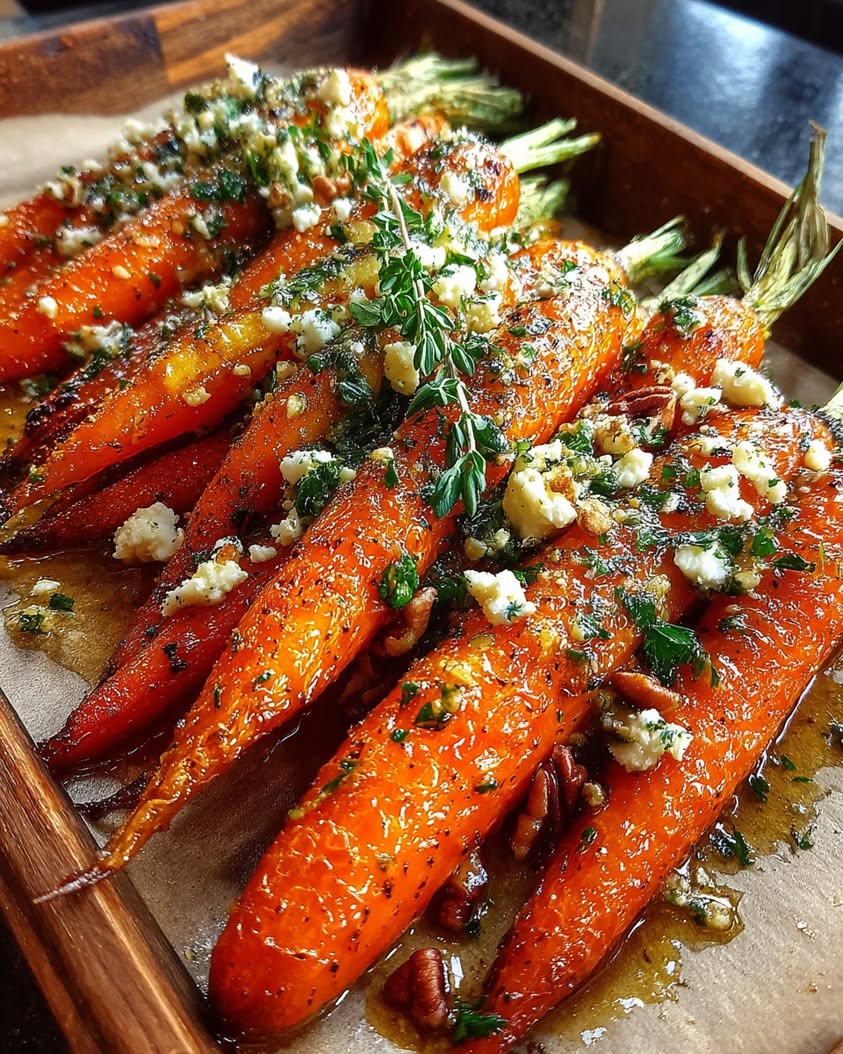
Maple Dijon Roasted Carrots with Goat Cheese: A Sweet and Savory Side Dish
Imagine a side dish so good it steals the spotlight from the main course. These Maple Dijon Roasted Carrots with Goat Cheese and Pecans do exactly that. They transform the humble carrot into a gourmet experience. The recipe combines sweet maple syrup with tangy Dijon mustard for a glaze that caramelizes beautifully in the oven. Consequently, you get carrots that are tender on the inside and perfectly caramelized on the outside.
This dish is a celebration of contrasting textures and flavors. Creamy goat cheese crumbles melt slightly on the warm carrots. Meanwhile, toasted pecans add a delightful crunch. Every bite is a harmonious blend of sweet, savory, tangy, and nutty notes. Ultimately, this recipe proves that vegetable sides can be the most memorable part of any meal. It is perfect for both weeknight dinners and holiday feasts.
Furthermore, the beauty of these Maple Dijon Roasted Carrots lies in their simplicity. You only need a handful of ingredients and one sheet pan. The oven does most of the work. As a result, you have more time to focus on the rest of your meal or enjoy time with guests. This dish is a foolproof way to impress anyone at your table with minimal effort.
Quick Recipe Highlights
- Flavor Profile: These Maple Dijon Roasted Carrots offer a masterful balance. The natural sweetness of the carrots and maple syrup pairs with the sharp tang of Dijon mustard. Additionally, the creamy, slightly funky goat cheese and the rich, buttery pecans create a complex and satisfying taste.
- Texture: The texture journey is exceptional. You get tender, roasted carrot interiors with slightly crisp, caramelized edges. Subsequently, the soft, crumbly goat cheese provides a creamy contrast. Finally, the toasted pecans deliver a satisfying, crunchy finish that makes every bite interesting.
- Aroma: While roasting, your kitchen will fill with an irresistible scent. The sweet maple and earthy carrots mingle with the savory notes of roasting. Moreover, the toasted pecans add a warm, nutty fragrance that signals a delicious meal is ready.
- Visual Appeal: This dish is a feast for the eyes. The glossy, amber-glazed carrots have a beautiful sheen. Vibrant orange carrots are elegantly strewn with white goat cheese crumbles and golden-brown pecan pieces. Therefore, it creates a rustic yet elegant presentation on any plate.
- Skill Level Needed: This recipe is perfect for beginners. It requires basic skills like chopping, whisking, and roasting. Essentially, if you can use an oven and a baking sheet, you can master these Maple Dijon Roasted Carrots.
- Special Equipment: You need only standard kitchen tools. A large baking sheet, parchment paper for easy cleanup, a mixing bowl, and a whisk are essential. A good chef’s knife for prepping the carrots is also helpful but not complex.
Recipe Overview
- Difficulty Level: We classify this Maple Dijon Roasted Carrots recipe as easy for good reason. The steps are straightforward and involve no advanced techniques. There is no fussy timing or precise temperature control needed beyond basic roasting. Consequently, even novice cooks can achieve restaurant-quality results with confidence.
- Category: This dish fits beautifully into several meal categories. Primarily, it is a standout vegetable side dish for proteins like roast chicken, pork, or fish. Alternatively, you can serve it as part of a vibrant vegetarian or holiday spread. It is versatile enough for any menu.
- Cuisine: While not tied to one specific tradition, the recipe draws from modern American and French-inspired farm-to-table cooking. The use of Dijon mustard nods to French cuisine, and maple syrup is a classic North American ingredient. Ultimately, it is a contemporary fusion that highlights quality, whole ingredients.
- Cost: This is a very cost-effective dish. Carrots are an inexpensive root vegetable available year-round. Maple syrup and Dijon mustard are pantry staples with a long shelf life. Goat cheese and pecans are the “splurge” items, but a small amount goes a long way in terms of flavor and texture.
- Season: These Maple Dijon Roasted Carrots are truly a dish for all seasons. They are perfect in fall and winter when carrots are at their sweetest and heartier sides are desired. However, the bright flavors also work wonderfully in spring and summer alongside grilled meats.
- Occasion: This recipe is incredibly versatile for occasions. It elevates a simple Tuesday night dinner instantly. Simultaneously, it is elegant and impressive enough for Thanksgiving, Christmas, Easter, or a dinner party. It is a reliable crowd-pleaser for any gathering.
Why You’ll Love This Recipe
First and foremost, the taste and texture of these Maple Dijon Roasted Carrots are utterly addictive. The caramelization from roasting deepens the carrots’ natural sugars. Meanwhile, the sticky maple Dijon glaze creates a sweet and savory coating that is impossible to resist. The addition of cool, creamy goat cheese cuts through the richness perfectly. Finally, the pecans add a necessary crunch that completes the sensory experience. Every component has a purpose, creating a dish that is far greater than the sum of its parts.
From a convenience standpoint, this recipe is a dream. Prep time is only about ten minutes, involving simple peeling, slicing, and whisking. Since everything cooks on one sheet pan, cleanup is incredibly easy. You do not need to juggle multiple pots and pans. This makes it an ideal recipe for busy weeknights when you want something healthy and delicious without a huge time investment. Furthermore, the hands-off roasting time allows you to prepare the rest of your meal.
Nutritionally, these Maple Dijon Roasted Carrots pack a powerful punch. Carrots are famously rich in beta-carotene, which your body converts to vitamin A for eye health. They also provide fiber, vitamin K, and potassium. Using olive oil adds heart-healthy monounsaturated fats. Goat cheese offers protein and calcium, and pecans contribute healthy fats, protein, and minerals like manganese. Therefore, this side dish is not just delicious but also nourishing.
For entertaining, this dish offers tremendous social value. It looks incredibly impressive and gourmet, suggesting you spent far more time than you actually did. Guests will be delighted by the sophisticated flavor combination. It is a fantastic conversation starter and a guaranteed way to receive compliments. Because it is served family-style from a platter, it encourages sharing and adds a warm, communal feel to your dinner table.
Finally, this recipe is highly accessible and cost-effective. The ingredients are easy to find at any standard grocery store. You can often find pre-trimmed “baby” carrots to save even more prep time. While goat cheese and pecans are premium ingredients, you use them as garnishes, so a little goes a long way. This makes the Maple Dijon Roasted Carrots an affordable way to add a touch of luxury to your meals.
Historical Background and Cultural Significance
The carrot has a long and fascinating history, dating back thousands of years. Originally, carrots were cultivated not for their roots but for their aromatic leaves and seeds. The first domesticated carrots were likely purple or yellow and came from the Persian region. The familiar orange carrot we know today was developed in the Netherlands in the 17th century, possibly to honor the Dutch Royal Family, the House of Orange. This historical journey makes the humble carrot a vegetable with a truly global pedigree.
Roasting vegetables is one of the oldest and most universal cooking methods. Essentially, it involves using dry heat to concentrate flavors and create caramelization. This technique is foundational across countless cuisines worldwide. The combination of sweet and savory glazes on roasted vegetables, however, is a more modern development in Western cooking. It reflects a contemporary desire to elevate simple ingredients into centerpiece dishes, moving vegetables from a mere afterthought to a celebrated component of the plate.
The evolution of this specific recipe for Maple Dijon Roasted Carrots is a product of modern food trends. It embodies the “root-to-leaf” and farm-to-table movements that emphasize respecting and highlighting whole vegetables. The use of maple syrup, a uniquely North American ingredient, alongside French Dijon mustard, creates a fusion that is both local and international. Adding cheese and nuts as finishing elements is a classic culinary technique for adding layers of flavor and texture, seen in dishes from salads to pastas.
Regional variations of glazed roasted carrots abound. In the American South, you might find carrots glazed with bourbon and brown sugar. In the Middle East, carrots are often roasted with cumin, coriander, and a drizzle of tahini. A Nordic version might use honey and caraway seeds. The Maple Dijon version sits comfortably within the North American culinary tradition, utilizing iconic local ingredients to create a side dish that feels both familiar and excitingly new.
Ingredient Deep Dive
Carrots: Carrots are root vegetables packed with history and nutrition. They are an excellent source of beta-carotene, fiber, vitamin K1, and potassium. Beta-carotene is a powerful antioxidant linked to improved eye health and immune function. When selecting carrots, look for firm, smooth roots with a vibrant orange color and fresh, green tops if attached. Avoid carrots that are limp, cracked, or have large green “shoulders” at the top, which can taste bitter. Store unwashed carrots in a plastic bag in the crisper drawer of your refrigerator for several weeks.
Maple Syrup: Pure maple syrup is the boiled-down sap of sugar maple trees, a tradition dating back to Indigenous peoples of North America. It contains antioxidants and minerals like manganese and zinc, unlike artificial pancake syrups. Always opt for “pure maple syrup” for the best flavor and quality. The grade (usually Grade A) indicates color and flavor intensity, not quality. Darker syrups have a more robust, caramel-like flavor perfect for glazing. Store maple syrup in the refrigerator after opening to prevent mold. For a vegan adaptation, you could substitute agave nectar, though the flavor profile will change.
Dijon Mustard: Originating from the city of Dijon, France, this mustard is known for its sharp, clean, and tangy flavor made from brown mustard seeds and white wine. It adds acidity and complexity to the glaze, cutting through the sweetness of the maple syrup. Nutritionally, mustard is low in calories and can contain turmeric, which has anti-inflammatory properties. A good Dijon should be smooth and pungent. Whole grain Dijon can be used for added texture. Mustard lasts for months in the refrigerator. For a substitution in a pinch, a good whole-grain mustard or even a standard yellow mustard can work, though the flavor will be different.
Goat Cheese (Chèvre): Goat cheese is a creamy, tangy cheese with a distinctive flavor. It is often easier to digest than cow’s milk cheese for those with mild lactose sensitivities because it contains different proteins. It provides protein, calcium, and healthy fats. Look for a fresh, soft log of goat cheese that is crumbly. Avoid pre-crumbled goat cheese if possible, as it often contains anti-caking agents and is less creamy. Store tightly wrapped in the refrigerator. For a dairy-free version, a vegan feta or a dollop of thick, unsweetened coconut yogurt could provide a similar tangy contrast.
Pecans: Pecans are native to North America and are a rich source of healthy monounsaturated fats, fiber, and minerals like manganese. Toasting them is a non-negotiable step; it deepens their flavor and maximizes their crunch. Always buy pecans from a store with high turnover and store them in an airtight container in the freezer to prevent their oils from going rancid. For a substitution, walnuts or almonds would work well, though they offer a slightly different flavor profile. For a nut-free version, toasted pumpkin seeds (pepitas) are an excellent alternative.
Common Mistakes to Avoid
- Crowding the Pan: Placing carrots too close together on the baking sheet is a major mistake. They will steam instead of roast, resulting in soggy, rather than caramelized, carrots. Always ensure there is space between each piece for proper air circulation and browning.
- Using Pre-Crumbled Goat Cheese: Pre-crumbled goat cheese often contains additives to prevent clumping. Consequently, it is drier and less creamy than a log you crumble yourself. For the best texture and flavor, always buy a fresh log and crumble it with your fingers just before serving.
- Skipping the Toasting of Pecans: Raw pecans are fine, but toasted pecans are transformative. Toasting unlocks their oils and intensifies their nutty flavor and crunch. Simply tossing them in a dry skillet for a few minutes makes a world of difference in the final dish.
- Neglecting to Peel the Carrots: While you can leave the peel on for extra fiber, peeling creates a more elegant texture and allows the glaze to adhere better. The peel can sometimes be slightly bitter or tough, so peeling ensures a uniformly tender and sweet result.
- Adding the Goat Cheese Too Early: If you add the goat cheese before or during roasting, it will melt completely and disappear. The goal is to have distinct, creamy crumbles. Therefore, always add the goat cheese and pecans after the carrots come out of the oven and have cooled slightly.
- Not Whisking the Glaze Thoroughly: The maple syrup and Dijon mustard need to be emulsified into a smooth glaze. If you just drizzle them separately, the coating will be uneven. Take a moment to whisk them together with the oil until the mixture is fully combined.
- Using Imitation Maple Syrup: The flavor of pure maple syrup is complex and irreplaceable. Imitation “pancake syrup” is primarily corn syrup and artificial flavor. It will make the glaze overly sweet and one-dimensional. Investing in real maple syrup is crucial for this recipe’s success.
- Underseasoning: Carrots need seasoning just like any other vegetable. Do not forget to season generously with salt and black pepper before roasting. The salt helps draw out moisture and enhances all the other flavors in the dish.
Essential Techniques
Uniform Slicing: Cutting your carrots into evenly sized pieces is the most critical prep technique. Consistent size ensures that all pieces roast at the same rate. Consequently, you avoid having some carrots burnt and others undercooked. Aim for pieces that are about 1/2-inch thick on the diagonal. This increases surface area for caramelization while keeping a substantial, satisfying bite. A sharp chef’s knife and a steady cutting board are your best tools for this task.
Creating the Emulsion: Whisking the maple syrup, Dijon mustard, and olive oil together is a simple form of emulsification. This means combining two liquids that normally do not mix well (oil and water-based syrup/mustard). A vigorous whisking creates a temporarily stable, homogenous glaze that will coat the carrots evenly. If you skip this step, the oil will separate, leading to patchy browning. Whisk until the mixture is smooth and slightly thickened.
High-Heat Roasting: Roasting at a high temperature (400°F or above) is essential for proper caramelization. The high heat quickly evaporates surface moisture on the carrots, allowing the sugars—both natural and from the maple syrup—to brown and create complex flavors. Do not be tempted to lower the temperature to prevent burning; just ensure your oven is properly preheated and your pan is not overcrowded. The edges of the carrots should be dark golden brown for the best flavor.
Tossing Midway: Halfway through the roasting time, you must remove the pan and toss the carrots. This technique ensures all sides have contact with the hot pan and glaze. It prevents sticking and promotes even browning and cooking. Use a thin spatula to gently flip and stir the carrots, being careful not to tear the caramelized layer that is starting to form.
Pro Tips for Perfect Maple Dijon Roasted Carrots
First, for extra flavor, toss a few sprigs of fresh thyme or rosemary onto the baking sheet with the carrots. The herbs will infuse the carrots and the air with an aromatic fragrance as they roast.
Second, let the roasted carrots cool for about five minutes on the pan before adding the goat cheese. This prevents the cheese from melting into a puddle and keeps those beautiful, distinct crumbles intact.
Third, if your carrots vary greatly in thickness, consider cutting the thicker ends in half lengthwise. This creates a more uniform shape and ensures everything cooks evenly.
Fourth, line your baking sheet with parchment paper. This guarantees easy cleanup and prevents the sugary glaze from sticking and burning onto your pan, which can be very difficult to scrub off.
Fifth, taste your glaze before tossing it with the carrots. Adjust the ratio of maple to Dijon to suit your personal preference for sweetness or tanginess.
Sixth, for a deeper, more complex flavor, use a dark, robust Grade A maple syrup. Its caramel notes pair exceptionally well with the savory elements of the dish.
Seventh, toast your pecans in a dry skillet while the carrots roast. This maximizes your time and ensures the nuts are warm and fragrant when you add them to the dish.
Eighth, finish the dish with a final sprinkle of flaky sea salt, like Maldon, just before serving. The delicate salt crystals provide a wonderful burst of salinity that enhances every other flavor.
Variations and Adaptations
Regional Variations: Explore global flavors by changing the glaze. For a Mediterranean twist, use honey instead of maple and add za’atar or oregano before roasting, then finish with feta cheese and pistachios. For an Asian-inspired version, substitute the maple syrup with a mix of honey and soy sauce, and use sesame oil in the glaze, finishing with toasted sesame seeds and chopped scallions.
Seasonal Adaptations: In spring, use multicolored baby carrots or rainbow carrots for a stunning visual effect. In summer, add the zest of one orange to the glaze for a brighter note. During the winter holidays, a sprinkle of ground cinnamon or a pinch of cayenne pepper in the glaze adds warm, festive spice.
Dietary Modifications: For a vegan version, omit the goat cheese or use a vegan feta alternative. Ensure your maple syrup is vegan-friendly (most are). For a nut-free dish, substitute toasted pumpkin seeds (pepitas) or sunflower seeds for the pecans. To make it Whole30 or paleo, use a compliant Dijon mustard and omit the cheese.
Flavor Variations: Add a minced garlic clove or a teaspoon of grated fresh ginger to the glaze for an aromatic kick. A tablespoon of balsamic vinegar whisked into the glaze will add a lovely acidity and depth. For a smoky note, use a teaspoon of smoked paprika in the seasoning.
Texture Modifications: If you prefer a smoother, saucier dish, you can double the glaze ingredients and simmer them in a small saucepan for a few minutes until slightly reduced. Drizzle this extra sauce over the plated carrots. For extra crunch, add a second textural element like panko breadcrumbs toasted in olive oil with herbs.
Presentation Alternatives: Instead of a rustic platter, you can plate individual servings. Fan the roasted carrots on each plate, drizzle with any remaining glaze from the pan, and artfully place goat cheese crumbles and pecans on top. Garnish with a single fresh herb sprig for a restaurant-worthy look.
Serving and Presentation Guide
Plating Techniques: For a family-style presentation, transfer the warm Maple Dijon Roasted Carrots to a large, shallow serving platter or a rustic wooden board. Spread them out in a single layer to showcase their glossy glaze. Sprinkle the goat cheese and pecans over the top in an even, yet casual, distribution. Allow some carrots to peek through for visual interest.
Garnishing Ideas: Beyond goat cheese and pecans, fresh herbs are the perfect final touch. Fresh thyme leaves, chopped flat-leaf parsley, or delicate dill fronds add a pop of color and freshness. A final drizzle of high-quality extra virgin olive oil or a balsamic glaze can add shine and another layer of flavor just before serving.
Traditional Accompaniments: These carrots pair classically with roasted or grilled meats. Think herb-roasted chicken, pork tenderloin, seared steak, or baked ham. They also complement hearty fish like salmon or halibut beautifully. For a vegetarian feast, serve them alongside a lentil loaf, stuffed squash, or a giant portobello mushroom.
Modern Serving Suggestions: Transform these Maple Dijon Roasted Carrots into a main course salad. Place them on a bed of peppery arugula or mixed greens while still warm. The heat will slightly wilt the greens. Add a simple vinaigrette and some cooked quinoa or farro for a complete, satisfying meal.
Temperature Considerations: This dish is best served warm. The goat cheese should be slightly softened from the residual heat of the carrots but not fully melted. If you need to hold the dish, keep the roasted carrots warm (covered loosely with foil) and add the cheese and nuts right before serving to maintain optimal texture.
Portion Control Tips: This recipe yields about four servings as a side dish. A good rule of thumb is about 3/4 to 1 cup of roasted carrots per person. If serving as part of a large holiday spread with many other sides, you can stretch it to six servings. For a main-dish salad, the recipe serves two generously.
Wine and Beverage Pairing
Wine Pairings: The sweet and savory profile of these Maple Dijon Roasted Carrots calls for a wine with good acidity to cut through the richness. A crisp, dry Riesling or a Grüner Veltliner is an excellent choice, as their acidity balances the sweetness and their fruit notes complement the carrots. Alternatively, a light-bodied Pinot Noir with its red fruit and earthy notes can pair wonderfully, especially if you are serving the carrots with a meat like pork or duck.
Non-Alcoholic Alternatives: Sparkling water with a twist of lemon or lime provides a clean, palate-cleansing effervescence. For a more crafted option, a ginger beer or a tart cherry juice spritzer (mixed with sparkling water) echoes the sweet and spicy notes in the dish. Iced herbal tea, like mint or chamomile, can also be a soothing and complementary beverage.
Coffee/Tea Pairings: While not a typical pairing for a side dish, if serving these carrots as part of a brunch, a medium-roast coffee with low acidity would work well. For tea, consider a smoky Lapsang Souchong black tea or a gentle white tea, which would not overpower the delicate flavors of the carrots and goat cheese.
Temperature Considerations: Serve white wines well-chilled, around 45-50°F. Red wines like Pinot Noir should be served slightly cooler than room temperature, around 55°F. Non-alcoholic sparkling drinks should be served very cold to maximize refreshment alongside the warm, rich carrots.
Serving Suggestions: Always offer water alongside any other beverage. The salt and richness in the dish will make guests thirsty. If serving wine, pour a small taste first to allow guests to see how the pairing works with the food before filling the glass.
Storage and Shelf Life
Storage Methods: Store leftover Maple Dijon Roasted Carrots in an airtight container in the refrigerator. It is best to store the carrots, goat cheese, and pecans separately if possible. This maintains the texture of the cheese and nuts. If stored combined, the pecans will soften and the goat cheese will fully incorporate into the glaze.
Temperature Requirements: Refrigeration is mandatory for leftovers. The dish contains dairy (goat cheese) and a moist glaze, creating an environment where bacteria can grow if left at room temperature for more than two hours. Always refrigerate within this timeframe.
Container Recommendations: Use a shallow, airtight glass or BPA-free plastic container. A shallow container allows the carrots to cool quickly and evenly, promoting food safety. Avoid storing in the roasting pan covered with foil, as this does not provide a proper seal.
Signs of Spoilage: Discard the carrots if you notice an off or sour smell, significant sliminess on the surface, or visible mold. The glaze may separate upon refrigeration, which is normal, but any drastic change in texture or odor indicates spoilage.
Reheating Instructions: Reheat carrots without the goat cheese and pecans. Spread them on a baking sheet and warm in a 350°F oven for 10-15 minutes until heated through. You can also reheat them in a skillet over medium heat, stirring occasionally. The microwave will work but can make them soggy. Add fresh goat cheese and pecans after reheating.
Freezing Guidelines: Freezing is not recommended for this completed dish. The texture of the roasted carrots becomes mushy upon thawing, and the dairy in the goat cheese will separate and become grainy. However, you can freeze plain roasted carrots (without glaze or toppings) for up to 3 months for use in soups or purees.
Make Ahead Strategies
Prep Timeline: You can prep components up to two days in advance. Peel and slice the carrots, storing them in a sealed bag or container of cold water in the fridge to keep them crisp. Whisk the maple Dijon glaze and store it in a jar in the refrigerator. Toast the pecans and store them at room temperature in an airtight container. Crumble the goat cheese and keep it refrigerated.
Storage Between Steps: Keep all prepped elements separate until just before roasting and serving. The carrots in water will prevent oxidation and wilting. The glaze may solidify slightly in the fridge; simply let it sit at room temperature for 15 minutes and shake or whisk it again before using.
Quality Impact Assessment: Prepping the carrots ahead saves significant time on the day of cooking and has no negative impact on quality. Making the glaze ahead allows the flavors to meld, which is a bonus. Toasting nuts ahead is always recommended as it saves a step during the busy cooking process.
Assembly Tips: On the day of serving, drain and pat the pre-cut carrots very dry. Toss them with oil, salt, pepper, and the pre-made glaze, then roast as directed. The only elements that must be done at the last minute are adding the room-temperature goat cheese crumbles and toasted pecans to the hot carrots.
Reheating Guidelines: If you fully roast the carrots ahead and need to reheat, use the oven method described in the storage section to restore some of their caramelized texture. Avoid the microwave to prevent sogginess.
Fresh Element Additions: No matter how much you prep ahead, always add the goat cheese, pecans, and any fresh herb garnishes right before serving. This ensures the best possible texture contrast and visual appeal for your Maple Dijon Roasted Carrots.
Scaling Instructions
Halving the Recipe: Halving this recipe for Maple Dijon Roasted Carrots is straightforward. Simply divide all ingredient quantities by two. Use a smaller baking sheet or quarter sheet pan to maintain proper spacing between the carrot pieces. The roasting time may be slightly reduced by 3-5 minutes, so start checking for doneness early.
Doubling or Tripling: To feed a crowd, double or triple the ingredients. The key here is to use multiple baking sheets and rotate them in the oven. Do not pile all the carrots onto one sheet, as they will steam. Roast on the upper and lower racks and swap their positions halfway through cooking to ensure even browning. You may need to add a few extra minutes to the total cook time.
Equipment Adjustments: When scaling up, ensure you have enough large, rimmed baking sheets. Lining them with parchment is even more crucial for easy cleanup. You may also need a very large bowl for tossing all the carrots with the glaze before dividing them among the pans.
Timing Modifications: For larger batches, the prep time will increase linearly with the amount of carrots you need to peel and slice. The active cook time remains the same, but you must account for the time it takes to work in batches if your oven cannot fit multiple sheets at once.
Storage Considerations: Leftovers from a large batch can be stored as usual. However, for best quality, consider storing the roasted carrots separately from the toppings and only combining what you will serve immediately. This allows you to reheat portions of carrots as needed without the toppings getting soggy.
Nutritional Deep Dive
Macro Breakdown: A serving of these Maple Dijon Roasted Carrots provides a balanced mix of macronutrients. The carbohydrates come primarily from the carrots and maple syrup, offering natural sugars and fiber. The healthy fats are sourced from the olive oil, goat cheese, and pecans, contributing to satiety. The goat cheese also provides a modest amount of protein. This combination helps stabilize energy levels after eating.
Micronutrient Analysis: This dish is a micronutrient powerhouse. Carrots deliver a massive dose of vitamin A (as beta-carotene), crucial for vision and immune health. They also provide vitamin K for bone health and potassium for blood pressure regulation. Pecans offer manganese for metabolism and antioxidants. Goat cheese contributes calcium and phosphorus for strong bones and teeth.
Health Benefits: The ingredients work synergistically for health. The fat from the olive oil and nuts helps your body absorb the fat-soluble beta-carotene from the carrots more efficiently. The fiber promotes digestive health and helps moderate the glycemic response to the natural sugars. The antioxidants in all the components combat oxidative stress and inflammation in the body.
Dietary Considerations: This recipe is naturally gluten-free. It contains dairy (goat cheese) and tree nuts (pecans), which are common allergens. The maple syrup makes it unsuitable for strict low-carb or keto diets in large portions, though a small serving could fit into some plans. It is vegetarian-friendly.
Portion Analysis: As a side dish, one serving (approximately 1/4 of the recipe) is a nutritionally sound addition to a meal. It adds vegetables, healthy fats, and flavor without being excessively high in calories. Being mindful of the portion of maple syrup and nuts is the key to keeping the dish balanced if you are watching calorie intake.
Weight Management Tips: To make this dish more weight-conscious, you can slightly reduce the amount of maple syrup and olive oil by 1-2 teaspoons each—the carrots will still caramelize. You can also increase the volume of carrots on the sheet pan. Using a light hand with the goat cheese and pecans as garnishes, rather than mix-ins, controls calorie-dense ingredients while maintaining flavor.
Dietary Adaptations
Gluten-Free: This recipe for Maple Dijon Roasted Carrots is naturally gluten-free. All ingredients—carrots, maple syrup, Dijon mustard (check the label to ensure no wheat-based additives), olive oil, goat cheese, and pecans—are inherently free from gluten. It is a safe and delicious option for those with celiac disease or gluten sensitivity.
Dairy-Free: To make this dish dairy-free, simply omit the goat cheese. For a similar creamy, tangy element, you can use a dollop of dairy-free yogurt made from coconut or almond milk, or sprinkle with nutritional yeast for a cheesy flavor. Many brands also offer excellent vegan feta cheese crumbles that would work perfectly here.
Vegan: For a fully vegan adaptation, follow the dairy-free instructions above and ensure your Dijon mustard and maple syrup are vegan (most are). The base recipe of roasted carrots with maple Dijon glaze is already vegan. Top with the vegan cheese alternative or a sprinkle of toasted nuts and seeds for a complete plant-based side dish.
Low-Carb/Keto: Carrots are higher in natural sugars than some other vegetables, so they are not typically keto-friendly. For a low-carb version, substitute carrots with lower-carb vegetables like halved Brussels sprouts, cauliflower florets, or zucchini spears. Use a sugar-free maple-flavored syrup and ensure your Dijon mustard has no added sugar.
Paleo: The main non-paleo ingredient here is the goat cheese (dairy). Omit the cheese to make it paleo-compliant. Double-check that your Dijon mustard does not contain white wine or other non-compliant additives (some brands do). The dish is otherwise made from whole, unprocessed ingredients fitting the paleo framework.
Low-FODMAP: Carrots are low-FODMAP in servings of about 1/2 cup chopped. Stick to a moderate portion size. Maple syrup is low-FODMAP in tablespoons, so the small amount per serving is fine. Dijon mustard is typically safe. Omit the goat cheese, as it is high in lactose. Pecans are low-FODMAP in a serving of 10 pecan halves.
Nut-Free: This is an easy adaptation. Simply omit the pecans. For added crunch, substitute with toasted seeds like pumpkin seeds (pepitas) or sunflower seeds. Ensure any seed or nut butter used in other variations{“success”:true,”message”:”Recipe created successfully”,”post_id”:8985,”tasty_recipe_id”:8985,”shortcode”:” Print
Maple Dijon Roasted Carrots with Goat Cheese & Pecans
Description
A sweet and savory side dish featuring roasted carrots glazed with maple and Dijon mustard, topped with creamy goat cheese and crunchy pecans.
Ingredients
For the Crust:
- 1 lb carrots, peeled and halved lengthwise
- 2 tbsp olive oil
- 2 tbsp pure maple syrup
- 1 tbsp Dijon mustard
- 1/2 tsp garlic powder
- Salt and black pepper to taste
- 1/4 cup pecans, chopped
- 2 oz goat cheese, crumbled
- Fresh thyme for garnish
Instructions
1. Prepare the Crust:
- Preheat oven to 400°F (200°C). Line a baking sheet with parchment paper.
- In a small bowl, whisk together olive oil, maple syrup, Dijon mustard, garlic powder, salt, and pepper.
- Toss carrots with the maple Dijon mixture until evenly coated. Arrange in a single layer on the baking sheet.
- Roast for 25-30 minutes, flipping halfway, until carrots are tender and caramelized.
- While carrots roast, toast pecans in a dry skillet over medium heat for 3-5 minutes until fragrant.
- Transfer roasted carrots to a serving dish. Top with crumbled goat cheese, toasted pecans, and fresh thyme.
Notes
You can customize the seasonings to taste.

I’m Billy, a classically trained culinary school graduate from The Culinary Institute of America with over 12 years in the restaurant industry and over 19 years of cooking experience.