
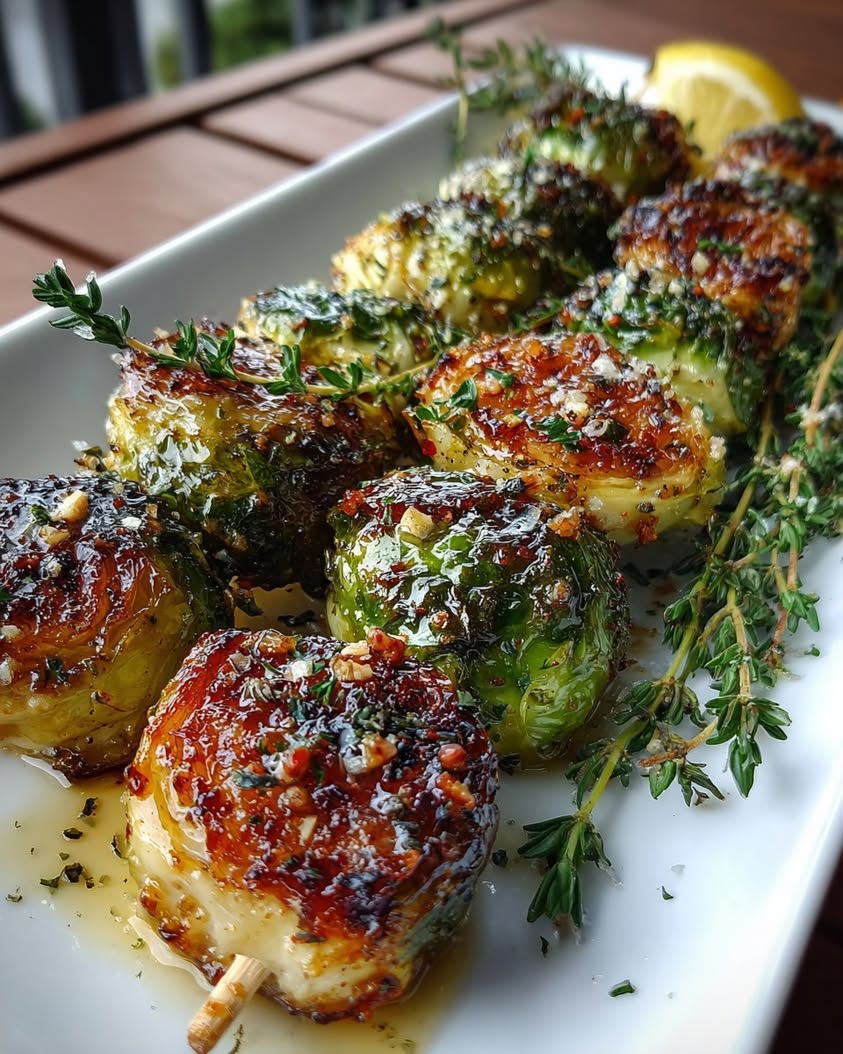
Maple-Glazed Brussels Sprout Skewers: A Sweet and Savory Grilled Side Dish
These Maple-Glazed Brussels Sprout Skewers are the ultimate game-changer for your next barbecue. They transform the humble sprout into a caramelized, smoky, and utterly irresistible side dish. The magic happens on the grill, where high heat chars the edges to perfection. Meanwhile, a simple glaze of pure maple syrup, soy sauce, and garlic creates a sticky, sweet, and savory coating that will have everyone asking for the recipe.
Forget about boring, steamed vegetables. This recipe is all about maximizing flavor and fun. Skewering the Brussels sprouts makes them easy to handle and ensures even cooking. Additionally, the presentation is fantastic, turning a simple side into a conversation starter. This dish is perfect for anyone looking to add more vegetables to their grill repertoire. Ultimately, these skewers prove that healthy eating can be incredibly delicious and exciting.
Whether you are hosting a summer cookout or just want a quick weeknight side, these Maple-Glazed Brussels Sprout Skewers deliver. They pair beautifully with grilled chicken, steak, or fish. Moreover, they are naturally gluten-free and can easily be made vegan. The combination of smoky char from the grill and the rich, glossy glaze is simply unforgettable. Give this recipe a try, and watch these skewers become a new family favorite.
Quick Recipe Highlights
- Flavor Profile: These skewers offer a perfect balance of sweet and savory. The natural bitterness of the Brussels sprouts mellows beautifully against the rich maple glaze. A hint of garlic and soy sauce adds a delicious umami depth that keeps you coming back for more.
- Texture: Expect a wonderful contrast in every bite. The outer leaves become delightfully crispy and charred from the grill. Inside, the sprouts remain tender and slightly firm, providing a satisfying mouthfeel that is never mushy.
- Aroma: As they cook, the aroma is absolutely mouthwatering. You will first smell the smoky notes from the grill, followed by the sweet scent of caramelizing maple syrup. Finally, the savory garlic and soy sauce create a complex and inviting fragrance.
- Visual Appeal: The finished skewers are a feast for the eyes. They boast a gorgeous, glossy mahogany glaze from the maple syrup. Charr marks from the grill add visual texture, making them look as impressive as they taste.
- Skill Level Needed: This is a beginner-friendly recipe that requires very little advanced technique. The most important skills are basic knife work for trimming and the ability to manage a grill. Anyone comfortable with following a simple glaze recipe can achieve excellent results.
- Special Equipment: You will need metal or soaked wooden skewers to thread the sprouts. A reliable grill, whether gas or charcoal, is essential for achieving the signature smoky flavor. A small saucepan for the glaze and a mixing bowl are also necessary.
Recipe Overview
- Difficulty Level: We rate this recipe as easy because it involves straightforward preparation steps. Trimming and skewering the sprouts is simple, and the glaze comes together in minutes. The grilling process is largely hands-off, requiring just a few turns for even cooking. Consequently, it is an accessible dish for cooks of all levels.
- Category: This dish falls squarely into the side dish category, perfect for complementing grilled mains. It can also serve as a standout vegetarian option at any barbecue. Furthermore, it works well as a hearty appetizer when served with a dipping sauce.
- Cuisine: While not tied to one specific tradition, these skewers draw inspiration from American barbecue culture and Asian flavor profiles. The use of maple syrup is a nod to North American ingredients, while the soy sauce and garlic introduce a universal savory element. This fusion creates a uniquely modern and globally-inspired dish.
- Cost: This is a very budget-friendly recipe, especially when Brussels sprouts are in season. Maple syrup is the most premium ingredient, but a little goes a long way. Overall, you can expect to feed four people for just a few dollars, making it an economical choice for entertaining.
- Season: Brussels sprouts are a cool-weather crop, peaking in fall and winter. However, this grilled preparation makes them ideal for late spring and summer barbecues. Thankfully, they are now widely available year-round in most grocery stores, so you can enjoy this recipe anytime.
- Occasion: These skewers are incredibly versatile for different events. They are perfect for casual backyard barbecues, holiday cookouts like Memorial Day or Labor Day, and even weeknight dinners. Their elegant presentation also makes them suitable for more festive gatherings.
Why You’ll Love This Recipe
First and foremost, the taste and texture are absolutely phenomenal. The caramelized maple glaze creates a sweet, sticky exterior that contrasts with the savory, charred sprouts. Each bite delivers a complex mix of flavors that is far more exciting than typical vegetable sides. The slight bitterness of the Brussels sprouts is not masked but beautifully balanced, resulting in a sophisticated and deeply satisfying dish. You will love how these simple ingredients transform into something truly special on the grill.
From a convenience standpoint, this recipe is a winner. The prep time is minimal, involving just trimming and skewering. The glaze takes mere minutes to whisk together on the stovetop. Once on the grill, the skewers cook quickly, freeing you up to manage your main course. This efficiency makes it an ideal side dish for busy hosts who want to impress without stress. Everything comes together in about thirty minutes from start to finish.
Nutritionally, these Maple-Glazed Brussels Sprout Skewers are a powerhouse. Brussels sprouts are packed with fiber, vitamins C and K, and antioxidants. Grilling them helps retain more nutrients compared to boiling. While the glaze adds sugar, using pure maple syrup provides minerals like manganese and zinc. This dish is a fantastic way to enjoy a vegetable-rich side that feels indulgent. It is a smart choice for health-conscious eaters who refuse to compromise on flavor.
The social and entertaining value of this dish is incredibly high. Food on skewers is inherently fun and interactive, appealing to both kids and adults. Placing a platter of these glossy, charred skewers on the table instantly elevates the meal. They encourage conversation and are easy for guests to serve themselves. This recipe turns a simple vegetable into the star of the barbecue, guaranteeing compliments and requests for the recipe from your friends and family.
Finally, this recipe is highly cost-effective and accessible. Brussels sprouts and the glaze ingredients are affordable and easy to find. You do not need any specialty equipment beyond skewers and a grill. The recipe is also forgiving and adaptable to what you have on hand. For instance, you can easily adjust the sweetness or saltiness to suit your taste. This combination of low cost, high flavor, and easy execution makes it a go-to recipe you will rely on for years.
Historical Background and Cultural Significance
The story of the Brussels sprout itself begins in ancient Rome, but the vegetable as we know it was cultivated in large quantities in Belgium during the 16th century, specifically near Brussels—hence its name. For centuries, it was a staple of European winter cuisine, often boiled or steamed. The concept of grilling vegetables, however, is a much more modern development, closely tied to the rise of backyard barbecuing in post-World War II America. This recipe represents a delicious fusion of Old World produce with New World cooking techniques and flavors.
Culturally, skewering food is one of humanity’s oldest cooking methods, practiced across countless cultures from Asian satay to Middle Eastern kebabs. It is a technique born of practicality, allowing for easy cooking over open flames and simple serving. Applying this universal method to Brussels sprouts is a relatively recent innovation, part of a broader culinary movement to reinvent and elevate vegetables. This dish reflects a contemporary desire to make plant-based eating more central and exciting, especially in the context of casual, social dining like barbecues.
The evolution of this specific recipe is rooted in the modern farm-to-table and vegetable-forward trends. Chefs and home cooks began experimenting with applying glazes and high-heat methods to vegetables traditionally considered bland. Maple syrup, a North American staple, became a popular natural sweetener for glazes due to its rich flavor and viscosity. The combination with soy sauce creates a classic sweet-and-savory profile that appeals to a wide audience. Therefore, this dish is a product of contemporary culinary experimentation aimed at maximizing flavor and appeal.
Regional variations of this concept are already emerging. In the American South, you might find a glaze with bourbon or brown sugar added. In Asian-inspired versions, the glaze could include ginger, sesame oil, or a touch of chili paste. Some cooks add chunks of onion, bell pepper, or pineapple between the sprouts on the skewer for added variety. The basic template of grilled Brussels sprouts with a sweet glaze is wonderfully adaptable, allowing it to absorb influences from different culinary traditions and personal pantries.
Ingredient Deep Dive
Brussels Sprouts: Selecting firm, bright green sprouts with tightly packed leaves is crucial for the best texture. Avoid any that are yellowing or have loose leaves. Store them unwashed in a plastic bag in your refrigerator’s crisper drawer, where they will keep for about a week. Before using, trim the dry stem end and remove any loose or damaged outer leaves. For a milder flavor, you can halve larger sprouts through the core, which also helps them cook more evenly on the skewer.
Pure Maple Syrup: It is vital to use 100% pure maple syrup, not pancake syrup which contains corn syrup and artificial flavors. The syrup’s complex caramel and vanilla notes are key to the glaze’s depth. Grade A Amber Color, Rich Taste is a great all-purpose choice. Store it in the pantry before opening and in the refrigerator afterward to prevent mold. In a pinch, you could substitute with honey or agave nectar, but the flavor profile will shift accordingly.
Soy Sauce: This ingredient provides the essential salty, umami counterpoint to the sweet maple. For a gluten-free version, use tamari or a certified gluten-free soy sauce. Low-sodium soy sauce is a good option if you are monitoring salt intake. The soy sauce helps the glaze cling to the sprouts and promotes beautiful caramelization on the grill. It acts as both a seasoning and a functional component in the recipe.
Garlic: Freshly minced garlic offers the best, most potent flavor for the glaze. The heat of the saucepan gently cooks the garlic, mellowing its raw bite and blending it seamlessly into the sauce. If you do not have fresh garlic, a quarter teaspoon of garlic powder can be substituted. The garlic adds a necessary aromatic layer that makes the glaze taste more complex and savory, preventing it from being one-dimensionally sweet.
Olive Oil: A good quality extra virgin olive oil is used to coat the sprouts before grilling. This prevents sticking, helps the seasoning adhere, and promotes even charring. The oil also carries the flavors of any dry seasonings you might add. If you prefer a more neutral taste, avocado oil or another high-heat oil works perfectly. The oil is a simple but critical element for achieving the perfect grilled texture.
Common Mistakes to Avoid
- Using Wooden Skewers Without Soaking: This is a surefire way to end up with burnt skewers and unevenly cooked sprouts. Always soak wooden skewers in water for at least 30 minutes before threading. This creates a protective barrier that prevents them from catching fire on the grill.
- Overcrowding the Skewers: Packing the sprouts too tightly on the skewer prevents hot air from circulating. Consequently, they will steam instead of grill, missing out on the essential crispy, charred texture. Leave a small space between each sprout for the best results.
- Applying the Glaze Too Early: If you brush on the sweet maple glaze at the beginning of grilling, the sugars will burn before the sprouts are cooked through. Always wait until the last few minutes of cooking to apply the glaze, allowing it to caramelize without scorching.
- Not Trimming the Sprouts Properly: Skipping the step of trimming the dry stem end can leave a tough, woody piece. Similarly, not removing loose outer leaves means they will burn quickly and fall into your grill. Take a moment for proper prep to ensure even cooking.
- Grilling Over Too High Heat: While you want a hot grill for good char, excessively high heat will blacken the outside while the inside remains hard and raw. Aim for a medium-high heat to cook the sprouts through while achieving a perfect caramelized exterior.
- Neglecting to Turn the Skewers: Setting the skewers on the grill and walking away will result in uneven cooking. Regular turning every few minutes is essential for all-around char and to prevent any one side from burning. Use tongs for easy and safe handling.
- Using Imitation Maple Syrup: Pancake syrup or table syrup lacks the depth and purity of real maple. These products often contain high-fructose corn syrup and artificial flavors that can taste cloying and may not caramelize properly. Invest in the real thing for the best flavor.
- Skipping the Pre-Grill Oil Toss: Coating the sprouts in oil is not an optional step. The oil helps conduct heat, prevents sticking, and encourages browning. If you skip it, the sprouts may dry out and are more likely to weld themselves to your grill grates.
Essential Techniques
Skewering for Even Cooking: Threading the sprouts onto skewers is a technique that ensures consistent heat exposure. Pierce each sprout through its core, which is the most dense part. This method stabilizes them and allows for easy flipping. The goal is to have them sit securely without spinning, so they make full contact with the grill grates. Proper skewering is the foundation for achieving that perfect, all-over char.
Building and Reducing a Glaze: The process of making the maple glaze involves simmering the ingredients together. This step is crucial for melding the flavors and slightly thickening the syrup. As the mixture simmers, water evaporates, concentrating the taste and creating a stickier consistency that will cling to the sprouts. Watch it carefully to prevent boiling over, and remove it from heat once it coats the back of a spoon. A well-reduced glaze will not drip excessively and will create a beautiful glossy finish.
Managing Grill Heat for Vegetables: Grilling vegetables requires a slightly different approach than grilling meat. You need a steady, medium-high heat that is hot enough to create char but not so violent that it incinerates the outside. Always preheat your grill with the lid closed for at least 10-15 minutes. Create two zones if possible: a direct heat zone for searing and an indirect zone to move the skewers if they are cooking too quickly. This control prevents burning and allows the sprouts to cook through.
The Art of Glazing on the Grill: Applying the glaze during the final minutes of cooking is a key technique. Use a silicone brush to generously coat the skewers, then immediately close the grill lid for a minute. The enclosed heat helps set the glaze. Repeat this process once more, turning the skewers and brushing the other side. This double-glazing method builds layers of flavor and creates that desirable sticky, caramelized coating without burning the sugar.
Pro Tips for Perfect Maple-Glazed Brussels Sprout Skewers
Choose sprouts that are similar in size to ensure they cook at the same rate. This prevents some from being undercooked while others are perfectly done. If your sprouts vary greatly, consider halving the larger ones to match the size of the smaller ones.
Par-cook very large sprouts by blanching them in boiling water for 2-3 minutes before skewering and grilling. This guarantees they will be tender in the center by the time the exterior is nicely charred. Shock them in ice water afterward to stop the cooking process.
Add a pinch of smoked paprika or a drop of liquid smoke to the glaze if you are using a gas grill. This mimics the deeper smoky flavor you would get from charcoal, adding an extra layer of complexity to the dish.
Let the glazed skewers rest for a minute or two after coming off the grill. The glaze will thicken slightly as it cools, making it less messy to eat. This short rest also allows the intense heat to distribute evenly through each sprout.
If you are concerned about sticking, ensure your grill grates are very clean and well-oiled before heating. Use tongs and a folded paper towel dipped in oil to rub the grates just before placing the skewers on them.
For an extra flavor boost, toss the oiled sprouts with a little kosher salt and black pepper before skewering. This seasons them from the inside out and ensures every bite is perfectly seasoned, not just the glazed exterior.
Keep a spray bottle of water nearby when grilling. If flare-ups occur from dripping oil or glaze, a quick mist will tame the flames without cooling down your grill significantly, protecting your skewers from burning.
Double the glaze recipe if you love extra sauce. You can serve the additional warmed glaze on the side for dipping, allowing everyone to add more of that sweet and savory goodness to their plate.
Variations and Adaptations
Regional Variations: Give these skewers a Southern twist by adding a tablespoon of bourbon to the glaze. For an Asian-inspired version, incorporate a teaspoon of grated fresh ginger and a dash of sesame oil into the glaze, then sprinkle with toasted sesame seeds after grilling. A Mediterranean take could use a balsamic reduction instead of maple syrup and add fresh rosemary to the oil toss.
Seasonal Adaptations: In the fall, add cubed sweet potato or apple chunks to the skewers between the sprouts. During summer, intersperse with cherry tomatoes or chunks of zucchini. For a winter holiday version, add a sprinkle of pomegranate arils and chopped pecans as a garnish after grilling for festive color and crunch.
Dietary Modifications: For a vegan version, ensure your maple syrup is vegan (most are) and use tamari instead of soy sauce if needed. To make it Whole30 or paleo, substitute coconut aminos for the soy sauce. A low-carb or keto adaptation would use a sugar-free maple-flavored syrup and reduce the amount used.
Flavor Variations: Spice it up by adding a teaspoon of sriracha or a pinch of red pepper flakes to the glaze. For a herbaceous note, stir a tablespoon of chopped fresh thyme or rosemary into the glaze after removing it from heat. A smoky variation can include a teaspoon of chipotle powder in the oil coating.
Texture Modifications: For extra crispiness, toss the trimmed sprouts in a tablespoon of cornstarch along with the oil before skewering. This creates an ultra-crispy exterior. Alternatively, for a softer texture, wrap the skewers in foil after glazing and let them steam on the grill for a few extra minutes.
Presentation Alternatives: Instead of serving on the skewer, slide the cooked sprouts into a serving bowl and drizzle with extra glaze. You can also de-skewer them and toss with cooked grains like farro or quinoa for a hearty grilled vegetable salad. For individual appetizer portions, use shorter skewers or cocktail sticks.
Serving and Presentation Guide
Plating is simple but impactful. Arrange the skewers neatly on a long rectangular platter or a rustic wooden board. Drizzle any remaining warmed glaze over the top for a glossy finish. Scatter a final garnish, like flaky sea salt, freshly cracked black pepper, or chopped fresh parsley, directly over the skewers to add a pop of color and a final layer of seasoning.
Garnishing ideas are endless. Fresh herbs like parsley, chives, or thyme add a bright, fresh contrast. For crunch, try toasted nuts like sliced almonds or chopped pecans. A sprinkle of crumbled bacon or vegan bacon bits adds a salty, savory element. A zest of lemon or orange over the top just before serving can brighten all the flavors beautifully.
Traditional accompaniments include any classic barbecue fare. They pair wonderfully with grilled meats like steak, burgers, pork chops, or chicken. For a vegetarian spread, serve them alongside grilled corn on the cob, a hearty bean salad, or a creamy potato salad. The sweet and savory profile of the skewers complements a wide range of dishes.
Modern serving suggestions might include placing them atop a bed of creamy polenta or mashed potatoes, allowing the glaze to become a sauce. You can also chop the grilled sprouts off the skewers and use them as a topping for a gourmet pizza or flatbread after grilling. They make an excellent addition to a grain bowl with quinoa, a soft-boiled egg, and a lemony tahini dressing.
Temperature considerations are key. These skewers are best served hot off the grill, when the glaze is sticky and the sprouts are at their crispiest. If you need to hold them, keep them on a warm platter tented loosely with foil. Avoid sealing them tightly, as the steam will soften the crispy exterior you worked so hard to achieve.
Portion control is easy with skewers. Typically, two skewers per person makes a generous side dish portion. If serving as an appetizer or as part of a larger buffet with many other sides, one skewer per person is sufficient. The visual cue of the skewer itself helps guests naturally take an appropriate amount.
Wine and Beverage Pairing
Wine pairings should balance the sweet and savory elements. A slightly off-dry Riesling or Gewürztraminer works beautifully, as their touch of sweetness mirrors the maple and their acidity cuts through the richness. For red wine lovers, a fruity, low-tannin Pinot Noir or Zinfandel complements the smoky, charred notes without overpowering the vegetables. An oak-aged Chardonnay can also pair well, matching the caramelized flavors with its own buttery, toasted notes.
Non-alcoholic alternatives are just as important. Sparkling water with a squeeze of lemon or lime cleanses the palate between bites. For a more crafted option, try a ginger beer or a tart cherry juice spritzer. Iced green tea or hibiscus tea offers a refreshing, slightly tannic counterpoint that works well with the savory aspects of the dish.
Coffee and tea pairings might seem unconventional but can work. A cold brew coffee with its smooth, low-acidity profile can stand up to the bold flavors, especially if the glaze has a spicy kick. A smoky Lapsang Souchong tea would echo the grilled flavors in a unique and interesting way, making for a sophisticated post-meal pairing.
Temperature considerations are straightforward: serve white and sparkling wines well-chilled, red wines slightly below room temperature, and all non-alcoholic beverages ice-cold. The contrast between the cold drink and the warm, savory skewers is part of the enjoyable experience. Always ensure your beverages are properly chilled before serving to maximize refreshment.
Serving suggestions include setting up a beverage station alongside your food spread. Offer a couple of options—perhaps one white wine and one signature non-alcoholic drink—so guests can choose. Clearly label each option. Providing plenty of ice to keep drinks cold is essential, especially for an outdoor barbecue where temperatures can warm drinks quickly.
Storage and Shelf Life
Storage methods for leftovers are simple. First, carefully slide the sprouts off the skewers to save space. Allow them to cool completely to room temperature, which prevents condensation in the storage container. Then, transfer the sprouts to an airtight container. Do not leave them at room temperature for more than two hours after cooking to ensure food safety.
Temperature requirements are strict for food safety. Refrigerate the leftovers promptly. Store the container in the main body of your refrigerator, not in the door, where temperatures fluctuate more. The ideal refrigerator temperature is at or below 40°F (4°C). Properly stored, the cooked skewers will last for 3 to 4 days in the refrigerator.
Container recommendations include glass or BPA-free plastic containers with tight-fitting lids. These prevent odor transfer and keep the sprouts from drying out. You can also use a bowl tightly covered with plastic wrap. Avoid storing them in a metal container, as the acidic glaze could potentially react with the metal over time.
Signs of spoilage are easy to spot. Discard the sprouts if you notice an off or sour smell, significant sliminess on the surface, or any visible mold growth. If the color has turned excessively dull or brown beyond the normal char, it is also best to err on the side of caution and throw them out.
Reheating instructions aim to restore texture. The best method is in a preheated 375°F (190°C) oven or toaster oven. Spread the sprouts on a baking sheet in a single layer and heat for 8-10 minutes, until warmed through. You can also reheat them in a dry skillet over medium heat, stirring occasionally. Avoid the microwave, as it will make them soggy.
Freezing guidelines are not generally recommended for this dish. The high water content in Brussels sprouts causes them to become mushy and watery when thawed. The glaze may also separate. The texture degradation is significant, so it is best to enjoy these skewers fresh or refrigerated for a few days.
Make Ahead Strategies
Your prep timeline can be stretched out to make entertaining easier. You can trim the Brussels sprouts and store them in a sealed bag or container in the refrigerator up to two days in advance. The maple glaze can also be prepared 2-3 days ahead and stored in a jar in the refrigerator. Simply reheat it gently on the stovetop or in the microwave before using.
Storage between steps is straightforward. Keep pre-trimmed sprouts dry and cold. Store the prepared glaze separately. You can even thread the sprouts onto skewers, place them on a baking sheet, cover with plastic wrap, and refrigerate for several hours before grilling. Just bring them out about 20 minutes before grilling to take the chill off.
Quality impact assessment is positive for most make-ahead steps. Pre-trimming has no negative effect. The glaze flavor often improves after sitting, allowing the garlic to infuse more deeply. The only step best done just before cooking is tossing the sprouts in oil, as the oil can cause the leaves to wilt slightly if done too far in advance.
Assembly tips for pre-skewered sprouts: If you skewer them ahead, lay them flat on a baking sheet so they are not piled on top of each other, which can cause bruising. Keep them covered in the fridge. When ready to cook, remove them from the fridge, let them sit briefly, then toss with oil and seasonings just before they hit the grill.
Reheating guidelines for pre-cooked skewers are not ideal, as the texture suffers. Therefore, it is better to do all prep ahead and cook fresh. If you must grill ahead, undercook them slightly, cool quickly, and then reheat in a hot oven to try to restore some crispness, though results will vary.
Fresh element additions should always be done at the end. Any fresh herb garnishes, a final sprinkle of salt, or a squeeze of citrus juice should be added just before serving. This ensures the brightest flavors and most appealing presentation, contrasting with the deep, cooked flavors of the skewers themselves.
Scaling Instructions
Halving the recipe is simple for smaller households. Simply divide all ingredient quantities by two. You will likely use fewer skewers, but maintain the rule of not overcrowding them. Cooking time may reduce slightly, so start checking for doneness a few minutes earlier. Keep an eye on the glaze as it reduces, as a smaller volume will thicken more quickly.
Doubling or tripling the recipe for a crowd works well. Multiply all ingredients accordingly. The key here is to work in batches on the grill. Do not overcrowd the grill surface, as this will cause the temperature to drop and the sprouts to steam. Grill in sequential batches, keeping finished skewers warm on a sheet pan in a low oven (around 200°F/95°C).
Equipment adjustments may be necessary when scaling up. You will need more skewers, obviously. Consider using a large, disposable aluminum pan to toss a big batch of sprouts with oil. For the glaze, use a wider saucepan when increasing the volume to allow for faster, more even reduction. Have multiple pairs of tongs and brushes ready for efficient handling.
Timing modifications are minimal when scaling. The actual grill time per skewer batch remains about the same (12-15 minutes). The total active time will increase as you manage more batches. Factor in extra time for brushing glaze on multiple skewers. Good organization is the secret to managing a large quantity smoothly.
Storage considerations for leftovers increase when you make more. Ensure you have enough appropriate-sized airtight containers to store any leftovers. If you are prepping for a party where you expect few leftovers, you can plan to grill continuously and serve fresh throughout the event, which is often the best strategy for large groups.
Nutritional Deep Dive
The macro breakdown for a serving of these skewers is favorable. They are relatively low in calories but provide a good balance. The carbohydrates come primarily from the natural sugars in the maple syrup and the fiber in the Brussels sprouts. The fat content is minimal and comes from the heart-healthy olive oil. Protein is present in a modest amount from the sprouts themselves. This makes them a nutrient-dense side that complements protein-rich mains.
A micronutrient analysis reveals a wealth of vitamins and minerals. Brussels sprouts are an excellent source of vitamin K, crucial for blood clotting and bone health, and vitamin C, a powerful antioxidant. They also provide folate, potassium, and manganese. The maple syrup contributes small amounts of minerals like zinc and calcium. Together, they offer a significant micronutrient boost in a delicious package.
Health benefits are substantial. The fiber in Brussels sprouts promotes digestive health and helps maintain stable blood sugar levels. The antioxidants, including vitamin C and various phytonutrients, help combat oxidative stress and inflammation in the body. The cooking method of grilling preserves more of these nutrients compared to boiling. This dish supports overall wellness while satisfying the palate.
Dietary considerations are generally positive. The recipe is naturally gluten-free if using tamari, dairy-free, and vegetarian. It can be made vegan with the simple soy sauce check. It is not inherently low-carb due to the maple syrup, but the portion of syrup per sprout is small. Those on specific diets can easily refer to the adaptation section for modifications.
Portion analysis shows that a serving of two skewers is a satisfying side dish that adds volume and nutrients to your plate without excessive calories. The skewer format naturally provides portion control, making it easier to avoid overeating. It is a filling side due to the high fiber content, which promotes satiety and can help manage overall calorie intake during a meal.
Weight management tips include being mindful of the amount of glaze used. You can lightly brush the skewers rather than drenching them to reduce added sugar. Pairing this side with a lean protein like grilled chicken or fish creates a balanced, satisfying meal that supports weight goals. The high fiber content helps you feel full longer, reducing the likelihood of snacking on less healthy options later.
Dietary Adaptations
Gluten-Free: This adaptation is incredibly simple. Ensure you use tamari or a certified gluten-free soy sauce instead of regular soy sauce. All other ingredients in the base recipe—Brussels sprouts, maple syrup, garlic, and olive oil—are naturally gluten-free. Always check labels on pre-made sauces to confirm no hidden gluten-containing additives are present.
Dairy-Free: The standard recipe is already completely dairy-free. No butter, milk, cheese, or other dairy products are used at any stage. This makes it an excellent choice for those with lactose intolerance or a dairy allergy. It is a safe and flavorful side dish for any dairy-free barbecue or gathering.
Vegan: To guarantee this recipe is vegan, confirm your maple syrup is processed without animal-derived filters (most are). Use tamari or a vegan soy sauce. The recipe contains no animal products whatsoever, making it a perfect centerpiece or side for a plant-based meal. The glaze provides a rich, savory depth that satisfies even without meat or dairy.
Low-Carb/Keto: For a keto-friendly version, replace the maple syrup with a sugar-free maple-flavored syrup that uses erythritol or monk fruit. Be aware that Brussels sprouts themselves are moderately high in carbs for a keto diet, so portion size is key. Consider using this as a occasional side in a very small serving, or use fewer sprouts per skewer and add low-carb vegetables like mushrooms.
Paleo: The main offender here is the soy sauce. Substitute it with coconut aminos, which provides a similar salty, umami flavor without the soy and gluten. Ensure your maple syrup is pure and free from additives. This adaptation aligns the recipe with paleo principles, focusing on whole, unprocessed ingredients.
Low-FODMAP: Brussels sprouts can be high in FODMAPs (specifically oligosaccharides) and may trigger symptoms for those with IBS. A low-FODMAP adaptation would replace the Brussels sprouts with a low-FODMAP vegetable like bell peppers, zucchini, or eggplant. Use garlic-infused oil instead of fresh garlic to impart flavor without the fructans. Ensure the maple syrup portion is limited to a low-FODMAP serving size (about 2 tablespoons is typically safe).
Troubleshooting Guide
Texture Issues (Soggy Sprouts): If your sprouts turn out soft and mushy, the grill was likely not hot enough, or they were overcrowded. To fix this, ensure your grill is preheated properly and cook in batches. For next time, make sure the sprouts are completely dry after washing before oiling them, as excess water promotes steaming. Also, avoid moving them too frequently; let them sit to develop a sear.
Flavor Balance{“success”:true,”message”:”Recipe created successfully”,”post_id”:7827,”tasty_recipe_id”:7827,”shortcode”:” Print A sweet and savory grilled appetizer featuring Brussels sprouts caramelized in a maple glaze, threaded onto skewers for easy serving. You can customize the seasonings to taste.Maple-Glazed Brussels Sprout Skewers
Description
Ingredients
For the Crust:
Instructions
1. Prepare the Crust:
Notes

I’m Billy, a classically trained culinary school graduate from The Culinary Institute of America with over 12 years in the restaurant industry and over 19 years of cooking experience.