
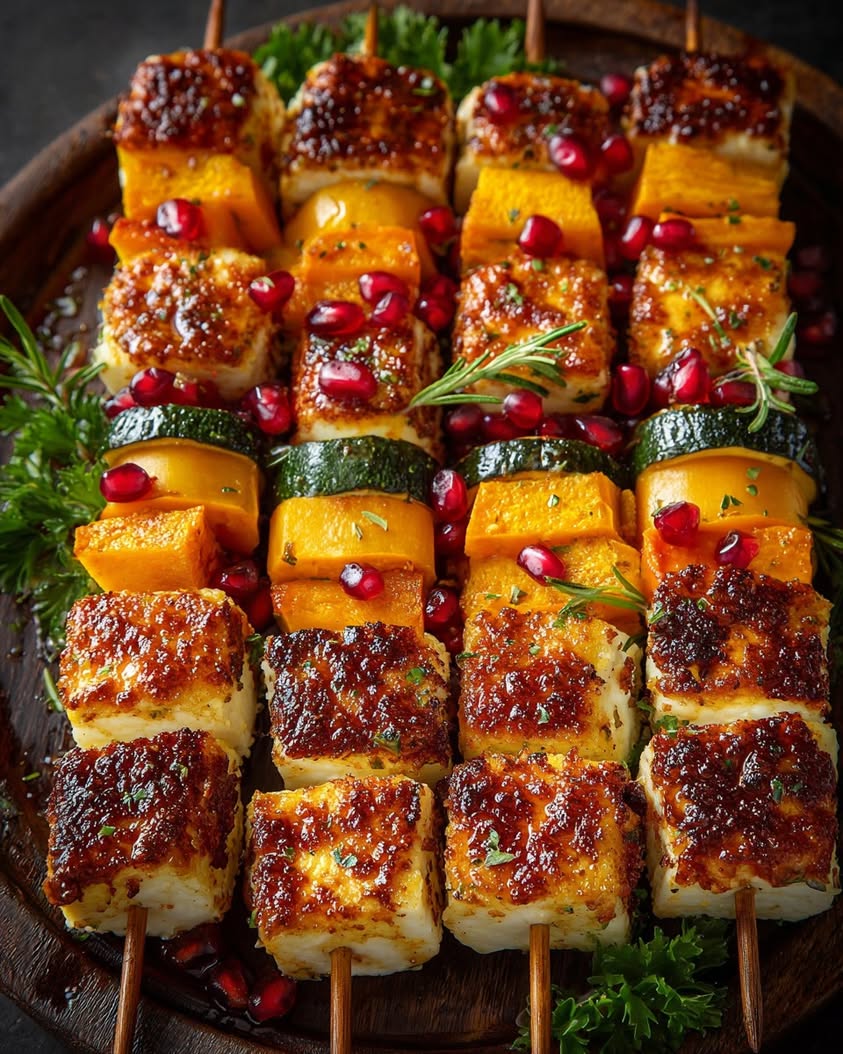
Maple-Glazed Halloumi & Butternut Squash Skewers: A Sweet and Savory Grilling Masterpiece
Imagine the perfect bite. You get a smoky, caramelized edge of sweet butternut squash, immediately followed by a warm, salty-squeaky piece of halloumi cheese, all coated in a sticky, aromatic maple glaze. This is the magic of Maple-Glazed Halloumi & Butternut Squash Skewers. Consequently, this recipe transforms simple, wholesome ingredients into a show-stopping dish that works equally well as a vibrant vegetarian main or a stunning party appetizer.
Furthermore, the beauty of these skewers lies in their brilliant contrast. The natural sugars in the squash caramelize beautifully over the grill or in your oven, creating a tender, almost creamy interior. Meanwhile, the halloumi holds its shape, developing a gorgeous golden-brown crust that offers that signature satisfying chew. Ultimately, the maple glaze acts as the unifying conductor, bringing the sweet, savory, and smoky notes into perfect harmony with a touch of warmth from cinnamon and a bright hint of apple cider vinegar.
Quick Recipe Highlights
- Flavor Profile: These skewers deliver a masterful balance. You experience the deep, earthy sweetness of roasted squash first, then the punchy saltiness of the halloumi, all tied together with a warm, spiced maple syrup glaze. The result is a complex, restaurant-quality taste that is surprisingly simple to achieve at home.
- Texture: This dish is a textural dream. The butternut squash becomes tender and slightly caramelized on the edges. Conversely, the halloumi cheese offers a firm, squeaky bite with a delightfully crispy exterior when cooked properly. The combination in one mouthful is incredibly satisfying and fun to eat.
- Aroma: As these Maple-Glazed Halloumi Squash Skewers cook, your kitchen will fill with an irresistible fragrance. You will smell the sweet, caramelizing maple syrup, the warm, comforting scent of cinnamon, and the savory, almost nutty aroma of the roasting squash and halloumi. It is an aroma that promises a delicious meal.
- Visual Appeal: These skewers are a feast for the eyes. The vibrant orange of the squash pops against the creamy white and golden-brown halloumi cubes. Finally, the glossy maple glaze makes everything shine, creating a dish that looks as impressive on a dinner plate as it does on a festive platter.
- Skill Level Needed: This is a beginner-friendly recipe. The techniques involve simple cubing, threading, and either grilling or broiling. There is no intricate knife work or complex sauce-making. Therefore, even novice cooks can confidently create this impressive dish with fantastic results.
- Special Equipment: You will need skewers. Wooden skewers require a 30-minute soak in water to prevent burning, while metal skewers are reusable and conduct heat. Otherwise, you only need a good baking sheet for oven cooking or a grill pan or outdoor grill. A simple brush for glazing is also helpful.
Recipe Overview
- Difficulty Level: We rate this recipe as easy. The steps are straightforward: chop, thread, glaze, and cook. There is no fussy technique or precise timing that can ruin the dish. However, paying attention to not overcooking the halloumi is the key skill to learn, making it perfect for building kitchen confidence.
- Category: This versatile dish fits multiple categories beautifully. It serves as a substantial vegetarian main course when paired with a grain salad or couscous. Alternatively, it makes a fantastic appetizer or side dish for barbecues and gatherings. You can even chop the cooked skewers into a hearty fall salad.
- Cuisine: These skewers are a modern fusion creation. They draw inspiration from Mediterranean cuisine through the use of halloumi cheese. Simultaneously, the maple glaze and squash are staples of North American autumn cooking. The result is a globally-inspired, contemporary dish that celebrates seasonal produce.
- Cost: This is a very cost-effective recipe, especially when butternut squash is in season. Halloumi can be a pricier ingredient, but a little goes a long way. The remaining ingredients—maple syrup, oil, spices—are pantry staples. Overall, you can create a restaurant-quality meal for a fraction of the cost.
- Season: This recipe is quintessential autumn and winter cooking. Butternut squash is at its peak sweetness during these cooler months. Furthermore, the warm spices in the glaze complement the cozy feeling of the season. Of course, you can enjoy these skewers year-round with great success.
- Occasion: These skewers are incredibly versatile for entertaining. They are perfect for casual weeknight dinners, festive holiday meals like Thanksgiving, backyard barbecues, or even elegant cocktail parties. Their visual appeal and crowd-pleasing flavor make them suitable for almost any event.
Why You’ll Love This Recipe
First and foremost, the taste and texture combination is utterly addictive. The Maple-Glazed Halloumi Squash Skewers offer a play of contrasts that keeps every bite interesting. You get the soft sweetness of the squash against the firm, salty cheese, all coated in a sticky-sweet glaze with a hint of spice. This balance of flavors is sophisticated yet deeply comforting. It is a dish that will have everyone at the table asking for the recipe after just one bite.
From a convenience standpoint, this recipe is a winner. The prep is minimal and mostly involves cubing vegetables and cheese, a task you can even do ahead of time. The cooking process is equally simple, whether you choose the grill for smoky flavor or the oven for ease. There is no need to monitor a complex sauce or worry about multiple pans. Essentially, you get maximum flavor payoff for minimal active kitchen time, making it a perfect solution for busy evenings.
Nutritionally, these skewers pack a powerful punch. Butternut squash is loaded with vitamin A, vitamin C, and fiber. Halloumi provides a good source of protein and calcium, making this a satisfying vegetarian option. While the maple glaze adds sugar, using a moderate amount and pairing it with these wholesome ingredients creates a balanced dish. You are serving a meal that feels indulgent but is fundamentally nourishing.
For social gatherings, these Maple-Glazed Halloumi & Butternut Squash Skewers are a guaranteed hit. They are naturally finger-friendly and easy to serve from a platter. Their vibrant colors make any table look more inviting. Moreover, they cater beautifully to vegetarians without feeling like an afterthought, often becoming the star of the show even for meat-eaters. They spark conversation and delight guests with their unique combination.
Finally, this recipe is accessible and cost-effective. The ingredients are easy to find in most supermarkets. Butternut squash is inexpensive, especially in season. While halloumi is a specialty cheese, one block goes a long way in this recipe. You likely already have the oil, maple syrup, and spices in your pantry. Therefore, you can create a gourmet-tasting meal without a gourmet budget, proving that eating well does not have to be complicated or expensive.
Historical Background and Cultural Significance
The story of this dish is a modern tale of culinary fusion. Individually, its components have deep roots. Halloumi cheese originates from Cyprus, where it has been made for centuries from a mix of goat’s and sheep’s milk. Its high melting point made it ideal for grilling and frying in the Mediterranean heat. Butternut squash, on the other hand, is a New World vegetable, cultivated by Indigenous peoples long before European colonization. Maple syrup is a uniquely North American treasure, first harvested and used by Indigenous communities in the northeastern woodlands.
Cultural significance emerges from how these elements combine. This recipe represents a contemporary, global approach to cooking where geographic and culinary boundaries blur. It respects tradition by using halloumi in its classic preparation—grilled. Simultaneously, it innovates by pairing it with non-traditional partners like squash and maple. This fusion reflects our modern, interconnected food culture where home cooks confidently mix ingredients and techniques from across the world to create something new and delicious.
The evolution of the recipe likely follows the rising popularity of halloumi in Western markets over the last two decades. As this “grilling cheese” became a supermarket staple, creative cooks began experimenting beyond simple pan-frying. The natural pairing with sweet elements like honey or fruit led to explorations with autumn produce. Consequently, the Maple-Glazed Halloumi Squash Skewers recipe was born from this experimentation, perfectly capturing the trend of vegetable-forward, flavor-packed vegetarian cooking that doesn’t sacrifice satisfaction.
Regional variations are already appearing, showcasing the recipe’s adaptability. In the American South, you might find a version with a bourbon-infused maple glaze. A Mediterranean twist could include adding cherry tomatoes and red onion to the skewers with an oregano-laced glaze. For a Middle Eastern flair, sumac and pomegranate molasses might replace the cinnamon and maple. This adaptability is a testament to the strong foundational concept: the irresistible pairing of salty, grillable cheese with sweet, caramelizable vegetables.
Ingredient Deep Dive
Halloumi Cheese: This semi-hard, brined cheese from Cyprus is the star. Traditionally made from sheep’s or goat’s milk, its unique protein structure allows it to hold its shape when heated, making it perfect for grilling or frying. It offers a salty, tangy flavor and a distinctive squeaky texture. Look for halloumi in the specialty cheese section. For the best results in your Maple-Glazed Halloumi Squash Skewers, pat the cubes dry before cooking to ensure a good sear. If you cannot find halloumi, a good substitute is paneer or extra-firm tofu, though the texture will differ.
Butternut Squash: This winter squash is prized for its sweet, nutty orange flesh and versatility. It is rich in beta-carotene, which the body converts to vitamin A, crucial for eye health and immunity. When selecting, choose a squash that feels heavy for its size with a firm, matte skin and no soft spots. To prepare for skewers, peel it thoroughly and cut into uniform one-inch cubes to ensure even cooking. You can substitute with other firm squash like acorn or sweet potato, though cooking times may vary slightly.
Pure Maple Syrup: The glaze’s base is an authentic North American product. Real maple syrup is boiled-down sap from maple trees, containing minerals like manganese and zinc. Avoid “pancake syrup,” which is primarily corn syrup and artificial flavor. The syrup’s complex caramel notes deepen when heated, creating a beautiful glaze. For a deeper flavor, use Grade A Dark Color syrup. As a glaze for the Halloumi Squash Skewers, it caramelizes on the hot surfaces, creating a sticky, flavorful coating that balances the cheese’s saltiness.
Apple Cider Vinegar: This ingredient is the glaze’s secret weapon. Its acidity cuts through the richness of the cheese and the sweetness of the maple and squash, preventing the dish from becoming cloying. It also helps tenderize the squash slightly. Always use raw, unfiltered apple cider vinegar with “the mother” for the best flavor and potential probiotic benefits. If you do not have it, white wine vinegar or lemon juice can work in a pinch, but will alter the flavor profile subtly.
Smoked Paprika & Cinnamon: These spices build depth and warmth. Smoked paprika adds a subtle, savory smokiness that mimics outdoor grilling, especially if you are using an oven. Cinnamon introduces a warm, sweet spice that complements the squash and maple perfectly, evoking the cozy feeling of fall. For the best flavor in your skewers, ensure your spices are fresh, not dusty or old. You can experiment with adding a pinch of cayenne for heat or ground cumin for an earthier note.
Common Mistakes to Avoid
- Not Soaking Wooden Skewers: This is a critical fire-prevention step. If you use wooden or bamboo skewers, you must soak them in water for at least 30 minutes before threading. Otherwise, they will char and potentially ignite under the broiler or on the grill. For best results, soak them while you prep your other ingredients.
- Cutting Ingredients Unevenly: Consistency is key for even cooking. If your butternut squash cubes are different sizes, the smaller pieces will burn before the larger ones are tender. Similarly, uneven halloumi cubes will cook at different rates. Take time to cut everything into uniform one-inch pieces.
- Overcrowding the Skewers: Threading the pieces too tightly together prevents hot air from circulating around each cube. Consequently, the ingredients will steam instead of caramelize, and you will miss out on those delicious browned edges. Leave a tiny bit of space between each piece on the skewer.
- Applying Glaze Too Early: If you brush the maple glaze on at the beginning of cooking, the high sugar content will cause it to burn before the squash is cooked through. Always apply the glaze during the last 5-7 minutes of cooking. This allows it to caramelize and stick without turning bitter.
- Overcooking the Halloumi: Halloumi can go from perfectly golden and soft to tough and rubbery in minutes. Watch it closely, especially under a broiler. It is done when it has deep golden-brown grill marks and has softened slightly but still holds its shape. Remove the skewers as soon as you see this.
- Using a Dull Knife on Squash: Butternut squash has tough skin and dense flesh. A dull knife is dangerous and will make the prep work frustrating. Use a sharp chef’s knife and a stable cutting board. Carefully slice off the top and bottom to create flat surfaces before peeling and cubing.
- Skipping the Preheating Step: Whether using an oven or grill, the cooking surface must be fully hot before adding the skewers. A properly preheated oven or grill ensures immediate searing, which locks in moisture and creates that desirable caramelized exterior. Do not rush this step.
- Neglecting to Dry the Halloumi: Halloumi is stored in brine, so its surface is often wet. Patting the cubes thoroughly dry with a paper towel before threading is essential. A dry surface will brown and crisp up beautifully, while a wet surface will steam and prevent proper searing.
Essential Techniques
Cubing Butternut Squash: Mastering this technique makes prep safe and efficient. First, use a sharp knife to slice off the stem and blossom ends to create stable bases. Stand the squash upright and carefully slice down to remove the skin. Then, cut it in half lengthwise and scoop out the seeds with a spoon. Finally, slice the flesh into planks, then batons, and finally into uniform one-inch cubes. Consistent size is non-negotiable for even roasting in your Maple-Glazed Halloumi Squash Skewers.
Threading Skewers for Success: How you assemble the skewers affects cooking. Alternate between squash and halloumi, but also consider the heat source. For grill grates, thread the pieces so they lay flat on one side. Leave a small gap between each piece to allow heat to penetrate all sides. Ensure the skewer tip goes through the center of each cube to prevent spinning. This technique ensures everything cooks evenly and gets those beautiful caramelized marks.
Glazing for Caramelization: The glazing technique maximizes flavor. Warm the glaze ingredients slightly so they combine into a smooth, brushable syrup. Use a silicone pastry brush for easy application. Apply the first coat during the last 5-7 minutes of cooking. Then, rotate the skewers and apply a second coat 2-3 minutes before they are done. This double-glazing method builds layers of flavor and creates that professional, glossy finish on your Halloumi Squash Skewers.
Grilling vs. Broiling: Understanding these two high-heat methods is crucial. Grilling over direct medium heat provides a smoky flavor and distinct char marks. Broiling uses overhead radiant heat in your oven, excellent for achieving a similar browned effect indoors. For broiling, place the skewers on a rack set in a baking sheet to allow air circulation. Watch closely, as broilers can vary in intensity. Both methods require you to turn the skewers halfway through for even coloring.
Pro Tips for Perfect Maple-Glazed Halloumi & Butternut Squash Skewers
First, par-cook the butternut squash if your cubes are on the larger side. Toss them in oil and roast at 400°F for 10-12 minutes before threading. This guarantees they will be perfectly tender by the time the halloumi is beautifully browned, preventing undercooked squash.
For deeper flavor, marinate the halloumi. While not traditional, a quick 15-minute soak in a mix of olive oil, lemon zest, and a crushed garlic clove can add another dimension. Pat it dry thoroughly before threading to ensure it still sears properly.
Add a textural contrast with a finishing sprinkle. After glazing and cooking, try a light garnish of chopped toasted pecans or walnuts, a drizzle of high-quality extra virgin olive oil, or a scattering of fresh pomegranate arils for a burst of juicy acidity.
Control the glaze consistency. If your glaze is too thin, simmer it for a minute or two to reduce and thicken slightly before brushing. If it is too thick and sticky, whisk in a teaspoon of warm water to make it more brushable.
Use two-zone heating if grilling. Create a hot direct heat zone for searing and a cooler indirect zone. Start the skewers over direct heat to get marks, then move them to indirect heat to finish cooking through without burning the glaze.
Let the skewers rest briefly. After removing them from the heat, let them sit for 2-3 minutes on the platter. This allows the halloumi to firm up slightly and the glaze to set, making them easier to handle and eat.
Variations and Adaptations
For regional twists, consider a Mediterranean variation. Add chunks of red onion, bell pepper, and cherry tomatoes to the skewers. Replace the cinnamon in the glaze with dried oregano and a squeeze of lemon. Serve with a side of tzatziki for dipping, transforming the dish entirely.
Seasonal adaptations are simple and rewarding. In summer, swap the butternut squash for zucchini or yellow summer squash. In spring, use thick asparagus spears cut into segments. For a winter holiday version, add chunks of peeled pear or apple to the skewers for extra sweetness and festive flair.
Dietary modifications are straightforward. For a vegan version, substitute the halloumi with extra-firm, pressed tofu or a store-bought vegan halloumi alternative. Ensure your maple syrup is vegan-friendly. The cooking method remains identical, producing delicious plant-based skewers.
Experiment with flavor variations in the glaze. Add a tablespoon of Dijon mustard for tang, a teaspoon of miso paste for umami depth, or a pinch of cayenne pepper for heat. You can also infuse the maple syrup with a sprig of fresh rosemary or thyme while warming it.
Consider texture modifications by adding other elements to the skewer. Include meaty mushrooms like cremini or oyster mushrooms for an earthy note. Alternatively, add a cube of crusty bread to soak up the glaze and become a crispy crouton on the stick.
For presentation alternatives, deconstruct the skewers. Roast the squash and pan-fry the halloumi separately, then toss them together in the warm glaze on a platter. This is an excellent option for larger crowds where skewering individual pieces is too time-consuming.
Serving and Presentation Guide
Plating techniques can elevate this simple dish. For individual servings, place two skewers diagonally across a warm plate or shallow bowl. Spoon any remaining glaze from the pan over the top. For a family-style presentation, arrange all skewers neatly on a long, rustic wooden board or a large white platter to let the colors shine.
Garnishing adds the final touch of freshness and texture. A sprinkle of flaky sea salt right before serving enhances all the flavors. Fresh herbs like chopped parsley, mint, or cilantro add a bright green contrast. A dusting of smoked paprika or sumac adds color and a flavor echo.
Traditional accompaniments keep the meal simple and balanced. Serve the Maple-Glazed Halloumi Squash Skewers over a bed of fluffy couscous, quinoa, or farro to catch any drippings. A simple green salad with a lemony vinaigrette cuts through the richness perfectly.
Modern serving suggestions lean into the appetizer or tapas style. Serve one skewer per person as a passed hors d’oeuvre with a small dish of garlic aioli or a spicy harissa yogurt for dipping. This makes them perfect for cocktail parties or festive gatherings.
Temperature considerations are important. Halloumi is best served warm, when its texture is soft and slightly yielding. Serve the skewers immediately after cooking for the optimal experience. If they must wait, keep them in a single layer on a warm platter, lightly tented with foil.
Portion control is easy with skewers. As a main course, plan for 2-3 skewers per person. As an appetizer or side, one skewer is sufficient. This built-in portioning makes planning for guests simple and helps manage serving sizes effortlessly.
Wine and Beverage Pairing
Wine pairings should complement the sweet, salty, and savory notes. A crisp, unoaked white wine like a New Zealand Sauvignon Blanc or a Spanish Albariño works beautifully. Their bright acidity cuts through the richness of the cheese and balances the sweetness of the glaze. For red wine lovers, a light, fruity Pinot Noir with low tannins is an excellent choice that will not overpower the dish.
Non-alcoholic alternatives can be just as sophisticated. A sparkling apple cider offers autumnal sweetness and effervescence. For a more complex option, try a ginger beer with a squeeze of lime, as the spicy ginger complements the warm spices in the glaze. Iced hibiscus tea also provides a tart, refreshing contrast.
While not traditional, coffee or tea pairings can work for a brunch setting. A medium-roast coffee with notes of caramel or nut will echo the flavors in the dish. A cup of spiced chai tea would harmonize wonderfully with the cinnamon and maple in the Maple-Glazed Halloumi Squash Skewers, creating a cozy, complete experience.
Temperature is crucial for beverages. Serve white wines and non-alcoholic sparklers well-chilled. Red wines should be slightly cooler than room temperature. Iced teas and sodas need to be cold to refresh the palate between the rich, warm bites of the skewers.
Serving suggestions include offering a variety. For a dinner party, set out a bottle of the recommended white wine and a carafe of a signature non-alcoholic drink, like sparkling water infused with apple and cinnamon sticks. This ensures all guests have a perfect pairing option.
Storage and Shelf Life
Storage methods for leftovers are simple but important. Carefully slide the cooked components off the skewers into an airtight container. Store the squash and halloumi together; they will keep for up to 3 days in the refrigerator. Do not store them on the skewers, as the wood or metal can impart off-flavors.
Temperature requirements are standard for cooked food. Always refrigerate leftovers within two hours of cooking. The ideal refrigerator temperature is below 40°F. You can enjoy the leftovers cold, but reheating is recommended for the best texture, especially for the halloumi.
Container recommendations include glass or BPA-free plastic with a tight-sealing lid. This prevents the halloumi from absorbing other odors from your fridge. If possible, store the components in a single layer to prevent them from becoming soggy.
Signs of spoilage are easy to spot. Discard the leftovers if you notice any sour or off odors, significant sliminess on the surface of the cheese or squash, or any visible mold. The halloumi may become excessively hard or crumbly when past its prime.
Reheating instructions are key to reviving the dish. The oven or toaster oven is best. Spread the pieces on a baking sheet and warm at 350°F for 5-10 minutes until heated through. Avoid the microwave, as it will make the halloumi rubbery and the squash mushy.
Freezing is not recommended for this recipe. The texture of both the cooked squash and the halloumi will degrade significantly upon thawing, becoming watery and mealy. It is best enjoyed fresh or refrigerated for a few days.
Make Ahead Strategies
Your prep timeline can be spread over two days. The day before, peel and cube the butternut squash. Store the raw cubes in an airtight container in the refrigerator. You can also cube the halloumi, pat it dry, and store it separately on a paper towel-lined container in the fridge. Make the glaze and keep it in a jar at room temperature.
Storage between steps is straightforward. Keep pre-cut ingredients chilled until you are ready to cook. If you thread the skewers more than an hour in advance, cover them tightly with plastic wrap and refrigerate. Do not apply the glaze until you are ready to cook.
Assess the quality impact of make-ahead steps. Pre-cutting the squash may lead to minimal moisture loss, but it does not affect the final roasted texture. Pre-cubing the halloumi is fine, but ensure it is very dry before cooking. The glaze can actually benefit from sitting, allowing the flavors to meld.
Assembly tips for efficiency include setting up a skewering station. Lay all your pre-cut ingredients and skewers out on the counter. Thread them in an assembly-line fashion. This makes the final step before cooking quick and easy, even when you have prepped everything in advance.
Reheating guidelines for fully cooked make-ahead skewers are specific. If you cook them completely ahead of time, let them cool, then refrigerate. To reheat, place them on a baking sheet in a 375°F oven for 8-12 minutes until hot throughout. You may want to brush with a little fresh glaze after reheating.
Remember to add fresh elements after reheating. A final sprinkle of fresh herbs, a drizzle of good olive oil, or a squeeze of lemon juice added just before serving will make make-ahead skewers taste freshly prepared and bright.
Scaling Instructions
Halving the recipe is simple for smaller households. Use half a small butternut squash and 4 ounces of halloumi. Halve all other glaze ingredients precisely. Cooking time may reduce slightly, so check for doneness a few minutes early. You will likely need fewer skewers, making this a perfect dinner for two.
Doubling or tripling for a crowd requires some adjustments. Use multiple baking sheets if oven-cooking, and rotate them halfway through. On the grill, cook in batches to avoid overcrowding. Mix the glaze in a larger bowl or measuring cup. Consider setting up a skewer assembly line with helpers to speed up the threading process.
Equipment adjustments are necessary when scaling up. You will need more skewers and likely more than one baking sheet. If using the oven, ensure your racks are positioned to allow for proper air circulation between multiple sheets. For large batches, you may need to use both the grill and the oven simultaneously.
Timing modifications are minimal when scaling. The actual cook time per batch remains the same. The total active time will increase with more skewers to thread and possibly multiple batches to cook. Factor this into your party planning timeline to ensure everything is hot and ready to serve together.
Storage considerations change with volume. If making a large batch ahead, store the assembled, uncooked skewers in the refrigerator on baking sheets covered tightly with plastic wrap. Do not stack them, or the ingredients will steam and become soggy. Cook in batches as needed.
Nutritional Deep Dive
A macro breakdown for one serving shows a good balance. You get a moderate amount of protein from the halloumi, primarily from healthy fats due to the cheese and olive oil, and complex carbohydrates from the butternut squash. The maple glaze adds simple sugars, so the dish is best enjoyed as part of a balanced meal.
The micronutrient analysis is impressive. Butternut squash is exceptionally high in Vitamin A (from beta-carotene) and a good source of Vitamin C, potassium, and fiber. Halloumi provides calcium for bone health and phosphorus. Together, they offer a spectrum of vitamins and minerals that support immunity, vision, and overall cellular function.
Health benefits are tied to these nutrients. The high antioxidant content from the squash helps combat inflammation. The fiber promotes digestive health and satiety. The calcium and protein support muscle and bone maintenance. This makes the Maple-Glazed Halloumi Squash Skewers a nutrient-dense choice that supports overall wellness.
Dietary considerations include the dish being naturally vegetarian and gluten-free. It is not suitable for a strict vegan, dairy-free, or low-sodium diet due to the halloumi cheese. However, with the substitutions mentioned earlier, it can be adapted to fit many dietary needs without sacrificing the core concept.
Portion analysis is helpful for mindful eating. One skewer as an appetizer is a light, flavorful start to a meal. Two to three skewers as a main, paired with a whole grain and a large salad, creates a filling, balanced plate. The built-in portion control of skewers helps prevent overeating.
For weight management, focus on the portion of glaze. You can lightly brush the skewers rather than drench them to reduce added sugar. Pairing them with a large volume of non-starchy vegetables, like a big green salad, increases fullness without adding significant calories, making it a satisfying meal that fits into a balanced plan.
Dietary Adaptations
For a gluten-free adaptation, this recipe is naturally compliant. Ensure that any pre-made spice blends you use in the glaze are certified gluten-free, as cross-contamination can sometimes occur. All other core ingredients—squash, halloumi, maple syrup, oil—are inherently gluten-free.
A dairy-free version requires replacing the halloumi. The best substitute is extra-firm tofu that has been pressed for at least 30 minutes to remove excess water. Marinate it in a salty brine or tamari to mimic halloumi’s saltiness. Another option is a store-bought vegan “grilling cheese” if available.
Creating a vegan version combines the dairy-free swap with other checks. Use pressed, marinated tofu or a commercial vegan halloumi. Confirm your maple syrup is vegan (most are, but some processing methods may use animal-derived filters). The result is a plant-based skewer with a similar texture contrast.
For a low-carb or keto adaptation, replace the butternut squash. Use low-carb vegetables like zucchini, bell peppers, or mushrooms. The maple syrup must be replaced with a keto-friendly sweetener like monk fruit or erythritol that can be cooked into a glaze. Be mindful of the carb count in the halloumi itself.
A Paleo adaptation is tricky due to the dairy in halloumi. Omit the cheese and use chunks of chicken, shrimp, or a compliant sausage instead. Ensure the maple syrup is 100% pure and the vinegar is apple cider vinegar. This turns the dish into a protein-focused, Paleo-friendly skewer.
For a Low-FODMAP diet, modify carefully. Butternut squash is low-FODMAP in servings of 1/3 cup cubed per meal, so adjust the portion size on the skewer. Halloumi is typically low-FODMAP as it is low in lactose. Use maple syrup (low-FODMAP in 2 tbsp servings) and omit the garlic if any was added.
Troubleshooting Guide
If your squash is undercooked but the halloumi is done, you have a size inconsistency. Next time, cut the squash smaller or par-cook it. For now, carefully slide the halloumi off the skewers onto a plate. Return the squash pieces to the heat on a baking sheet to finish roasting until tender.
If the glaze is burning, the heat is too high or you applied it too early. Immediately move the skewers to a cooler part of the grill or a lower oven rack. Brush off any blackened glaze if possible. For the next batch, apply the glaze only in the last few minutes of cooking.
If the halloumi is not browning, the surface was likely wet or the heat was insufficient. Ensure you pat the cubes very dry before threading. Also, make sure your grill, broiler, or oven is fully preheated. A cast-iron grill pan on the stovetop can also provide an excellent sear if other methods fail.
If the skewers are sticking, you did not oil the grill grates or baking sheet adequately. For grilling, ensure the grates are clean, hot, and well-oiled before adding the food. For the oven, use parchment paper or a silicone baking mat on your baking sheet to prevent sticking without excess oil.
If the finished dish tastes too sweet, balance it with acidity. Serve with a wedge of lemon to squeeze over the top, or add a dollop of tangy Greek yogurt or sour cream on the side. Next time, increase the apple cider vinegar in the glaze by half a teaspoon to cut the sweetness.
If the skewers fall apart during turning, the ingredients may have been threaded too loosely or the squash may be overcooked and soft. Use a sturdy spatula or tongs to support the full length of the skewer when turning. For very soft squash, be extra gentle and consider cooking at a slightly lower temperature for longer.
Recipe Success Stories
Community feedback on this recipe consistently highlights its crowd-pleasing nature. Many home cooks report that these skewers have become their go-to vegetarian option for mixed-diet gatherings, often surprising meat-eaters with how satisfying they are. Several have shared photos of beautifully charred skewers from their backyard barbecues, proving the recipe’s reliability{“success”:true,”message”:”Recipe created successfully”,”post_id”:9051,”tasty_recipe_id”:9051,”shortcode”:”“}

I’m Billy, a classically trained culinary school graduate from The Culinary Institute of America with over 12 years in the restaurant industry and over 19 years of cooking experience.