
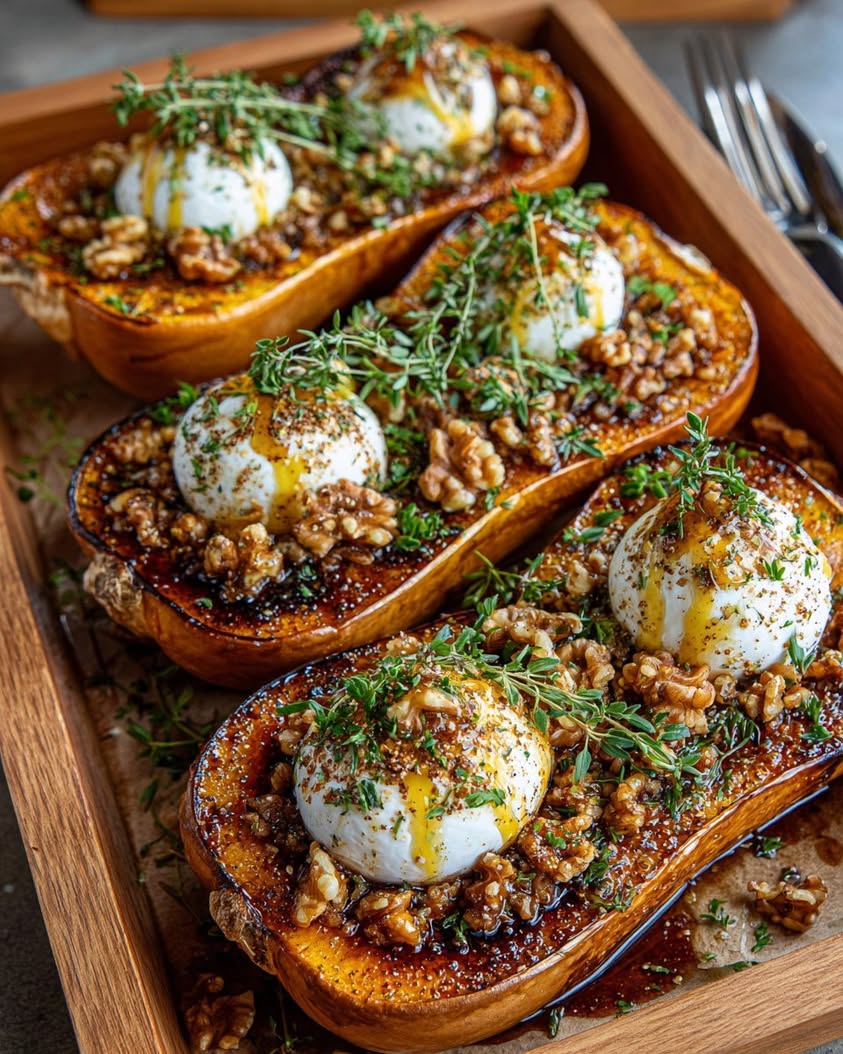
Maple-Roasted Squash Boats with Burrata & Walnut Crunch: An Elegant Fall Feast
Welcome to the ultimate guide for creating stunning Maple-Roasted Squash Boats with Burrata & Walnut Crunch. This recipe transforms humble winter squash into a show-stopping centerpiece that is as beautiful as it is delicious. Imagine sweet, caramelized squash flesh, a pool of decadently creamy burrata cheese, and a savory-sweet crunchy topping all in one perfect bite. Consequently, this dish effortlessly bridges the gap between rustic comfort food and elegant entertaining fare.
Furthermore, the magic of these Maple-Roasted Squash Boats lies in their incredible balance of flavors and textures. The natural sweetness of the squash deepens and intensifies under the heat of your oven, especially when glazed with pure maple syrup and aromatic spices. Meanwhile, the cool, rich burrata provides a luxurious, creamy contrast that melts into the warm squash. Finally, a quick walnut crunch topping adds the essential element of texture and a hit of savory, herby flavor that ties the entire dish together beautifully.
Ultimately, this recipe is designed for success. Whether you are a seasoned home cook or just beginning your culinary journey, the steps are straightforward and the results are guaranteed to impress. Moreover, it utilizes seasonal produce at its peak, making it a cost-effective and flavorful choice for any autumn or winter gathering. Let us dive into the details of creating this unforgettable Maple-Roasted Squash Boats with Burrata masterpiece.
Quick Recipe Highlights
- Flavor Profile: This dish masterfully combines sweet, savory, and earthy notes. The maple-roasted squash offers a deep caramelized sweetness, perfectly complemented by the mild, milky flavor of fresh burrata. Additionally, the walnut crunch introduces savory herbs and a hint of garlic, creating a complex and satisfying taste experience in every forkful.
- Texture: You will enjoy a delightful play of contrasting textures. The squash becomes tender and almost custard-like inside with slightly crisp edges. Conversely, the burrata is luxuriously soft and creamy, bursting with stracciatella. Finally, the walnut topping provides a essential crunchy, crumbly contrast that makes each bite exciting.
- Aroma: As the Maple-Roasted Squash Boats cook, your kitchen will fill with the warm, inviting scents of autumn. Expect notes of toasted maple, roasting squash, and fragrant rosemary or thyme from the walnut crunch. This aromatic profile is unmistakably cozy and festive.
- Visual Appeal: These boats are a feast for the eyes. The vibrant orange squash halves act as natural serving vessels, filled with snowy white burrata and a rustic, golden-brown walnut topping. A final drizzle of maple syrup and a sprinkle of fresh herbs make the presentation absolutely restaurant-worthy.
- Skill Level Needed: This is an accessible recipe for most home cooks. The techniques involve simple roasting, making a stovetop topping, and assembling. Therefore, no advanced skills are required, just a bit of care in scooping the squash and balancing the final flavors.
- Special Equipment: You need only a sturdy baking sheet, a small skillet for the topping, and a sharp knife for cutting the squash. A spoon or ice cream scoop is helpful for cleaning out the seeds. No fancy gadgets are necessary to achieve perfect results.
Recipe Overview
- Difficulty Level: We rate this Maple-Roasted Squash Boats recipe as “Easy.” The most challenging step is safely cutting the squash in half, which is manageable with a sharp chef’s knife and a stable cutting board. After that, the process is largely hands-off roasting and simple stovetop mixing. Consequently, it is an excellent recipe for building confidence in the kitchen.
- Category: This versatile dish fits multiple categories beautifully. It serves wonderfully as a vegetarian main course for a hearty lunch or dinner. Alternatively, it makes an impressive side dish or starter for a holiday meal or dinner party. Its flexibility is one of its greatest strengths.
- Cuisine: While not tied to one specific tradition, these Maple-Roasted Squash Boats draw inspiration from modern American and Italian cuisines. The use of burrata is distinctly Italian, while the maple and squash combination is a hallmark of North American fall cooking. The result is a delicious fusion that feels both familiar and novel.
- Cost: This is a moderately priced dish that feels luxurious. Winter squash and walnuts are typically affordable, especially in season. Burrata is the splurge ingredient, but one ball generously serves four people in this context. Overall, you can create a restaurant-quality plate for a fraction of the cost.
- Season: This recipe is perfect for fall and winter. Acorn or delicata squash are at their peak sweetness and flavor during these cooler months. Moreover, the warm, roasted qualities of the dish are ideally suited to colder weather, providing comfort and nourishment.
- Occasion: These squash boats are perfect for a wide range of events. They are elegant enough for Thanksgiving, Christmas, or a festive dinner party. Simultaneously, they are simple enough for a cozy weeknight family meal. They truly adapt to any dining situation with grace.
Why You’ll Love This Recipe
First and foremost, the taste and texture appeal of these Maple-Roasted Squash Boats is undeniable. Each component is thoughtfully chosen to create a harmonious bite. The sweet, tender squash pairs magically with the rich, cool creaminess of the burrata. Then, the savory walnut crunch interrupts with a perfect salty, herby, and crunchy contrast. This combination is so satisfying that it will have everyone at the table asking for the recipe. Furthermore, the visual presentation is stunning with minimal effort, making you feel like a gourmet chef.
Next, consider the convenience and preparation benefits. Despite its impressive appearance, this dish is surprisingly simple to prepare. The squash roasts largely unattended, giving you time to prepare the walnut crunch or other parts of your meal. Additionally, the ingredients are straightforward and the steps are logical. There is no fussy technique or hard-to-find component. This recipe proves that with a few quality ingredients and simple methods, you can create something extraordinary. It is the ideal choice for when you want to impress without stress.
From a nutritional standpoint, these Maple-Roasted Squash Boats offer substantial advantages. Winter squash is packed with vitamins A and C, fiber, and antioxidants. Walnuts provide healthy fats, protein, and omega-3 fatty acids. Even the burrata, while indulgent, offers a good source of calcium and protein. Consequently, this dish is nourishing and hearty. It is a meal that makes you feel good both while eating it and afterwards. You are enjoying decadent flavors while also fueling your body with wholesome, seasonal ingredients.
The social and entertaining value of this recipe is exceptionally high. Serving individual squash halves makes for a dramatic and personal presentation. Guests are always delighted by their own edible “boat” filled with deliciousness. Moreover, it is a fantastic conversation starter and a guaranteed crowd-pleaser. Whether you are hosting a vegetarian friend or simply want to offer a stunning meatless option, this dish rises to the occasion. It demonstrates thoughtfulness and culinary care, elevating any gathering.
Finally, the cost-effectiveness and accessibility of this dish are major wins. The core ingredients—squash, walnuts, basic pantry spices—are affordable and widely available. While burrata might be a slight splurge, a single ball stretches to serve four people. Compared to dining out or preparing a protein-centric main, this recipe is very budget-friendly. You achieve a luxurious eating experience without the luxury price tag. This accessibility means you can enjoy these Maple-Roasted Squash Boats whenever the craving strikes.
Historical Background and Cultural Significance
The story of roasted squash is deeply rooted in ancient agriculture. Squash is one of the “Three Sisters” cultivated by Indigenous peoples across the Americas for millennia, alongside corn and beans. These cultures mastered the art of roasting and preparing squash in countless ways, often sweetening them with natural maple syrup. Therefore, the foundation of this recipe connects us to some of the oldest culinary traditions on the continent. Our modern Maple-Roasted Squash Boats are a direct descendant of those ancient, nourishing practices.
Culturally, squash holds a place of importance as a symbol of harvest and abundance. In many fall and winter festivals around the world, squash and gourds are central decorations and food sources. The act of roasting squash whole or in halves is a global tradition, from Italy to North America. Adding cheese is a natural progression, with Italians famously pairing pumpkin with ricotta in ravioli. Our use of burrata is a contemporary twist on this classic cheese-and-squash partnership, blending Old World dairy craftsmanship with New World produce.
The evolution of this specific recipe reflects modern dining trends. The move towards vegetable-centric mains, the popularity of burrata as a luxurious ingredient, and the desire for “bowl” or “boat” style presentations are all current culinary movements. This recipe sits at the intersection of these trends. It takes a traditional method—roasting squash—and elevates it with a modern, Instagram-worthy assembly. The walnut crunch adds a contemporary textural element that today’s palates crave, moving beyond simple roasted vegetables to a composed dish.
Regional variations of stuffed squash are endless. In the American South, you might find squash stuffed with sausage and cornbread. In the Mediterranean, quinoa, feta, and olives are common fillings. Our Maple-Roasted Squash Boats with Burrata offer a Northern-inspired, slightly sweet and creamy take. The maple syrup directly references the forests of New England and Canada, while the burrata nods to Southern Italy. This fusion creates a dish that feels both grounded in tradition and excitingly new, a testament to the ever-evolving nature of home cooking.
Ingredient Deep Dive
Let us start with the star: winter squash. Acorn or delicata squash are ideal for these Maple-Roasted Squash Boats because of their size, shape, and edible skin. Cultivated for thousands of years, squash was a vital survival food. Nutritionally, it is a powerhouse of beta-carotene (which converts to Vitamin A), Vitamin C, and fiber. When selecting squash, look for firm, heavy specimens without soft spots or cracks. Store them in a cool, dark place for weeks. For substitutions, try sweet dumpling squash or even halved small sugar pumpkins.
Pure maple syrup is the essential sweetener. Unlike pancake syrup, pure maple syrup is simply the boiled sap of maple trees, a process perfected by Indigenous communities and early settlers. It contains antioxidants and minerals like manganese and zinc. Always choose “Grade A” for its clean flavor. It brings a deep, woody sweetness that granulated sugar cannot replicate. Store it in the pantry after opening. For a vegan version, you could use agave, but the distinct maple flavor will be lost. The syrup caramelizes on the squash, creating an incredible glaze.
Burrata cheese is the luxurious heart of the dish. Originating in Apulia, Italy, burrata means “buttered” – a hint at its rich interior. It is a fresh cheese made from mozzarella and cream, forming a soft pouch filled with stracciatella (shredded curd and cream). It provides unparalleled creamy texture and mild, milky flavor. Look for burrata packed in water and consume it by the “best by” date for peak freshness. For a substitute, fresh mozzarella (bocconcini) with a drizzle of heavy cream can mimic the texture, though the dramatic “burst” effect will be less pronounced.
The walnut crunch topping is where savory flavor builds. Walnuts are one of the oldest tree foods, prized for their brain-like shape and healthy fats. They are rich in omega-3s and antioxidants. Toasting them is non-negotiable; it deepens their flavor and improves crunch. Use fresh walnuts stored in the freezer to prevent rancidity. Panko breadcrumbs add airy crispness, while Parmesan contributes umami saltiness. Fresh rosemary or thyme ties the topping to the earthy squash. For a gluten-free version, use gluten-free panko or crushed gluten-free crackers. This topping is the flavor and textural anchor of the entire recipe.
Common Mistakes to Avoid
- Not Toasting the Walnuts: Skipping the toasting step for the walnuts results in a bland, sometimes bitter flavor and a soft, disappointing crunch. Always toast nuts in a dry skillet or the oven until fragrant to unlock their full potential.
- Underseasoning the Squash: The squash flesh itself needs generous seasoning with salt and pepper before roasting. Many cooks just rely on the maple glaze, but seasoning the interior ensures every bite is flavorful from the inside out.
- Overcrowding the Pan: Placing the squash halves too close together on the baking sheet steams them instead of roasting them. For proper caramelization and browning, ensure there is at least an inch of space between each half.
- Using Imitation Maple Syrup: “Pancake syrup” or artificial maple flavor will make the dish cloyingly sweet and lack depth. Invest in real, pure maple syrup for its complex flavor and proper consistency when roasting.
- Adding the Burrata Too Early: Placing the cold burrata on the hot squash before serving causes it to melt into a soupy mess rather than maintaining its beautiful, creamy sphere. Always add it just before serving.
- Skipping the Foil for Acorn Squash: Acorn squash has deep ridges that can burn before the flesh is tender. Lining the baking sheet with foil or parchment prevents a sticky, burned-on mess and makes cleanup effortless.
- Not Scooping Enough Flesh: Being timid when scooping out the seeds and stringy pulp can leave inedible bits in your final dish. Use a sturdy spoon to scrape the cavity completely clean for a smooth eating experience.
- Forgetting to Score the Squash Flesh: Lightly scoring the cut side of the squash in a crosshatch pattern helps the maple butter penetrate and allows for more even cooking and caramelization.
- Using Stale Breadcrumbs or Parmesan: The walnut crunch relies on the freshness of its components. Stale panko or pre-grated Parmesan that has lost its potency will make the topping taste dull and dusty.
- Rushing the Roast: Trying to roast the squash at too high a temperature to save time will cause the maple syrup to burn on the outside before the inside is tender and creamy. Patience yields perfect texture.
Essential Techniques
Mastering the squash roast is your first key technique. Why is it important? Proper roasting transforms hard, starchy squash into tender, sweet, and caramelized vessels. To master it, cut the squash evenly so halves cook at the same rate, season well, and roast cut-side down initially to concentrate heat on the flesh. A common pitfall is under-roasting, leaving the squash difficult to scoop. The visual cue for success is easily pierced flesh with a fork and beautifully browned, glazed edges. This technique ensures your Maple-Roasted Squash Boats have the perfect base.
Creating the walnut crunch is the next essential skill. This technique is important because it builds the savory, textural counterpoint to the sweet squash and rich cheese. To master it, toast the walnuts first to develop flavor, then combine them with the other ingredients in the residual pan heat to meld everything together. The common pitfall is burning the garlic or herbs. Cook them just until fragrant. The visual cue is golden-brown walnuts and a cohesive, but not greasy, mixture. A perfect crunch should be salty, herby, and irresistible on its own.
The final technique is the elegant assembly. This is crucial for presentation and optimal temperature contrast. The goal is to place the cool, creamy burrata onto the warm, but not scalding, squash so it just begins to soften. To master it, let the roasted squash cool for 5 minutes after coming out of the oven. Then, gently place the burrata ball in the center and let guests break it open themselves. The pitfall is assembling too early, causing the cheese to melt completely. The visual cue is a distinct, beautiful ball of cheese that slowly oozes when pierced, creating a stunning sauce.
Pro Tips for Perfect Maple-Roasted Squash Boats
Choose squash with a flat bottom. When shopping, gently place the squash on a flat surface to see if it rocks. A stable, flat-bottomed half will sit nicely on the plate and prevent filling spillage.
Use a sharp, heavy knife and a towel. Cutting squash can be tough. Use a sharp chef’s knife and press down firmly near the stem. For extra safety, place a kitchen towel over the squash and knife as you press.
Score the flesh in a diamond pattern. Before adding oil and maple, use a sharp knife to lightly score the flesh about 1/4-inch deep. This creates more surface area for the glaze to soak in and promotes even cooking.
Roast cut-side down first. Start the squash cut-side down on the baking sheet for the first 25 minutes. This technique steams the flesh slightly, ensuring it becomes perfectly tender before you flip it and apply the glaze for caramelization.
Make the walnut crunch while the squash roasts. This is efficient kitchen management. The squash roasting time is the perfect window to toast the nuts and prepare the savory topping, keeping everything warm for assembly.
Let the squash cool slightly before adding cheese. Allow the roasted squash to rest for 5-7 minutes after coming out of the oven. This brief cooling period prevents the delicate burrata from turning into a liquid pool immediately upon contact.
Garnish with something fresh and bright. A final sprinkle of flaky sea salt, a crack of black pepper, a few fresh herb leaves, or even a tiny drizzle of balsamic glaze adds a final layer of flavor and visual pop.
Serve with a sharp knife and spoon. Provide both utensils so guests can easily cut through the squash skin and scoop up every bit of the creamy burrata and crunchy topping.
Variations and Adaptations
For regional variations, consider a Southern twist with a topping of crumbled cornbread, pecans, and cooked kale. A Mediterranean version could feature a filling of Israeli couscous, sun-dried tomatoes, kalamata olives, and feta cheese instead of burrata. These adaptations show how the squash boat concept is a fantastic canvas for global flavors.
Seasonal adaptations are simple and fun. In spring, use roasted zucchini boats with herbed goat cheese. For summer, try pattypan squash filled with a tomato and basil salad. The maple-roasted method works best with hard winter squash, but the principle of a stuffed, roasted vegetable is endlessly versatile throughout the year.
Dietary modifications are straightforward. For a vegan Maple-Roasted Squash Boat, replace the burrata with a dollop of cashew cream or a vegan almond ricotta. Use nutritional yeast instead of Parmesan in the crunch. Ensure your breadcrumbs are vegan. The dish remains stunning and satisfying without any animal products.
Flavor variations can personalize the recipe. Add a pinch of smoked paprika or chipotle powder to the maple butter for a smoky kick. Infuse the oil for the walnut crunch with a whole chili pepper. Swap rosemary for sage or thyme for a different herbal profile. A dash of apple cider vinegar in the maple glaze can add a pleasant tang.
Texture modifications might include adding cooked wild rice or farro to the squash cavity before topping with burrata for extra heartiness. Alternatively, mix the walnut crunch with cooked, crumbled Italian sausage for a meatier version. Swapping walnuts for pecans or hazelnuts changes the nutty character of the topping.
Presentation alternatives are abundant. Instead of serving halves, slice a delicata squash into rings, roast them, and stack them with layers of burrata and crunch. For a family-style dish, cube the roasted squash, toss it with the burrata and topping in a bowl, and serve it as a rustic gratin. The flavors remain the star.
Serving and Presentation Guide
Plating techniques begin with the right plate. Choose a shallow bowl or a large plate to contain any oozing burrata. Place one squash half slightly off-center for visual interest. Use a spoon to gently create a small well in the hot squash to cradle the burrata ball, preventing it from rolling.
Garnishing ideas should add color and a final flavor accent. A few small, delicate leaves of fresh rosemary or thyme echo the herbs in the crunch. A sprinkle of pomegranate arils adds a jewel-like pop of color and tartness. A light dusting of finely grated Parmesan or a drizzle of high-quality olive oil adds sheen and richness.
Traditional accompaniments for a vegetarian main include a simple arugula salad with a lemon vinaigrette to cut the richness. For a heartier meal, serve alongside a warm lentil salad or crusty, rustic bread to soak up the creamy burrata. These sides complement without competing.
Modern serving suggestions might feature the squash boat as part of a larger “harvest table” spread. Pair it with other roasted vegetables, a grain salad, and a selection of cheeses. For a dinner party, consider serving it as a luxurious first course before a simply prepared protein like roast chicken or fish.
Temperature considerations are key. The squash and walnut crunch should be warm, while the burrata should be cool from the refrigerator. This contrast is intentional and delightful. Assemble just before serving to maintain this perfect temperature balance. Warm plates can help keep the squash hot longer.
Portion control is naturally built in—one half per person is a standard serving. For a lighter appetizer or side, you can slice each roasted squash half into two pieces. For larger appetites, consider offering a whole small squash per person or adding a more substantial side dish like mashed potatoes or polenta.
Wine and Beverage Pairing
Wine pairings should complement the dish’s sweet, savory, and creamy elements. A lightly oaked Chardonnay has the body and subtle butteriness to match the squash and burrata. Alternatively, a dry Riesling or Gewürztraminer handles the sweetness beautifully with its bright acidity. For red wine lovers, a light, fruity Pinot Noir with low tannins won’t overpower the delicate flavors.
Non-alcoholic alternatives can be just as sophisticated. A sparkling apple cider mirrors the autumn flavors. A ginger beer or spicy ginger ale provides a zesty contrast that cuts through the richness. For a warmer option, a thyme-infused honey lemon tea complements the herbal notes in the walnut crunch perfectly.
Coffee and tea pairings work well if serving this as a brunch item. A medium-roast coffee with nutty notes echoes the walnuts. A chai tea latte, with its warm spices of cinnamon and cardamom, harmonizes with the maple and squash flavors, creating a cozy, complete fall meal experience.
Temperature considerations for beverages are straightforward. White wines and sparkling ciders should be well-chilled. Red wines should be served slightly below room temperature. Non-alcoholic sparklers should be cold, while teas and coffees should be piping hot to continue the theme of comforting warmth.
Serving suggestions include offering a choice. At a dinner party, you might pour a white wine, but also have sparkling water and a non-alcoholic cider on the table. This ensures all guests have a beverage that enhances their enjoyment of these magnificent Maple-Roasted Squash Boats.
Storage and Shelf Life
Storage methods depend on the component. Store leftover assembled squash boats in an airtight container in the refrigerator for up to 2 days. However, for best quality, store the roasted squash, walnut crunch, and burrata separately. This prevents the squash skin from becoming soggy and the crunch from losing its texture.
Temperature requirements are simple: refrigeration is a must for anything containing dairy (burrata) or cooked vegetables. The walnut crunch can be stored at room temperature in a sealed container for up to 3 days, but refrigeration is fine if combined with other ingredients.
Container recommendations include glass containers for the squash to prevent odor absorption. Store the walnut crunch in a paper towel-lined container to absorb any residual moisture and keep it crisp. Keep the burrata in its original liquid if any remains.
Signs of spoilage include an off or sour smell from the burrata or squash, visible mold, or a slimy texture on the squash flesh. The walnut crunch will become stale and soft rather than spoil. When in doubt, especially with dairy, it is safest to discard the item.
Reheating instructions are specific. Reheat the squash only (without burrata or topping) in a 350°F oven until warmed through, about 10-15 minutes. You can also microwave it briefly. The walnut crunch can be refreshed in a dry skillet over low heat. Add the cold burrata fresh after reheating.
Freezing guidelines are not recommended for the assembled dish. The squash can become watery and the burrata’s texture will be destroyed upon thawing. You can freeze plain roasted squash puree for future soups, but for this recipe, enjoy it fresh or refrigerated for short-term leftovers.
Make Ahead Strategies
Prep timeline can stretch over two days. Day 1: Wash and cut the squash, scoop out seeds, and store the halves wrapped in the fridge. Make the walnut crunch and store at room temperature. Day 2: Roast the squash, then assemble with fresh burrata just before serving. This splits the labor effectively.
Storage between steps is easy. Wrap the prepared, uncooked squash halves tightly in plastic wrap and refrigerate for up to 24 hours. The walnut crunch can be stored in an airtight container at room temperature. Keep the burrata sealed in its package in the fridge until the moment of assembly.
Quality impact assessment shows that pre-cutting the squash has no negative effect. Making the crunch ahead actually allows flavors to meld. The only element that must be absolutely fresh is the burrata addition. Therefore, this is an excellent make-ahead strategy for stress-free entertaining.
Assembly tips for pre-made components: Let the refrigerated squash halves sit at room temperature for 20 minutes before roasting so they cook evenly. Give the walnut crunch a quick stir in a warm pan to revive its crispness before sprinkling. Have your garnishes prepped and ready in small bowls.
Reheating guidelines for pre-roasted squash: If you fully roast the squash a few hours ahead, simply warm it in a 300°F oven for 10 minutes before assembling. Do not overheat it, or it may become mushy. You want it warm enough to slightly melt the burrata upon contact, not hot enough to liquefy it.
Fresh element additions are the final touch. No component can be made ahead of time without quality loss. Have it cold and ready. Add any delicate fresh herb garnishes after plating, not before storing, to maintain their vibrant color and aroma.
Scaling Instructions
Halving the recipe is simple for a smaller household. Use one medium squash and cut the glaze and topping ingredients in half. Roasting time may decrease slightly, so check for tenderness 5-10 minutes earlier. One ball of burrata will still be enough for two halves, providing a generous cheese portion.
Doubling or tripling the recipe for a crowd works beautifully. You will need multiple baking sheets. Rotate the sheets in the oven halfway through cooking for even roasting. Make the walnut crunch in batches to avoid overcrowding the skillet, which leads to steaming instead of toasting. Consider buying burrata balls in larger, multi-pack containers.
Equipment adjustments for scaling up are important. Ensure you have enough oven space and baking sheets. You may need to roast in consecutive batches, keeping the first batch warm in a low oven (200°F) while the second cooks. Use a large bowl to mix bigger batches of the walnut crunch after toasting the nuts in batches.
Timing modifications are minimal when scaling. The roasting time for the squash remains the same per batch, as it depends on the size of the halves, not the quantity. The only added time is for preparing more ingredients and potentially cooking in batches. Plan an extra 15-20 minutes of active prep time when doubling.
Storage considerations for large batches: If making a huge quantity, store components separately as described earlier. Assembled boats do not hold well for more than an hour. For a buffet, set up a station with warm squash, the crunch in a bowl, cold burrata on a plate, and let guests assemble their own for optimal freshness.
Nutritional Deep Dive
The macro breakdown of one squash boat half is well-balanced. It provides complex carbohydrates from the squash for sustained energy, healthy fats from the walnuts, olive oil, and burrata, and a moderate amount of protein from the cheese and nuts. This balance makes it a satiating meal that won’t cause a blood sugar spike.
Micronutrient analysis reveals a wealth of vitamins and minerals. The squash is exceptionally high in Vitamin A (as beta-carotene) for eye and skin health, and Vitamin C for immunity. Walnuts contribute manganese and copper. Burrata provides calcium for bones and some B vitamins. Together, they create a nutrient-dense plate.
Health benefits are significant. The antioxidants in squash and walnuts combat inflammation. The fiber in squash promotes digestive health. The monounsaturated fats in olive oil and walnuts support heart health. This dish is a celebration of foods that are as good for your body as they are for your palate.
Dietary considerations include being vegetarian. It is not vegan or gluten-free as written, but can be easily adapted as outlined. It is also not low-carb due to the squash, but the carbs are of the high-fiber, complex variety. Those monitoring sodium should be mindful of the salt added during roasting and in the Parmesan cheese.
Portion analysis shows one half is a satisfying main course for most adults, typically ranging between 400-550 calories depending on the size of the squash and amount of oil used. As a side dish, it is rich, so a half can be shared between two people alongside a protein.
Weight management tips include being mindful of the maple syrup and oil portions if strictly counting calories. You can lightly spray the squash with oil instead of brushing for a reduction. The dish is inherently filling due to its fiber and fat content, which can help prevent overeating later.
Dietary Adaptations
For a gluten-free version, ensure you use certified gluten-free panko breadcrumbs or substitute with crushed gluten-free crackers or oats. Check that your maple syrup and other packaged ingredients are certified GF. This simple swap makes the entire dish safe for those with celiac disease or gluten sensitivity.
A dairy-free adaptation replaces the burrata and Parmesan. Use a high-quality vegan mozzarella-style cheese or a dollop of thick, seasoned cashew cream for the creamy element. For the crunch, use nutritional yeast instead of Parmesan and ensure your breadcrumbs are dairy-free. The result is still creamy and satisfying.
Creating a vegan Maple-Roasted Squash Boat combines the gluten-free and dairy-free swaps. Use maple syrup (which is plant-based), vegan cheese or cashew cream, nutritional yeast, and gluten-free breadcrumbs. The dish retains all its sweet, savory, and textural appeal while aligning with a vegan lifestyle.
For a low-carb or keto adaptation, the squash itself is too high in carbohydrates. Instead, use roasted low-carb vegetables like large portobello mushroom caps or bell pepper halves as the “boat.” The burrata and walnut crunch (perhaps with fewer breadcrumbs or using crushed pork rinds) fit well into these diets.
A Paleo version omits dairy and grains. Omit the burrata and Parmesan. Fill the squash with a mixture of ground meat, mushrooms, and herbs. For the topping, use just toasted walnuts, herbs, and spices. Ensure your maple syrup is 100% pure without additives to keep it Paleo-compliant.
For a Low-FODMAP adaptation, this recipe requires careful modification. Use a low-FODMAP squash like acorn (in limited serving size). Omit garlic from the walnut crunch and use garlic-infused oil instead for flavor. Replace burrata with a lactose-free cheese like aged cheddar. Portion control is key to staying within FODMAP limits.
Troubleshooting Guide
If your squash is tough after roasting, the likely cause is undercooking or the squash was very large/thick-walled. Solution: Return it to the oven, cover loosely with foil to prevent burning, and continue roasting in 10-minute increments until fork-tender. Next time, choose medium-sized squash or increase initial roasting time.
If the maple syrup burns on the squash, the oven temperature was too high or the syrup was applied too early. Solution: Scrape off the burned bits if possible. Next time, roast the squash cut-side down first without glaze, then flip, add the maple butter, and roast for the final 15-20 minutes only.
If the burrata is too cold and firm, it won’t create the desired creamy sauce. Solution: Let the burrata sit at room temperature for 20-30 minutes before serving. You can also gently tear it open over the warm squash to expose the creamy interior to the heat more quickly.
If the walnut crunch is soggy, it may have been stored improperly or added to hot squash too early. Solution: Re-crisp it in a dry skillet over low heat for a few minutes. Always store it separately in an airtight container and add it at the very last second before serving.
If you cannot find burrata, a successful substitution is fresh mozzarella (bocconcini). Tear the mozzarella and place it on the squash. Then, drizzle with 1-2 tablespoons of heavy cream{“success”:true,”message”:”Recipe created successfully”,”post_id”:8898,”tasty_recipe_id”:8898,”shortcode”:” Print
Maple-Roasted Squash Boats with Burrata & Walnut Crunch
Description
A cozy, elegant dish featuring roasted acorn squash halves filled with creamy burrata, topped with a sweet and savory maple glaze and a crunchy walnut-herb topping.
Ingredients
For the Crust:
- 2 medium acorn squash, halved and seeded
- 2 tablespoons olive oil
- Salt and black pepper to taste
- 1/4 cup pure maple syrup
- 1 tablespoon balsamic vinegar
- 1/2 teaspoon smoked paprika
- 8 ounces burrata cheese, at room temperature
- 1/2 cup walnuts, roughly chopped
- 2 tablespoons fresh parsley, chopped
- 1 teaspoon fresh thyme leaves
- 1 tablespoon honey (optional for extra sweetness)
Instructions
1. Prepare the Crust:
- Preheat oven to 400°F (200°C). Place squash halves cut-side up on a baking sheet. Drizzle with olive oil and season with salt and pepper. Roast for 25-30 minutes until tender.
- In a small bowl, whisk together maple syrup, balsamic vinegar, and smoked paprika. Brush mixture over roasted squash during the last 10 minutes of cooking.
- While squash roasts, toast walnuts in a dry skillet over medium heat for 3-4 minutes until fragrant. Remove from heat and mix with parsley and thyme.
- Remove squash from oven. Place a burrata ball in the center of each half. Top with walnut-herb crunch and drizzle with remaining maple glaze or honey if desired.
- Serve warm as a main dish or hearty side.
Notes
You can customize the seasonings to taste.

I’m Billy, a classically trained culinary school graduate from The Culinary Institute of America with over 12 years in the restaurant industry and over 19 years of cooking experience.