
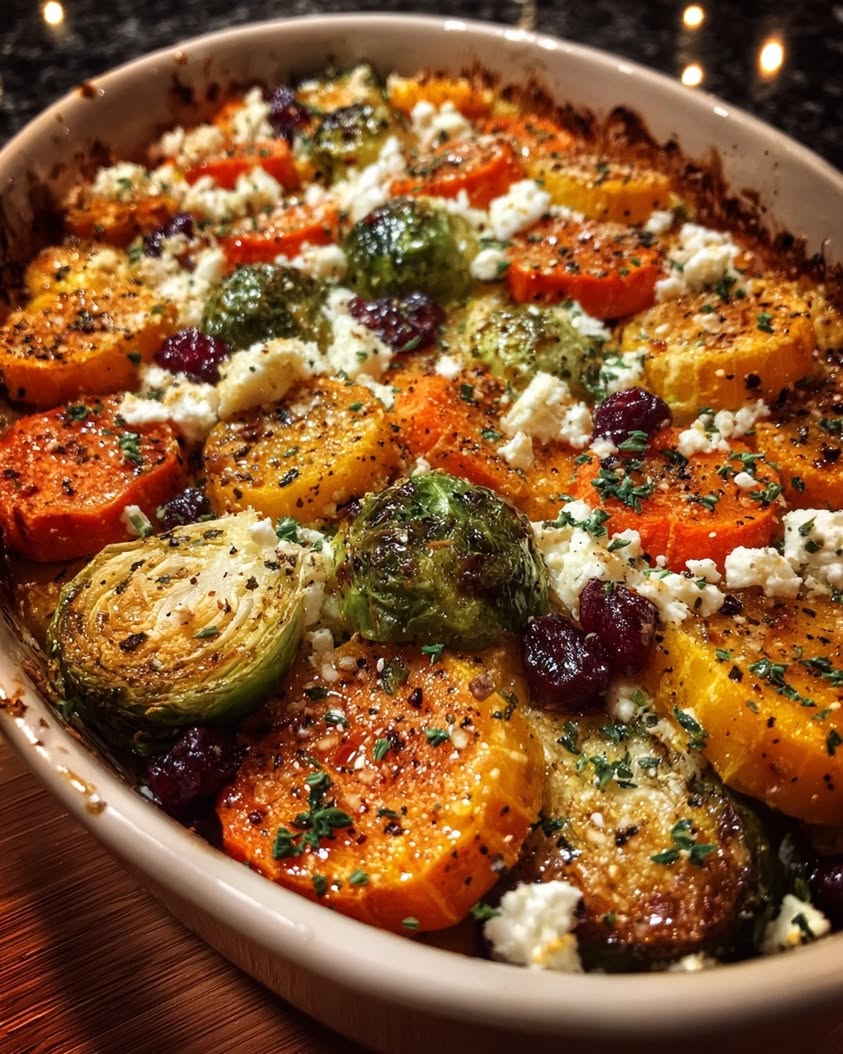
Mediterranean Roasted Vegetable Gratin with Feta and Cranberries: A Festive and Flavorful Side Dish
Imagine a dish that captures the warmth of the Mediterranean sun and the festive spirit of a holiday table. This Mediterranean Roasted Vegetable Gratin with Feta and Cranberries does exactly that. It transforms humble root vegetables and sprouts into a stunning, caramelized masterpiece. Moreover, it’s a celebration of contrasting flavors and textures that will become the star of any meal.
This recipe is not just another side dish. It’s a vibrant, layered experience. Sweet butternut squash and carrots mingle with earthy Brussels sprouts and sweet potatoes. Then, a generous topping of creamy, tangy feta cheese and pops of tart dried cranberries creates a perfect balance. Ultimately, every bite offers a delightful harmony of savory, sweet, and salty notes.
Furthermore, this Mediterranean Roasted Vegetable Gratin is incredibly versatile. It shines as a centerpiece for a vegetarian feast. Alternatively, it pairs beautifully with roasted chicken, turkey, or ham. The best part is its simplicity. You only need one pan for roasting and a baking dish for finishing. Consequently, you get maximum flavor with minimal cleanup, which is always a win in any home kitchen.
Quick Recipe Highlights
- Flavor Profile: This gratin boasts a complex profile. Sweet roasted vegetables are perfectly balanced by salty feta and bright, tart cranberries. Herbs like thyme add an earthy, aromatic depth that ties everything together beautifully.
- Texture: Expect a wonderful contrast in every forkful. The vegetables become tender and almost creamy inside while developing crispy, caramelized edges. Meanwhile, the feta softens without fully melting, and the cranberries add a delightful chewy element.
- Aroma: As it roasts, your kitchen will fill with an irresistible scent. The sweet, caramelizing vegetables mingle with the savory notes of olive oil and herbs. Finally, the finishing touch of feta adds a tangy, salty fragrance that makes mouths water.
- Visual Appeal: This dish is a feast for the eyes. You get a gorgeous mosaic of orange, green, and deep red from the cranberries. The golden-brown edges and white feta crumbles create a rustic yet elegant presentation that’s perfect for any table.
- Skill Level Needed: This is a beginner-friendly recipe. The techniques involve simple chopping, tossing, and roasting. There’s no complicated sauce or precise baking science. Therefore, even novice cooks can achieve impressive, restaurant-quality results with ease.
- Special Equipment: You only need basic kitchen tools. A good chef’s knife and cutting board are essential for prepping the vegetables. Additionally, a large baking sheet for roasting and a medium-sized baking dish for the final gratin are all you require.
Recipe Overview
- Difficulty Level: We rate this recipe as easy for several reasons. First, the preparation involves straightforward chopping. Second, the cooking process is mostly hands-off roasting. There are no tricky techniques like making a roux or tempering eggs. Consequently, it’s very forgiving and hard to mess up.
- Category: This dish fits multiple categories wonderfully. It’s primarily a spectacular side dish for holiday dinners or Sunday roasts. However, with its hearty vegetables and protein from the feta, it can also serve as a satisfying vegetarian main course with a simple green salad.
- Cuisine: The inspiration is firmly rooted in Mediterranean home cooking. It uses the region’s hallmark ingredients: olive oil, fresh herbs, and tangy cheese. The method of roasting vegetables to concentrate their flavor is a classic technique celebrated across Greek, Italian, and Southern French cuisines.
- Cost: This is a very cost-effective dish, especially in the fall and winter. Root vegetables like carrots and sweet potatoes are typically inexpensive. Butternut squash and Brussels sprouts are also affordable when in season. Feta and dried cranberries are the only splurge items, but a little goes a long way.
- Season: This gratin is the ultimate autumn and winter recipe. All the vegetables are at their peak sweetness and flavor during the cooler months. Moreover, its warm, comforting nature is perfect for holiday gatherings like Thanksgiving, Christmas, and cozy family dinners.
- Occasion: It’s incredibly versatile for entertaining. It’s elegant enough for a formal holiday table yet simple enough for a casual weeknight meal. You can also bring it to potlucks where it will stand out from the usual sides. It’s a guaranteed crowd-pleaser.
Why You’ll Love This Recipe
First and foremost, the taste and texture are absolutely unforgettable. Each vegetable roasts to bring out its unique natural sweetness. The feta cheese adds a creamy, briny counterpoint that prevents the dish from being too sweet. Then, the cranberries deliver little bursts of tartness that cut through the richness. Ultimately, the combination creates a symphony of flavors that is both comforting and sophisticated. You will find yourself going back for just one more bite.
From a practical standpoint, the convenience is a major selling point. You do most of the work upfront with some simple chopping. After that, the oven does the heavy lifting. This hands-off time is perfect for preparing the rest of your meal or entertaining guests. Furthermore, you only dirty one sheet pan and one baking dish, making cleanup a breeze. This Mediterranean Roasted Vegetable Gratin is designed for real life, not just for show.
Nutritionally, this dish is a powerhouse. It’s packed with vitamins, minerals, and fiber from four different colorful vegetables. The olive oil provides healthy fats, and the feta offers a good source of calcium and protein. Using dried cranberries adds antioxidants and a touch of natural sweetness without refined sugar. Therefore, you can feel good about serving this vibrant, health-supportive dish to your family and friends.
For social gatherings, this gratin has immense value. It’s visually stunning and feeds a crowd with minimal effort. It caters beautifully to vegetarians without alienating meat-eaters. The familiar ingredients often appeal to picky eaters, especially when they see how delicious roasted vegetables can be. It becomes a conversation starter and often the most requested recipe after the meal.
Finally, it’s wonderfully accessible and cost-effective. The ingredients are easy to find at any standard grocery store. You can often find pre-cut butternut squash to save even more time. Seasonal vegetables keep the cost low, and the recipe is easily adaptable based on what you have on hand. This Mediterranean Roasted Vegetable Gratin proves that eating well doesn’t have to be complicated or expensive.
Historical Background and Cultural Significance
The concept of a gratin has its roots in French cuisine, specifically referring to a dish with a browned crust, often made with cheese or breadcrumbs. The technique of roasting vegetables, however, is ancient and universal. This particular recipe is a modern fusion that draws on Mediterranean culinary principles. It emphasizes fresh, seasonal produce, high-quality olive oil, and simple preparations that highlight natural flavors. While not a traditional historic dish, it is built on a foundation of timeless cooking wisdom from the region.
Culturally, this dish celebrates the Mediterranean diet, which is renowned for its health benefits and delicious simplicity. Meals in this region often center around vegetables, legumes, whole grains, olive oil, and cheese. This gratin embodies that ethos perfectly. It turns vegetables into the star of the show, using fat and heat to transform them into something deeply satisfying. The addition of feta, a cheese with a history dating back thousands of years in Greece, connects the dish to a long tradition of dairy preservation and flavoring.
The evolution of this recipe is a story of seasonal adaptation and global pantry mixing. The core technique of roasting root vegetables is classic. The innovation comes from the bold combination of savory feta and sweet-tart cranberries, an ingredient more common in North American cooking. This fusion creates a bridge between traditions. It’s a perfect example of how modern home cooking borrows from different cultures to create something new and exciting that still feels familiar and comforting.
Regional variations of this concept are endless. In Provence, a similar dish might include herbs de Provence and perhaps goat cheese. In Greece, it might feature more oregano and Kalamata olives instead of cranberries. You could add Italian flavors with rosemary and Parmesan. The beauty of this Mediterranean Roasted Vegetable Gratin framework is its flexibility. It encourages cooks to use what is local and seasonal, adhering to the most important principle of Mediterranean home cooking: letting quality ingredients speak for themselves.
Ingredient Deep Dive
Butternut Squash: This winter squash is native to the Americas but has become a global staple. It’s incredibly rich in Vitamin A, providing over 450% of the daily value in one cup, and is a great source of Vitamin C and fiber. When selecting, choose a squash that feels heavy for its size with a firm, matte skin and no soft spots. Store whole squash in a cool, dark place for months. For a quicker prep, look for pre-cut cubes in the produce section. You can substitute with other orange-fleshed squash like acorn or kabocha.
Brussels Sprouts: These mini cabbages have a long history in Europe, named after Brussels, Belgium. They are part of the nutrient-dense cruciferous vegetable family, packed with Vitamin K, Vitamin C, and compounds that support cellular health. Pick sprouts that are bright green, firm, and compact, with tightly closed leaves. Avoid yellowing or loose leaves. Store them unwashed in a plastic bag in the refrigerator’s crisper drawer. For a different flavor, you could substitute with broccoli florets or cauliflower, though the roasting time may vary slightly.
Sweet Potato: A staple food for centuries in Central and South America, sweet potatoes are now beloved worldwide. They are an excellent source of beta-carotene (which converts to Vitamin A), Vitamin C, and manganese. Look for firm potatoes with smooth skin and no signs of decay. Store them in a cool, dark, well-ventilated place—not the refrigerator, as cold temperatures can alter their texture and taste. For a lower-glycemic option, you can substitute part of the sweet potato with parsnips or turnips, which will add a more earthy, peppery note.
Feta Cheese: Feta is a brined curd cheese with a protected designation of origin (PDO) in Greece, traditionally made from sheep’s milk or a sheep-goat blend. It provides a good amount of calcium and protein, along with beneficial probiotics. For the best flavor and texture, seek out authentic Greek feta in blocks stored in brine, not pre-crumbled dry feta. The brine keeps it moist and flavorful. Store leftover feta in its brine in the refrigerator. For a dairy-free version, a firm, salty tofu or a vegan feta alternative can work, though the flavor profile will change.
Dried Cranberries: While fresh cranberries are native to North America, dried cranberries are a modern convenience product, often sweetened. They add antioxidants, fiber, and a vibrant pop of color and tartness. Look for brands with no added sugar or oil if possible. For a more traditional Mediterranean twist, you could substitute with dried currants or chopped dried apricots. Soaking them in warm water or orange juice for 10 minutes before adding can plump them up and prevent them from burning in the oven.
Common Mistakes to Avoid
- Cutting Vegetables Unevenly: This is the most common pitfall. If your vegetable pieces are different sizes, they will cook unevenly. Some will be mushy while others are still hard. Take the time to cut them into uniform, bite-sized pieces for consistent roasting.
- Overcrowding the Pan: Do not dump all the vegetables onto one small sheet pan. They need space for the oven’s hot air to circulate. If they are piled on top of each other, they will steam instead of roast. Consequently, you will miss out on the crucial caramelization and crispy edges.
- Underseasoning the Vegetables: Vegetables need a generous amount of seasoning before roasting. Salt is essential for drawing out moisture and enhancing natural flavors. Do not be shy with the salt, pepper, and herbs at the tossing stage. Remember, the feta adds saltiness later, but the veggies themselves need to be well-seasoned.
- Using Pre-Crumbled Feta: Pre-crumbled feta is often drier, chalkier, and contains anti-caking agents. For the best creamy texture and robust flavor, always buy a block of feta in brine and crumble it yourself just before using. The difference in quality and melt is significant.
- Adding Cranberries Too Early: If you mix the dried cranberries in before roasting, they can burn and become bitter. Always add them in the last 10-15 minutes of cooking or even after baking. This preserves their chewy texture and bright, tart flavor.
- Skipping the Tossing Step: Do not just drizzle oil over the vegetables in the pan. You must toss them thoroughly in a large bowl with the oil and seasonings. This ensures every single piece is evenly coated, leading to perfect browning and flavor distribution.
- Not Preheating the Oven: A properly preheated oven is non-negotiable for roasting. Putting vegetables into a cold oven will cause them to release too much water initially, resulting in a soggy outcome. Always wait for your oven to reach the full temperature before adding the pan.
- Forgetting to Check for Doneness: Oven temperatures can vary. Do not rely solely on the timer. Start checking the vegetables a few minutes before the suggested time. They are done when easily pierced with a fork and have golden-brown spots. This prevents under or overcooking.
Essential Techniques
Uniform Chopping: This technique is critical for even cooking. Aim for pieces that are roughly the same size and shape, about 1-inch cubes or halves for Brussels sprouts. Using a sharp chef’s knife and a stable cutting board makes this easier and safer. The visual cue for success is a bowl of vegetables where no single piece looks drastically larger or smaller than the others. Consistent size means consistent texture in the final dish.
Dry Roasting: The goal of roasting is to caramelize the natural sugars in the vegetables, not to steam them. The key is ensuring the vegetables are dry before tossing them in oil and giving them plenty of space on the baking sheet. Pat washed vegetables dry with a clean kitchen towel. The success cue is hearing a gentle sizzle when they hit the hot pan and seeing browned, crispy edges after cooking, not pale, steamed surfaces.
Layering for Gratin: After roasting, transferring the vegetables to a baking dish creates the “gratin” presentation. Gently mix the vegetables together for a colorful blend before placing them in the dish. Avoid pressing them down densely; a loose, slightly mounded arrangement allows for better heat circulation and a more attractive finish. The visual cue is an inviting, rustic pile of colorful veggies ready for their cheesy topping.
Pro Tips for Perfect Mediterranean Roasted Vegetable Gratin
Use a Lined Baking Sheet: Always line your sheet pan with parchment paper or a silicone baking mat. This prevents sticking and makes cleanup incredibly easy. Furthermore, it helps with browning because the vegetables won’t sit in any pooled moisture.
Preheat Your Baking Sheet: For extra-crispy edges, place your empty baking sheet in the oven while it preheats. Carefully add the tossed vegetables to the hot pan. This gives an immediate sear, mimicking the effect of a restaurant oven.
Reserve Some Herbs for Garnish: Add most of your fresh thyme or rosemary before roasting. However, save a small amount of fresh herbs to sprinkle over the finished gratin just before serving. This adds a burst of fresh aroma and bright color.
Add a Touch of Acid: After the gratin comes out of the oven, a light drizzle of high-quality balsamic glaze or a squeeze of fresh lemon juice can elevate the flavors dramatically. It brightens the rich, sweet vegetables and balances the salty feta.
Let it Rest Before Serving: Allow the gratin to sit for 5-10 minutes after removing it from the oven. This lets the flavors settle and meld together. It also makes it easier to serve, as it won’t be scalding hot and falling apart on the plate.
Customize Your Spices: While thyme is classic, feel free to experiment. Smoked paprika adds a warm depth, a pinch of red pepper flakes brings subtle heat, and ground cumin offers an earthy, warm note that pairs wonderfully with sweet vegetables.
Variations and Adaptations
Regional Variations: To take this dish on a tour of the Mediterranean, simply change the cheese and herbs. For an Italian twist, use Parmesan or Pecorino Romano with fresh rosemary. For a French version, swap in goat cheese and Herbes de Provence. A Middle Eastern variation could include sumac and za’atar seasoning with a dollop of yogurt on the side.
Seasonal Adaptations: This recipe framework works year-round. In spring, use asparagus, new potatoes, and peas. Summer calls for zucchini, bell peppers, and eggplant. The autumn/winter version here is classic, but you can also incorporate beets or parsnips for deeper earthiness. Always adjust roasting times based on the density of the vegetables you choose.
Dietary Modifications: For a vegan Mediterranean Roasted Vegetable Gratin, omit the feta. Instead, finish with a drizzle of tahini sauce or a sprinkle of nutritional yeast and toasted nuts like pine nuts or walnuts for richness and crunch. Ensure all other ingredients, like vegetable broth for moistening, are plant-based.
Flavor Variations: Introduce different flavor profiles easily. Add sliced red onion or shallots to the roasting pan for sweetness. Toss the vegetables with a tablespoon of maple syrup or honey before roasting for extra caramelization. A tablespoon of Dijon mustard mixed into the olive oil adds a wonderful tangy complexity.
Texture Modifications: If you love a crispy topping, combine your crumbled feta with 1/4 cup of panko breadcrumbs and a tablespoon of olive oil before sprinkling it over the vegetables. This creates a delicious, golden-brown crust. For a creamier interior, you can pour 1/2 cup of vegetable broth or cream over the vegetables before adding the cheese.
Presentation Alternatives: For individual servings, divide the roasted vegetables among ramekins or small cast-iron skillets before adding the feta and finishing in the oven. This is elegant for dinner parties. You can also layer the roasted vegetables in a clear glass trifle dish with the feta and cranberries for a stunning, deconstructed visual effect.
Serving and Presentation Guide
Plating Techniques: For a family-style presentation, bring the baking dish directly to the table. The rustic look is part of the charm. Use a large, shallow serving spoon to scoop out portions, ensuring you get all the layers. For individual plates, use a ring mold to create a neat, stacked cylinder of the gratin in the center of the plate for a more refined restaurant-style look.
Garnishing Ideas: Fresh herbs are the simplest and most effective garnish. Sprigs of fresh thyme, rosemary, or chopped parsley add color and freshness. A final drizzle of extra virgin olive oil or balsamic reduction looks beautiful. For crunch and visual appeal, sprinkle with toasted pumpkin seeds (pepitas) or slivered almonds just before serving.
Traditional Accompaniments: In a Mediterranean meal, this gratin would be served alongside other shared dishes. Think of a simple green salad with a lemon vinaigrette, warm crusty bread for soaking up juices, and perhaps some olives. It pairs perfectly with simply grilled or roasted meats like lamb, chicken, or fish.
Modern Serving Suggestions: For a contemporary twist, serve a scoop of the gratin atop a bed of lemony quinoa or farro for a hearty grain bowl. You can also use leftovers as a filling for a savory breakfast hash topped with a fried egg. It’s incredibly versatile beyond the dinner table.
Temperature Considerations: This dish is best served warm. The feta should be slightly softened from the residual heat of the vegetables. It can sit at room temperature for about 30 minutes without issue, making it great for buffets. While you can reheat it, the vegetables are at their peak texture right after the final bake.
Portion Control Tips: As a hearty side dish, plan for about 1 to 1.5 cups per person. As a vegetarian main, 2 cups is a satisfying portion. Remember, the vegetables reduce slightly during roasting, so what looks like a lot on the sheet pan will be a perfect amount in the baking dish.
Wine and Beverage Pairing
Wine Pairings: The sweet, earthy vegetables and salty feta call for wines with good acidity to cleanse the palate. A crisp, unoaked white like a Sauvignon Blanc or a Greek Assyrtiko works beautifully. For red wine lovers, a light-bodied Pinot Noir or a Grenache-based rosé from the South of France complements the dish without overpowering it. The key is to avoid heavily oaked or high-tannin wines that could clash with the vegetables’ sweetness.
Non-Alcoholic Alternatives: Sparkling water with a twist of lemon or lime is always a refreshing choice. For something more special, try a tart cranberry spritzer made with unsweetened cranberry juice, sparkling water, and a sprig of rosemary. A lightly sweetened iced herbal tea, like mint or hibiscus, also pairs wonderfully with the Mediterranean flavors.
Coffee/Tea Pairings: After the meal, a cup of herbal tea is a lovely finish. Chamomile or lemon ginger tea would be soothing. For coffee, a medium-roast brew without heavy bitterness would complement the meal’s end. The goal is a beverage that doesn’t compete with the lingering savory-sweet notes of the gratin.
Temperature Considerations: Serve white wines and non-alcoholic spritzers well-chilled. Red wines should be served slightly below room temperature, around 60-65°F. Iced beverages should be cold but not so icy that they numb the palate, allowing you to still appreciate the complex flavors of the Mediterranean Roasted Vegetable Gratin.
Storage and Shelf Life
Storage Methods: Allow the gratin to cool completely to room temperature before storing. Transfer leftovers to an airtight container. You can store the entire baking dish covered tightly with plastic wrap or aluminum foil if you prefer. Do not leave it at room temperature for more than two hours to prevent bacterial growth.
Temperature Requirements: This dish must be refrigerated. Store it in the main body of your refrigerator, not in the door, where temperatures fluctuate more. The ideal temperature is below 40°F (4°C). Properly stored, it will keep for 3-4 days.
Container Recommendations: Glass containers with tight-fitting lids are ideal because they don’t absorb odors and allow you to see the contents. If using the original baking dish, ensure the covering is airtight with plastic wrap pressed directly onto the surface of the food to minimize air exposure.
Signs of Spoilage: Discard the gratin if you notice an off or sour smell, significant mold growth (often fuzzy spots in white, green, or blue), or if the vegetables develop an excessively slimy texture. A slight softening of the vegetables upon reheating is normal, but a foul odor is a clear sign it should not be consumed.
Reheating Instructions: For best results, reheat in the oven. Preheat to 350°F (175°C). Place the gratin in an oven-safe dish, sprinkle with a tablespoon of water or broth to prevent drying out, cover with foil, and heat for 15-20 minutes until warmed through. You can microwave single portions for 1-2 minutes, though this may soften the texture further.
Freezing Guidelines: Freezing is possible but not ideal, as the texture of the roasted vegetables can become mushy upon thawing. If you must freeze, do so in an airtight container for up to 2 months. Thaw overnight in the refrigerator before reheating thoroughly in the oven. Expect a softer final texture.
Make Ahead Strategies
Prep Timeline: You can prep this dish up to 24 hours in advance. Chop all the vegetables and store them separately in airtight containers or resealable bags in the refrigerator. You can also mix the oil and seasonings in a small jar. Crumble the feta and store it covered in the fridge. This turns the day-of cooking into a simple 10-minute assembly before roasting.
Storage Between Steps: Keep pre-cut vegetables chilled until you are ready to use them. If you roast the vegetables a day ahead, let them cool completely, then store them covered in the fridge. On the day of serving, transfer them to the baking dish, add the feta and cranberries, and reheat in a 375°F oven for 15-20 minutes until hot and the cheese is softened.
Quality Impact Assessment: Pre-chopping vegetables has minimal impact on quality. Pre-roasting and reheating may result in slightly softer vegetables, but the flavors will still be excellent. The key is to add the feta and cranberries only during the final bake/reheat to maintain their optimal texture and flavor.
Assembly Tips: For the freshest result, complete the roasting step the day you plan to serve. You can roast the vegetables in the morning, leave them at room temperature (covered) for a few hours, then assemble the gratin in the baking dish and do the final bake with cheese just before your meal. This preserves the perfect vegetable texture.
Reheating Guidelines: Always reheat in the oven, not the microwave, for a crowd. The oven restores some of the crispy edges and heats everything evenly. Cover with foil for the first half of the reheating time to prevent over-browning, then uncover for the last 5 minutes.
Fresh Element Additions: If making ahead, always add fresh garnishes after the final reheat. Sprinkle with extra fresh herbs, a final pinch of flaky sea salt, or a drizzle of olive oil just before serving to brighten up the dish and make it taste freshly made.
Scaling Instructions
Halving the Recipe: Halving is straightforward for smaller households. Simply divide all ingredient quantities by two. Use a standard 8×8 inch or 9-inch round baking dish. The roasting time may be slightly shorter, perhaps by 5-10 minutes, so start checking for doneness early. Keep the oven temperature the same.
Doubling or Tripling: To feed a crowd, double or triple the ingredients. The key is to use multiple sheet pans for roasting. Do not pile all the vegetables onto one pan; they must be in a single layer. You may need to roast in batches or use two oven racks, rotating the pans halfway through. For serving, use a very large baking dish or multiple standard dishes.
Equipment Adjustments: Scaling up requires planning your equipment. Ensure you have enough large sheet pans and a serving dish big enough. If using multiple oven racks, allow space for air circulation. For a very large batch, consider using a disposable aluminum roasting pan for the final bake and presentation.
Timing Modifications: When doubling, the prep time will increase linearly with more chopping. The roasting time may increase slightly because the oven is more crowded, but not double. Add 5-10 minutes to the roasting time and rely on visual doneness cues—tender vegetables with browned edges—rather than the clock alone.
Storage Considerations: A larger batch means more potential leftovers. Have appropriate storage containers ready. Consider if you want to freeze portions. It’s often easier to bake the gratin in two separate dishes—serve one immediately and freeze the other unbaked (without feta and cranberries) for a future easy meal.
Nutritional Deep Dive
Macro Breakdown: This Mediterranean Roasted Vegetable Gratin is primarily a carbohydrate-rich dish from the vegetables, providing sustained energy. The olive oil and feta contribute healthy fats. The feta also adds a moderate amount of protein. It’s naturally low in saturated fat, especially if you use olive oil judiciously. The dried cranberries add a small amount of natural sugars and fiber.
Micronutrient Analysis: This dish is a micronutrient powerhouse. Butternut squash and sweet potatoes are loaded with Vitamin A (as beta-carotene), essential for vision and immune health. Brussels sprouts provide Vitamin K for bone health and Vitamin C. Carrots add more Vitamin A and potassium. Together, they offer a broad spectrum of B vitamins, manganese, and antioxidants from the colorful pigments.
Health Benefits: Consuming a variety of colorful vegetables is linked to reduced risk of chronic diseases. The high fiber content promotes digestive health and helps maintain stable blood sugar levels. The monounsaturated fats from olive oil support heart health. The combination of fiber, vitamins, and antioxidants makes this a truly nourishing, anti-inflammatory meal component.
Dietary Considerations: This recipe is naturally gluten-free. It is vegetarian but not vegan due to the feta. It can be made dairy-free with modifications. It is not suitable for a strict low-carb or keto diet due to the starchy vegetables, but the portion size can be adjusted. Always check specific ingredients like pre-packaged cranberries for added allergens.
Portion Analysis: A standard serving (about 1.5 cups) provides a substantial volume of food that is satisfying and filling due to the fiber and water content of the vegetables. This helps with satiety and can prevent overeating. It’s a nutrient-dense choice that fills your plate with vitamins, not just empty calories.
Weight Management Tips: This gratin is an excellent addition to a weight-conscious diet when portion control is practiced. The high fiber and water content promote fullness. To reduce the calorie density slightly, you can reduce the olive oil by a tablespoon or two (though some fat is needed for flavor and nutrient absorption) and be mindful of the amount of feta and cranberries added.
Dietary Adaptations
Gluten-free: This recipe is naturally gluten-free as written. Always double-check that your dried cranberries have not been processed in a facility with wheat and that any pre-packaged seasonings are certified gluten-free. It’s a safe and delicious option for those with celiac disease or gluten sensitivity.
Dairy-free: To make a dairy-free Mediterranean Roasted Vegetable Gratin, omit the feta cheese. For a creamy, tangy element, make a sauce by blending soaked cashews with lemon juice, nutritional yeast, salt, and a little water until smooth. Drizzle this over the roasted vegetables before the final bake. Alternatively, top with toasted nuts or a vegan cheese alternative that melts well.
Vegan: Follow the dairy-free instructions above. Also, ensure the dried cranberries do not contain honey or other animal-derived sweeteners. Use maple syrup or agave if you choose to add a sweet glaze. The base of roasted vegetables with olive oil and herbs is inherently vegan and packed with flavor.
Low-carb/Keto: This recipe is not ideal for strict keto due to the high carb count from squash, carrots, and sweet potatoes. For a keto-friendly version, replace those with low-carb vegetables like cauliflower florets, broccoli, bell peppers, and zucchini. Increase the amount of Brussels sprouts. Use a full-fat cheese and add more olive oil or butter for fat content.
Paleo: For a Paleo adaptation, omit the dairy (feta). Ensure your dried cranberries have no added sugar. You can add more protein by mixing in cooked, crumbled bacon or pancetta (if you eat pork) or topping the finished dish with toasted walnuts or pecans for healthy fats and crunch.
Low-FODMAP: This recipe can be modified for a low-FODMAP diet. Use only the green tops of green onions (scallions) instead of regular onions if called for. Limit the butternut squash to 1/3 cup per serving and replace sweet potatoes with an equal weight of carrots and parsnips, which are lower in FODMAPs. Omit the garlic or use garlic-infused oil. Ensure cranberries are consumed in a low-FODMAP serving size (about 1 tablespoon).
Troubleshooting Guide
Vegetables Are Soggy: This usually means they were overcrowded on the pan or not roasted at a high enough temperature. For a fix, spread the cooked vegetables back onto a hot sheet pan and broil for 3-5 minutes, watching carefully, to evaporate excess moisture and crisp up the edges. Next time, ensure they are in a single layer with space between pieces.
Vegetables Are Burned on Edges but Hard Inside: This indicates your oven temperature is too high, or your vegetable pieces are too small. Unfortunately, you can’t fix burned veggies. For the next batch, reduce the oven temperature by 25°F and cut vegetables into slightly larger, uniform pieces to ensure the insides cook through before the outsides char.
Dish Tastes Bland: The most likely culprit is underseasoning. Vegetables need a good amount of salt before roasting. To rescue a bland{“success”:true,”message”:”Recipe created successfully”,”post_id”:7706,”tasty_recipe_id”:7706,”shortcode”:” Print
Mediterranean Roasted Vegetable Gratin with Feta and Cranberries
Description
A vibrant, hearty gratin featuring roasted butternut squash, carrots, Brussels sprouts, and sweet potatoes, topped with creamy feta and tart cranberries for a Mediterranean-inspired dish.
Ingredients
For the Crust:
- 1 small butternut squash, peeled and cubed
- 2 large carrots, sliced into rounds
- 1 cup Brussels sprouts, halved
- 1 large sweet potato, peeled and cubed
- 3 tablespoons olive oil
- 1 teaspoon dried oregano
- 1 teaspoon garlic powder
- 1/2 teaspoon smoked paprika
- Salt and black pepper to taste
- 1/2 cup crumbled feta cheese
- 1/4 cup dried cranberries
- 2 tablespoons chopped fresh parsley for garnish
Instructions
1. Prepare the Crust:
- Preheat oven to 400°F (200°C). In a large bowl, toss butternut squash, carrots, Brussels sprouts, and sweet potato with olive oil, oregano, garlic powder, paprika, salt, and pepper until evenly coated.
- Spread vegetables in a single layer on a baking sheet. Roast for 25-30 minutes, stirring halfway, until tender and slightly caramelized.
- Transfer roasted vegetables to a baking dish. Sprinkle feta cheese and cranberries evenly over the top. Bake for an additional 5-7 minutes until cheese is slightly melted. Garnish with fresh parsley before serving.
Notes
You can customize the seasonings to taste.

I’m Billy, a classically trained culinary school graduate from The Culinary Institute of America with over 12 years in the restaurant industry and over 19 years of cooking experience.