
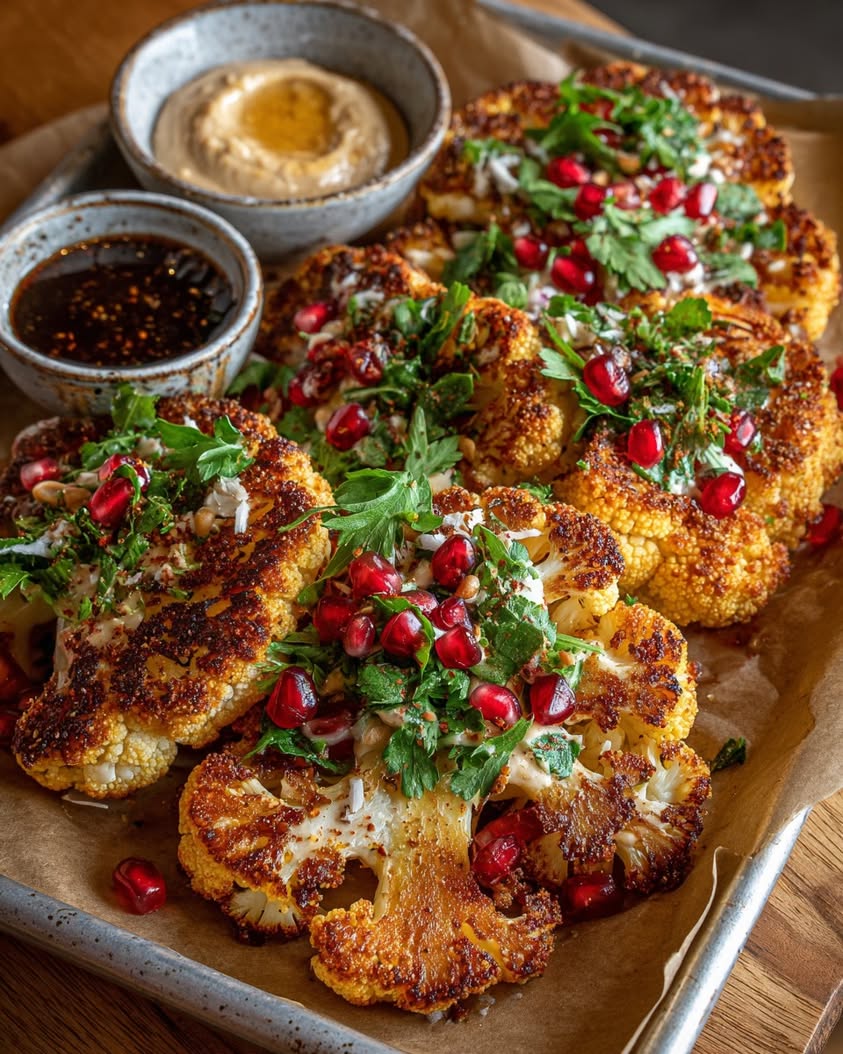
Mediterranean Roasted Cauliflower Steak Recipe: A Vibrant and Hearty Plant-Based Feast
Imagine a dish that transforms a humble vegetable into the star of your dinner table. This Mediterranean Roasted Cauliflower Steak Recipe does exactly that. It delivers a stunning presentation alongside an explosion of flavor that will impress even the most dedicated meat-eaters. Moreover, this recipe is a celebration of simple, wholesome ingredients elevated by the vibrant flavors of the Mediterranean.
The magic happens in the oven, where thick cauliflower steaks roast to caramelized perfection. Meanwhile, you whisk together a creamy, tangy tahini sauce. Finally, a sprinkle of jewel-like pomegranate arils and fresh herbs adds the perfect finishing touch. Consequently, you get a meal that is as beautiful to look at as it is delicious to eat. Ultimately, this dish proves that plant-based cooking can be incredibly satisfying and sophisticated.
This Mediterranean Roasted Cauliflower Steak Recipe is perfect for a busy weeknight or a special weekend dinner. It requires minimal hands-on time, allowing the oven to do most of the work. Additionally, the ingredient list is straightforward, featuring items you can find at any well-stocked grocery store. Therefore, you can create a restaurant-quality meal in your own kitchen without any fuss.
Quick Recipe Highlights
- Flavor Profile: This Mediterranean Roasted Cauliflower Steak Recipe masterfully balances earthy, nutty, tangy, and sweet notes. The roasted cauliflower develops a deep, caramelized flavor. Then, the creamy tahini sauce adds a rich, sesame tang. Finally, the bright pop of pomegranate and fresh parsley brings a refreshing sweetness and herbal lift.
- Texture: You will enjoy a wonderful contrast of textures in every bite. The exterior of the cauliflower steak becomes beautifully crisp and golden brown. Meanwhile, the interior stays tender and almost meaty. Furthermore, the creamy sauce and juicy pomegranate seeds add luxurious and bursting elements that complete the experience.
- Aroma: As the cauliflower roasts, your kitchen will fill with a warm, nutty, and slightly sweet aroma. The spices, like cumin or smoked paprika if used, release their fragrant oils. Additionally, the fresh herbs and bright pomegranate provide a final, clean scent that makes the dish incredibly inviting.
- Visual Appeal: This dish is a true showstopper on the plate. The golden-brown steaks look substantial and hearty. Subsequently, the drizzle of pale tahini sauce and the vibrant red pomegranate arils create a stunning color contrast. A final sprinkle of green parsley makes the presentation absolutely magazine-worthy.
- Skill Level Needed: This is an accessible recipe for cooks of all levels. The primary skills involve simple knife work to cut the steaks and the ability to whisk a sauce. There is no complicated technique, making it a fantastic introduction to more involved vegetable-centric cooking.
- Special Equipment: You only need a few basic kitchen tools. A good chef’s knife and a sturdy cutting board are essential for safely cutting the cauliflower. Also, a reliable baking sheet and some parchment paper ensure even roasting and easy cleanup. A small bowl for the sauce is the final requirement.
Recipe Overview
- Difficulty Level: We classify this Mediterranean Roasted Cauliflower Steak Recipe as easy. The steps are sequential and simple: cut, season, roast, and assemble. There is no finicky timing or advanced culinary techniques required. Consequently, it is a very forgiving recipe perfect for building kitchen confidence.
- Category: This dish is wonderfully versatile. It shines as a spectacular vegetarian or vegan main course. Alternatively, it serves as a impressive and hearty side dish alongside grilled meats or fish. It fits perfectly into categories like “Healthy Dinners,” “Plant-Based Mains,” and “Holiday Sides.”
- Cuisine: The flavors are firmly rooted in the Eastern Mediterranean and Middle Eastern culinary tradition. Tahini, a paste of ground sesame seeds, is a staple in Levantine cuisine. Pomegranates also hold historic significance across the region. This recipe is a modern, whole-food celebration of those timeless ingredients.
- Cost: This is an incredibly cost-effective meal. A whole cauliflower, tahini, lemon, and spices are relatively inexpensive pantry items. Pomegranate arils might be the priciest component, but a little goes a long way. Overall, you can create this stunning dish for a fraction of the cost of a restaurant meal.
- Season: This Mediterranean Roasted Cauliflower Steak Recipe is fantastic year-round. Cauliflower is typically best in the cooler fall and winter months. However, its bright, fresh toppings make it feel light and suitable for spring and summer evenings as well. It is a truly adaptable seasonal dish.
- Occasion: This recipe is perfect for many occasions. It is simple enough for a casual family dinner yet elegant enough for a dinner party or holiday table like Thanksgiving or Christmas. It is also an excellent option for Meatless Monday or any night you want a healthy, satisfying meal.
Why You’ll Love This Recipe
First and foremost, the taste and texture combination is utterly irresistible. The roasting process unlocks a deep, savory sweetness in the cauliflower that meat-lovers will appreciate. The creamy, lemony tahini sauce cuts through that richness perfectly. Then, each juicy burst of pomegranate adds a surprising and delightful sweetness. Every element complements the others, creating a harmonious and memorable flavor profile that will have you coming back for more.
Furthermore, the convenience of this Mediterranean Roasted Cauliflower Steak Recipe is a major win. After about 15 minutes of simple prep, the oven takes over. This gives you time to set the table, prepare a simple side like quinoa or a green salad, or simply relax. The recipe is also naturally gluten-free and easily made vegan, accommodating various dietary needs without requiring special substitutions. It is a one-pan wonder that simplifies cleanup dramatically.
From a nutritional standpoint, this dish is a powerhouse. Cauliflower is packed with fiber, vitamins C and K, and various antioxidants. Tahini provides healthy fats, protein, and important minerals like calcium and iron. Pomegranate arils are famous for their antioxidant content. Together, they create a meal that supports gut health, reduces inflammation, and provides sustained energy. You can feel genuinely good about serving and eating this recipe.
For entertaining, this recipe offers incredible social value. It is a dramatic and beautiful centerpiece that sparks conversation. Guests are always impressed by the “steak” presentation from a vegetable. Because it is plant-based, it comfortably serves as a main for vegetarian friends while still satisfying omnivores. It eliminates the need to cook multiple separate meals, making hosting much less stressful.
Finally, the cost-effectiveness and accessibility are unbeatable. As mentioned, the core ingredients are affordable and easy to find. You can often find pre-cut cauliflower steaks or pomegranate arils to save even more time. This recipe demonstrates how to create a luxurious, restaurant-style dining experience on a home cook’s budget. It turns everyday ingredients into something extraordinary.
Historical Background and Cultural Significance
The story of this dish is less about a single origin point and more about the beautiful fusion of iconic ingredients from the Mediterranean and Middle East. Cauliflower is believed to have originated in Asia Minor and was prized in the ancient Mediterranean. Meanwhile, tahini, a paste of ground sesame seeds, has been a culinary cornerstone in the Levant for centuries, appearing in historic texts and recipes. Pomegranates are one of the oldest known fruits, deeply symbolic in many cultures around the Mediterranean basin. This recipe is a modern homage to that rich, shared culinary history.
Each component carries deep cultural importance. In many Middle Eastern cultures, tahini is as fundamental as olive oil, used in sauces, dips, and desserts. Pomegranates symbolize abundance, fertility, and prosperity in Greek, Persian, and Jewish traditions. Cauliflower, while more humble, has been embraced across the region for its versatility and ability to absorb bold flavors. By combining them, this recipe connects to a food tradition that values fresh, flavorful, and communal eating.
The evolution of the cauliflower “steak” is a relatively recent innovation in Western plant-based cooking. It speaks to the desire for hearty, center-of-the-plate vegetable dishes. Chefs began cutting cauliflower into thick slabs to showcase its meaty texture and roasting potential. The pairing with tahini and pomegranate was a natural and brilliant progression, layering the earthy vegetable with classic regional flavors. Consequently, this recipe represents a contemporary, global interpretation of ancient ingredients.
Regional variations of this concept abound. In different areas, you might find the cauliflower seasoned with za’atar, sumac, or baharat instead of simple salt and pepper. The sauce could be a garlicky toum or a yogurt-based sauce instead of straight tahini. Toppings might include toasted pine nuts, fried chickpeas, or a drizzle of pomegranate molasses. This flexibility is a testament to the adaptability of the core idea. Our version provides a perfect, accessible foundation from which you can explore.
Ingredient Deep Dive
Cauliflower: This versatile brassica is the star. Select a head that feels heavy for its size with tightly packed, creamy-white florets and bright green, perky leaves attached at the base. Avoid any with brown spots or significant separation. Store it unwashed in a perforated plastic bag in your refrigerator’s crisper drawer for up to a week. For this Mediterranean Roasted Cauliflower Steak Recipe, a large, symmetrical head is key for getting beautiful, intact steaks.
Tahini: This sesame seed paste is the soul of the sauce. Look for tahini made from 100% hulled sesame seeds, preferably in a glass jar. A good tahini should be pourable and have a smooth, not bitter, taste. Stir it thoroughly before use, as natural separation occurs. Store it at room temperature for short-term use or in the refrigerator to extend its life. It is rich in healthy fats, calcium, and copper, making it a nutritious powerhouse.
Pomegranate Arils: These juicy seeds provide the essential pop of color and flavor. You can buy whole pomegranates and seed them yourself or purchase convenient ready-to-use arils. To seed a pomegranate, score and submerge it in a bowl of water to avoid messy splatter. The arils are packed with vitamin C, potassium, and potent antioxidants like punicalagins. Store them in an airtight container in the fridge for up to 5 days or freeze them for months.
Lemon Juice: Freshly squeezed lemon juice is non-negotiable. It brightens the entire dish and balances the richness of the tahini. Roll the lemon on the counter before cutting to maximize juice yield. In addition to flavor, it provides vitamin C. For the best results in your Mediterranean Roasted Cauliflower Steak Recipe, avoid bottled juice, which often has a flat or metallic taste.
Olive Oil & Spices: Use a good quality extra-virgin olive oil for both roasting and flavor. It helps achieve a beautiful caramelization. Simple salt and black pepper are sufficient, but feel free to add a sprinkle of ground cumin, smoked paprika, or garlic powder to the cauliflower before roasting for an extra layer of Mediterranean flavor. These spices are rich in antioxidants and have anti-inflammatory properties.
Common Mistakes to Avoid
- Cutting the Steaks Too Thin: Slices less than 3/4-inch thick will overcook and become mushy, losing their steak-like integrity. Aim for thick, substantial slabs that can withstand roasting while becoming tender inside and crispy outside.
- Not Drying the Cauliflower: Excess moisture is the enemy of good roasting. After washing, pat the whole head and the cut steaks thoroughly dry with clean kitchen towels. This ensures proper browning instead of steaming.
- Overcrowding the Pan: Placing the steaks too close together on the baking sheet causes them to steam. For the best caramelization, leave at least an inch of space between each piece. Use two pans if necessary.
- Underseasoning: Cauliflower needs generous seasoning. Do not be shy with salt and pepper on both sides of the steaks before roasting. Remember, you are seasoning a thick, dense vegetable that needs flavor penetration.
- Using Old or Poor-Quality Tahini: Tahini can go rancid or become overly bitter. Taste it before using. If it smells off or tastes unpleasantly sharp, it will ruin your sauce. Always opt for a reputable brand.
- Adding Garlic Directly to the Tahini Sauce: Raw garlic can overpower the sauce and leave a harsh aftertaste. If you want garlic flavor, try roasting a whole clove with the cauliflower and then blending it in, or use a tiny amount of garlic powder.
- Skipping the Pomegranate or Herb Garnish: These are not just decoration. They provide critical bursts of freshness, acidity, and texture that balance the rich, roasted elements. Do not omit them for the full experience.
- Overcooking the Cauliflower: The goal is a tender interior, not mush. Check for doneness with a fork at the 25-minute mark. It should pierce the thickest part with slight resistance.
Essential Techniques
Cutting Cauliflower Steaks: This is the most important technique for presentation. First, remove the outer leaves and trim the very base of the stem, but leave the core intact—it’s what holds the steak together. Place the head stem-side down on your board. Using a large, sharp knife, cut straight down through the center to create two large halves. Then, from each half, cut 3/4-inch to 1-inch thick slabs. You will get 2-3 prime steaks from the center; the outer florets can be roasted separately as a side.
Mastering the Roast: High, consistent heat is crucial. Preheat your oven fully—don’t put the pan in a cold oven. Lining the sheet with parchment paper prevents sticking and aids cleanup. Brushing or drizzling both sides of the steaks with ample oil promotes even browning. Do not flip the steaks too early; let the first side develop a deep golden crust before carefully turning them with a thin spatula.
Whisking the Perfect Tahini Sauce: The sauce can seize up if you add the lemon juice or water incorrectly. Start by stirring your tahini well in its jar. In a separate bowl, whisk the tahini with the lemon juice. It will thicken dramatically and may look broken—this is normal. Then, gradually whisk in cold water, one tablespoon at a time, until it reaches a smooth, creamy, pourable consistency. Finally, season with salt.
Pro Tips for Perfect Mediterranean Roasted Cauliflower Steaks
For extra flavor, marinate the cauliflower steaks in the oil, salt, pepper, and any additional spices for 30 minutes before roasting. This allows the seasoning to penetrate deeper. Always roast on the middle oven rack for the most even heat distribution. If your tahini sauce is too thick, simply whisk in more water, one teaspoon at a time. Conversely, if it’s too thin, add a little more tahini. To prevent the parchment paper from sliding, dab a tiny bit of oil under each corner to “glue” it to the pan. Let the roasted steaks rest for 5 minutes on the pan after cooking; this allows them to reabsorb some juices and firm up slightly for easier plating. For a deeper color, brush the steaks with a very light coating of oil again before the final 5-10 minutes of roasting. If using pre-packaged pomegranate arils, give them a quick rinse and pat dry to remove any residual packing liquid, ensuring they are perfectly juicy and not watery.
Variations and Adaptations
For regional twists, sprinkle the cauliflower with za’atar before roasting or drizzle with pomegranate molasses after. A Middle Eastern variation might include a topping of toasted pine nuts and chopped mint. Seasonally, in summer, top with diced tomatoes and cucumber; in winter, add roasted chickpeas for extra heartiness. For dietary changes, ensure your tahini is certified gluten-free if needed; the recipe is naturally vegan and gluten-free. To modify flavors, add a teaspoon of smoked paprika or ground cumin to the oil brushed on the steaks. For a different texture, try blending roasted garlic or a roasted red pepper into the tahini sauce for a smoother, more complex dip. Presentation-wise, serve the whole steak on a bed of lemony quinoa or finely chop it after roasting to serve as a warm salad with the sauce and toppings mixed throughout.
Serving and Presentation Guide
For beautiful plating, place one warm cauliflower steak slightly off-center on a shallow bowl or plate. Drizzle the tahini sauce in a zig-zag pattern or pool it around the base. Artistically scatter the pomegranate arils and chopped parsley over the top. Traditional accompaniments include warm pita bread, a simple couscous, or a crisp cucumber and tomato salad. For a modern main course, slice the steak and fan it out over a bed of garlicky sautéed greens or lentil salad. Serve the dish immediately while the cauliflower is hot and the toppings are fresh and cool. For portion control, one large steak per person is a satisfying main; for a side dish, half a steak per person is sufficient alongside protein.
Wine and Beverage Pairing
For wine, a crisp, dry white wine like a Sauvignon Blanc or Pinot Grigio complements the lemon and herbal notes beautifully. A light-bodied, low-tannin red like a Pinot Noir can also work with the earthy, roasted flavors. For non-alcoholic options, sparkling water with a squeeze of lemon or a mint-infused iced tea are refreshing choices. A tart pomegranate spritzer made with pomegranate juice and soda water mirrors the dish’s flavors. Serve white wines well-chilled and reds slightly below room temperature. The key is to choose beverages that are bright and acidic enough to cut through the richness of the tahini without overpowering the delicate cauliflower.
Storage and Shelf Life
Store leftover components separately for best results. Place cooled cauliflower steaks in an airtight container in the refrigerator for up to 3 days. Store tahini sauce in a separate sealed jar or container for up to 5 days; it may thicken, so whisk in a little water to refresh it. Keep pomegranate arils in their own container for up to 3 days. Signs of spoilage include a sour smell, significant discoloration, or slimy texture on the cauliflower. Reheat steaks in a 350°F oven or toaster oven until warmed through to restore some crispness; avoid the microwave, which will make them soggy. This dish does not freeze well, as the cauliflower becomes watery and the texture suffers upon thawing.
Make Ahead Strategies
You can prep several elements ahead of time. Cut the cauliflower steaks, wrap them in a damp paper towel, and store in an airtight container in the fridge for up to 24 hours before roasting. Whisk the tahini sauce completely and store it in the refrigerator for 2-3 days; it may separate, so just whisk it again before serving. Seed the pomegranate up to 2 days in advance. The quality impact is minimal if components are stored properly. Assemble the dish just before serving by roasting the pre-cut steaks, then topping with the pre-made sauce and garnishes. If you must reheat, use the oven method mentioned above, and add all fresh garnishes after reheating.
Scaling Instructions
Halving the recipe is simple: use one small cauliflower head and halve all other ingredient quantities. One baking sheet will be sufficient. Doubling or tripling for a crowd works well; just ensure you have enough baking sheets and oven space. Roast in batches if needed, or use multiple racks and rotate the sheets halfway through cooking. Timing remains roughly the same, but keep an eye on the steaks as oven hotspots can vary with multiple pans. When scaling up, mix the tahini sauce in a larger bowl or use a hand mixer for ease. Storage considerations remain the same per component, just in larger quantities.
Nutritional Deep Dive
This Mediterranean Roasted Cauliflower Steak Recipe is a nutrient-dense meal. A serving provides a good balance of complex carbohydrates from the cauliflower, healthy fats from the olive oil and tahini, and plant-based protein from the tahini. It is an excellent source of dietary fiber, which aids digestion and promotes satiety. Micronutrient highlights include high levels of Vitamin C from the cauliflower and pomegranate, Vitamin K for bone health, and antioxidants like sulforaphane from cauliflower and punicalagins from pomegranate. These compounds support immune function and may reduce inflammation. For weight management, this dish is low in calories but high in volume and fiber, helping you feel full and satisfied. It fits perfectly into a balanced, whole-foods diet.
Dietary Adaptations
This recipe is naturally gluten-free and vegan, requiring no changes. For a nut-free version, ensure your tahini is processed in a dedicated facility if you have a severe allergy, as cross-contamination can occur. For a Whole30 or strict Paleo adaptation, omit the tahini sauce (as sesame seeds are a gray area) and use a compliant dressing like an herbed olive oil and lemon juice drizzle. For a lower-carb or Keto approach, this dish is already quite low in net carbs, especially if you moderate the amount of pomegranate arils used as a garnish. For a Low-FODMAP diet, tahini is typically safe in 2-tablespoon servings, and the cauliflower becomes lower in FODMAPs when roasted and served in a moderate portion (about ¾ cup). Always adjust toppings and sauces to fit your specific dietary protocol.
Troubleshooting Guide
If your cauliflower is soggy, the oven temperature may be too low, the steaks were too thin, or the pan was overcrowded. Next time, ensure proper preheating, cut thicker steaks, and space them out. If the tahini sauce is too bitter, your tahini may be old or made from unhulled seeds. Try a different brand of hulled tahini. Sweeten it slightly with a tiny drop of maple syrup or honey if desired. If the steaks are browning unevenly, your oven may have hot spots. Rotate the baking sheet halfway through the cooking time. If you lack a good baking sheet, a cast-iron skillet can work beautifully for roasting and will give an even better sear. If you are out of fresh lemon for the sauce, a small amount of white wine vinegar or apple cider vinegar can work in a pinch, though the flavor will be different.
Recipe Success Stories
Readers love how this Mediterranean Roasted Cauliflower Steak Recipe wows their dinner guests. Many report that it has become a go-to for holiday meals, pleasing both vegetarians and meat-eaters at the table. One home cook shared that adding a sprinkle of smoked paprika transformed it into her family’s favorite weekly dinner. Another successfully doubled the recipe for a large potluck, where it was the first dish to disappear. For photography, readers find that natural daylight and a simple, neutral plate make the colors of the pomegranate and parsley truly pop. The most common feedback is surprise at how such simple ingredients can create something that feels so special and restaurant-quality.
Frequently Asked Questions
Q: Can I use frozen cauliflower steaks?
A: We do not recommend it for this recipe. Frozen cauliflower has a much higher water content. Consequently, it will release too much liquid while roasting, resulting in a steamed, soggy texture instead of the desired caramelized, crispy exterior. Fresh cauliflower is essential for the best results.
Q: My tahini sauce is too thick and pasty. What did I do wrong?
A: This is completely normal and easy to fix. When you first mix tahini with lemon juice, it seizes up and becomes very thick. Simply continue whisking and gradually add cold water, one tablespoon at a time, until it thins to a smooth, creamy, pourable consistency. The amount of water needed can vary by tahini brand.
Q: How do I cut cauliflower without it falling apart?
A: The key is a large, sharp knife and leaving the core intact. Do not remove the stem; it acts as a backbone holding the florets together. Cut straight down through the center of the whole head to create two halves first, then slice steaks from each half. You will lose some outer florets, which you can roast separately.
Q: Can I make this without tahini?
A: Yes, though the flavor profile will change. For a similar creamy, tangy element, you could use a yogurt-based sauce (Greek yogurt thinned with lemon juice) or a white bean purée with lemon and garlic. For a nut-free option, sunflower seed butter thinned with lemon and water can mimic the texture, but the taste will be different.
Q: What can I use instead of pomegranate arils?
A: The goal is a sweet, juicy, acidic pop. Good substitutes include chopped dried cherries or cranberries (soaked in warm water to plump up), fresh diced apple, or a handful of roasted grapes. A drizzle of pomegranate molasses can also provide that sweet-tart flavor if you are out of fresh arils.
Q: Is this recipe good for meal prep?
A: It is excellent for component meal prep. Roast the cauliflower steaks and store them separately from the tahini sauce and pomegranate garnish. Assemble just before eating to maintain the best textures. Reheat the steaks in an oven or toaster oven to keep them from getting soggy.
Q: How do I know when the cauliflower steaks are done roasting?
A: The steaks should be tender when pierced with a fork in the thickest part, but not mushy. The edges and surface should be a deep golden brown and slightly crispy. This usually takes 25-30 minutes in a 400°F oven, depending on the thickness of your slices.
Q: Can I grill the cauliflower steaks instead?
A: Absolutely! Grilling adds a wonderful smoky flavor. Brush the steaks with oil, then grill over medium-high heat for 5-7 minutes per side, until tender and marked. Keep a close eye on them, as grills can vary in heat intensity.
Additional Resources
If you loved this Mediterranean Roasted Cauliflower Steak Recipe, explore other vegetable-centric mains like Stuffed Portobello Mushrooms or a hearty Lentil Shepherd’s Pie. To master knife skills for perfect vegetable cuts, look up basic chef’s knife technique guides online. For more on tahini, learn how to make classic Hummus or Baba Ganoush. A high-quality half-sheet pan is our top equipment recommendation for even roasting. Finally, try this recipe with seasonal variations: in spring, top with peas and mint; in fall, add roasted squash and walnuts for a cozy twist.
{“success”:true,”message”:”Recipe created successfully”,”post_id”:8970,”tasty_recipe_id”:8970,”shortcode”:” Print
Mediterranean Roasted Cauliflower Steaks with Tahini & Pomegranate
Description
Hearty cauliflower steaks roasted with Mediterranean spices, drizzled with creamy tahini sauce and topped with fresh pomegranate seeds for a vibrant, plant-based main dish.
Ingredients
For the Crust:
- 2 large heads cauliflower, cut into 1-inch thick steaks
- 3 tablespoons olive oil
- 1 teaspoon smoked paprika
- 1 teaspoon ground cumin
- 1/2 teaspoon garlic powder
- Salt and black pepper to taste
- 1/4 cup tahini
- 2 tablespoons lemon juice
- 2–3 tablespoons water
- 1/4 cup pomegranate seeds
- 2 tablespoons chopped fresh parsley
Instructions
1. Prepare the Crust:
- Preheat oven to 400°F (200°C). Line a baking sheet with parchment paper.
- Place cauliflower steaks on the baking sheet. Brush both sides with olive oil and sprinkle with smoked paprika, cumin, garlic powder, salt, and pepper.
- Roast for 25-30 minutes, flipping halfway, until tender and golden brown.
- In a small bowl, whisk together tahini, lemon juice, and water until smooth. Add more water if needed for a drizzling consistency.
- Transfer roasted cauliflower to a serving platter. Drizzle with tahini sauce, then top with pomegranate seeds and parsley.
Notes
You can customize the seasonings to taste.

I’m Billy, a classically trained culinary school graduate from The Culinary Institute of America with over 12 years in the restaurant industry and over 19 years of cooking experience.