
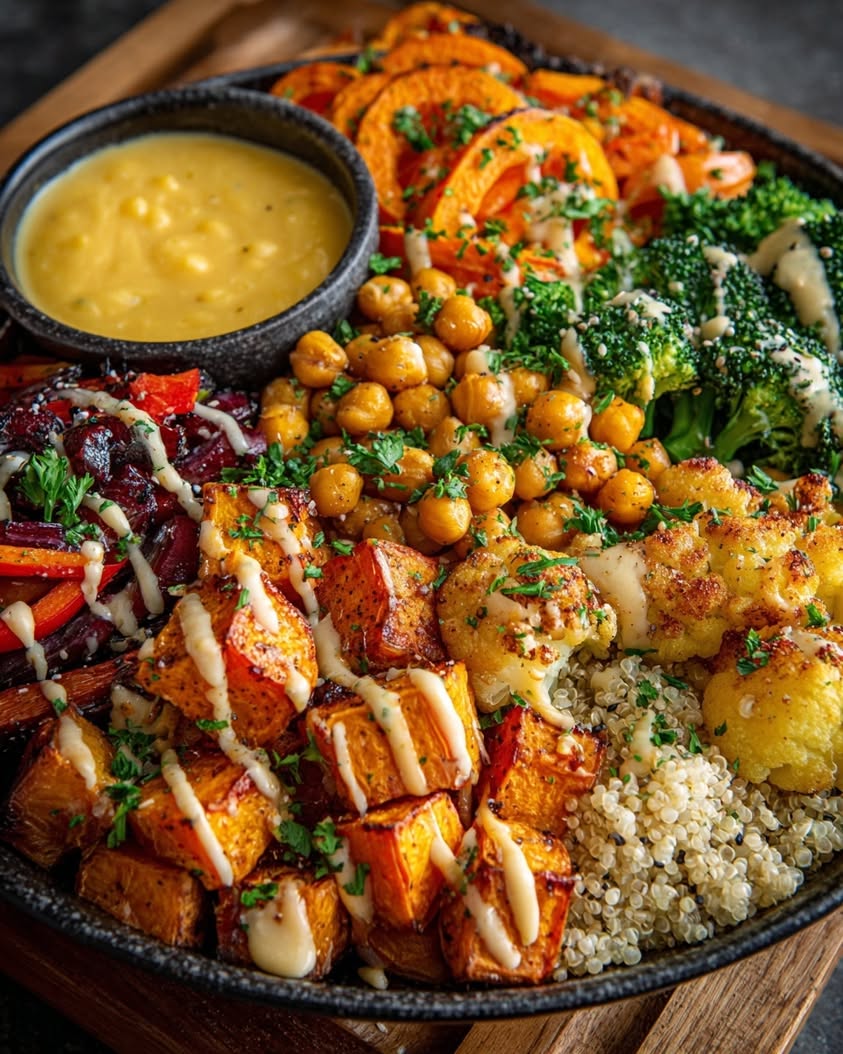
Mediterranean Roasted Veggie Bowls with Maple Tahini Dressing: A Vibrant Weeknight Feast
Imagine a dinner that is both a feast for the eyes and a celebration for your taste buds. These Mediterranean Roasted Veggie Bowls with Maple Tahini Dressing deliver exactly that experience. This recipe transforms humble vegetables into caramelized, tender gems, while protein-rich chickpeas become wonderfully crispy. Ultimately, everything gets tossed in a creamy, sweet, and tangy maple tahini dressing that ties the whole dish together beautifully.
Furthermore, this meal is a perfect example of how simple ingredients can create extraordinary flavor. The roasting process deepens the natural sugars in the vegetables, creating a complex base. Meanwhile, the chickpeas add a satisfying, hearty texture. Finally, the dressing provides a luxurious, velvety finish that makes every bite irresistible. This dish is not just food; it’s a colorful, nutritious experience on a plate.
Consequently, if you are searching for a meal that is easy, healthy, and bursting with Mediterranean flavors, you have found it. These bowls are incredibly versatile and perfect for meal prep. Moreover, they cater to various dietary needs effortlessly. In short, this recipe is a reliable path to a delicious and wholesome dinner any night of the week.
Quick Recipe Highlights
- Flavor Profile: This dish offers a masterful balance of savory, sweet, and tangy notes. The roasted vegetables provide a deep, caramelized earthiness, while the maple tahini dressing introduces a creamy sweetness with a hint of sharpness from the Dijon mustard. Every component works in harmony to create a complex and satisfying taste experience.
- Texture: You will enjoy a delightful contrast of textures in every bite. The roasted veggies become tender with slightly crisp edges, and the chickpeas turn wonderfully crunchy. The creamy maple tahini dressing coats everything smoothly, while fresh garnishes like parsley can add a final pop of freshness and slight bite.
- Aroma: As the vegetables and chickpeas roast, your kitchen will fill with the warm, inviting scents of garlic, paprika, and caramelizing onions. The aroma is hearty and comforting, promising a meal that is both nourishing and deeply flavorful. It’s the kind of smell that makes everyone eagerly ask, “When’s dinner?”
- Visual Appeal: These bowls are a rainbow on a plate. You get vibrant orange from sweet potatoes, deep purple from red onion, green from zucchini, and red from bell peppers. The golden-brown chickpeas and creamy beige dressing complete the picture, making this dish as beautiful to look at as it is to eat.
- Skill Level Needed: This is a beginner-friendly recipe that requires only basic kitchen skills. You need to know how to chop vegetables, toss ingredients with oil, and use an oven. The dressing is a simple whisk-together affair. Therefore, even novice cooks can achieve fantastic results with confidence.
- Special Equipment: You need a large baking sheet, a mixing bowl, and a whisk. Parchment paper is highly recommended for easy cleanup. A good chef’s knife and cutting board are essential for prepping the vegetables. No fancy or specialized tools are required, making this recipe accessible to all.
Recipe Overview
- Difficulty Level: We rate this recipe as “Easy” because it involves straightforward techniques like chopping and roasting. The steps are sequential and simple to follow. There is no complicated timing or advanced culinary methods required. Essentially, if you can use an oven, you can master this dish.
- Category: This recipe falls perfectly into the categories of healthy dinner, vegetarian main course, and meal prep staple. It is a complete, balanced bowl meal featuring protein, complex carbohydrates, and healthy fats. It works for a quick weeknight dinner, a leisurely lunch, or a make-ahead office meal.
- Cuisine: The dish draws clear inspiration from the broad, sun-drenched flavors of the Mediterranean region. It utilizes classic ingredients like chickpeas, olive oil, and tahini. However, it incorporates a modern, global twist with the addition of maple syrup, creating a fusion that is both familiar and excitingly new.
- Cost: This is a very budget-friendly meal. The base ingredients like sweet potatoes, chickpeas, and onions are inexpensive pantry staples. The dressing uses tahini, which is a cost-per-use investment, and maple syrup. Overall, you can create four generous, restaurant-quality servings for a fraction of the price of eating out.
- Season: While truly fantastic year-round, this recipe shines in the fall and winter. It makes use of hearty, robust vegetables like sweet potatoes and red onions that are in season. The warm, roasted flavors are particularly comforting during cooler months. That said, you can adapt it with summer squash and tomatoes for a seasonal twist.
- Occasion: This dish is wonderfully versatile for any occasion. It is casual enough for a simple family dinner, yet elegant and colorful enough to serve to guests. You can easily double the recipe for a crowd. It is also an excellent potluck contribution, as it travels well and can be served at room temperature.
Why You’ll Love This Recipe
First and foremost, the taste and texture are utterly irresistible. The combination of sweet roasted vegetables, crispy spiced chickpeas, and that luxuriously creamy maple tahini dressing creates a symphony in your mouth. Each forkful delivers a perfect balance of savory, sweet, and tangy flavors, complemented by contrasting textures that keep every bite interesting. This is not a boring health food; it is a genuinely crave-worthy meal that satisfies on every level.
Additionally, the convenience factor is a major win. From start to finish, you can have this vibrant dinner on the table in under an hour. The majority of the time is hands-off oven roasting, allowing you to prepare the simple dressing or tidy up the kitchen. Moreover, the entire meal comes together on just one or two baking sheets, meaning cleanup is a breeze. This recipe proves that eating well does not have to be complicated or time-consuming.
From a nutritional standpoint, these Mediterranean Roasted Veggie Bowls are a powerhouse. They are packed with fiber from the chickpeas and vegetables, which aids digestion and promotes lasting fullness. The chickpeas and tahini provide a good dose of plant-based protein and healthy fats. Furthermore, the variety of colorful vegetables ensures a broad spectrum of vitamins, minerals, and antioxidants. You are nourishing your body with every delicious bite.
This dish also holds tremendous social and entertaining value. Its stunning visual appeal makes it impressive to serve to guests, and it easily accommodates various dietary preferences, being naturally vegetarian and easily made vegan or gluten-free. You can set up a “bowl bar” with all the components and let everyone build their own masterpiece. It is a meal that encourages sharing, conversation, and a relaxed, joyful dining experience.
Finally, the cost-effectiveness and accessibility are unbeatable. You can create a restaurant-quality meal for a fraction of the cost. Most ingredients are pantry staples or readily available at any grocery store. The recipe is also incredibly forgiving; you can swap in different vegetables based on what you have on hand or what is on sale. This makes the Mediterranean Roasted Veggie Bowls with Maple Tahini Dressing a practical, economical, and endlessly adaptable addition to your cooking repertoire.
Historical Background and Cultural Significance
The concept of the “bowl meal” is ancient, but its modern iteration as a curated, Instagram-worthy dish is a relatively recent trend. However, the roots of this recipe dig deep into Mediterranean culinary traditions. For centuries, cultures around the Mediterranean Sea have built meals around humble, available ingredients: legumes like chickpeas, seasonal vegetables, olive oil, and sesame paste (tahini). These components formed the backbone of nutritious, peasant-style cooking that was both sustainable and delicious.
Culturally, meals in the Mediterranean region are often centered around sharing and abundance. A large platter of roasted vegetables, a bowl of beans, and various dips and breads would be placed in the center of the table for everyone to enjoy. Our modern bowl presentation is a personalized take on this communal style. It honors the tradition of combining simple, high-quality ingredients to create something greater than the sum of its parts, emphasizing freshness and balance.
The recipe has evolved significantly with global ingredient exchange. The classic Mediterranean combination of chickpeas and tahini is famously found in dishes like hummus. The addition of maple syrup, a distinctly North American ingredient, represents a beautiful fusion of foodways. This evolution shows how traditional recipes are not static; they adapt and incorporate new flavors, creating exciting hybrids that respect their origins while appealing to modern palates.
Regional variations of this concept are endless. In the Eastern Mediterranean, you might find a similar bowl with sumac and pomegranate molasses. In Greece, it could feature oregano and lemon more prominently. Our version, with its smoky paprika and sweet maple, leans into a more globally influenced, contemporary profile. This adaptability is a testament to the strength of the foundational formula: robust vegetables, hearty legumes, and a creamy, flavorful sauce.
Ingredient Deep Dive
Chickpeas (Garbanzo Beans): A staple across the Middle East and Mediterranean for thousands of years, chickpeas are one of the earliest cultivated legumes. Nutritionally, they are a superstar, offering a fantastic blend of plant-based protein, fiber, and complex carbohydrates. This combination promotes steady energy and satiety. For the best result in this recipe, use canned chickpeas for convenience, but be sure to rinse, drain, and pat them very dry. This step is crucial for achieving a crispy roast. Store unused canned chickpeas in a covered container in the fridge for up to 4 days. For a substitution, try canned white beans or lentils, though the texture will be different.
Tahini: Tahini is a paste made from ground sesame seeds and is a cornerstone of Levantine cuisine. It is rich in healthy fats, calcium, and iron. When selecting tahini, look for a brand with a smooth, pourable consistency and a jar where the oil is not completely separated from the paste (a little separation is normal). Stir it well before using. Store opened tahini in the refrigerator, where it will thicken; let it come to room temperature before making the dressing. If you need a substitute, a thick, unsweetened almond or cashew butter can work in a pinch, though the flavor will be distinct.
Sweet Potato: Originally from Central and South America, sweet potatoes have been embraced worldwide for their versatility and nutrition. They are an excellent source of beta-carotene (which converts to Vitamin A), Vitamin C, and fiber. Choose firm sweet potatoes with smooth, unblemished skin. For this recipe, cutting them into even, ¾-inch cubes ensures they roast at the same rate as the other vegetables. Store sweet potatoes in a cool, dark, well-ventilated place—not in the refrigerator. As a variation, you can substitute with butternut squash or regular potatoes.
Maple Syrup: A gift from the forests of North America, pure maple syrup adds a unique, nuanced sweetness that refined sugar cannot match. It contains antioxidants and minerals like manganese and zinc. Always opt for “pure maple syrup,” not pancake syrup, which is primarily corn syrup and artificial flavor. The maple syrup in the dressing balances the tahini’s slight bitterness and the Dijon’s sharpness. Store it in the pantry after opening. For a vegan or lower-glycemic alternative, agave nectar or date syrup can be used.
Smoked Paprika: This spice is made from peppers that are smoked and dried before grinding, a process with roots in Spain. It imparts a deep, smoky flavor without any heat, which adds incredible depth to the roasted vegetables and chickpeas. From a health perspective, paprika is rich in Vitamin A and antioxidants. For the best flavor, ensure your smoked paprika is fresh (not years old). Store spices in a cool, dark cabinet. If you don’t have smoked paprika, a combination of regular paprika and a tiny pinch of chipotle powder can mimic the flavor.
Common Mistakes to Avoid
- Not Drying the Chickpeas: This is the number one reason chickpeas won’t get crispy. After rinsing, spread them on a clean kitchen towel or paper towels and pat them thoroughly dry. Any residual moisture will steam them in the oven, resulting in a soft, not crunchy, texture.
- Crowding the Baking Sheet: If you pile all the vegetables and chickpeas onto one small pan, they will steam instead of roast. You need space for hot air to circulate. Use two large baking sheets if necessary to ensure everything is in a single, uncrowded layer for perfect caramelization.
- Cutting Vegetables Unevenly: Inconsistent sizes lead to inconsistent cooking. Some pieces will be burnt while others are still hard. Take the time to chop your sweet potatoes, zucchini, and peppers into uniformly sized pieces (about ¾-inch cubes) so they roast evenly and finish at the same time.
- Using Old or Low-Quality Tahini: Tahini can go rancid or become extremely bitter over time. Always taste a tiny bit before using. Good tahini should taste nutty and smooth, not harsh or sour. Investing in a fresh, high-quality brand makes a dramatic difference in the flavor of your dressing.
- Skipping the Acid in the Dressing: The recipe likely calls for lemon juice or vinegar. This acid is not optional; it is essential for balancing the richness of the tahini and the sweetness of the maple syrup. Without it, the dressing will taste flat and overly heavy.
- Over-blending or Under-whisking the Dressing: If using a blender for the maple tahini dressing, over-processing can make it too thick and pasty. If whisking by hand, you must whisk vigorously and continuously as you add the water to achieve a smooth, creamy emulsion. A lumpy dressing is less appealing.
- Forgetting to Season in Layers: Do not rely solely on the dressing for seasoning. Be sure to generously season the vegetables and chickpeas with salt and pepper before they go into the oven. This builds foundational flavor in every component of your Mediterranean Roasted Veggie Bowls.
- Roasting at the Wrong Temperature: A temperature that’s too low won’t caramelize the vegetables, and one that’s too high may burn the outside before the inside is tender. Following the recipe’s specified temperature (usually around 425°F) is key for the perfect roast.
Essential Techniques
Dry-Roasting Chickpeas: Achieving crispy chickpeas is a game-changer for texture. The technique is all about moisture removal. After rinsing, pat them obsessively dry with towels. Toss them with a small amount of oil—too much oil will make them soggy. Spread them in a single layer on the baking sheet, giving them plenty of space. Roast until they are golden brown and sound hollow when shaken in the pan. The common pitfall is impatience; they need the full time to dry out and crisp up. Visual cues are a deep golden color and a slightly shrunken, wrinkled appearance.
Creating a Creamy Tahini Dressing: Tahini dressings can seize up and become thick or grainy if not made correctly. The key is to start by whisking the tahini with the acidic component (lemon juice/vinegar) and maple syrup first. This initial mixture will thicken dramatically. Then, add warm water very slowly, whisking constantly. The magic happens here: the mixture will thin out and transform into a smooth, creamy, pourable sauce. The pitfall is adding all the water at once. The visual cue for success is a dressing with the consistency of heavy cream or runny yogurt.
Roasting Vegetables for Maximum Flavor: The goal is caramelization, not just cooking. Cut vegetables uniformly. Toss them with enough oil to coat lightly but thoroughly—this conducts heat and promotes browning. Do not overcrowd the pan. Season well with salt and spices before roasting. The high oven temperature is crucial; it quickly browns the exterior while softening the interior. The common mistake is stirring too often; let them sit undisturbed for at least 15-20 minutes to develop those delicious, flavorful browned spots. Success is visible: tender vegetables with golden-brown, slightly crisp edges.
Pro Tips for Perfect Mediterranean Roasted Veggie Bowls
Use Parchment Paper: Lining your baking sheets with parchment paper prevents sticking and makes cleanup incredibly easy. It also promotes even browning without the risk of burning that can sometimes occur on bare metal pans.
Preheat Your Baking Sheet: For extra-crispy chickpeas and vegetables, place your empty baking sheet in the oven as it preheats. Carefully add the oiled ingredients to the hot pan; the immediate sizzle helps kickstart the crisping process.
Make the Dressing Ahead: The maple tahini dressing tastes even better after the flavors meld for a few hours. Make it in the morning or the day before and store it in the fridge. Let it come to room temperature and give it a good stir before serving.
Reserve Fresh Herbs for Garnish: While dried herbs like oregano are great for roasting, add fresh herbs like parsley, cilantro, or dill only after the bowls are assembled. The fresh, bright flavor and color provide a final layer of complexity.
Add a Crunchy Topping: Elevate your bowls with a final textural element. A sprinkle of toasted pine nuts, slivered almonds, or pumpkin seeds adds a wonderful crunch that contrasts beautifully with the creamy dressing and tender vegetables.
Warm Your Serving Bowls: For a truly restaurant-quality experience, warm your serving bowls before assembling. This keeps the meal hot longer and makes the entire eating experience more enjoyable, especially if you are serving guests.
Taste and Adjust the Dressing: Always taste your dressing before drizzling. You may want an extra squeeze of lemon for brightness, a pinch of salt, or a tiny bit more water to reach your desired consistency. Adjust it to your personal preference.
Let the Veggies Rest: When the vegetables come out of the oven, let them sit for 2-3 minutes on the pan. This allows them to firm up slightly and makes them easier to handle and portion into your bowls without falling apart.
Variations and Adaptations
Regional Variations: Travel the Mediterranean through your bowl. For a Greek twist, add kalamata olives, crumbled feta cheese, and a lemon-oregano vinaigrette. For a Middle Eastern flair, incorporate sumac-spiced onions, a drizzle of pomegranate molasses, and a sprinkle of za’atar. An Italian-inspired version could feature roasted cherry tomatoes, fresh basil, and a balsamic glaze instead of the tahini dressing.
Seasonal Adaptations: Embrace what is fresh. In spring, use asparagus and green garlic. Summer bowls can shine with zucchini, eggplant, and bell peppers. For fall, focus on sweet potatoes, Brussels sprouts, and red onions. In winter, try a combination of parsnips, carrots, and turnips for a hearty, root vegetable-centric bowl.
Dietary Modifications: To make this dish vegan, ensure your maple syrup is vegan-friendly (most are) and omit any cheese garnish. For a gluten-free meal, it is naturally compliant—just double-check that your spices and other packaged ingredients are certified GF. To add more protein, consider serving it over quinoa or farro, or add a side of baked tofu or falafel.
Flavor Variations: Change up the spice profile easily. Swap smoked paprika for cumin and coriander for a more North African taste. Add a teaspoon of harissa paste to the dressing for a spicy kick. For an herby fresh take, blend a handful of fresh basil or cilantro into the tahini dressing.
Texture Modifications: If you prefer softer chickpeas, skip the separate roasting and add them to the sheet pan with the vegetables for the last 10 minutes only. For a creamier base, serve the components over a bed of hummus or Greek yogurt instead of plain greens or grains.
Presentation Alternatives: Instead of a deconstructed bowl, toss all the roasted components together with half the dressing in a large serving platter for a family-style meal. You can also use the mixture as a hearty filling for warm pita bread or wraps, drizzling the remaining dressing inside.
Serving and Presentation Guide
Plating Techniques: Start with a base to catch the delicious dressing. A bed of fluffy quinoa, couscous, or massaged kale works beautifully. Then, artfully arrange the different roasted vegetables and chickpeas in sections or piles around the bowl. This showcases each ingredient’s color and makes the bowl visually appealing. Finally, drizzle the maple tahini dressing over the top in a zig-zag pattern or around the edges, allowing it to pool enticingly at the bottom.
Garnishing Ideas: Garnishes are the final touch that elevates the dish. A generous sprinkle of fresh chopped parsley, cilantro, or mint adds color and freshness. For richness, add a few crumbles of feta or goat cheese. For crunch, top with toasted sesame seeds, pine nuts, or chopped pistachios. A final grind of black pepper or a light dusting of paprika ties everything together.
Traditional Accompaniments: In a traditional Mediterranean spread, these bowls would be accompanied by warm, fresh pita bread or flatbread for scooping. A side of mixed olives, a simple cucumber-tomato salad, or a dollop of tangy tzatziki would also complement the flavors perfectly, creating a more expansive and shared meal experience.
Modern Serving Suggestions: For a contemporary lunch, pack the components separately in a meal prep container and assemble just before eating to keep textures intact. For a dinner party, consider serving the components in separate bowls on the table, allowing guests to build their own custom creations, which is always a fun and interactive dining experience.
Temperature Considerations: These bowls are fantastic served warm, right after roasting. However, they are equally delicious at room temperature, making them ideal for picnics, potlucks, or next-day lunches. If you have prepared components in advance, briefly reheat the vegetables and chickpeas in a warm oven or skillet before assembling to revive their texture.
Portion Control Tips: A standard serving is about 1.5 to 2 cups of the vegetable-chickpea mixture over a ½-cup base of grain or greens, with 2-3 tablespoons of dressing. To manage portions easily, use a measuring cup to divide the roasted mixture evenly among bowls. The dressing can be served on the side for those who prefer to control the amount.
Wine and Beverage Pairing
Wine Pairings: The sweet and savory elements in these Mediterranean Roasted Veggie Bowls call for versatile, food-friendly wines. A crisp, dry Rosé from Provence complements the vegetables’ earthiness and cuts through the creamy dressing. Alternatively, a medium-bodied white like a Greek Assyrtiko or a Sauvignon Blanc with its herbal notes pairs wonderfully. For red wine lovers, a light, low-tannin Pinot Noir won’t overpower the dish and will harmonize with the smoky paprika and sweet potatoes.
Non-Alcoholic Alternatives: Sparkling water with a squeeze of lemon or lime is a classic, refreshing choice that cleanses the palate. For something more special, try a homemade ginger-lemonade; the ginger’s spice plays nicely with the dish’s flavors. A tart cherry or pomegranate spritzer (sparkling water mixed with a splash of juice) also mirrors the fruity, earthy notes of the meal beautifully.
Coffee/Tea Pairings: While not a typical pairing for dinner, if enjoying this as a lunch, a cup of mint tea would be a wonderfully authentic Mediterranean accompaniment, aiding digestion. A light, floral herbal tea like chamomile or lemongrass could also provide a soothing, aromatic finish to the meal without competing with its robust flavors.
Temperature Considerations: Serve white wines and rosés well-chilled, between 45-50°F. Red wines like Pinot Noir should be slightly cool, around 55°F. Non-alcoholic sparkling drinks are best served ice-cold to provide a refreshing contrast to the warm, roasted components of the bowl.
Serving Suggestions: Always offer water alongside any beverage pairing to help guests cleanse their palates. If serving wine, pour modestly to start, allowing the complex flavors of the food to remain the star of the show. For non-alcoholic options, consider serving them in elegant glassware to make the meal feel just as special.
Storage and Shelf Life
Storage Methods: Store all components separately for best results. Place cooled roasted vegetables and chickpeas in an airtight container in the refrigerator. Store the maple tahini dressing in a separate jar or container with a tight-fitting lid. If using a grain base, store that separately as well. This prevents the vegetables from becoming soggy and allows you to reheat components properly.
Temperature Requirements: All components must be refrigerated at or below 40°F. Do not leave assembled bowls or any of the ingredients at room temperature for more than two hours. The dressing, containing tahini and lemon juice, is particularly stable, but refrigeration maintains its freshness and prevents separation.
Container Recommendations: Glass containers with snap-lock lids are ideal as they do not absorb odors and allow you to see the contents. For the dressing, a small mason jar is perfect for shaking and remixing before use. Ensure all containers are completely airtight to maximize shelf life and prevent the transfer of smells in your fridge.
Signs of Spoilage: Discard any component that develops an off smell, visible mold, or significant sliminess. The vegetables may soften over time, which is normal, but they should not become mushy or sour. If the dressing separates, it’s usually fine—just stir or shake vigorously. If it smells rancid or fermented, it should be discarded.
Reheating Instructions: Reheat the roasted vegetables and chickpeas in a 350°F oven for 10-15 minutes or in a dry skillet over medium heat until warmed through. This method helps restore some crispiness. Avoid microwaving if possible, as it can make them soft and steamy. The dressing should be stirred and served at room temperature.
Freezing Guidelines: Freezing is not recommended for the assembled bowls or the roasted vegetables, as their texture will become very soft and watery upon thawing. The maple tahini dressing can be frozen for up to a month. Thaw it in the refrigerator overnight and whisk vigorously to re-emulsify before using.
Make Ahead Strategies
Prep Timeline: You can fully prepare this meal 2-3 days in advance. Day 1: Chop all vegetables and store them in a sealed container or bag in the fridge. Make the maple tahini dressing and refrigerate. Day of serving: Roast the vegetables and chickpeas, then assemble the bowls. Alternatively, roast everything 1 day ahead and gently reheat before serving.
Storage Between Steps: Keep chopped, uncooked vegetables in the refrigerator in a bowl covered with a damp paper towel or in a reusable produce bag to maintain moisture. Prepared dressing can live in the fridge for up to 5 days. Cooked components should be cooled completely before being transferred to airtight containers for refrigeration.
Quality Impact Assessment: Making the dressing ahead greatly improves its flavor. Pre-chopping vegetables saves significant time but does not affect final quality. Roasting the vegetables and chickpeas a day ahead is acceptable, though they will lose a bit of their crisp edge upon reheating. The trade-off for convenience is minimal, and the meal will still be delicious.
Assembly Tips: For the freshest presentation, assemble bowls just before eating. If you must pre-assemble for lunches, keep the dressing in a separate small container and add it right before you eat to prevent the base (greens or grains) from becoming soggy. Pack any delicate garnishes like fresh herbs separately.
Reheating Guidelines: As mentioned, reheat roasted components in the oven or a skillet to restore texture. If taking a pre-assembled bowl to work, you can reheat the vegetable/chickpea portion in the microwave, then stir in the cold dressing and fresh garnishes afterward for the best texture and flavor contrast.
Fresh Element Additions: No matter how far ahead you prep, always add fresh elements right before serving. This includes the final drizzle of dressing, any fresh herb garnish, crunchy toppings like nuts, or a squeeze of fresh lemon juice. These last-minute additions brighten the entire dish and make it taste freshly made.
Scaling Instructions
Halving the Recipe: To serve two, simply divide all ingredient quantities by two. Use one standard baking sheet for the reduced volume. Cooking times may be slightly shorter by about 5 minutes, so start checking for doneness early. The dressing recipe halves easily, but consider making the full batch as it keeps well and is versatile for other meals.
Doubling or Tripling: For a crowd, multiply the ingredients accordingly. The key is to use multiple baking sheets and roast in batches, or use two oven racks and rotate the sheets top-to-bottom and front-to-back halfway through cooking. Do not overcrowd the pans. You may need to extend the roasting time by 5-10 minutes per batch. Make the dressing in a blender for larger quantities to ensure smooth emulsification.
Equipment Adjustments: Scaling up requires more baking sheets and large mixing bowls. If you are roasting multiple trays at once, ensure your oven has good air circulation; convection settings are great for this. For very large batches, consider roasting the vegetables and chickpeas separately to better manage oven space and ensure even cooking.
Timing Modifications: When cooking multiple batches, the first batch will stay warm if you tent it loosely with foil. Factor in the extra time needed for chopping larger quantities of vegetables. The active prep time will increase linearly, but the oven time may overlap if you have enough racks and pans.
Storage Considerations: Leftovers from a scaled-up recipe will be abundant. Plan your storage containers in advance. Label and date them clearly. Having a plan for leftovers, such as using them in wraps or salads later in the week, will prevent food waste and give you easy future meals.
Nutritional Deep Dive
Macro Breakdown: A serving of these Mediterranean Roasted Veggie Bowls provides an excellent balance of macronutrients. The chickpeas and tahini are rich sources of plant-based protein and healthy fats, crucial for satiety and cell function. The sweet potatoes and other vegetables offer complex carbohydrates and fiber for sustained energy. The olive oil contributes heart-healthy monounsaturated fats. This combination supports stable blood sugar levels and keeps you feeling full and energized for hours.
Micronutrient Analysis: This dish is a micronutrient powerhouse. Sweet potatoes are loaded with beta-carotene (Vitamin A), essential for vision and immunity. The variety of vegetables provides Vitamin C, potassium, and folate. Tahini is a good source of calcium, iron, and magnesium. Chickpeas add B vitamins and zinc. Together, they deliver a broad spectrum of vitamins and minerals that support overall health, from bone strength to immune defense.
Health Benefits: Regularly consuming meals like this is linked to numerous health benefits. The high fiber content promotes digestive health and may help lower cholesterol. The antioxidants in the colorful vegetables combat oxidative stress and inflammation. The healthy fat profile supports heart health. Furthermore, the plant-based nature of the meal aligns with dietary patterns associated with longevity and reduced risk of chronic diseases.
Dietary Considerations: This recipe is naturally vegetarian and can be easily made vegan. It is inherently dairy-free (unless topped with cheese) and gluten-free, provided all packaged ingredients like spices are certified GF. It is also nut-free, making it suitable for many common allergies. The whole-food ingredients make it a clean-eating choice.
Portion Analysis: A standard serving is nutritionally dense but not excessively high in calories, making it a fantastic main course for weight management or maintenance. The high fiber and protein content create a strong sense of fullness, which can help prevent overeating later. It is a satisfying meal that nourishes without leaving you feeling heavy.
Weight Management Tips: To make this bowl even more weight-conscious, you can slightly reduce the amount of olive oil used in roasting (use a spray bottle for misting). You can also increase the proportion of non-starchy vegetables like zucchini and peppers relative to the sweet potato. Serving it over a large bed of leafy greens instead of a grain base will further increase volume and nutrients without significantly adding calories.
Dietary Adaptations
Gluten-Free: This recipe is naturally gluten-free as written. The only potential hidden sources of gluten are in pre-made spice blends or cross-contamination. To ensure it’s fully GF, use spices from a certified gluten-free brand and confirm that your tahini and maple syrup are processed in GF facilities. Serve over quinoa, rice, or greens instead of couscous or farro if those are concerns.
Dairy-Free: The base recipe contains no dairy. The creamy texture comes entirely from the tahini-based dressing. For garnishes, avoid cheese or yogurt-based toppings. Instead, use nutritional yeast for a cheesy flavor, or top with avocado for extra creaminess. This adaptation makes the dish suitable for those with lactose intolerance or a dairy allergy.
Vegan: This{“success”:true,”message”:”Recipe created successfully”,”post_id”:7833,”tasty_recipe_id”:7833,”shortcode”:” Print
Mediterranean Home Cooking Roasted Veggie & Chickpea Bowls with Maple Dijon Tahini Dressing
Description
A vibrant and hearty Mediterranean-inspired bowl featuring roasted vegetables and chickpeas, topped with a sweet and tangy maple Dijon tahini dressing.
Ingredients
For the Crust:
- 2 cups chickpeas, drained and rinsed
- 1 large sweet potato, cubed
- 1 red bell pepper, sliced
- 1 zucchini, sliced
- 1 red onion, sliced
- 2 tablespoons olive oil
- 1 teaspoon smoked paprika
- 1 teaspoon garlic powder
- Salt and pepper to taste
- 4 cups cooked quinoa or brown rice
- 1/4 cup tahini
- 2 tablespoons maple syrup
- 1 tablespoon Dijon mustard
- 2 tablespoons lemon juice
- 2–3 tablespoons water
- Fresh parsley for garnish
Instructions
1. Prepare the Crust:
- Preheat oven to 400°F (200°C). Line a baking sheet with parchment paper.
- In a large bowl, toss chickpeas, sweet potato, bell pepper, zucchini, and red onion with olive oil, smoked paprika, garlic powder, salt, and pepper. Spread evenly on the baking sheet.
- Roast for 25-30 minutes, stirring halfway, until vegetables are tender and slightly caramelized.
- While roasting, prepare the dressing: In a small bowl, whisk together tahini, maple syrup, Dijon mustard, lemon juice, and water until smooth. Adjust consistency with more water if needed.
- Assemble bowls by dividing cooked quinoa or brown rice among four bowls. Top with roasted veggies and chickpeas.
- Drizzle with maple Dijon tahini dressing and garnish with fresh parsley before serving.
Notes
You can customize the seasonings to taste.

I’m Billy, a classically trained culinary school graduate from The Culinary Institute of America with over 12 years in the restaurant industry and over 19 years of cooking experience.