
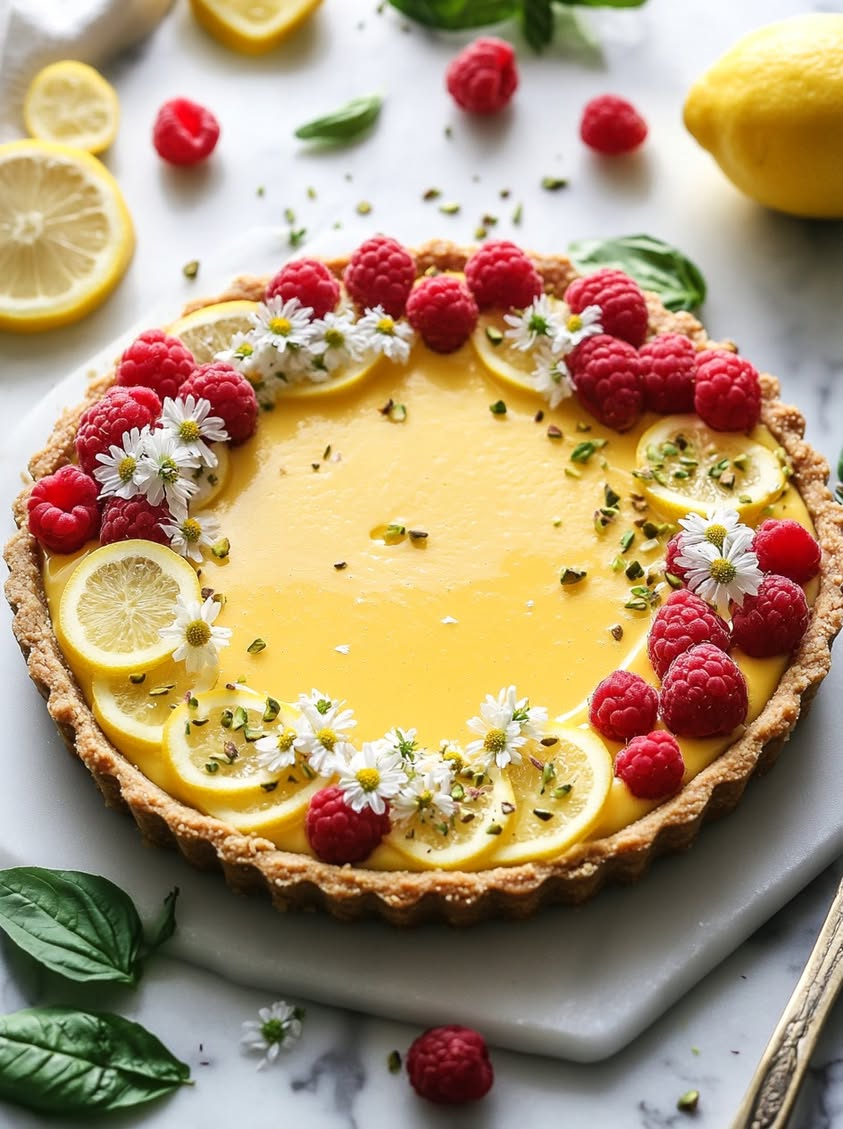
Elegant No-Bake Lemon Velvet Tart with a Biscoff Crust Recipe: A Zesty, Effortless Dessert
Imagine a dessert that perfectly balances sunny citrus brightness with a rich, spiced cookie crust. This Elegant No-Bake Lemon Velvet Tart with a Biscoff Crust Recipe delivers exactly that. It is a stunning centerpiece dessert that requires absolutely zero oven time. Consequently, it is the ultimate solution for warm weather entertaining or when you simply crave a spectacular sweet treat without the heat.
This recipe features a velvety smooth lemon filling that is both tart and sweet. It rests upon a deeply flavorful crust made from crushed Biscoff cookies. The contrast is nothing short of magical. Moreover, the final garnish of fresh berries and mint elevates it from a simple tart to a restaurant-quality masterpiece. Ultimately, this Elegant No-Bake Lemon Velvet Tart with a Biscoff Crust Recipe proves that impressive desserts can be wonderfully simple.
The magic lies in the harmony of textures and flavors. You get the snappy, spiced crunch of the crust giving way to the cloud-like, creamy lemon filling. Each bite is a refreshing burst of citrus that is never overly heavy. This dessert is a guaranteed crowd-pleaser. It is perfect for dinner parties, summer picnics, or as a bright finish to a rich meal.
Quick Recipe Highlights
- Flavor Profile: This Elegant No-Bake Lemon Velvet Tart with a Biscoff Crust Recipe masterfully combines the zesty, bright punch of fresh lemon with the warm, caramelized spice of Biscoff cookies. The result is a sophisticated balance that is neither too sweet nor too sour.
- Texture: Experience a delightful textural journey from the very first bite. The crust provides a firm, crumbly base that contrasts beautifully with the luxuriously smooth and creamy velvet filling, which sets to a perfect sliceable consistency.
- Aroma: The scent is instantly inviting. You will notice the warm aromas of cinnamon, ginger, and caramel from the Biscoff crust, followed immediately by the fresh, clean, and uplifting fragrance of citrus from the lemon filling and zest.
- Visual Appeal: This tart is a showstopper. Its vibrant yellow filling in a dark brown crust creates stunning contrast. Finally, the garnish of red berries and green mint adds a pop of color that makes it almost too beautiful to eat.
- Skill Level Needed: This is a beginner-friendly recipe designed for success. The steps are straightforward, involving mixing, pressing, and blending. Therefore, even novice bakers can achieve a professional-looking result with confidence.
- Special Equipment: You only need a few basic tools: a food processor or zip-top bag for crushing cookies, a mixing bowl, and a tart pan with a removable bottom. A hand mixer or stand mixer will make the filling extra smooth, but a whisk and strong arm can also work.
Recipe Overview
- Difficulty Level: We rate this Elegant No-Bake Lemon Velvet Tart with a Biscoff Crust Recipe as “Easy.” The process involves no complex techniques like tempering eggs or baking a custard. All steps are simple assembly, and the setting happens passively in the refrigerator. The most challenging part is patiently waiting for it to chill.
- Category: This dessert falls squarely into the category of no-bake pies and tarts. It is also an excellent choice for a make-ahead dessert, a potluck contribution, or a fancy finish to a special meal. Its refreshing quality makes it ideal for spring and summer menus.
- Cuisine: While lemon tarts have strong roots in French patisserie, this version takes a modern, fusion approach. The use of Biscoff cookies, a Belgian invention, adds a unique twist. Consequently, the recipe blends European dessert traditions into a uniquely accessible and contemporary creation.
- Cost: This is a relatively affordable dessert to make. The primary costs are for cream cheese, heavy cream, and fresh lemons. Biscoff cookies are widely available and reasonably priced. Overall, you can create this elegant tart for a fraction of the cost of a bakery version.
- Season: This tart shines brightest in the spring and summer months. Its bright, citrusy flavor is a perfect counterpoint to warm weather. It is also a fantastic holiday dessert for Easter, Mother’s Day, or Fourth of July gatherings where a light, refreshing option is welcome.
- Occasion: Its elegance suits formal dinners, bridal showers, and afternoon tea. Meanwhile, its no-bake simplicity makes it perfect for casual barbecues, weeknight treats, or when you need a last-minute impressive dessert. It truly is versatile for any event.
Why You’ll Love This Recipe
First and foremost, the taste and texture are utterly divine. This Elegant No-Bake Lemon Velvet Tart with a Biscoff Crust Recipe offers a symphony of flavors that dance on your palate. The filling is luxuriously smooth with a perfect tangy-sweet balance that lemon lovers will adore. Furthermore, the Biscoff crust introduces warm notes of cinnamon and caramel, creating a depth of flavor that a traditional graham cracker crust simply cannot match. Every single bite provides a satisfying contrast between the creamy filling and the spiced, crunchy base.
Secondly, the convenience factor is unbeatable. Since this is a no-bake dessert, you avoid heating up your kitchen, which is a major benefit during summer. The active preparation time is under 30 minutes. After that, the refrigerator does all the work of setting the tart. This makes the recipe ideal for busy hosts who want to prepare desserts ahead of time. You can easily assemble it in the morning for an evening event, freeing you up to focus on other dishes.
Additionally, this dessert offers some nutritional advantages compared to heavier baked goods. While it is certainly a treat, lemons provide a good dose of vitamin C and antioxidants. Using fresh lemon juice and zest ensures you get real fruit benefits without artificial flavors. You control the sweetness level, potentially reducing the sugar slightly if desired. Choosing a high-quality cream cheese and real dairy cream also means you are avoiding the stabilizers and preservatives often found in store-bought versions.
From a social perspective, this tart has immense entertaining value. Its stunning appearance guarantees compliments from your guests. It looks like you spent hours in a professional kitchen, yet the secret is its simplicity. Serving an Elegant No-Bake Lemon Velvet Tart with a Biscoff Crust Recipe shows thoughtfulness and care. It is a conversation starter and a dessert that people will remember and ask you for the recipe.
Finally, it is cost-effective and accessible. The ingredients are common and can be found at any standard grocery store. You do not need expensive specialty items. Compared to ordering a similar tart from a bakery or restaurant, making it at home saves a significant amount of money. This allows you to create a luxurious dessert experience on a modest budget, perfect for family celebrations or frequent treats.
Historical Background and Cultural Significance
The lemon tart, or *tarte au citron*, has a storied history in French cuisine. Its origins are somewhat debated, but many food historians trace similar citrus custard pies back to Medieval times. However, the modern version we recognize likely solidified in the 19th century with the refinement of pastry techniques. The French mastery of patisserie elevated the simple lemon curd into a smooth, refined filling encased in delicate pâte sucrée. This dessert became a staple in Parisian cafes, symbolizing elegance and culinary precision.
Culturally, lemon desserts hold significance across Europe. In England, lemon curd is a teatime classic. In Italy, *limoncello* and lemon granita showcase the fruit’s versatility. The French tart, however, became the gold standard for its perfect balance of intense flavor and silky texture. It represents a celebration of seasonal, bright ingredients and technical skill. Serving a lemon tart implies a certain level of culinary sophistication and an appreciation for clean, vibrant flavors.
The evolution of the recipe is a tale of adaptation and convenience. Traditional French lemon tart filling is baked with eggs, which can be tricky to avoid curdling. The no-bake version is a modern innovation, often using cream cheese or condensed milk to stabilize the filling without eggs. This adaptation made the dessert more accessible to home cooks. The introduction of cookie crusts, like Biscoff, is another contemporary twist, moving away from labor-intensive pastry dough to quicker, flavor-packed alternatives.
Regional variations abound. In the American South, lemon icebox pie with a cracker crust is a beloved classic. In the UK, a lemon meringue pie adds a fluffy toasted topping. Our Elegant No-Bake Lemon Velvet Tart with a Biscoff Crust Recipe sits at a delicious intersection of these traditions. It borrows the sophistication of the French tart, the convenience of the American icebox pie, and introduces a globally loved cookie for a crust. This fusion creates a dessert that is both timeless and excitingly new.
Ingredient Deep Dive
Biscoff Cookies (Speculoos): These spiced shortcrust biscuits hail from Belgium and the Netherlands, traditionally served on St. Nicholas’ Day. Their unique flavor comes from a blend of cinnamon, nutmeg, cloves, ginger, and cardamom, along with brown sugar for caramel notes. Nutritionally, they are a cookie, so enjoy in moderation, but they do provide a small amount of iron. For the best crust, use the classic Biscoff cookies, not the spread. Store them in a sealed container to maintain crispness. For substitutions, gingersnaps or graham crackers work, but you will lose the distinctive speculoos spice profile.
Cream Cheese: A cornerstone of American no-bake desserts, cream cheese originated in New York in the 19th century. It provides the stable, tangy base for our velvet filling. Full-fat, brick-style cream cheese is non-negotiable for proper texture and setting ability. It offers protein, calcium, and vitamin A. Always use it at room temperature to ensure a lump-free, smooth blend with other ingredients. Store it tightly wrapped in the refrigerator. For dairy-free adaptations, a high-quality, firm vegan cream cheese alternative can be used, though the flavor may vary slightly.
Fresh Lemons: The star of the show. Lemons have been cultivated for thousands of years, originating in Asia and spreading via trade routes. They are packed with vitamin C and antioxidants. For this Elegant No-Bake Lemon Velvet Tart with a Biscoff Crust Recipe, fresh juice and zest are absolutely critical. Bottled juice lacks the bright, volatile oils and can impart a flat or metallic taste. Choose heavy, firm lemons with smooth skin for the most juice. Zest them before juicing for easiest handling. Store lemons at room temperature for a week or in the fridge for longer.
Heavy Whipping Cream: This ingredient is responsible for the “velvet” in the tart’s name. When whipped, it incorporates air, lightening the cream cheese filling and giving it a mousse-like texture. Heavy cream, with its high fat content (36% or more), whips best and holds its structure. It provides richness and helps the tart set firmly when chilled. For best results, ensure both your cream and your mixing bowl are very cold. For a lighter version, you could experiment with well-chilled coconut cream, though the flavor will be different.
Common Mistakes to Avoid
- Using Cold Cream Cheese: This is the number one cause of a lumpy filling. Cold cream cheese will not blend smoothly with the other ingredients. Always plan ahead and let your cream cheese sit on the counter for at least an hour until it is perfectly soft and spreadable.
- Over-Processing the Crust: If you pulse the Biscoff cookies in a food processor for too long, they can turn into a fine dust that, when mixed with butter, becomes pasty instead of crumbly. Pulse just until you have coarse, sandy crumbs with a few small chunks for texture.
- Not Pressing the Crust Firmly: A loosely pressed crust will crumble and fall apart when you slice the tart. Use the bottom of a measuring cup or glass to press the crumbs very firmly and evenly into the pan and up the sides. This creates a stable base.
- Under-Whipping the Cream: If your heavy cream is only softly whipped, the filling will be too loose and may not set properly. Whip the cream to firm, stiff peaks so it can support the weight of the cream cheese mixture and provide structure.
- Zesting the White Pith: The white pith underneath the yellow lemon zest is intensely bitter. When zesting, use a fine grater or microplane and only remove the bright yellow outer layer. Stop as soon as you see white.
- Adding Fresh Fruit Garnish Too Early: If you place fresh berries on top of the tart before serving, their juices will bleed and create wet spots on the beautiful velvet surface. Always add fresh garnishes just before you plan to serve the dessert.
- Impatient Chilling: Trying to slice the tart after only an hour or two in the fridge will result in a mess. The filling needs a full four hours, preferably overnight, to set completely and achieve the perfect clean slice.
- Forgetting to Grease the Pan: Even with a removable bottom, a light coating of butter or non-stick spray on the tart pan ensures the crust releases cleanly without any broken edges, preserving its elegant appearance.
Essential Techniques
Creating the Perfect Crumb Crust: This technique is foundational for no-bake pies. The goal is to transform cookies into a cohesive, press-in crust. First, crush the cookies to a uniform sandy texture with a few pea-sized pieces for structure. Next, thoroughly mix the melted butter into the crumbs; every particle should be coated. This butter acts as the glue. Finally, press the mixture firmly and evenly into the pan. The “press” is key—use a flat-bottomed object and apply even pressure across the base and up the sides. A properly pressed crust will hold together when sliced.
Whipping Cream to Stiff Peaks: This aerates the cream, increasing its volume and stabilizing the filling. Start with a very cold bowl and beaters. Pour in the cold heavy cream and begin whipping on medium speed. As it thickens, increase the speed. Stop when the beaters leave distinct, firm ridges in the cream, and the peaks stand straight up when you lift the beaters. The cream should look smooth, not grainy. Under-whipped cream won’t provide enough structure, while over-whipped cream will become buttery and separate.
Folding Ingredients Gently: Folding is the gentle method of combining a light, airy ingredient (like whipped cream) with a heavier one (the cream cheese mixture) without deflating the air bubbles. Use a large rubber spatula. Cut down through the center of the bowl, scrape along the bottom, and fold the mixture over onto itself. Rotate the bowl a quarter turn and repeat. This technique preserves the airy, velvet texture. Stirring or beating would knock out the air and result in a dense filling.
Pro Tips for Perfect Elegant No-Bake Lemon Velvet Tart
For an extra-stable crust that holds up for days, add one tablespoon of granulated sugar to the Biscoff crumbs before mixing with the butter. The sugar will caramelize slightly with the butter, creating a firmer bind.
To prevent a soggy crust, you can blind-bake it very briefly. Spread the pressed crust in the pan and bake at 350°F for 8-10 minutes, then let it cool completely before adding the filling. This step is optional but adds durability.
Ensure your filling is ultra-smooth by sifting the powdered sugar into the cream cheese mixture. This prevents any tiny lumps of sugar from remaining in your otherwise perfectly velvety filling.
For the most intense lemon flavor, infuse the granulated sugar with lemon zest before you begin. Rub the zest and sugar together between your fingers until the sugar is fragrant and pale yellow. Then use this lemon sugar in the filling.
When slicing, dip your sharp knife in hot water and wipe it clean between each cut. This will give you pristine, clean slices with sharp edges, showcasing the beautiful layers of your tart.
If your kitchen is very warm, chill your mixing bowl and beaters in the freezer for 15 minutes before whipping the cream. The colder everything is, the quicker and more stable your whipped cream will be.
For a decorative edge, use the bottom of a small spoon or your thumb to press a fluted pattern into the top edge of the crust before chilling. It adds a lovely handmade touch.
Let the finished tart sit at room temperature for about 10 minutes before serving. This slight warming will soften the filling just enough to make it creamy and easy to cut, rather than rock-hard from the fridge.
Variations and Adaptations
Regional Variations: Travel the world through your tart. For a Mediterranean twist, add a tablespoon of finely chopped fresh rosemary to the crust mixture. For a tropical flair, replace half the lemon juice with fresh passion fruit pulp and garnish with toasted coconut. A British-inspired version could include a layer of lemon curd beneath the velvet filling for a double-lemon punch.
Seasonal Adaptations: Make this dessert year-round. In fall, incorporate a teaspoon of pumpkin pie spice into the Biscoff crust and garnish with candied ginger. For winter, add a hint of vanilla bean to the filling and top with sugared cranberries and a sprig of rosemary. In spring, fold a handful of very finely chopped fresh basil into the filling and garnish with edible flowers.
Dietary Modifications: This recipe is adaptable. For a gluten-free Elegant No-Bake Lemon Velvet Tart, use gluten-free Biscoff-style cookies or gingersnaps. For dairy-free, use a plant-based cream cheese, coconut cream (chilled and whipped), and vegan butter. A sugar-free version can use alternative sweeteners like erythritol, but be sure to use a powdered version for the filling to avoid graininess.
Flavor Variations: The base is a perfect canvas. Swirl in a few tablespoons of raspberry or blueberry jam before chilling for a berry-lemon ripple effect. Add up to a quarter cup of finely ground pistachios to the crust for a nutty flavor and green hue. Infuse the heavy cream with Earl Grey tea before whipping for a sophisticated citrus-bergamot note.
Texture Modifications: Play with mouthfeel. For a crunchier texture, mix chopped toasted almonds or pecans into the pressed crust. For an even silkier filling, strain the lemon juice to remove any pulp before adding it. To create a layered tart, spread a thin base of white chocolate ganache over the cooled crust before adding the lemon filling.
Presentation Alternatives: Skip the tart pan for individual servings. Press the crust into the bottoms of mason jars, glasses, or even small dessert rings on a plate. Pipe or spoon the filling on top. This creates elegant, portion-controlled desserts perfect for parties. You can also make a free-form tart by pressing the crust into a pie dish for a more rustic look.
Serving and Presentation Guide
Plating Techniques: For the most elegant presentation, slice the tart while it’s still in the pan with the ring, then carefully remove the ring and use a cake server or offset spatula to transfer each slice to a plate. Alternatively, remove the entire tart from the pan base and place it on a cake stand for a grand centerpiece. Use a sharp, thin-bladed knife for clean cuts.
Garnishing Ideas: Fresh garnishes add color and freshness. Classic choices include a twist of lemon zest, fresh raspberries or blueberries, and a small mint leaf. For extra sparkle, dust the edges with powdered sugar or edible gold dust. A dollop of lightly sweetened whipped cream on the side is always welcome. A thin slice of lemon, partially candied, makes a stunning topper.
Traditional Accompaniments: A simple garnish of fresh berries is the most traditional pairing. A small side of lemon sorbet or vanilla bean ice cream creates a delightful temperature and texture contrast. A drizzle of raspberry coulis or a light dusting of confectioners’ sugar are also classic, understated choices that let the tart’s flavor shine.
Modern Serving Suggestions: For a contemporary twist, serve with a quenelle of mascarpone cream and a sprinkle of crumbled Biscoff cookie. A light drizzle of honey or a balsamic glaze reduction can add complexity. Consider pairing with a small glass of limoncello or prosecco for an adult dinner party. Deconstructed versions with crust crumbles, filling mousse, and fresh fruit are also trendy.
Temperature Considerations: This tart is best served cold, but not ice-cold. As mentioned, letting it rest for 5-10 minutes after removing it from the refrigerator allows the flavors to bloom and the texture to soften slightly from a firm chill to a perfect creamy consistency. The crust will also be less prone to shattering.
Portion Control Tips: A standard 9-inch tart pan yields 8 generous slices or 12 more modest, dainty slices. For larger gatherings, consider making two tarts or the individual portion variations. Using a smaller tart pan will yield taller, more dramatic slices. A pie server is the best tool for cleanly lifting slices from the pan base.
Wine and Beverage Pairing
Wine Pairings: The bright acidity and citrus notes of this tart call for wines with matching vibrancy. A classic pairing is a late-harvest Riesling or a Moscato d’Asti, whose sweetness and acidity complement the lemon perfectly. A dry sparkling wine like Champagne or Prosecco cuts through the richness and cleanses the palate. For a more adventurous match, try a glass of ice-cold limoncello liqueur.
Non-Alcoholic Alternatives: Sparkling water with a twist of lemon or a few muddled berries is a refreshing, palate-cleansing choice. Homemade lavender lemonade echoes the citrus theme beautifully. A chilled glass of tart cherry juice or a sparkling apple cider also provides a nice sweet-tart balance that won’t compete with the dessert.
Coffee/Tea Pairings: A light, floral tea is an excellent companion. Consider a citrus-infused herbal tea like lemon ginger or a delicate white tea. For coffee lovers, a medium-roast coffee with citrusy notes or even a shot of espresso can work surprisingly well, as the bitterness contrasts with the sweet tartness. Avoid overly dark or smoky roasts that might overpower the delicate lemon flavor.
Temperature Considerations: Beverages should be served well-chilled or hot, depending on the type, to provide a pleasing contrast to the cool tart. Iced tea or cold brew coffee are great summer options. Hot tea should be freshly brewed and served at the proper temperature to be most enjoyable alongside the dessert.
Serving Suggestions: Offer a selection of beverages to cater to different preferences. A small carafe of sparkling water, a pitcher of iced tea, and a pot of hot tea cover all bases. For wine, a half-bottle of a recommended pairing is often perfect for a dinner party of four to six people, allowing for a small glass per person with dessert.
Storage and Shelf Life
Storage Methods: This Elegant No-Bake Lemon Velvet Tart must be stored in the refrigerator at all times. Cover it tightly with plastic wrap, ensuring the wrap touches the surface of the filling to prevent a skin from forming. Alternatively, place it under a large, inverted bowl or in a cake carrier. The crust will gradually soften in the fridge but will remain delicious for several days.
Temperature Requirements: Consistent refrigeration at 40°F or below is crucial for food safety due to the dairy content. Never leave the tart at room temperature for more than two hours. If transporting, keep it in a cooler with ice packs. For serving, follow the brief rest period guideline but return any leftovers to the fridge promptly.
Container Recommendations: The best storage container is the tart pan itself with a tight cover. If you’ve removed it from the pan, transfer the whole tart to a flat, airtight container or carefully cover it with a domed lid. For individual slices, store them in a single layer in an airtight container separated by parchment paper.
Signs of Spoilage: Discard the tart if you notice any off smells, such as sourness beyond the lemon. Visible mold, an excessively watery separation (beyond minor weeping), or a slimy texture on the surface are all clear indicators it has gone bad. When in doubt, err on the side of caution and throw it out.
Reheating Instructions: This dessert is not meant to be reheated. Its texture and appeal depend on it being served chilled. If a slice has been left out too long and become too soft, simply place it back in the refrigerator to firm up again. Do not microwave it.
Freezing Guidelines: You can freeze this tart successfully for up to one month. Freeze it uncovered on a level surface until solid (about 4 hours), then wrap it tightly in multiple layers of plastic wrap and foil. Thaw overnight in the refrigerator. Note that the texture of the filling may be slightly less velvety after freezing, and the crust will be softer, but it will still taste wonderful.
Make Ahead Strategies
Prep Timeline: This tart is the ultimate make-ahead dessert. You can prepare the entire tart up to 2 days in advance. In fact, the flavor often improves with a night in the fridge, as the lemon has more time to permeate the filling. Simply add fresh garnishes right before serving. The crust can be made and pressed into the pan a day ahead, covered, and stored at room temperature.
Storage Between Steps: If preparing components separately, store the pressed, unbaked crust at room temperature, tightly covered. The filling mixture can be made, covered, and refrigerated for up to a day. If it sets too firm, let it soften slightly at room temperature and give it a brief stir before pouring into the crust. Whipped cream is best made fresh, but you can stabilize it with a little cornstarch if needed for advance prep.
Quality Impact Assessment: Making it ahead has minimal negative impact and several positives. The crust may soften slightly but remains delicious. The filling sets perfectly and the flavors meld and intensify. The only potential downside is minor “weeping” if the filling is held for more than two days, which is easily blotted with a paper towel before garnishing.
Assembly Tips: For the cleanest assembly, pour the filling into the crust while the crust is already placed on the serving plate or cake stand you intend to use. Moving a filled tart is risky. If you must move it, freeze it for 30 minutes first to firm up the surface, then transfer it with great care using a large spatula.
Reheating Guidelines: As a no-bake, chilled dessert, reheating is not applicable. The key is proper thawing if frozen, or simply pulling it from the fridge at the correct time to reach the ideal serving temperature.
Fresh Element Additions: Always add any fresh fruit, mint, or a final dusting of powdered sugar just before serving. This preserves their vibrant color, texture, and freshness. You can even prepare garnishes ahead—wash and dry berries, pluck mint leaves—and store them separately in the fridge until showtime.
Scaling Instructions
Halving the Recipe: To make a smaller tart, simply divide all ingredient quantities by two. Use a 6-inch or 7-inch tart pan with a removable bottom. The prep time remains similar, but the chilling time may be reduced by about an hour. This is perfect for a small family or couple. Ensure you still use a mixer for the filling, even with smaller amounts, to achieve the proper aeration.
Doubling or Tripling: This recipe doubles beautifully for a crowd. Double all ingredients. You can make one very large tart in a 9×13-inch pan (though slicing will be more like bars), or make two separate 9-inch tarts. The work time increases slightly, mainly for crushing more cookies and mixing larger batches. Use a stand mixer for the filling if tripling. Chilling time remains the same.
Equipment Adjustments: Scaling up requires a large enough food processor or mixer bowl. For a double batch of crust, you may need to process cookies in batches. When whipping a double batch of cream, ensure your mixer bowl is no more than halfway full to allow for proper volume increase. Have multiple tart pans ready if making more than one.
Timing Modifications: Active prep time scales roughly linearly—doubling the recipe takes about twice as long to measure, crush, and mix. Passive chilling time does not need to be increased; a double batch in a larger pan may need the full 4+ hours, but two separate tarts will chill at the same rate as one.
Storage Considerations: A larger tart will take up more refrigerator space, so plan accordingly. Multiple tarts can be stacked carefully with cardboard rounds between them. Remember that a larger volume of food will stay cold longer when served, so the “resting time” before serving might be extended to 15 minutes for a very thick, large tart.
Nutritional Deep Dive
Macro Breakdown: A typical slice of this Elegant No-Bake Lemon Velvet Tart is a rich dessert. It is higher in fat, primarily from the cream cheese, heavy cream, and butter in the crust. It contains a moderate amount of carbohydrates from the cookies and sugars. Protein content is modest, coming from the dairy. This is an energy-dense treat best enjoyed in the context of a balanced diet, with the portion size being key to managing intake.
Micronutrient Analysis: The standout micronutrient is Vitamin C from the fresh lemon juice, which supports immune function and skin health. Dairy ingredients provide calcium and Vitamin A. The spices in Biscoff cookies, like cinnamon, may offer trace antioxidants. However, this is a dessert, not a health food, so its primary nutritional contribution is enjoyment and satisfaction.
Health Benefits: The main health benefit is psychological—the joy of eating a delicious, homemade dessert. Using real ingredients like fresh lemon avoids artificial additives. The protein and fat can provide satiety, potentially preventing overconsumption compared to lighter, more sugary treats that leave you wanting more. The bright citrus flavor can also feel refreshing and cleansing.
Dietary Considerations: As written, this recipe contains gluten (Biscoff cookies), dairy, and refined sugars. It is not suitable for those with related allergies or intolerances. However, as outlined in the adaptations section, it can be modified for many dietary needs. Always check labels, as some cream cheeses may contain stabilizers some people wish to avoid.
Portion Analysis: One-eighth of a 9-inch tart is a standard dessert portion. This is satisfying for most people. For a lighter option, cut the tart into 12 slices. Serving with fresh berries adds volume and nutrients to the plate without significantly increasing the calorie density of the dessert itself, helping you feel more satisfied.
Weight Management Tips: If you are mindful of calories, enjoy a smaller slice and savor it slowly. Balance it out with lighter meals earlier in the day. The protein and fat content can help blunt blood sugar spikes compared to purely sugary desserts. Most importantly, view it as an occasional treat within a healthy lifestyle, not an everyday indulgence.
Dietary Adaptations
Gluten-Free: To make a gluten-free version of this Elegant No-Bake Lemon Velvet Tart, replace the Biscoff cookies with an equal weight of gluten-free gingersnap cookies or a certified gluten-free shortbread cookie. Ensure all other ingredients, like powdered sugar, are certified gluten-free. The method remains identical. The crust may be slightly more fragile, so press it extra firmly and consider the optional blind-baking step for stability.
Dairy-Free: Use a high-quality, firm vegan cream cheese alternative. For the heavy cream, use full-fat, canned coconut cream that has been chilled overnight; whip the solid part that separates to the top. Substitute vegan butter or coconut oil for the melted butter in the crust. Be aware that the flavor will have a subtle coconut note, which can pair nicely with lemon.
Vegan: Follow the dairy-free guidelines above. Also, ensure your cookie choice for the crust is vegan (some Biscoff cookies are vegan, but always check the label). Use a plant-based powdered sugar that does not use bone char in processing. The texture can be very close to the original with the right brand of vegan cream cheese.
Low-Carb/Keto: This is a challenging adaptation due to the cookies and sugar. For a keto version, create a crust from almond flour, melted butter, and a keto-friendly sweetener. For the filling, use full-fat cream cheese, a keto powdered sweetener like erythritol or monk fruit blend, and lemon juice. The net carbs will be significantly reduced, but the texture of the crust will be different—more like a shortbread.
Refined Sugar-Free: Replace the powdered sugar in the filling with a powdered erythritol or monk fruit blend. For the crust, use cookies sweetened with dates or coconut sugar, or make your own crust from nuts, dates, and a little coconut oil. The tart will be less sweet and have a more natural flavor profile.

I’m Billy, a classically trained culinary school graduate from The Culinary Institute of America with over 12 years in the restaurant industry and over 19 years of cooking experience.