
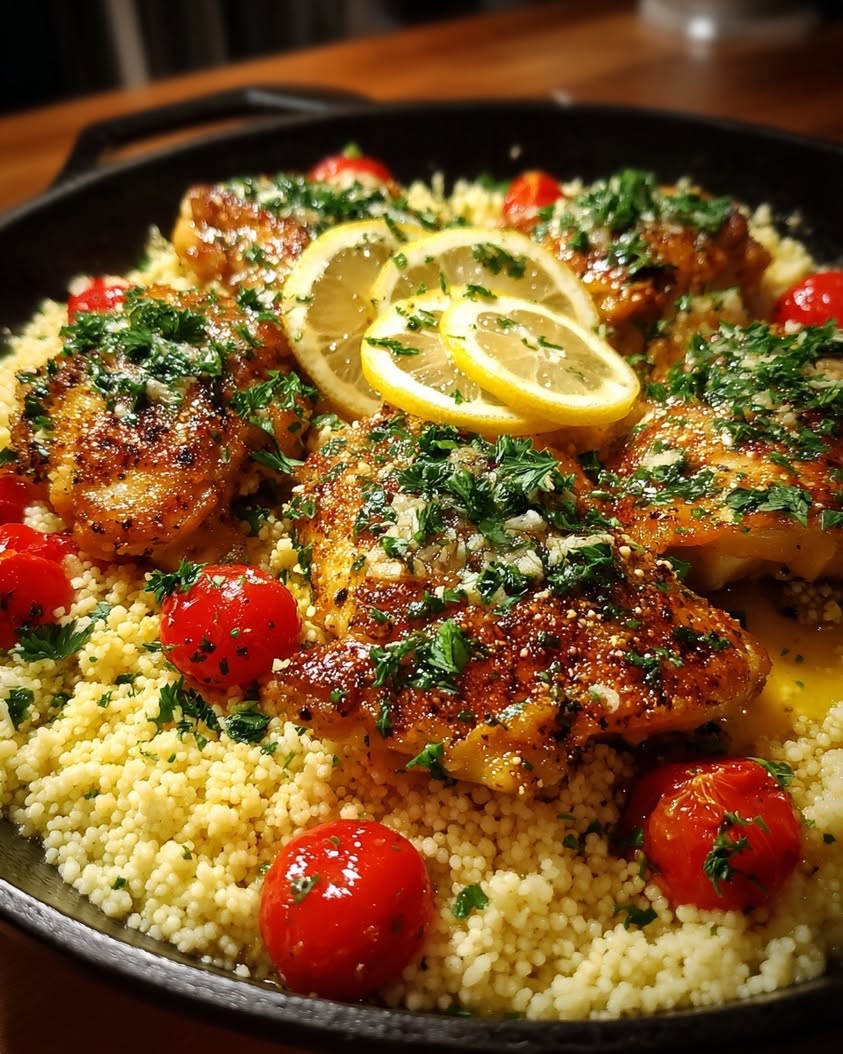
One-Pan Lemon Butter Chicken with Couscous: A Zesty Weeknight Wonder
Imagine a complete, satisfying dinner bursting with bright, sunny flavor, all cooked in a single pan. This One-Pan Lemon Butter Chicken with Couscous is exactly that kind of magical meal. It transforms simple ingredients into something extraordinary, offering a perfect balance of savory, buttery chicken and fluffy, lemony couscous. Moreover, it delivers restaurant-quality taste with minimal effort and even less cleanup, making it an ideal solution for busy evenings.
The beauty of this dish lies in its elegant simplicity. Juicy chicken thighs sear to golden perfection, creating a flavorful fond in the pan. Next, that fond becomes the base for a luxurious lemon butter sauce that soaks into the couscous as it cooks. Consequently, every single grain absorbs the rich, citrusy, and herby flavors. The result is a cohesive dish where the protein and starch are perfectly married, offering a delightful taste in every forkful.
This recipe is a testament to efficient, flavorful cooking. It proves you do not need a pile of pots and pans to create a meal that feels special. Whether you are cooking for your family on a Wednesday or need an impressive yet effortless dish for guests, this One-Pan Lemon Butter Chicken with Couscous consistently delivers. It is a reliable, delicious formula you will return to again and again.
Quick Recipe Highlights
- Flavor Profile: This dish masterfully combines the rich, savory depth of seared chicken and butter with the bright, acidic punch of fresh lemon. Herbs like thyme add an earthy, aromatic layer that ties everything together beautifully. Ultimately, it is a harmonious blend of comfort and zest.
- Texture: You get wonderfully crispy, golden-brown skin on the chicken contrasting with the tender, juicy meat underneath. The couscous, meanwhile, cooks to a light, fluffy perfection, each grain separate and infused with the pan sauce. This delightful contrast makes every bite interesting.
- Aroma: As it cooks, your kitchen will fill with the irresistible scent of sizzling garlic, caramelizing chicken, and fresh lemon zest. The herbal notes of thyme and the nutty fragrance of toasting couscous complete the aromatic experience, building anticipation for the meal.
- Visual Appeal: The presentation is naturally stunning with golden-brown chicken nestled atop a bed of vibrant yellow couscous, speckled with green herbs. A final garnish of fresh parsley or lemon slices adds a pop of color, making the dish look as good as it tastes.
- Skill Level Needed: This is a beginner-friendly recipe that teaches foundational skills like pan-searing and making a simple pan sauce. If you can handle a skillet and follow sequential steps, you can absolutely master this One-Pan Lemon Butter Chicken with Couscous.
- Special Equipment: You only need one large, oven-safe skillet or braiser. A good pair of tongs is helpful for turning the chicken, and a microplane or zester is ideal for getting the most flavor from your lemon. Otherwise, standard kitchen tools will suffice.
Recipe Overview
- Difficulty Level: We rate this recipe as “Easy” because it uses straightforward techniques in a logical sequence. The one-pan method eliminates complexity, and the cooking process is largely hands-off once the couscous is simmering. Therefore, even novice cooks can achieve excellent results with confidence.
- Category: This dish is a complete main course, perfectly combining protein and starch. It fits wonderfully into categories like “Weeknight Dinners,” “Family Meals,” and “Easy Entertaining.” Furthermore, it is a fantastic “Meal Prep” option as it reheats beautifully.
- Cuisine: While not strictly traditional to one region, the dish draws inspiration from Mediterranean and French culinary traditions. The use of lemon, butter, garlic, and herbs is classic in Provençal cooking, and couscous is a staple across North Africa. This fusion creates a globally-inspired, accessible flavor profile.
- Cost: This is a very cost-effective meal. Chicken thighs are an affordable cut, and couscous is an inexpensive pantry staple. Fresh lemons, butter, and common herbs round out the list, making it a budget-friendly way to enjoy a restaurant-style dish at home.
- Season: This One-Pan Lemon Butter Chicken with Couscous shines year-round but feels particularly fitting in spring and summer. The bright lemon flavor evokes sunshine and pairs well with lighter seasonal vegetables. Conversely, it also provides comforting warmth during cooler months.
- Occasion: It is incredibly versatile for any occasion. It is quick enough for a simple Tuesday dinner yet elegant enough for casual weekend entertaining. Additionally, it is a great option for a stress-free date night at home where you want impressive flavor without kitchen chaos.
Why You’ll Love This Recipe
First and foremost, the taste and texture are utterly irresistible. The chicken develops a crispy, flavorful crust while staying incredibly moist inside. Simultaneously, the couscous acts like a sponge, soaking up every drop of the lemony, buttery, garlicky sauce. Each component complements the other, creating a unified dish where the sum is greater than its parts. The bright acidity of the lemon cuts through the richness of the butter, ensuring the meal feels vibrant and satisfying without being heavy.
The convenience factor is a major win. Cooking everything in a single pan means you spend less time washing up and more time enjoying your meal. The process is also wonderfully sequential: cook the chicken, build the sauce in the same pan, then add the couscous to simmer. Consequently, there is no juggling multiple pots or complex timing. This streamlined approach makes getting a delicious, home-cooked dinner on the table remarkably simple, even after the longest workday.
Nutritionally, this dish offers a well-balanced plate. Chicken thighs provide high-quality protein and essential nutrients like iron and zinc. Couscous, made from semolina wheat, is a good source of plant-based protein and selenium. By cooking the grain directly in the pan sauce, you also minimize nutrient loss that can occur from draining water. You can easily boost the vegetable content by stirring in spinach, peas, or diced zucchini with the couscous for an extra health kick.
For social and entertaining value, this recipe is a secret weapon. It allows you to be present with your guests instead of stuck in the kitchen. You can do most of the work ahead of time or simply cook it while chatting. When you bring the whole, beautiful skillet to the table, it creates a rustic, communal dining experience. People are always impressed by a one-pan wonder that delivers such complex flavor, making you look like a kitchen pro.
Finally, its cost-effectiveness and accessibility are undeniable. The ingredients are humble, affordable, and easy to find at any grocery store. You likely have many of them in your pantry already. This recipe demonstrates how a few basic items, when combined thoughtfully, can transform into a spectacular meal. It is an accessible gateway to feeling more confident and creative in the kitchen without requiring a special trip to a gourmet market.
Historical Background and Cultural Significance
The concept of one-pan cooking is ancient, rooted in traditions of efficiency and resourcefulness. Before modern kitchens with multiple burners, cooks often prepared entire meals in a single pot over a fire. Our One-Pan Lemon Butter Chicken with Couscous is a modern iteration of this timeless practice. It specifically draws on the French technique of “deglazing,” where liquid is added to a hot pan to lift the flavorful browned bits (fond) left from searing meat. This fond forms the soul of the sauce that binds the dish together.
Culturally, the dish is a beautiful fusion. The use of butter, lemon, and thyme is deeply embedded in French Provençal cuisine, known for its bright, herbaceous flavors. Couscous, on the other hand, is a staple food across North Africa, particularly in Morocco, Algeria, and Tunisia, where it is traditionally steamed over a stew. Combining these elements reflects today’s global pantry, where ingredients and techniques from different culinary traditions are blended to create new, delicious hybrids that are accessible to home cooks everywhere.
The recipe has evolved significantly from its separate traditional roots. Historically, a French poulet au citron might be served with potatoes, while couscous would accompany a tagine. The innovation here is merging the protein cooking method with the grain’s absorption technique. This evolution speaks to the modern desire for streamlined cooking processes without sacrificing depth of flavor. It is a recipe born from contemporary needs but built on classic, time-tested foundations.
Regional variations of this concept are endless. In Greece, you might find a similar dish with oregano and feta. In Italy, the couscous could be replaced with orzo or risotto, using white wine in the deglazing step. The adaptability is part of its charm. Our version uses widely available ingredients to create a universally appealing profile. This flexibility allows cooks to make it their own, perhaps adding olives, capers, or a pinch of saffron, thus continuing the recipe’s evolution in home kitchens around the world.
Ingredient Deep Dive
Chicken Thighs (Bone-in, Skin-on): We choose bone-in, skin-on thighs for superior flavor and moisture. The bone insulates the meat during cooking, leading to juicier results, while the skin renders fat and crisps up, providing unmatched texture and richness. This cut is also forgiving and harder to overcook compared to lean chicken breast. From a nutritional standpoint, thighs contain more iron and zinc. For the best results, pat the skin very dry before seasoning to ensure a crisp sear. You can substitute boneless thighs, but reduce cook time slightly.
Couscous: Couscous is not a grain but tiny pellets of steamed and dried semolina wheat. It originates from North Africa and cooks incredibly quickly by absorption. For this One-Pan Lemon Butter Chicken with Couscous, we use regular or instant couscous, which perfectly soaks up the flavorful cooking liquid. It is a good source of plant-based protein and selenium. Toasting it briefly in the butter and aromatics before adding liquid enhances its nutty flavor. For a whole-grain option, whole wheat couscous works beautifully but may require a touch more liquid.
Fresh Lemon: The lemon is the star, providing essential brightness. We use both zest and juice. The zest contains potent aromatic oils that deliver intense lemon flavor without excess acidity. The juice adds the necessary tang to balance the butter’s richness. Always zest your lemon before juicing it, as it is much harder the other way around. For maximum yield, roll the lemon firmly on the counter before cutting and juicing. In a pinch, bottled lemon juice can work for the liquid, but fresh zest is non-negotiable for the best flavor.
Butter: Butter is crucial for creating a luxurious, emulsified sauce that coats the couscous. Its milk solids brown slightly when the chicken is seared, adding depth (nutty brown butter notes). Use unsalted butter to control the dish’s sodium level. The fat carries the flavors of garlic and herbs beautifully. For storage, keep butter tightly wrapped in the fridge or freezer. While olive oil can be used for searing, the butter added later is key for the signature sauce; substituting it with oil will result in a less rich, cohesive dish.
Chicken Broth: Chicken broth forms the liquid base for cooking the couscous and building the sauce. It adds a savory, umami depth that water cannot provide. Use a low-sodium variety to manage salt content. The broth deglazes the pan, incorporating all the flavorful browned bits into the dish. For a richer flavor, you can use homemade stock. Vegetarians can easily adapt the recipe by using a robust vegetable broth. Ensure your broth is warm or hot when adding it to the pan to maintain a consistent cooking temperature.
Common Mistakes to Avoid
- Crowding the Pan: Do not add too many chicken thighs to the skillet at once. Overcrowding causes the chicken to steam instead of sear, preventing that essential golden-brown, crispy skin. Cook in batches if necessary to give each piece ample space. This step is crucial for developing flavor and texture.
- Not Drying the Chicken Skin: Skipping the step of patting the chicken skin completely dry with paper towels is a major error. Moisture on the skin creates steam, which is the enemy of crispiness. Taking a minute to dry it thoroughly ensures you get that perfect, crackling-crisp finish every single time.
- Moving the Chicken Too Soon: After placing the chicken in the hot pan, resist the urge to move or poke it for several minutes. Let it sear undisturbed to form a proper crust. If you try to lift it and it sticks, it is not ready. A good sear will naturally release the chicken from the pan when it is time to flip.
- Using Cold Broth: Adding cold chicken broth to the hot pan can shock the ingredients and slow down the cooking process, potentially making the chicken tough. Always use warm or hot broth. Simply microwave it for a minute before adding it to the skillet for a smoother, more controlled cook.
- Overcooking the Couscous: Couscous cooks very quickly by absorption. Once you add the broth, bring it to a simmer, stir, cover, and remove from heat. Letting it boil or cook over heat for too long can make it mushy and gummy. The residual heat is sufficient to cook it to fluffy perfection.
- Neglecting to Season in Layers: Season only at the beginning with the chicken. Remember to also season the couscous cooking liquid. Building layers of seasoning at different stages ensures every component of your One-Pan Lemon Butter Chicken with Couscous is properly seasoned from the inside out, not just on the surface.
- Adding Lemon Juice Too Early: If you add all the fresh lemon juice at the beginning of the sauce-making process, much of its bright flavor will cook off and become muted. Instead, add half early for base flavor and stir in the remaining fresh juice at the very end to preserve its vibrant, zesty punch.
- Skipping the Resting Time: Do not slice into the chicken immediately after cooking. Let it rest for about 5 minutes after it comes out of the oven. This allows the juices, which have been driven to the center by the heat, to redistribute throughout the meat, ensuring every bite is moist and tender.
Essential Techniques
Pan-Searing for Golden Skin: Pan-searing is the foundational technique for building flavor. Heat your oiled skillet until it is properly hot before adding the dried, seasoned chicken skin-side down. The high heat instantly begins to render the fat and create a Maillard reaction—the chemical process that gives browned food its complex, savory taste. Do not move the chicken until it easily releases from the pan, indicating a good crust has formed. This technique ensures juicy meat and crispy skin, which is critical for the success of your One-Pan Lemon Butter Chicken with Couscous.
Deglazing to Create Sauce: After removing the chicken, you will see browned bits stuck to the pan. These are flavor gold, not burnt food. Deglazing is the process of adding liquid (like broth or wine) to the hot pan and using a wooden spoon to scrape those bits loose. They dissolve into the liquid, creating an instant, deeply flavorful sauce base. This technique captures all the deliciousness that would otherwise be left behind, transforming it into the soul of your dish.
Toasting the Couscous: Before adding the cooking liquid, stir the dry couscous into the butter and aromatics in the pan. Toast it for about a minute until it becomes fragrant. This simple step cooks the starch on the surface of the couscous granules, helping them stay separate and fluffy after cooking instead of clumping together. Additionally, it imparts a subtle, nutty flavor that elevates the grain from a simple side to an integral part of the flavor profile.
The Absorption Method for Couscous: Couscous is not boiled like pasta; it is cooked by absorption. Once you add the hot broth, bring it just to a simmer, give it one quick stir, then immediately cover the pan and remove it from the heat. The trapped steam and hot liquid will hydrate and cook the couscous perfectly in about 5-10 minutes. Fluffing it with a fork after cooking separates the grains for a light, fluffy texture. Mastering this passive cooking method is key to perfect couscous every time.
Pro Tips for Perfect One-Pan Lemon Butter Chicken with Couscous
First, bring your chicken to room temperature for about 15-20 minutes before cooking. This helps it cook more evenly, preventing the outside from overcooking before the inside is done. Meanwhile, pat the skin relentlessly dry with paper towels; this is the single most important step for achieving crackling-crisp skin.
Use a combination of oil and butter for the initial sear. The oil has a higher smoke point, allowing you to get the pan nice and hot without burning the butter. Add the butter to the oil just before adding the chicken to infuse it with that nutty flavor from the start.
Do not discard the fat rendered from the chicken skin after searing. This flavorful fat is what you will cook your garlic and thyme in, adding another layer of chicken essence to the entire dish. It is free flavor, so make sure to use it.
Zest your lemon directly over the pan after adding the garlic. The heat helps to release the volatile oils in the zest, instantly perfuming the dish and maximizing its citrus impact. This small timing trick makes a big difference in the aromatic quality of your meal.
When you return the chicken to the pan to finish cooking with the couscous, nestle it skin-side up. This prevents the crispy skin you worked so hard for from becoming soggy in the simmering liquid. The skin stays gloriously crisp while the meat finishes cooking through gently.
Let the dish rest off the heat, covered, for a full 5 minutes after cooking. This allows the couscous to fully absorb any remaining liquid and become perfectly tender. It also gives the chicken a final chance to relax, ensuring juiciness when you serve.
Finish with a final drizzle of high-quality extra virgin olive oil and a sprinkle of fresh herbs like parsley or chives. This adds a fresh, vibrant note and a luxurious mouthfeel that makes the dish feel restaurant-quality. A final squeeze of lemon juice right at the end brightens everything up.
Variations and Adaptations
For regional variations, explore different herb profiles. Swap thyme for oregano and add kalamata olives and feta cheese for a Greek twist. Alternatively, use smoked paprika, cumin, and a pinch of saffron for a Spanish-inspired version. You can even replace the couscous with orzo pasta or arborio rice for an Italian or risotto-style dish, adjusting the liquid accordingly.
Seasonal adaptations are simple and effective. In spring, stir fresh peas or asparagus tips into the couscous during the last few minutes of cooking. For summer, add halved cherry tomatoes and fresh basil. In fall, incorporate roasted butternut squash cubes and sage. During winter, hearty greens like chopped kale or Swiss chard wilt beautifully into the hot couscous.
Dietary modifications are straightforward. For a gluten-free One-Pan Lemon Butter Chicken, substitute the couscous with an equal amount of quinoa or certified gluten-free couscous. To make it dairy-free, use a high-quality plant-based butter and olive oil. For a lower-carb option, replace the couscous with cauliflower rice added in the last 5 minutes of cooking, though you will need less broth.
Flavor variations can take this recipe in new directions. Add a teaspoon of Dijon mustard or a splash of white wine to the deglazing step for complexity. Incorporate capers or anchovy fillets for a briny, umami punch. For a creamier sauce, stir in a couple of tablespoons of heavy cream or crème fraîche after the couscous has cooked.
Texture modifications can cater to different preferences. Use chicken breasts instead of thighs for a leaner option, but reduce cook time significantly to prevent dryness. For extra crunch, top the finished dish with toasted pine nuts or slivered almonds. To make the couscous more substantial, mix in a can of drained and rinsed chickpeas when you add the broth.
Presentation alternatives can elevate the dish for guests. Instead of mixing everything, serve the couscous on a large platter, top with the chicken, and drizzle the remaining pan sauce over everything. Garnish with microgreens, edible flowers, or thin lemon slices for a stunning centerpiece. Individual servings in shallow bowls also make for an elegant presentation.
Serving and Presentation Guide
Plating techniques matter for visual appeal. For a family-style presentation, bring the entire skillet to the table—it is rustic and inviting. For individual plates, use a spoon to create a bed of fluffy couscous in the center of a warm plate. Place a piece of chicken, skin-side up, proudly on top, allowing some couscous to peek out around the edges.
Garnishing adds the final touch of freshness and color. A generous sprinkle of chopped fresh flat-leaf parsley or chives is classic. Thinly sliced lemon rounds or twists add a decorative element and hint at the flavor within. For a touch of color and slight bitterness, a few small arugula leaves scattered over the top look beautiful.
Traditional accompaniments are light and simple. A crisp green salad with a lemony vinaigrette complements the dish perfectly without competing. Alternatively, steamed green beans, roasted broccoli, or a simple tomato and cucumber salad provide a fresh, crunchy contrast to the rich, savory chicken and couscous.
Modern serving suggestions might include a dollop of lemony yogurt or tzatziki on the side for dipping. Crusty bread is also excellent for sopping up any remaining buttery sauce left on the plate. For a more substantial meal, start with a simple soup like a puréed vegetable soup to set the stage.
Temperature considerations are key. Serve the One-Pan Lemon Butter Chicken with Couscous immediately after its resting period while the chicken skin is still crisp and the couscous is steaming hot. Warm your serving plates slightly to keep the food at an ideal temperature longer, especially if you are plating individually for several people.
Portion control is easy with this dish. One chicken thigh and a generous scoop of couscous typically makes a satisfying serving for an average adult. If you are serving larger appetites or want leftovers, the recipe scales up easily. Remember, the couscous will continue to absorb liquid, so for leftovers, you may want to add a tiny splash of broth when reheating to refresh it.
Wine and Beverage Pairing
Wine pairings should complement the dish’s bright acidity and rich texture. A crisp, unoaked white wine like a Sauvignon Blanc or Pinot Grigio is a classic choice, as their citrus notes mirror the lemon in the recipe. For a more complex option, a French Chablis or other unoaked Chardonnay offers minerality that cuts through the butter beautifully. If you prefer red, choose a light-bodied, low-tannin red like a Pinot Noir or Gamay, served slightly chilled.
Non-alcoholic alternatives can be just as sophisticated. Sparkling water with a twist of lemon or lime keeps the palate refreshed. A homemade lemonade, perhaps infused with herbs like rosemary or thyme, echoes the dish’s flavors elegantly. Iced herbal teas, such as mint or verbena, also provide a lovely, refreshing counterpoint to the savory, buttery notes of the chicken and couscous.
Coffee and tea pairings work well if serving the dish for lunch. A light roast coffee with bright, citrusy notes can surprisingly complement the meal. For tea, consider a green tea like Sencha, which has vegetal and slightly astringent qualities that cleanse the palate, or a floral Earl Grey, whose bergamot oil shares citrus kinship with the lemon in the recipe.
Temperature considerations are crucial for beverages. White wines and non-alcoholic sparklers should be served well-chilled, around 45-50°F. Light reds should be slightly cooler than room temperature, about 55°F. Iced drinks should be cold but not diluted; use large ice cubes or frozen fruit to keep them cool without watering them down too quickly during the meal.
Serving suggestions include offering a choice to guests. You might place a bottle of chilled white wine and a pitcher of herb-infused water on the table. Always ensure water glasses are full, as the dish is flavorful. If pairing, pour a small taste of wine before the meal begins to allow guests to experience how the flavors interact from the first bite.
Storage and Shelf Life
Proper storage methods are essential for maintaining quality. Allow the One-Pan Lemon Butter Chicken with Couscous to cool completely before storing, but do not leave it at room temperature for more than two hours to prevent bacterial growth. Separate the chicken from the couscous if possible, as the couscous will continue to absorb moisture from the chicken and sauce, potentially becoming mushy.
Temperature requirements are standard for cooked food. Store leftovers in airtight containers in the refrigerator at 40°F or below. The chicken and couscous should be consumed within 3-4 days for the best taste and texture. The lemon butter sauce may solidify when chilled due to the butter; this is normal and will liquefy again when reheated.
Container recommendations include shallow, airtight containers. Shallow containers promote faster, more even cooling. Glass containers are ideal as they do not absorb odors and allow you to see the contents. If storing together, place the chicken on top of the couscous to help keep the skin somewhat crisp, though it will soften significantly upon refrigeration.
Signs of spoilage are important to recognize. Discard the food if you detect any off or sour odors, visible mold, or significant discoloration. If the couscous becomes excessively slimy or the chicken develops a sticky surface, these are indicators of spoilage. When in doubt, follow the golden rule: when in doubt, throw it out.
Reheating instructions are key to reviving the meal. For best results, reheat the components separately if possible. Gently reheat the couscous in a skillet with a splash of broth or water over low heat, fluffing with a fork. Reheat the chicken in a 350°F oven on a wire rack until warmed through to help re-crisp the skin slightly. Microwave reheating is convenient but will further soften the skin and can make the couscous gummy.
Freezing guidelines are possible but with caveats. You can freeze the cooked chicken (without skin for better texture) and the couscous separately for up to 2 months. Thaw overnight in the refrigerator. The couscous may be slightly drier upon reheating; add extra broth or a pat of butter when warming. The texture of previously frozen couscous will be softer, but the flavor will remain good.
Make Ahead Strategies
A prep timeline can turn this into a 15-minute meal on a busy night. The day before, pat your chicken thighs dry, season them generously, and store them uncovered on a plate in the fridge. This air-drying effect in the fridge actually promotes even crispier skin. You can also measure out your couscous, zest and juice your lemon, mince garlic, and measure herbs and broth. Store each component in separate containers in the refrigerator.
Storage between steps is simple with proper planning. Keep prepped ingredients in clearly labeled containers. The seasoned chicken can stay in the fridge for up to 24 hours. The lemon juice should be kept airtight to preserve its acidity. Pre-measured dried herbs and spices can sit at room temperature. Having everything measured and ready (mise en place) turns the cooking process into a smooth, enjoyable assembly.
Quality impact assessment is important. Pre-seasoning the chicken enhances flavor penetration. Pre-juicing lemon is fine, but the zest is best done fresh to preserve its volatile oils. Mincing garlic ahead can cause it to develop a sharper, sometimes bitter flavor; for the best taste, mince it no more than a few hours before cooking. Pre-measuring couscous and broth has no negative impact.
Assembly tips for make-ahead involve a cold start. When ready to cook, take your pre-seasoned chicken from the fridge about 20 minutes before cooking to take the chill off. Have your pre-measured ingredients lined up next to the stove. The cooking process will then flow seamlessly from searing to deglazing to simmering, with no frantic searching for ingredients.
Reheating guidelines for a fully made-ahead dish are specific. If you cook the entire One-Pan Lemon Butter Chicken with Couscous a day in advance, reheat it gently in a covered skillet in a 325°F oven until thoroughly warmed, about 15-20 minutes. You may need to add a small amount of broth to the pan to prevent drying out. The chicken skin will not be as crisp, but the flavors will have melded beautifully.
Fresh element additions are the final touch. If making ahead, always add a final garnish of fresh herbs and a fresh squeeze of lemon juice just before serving. This brightens up the dish and adds a layer of freshness that can be lost during storage or reheating. A final drizzle of good olive oil also restores a luxurious mouthfeel.
Scaling Instructions
Halving the recipe is straightforward for smaller households. Use two chicken thighs, and simply halve all other ingredients. Use the same size skillet; the cooking times will remain very similar as the surface area for searing is the same. Keep a close eye on the couscous as it may cook a minute or two faster due to the smaller volume. The result will be just as delicious and perfect for two servings with maybe a small lunch leftover.
Doubling or tripling requires some adjustments. Use the largest skillet or braiser you have, or cook the chicken in batches to avoid overcrowding. You may need to deglaze with a bit more broth to capture all the fond from the larger batch of chicken. When adding the couscous and liquid, ensure it is in an even layer. You might need to increase the covered simmering time by a few minutes for the liquid to fully absorb into the larger volume of grain.
Equipment adjustments are necessary when scaling. For a double batch, a 12-inch skillet is the minimum; a 14-inch is better. For tripling, consider using a large Dutch oven or even dividing the recipe between two large skillets. If baking to finish, ensure your oven-safe vessel fits comfortably in your oven. Having a larger wooden spoon or spatula can help when stirring the increased volume of couscous.
Timing modifications are minimal but important. The initial searing time for the chicken remains the same per batch. However, if cooking chicken in batches, the total active time will increase. The simmering time for the couscous may extend by 3-5 minutes for a doubled recipe. Always rely on visual and textural cues—the couscous should have absorbed all liquid and be tender—rather than strictly on the clock.
Storage considerations change with scale. A larger batch means more leftovers. Plan your storage containers accordingly. It is often helpful to divide leftovers into single-serving portions for easy grab-and-go lunches. Remember that a large, deep container of hot food will take much longer to cool to a safe temperature; consider dividing it into several shallow containers before refrigerating.
Nutritional Deep Dive
A macro breakdown for one serving (one chicken thigh with couscous) provides a balanced profile. You can expect approximately 35-40 grams of high-quality protein from the chicken, essential for muscle repair and satiety. The couscous contributes around 35-40 grams of complex carbohydrates, offering sustained energy. Fats, primarily from the chicken skin, butter, and olive oil, total about 20-25 grams, including both saturated and unsaturated types, which aid in nutrient absorption and flavor.
The micronutrient analysis reveals a wealth of vitamins and minerals. Chicken thighs are an excellent source of B vitamins, particularly B6 and B12, crucial for energy metabolism, and minerals like iron, zinc, and selenium. Couscous provides selenium, an important antioxidant, and some B vitamins as well. The lemon juice offers a dose of vitamin C, which can help with iron absorption from the chicken. Herbs like parsley contribute vitamin K and various antioxidants.
Health benefits of this meal are multifaceted. The high protein content promotes fullness and supports metabolic health. The complex carbs in couscous provide fiber for digestive health. The fats, when consumed as part of a balanced diet, support hormone function and cell health. The herbs and lemon provide anti-inflammatory compounds. Together, these components make for a meal that is satisfying, energizing, and nourishing.
Dietary considerations are easily addressed. For those monitoring sodium, use low-sodium broth and control added salt. The dish is naturally nut-free. For diabetics, the pairing of protein, fat, and fiber from the couscous can help moderate blood sugar response compared to a carb-only meal. As always, individual needs vary, so adjust portions of couscous or fat as necessary for your specific health goals.
Portion analysis shows this recipe is designed as a complete meal. One serving provides a balanced plate with a palm-sized portion of protein, a fist-sized portion of starch, and integrated fats. This balance helps prevent overeating by promoting satiety. If you are very active, you may want a larger serving of couscous. For a lighter meal, you could serve half a thigh with a full portion of the vegetable-laden couscous.
Weight management tips include being mindful of the butter and oil. You can reduce the butter by a tablespoon without major flavor loss. Leaving a bit of the chicken skin behind after eating can reduce saturated fat intake while still enjoying its flavor during cooking. Loading the couscous with extra non-starchy vegetables (like spinach or zucchini) increases volume and nutrients without adding significant calories, helping you feel full and satisfied.
Dietary Adaptations
For a gluten-free adaptation, replace the regular couscous with an equal amount of certified gluten-free couscous, quinoa, or millet. Quinoa will require a similar 1:1.25 quinoa-to-liquid ratio and about 15 minutes of simmering. Ensure your chicken broth is certified gluten-free. All other ingredients in the One-Pan Lemon Butter Chicken are naturally gluten-free, making this a simple swap for a safe and delicious meal.
A dairy-free version is easily{“success”:true,”message”:”Recipe created successfully”,”post_id”:8757,”tasty_recipe_id”:8757,”shortcode”:” Print
One-Pan Lemon Butter Chicken with Couscous
Description
A quick and flavorful meal featuring tender chicken cooked in a zesty lemon butter sauce, served over fluffy couscous—all made in one pan for easy cleanup.
Ingredients
For the Crust:
- 4 boneless, skinless chicken breasts
- 1 cup couscous
- 2 cups chicken broth
- 4 tablespoons unsalted butter
- 2 lemons (juiced and zested)
- 3 cloves garlic (minced)
- 1 teaspoon dried thyme
- Salt and black pepper to taste
- Fresh parsley (chopped, for garnish)
Instructions
1. Prepare the Crust:
- Season chicken breasts with salt, pepper, and dried thyme on both sides.
- In a large skillet, melt butter over medium-high heat. Add chicken and cook for 5-6 minutes per side until golden and cooked through. Remove chicken and set aside.
- In the same skillet, add garlic and cook for 1 minute until fragrant. Pour in chicken broth and lemon juice, scraping up any browned bits from the pan.
- Stir in couscous, bring to a simmer, then reduce heat to low. Cover and cook for 10 minutes until couscous is tender and liquid is absorbed.
- Return chicken to the skillet, spooning some couscous around it. Drizzle with lemon butter sauce from the pan, garnish with lemon zest and parsley, and serve warm.
Notes
You can customize the seasonings to taste.

I’m Billy, a classically trained culinary school graduate from The Culinary Institute of America with over 12 years in the restaurant industry and over 19 years of cooking experience.