
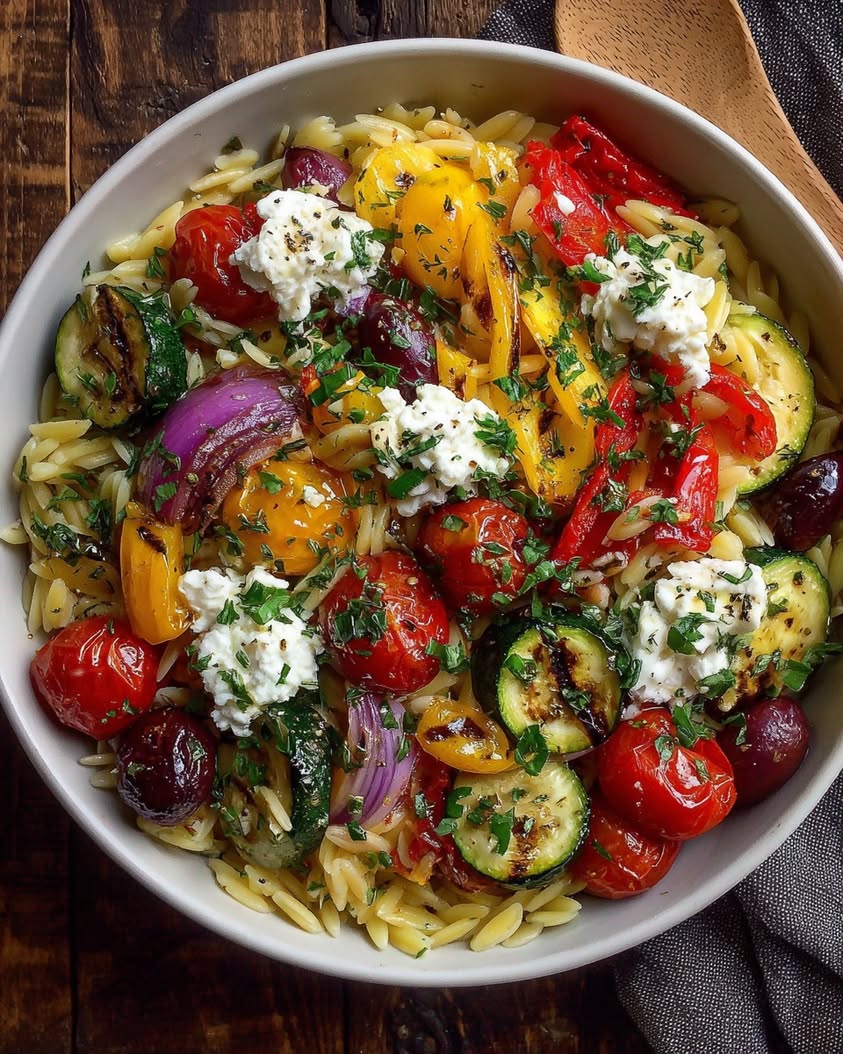
Orzo Bowl with Feta and Roasted Veggies: A Vibrant Mediterranean Feast
Imagine a bowl that captures the essence of a sun-drenched Mediterranean coast. This Orzo Bowl with Feta and Roasted Veggies delivers exactly that experience. It combines tender, pearl-like orzo pasta with a rainbow of caramelized vegetables, all tossed in a vibrant herbed lemon dressing and finished with creamy, salty feta cheese. Consequently, every forkful is a perfect balance of textures and bright, satisfying flavors. This dish is not just a meal; it is a celebration of fresh, wholesome ingredients coming together in perfect harmony.
Furthermore, this recipe is a fantastic solution for busy weeknights or impressive enough for casual entertaining. The process is wonderfully straightforward. You simply roast your vegetables to sweet, crispy perfection while the orzo cooks on the stovetop. Meanwhile, you whisk together a quick, herbaceous dressing. Finally, you combine everything for a meal that feels gourmet but requires minimal effort. Ultimately, this Orzo Bowl with Feta and Roasted Veggies is a testament to how simple techniques can yield extraordinary results.
Additionally, the versatility of this dish is truly remarkable. You can easily adapt it based on the seasons or what you have in your refrigerator. For instance, swap zucchini for winter squash in the fall or add cherry tomatoes in the summer. The herbed dressing and feta cheese tie everything together beautifully. Therefore, this recipe becomes a reliable template for endless delicious variations, ensuring you will never tire of it.
Quick Recipe Highlights
- Flavor Profile: This Orzo Bowl with Feta and Roasted Veggies bursts with tangy, savory, and sweet notes. The salty feta and bright lemon dressing perfectly complement the natural sweetness of the roasted vegetables. Moreover, fresh herbs add a final layer of aromatic complexity.
- Texture: You will enjoy a delightful contrast in every bite. The orzo provides a pleasingly chewy base, while the roasted veggies offer tender interiors with slightly crispy edges. Meanwhile, the crumbled feta adds creamy pockets that melt in your mouth.
- Aroma: As the vegetables roast, your kitchen will fill with the sweet, earthy scent of caramelizing onions and peppers. Then, the fresh herbs and zesty lemon in the dressing add a final, invigorating fragrance that makes the dish irresistible.
- Visual Appeal: This bowl is a feast for the eyes with its vibrant color palette. You will see deep golden browns from the roasted veggies, the creamy white of the orzo and feta, and the brilliant green flecks of fresh herbs. It is a truly Instagram-worthy meal.
- Skill Level Needed: This is a beginner-friendly recipe. You only need basic skills like chopping vegetables, boiling pasta, and whisking a dressing. There are no complicated techniques, making it perfect for novice cooks or anyone seeking a stress-free dinner.
- Special Equipment: You only require standard kitchen tools. A good baking sheet for roasting, a pot for boiling the orzo, and a mixing bowl for the dressing are essential. A sturdy whisk and a sharp chef’s knife will make the prep work even easier.
Recipe Overview
- Difficulty Level: We rate this Orzo Bowl with Feta and Roasted Veggies as “Easy” because it involves fundamental cooking methods. The steps are sequential and not time-sensitive. You can comfortably prepare components simultaneously without rushing. Even a first-time cook can achieve fantastic results by following the clear instructions.
- Category: This dish fits beautifully into several meal categories. It serves as a hearty vegetarian main course, a substantial side dish for grilled proteins, or a fantastic packed lunch. Furthermore, it is an excellent potluck or picnic option because it tastes wonderful at room temperature.
- Cuisine: The recipe draws strong inspiration from Mediterranean and Greek culinary traditions. The use of ingredients like feta cheese, lemon, olive oil, and oregano is classic to the region. However, it adopts a modern, bowl-based presentation that makes it feel contemporary and accessible.
- Cost: This is a very budget-friendly meal. Ingredients like bell peppers, zucchini, and red onion are inexpensive, especially when in season. Orzo and basic pantry staples for the dressing keep costs low. The feta cheese is the splurge item, but a little goes a long way in terms of flavor.
- Season: This Orzo Bowl with Feta and Roasted Veggies is perfect for late spring through early fall. This is when zucchini, bell peppers, and fresh herbs are at their peak flavor and most affordable. However, you can absolutely make it year-round using sturdy, available vegetables.
- Occasion: It is ideal for a quick family dinner, a healthy meal prep option, or a casual gathering with friends. Because it is visually appealing and full of flavor, it also works well for a light yet satisfying lunch or a meatless Monday centerpiece.
Why You’ll Love This Recipe
First and foremost, the taste and texture combination is utterly addictive. Each component of this Orzo Bowl with Feta and Roasted Veggies brings something special to the table. The roasted vegetables develop a deep, concentrated sweetness that plays off the salty, tangy feta cheese. Meanwhile, the herbed lemon dressing cuts through the richness and brightens every single bite. The orzo pasta acts as the perfect, pillowy canvas that soaks up all the delicious flavors. Consequently, you get a symphony of tastes in one cohesive and satisfying dish.
From a convenience standpoint, this recipe is a true weeknight hero. The preparation is incredibly straightforward and mostly hands-off. Once you chop the veggies and get them roasting, you can focus on cooking the orzo and making the dressing. There is no need for constant stirring or complicated timing. Moreover, everything comes together in one bowl for easy serving and minimal cleanup. This efficiency makes it possible to have a wholesome, homemade meal on the table with minimal stress.
Nutritionally, this Orzo Bowl with Feta and Roasted Veggies is a powerhouse. It is packed with vitamins and antioxidants from the colorful array of vegetables. The olive oil and feta provide healthy fats, while the orzo offers energizing complex carbohydrates. Importantly, it is a complete vegetarian meal that will keep you full and satisfied. You can feel good about serving this to your family, knowing you are nourishing them with real, whole foods.
For entertaining, this dish is a fantastic choice. It is naturally beautiful and looks like you spent far more time than you actually did. You can easily double or triple the recipe to feed a crowd. Additionally, it can be served warm, at room temperature, or even cold, making it incredibly flexible for parties, potlucks, or picnics. Your guests will appreciate the vibrant flavors and the fact that it accommodates various dietary preferences.
Finally, this recipe is wonderfully cost-effective and accessible. The ingredients are simple, easy to find at any grocery store, and generally inexpensive. You likely have many of the pantry staples like olive oil, vinegar, and dried oregano already on hand. This accessibility means you can whip up this delicious Orzo Bowl with Feta and Roasted Veggies anytime a craving strikes, without needing to make a special trip to the store or break the bank.
Historical Background and Cultural Significance
The story of this dish begins with its individual components, each with a rich history. Orzo, which means “barley” in Italian, is a rice-shaped pasta that originated in the Mediterranean region. Historically, pasta shapes were often designed to mimic grains like rice or barley, especially in areas where those grains were costly or scarce. Consequently, orzo became a versatile staple, used in soups, pilafs, and salads across Italy and Greece. Its small size and ability to absorb flavors made it a perfect base for hearty, vegetable-forward dishes.
Culturally, the combination of roasted vegetables, cheese, and grain is a cornerstone of Mediterranean cuisine. This style of eating emphasizes fresh, seasonal produce, healthy fats like olive oil, and fermented dairy like feta cheese. Meals are often built around a central grain or legume, accompanied by an abundance of vegetables. Therefore, this Orzo Bowl with Feta and Roasted Veggies is a direct descendant of that timeless, health-focused culinary tradition. It embodies the Mediterranean principle of eating for both pleasure and longevity.
The recipe has evolved significantly with modern cooking trends. Traditionally, similar dishes might be served as a rustic salad or a side. The contemporary “bowl” format, however, reflects a global shift towards compartmentalized, Instagram-friendly meals that are as visually appealing as they are nutritious. The herbed dressing, while using classic Mediterranean flavors, is often emulsified for a creamier, more cohesive texture than a simple oil and vinegar drizzle. This evolution makes the dish feel both familiar and fresh.
Regional variations of this concept are endless. In Greece, you might find a similar dish called “kritharaki,” which is the Greek name for orzo, often baked with tomatoes and cheese. In Italy, “orzo al forno” features pasta baked with vegetables and béchamel. The American interpretation, as seen in this Orzo Bowl with Feta and Roasted Veggies, often prioritizes ease and bold, combined flavors, using high-heat roasting to quickly caramelize vegetables. This fusion of techniques and traditions creates a uniquely satisfying modern classic.
Ingredient Deep Dive
Orzo: Orzo is a form of short-cut pasta, typically made from semolina wheat. Despite its rice-like appearance, it has the characteristic chew and starchiness of pasta. When cooked, it releases some starch into the water, which helps the dressing cling to it later. For the best texture in your Orzo Bowl with Feta and Roasted Veggies, cook it al dente so it retains a slight bite. You can find it in the pasta aisle of any supermarket. If you need a gluten-free option, many brands now offer orzo made from brown rice or corn.
Bell Peppers & Zucchini: These vegetables form the colorful, sweet heart of the roasted component. Bell peppers, especially red and yellow, are high in vitamins A and C. Zucchini adds a tender, mild flavor and contains plenty of water, which evaporates during roasting to concentrate its taste. Choose firm, glossy vegetables without soft spots. Roasting at a high temperature is key; it caramelizes their natural sugars, creating deep flavor without the need for added sugar. You can substitute with eggplant, asparagus, or cherry tomatoes based on the season.
Red Onion: Red onion provides a sharp, pungent kick that mellows and sweetens dramatically when roasted. It adds a crucial layer of foundational flavor to the Orzo Bowl with Feta and Roasted Veggies. Nutritionally, onions are rich in antioxidants and prebiotic fibers that support gut health. Slice them into wedges so they hold their shape during cooking. If you only have yellow or white onions, they will work, though they have a stronger, more sulfurous note when raw that sweetens nicely when cooked.
Feta Cheese: Authentic Greek feta is made from at least 70% sheep’s milk, often blended with goat’s milk, and is brined for a tangy, salty flavor and crumbly texture. It is a protected designation of origin (PDO) product. For the best results in your bowl, buy a block of feta packed in brine rather than pre-crumbled cheese, which often contains anti-caking agents and can be drier. Feta adds protein, calcium, and a distinctive salty punch that elevates the entire dish. For a vegan version, use a firm, brined tofu or a commercial vegan feta alternative.
Herbed Lemon Dressing: This dressing is the unifying element that brings all the components to life. Extra virgin olive oil forms the base, providing fruity, peppery notes and healthy monounsaturated fats. Fresh lemon juice adds necessary acidity to balance the richness. Fresh herbs like parsley and dill contribute bright, grassy flavors that are lost when using dried herbs. Whisking the dressing vigorously emulsifies it, creating a slightly creamy texture that coats the orzo and veggies evenly. Always taste and adjust the seasoning before tossing.
Common Mistakes to Avoid
- Overcrowding the Baking Sheet: Do not pile all the vegetables onto one pan. If they are too crowded, they will steam instead of roast. Consequently, you will get soggy, pale veggies instead of caramelized, flavorful ones. Always use a large enough sheet and spread the pieces in a single layer.
- Underseasoning the Vegetables: Remember to season the veggies generously with salt and pepper before they go into the oven. Salt draws out moisture and enhances natural flavors. If you only season at the end, the flavors will not penetrate the vegetables properly.
- Overcooking the Orzo: Orzo can quickly go from al dente to mushy. Follow the package instructions but start tasting a minute or two before the suggested time. You want it to be tender but still have a slight resistance when you bite into it.
- Not Reserving Pasta Water: Before draining the orzo, always scoop out about a half cup of the starchy cooking water. This liquid is gold for adjusting the consistency of your final Orzo Bowl with Feta and Roasted Veggies. It helps loosen the dressing and makes everything silky.
- Using Dried Herbs in the Dressing: The dressing relies on the fresh, bright flavor of herbs like parsley and dill. Dried herbs will not provide the same vibrant punch and can taste dusty. If you must substitute, use only one-third the amount of dried herbs.
- Adding Feta While Hot: If you mix the crumbled feta into the piping hot orzo and vegetables, it will melt completely and become greasy. Instead, let the mixture cool slightly before folding in the cheese. This preserves its creamy, crumbly texture.
- Skipping the Lemon Zest: The recipe likely calls for both lemon juice and zest. Do not skip the zest! It contains potent aromatic oils that provide a huge burst of lemon fragrance without additional acidity, elevating the overall flavor profile.
- Not Tasting Before Serving: Always do a final taste test after combining everything. You may need an extra pinch of salt, a squeeze of lemon, or a drizzle of olive oil to balance the flavors perfectly. Seasoning is the final, crucial step.
Essential Techniques
High-Heat Roasting: This technique is non-negotiable for perfect vegetables in your Orzo Bowl with Feta and Roasted Veggies. Preheat your oven to a high temperature, usually around 425°F (220°C). The intense heat quickly evaporates surface moisture, allowing the vegetables to caramelize and develop complex, sweet flavors and a desirable char. The key is to cut your vegetables into uniform sizes so they cook evenly. Do not stir them too often; letting them sit undisturbed on the hot pan ensures proper browning.
Emulsifying a Vinaigrette: An emulsified dressing coats ingredients more evenly than a broken, separated one. The classic method is to combine your acid (lemon juice) and seasonings in a bowl, then slowly drizzle in the olive oil while whisking vigorously. The mechanical action breaks the oil into tiny droplets that suspend in the acid, creating a temporary emulsion. For a more stable dressing, you can add a small amount of Dijon mustard, which contains natural emulsifiers. A properly made dressing should look slightly creamy and unified.
Cooking Pasta Al Dente: “Al dente” translates to “to the tooth” in Italian. It describes pasta that is fully cooked but still firm when bitten. To achieve this, use a large pot of well-salted boiling water and cook the orzo for the minimum time suggested on the package. Start testing a minute or two early. Perfectly cooked orzo for your bowl should be tender but not mushy, as it will continue to absorb flavors from the dressing and vegetables after mixing.
Pro Tips for Perfect Orzo Bowl with Feta and Roasted Veggies
1. Dry Your Veggies: After washing zucchini and peppers, pat them thoroughly dry with a kitchen towel. Excess water will create steam on the baking sheet, preventing proper caramelization.
2. Preheat Your Sheet Pan: For extra crispy edges, place your empty baking sheet in the oven while it preheats. Carefully add the oiled vegetables to the hot pan for an instant sear.
3. Boost Umami: Add a sprinkle of smoked paprika or a dash of soy sauce to the vegetables before roasting. This adds a deep, savory layer that complements the sweet and tangy notes.
4. Toast the Orzo: For a nuttier flavor, toast the dry orzo in a drizzle of olive oil in your pot for 1-2 minutes before adding the boiling water. Stir constantly to prevent burning.
5. Fresh Herb Finish: Reserve a small handful of your chopped fresh herbs. Stir most into the dressing, but sprinkle the reserved herbs on top of the finished bowls for a burst of fresh color and flavor.
6. Add a Protein: To make the bowl more substantial, top it with grilled chicken, shrimp, chickpeas, or white beans. These additions turn it into a complete, protein-packed meal.
7. Let it Rest: After combining all ingredients, let the Orzo Bowl with Feta and Roasted Veggies sit for 5-10 minutes before serving. This allows the flavors to meld and the orzo to fully absorb the dressing.
Variations and Adaptations
Regional Variations: Travel the Mediterranean through your bowl. For a Greek twist, add Kalamata olives and chopped cucumber. An Italian version could include sun-dried tomatoes, fresh basil, and a splash of balsamic glaze. For a Middle Eastern flair, mix in some za’atar seasoning to the veggies before roasting and swap the feta for creamy labneh.
Seasonal Adaptations: Embrace what is fresh. In spring, use asparagus, peas, and fresh mint. Summer bowls can feature cherry tomatoes, corn, and eggplant. For fall, roast cubes of butternut squash, Brussels sprouts, and red onion. Winter calls for hearty roots like carrots, parsnips, and sweet potato.
Dietary Modifications: This recipe is wonderfully adaptable. For gluten-free, use certified GF rice orzo. Make it vegan by omitting the feta or using a plant-based alternative, and ensure your pasta contains no egg. To reduce carbs, you can substitute half the orzo with riced cauliflower, though the texture will be different.
Flavor Variations: Change the profile of your dressing. Use red wine vinegar instead of lemon, or add a teaspoon of harissa paste for heat. Incorporate different fresh herbs like cilantro, mint, or tarragon. A sprinkle of sumac or smoked sea salt on the finished bowl adds a wonderful, complex finish.
Serving and Presentation Guide
Plating is simple but impactful for your Orzo Bowl with Feta and Roasted Veggies. Start with a wide, shallow bowl to showcase the colorful ingredients. Place a generous bed of the dressed orzo mixture first. Then, artfully arrange the roasted vegetables on top, rather than mixing them in completely, to highlight their beautiful caramelized edges. Finally, sprinkle the crumbled feta and any reserved fresh herbs over everything. This layered approach creates visual interest and allows each component to shine.
Consider your garnishes carefully. Beyond extra herbs, a final drizzle of high-quality extra virgin olive oil adds sheen. Toasted pine nuts or slivered almonds provide a welcome crunch. For a touch of briny sweetness, a few capers or a handful of pomegranate arils make stunning additions. If serving for guests, offer lemon wedges on the side so everyone can adjust the acidity to their taste.
Temperature is flexible. This dish is delicious served warm, right after assembly. It is also fantastic at room temperature, making it ideal for buffets or picnics. If you plan to serve it chilled, you may want to add a little extra dressing, as the orzo will absorb more as it sits. Avoid serving it piping hot, as this can wilt the fresh herbs and melt the feta too much.
Wine and Beverage Pairing
The bright, tangy, and savory notes of this Orzo Bowl with Feta and Roasted Veggies call for wines with good acidity. A crisp, dry white wine like a Greek Assyrtiko, a Sauvignon Blanc, or a Pinot Grigio complements the lemon and herbs beautifully. The wine’s acidity will cut through the richness of the olive oil and feta. If you prefer rosé, a dry Provençal style with its subtle red fruit and herbal notes is an excellent match, especially for a summer meal.
For non-alcoholic options, consider beverages that mirror the dish’s freshness. Sparkling water with a squeeze of lemon or lime is always refreshing. A homemade herbal iced tea, perhaps with mint or lemon verbena, enhances the Mediterranean vibe. Even a simple cucumber-infused water helps cleanse the palate between bites. The goal is to choose a drink that refreshes rather than overwhelms the vibrant flavors of the bowl.
Storage and Shelf Life
Store any leftovers in an airtight container in the refrigerator. The Orzo Bowl with Feta and Roasted Veggies will keep well for 3-4 days. Note that the orzo will continue to absorb the dressing, so it may dry out slightly. When ready to eat again, you can enjoy it cold straight from the fridge, or let it come to room temperature for about 20 minutes. If you prefer it warm, reheat it gently in the microwave with a splash of water or broth to rehydrate it, stirring occasionally.
Freezing is not generally recommended for this dish. The texture of the roasted vegetables and the orzo can become mushy and watery upon thawing. The dairy in the feta may also separate and become grainy. For the best quality, enjoy this meal fresh or within a few days of making it. If you must prep ahead, consider storing the components separately: the roasted veggies in one container, the dressed orzo in another, and the feta crumbled in a third. Combine just before serving.
Make Ahead Strategies
This recipe is a meal-prep dream. You can roast the vegetables up to 3 days in advance and store them in the fridge. Cook the orzo 1-2 days ahead; toss it with a tiny bit of olive oil after draining to prevent sticking, then refrigerate. Prepare the dressing and store it in a jar for up to 5 days. When ready to serve, let the components come to room temperature, then combine everything. You may need to refresh the dressing with an extra squeeze of lemon and a pinch of salt. Add the fresh herbs and feta at the last minute for the best texture and flavor.
For a streamlined dinner, do all your vegetable chopping the night before. Store the chopped peppers, zucchini, and onion in a sealed container or bag in the refrigerator. This way, you can simply toss them with oil and roast them when you get home, cutting your active prep time down to just minutes. Having a well-organized mise en place makes assembling this Orzo Bowl with Feta and Roasted Veggies incredibly fast and stress-free.
Scaling Instructions
To halve the recipe, simply divide all ingredient quantities by two. Use a standard-sized baking sheet for the vegetables, as they will have plenty of room to roast properly. The cook times will remain roughly the same, though you may want to check the vegetables a few minutes early. This is perfect for a dinner for two with minimal leftovers.
Doubling or tripling for a crowd is easy. Use multiple baking sheets, and rotate them in the oven halfway through cooking to ensure even roasting. You may need to cook the orzo in batches to avoid overcrowding the pot, which leads to gummy pasta. Consider mixing the final dish in a very large serving bowl or even a clean, food-safe storage container. Remember to season generously as you scale up; taste and adjust the final dish with extra salt, lemon, and herbs as needed.
Nutritional Deep Dive
This Orzo Bowl with Feta and Roasted Veggies offers a balanced macronutrient profile. The orzo provides complex carbohydrates for sustained energy. The olive oil and feta contribute healthy fats, including monounsaturated fats and, in the case of sheep’s milk feta, beneficial fatty acids. The vegetables add fiber and volume with minimal calories. While not extremely high in protein, the dish contains a modest amount from the feta and orzo. For a more protein-forward meal, simply add beans, lentils, or grilled chicken as suggested in the variations.
Micronutrient-wise, this bowl is a powerhouse. The colorful vegetables are rich in vitamins A and C, potassium, and various antioxidants like lycopene (from red peppers) and beta-carotene. The olive oil provides vitamin E. Feta cheese is a good source of calcium and phosphorus. Using whole ingredients and healthy fats makes this a nutrient-dense choice that supports overall health, satiety, and stable blood sugar levels when eaten as part of a balanced diet.
Dietary Adaptations
Gluten-Free: Ensure your orzo is made from a gluten-free grain like rice or corn. Many mainstream and specialty brands now offer this. Check all other ingredients, like pre-crumbled feta, for hidden gluten in anti-caking agents. The rest of the recipe is naturally gluten-free.
Dairy-Free/Vegan: Omit the feta cheese entirely, or use a high-quality vegan feta alternative made from tofu or almonds. For the dressing, ensure you are using a vegan-friendly Dijon mustard (most are). The result will still be flavorful and satisfying, with the roasted vegetables and herbed dressing taking center stage.
Low-Carb/Keto: This recipe in its standard form is not low-carb due to the orzo. For a keto adaptation, replace the orzo entirely with riced cauliflower. Roast the cauliflower rice separately on a sheet pan to dry it out and give it texture, then proceed with the recipe. Be mindful of the carb count in onions and certain vegetables like bell peppers.
Low-FODMAP: For those sensitive to FODMAPs, use only the green tops of spring onions (scallions) instead of red onion. Replace the garlic in the dressing with a garlic-infused olive oil. Limit the portion of zucchini and ensure the feta is a hard, aged variety, as fresh cheeses can be higher in lactose.
Troubleshooting Guide
Soggy Vegetables: If your veggies are steaming instead of roasting, the oven may not be hot enough, or the pan is overcrowded. Always preheat your oven fully and use a large enough pan. Also, make sure you are patting the vegetables dry before tossing them in oil. For a quick fix, you can spread the soggy veggies on a fresh pan and broil them for a few minutes to crisp up the edges.
Bland Flavor: This usually stems from underseasoning. Remember to salt the vegetables before roasting and salt the orzo cooking water generously—it should taste like the sea. Always taste and adjust the dressing and the final dish. Acid (lemon) and salt are your best friends for making flavors pop. A final sprinkle of flaky sea salt can work wonders.
Gummy or Sticky Orzo: This happens if the orzo is overcooked or if it sits in the colander too long after draining, causing it to clump. Cook it al dente and drain it promptly. Immediately toss it with a bit of the dressing or a drizzle of olive oil after draining to coat the grains and prevent sticking.
Recipe Success Stories
Readers and home cooks consistently rave about how this Orzo Bowl with Feta and Roasted Veggies becomes a regular in their rotation. Many report that it is the dish they make for last-minute guests because it is reliably impressive and quick. One home cook shared that her vegetable-averse teenager asked for seconds, thanks to the sweet, caramelized flavor of the roasted peppers and zucchini. Another found it to be the perfect work-from-home lunch, as it is satisfying without causing an afternoon slump.
Creative adaptations are always fun to hear about. One person added leftover rotisserie chicken and said it was a complete family meal. Another used it as a filling for stuffed bell peppers, baking the whole mixture with a little extra cheese on top. A vegan follower successfully used marinated artichoke hearts and toasted chickpeas in place of the feta, proving the recipe’s incredible flexibility. These stories highlight how a good recipe serves as a springboard for personal culinary expression.
Frequently Asked Questions
Q: Can I use a different type of pasta?
A: Absolutely. While orzo is ideal for its rice-like shape that holds dressing well, you can substitute with other small pastas like ditalini, small shells, or even couscous. Just adjust the cooking time according to the package directions for your chosen pasta.
Q: My feta seems very salty. How can I balance this?
A: If your feta is particularly salty, you can rinse the block briefly under cold water before crumbling. Also, be cautious with adding extra salt to the rest of the dish until you have tasted it with the feta mixed in. The acidity from the lemon dressing will also help balance the saltiness.
Q: Can I make this without an oven?
A: Yes, you can achieve a similar result by sautéing the vegetables in a large skillet over medium-high heat. They will not get the same deep caramelization, but they will still be tender and flavorful. Cook them in batches to avoid steaming.
Q: Is this dish good for meal prep?
A: It is excellent for meal prep! Store the combined orzo, veggies, and dressing (hold the feta) in airtight containers for 3-4 days. Add the crumbled feta and any extra fresh herbs just before eating to maintain the best texture.
Q: What can I use instead of fresh dill?
A: If you are not a fan of dill, fresh parsley, mint, basil, or chives are all wonderful substitutes. Each will give the dressing a different but equally delicious character. Avoid using dried dill as a direct substitute for fresh.
Q: How do I prevent the red onion from burning?
A: Cut the onion into wedges, not thin slices, so they have more substance. Toss them thoroughly in oil. If you notice they are browning too quickly, you can push them to a cooler part of the pan or add them to the sheet pan about 10 minutes after the other, denser vegetables.
Q: Can I add leafy greens like spinach?
A: Definitely. Stir in a couple of handfuls of fresh baby spinach right after you mix the warm orzo and vegetables. The residual heat will wilt it perfectly. For heartier greens like kale, chop it finely and massage it with a little dressing first to soften it.
Q: Why is my dressing separating?
A> It is natural for a simple vinaigrette to separate when it sits. Just give it a good shake or whisk again right before using. Adding a teaspoon of Dijon mustard or a little honey to the initial mix helps create a more stable emulsion that stays combined longer.
Additional Resources
If you loved the flavors in this Orzo Bowl with Feta and Roasted Veggies, explore other Mediterranean-inspired recipes on the site. A classic Greek salad, a hearty lentil soup, or a simple lemon-herb grilled fish would all complement this culinary style. Learning to make your own tzatziki or hummus is another great way to expand your repertoire with these bright, healthy flavors.
For mastering the techniques used here, consider our detailed guides on “How to Roast Any Vegetable Perfectly” and “The Ultimate Guide to Vinaigrettes and Dressings.” Understanding these foundational skills will empower you to create countless variations of this bowl and many other dishes. Investing in a good quality half-sheet pan and a sharp chef’s knife will also make your cooking experience more enjoyable and efficient.
{“success”:true,”message”:”Recipe created successfully”,”post_id”:9253,”tasty_recipe_id”:9253,”shortcode”:”“}

I’m Billy, a classically trained culinary school graduate from The Culinary Institute of America with over 12 years in the restaurant industry and over 19 years of cooking experience.