
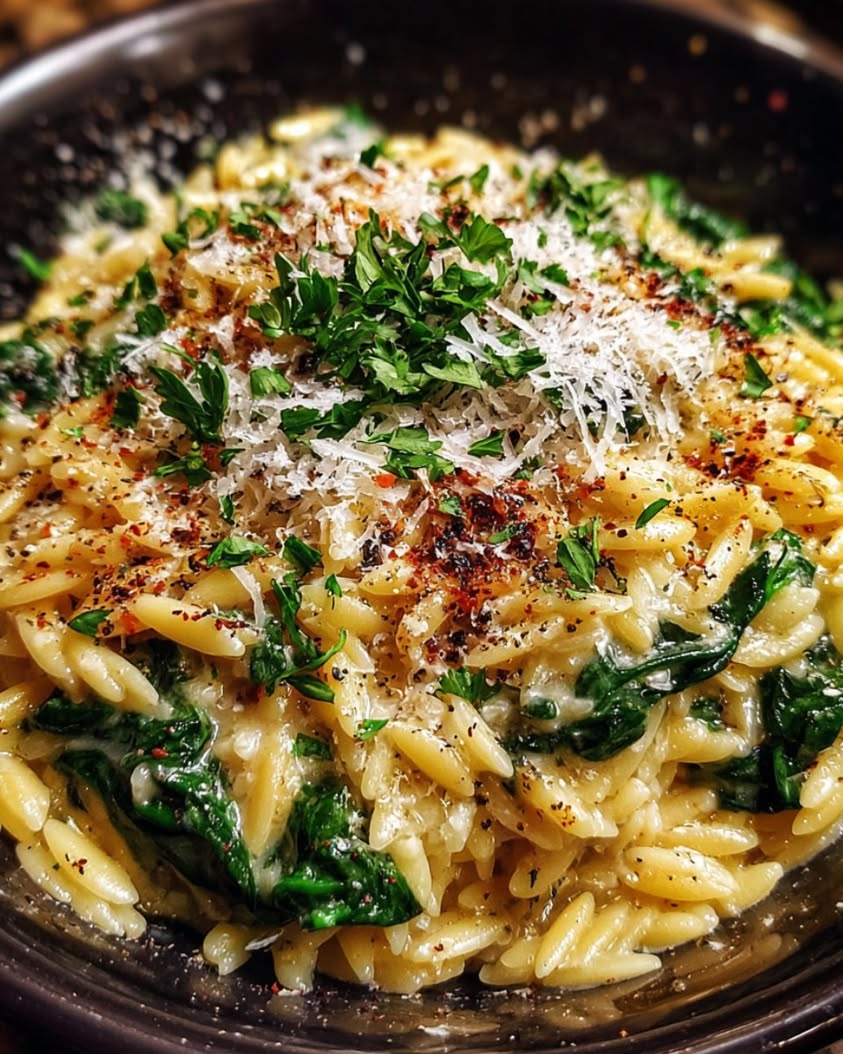
Parmesan Spinach Orzo: A Simple One-Pan Dinner
Imagine a dish that combines the comforting creaminess of risotto with the effortless simplicity of a one-pot pasta. This Parmesan Spinach Orzo recipe delivers exactly that, creating a luxurious and satisfying meal with minimal cleanup. Moreover, it transforms basic pantry staples into something truly special, perfect for busy weeknights when time is precious but taste is non-negotiable. The magic happens in a single skillet, where the orzo toasts, simmers, and melds with garlic, broth, and greens into a cohesive, elegant dish.
The beauty of this Parmesan Spinach Orzo lies in its harmonious balance. First, nutty toasted orzo provides a delightful base. Next, fresh spinach wilts into emerald ribbons, adding color and nutrition. Finally, a generous amount of Parmesan cheese melts into the hot pasta, creating a velvety, savory sauce that clings to every grain. The result is a warm, inviting bowl of food that feels both rustic and refined, proving that impressive dinners don’t require complicated techniques or a mountain of dishes.
Ultimately, this recipe is a testament to smart, flavorful cooking. It’s incredibly adaptable, welcoming various additions like chicken, shrimp, or sun-dried tomatoes. Consequently, it has earned a permanent spot in my regular dinner rotation. Whether you need a quick family meal or an easy side dish for guests, this creamy Parmesan Spinach Orzo consistently delivers comfort and flavor in under thirty minutes.
Quick Recipe Highlights
- Flavor Profile: This dish features a rich, savory foundation from toasted orzo and garlic, beautifully balanced by the salty, umami punch of Parmesan cheese. A hint of black pepper adds a subtle warmth that complements the creamy elements without overpowering them.
- Texture: The orzo achieves a perfect al dente bite, offering a pleasing chew. Meanwhile, the wilted spinach becomes silky and tender, and the melted Parmesan creates a luxuriously creamy sauce that coats every piece seamlessly.
- Aroma: As it cooks, the kitchen fills with the irresistible scent of toasting pasta and sautéed garlic. This aromatic base is followed by the comforting, savory smell of simmering broth and the final nutty fragrance of freshly grated Parmesan.
- Visual Appeal: The presentation is stunning, with vibrant green spinach ribbons swirling through a mound of creamy, pale gold orzo. A final sprinkle of extra Parmesan and a crack of black pepper on top add visual texture and gourmet appeal.
- Skill Level Needed: This recipe is ideal for beginners. It requires only fundamental skills like sautéing and simmering. Furthermore, the one-pan method simplifies the process dramatically, making it nearly foolproof for cooks of any experience level.
- Special Equipment: You need just one large skillet or saucepan with a lid. A standard box grater for the Parmesan is highly recommended over pre-grated cheese for superior melting and flavor. Otherwise, no special tools are required.
Recipe Overview
- Difficulty Level: We classify this Parmesan Spinach Orzo as easy because it uses straightforward techniques in a logical sequence. The one-pan method eliminates complex juggling of multiple pots. Additionally, the visual and textural cues are clear, guiding you to perfect results without guesswork.
- Category: This versatile dish blurs the lines between categories beautifully. It functions perfectly as a hearty vegetarian main course. Alternatively, it serves as an impressive side dish for proteins like grilled chicken, fish, or roasted lamb. It’s truly an all-purpose culinary star.
- Cuisine: While orzo pasta is a staple of Greek and Italian cuisines, this preparation is a modern, fusion-style comfort food. It draws inspiration from Italian risotto techniques but simplifies them for the American home kitchen, creating a uniquely accessible and delicious hybrid dish.
- Cost: This is a remarkably budget-friendly meal. Primary ingredients like orzo, spinach, and broth are inexpensive pantry staples. The Parmesan cheese is the splurge item, but a little goes a long way in flavor. Overall, you can feed a family for a fraction of the cost of takeout.
- Season: This creamy Parmesan Spinach Orzo is truly a year-round champion. In colder months, it provides warm, stick-to-your-ribs comfort. During spring and summer, it feels lighter than heavy pasta dishes but still substantial, especially when paired with a fresh salad.
- Occasion: Its flexibility makes it suitable for countless occasions. It’s a quick weeknight savior, a elegant yet easy option for casual dinner parties, and a comforting meal for cozy nights in. You can even prepare it for potlucks where it travels and reheats well.
Why You’ll Love This Recipe
First and foremost, the taste and texture are utterly irresistible. The creamy Parmesan Spinach Orzo delivers a sophisticated flavor profile that belies its simple preparation. Each forkful offers the satisfying chew of perfectly cooked pasta, contrasted with the silkiness of wilted spinach, all enveloped in a rich, cheesy sauce. The toasted notes from the orzo add a depth of flavor that makes this dish taste like it simmered for hours, not minutes. It’s the kind of comfort food that feels both indulgent and somehow wholesome.
From a practical standpoint, the convenience is a major win. This entire meal comes together in one pan, meaning you spend less time washing dishes and more time enjoying dinner. The active cooking time is minimal; after the initial sauté, the orzo simmers mostly unattended. This makes the recipe perfect for those evenings when you’re juggling homework, chores, or just need a reliable path from hungry to happy with minimal stress. It’s a streamlined process that yields maximum flavor payoff.
Nutritionally, this dish packs a beneficial punch. Spinach is a powerhouse of vitamins A, C, and K, along with iron and fiber. Using a whole-grain orzo option can boost the fiber content even further. The Parmesan cheese provides protein and calcium. Compared to heavy cream-based sauces, this version achieves its creaminess primarily from the starch of the pasta and the cheese, creating a satisfying meal that feels lighter. You can feel good about serving it regularly.
For entertaining, this Parmesan Spinach Orzo is a secret weapon. It scales up effortlessly to feed a crowd and can be mostly prepared ahead of time. Guests are always impressed by its creamy, restaurant-quality appearance, and it pairs wonderfully with a wide variety of mains. Serving a beautiful, homemade one-pan dish allows you to be present with your company instead of stuck in the kitchen. It elevates casual gatherings without requiring professional chef skills.
Finally, the cost-effectiveness and accessibility of the ingredients cannot be overstated. You likely have many of the core components already in your pantry and freezer. Even if you need to shop, the list is short and affordable. This recipe demonstrates how a few humble ingredients, when treated with care, can transform into something extraordinary. It’s a lesson in economical, flavorful cooking that will serve you well for years to come.
Historical Background and Cultural Significance
Orzo, which means “barley” in Italian, is a rice-shaped pasta that has been a staple in Mediterranean cuisines for centuries. Its origin is often traced to Greece and Italy, where it was traditionally used in soups, pilafs, and baked dishes. The small, versatile shape made it ideal for absorbing broths and sauces, creating hearty, comforting meals for families. Over time, its use spread throughout the region, becoming a beloved ingredient in countless traditional recipes that celebrated local produce and simple, robust flavors.
The cultural significance of dishes like this Parmesan Spinach Orzo lies in their embodiment of “cucina povera” or the “food of the poor.” This culinary philosophy, central to Italian cooking, focuses on creating magnificent meals from inexpensive, readily available ingredients. Transforming basic pasta, greens, and a hard cheese into a creamy, luxurious dish is a classic example of this resourceful and respectful approach to food. It speaks to a history of making the most of what you have, resulting in food that is both nourishing and deeply satisfying.
The evolution of this specific recipe is a modern story of fusion and convenience. While traditional Greek “kritharaki” (orzo) might be baked with tomatoes and meat, the one-pan, stovetop creamy method is a contemporary adaptation. It borrows the risotto-like technique of toasting the pasta and adding liquid gradually to develop starch, but simplifies it by using orzo, which is more forgiving than Arborio rice. This evolution reflects our modern desire for deep flavor without all-day cooking, merging tradition with today’s need for efficiency.
Regional variations of orzo dishes are plentiful. In Greece, you might find it baked with shrimp and feta. In Italy, it’s often served as “orzo al pomodoro” or in a simple broth. The addition of spinach and Parmesan in this creamy format is a popular American-Italian fusion that highlights the adaptability of the ingredient. This particular version has become a staple in home kitchens because it captures the essence of Mediterranean comfort food while being perfectly suited for a quick weeknight dinner anywhere in the world.
Ingredient Deep Dive
Orzo pasta is the star of this dish. Culturally, it bridges the gap between pasta and grain, used for centuries in Mediterranean soups and salads. Nutritionally, it provides carbohydrates for energy; choosing a whole-wheat variety increases fiber and protein. When selecting orzo, look for a reputable brand to ensure even cooking. Store it in a cool, dry pantry. For substitutions, you can use other small pasta like ditalini, or for a gluten-free version, rice-shaped quinoa or certified gluten-free orzo works perfectly, though cooking times may vary slightly.
Fresh spinach brings vital color and nutrition. Historically, leafy greens have been foraged and cultivated across Europe for millennia, valued for their health properties. Spinach is loaded with vitamins A, C, K, iron, and magnesium. Select bunches with vibrant, crisp leaves, avoiding any that are wilted or slimy. Store it loosely wrapped in a towel in the refrigerator’s crisper drawer. If fresh is unavailable, frozen chopped spinach, thoroughly thawed and squeezed dry, is an excellent substitute that actually concentrates the flavor and reduces prep time.
Parmesan cheese, specifically Parmigiano-Reggiano, is a product of profound cultural heritage from Italy, aged for years to develop its complex, nutty flavor. It provides umami, protein, and calcium. Always buy a block and grate it yourself; pre-grated cheese contains anti-caking agents that prevent it from melting smoothly. Store the block wrapped in parchment and then foil in the refrigerator. For a dairy-free version, a high-quality nutritional yeast can provide a cheesy flavor, or a vegan Parmesan alternative may be used, though the texture will differ.
Garlic and onion form the aromatic foundation. Garlic has been used both medicinally and culinarily since ancient times. It adds depth and a pungent kick that mellows beautifully when sautéed. Use fresh, firm cloves. A shallot can be substituted for the onion for a more delicate flavor. Store both in a cool, dark, dry place. Their nutritional benefits include allicin, a compound with noted antioxidant properties. These aromatics are non-negotiable for building the flavor base of your creamy Parmesan Spinach Orzo.
Chicken or vegetable broth is the cooking liquid that infuses the orzo with flavor. A rich, homemade broth is ideal, but a good-quality, low-sodium store-bought broth works wonderfully. The salt content is crucial; using low-sodium allows you to control the final seasoning, especially since Parmesan adds saltiness. For storage, keep unopened boxes in the pantry. Once opened, refrigerate and use within a few days. This liquid is what the orzo absorbs to become plump and flavorful, so never underestimate its importance in the final taste of the dish.
Common Mistakes to Avoid
- Using Pre-Grated Parmesan: This is the most common pitfall. Pre-grated cheese contains cellulose to prevent clumping, which creates a grainy, non-melty sauce. Always grate a block of Parmesan yourself for the silkiest, most integrated sauce in your creamy Parmesan Spinach Orzo.
- Not Toasting the Orzo: Skipping the step of toasting the dry orzo in butter or oil misses a key flavor opportunity. Toasting develops a nutty depth and helps the pasta maintain a better texture during cooking. It only takes a minute but makes a significant difference.
- Adding All the Liquid at Once: Pouring all the broth in at the start will result in boiled, mushy orzo. Instead, add it in increments, allowing the pasta to absorb the liquid slowly. This technique encourages starch release for a creamier consistency, similar to risotto.
- Overcooking the Spinach: Adding the spinach too early will cause it to overcook, lose its vibrant color, and become slimy. Stir it in at the very end, just until wilted by the residual heat. This preserves its texture, color, and nutritional value.
- Using a Skillet That’s Too Small: Crowding the ingredients prevents even cooking and steaming. Use a large, wide skillet or sauté pan to give the orzo plenty of room to toast and simmer properly. This ensures every grain cooks evenly.
- Not Seasoning in Layers: Seasoning only at the end results in a bland dish. Season the aromatics as they sauté, and taste the broth for salt before adding it. Finally, adjust seasoning again after adding the cheese, which is salty itself.
- Rushing the Simmer: Cooking at too high a boil will cause the liquid to evaporate too quickly, leaving the orzo undercooked in the center. Maintain a gentle, steady simmer after each addition of broth for perfect, tender results.
- Skipping the Rest Time: Serving immediately after the last stir doesn’t allow the dish to settle. Letting it sit off the heat for 2-3 minutes, covered, lets the flavors meld and the sauce thicken to the ideal creamy consistency.
Essential Techniques
Toasting the orzo is the first critical technique. This step involves cooking the dry pasta in fat for a minute or two until it becomes fragrant and lightly golden. Importantly, this process seals the starch on the surface, which helps the orzo retain a pleasing al dente texture later. It also unlocks a deep, nutty flavor that forms the foundation of the dish. The visual cue for success is a change in color from pale to a light tan and a noticeable toasted aroma. Avoid burning it by keeping the heat at medium and stirring constantly.
The incremental addition of broth is what creates the creamy sauce. Unlike boiling pasta in a large pot of water, here you add warm broth in stages, allowing the orzo to absorb it slowly. As the orzo cooks, it releases its starch directly into the limited liquid, naturally thickening it into a luxurious sauce. The key is to add the next ladleful only when the previous one has been mostly absorbed. This technique requires patience and attention but is simple to master. The result is a cohesive, creamy Parmesan Spinach Orzo, not a watery soup with separate pasta.
Properly wilting the spinach ensures perfect texture and color. The technique involves turning off the heat and immediately stirring the fresh spinach into the hot orzo. The residual heat is sufficient to wilt the leaves gently without applying direct flame. This method preserves the spinach’s vibrant green hue and prevents it from becoming overcooked and slimy. Fold it in until it just collapses, which takes less than a minute. For frozen spinach, ensure it is thoroughly thawed and squeezed of all excess water to prevent diluting your carefully crafted sauce.
Finishing with cheese off the heat is the final master technique. Once the orzo is cooked and the spinach wilted, remove the pan from the burner before stirring in the grated Parmesan. The residual heat will melt the cheese smoothly into the sauce. Adding cheese over direct heat can cause it to seize, become oily, or clump together. Stir vigorously until the cheese is fully incorporated and the sauce becomes velvety. This off-heat incorporation guarantees the signature creamy, cohesive texture that makes this dish so delightful.
Pro Tips for Perfect Parmesan Spinach Orzo
Warm your broth before adding it to the skillet. Adding cold broth shocks the cooking orzo and drastically lowers the pan temperature, leading to uneven cooking. Simply heat the broth in a separate saucepan or in the microwave before you begin. This maintains a consistent simmer and helps the starch release properly for a creamier sauce.
Use a wooden spoon for stirring. Its gentle action is less likely to break the delicate orzo grains compared to a metal spoon or spatula. Furthermore, a wooden spoon doesn’t conduct heat, so it stays cool in your hand as you stir the simmering pasta.
Reserve a little extra broth. Sometimes the orzo absorbs liquid faster than expected, or you may prefer a slightly looser consistency. Having a half-cup of warm broth ready to stir in at the end allows you to perfect the texture just before serving.
Grate your Parmesan on the fine side of a box grater. Finely grated cheese melts more quickly and evenly into the sauce, creating a seamless creaminess. The powdery texture from the fine holes integrates better than larger shreds.
Let the dish rest before serving. After adding the final ingredients, turn off the heat, cover the skillet, and let it sit for two to three minutes. This allows the last bit of liquid to absorb fully and the flavors to marry, resulting in a more harmonious and thicker final product.
Add a splash of fresh lemon juice at the end. A small squeeze of lemon juice brightens the entire dish, cutting through the richness of the cheese and adding a layer of freshness that elevates the flavors dramatically. It’s a simple trick with a major impact.
Toast the orzo in a combination of butter and olive oil. The butter contributes rich flavor for toasting, while the olive oil has a higher smoke point to prevent burning. This duo gives you the best of both worlds for the foundational step.
Variations and Adaptations
For regional variations, consider a Greek twist by adding chopped kalamata olives, crumbled feta cheese, and a sprinkle of oregano at the end. An Italian-inspired version might include sun-dried tomatoes and fresh basil. For a more American take, stir in cooked, shredded rotisserie chicken or crispy pancetta for added protein and heartiness. The basic creamy Parmesan Spinach Orzo recipe is a perfect canvas for these cultural flavor profiles.
Seasonal adaptations keep this dish exciting year-round. In spring, add fresh peas and asparagus tips with the spinach. Summer calls for cherry tomatoes and fresh zucchini. For autumn, incorporate roasted butternut squash cubes and sage. In winter, hearty mushrooms and a touch of cream can make it even more comforting. Adjusting the greens and add-ins with the seasons makes the recipe feel new every time.
Dietary modifications are straightforward. For a gluten-free meal, use certified gluten-free orzo or rice-shaped quinoa. To make it vegan, substitute the butter with olive oil, use vegetable broth, and replace Parmesan with a blend of nutritional yeast and a vegan hard cheese alternative. For a dairy-free version that isn’t vegan, you could use a high-quality dairy-free Parmesan-style cheese.
Flavor variations can cater to different palates. For a richer taste, stir in a tablespoon of cream cheese or mascarpone with the Parmesan. For a spicy kick, add red pepper flakes when sautéing the garlic. To enhance umami, include a teaspoon of white miso paste dissolved in the warm broth. A teaspoon of lemon zest added at the end provides a bright, aromatic lift.
Texture modifications can change the eating experience. For a creamier texture, use a full cup of heavy cream in place of one cup of the broth. For a chunkier, more substantial dish, add cannellini beans or chickpeas. To include a crunchy element, top the finished dish with toasted pine nuts, breadcrumbs, or crispy fried onions for contrast.
Presentation alternatives can elevate the dish for guests. Serve individual portions in shallow bowls garnished with a Parmesan crisp. For a family-style presentation, transfer the entire skillet to the table. You can also bake the finished orzo in a casserole dish with a breadcrumb topping for a few minutes to create a gratin-style crust. Stuffing the orzo into hollowed-out tomatoes or bell peppers makes for an impressive individual serving.
Serving and Presentation Guide
Plating techniques matter for visual appeal. For individual servings, use a warm, shallow bowl. Spoon the creamy Parmesan Spinach Orzo into the center and use the back of the spoon to create a slight well or swirl. This adds dimension and makes the dish look more abundant. Avoid mounding it too high; a flatter presentation shows off the vibrant green spinach throughout. For family style, a wide, low-serving bowl or the skillet itself (if presentable) creates a rustic, inviting centerpiece.
Garnishing adds the final professional touch. A simple sprinkle of freshly grated Parmesan and a crack of black pepper is classic. For color and freshness, add a few whole baby spinach leaves, a drizzle of high-quality olive oil, or finely chopped fresh herbs like parsley, chives, or basil. A light dusting of smoked paprika adds both color and a subtle smoky note. Remember, garnishes should be edible and complement the flavors, not overwhelm them.
Traditional accompaniments lean Mediterranean. Serve this orzo as a side to simply grilled or roasted proteins like lemon-herb chicken, seared salmon, or lamb chops. A crisp, acidic salad with a lemon vinaigrette cuts through the richness perfectly. For a vegetarian feast, pair it with roasted vegetables like eggplant or peppers. Crusty bread for soaking up any remaining sauce is always welcome.
Modern serving suggestions embrace its role as a main. Top a bowl with a soft-poached or fried egg for a luxurious dinner. Serve it alongside a charcuterie board for a casual gathering. For a light lunch, portion it into a container with a lid—it travels well and can be eaten cold or at room temperature, almost like a pasta salad. It’s incredibly versatile.
Temperature considerations are key. This dish is best served immediately while hot and creamy. However, it also holds its texture well for about 20 minutes if kept covered in a warm place. Avoid keeping it on direct heat, as it will continue to cook and dry out. If it thickens too much upon standing, stir in a small splash of warm broth or milk to loosen it before serving.
Portion control tips help with meal planning. As a main course, this recipe yields four generous servings. As a side dish, it can comfortably serve six. Use a measuring cup or kitchen scale to divide it evenly if needed. Remember that the dish is rich, so a little goes a long way, especially when served with other components. Leftovers reheat beautifully, making it ideal for planning ahead.
Wine and Beverage Pairing
Wine pairings should complement the creamy, savory, and slightly salty profile. A crisp, acidic white wine like Pinot Grigio or Sauvignon Blanc cuts through the richness of the cheese beautifully. For a more rounded option, an unoaked Chardonnay has the body to match the dish without overpowering it. If you prefer red, choose a light-bodied, low-tannin red like a Pinot Noir served slightly chilled. The key is to avoid heavily oaked or high-tannin wines that will clash with the creamy texture.
Non-alcoholic alternatives offer refreshing balance. Sparkling water with a squeeze of lemon or lime provides cleansing bubbles. For a more crafted option, a virgin basil lemonade or a cucumber-mint cooler complements the herbal and fresh notes in the orzo. Iced herbal teas, like chamomile or peppermint, can also be lovely, especially if lightly sweetened. The goal is a beverage that refreshes the palate between bites.
Coffee and tea pairings work well if serving the dish for lunch. A medium-roast coffee with low acidity won’t compete with the savory flavors. For tea, consider a green tea like Sencha, which has vegetal notes that echo the spinach, or a light oolong. Avoid strong, bitter black teas or heavily flavored coffees that could overwhelm the subtlety of the Parmesan Spinach Orzo.
Temperature considerations for beverages are straightforward. White wines and non-alcoholic sparklers should be well-chilled. Light reds are best served slightly below room temperature. Non-alcoholic still drinks are most refreshing when cold or over ice. Serving beverages at their ideal temperature enhances their role in cleansing the palate and elevating the entire dining experience.
Serving suggestions for a complete experience include setting the table with appropriate glassware. Offer both still and sparkling water. If serving wine, pour a small taste first to allow guests to experience the pairing. For a casual family dinner, a simple pitcher of iced tea or lemonade is perfect. Ultimately, the best pairing is one that you and your guests enjoy, so feel free to experiment with your favorite drinks.
Storage and Shelf Life
Storage methods are simple but important. Allow any leftover creamy Parmesan Spinach Orzo to cool completely to room temperature before storing. Do not leave it out for more than two hours. Transfer it to an airtight container. You can store it in one large container or divide it into single-serving portions for easy reheating. Press a piece of plastic wrap directly onto the surface of the orzo before sealing the lid to minimize exposure to air, which can dry it out and cause discoloration.
Temperature requirements are strict for food safety. Refrigerate the leftovers promptly. The orzo will keep safely in the refrigerator for 3 to 4 days. Do not store it at room temperature. The dairy and starchy composition makes it susceptible to bacterial growth if not kept cold. Always use your nose and eyes; if it develops an off smell, unusual sliminess, or mold, discard it immediately.
Container recommendations focus on airtightness. Glass containers with locking lids are ideal because they don’t absorb odors and allow you to see the contents. Alternatively, BPA-free plastic containers with tight seals work well. If using a bowl covered with plastic wrap, ensure the wrap is sealed tightly around the edges. The goal is to prevent the orzo from drying out and absorbing other flavors from the refrigerator.
Signs of spoilage are usually evident. Look for a sour or unpleasant odor—the fresh, cheesy aroma should remain. Visually, significant darkening of the spinach or the presence of any mold are clear indicators. The texture may become excessively dry or, conversely, unnaturally slimy. When in doubt, it is always safer to throw it out. Properly stored, however, it should remain fresh for several days.
Reheating instructions are crucial for restoring creaminess. The best method is on the stovetop. Place the orzo in a saucepan or skillet with a splash of broth, milk, or water. Heat over medium-low, stirring frequently, until warmed through. The added liquid will reconstitute the creamy sauce. You can also reheat it in the microwave in a covered, microwave-safe dish, stirring every 30 seconds and adding a teaspoon of liquid as needed. Avoid high heat, which can cause the cheese to separate.
Freezing guidelines come with a caveat. You can freeze this dish, but be aware that the texture of the dairy and pasta may change slightly upon thawing. To freeze, cool completely and place in a freezer-safe airtight container, leaving some headspace for expansion. It will keep for up to 2 months. Thaw overnight in the refrigerator before reheating gently on the stovetop with added liquid. The spinach may darken, but the flavor will still be good.
Make Ahead Strategies
A prep timeline can turn this into a 10-minute meal. The day before, chop your onion and mince your garlic. Store them together in a small container in the fridge. Grate your entire block of Parmesan and keep it in a separate airtight container. Wash and dry your spinach. Measure out your orzo and broth. With these elements ready, you can literally have the dish simmering in under five minutes when you’re ready to cook.
Storage between steps is simple with mise en place. Keep pre-chopped aromatics in the fridge. Keep grated cheese in the fridge. Keep broth in its container until needed. The orzo and dried spices can stay at room temperature. Organizing your ingredients before you start cooking streamlines the process and prevents frantic searching, making the cooking experience much more enjoyable and efficient.
Quality impact assessment for fully made-ahead orzo is important. The dish is best served fresh. However, you can cook it completely, cool it rapidly, and refrigerate it for up to 24 hours. Expect some absorption of the sauce; it will thicken considerably. The key to success is reheating it gently with added liquid to restore the creamy consistency. The flavor often deepens overnight, which can be a positive.
Assembly tips for partial make-ahead involve stopping at a specific point. You can complete the recipe through toasting the orzo and sautéing the aromatics. Then, turn off the heat and let the pan cool. Cover and refrigerate it. When ready to finish, reheat the pan over medium, then proceed with adding the warm broth in increments. This splits the active cooking time effectively.
Reheating guidelines for pre-made dishes require patience and liquid. Always reheat on the stovetop over low to medium heat. Add liquid—broth, water, or milk—a few tablespoons at a time, stirring constantly until the orzo is hot and the sauce is creamy again. Microwaving can work but often heats unevenly and requires frequent stirring. The goal is to gently warm it without further cooking the pasta.
Fresh element additions are best done just before serving. If you make the entire dish ahead, consider reserving a handful of fresh spinach. When reheating, stir in the fresh spinach at the very end to revive the vibrant green color. Also, reserve a little grated Parmesan to sprinkle on top after reheating for a fresh, sharp flavor boost that makes the dish taste newly made.
Scaling Instructions
Halving the recipe is perfect for one or two people. Simply divide all ingredient quantities by two. Use a medium skillet instead of a large one. The cooking times will be slightly shorter, so watch carefully after adding the broth. The orzo will absorb liquid faster. You may need slightly less than half the total broth, so add it gradually and stop when the texture is perfect. The rest period is still essential for a creamy result.
Doubling or tripling the recipe for a crowd requires planning. Double or triple all ingredients proportionally. You must use a very large pot or Dutch oven to accommodate the volume—crowding will lead to steaming instead of toasting and uneven cooking. You will likely need to increase the total simmering time slightly. Stir more frequently to ensure even heat distribution. Taste and adjust seasoning carefully, as scaling up spices can be tricky.
Equipment adjustments are non-negotiable when scaling. For a half batch, a 10-inch skillet is sufficient. For a double batch, a 5-quart Dutch oven or a large, wide saucepan is ideal. Ensure your stirring utensil is appropriate for the larger volume. You may also need a larger ladle for adding broth. Using the correct equipment prevents spillovers and ensures the cooking process works as intended.
Timing modifications are subtle but important. When scaling up, the initial toasting and sautéing may take a minute or two longer due to the increased mass in the pan. The simmering time between broth additions will also lengthen slightly because it takes more time for the larger quantity of liquid to absorb. Rely on visual cues (liquid absorbed, orzo tender) rather than a strict timer.
Storage considerations change with scale. A large batch will yield more leftovers. Ensure you have enough appropriate-sized airtight containers for refrigeration. Cool the large batch quickly by spreading it in a thin layer on a baking sheet before transferring to containers. This prevents the center from staying warm too long, which is a food safety concern. Label containers with the date if you’re making it well ahead of an event.
Nutritional Deep Dive
The macro breakdown of this creamy Parmesan Spinach Orzo provides a balanced meal. A serving offers a good source of complex carbohydrates from the orzo for sustained energy. The Parmesan cheese and any added butter contribute healthy fats and protein. The spinach adds minimal calories but significant volume and fiber. Using low-sodium broth and controlling added salt helps manage sodium content. As a complete dish, it provides a satisfying mix of macros that can fuel your body effectively.
A micronutrient analysis reveals a wealth of vitamins and minerals. Spinach is famously rich in vitamin K for bone health, vitamin A for vision, and folate. Parmesan cheese is an excellent source of calcium and phosphorus. Garlic contains allicin and other antioxidants. Onions provide quercetin. Using whole-grain orzo would further increase the B-vitamin and mineral content. This dish is more nutrient-dense than many simple pasta dishes due to its vegetable and cheese components.
Health benefits extend beyond basic nutrition. The combination of fiber from spinach and complex carbs can aid in digestive health and provide steady blood sugar levels when portioned appropriately. The calcium supports bone strength. The antioxidants in the vegetables combat oxidative stress. As a homemade meal, it avoids the excessive sodium, unhealthy fats, and preservatives often found in processed or restaurant versions of similar dishes.
Dietary considerations are important for specific needs. For those monitoring carbohydrates, a smaller portion served with a large salad can fit into many plans. The dish is vegetarian as written. For gluten-free needs, use appropriate pasta. The primary allergen is dairy (Parmesan), but this can be substituted. Being aware of these considerations allows you to adapt the recipe or advise guests accordingly.
Portion analysis helps with mindful eating. One serving is roughly one and a half to two cups, which is very satisfying due to the creamy, rich nature of the dish. It’s easy to over-serve because it’s delicious, so using a{“success”:true,”message”:”Recipe created successfully”,”post_id”:7670,”tasty_recipe_id”:7670,”shortcode”:” Print
Parmesan Spinach Orzo
Description
A creamy, one-pot orzo dish packed with fresh spinach and savory Parmesan cheese, perfect for a quick and comforting meal.
Ingredients
For the Crust:
- 1 cup orzo pasta
- 2 tablespoons olive oil
- 3 cloves garlic, minced
- 4 cups fresh spinach
- 2 cups vegetable broth
- 1/2 cup heavy cream
- 1 cup grated Parmesan cheese
- Salt and black pepper to taste
- 1/4 teaspoon red pepper flakes (optional)
Instructions
1. Prepare the Crust:
- Heat olive oil in a large skillet over medium heat. Add minced garlic and sauté for 1-2 minutes until fragrant.
- Add orzo to the skillet and toast for 2-3 minutes, stirring frequently, until lightly golden.
- Pour in vegetable broth and bring to a simmer. Cook for 8-10 minutes, stirring occasionally, until orzo is tender and liquid is mostly absorbed.
- Stir in fresh spinach and cook until wilted, about 2-3 minutes.
- Reduce heat to low and stir in heavy cream and grated Parmesan cheese until creamy and well combined. Season with salt, black pepper, and red pepper flakes if using. Serve immediately.
Notes
You can customize the seasonings to taste.

I’m Billy, a classically trained culinary school graduate from The Culinary Institute of America with over 12 years in the restaurant industry and over 19 years of cooking experience.