
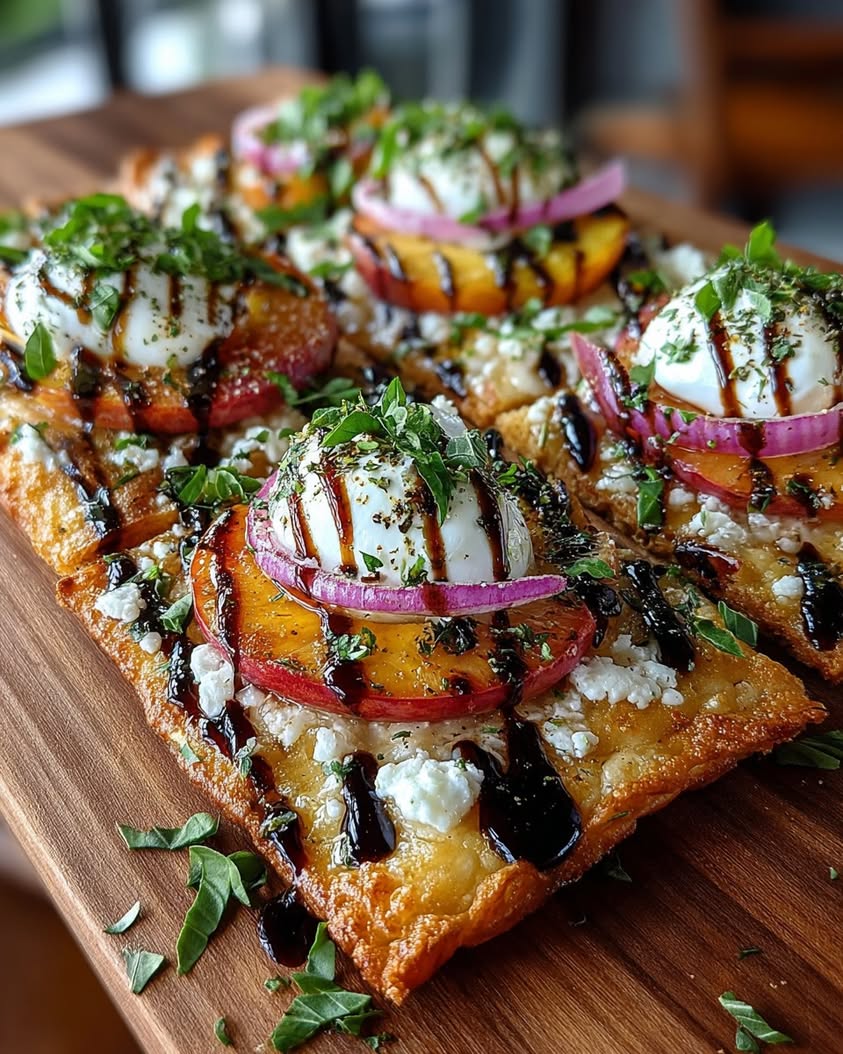
Peach, Burrata & Balsamic Flatbread: A Sweet & Savory Summer Masterpiece
Imagine the perfect bite of summer. This Peach, Burrata & Balsamic Flatbread recipe delivers exactly that. It combines juicy, ripe peaches with creamy burrata cheese and a drizzle of syrupy balsamic glaze. The result is a stunning appetizer or light meal that feels both elegant and effortless. Moreover, it captures the essence of warm-weather dining on a single, crispy crust.
This flatbread is a celebration of peak-season produce. The sweet peaches and tangy balsamic balance the rich, milky burrata beautifully. Fresh basil adds a final, aromatic punch that ties everything together. Consequently, every slice offers a complex harmony of flavors and textures. It is the ideal centerpiece for a garden party or a simple weeknight treat that feels special.
Learning how to make this Peach Burrata Basil Flatbread Recipe is wonderfully straightforward. You do not need any advanced culinary skills. Essentially, you just need quality ingredients and a hot oven. The process is quick, allowing you to spend less time cooking and more time enjoying. Ultimately, this dish proves that the most impressive meals often come from the simplest preparations.
Quick Recipe Highlights
- Flavor Profile: This flatbread masterfully balances sweet, savory, tangy, and creamy notes. The natural sugar of the peaches plays against the rich burrata, while the balsamic glaze adds a sharp, acidic counterpoint. Fresh basil provides an herby, peppery finish that brightens the entire dish.
- Texture: You get a fantastic contrast between the crispy, chewy flatbread crust and the lush, soft burrata. The peaches offer a tender, juicy bite, and the reduced balsamic adds a sticky, syrupy quality. This combination creates a truly satisfying mouthfeel in every slice.
- Aroma: As it bakes, the flatbread fills your kitchen with the warm, toasty scent of baking dough. The fragrance of ripe stone fruit mingles with the sweet-tart smell of reducing balsamic. Finally, tearing the fresh basil releases its iconic, summery perfume right before serving.
- Visual Appeal: This dish is a feast for the eyes with its vibrant color palette. The bright yellow and red of the peaches pop against the stark white burrata and green basil. A drizzle of dark balsamic glaze creates an artistic, appetizing finish that looks professionally crafted.
- Skill Level Needed: This is a beginner-friendly recipe requiring minimal technique. The key skills are simple slicing, assembling, and monitoring the oven. Therefore, even a novice cook can achieve restaurant-quality results with confidence on their first try.
- Special Equipment: You only need a baking sheet or pizza stone and a sharp knife. A pastry brush for the olive oil is helpful but not essential. For the balsamic glaze, a small saucepan is needed if you are reducing it yourself.
Recipe Overview
- Difficulty Level: We rate this recipe as “Easy” because it involves no dough-making or complex techniques. The assembly is intuitive and the cooking process is largely hands-off. The most delicate task is handling the burrata, which is simple. Overall, it is an accessible project for cooks of all levels.
- Category: This dish fits multiple categories beautifully. It works perfectly as a shareable appetizer or a light lunch. Additionally, it can be the star of a summer brunch spread or a sophisticated snack. Its versatility makes it a valuable addition to your recipe repertoire.
- Cuisine: While flatbread has roots in many cultures, this combination is inspired by modern Italian and Californian cuisine. It takes the Italian love for burrata and balsamic and pairs it with a quintessential summer fruit. The result is a fresh, fusion-style dish that feels both classic and contemporary.
- Cost: This is a moderately priced recipe, with the burrata cheese being the primary cost. Seasonal peaches are very affordable in summer. Using store-bought flatbread or naan keeps costs down. Ultimately, you create a gourmet-tasting dish for a fraction of restaurant prices.
- Season: This Peach Burrata Basil Flatbread Recipe is best made in mid-to-late summer. That is when peaches are at their peak of flavor, sweetness, and juiciness. Making it with subpar, out-of-season fruit will compromise the entire dish’s quality.
- Occasion: It is ideal for casual outdoor gatherings, picnics, or date nights at home. The flatbread also makes a stunning addition to a bridal shower or birthday party menu. Its elegant appearance belies how simple it is to prepare for a crowd.
Why You’ll Love This Recipe
First and foremost, the taste and texture are utterly irresistible. The Peach Burrata Basil Flatbread Recipe delivers a party in your mouth with every single bite. You experience the initial crunch, followed by creamy burrata and juicy fruit. The sweet and savory combination is sophisticated yet deeply satisfying. Furthermore, the aromatic basil cuts through the richness, ensuring the flatbread never feels too heavy. It is a flavor profile that will impress your guests and have them asking for the recipe.
Next, consider the sheer convenience. This recipe comes together in under 30 minutes from start to finish. You can use pre-made flatbread or naan for an even faster assembly. Consequently, it is a lifesaver when you need an impressive dish without hours of labor. The ingredients are minimal and the steps are simple. Therefore, you can focus on enjoying your company instead of being stuck in the kitchen. It is the definition of easy elegance.
From a nutritional standpoint, this flatbread offers several benefits. Peaches provide vitamins A and C, along with fiber. Burrata offers a good source of protein and calcium, though it is rich. Using a whole-grain flatbread base can add more fiber and nutrients. As a result, you can feel good about serving this as part of a balanced meal. It is a more wholesome choice than many heavy, cheese-laden pizzas or appetizers.
For entertaining, this dish has incredible social value. It is meant to be shared, torn apart, and enjoyed communally. The beautiful presentation sparks conversation and makes people feel special. Moreover, it pairs wonderfully with a variety of drinks, from sparkling wine to iced tea. Serving this Peach, Burrata & Balsamic Flatbread signals that you have put thought into the menu. It creates a memorable culinary moment for your guests.
Finally, it is cost-effective and accessible. You do not need rare or expensive ingredients to make something extraordinary. A few high-quality components transform into a gourmet experience. Learning this Peach Burrata Basil Flatbread Recipe empowers you to create restaurant-worthy food at home. Ultimately, it is an investment in your culinary confidence that pays delicious dividends all summer long.
Historical Background and Cultural Significance
The concept of flatbread is ancient, found in virtually every cuisine worldwide. However, the specific combination of fruit, cheese, and bread has a rich history. In Italy, pairing fresh cheese with fruit and honey or mostarda is a classic dessert or antipasto tradition. Meanwhile, the use of balsamic vinegar, particularly the prized Aceto Balsamico Tradizionale from Modena, dates back to the Middle Ages. This recipe is a modern fusion that borrows from these timeless Italian practices, applying them to a flatbread canvas for a casual, shareable format.
Culturally, this dish reflects a growing trend in contemporary cooking: the elevation of simple, seasonal ingredients. It embodies the “less is more” philosophy where quality shines. The Peach Burrata Basil Flatbread Recipe is a product of the farm-to-table movement. It prioritizes the flavor of a perfect peach over complex sauces or techniques. This approach has become central to how many people want to eat today—celebrating purity, seasonality, and local produce.
The recipe has evolved from basic fruit and cheese plates. Chefs began experimenting with warm applications, discovering how heat enhances the sweetness of fruit and the creaminess of cheese. Putting these elements on a crispy flatbread added a satisfying textural component and made the dish more substantial. The addition of reduced balsamic vinegar provided the necessary acidic balance to cut through the fat. Consequently, what started as separate elements on a platter merged into a cohesive, hot appetizer.
Regional variations of this concept are endless. In the American South, you might find a similar flatbread with peaches and pimento cheese. In France, one might use figs and chèvre. The Mediterranean version could feature apricots and halloumi. This particular Peach, Burrata & Balsamic Flatbread sits comfortably within a global family of sweet-savory flatbreads. It demonstrates how a foundational idea can be adapted to highlight local ingredients and tastes.
Ingredient Deep Dive
Peaches: Peaches originated in China over 8,000 years ago and were later cultivated along the Silk Road. They symbolize immortality and friendship in Chinese culture. Nutritionally, they are rich in vitamins A and C, potassium, and fiber, while being low in calories. Their antioxidants can help protect against free radical damage. For this recipe, select peaches that are fragrant and yield slightly to gentle pressure at the stem end. Avoid hard or overly soft fruit. Store unripe peaches at room temperature and refrigerate ripe ones for a few days. For substitutions, nectarines are perfect, while figs or apricots work well for a different seasonal twist.
Burrata Cheese: Burrata is a fresh Italian cheese from the Apulia region, invented in the early 20th century as a way to use up mozzarella scraps. “Burrata” means “buttered,” hinting at its rich interior. It consists of a mozzarella pouch filled with stracciatella (shredded mozzarella) and cream. It provides protein, calcium, and fat, contributing to the dish’s luxurious mouthfeel. Always choose the freshest burrata possible, checking the sell-by date. It should be stored in its liquid in the refrigerator and consumed within a day or two of opening. For a lighter option, fresh mozzarella can be used, though you will lose the luscious creamy center.
Balsamic Glaze: Authentic traditional balsamic vinegar is aged for years in wooden barrels and is incredibly complex. The glaze is a reduction of balsamic vinegar, often with a little sweetener, creating a syrupy consistency. It contains antioxidants from the grapes and can aid digestion. For this Peach Burrata Basil Flatbread Recipe, you can purchase a ready-made glaze or make your own by simmering balsamic vinegar until it thickens. A high-quality, aged balsamic will yield the best flavor. Store glaze at room temperature. If you need a substitute, a reduction of pomegranate molasses or a high-quality honey can provide a different but delicious sweet-tart note.
Fresh Basil: Basil is native to tropical regions from Central Africa to Southeast Asia and holds sacred significance in many cultures, particularly in India and Italy. It is a good source of vitamin K, manganese, and essential oils like eugenol, which have anti-inflammatory properties. For the brightest flavor, choose vibrant green bunches without black spots. Store basil like a bouquet of flowers—stems in water at room temperature, not in the fridge. Tear the leaves just before serving to prevent bruising and blackening. In a pinch, fresh mint or arugula can offer a different but complementary herbal freshness.
Flatbread: Flatbread is one of humanity’s oldest prepared foods. You can use naan, pre-baked pizza crust, or even lavash. For a homemade touch, many stores sell fresh pizza dough you can roll out. Opt for a plain or garlic-flavored base to complement the toppings. For a crispier result, pre-bake the flatbread for a few minutes before adding toppings. Whole wheat or multigrain versions add nutritional value. The flatbread acts as the essential crispy foundation that holds the luxurious toppings, making its texture and sturdiness key to the recipe’s success.
Common Mistakes to Avoid
- Using Underripe or Overripe Peaches: Underripe peaches will be hard and lack sweetness, throwing off the flavor balance. Overripe peaches can become mushy and overly watery when baked. Always select fruit that is just ripe for the perfect texture and sugar content.
- Skipping the Pre-Bake on the Crust: If you add toppings to a cold, unbaked flatbread, the crust may end up soggy. Always brush the crust with oil and give it a short pre-bake. This step ensures a crispy, sturdy base that can support the juicy toppings.
- Adding Burrata Before Baking: Burrata is a delicate fresh cheese meant to be served cool or room temperature. Placing it in the oven will cause it to melt completely and separate, losing its signature creamy pocket. Always add torn burrata after the flatbread comes out of the oven.
- Using Low-Quality Balsamic: A harsh, overly acidic balsamic vinegar can ruin the delicate balance of the dish. Invest in a decent aged balsamic for reducing, or use a prepared glaze known for its balanced sweet-tart flavor. The quality of this ingredient is very noticeable.
- Dicing the Peaches Too Small: Small pieces of peach can overcook and lose their shape, becoming jam-like. Slightly larger slices or wedges hold up better in the oven’s heat. They will soften but still retain their distinct identity and juicy bite.
- Overcrowding the Flatbread: While it is tempting to load up on toppings, less is more here. Too many peach slices will release excess moisture. Too much cheese can make it greasy. Arrange ingredients thoughtfully with space in between for the best texture.
- Neglecting to Season: Even sweet dishes need seasoning. A light sprinkle of flaky sea salt and black pepper over the finished flatbread is crucial. The salt enhances the sweetness of the peaches and the richness of the cheese, elevating all the flavors.
- Chopping Instead of Tearing Basil: Using a knife bruises basil leaves and can cause them to blacken quickly. Tearing the leaves by hand preserves their integrity, releases more aroma, and gives a more rustic, appealing look to your final presentation.
Essential Techniques
Reducing Balsamic Vinegar: This technique concentrates flavor and creates a luxurious syrup. Pour balsamic vinegar into a small saucepan and simmer over medium-low heat. Watch it closely, as it can burn easily once it thickens. It is done when it coats the back of a spoon and has reduced by about half. The vinegar will continue to thicken as it cools. This process transforms sharp acidity into a complex, sweet-tart glaze that is essential for balancing the Peach, Burrata & Balsamic Flatbread.
Pre-Baking the Crust: Pre-baking is critical for a crisp result. Brush your flatbread base lightly with olive oil and place it directly on the oven rack or a preheated baking sheet. Bake for 3-5 minutes at a high temperature until it just starts to crisp but is not fully browned. This step creates a barrier against the moist toppings. Consequently, it prevents a soggy middle and ensures every bite has a satisfying crunch.
Tearing Burrata: Handling burrata properly preserves its unique texture. Remove it from its liquid and pat the outer shell gently. Use your hands to tear it into large, irregular pieces. This method exposes the creamy interior in a way that a clean knife cut cannot. The ragged edges catch the balsamic glaze and provide varied pockets of creamy and chewy texture in the finished flatbread.
Arranging Toppings: Strategic arrangement ensures even cooking and perfect bites. After pre-baking, layer the peach slices in a single, slightly overlapping layer. Leave a small border around the edge for easy handling. This allows heat to circulate and the peaches to caramelize slightly. Avoid piling ingredients in the center. Thoughtful placement makes the flatbread easier to slice and guarantees every piece gets a bit of everything.
Pro Tips for Perfect Peach, Burrata & Balsamic Flatbread
First, let your burrata sit at room temperature for 20-30 minutes before serving. Cold cheese straight from the fridge can dull the flavors of the other ingredients. Room-temperature burrata is luxuriously soft and spreads beautifully over the warm flatbread.
Second, use a pizza stone or steel if you have one. Preheat it in the oven for at least 30 minutes before baking. This professional tool mimics a pizza oven floor, giving your flatbread an exceptionally crisp and bubbly crust that elevates the entire dish.
Third, add a layer of something under the peaches for extra flavor. A thin schmear of whole milk ricotta or a light brush of garlic-infused olive oil on the pre-baked crust adds depth. This creates a flavor bridge between the crust and the main toppings.
Fourth, finish with high-quality finishing salt. A sprinkle of flaky Maldon sea salt or Himalayan pink salt after adding the burrata makes the flavors pop. The delicate crunch of the salt flakes also adds another subtle textural element.
Fifth, get creative with your balsamic drizzle. Do not just pour it on. Use a spoon or squeeze bottle to create zig-zags, dots, or a loose lattice pattern. This makes the flatbread look professionally decorated and distributes the flavor perfectly.
Sixth, consider a hint of heat. A very light sprinkle of crushed red pepper flakes or a drizzle of chili-infused honey after baking adds a wonderful complexity. The gentle heat contrasts beautifully with the sweet peaches and cool cheese.
Seventh, serve it immediately. This Peach Burrata Basil Flatbread Recipe is at its absolute peak within minutes of assembly. The contrast between the warm crust, cool cheese, and fresh basil is magical but fleeting. Have your guests ready to eat as soon as it is plated.
Eighth, use a sharp serrated knife or pizza wheel for clean cuts. A dull knife will drag the burrata and make a mess. A quick, confident sawing motion will give you beautiful, clean slices that showcase all the layers.
Variations and Adaptations
Regional Variations: Across different regions, the core ingredients shift to match local produce. In the Pacific Northwest, try this with roasted cherries and hazelnuts. A Southern twist might include candied pecans and a bourbon-balsamic glaze. For a Mediterranean version, substitute peaches with roasted figs and swap burrata for creamy feta or salty halloumi.
Seasonal Adaptations: This recipe framework works year-round with simple fruit swaps. In fall, use thinly sliced pears or apples with a sprinkle of thyme. Winter calls for roasted squash or persimmon with sage. Spring welcomes strawberries or rhubarb compote with goat cheese. The balsamic and basil remain constant, tying the variations together.
Dietary Modifications: For a vegan Peach, Burrata & Balsamic Flatbread, use a high-quality vegan mozzarella or a cashew-based cream. A gluten-free flatbread or cauliflower crust accommodates gluten sensitivities. To reduce carbs, serve the topping mixture over a bed of arugula as a salad instead of on bread.
Flavor Variations: Introduce new flavor dimensions with infused oils or different cheeses. A truffle oil drizzle adds earthy luxury. Try substituting burrata with creamy blue cheese for a sharper bite. Adding thinly sliced prosciutto or speck after baking introduces a savory, salty element that pairs wonderfully with the sweet fruit.
Texture Modifications: Play with texture by adding crunchy elements. Sprinkle toasted pine nuts, walnuts, or pumpkin seeds over the finished flatbread. For a sweet crunch, a few crumbles of honeycomb candy are spectacular. These additions provide a counterpoint to the soft peaches and creamy cheese.
Presentation Alternatives: Think beyond the large flatbread. Make individual-sized versions on small naan or pita rounds for easy serving at parties. Alternatively, deconstruct the elements into skewers with peach chunks, burrata balls, and basil leaves, served with a balsamic dipping glaze.
Serving and Presentation Guide
Plating Techniques: Present the whole flatbread on a large, clean wooden cutting board or a simple slate platter. This rustic presentation highlights the food’s natural beauty. Use a pizza wheel to score cutting lines before bringing it to the table, then do the final slicing in front of your guests for a theatrical touch.
Garnishing Ideas: Beyond torn basil, consider microgreens, edible flowers, or delicate pea shoots for a restaurant-worthy finish. A final drizzle of high-quality extra virgin olive oil adds shine and flavor. A light grating of lemon zest over the top can brighten all the other components just before serving.
Traditional Accompaniments: In Italy, a simple dish like this might be served as part of a larger antipasti spread. Pair it with other small plates like marinated olives, cured meats, and roasted vegetables. A crisp, bitter green salad with a lemon vinaigrette on the side helps cleanse the palate between rich bites.
Modern Serving Suggestions: For a chic appetizer, cut the flatbread into small, narrow strips. Alternatively, slice it into irregular shards for a more artistic look. Serve alongside a glass of Prosecco or a craft cocktail. For a light meal, accompany it with a bowl of tomato gazpacho or a simple white bean salad.
Temperature Considerations: The ideal serving temperature is a study in contrasts. The crust should be very warm, almost hot from the oven. The burrata should be cool, and the basil should be room temperature. This contrast is a key part of the sensory experience, so time your assembly carefully.
Portion Control Tips: One standard-sized naan or flatbread typically serves 2-3 people as an appetizer. For a main course for two, plan on one full flatbread per person, served with a side salad. When serving as part of a larger party spread, one flatbread can yield 8-10 small, bite-sized pieces.
Wine and Beverage Pairing
Wine Pairings: The sweet and savory profile of this flatbread calls for wines with good acidity and some fruitiness. A dry Rosé from Provence is a perfect match, offering red fruit notes and crispness. A lightly oaked Chardonnay can stand up to the rich burrata. For red wine lovers, a light, low-tannin Pinot Noir with red fruit flavors complements the peaches without overpowering the dish.
Non-Alcoholic Alternatives: Sparkling water with a twist of peach or lemon is a classic, cleansing choice. For something more special, try a peach iced tea infused with fresh basil. A non-alcoholic sparkling cider or grape juice provides the celebratory fizz and fruitiness that pairs well with the food’s flavors.
Coffee/Tea Pairings: If serving this for a brunch or late-afternoon gathering, consider beverage pairings beyond alcohol. A lightly roasted, fruity Ethiopian coffee can echo the stone fruit notes. A floral herbal tea, like peach or apricot tisane, enhances the dessert-like qualities of the flatbread without adding caffeine.
Temperature Considerations: Serve white and rosé wines well-chilled, between 45-50°F. Red wines should be slightly cooler than room temperature, around 55°F. Non-alcoholic sparkling drinks should be ice-cold to provide a refreshing contrast to the warm, rich flatbread. Always have plenty of chilled still water available as well.
Serving Suggestions: Offer beverages in appropriate glassware to enhance the experience. Serve wine in large-bowled glasses to allow aromas to develop. Present iced teas or sparkling drinks in tall glasses with plenty of ice. Setting a beautiful drinks table alongside the food encourages guests to mix and match sips with bites.
Storage and Shelf Life
Storage Methods: This flatbread is best enjoyed immediately. However, if you have leftovers, store them in a single layer in an airtight container in the refrigerator. Separate layers with parchment paper if stacking is unavoidable. The crust will lose its crispness, but the flavors will still be good for a day.
Temperature Requirements: Always refrigerate leftovers within two hours of preparation. Keep the fridge at or below 40°F to ensure food safety. Do not leave the flatbread, especially with dairy on it, at room temperature for extended periods.
Container Recommendations: A shallow, wide container is better than a deep one to prevent condensation from making the crust soggy. A baking sheet covered tightly with foil can work in a pinch. Avoid sealing warm flatbread in a container, as the trapped steam will accelerate sogginess.
Signs of Spoilage: Discard the flatbread if you notice any off smells, especially sour or ammonia-like odors from the dairy. Visible mold, excessive liquid separation, or a slimy texture on the peaches or cheese are clear indicators it is no longer safe to eat.
Reheating Instructions: To partially restore crispness, reheat slices in a toaster oven or conventional oven at 375°F for 5-7 minutes. Avoid the microwave, as it will make the crust rubbery and the burrata will melt into a puddle. The basil will wilt, so you may want to add a fresh leaf after reheating.
Freezing Guidelines: Freezing is not recommended for this Peach Burrata Basil Flatbread Recipe. The high moisture content of the peaches and cheese leads to ice crystal formation, resulting in a very soggy and separated texture upon thawing. The fresh basil will also turn black. It is truly a “make and eat now” dish.
Make Ahead Strategies
Prep Timeline: You can prep several components up to a day in advance. Slice the peaches and store them in an airtight container with a squeeze of lemon juice to prevent browning. Make the balsamic reduction and let it cool, then store it at room temperature. Wash and dry the basil leaves, storing them in a damp paper towel in a bag in the fridge.
Storage Between Steps: Keep prepped ingredients separate until assembly. Do not assemble the flatbread and refrigerate it before baking, as the crust will become soggy. The power of this recipe is in the last-minute assembly, which takes only minutes when your components are ready.
Quality Impact Assessment: Pre-slicing peaches may cause minimal texture loss but is worth it for convenience. The balsamic glaze actually improves as it sits, thickening and deepening in flavor. The basil may wilt slightly but will revive if stored properly. The burrata must be opened fresh.
Assembly Tips: When ready to serve, simply pre-bake your crust, top with the pre-sliced peaches, and bake as directed. Then, tear the room-temperature burrata, drizzle with the pre-made glaze, and garnish with the prepped basil. This streamlined process gets dinner on the table in 15 minutes.
Reheating Guidelines: Only the crust and peaches are reheated during the bake. The burrata, glaze, and basil are always added cold or at room temperature after baking. This preserves their distinct textures and flavors, which are the hallmarks of the dish.
Fresh Element Additions: The burrata and basil are the non-negotiable fresh elements that should never be pre-baked. Their cool, creamy, and aromatic qualities are designed to contrast with the warm base. Plan your make-ahead strategy around these two ingredients being added at the very last second.
Scaling Instructions
Halving the Recipe: Halving is simple for a smaller yield. Use one flatbread, one peach, one ball of burrata, and reduce other ingredients proportionally. Baking time may decrease by 1-2 minutes since the oven is less crowded. This is perfect for a romantic dinner for two.
Doubling or Tripling: For a crowd, you can easily multiply the ingredients. The key is to bake flatbreads in batches or on multiple oven racks, rotating the sheets halfway through. Do not overcrowd the oven, as this leads to steam and soggy crusts. Assemble them one at a time after each comes out of the oven for the freshest result.
Equipment Adjustments: Scaling up requires enough baking sheets and cooling racks. Consider using pre-cut parchment paper sheets for each flatbread to streamline the process. If you have a double oven, use it. For very large batches, you might finish the flatbreads under a broiler for a minute to ensure the crust is perfectly crisp.
Timing Modifications: When making multiple flatbreads, prep all your toppings in bulk first. Have a “station” set up with peaches, torn burrata, glaze, and basil. As each hot flatbread comes out of the oven, move it to the station for immediate topping. This assembly-line method keeps everything flowing smoothly.
Storage Considerations: For a party, you can hold finished flatbreads in a warm oven (around 170°F) for up to 15 minutes before adding the burrata and basil. Add the final cold toppings just before serving. This keeps the base warm without cooking the delicate fresh elements.
Nutritional Deep Dive
Macro Breakdown: A serving of this Peach, Burrata & Balsamic Flatbread provides a balance of carbohydrates, fats, and protein. The flatbread crust is the primary carb source. The burrata contributes most of the fat and protein, along with saturated fat. The peaches add natural sugars and fiber. The olive oil and balsamic glaze contribute additional fats and sugars, respectively. It is a energy-dense dish best enjoyed as part of a varied diet.
Micronutrient Analysis: This dish is a source of several key vitamins and minerals. Peaches offer Vitamin C for immunity and Vitamin A for eye health. Burrata provides calcium for bones and phosphorus for energy metabolism. Basil contains Vitamin K, essential for blood clotting, and antioxidants like beta-carotene.
Health Benefits: The combination offers anti-inflammatory benefits from the antioxidants in peaches, basil, and balsamic vinegar. The calcium supports bone density. The fiber from peaches and potentially whole-grain crust aids digestion. The monounsaturated fats from olive oil are heart-healthy. Enjoying this dish is a pleasurable way to consume a variety of beneficial plant compounds.
Dietary Considerations: This recipe contains gluten (from flatbread) and dairy (from burrata and optional ricotta). It is vegetarian but not vegan. The sugar content comes primarily from natural fruit and the reduced balsamic, with no refined sugars added unless specified in a glaze. It is not suitable for low-carb or keto diets in its standard form.
Portion Analysis: One-half of a standard flatbread is a reasonable serving as an appetizer or light meal. Be mindful of the portion size due to the calorie density from the cheese and oil. Pairing it with a large, non-starchy salad filled with vegetables can create a more balanced and filling meal.
Weight Management Tips: To make this dish more weight-conscious, use a lighter flatbread option like lavash or a whole-wheat thin crust. Reduce the amount of olive oil brushed on the crust. Use a smaller amount of burrata and bulk up the peach slices. You can also serve it as a shared appetizer rather than a main course to control intake.
Dietary Adaptations
Gluten-Free: Use a certified gluten-free flatbread, pizza crust, or even a polenta base. Many stores sell excellent gluten-free naan or crusts. Ensure all other ingredients, like pre-made balsamic glaze, are certified gluten-free, as some vinegars may have trace gluten from the barrels.
Dairy-Free/Vegan: Replace burrata with a high-quality vegan mozzarella that melts well. For the creamy center, dollops of cashew cream or a vegan ricotta made from almonds or tofu work wonderfully. Use a vegan balsamic glaze (check for honey) and brush the crust with olive oil instead of butter.
Low-Carb/Keto: For a keto Peach Burrata Basil Flatbread, use a fathead dough or a pre-made keto-friendly crust as the base. Reduce the amount of peach used, as they are higher in carbs, or substitute with lower-carb berries like blackberries in moderation. Ensure the balsamic glaze is sugar-free.
Paleo: A grain-free flatbread made from almond or cassava flour is necessary. Omit any cheese or use a paleo-friendly “cheese” made from nuts and nutritional yeast. The peaches and balsamic reduction (made without refined sugar) are generally paleo-approved.
Low-FODMAP: Peaches can be high in FODMAPs. Use a single, firm, just-ripe peach for the entire recipe to keep servings low. Ensure the balsamic glaze does not contain high-fructose corn syrup. Omit garlic if used in any form. Lactose-free mozzarella can replace burrata for those sensitive to lactose.
Nut-Free: The standard recipe is naturally nut-free. Always check labels on pre-made flatbreads and balsamic glazes to ensure they are processed in a nut-free facility if you have a severe allergy. All fresh ingredients are safe.
Troubleshooting Guide
Soggy Crust: A soggy crust results from under-baking, over-topping with wet ingredients, or not pre-baking. Solution: Ensure your oven is fully preheated. Pre-bake the naked, oiled crust until lightly golden. Pat peach slices{“success”:true,”message”:”Recipe created successfully”,”post_id”:9271,”tasty_recipe_id”:9271,”shortcode”:”“}

I’m Billy, a classically trained culinary school graduate from The Culinary Institute of America with over 12 years in the restaurant industry and over 19 years of cooking experience.