
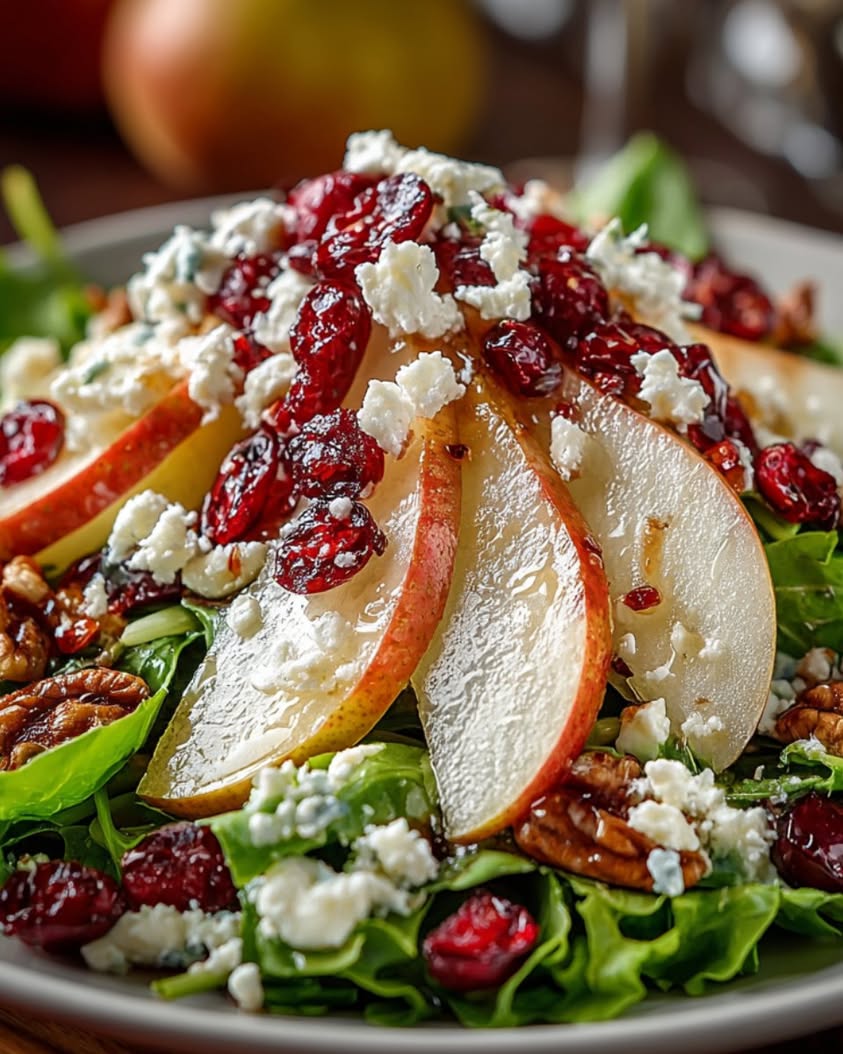
Festive Pear Apple Cranberry Salad with Feta Snowflakes: A Showstopping Holiday Side
Elevate your holiday table with this stunning Festive Pear Apple Cranberry Salad with Feta Snowflakes. This vibrant salad masterfully blends sweet, tart, and savory notes into a truly memorable side dish. Moreover, it offers a refreshing counterpoint to the rich, heavy foods typical of a Christmas feast. The combination of crisp pears, tart apples, and chewy dried cranberries creates a delightful textural symphony. Meanwhile, the creamy, salty feta cheese cut into delicate snowflakes adds a whimsical and elegant touch. Finally, a simple maple vinaigrette ties everything together with a warm, autumnal sweetness.
This recipe is not just about incredible flavor; it is also a visual masterpiece designed to impress your guests. The bright red cranberries, pale green pears, and snowy white feta create a stunning red, white, and green color palette that screams Christmas. Consequently, it becomes the centerpiece of your spread, sparking conversation and delight. Best of all, this Festive Pear Apple Cranberry Salad with Feta Snowflakes comes together in just 20 minutes with no cooking required. Therefore, it is the perfect last-minute dish that delivers maximum impact with minimal effort, freeing you to focus on the main course.
Imagine the burst of juicy pear, the snap of fresh apple, and the pop of tart cranberry in every bite. This salad is an experience for all the senses. The aroma of fresh citrus and maple will fill your kitchen, setting a cozy holiday mood. Ultimately, this dish proves that a salad can be just as special and anticipated as the roast or ham. It is a celebration of winter produce and a testament to simple, beautiful cooking.
Quick Recipe Highlights
- Flavor Profile: This salad delivers a perfect harmony of sweet, tart, and savory. The natural sweetness of ripe pears and maple syrup balances the sharp tartness of green apple and dried cranberries. Then, the salty, creamy feta cheese brings a savory depth that prevents the dish from being overly sweet.
- Texture: You will enjoy a fantastic contrast of textures in every forkful. Crisp, juicy apple and soft, ripe pear provide the base. Additionally, chewy dried cranberries add substance, while crunchy toasted pecans offer a satisfying bite. The creamy feta melts slightly on the tongue, creating a luxurious finish.
- Aroma: The salad fills the air with fresh, inviting scents. Firstly, the citrus notes from the lemon juice in the dressing are bright and clean. Secondly, the warm aroma of pure maple syrup and a hint of cinnamon evoke the coziness of the holiday season. Finally, the fresh, clean scent of the chopped herbs adds an earthy layer.
- Visual Appeal: This dish is a feast for the eyes with its festive color scheme. Vibrant red cranberries, pale green pears, and snowy white feta snowflakes create a stunning Christmas palette. The glossy maple dressing makes everything glisten, while the green herbs provide a beautiful, fresh garnish.
- Skill Level Needed: This is an absolutely beginner-friendly recipe. It requires no cooking, just simple chopping, whisking, and assembling. The most advanced technique is using a small cookie cutter to shape the feta, but you can easily crumble it instead. Therefore, cooks of all levels can achieve spectacular results.
- Special Equipment: You need only basic kitchen tools: a good chef’s knife, a cutting board, a large mixing bowl, and a small bowl for the dressing. A small snowflake-shaped cookie cutter is optional for the feta cheese but adds a magical touch. A whisk or a simple fork will perfectly emulsify the vinaigrette.
Recipe Overview
- Difficulty Level: We classify this Festive Pear Apple Cranberry Salad as “Easy” for several clear reasons. Firstly, it involves no heat application or complex cooking methods. Secondly, the steps are sequential and simple: chop, whisk, toss, and serve. The ingredient preparation is straightforward, and there is little room for error. Even the decorative element, the feta snowflakes, is optional and simple to execute.
- Category: This recipe falls squarely into the side dish and salad categories. It is designed to complement a main protein like roast turkey, glazed ham, or beef tenderloin. Furthermore, it can also serve as a bright starter course to awaken the palate before a heavy meal. Its refreshing quality makes it ideal for balancing a rich holiday menu.
- Cuisine: This dish is a modern fusion with roots in American and European holiday traditions. It draws inspiration from Waldorf salads, which combine fruit and nuts, and from winter fruit salads common across colder climates. The use of maple syrup nods to North American ingredients, while the feta cheese adds a Mediterranean tang. Ultimately, it is a contemporary holiday creation.
- Cost: This is a moderately priced salad that feels luxurious. The most significant costs are the fresh pears, block feta cheese, and toasted pecans. Dried cranberries and apples are typically affordable. The dressing uses pantry staples like olive oil, lemon juice, and maple syrup. Overall, you can expect to spend about fifteen to twenty dollars for a beautiful, crowd-sized portion.
- Season: This salad is quintessentially a winter and holiday season recipe. Pears and apples are at their peak in late fall and winter, offering the best flavor and texture. The ingredients and color scheme are specifically chosen for Christmas, Thanksgiving, and New Year’s celebrations. However, you can enjoy it anytime you crave a bright, fruity salad.
- Occasion: It is perfect for any festive gathering, especially Christmas dinner, Thanksgiving, potlucks, and holiday parties. Its make-ahead potential also makes it excellent for busy hosts. Additionally, it is a wonderful dish for a festive brunch or a special winter lunch. The elegant presentation makes it suitable for formal dinners and casual family meals alike.
Why You’ll Love This Recipe
You will adore the taste and texture appeal of this Festive Pear Apple Cranberry Salad. Every bite is a delightful journey, starting with the crisp juiciness of the apple, moving to the buttery softness of the pear, and finishing with the chewy tartness of the cranberry. The toasted pecans add a crucial crunchy element that keeps the texture interesting. Meanwhile, the creamy, salty feta cheese cuts through the sweetness and adds a rich, luxurious note. The maple vinaigrette is not overly sweet; instead, it acts as a unifying glaze that enhances the natural flavors of the fruit without overwhelming them. This balance ensures the salad feels refreshing and light, not cloying.
The convenience and preparation benefits are a major reason to love this recipe. Since there is zero cook time, you can assemble this stunning dish in under twenty minutes. This is a game-changer during the hectic holiday season when oven and stovetop space is at a premium. Furthermore, you can prepare nearly every component ahead of time. You can toast the nuts, make the dressing, and even chop the fruits (with a little lemon juice to prevent browning) hours in advance. Consequently, last-minute assembly is a breeze, allowing you to be present with your guests instead of stuck in the kitchen.
This Festive Pear Apple Cranberry Salad also offers notable nutritional advantages. It is packed with fiber from the fresh pears, apples, and cranberries, which aids digestion—a welcome benefit during a feast-heavy season. The fruits provide essential vitamins like Vitamin C and antioxidants. The pecans contribute healthy fats and protein, helping you feel satisfied. Using a vinaigrette base of olive oil and lemon juice provides heart-healthy monounsaturated fats instead of the heavy, creamy dressings often found on holiday tables. Therefore, this dish allows you to indulge in something delicious that also feels genuinely good for your body.
The social and entertaining value of this salad cannot be overstated. It is a guaranteed conversation starter. The whimsical feta snowflakes immediately signal care and creativity, making your guests feel special. The vibrant, festive colors contribute to the overall tablescape and holiday ambiance. Serving a beautiful, homemade dish like this shows thoughtfulness and effort, elevating the entire dining experience. It is a recipe that people will remember and likely ask you for, allowing you to share the joy long after the meal is over.
Finally, this recipe is cost-effective and accessible. It uses mostly whole, recognizable ingredients without requiring expensive or hard-to-find specialty items. If you cannot find pears, you can use more apples. If pecans are pricey, walnuts or almonds work beautifully. The feta can be crumbled if you do not have a cookie cutter. This flexibility makes it a reliable choice regardless of your budget or location. You can create a showstopping dish that feeds a crowd without breaking the bank, proving that holiday magic does not require extravagant spending.
Historical Background and Cultural Significance
The origin story of fruit-based salads with cheese and nuts is a tapestry woven from many culinary traditions. The concept likely finds its earliest roots in ancient Roman and Persian cuisines, where combining fruits, nuts, and sharp cheeses was common. However, the direct inspiration for this Festive Pear Apple Cranberry Salad can be traced to the classic Waldorf Salad, invented in New York City’s Waldorf-Astoria Hotel in the late 19th century. That original recipe featured apples, celery, and mayonnaise. Over decades, home cooks and chefs began experimenting, adding different fruits, nuts, and dressings. The inclusion of cranberries and a vinaigrette is a modern evolution, moving away from creamy dressings toward lighter, brighter flavors that suit contemporary palates.
The cultural importance of this salad lies in its embodiment of holiday harvest and celebration. In many Northern European and North American cultures, the late autumn and winter holidays are a time to celebrate the final harvest and preserve its bounty. Apples and pears, which store well through the winter, became staple fruits for holiday meals. Cranberries, native to North America, have been a part of Thanksgiving and Christmas traditions since colonial times. Combining these elements on one plate is a symbolic nod to gratitude and seasonal abundance. The salad represents a bridge between the old-world tradition of fruit and cheese plates and the new-world love for composed, dressed salads.
The evolution of this specific recipe mirrors broader trends in home cooking. Initially, holiday salads were often gelatin-based or smothered in heavy cream dressings. As nutritional awareness grew and tastes shifted towards fresher ingredients, recipes like this Festive Pear Apple Cranberry Salad gained popularity. The switch from a creamy dressing to a maple vinaigrette reflects a desire for lighter, more nuanced flavors that don’t overpower the delicate fruit. The addition of feta cheese, rather than a milder cheddar or blue cheese, shows the influence of globalized food trends and a preference for tangy, salty contrasts. This evolution highlights how holiday traditions can adapt while still feeling timeless.
Regional variations of this concept are plentiful, demonstrating its versatility. In the American South, you might find a similar salad with pecans and a bourbon-spiked dressing. In parts of Europe, a version might include walnuts and a honey-lemon dressing, omitting the cranberries for local berries. Some variations incorporate blue cheese or goat cheese instead of feta. Others add grains like quinoa or farro to make it a heartier meal. These adaptations show how the core idea—sweet fruit, crunchy nuts, tangy cheese, and a sweet-acid dressing—is a universal template that can be customized with local ingredients and cultural preferences, ensuring its place on holiday tables worldwide.
Ingredient Deep Dive
Pears: Pears have been cultivated for thousands of years, originating in Asia and Europe before spreading worldwide. They symbolize longevity and prosperity in Chinese culture, making them a fitting addition to a celebratory meal. Nutritionally, pears are an excellent source of dietary fiber, particularly in the skin, and provide Vitamin C and potassium. For this salad, choose firm but ripe Bartlett or Anjou pears that yield slightly to pressure at the stem. They should be fragrant. To prevent browning after slicing, toss them immediately in a bit of the lemon juice from the dressing. Store uncut pears at room temperature to ripen, then refrigerate once ripe. If pears are unavailable, you can use extra apples or even firm, sliced peaches for a different twist.
Apples: Apples hold immense cultural significance, from the biblical story of Adam and Eve to Johnny Appleseed’s role in American folklore. They represent knowledge, health, and harvest. A medium apple with its skin provides about 4 grams of fiber and a range of antioxidants. For the best texture and tart balance in this Festive Pear Apple Cranberry Salad, select a crisp, tart variety like Granny Smith or Honeycrisp. Their firmness holds up well when tossed, and their acidity cuts through the sweetness of the other components. Store apples in the refrigerator to maintain crispness. To prepare, wash well and leave the skin on for added color, fiber, and nutrients. If you prefer a sweeter salad, a Pink Lady or Fuji apple is a good substitute.
Dried Cranberries: While fresh cranberries are native to North America and used cooked in sauces, dried cranberries are a modern, convenient product. They add a chewy texture and concentrated tart-sweet flavor that is essential to the salad’s profile. They are a good source of certain antioxidants and fiber. Look for dried cranberries with no added sugar or with minimal added juice concentrate to control sweetness. You can often find them labeled as “craisins.” For storage, keep them in a cool, dry pantry in a sealed container. As a substitution, try dried cherries for a deeper flavor, chopped dried apricots for a different tartness, or even raisins for a classic touch.
Feta Cheese: Feta is a brined curd cheese with a history dating back to ancient Greece, where it was made from sheep’s or goat’s milk. Its tangy, salty flavor and crumbly yet creamy texture provide the perfect savory counterpoint in this salad. Feta is a good source of calcium and protein. For the best results, buy a block of feta packed in brine, not pre-crumbled. It will be creamier, less dry, and more flavorful. The brine helps it hold its shape when cutting snowflakes. Store leftover feta submerged in its brine in the refrigerator. For a dairy-free version, use a firm vegan feta alternative. If you cannot find feta, goat cheese or a mild blue cheese would also work well.
Maple Vinaigrette: This simple dressing is the glue that binds the salad. Pure maple syrup, the star ingredient, is the boiled sap of sugar maple trees, primarily produced in North America. It contains antioxidants and minerals like manganese and zinc. Always opt for “pure maple syrup” over pancake syrup, which is corn syrup with flavoring. The syrup’s complex caramel notes pair perfectly with the fruit. Combined with fresh lemon juice for acidity, extra virgin olive oil for body, a pinch of cinnamon for warmth, and salt and pepper, it creates a perfectly balanced emulsion. Make extra and store it in a jar in the fridge for up to a week; it’s excellent on other salads or roasted vegetables.
Common Mistakes to Avoid
- Using Overripe or Mushy Pears: Overripe pears will turn to mush when tossed and make the salad soggy. Always select pears that are firm but yield slightly to gentle pressure near the stem. They should have a fragrant aroma. If your pears are too soft, consider using them for baking instead.
- Not Tossing Cut Fruit with Acid: Apples and pears oxidize and turn brown quickly when exposed to air. To keep your Festive Pear Apple Cranberry Salad looking fresh and vibrant, toss the sliced fruit immediately with a tablespoon of the lemon juice from your dressing before adding anything else. This simple step preserves color and adds flavor.
- Using Pre-Crumbled Feta: Pre-crumbled feta is often drier, saltier, and lacks the creamy texture of a block stored in brine. For the best flavor and for successfully cutting snowflakes, purchase a solid block of feta in brine. The difference in taste and texture is significant and worth the minor extra effort.
- Adding Dressing Too Early: If you dress the entire salad hours in advance, the greens will wilt, and the fruits will release water, creating a pool at the bottom of the bowl. Instead, prepare all components separately. Combine the fruits, nuts, and cranberries ahead, but add the dressing and delicate greens just before serving.
- Skipping the Toasting Step for Nuts: Raw pecans can taste bland and slightly bitter. Toasting them unlocks their natural oils, deepens their flavor, and adds a crucial crunch. Simply toast in a dry skillet over medium heat for 3-5 minutes, shaking often, until fragrant. Let them cool completely before adding to the salad.
- Overcomplicating the Dressing: The beauty of the maple vinaigrette is its simplicity. Avoid the temptation to add too many extra spices or ingredients. A pinch of cinnamon is perfect; adding cloves, allspice, or nutmeg can overwhelm the fresh fruit flavors. Whisk the dressing vigorously to create a stable emulsion so it coats evenly.
- Choosing the Wrong Apple Variety: Using a soft apple like Red Delicious will result in a mealy, unappealing texture. Always choose a crisp, tart apple that holds its shape. Granny Smith is ideal for its bright acidity, but Honeycrisp, Braeburn, or Pink Lady are also excellent choices that provide both crunch and flavor.
- Neglecting to Taste and Season: Even though the ingredients are flavorful, the salad still needs proper seasoning. After tossing everything together, taste a bite. You may need an extra pinch of salt to make the flavors pop or a small extra drizzle of lemon juice if it tastes too sweet. Seasoning is the final, essential step.
Essential Techniques
Creating an Emulsified Vinaigrette: This technique is vital for a dressing that clings to the salad ingredients instead of separating and pooling. An emulsion is a stable mixture of two liquids that don’t normally combine, like oil and vinegar (or lemon juice). To achieve this, start by whisking your acid (lemon juice), maple syrup, and seasonings together thoroughly. Then, add the olive oil in a very slow, steady stream while continuously whisking vigorously. This slow incorporation allows the oil to break into tiny droplets suspended in the acid. The common pitfall is dumping the oil in all at once, which will prevent emulsification. A successful emulsion will look slightly thickened and creamy, not oily and separate.
Preventing Fruit Oxidation (Browning): Understanding this simple chemical reaction is key to a beautiful salad. When the flesh of apples and pears is exposed to oxygen, enzymes trigger a browning process. To stop this, you need an acid. The citric acid in lemon juice lowers the pH on the fruit’s surface, slowing the enzymes dramatically. The technique is straightforward: as you slice your fruit, immediately place the pieces in a bowl and drizzle with a tablespoon of fresh lemon juice, tossing gently to coat all surfaces. This not only preserves the bright, fresh color but also adds a layer of flavor that complements the salad. Do not skip this step, even if you are serving immediately.
Toasting Nuts for Maximum Flavor: Toasting is a dry-heat cooking method that transforms nuts. It drives off moisture, concentrates flavors, and triggers the Maillard reaction, creating new, complex, roasted taste compounds. The technique is simple but requires attention. Place raw nuts in a single layer in a dry skillet over medium heat. Do not add oil. Shake the pan or stir frequently for 3-5 minutes until they become fragrant and lightly golden. Listen for a slight crackling sound. The visual cue for success is a deepened color and the release of a rich, nutty aroma. The common pitfall is walking away, as they can burn in seconds. Always transfer them to a plate to cool immediately after toasting to stop the cooking process.
Pro Tips for Perfect Festive Pear Apple Cranberry Salad
First, chill your serving bowl or platter before assembling. A cold bowl helps keep the salad crisp and refreshing, especially if your kitchen is warm from holiday cooking. This small step makes a noticeable difference in the final presentation and temperature.
Second, use a melon baller to create small, elegant spheres from the pears if you want a more refined look. This technique adds visual interest and makes the salad easier to eat. Alternatively, you can use a mandoline for uniformly thin apple slices.
Third, if you are making the feta snowflakes, pat the block of feta very dry with paper towels before cutting. A dry surface helps the cookie cutter press through cleanly. Dip the cutter in warm water between cuts to prevent sticking for the cleanest shapes.
Fourth, reserve a small handful of each colorful ingredient—cranberries, pecans, feta snowflakes—to sprinkle on top after tossing. This creates a more professional, layered presentation where all the beautiful components are visible on the surface.
Fifth, for an extra flavor dimension, toast the pecans with a tiny pinch of cayenne pepper and a light sprinkle of the maple syrup used in the dressing. Let them cool completely on parchment paper to create a sweet-spicy candied crunch.
Sixth, if serving a crowd, consider building the salad in layers in a large, clear glass trifle bowl. Start with greens, then a layer of dressed fruit mixture, then more greens, and repeat, topping with the reserved garnishes. This showcases all the colors and makes serving easy.
Seventh, let the dressed fruit mixture sit for 5-10 minutes before adding the greens and final toss. This allows the flavors to meld slightly and the fruits to absorb a bit of the dressing, resulting in a more cohesive taste.
Eighth, always use fresh lemon juice, not bottled, for the dressing. The bright, clean flavor of fresh juice is incomparable and is crucial for both the dressing’s balance and for preventing the fruit from browning.
Variations and Adaptations
For regional variations, consider the ingredients local to your area. In the Pacific Northwest, try adding hazelnuts instead of pecans and a blackberry vinaigrette. A Southern adaptation might include candied pecans and a touch of bourbon in the maple dressing. In the Mediterranean, swap feta for creamy goat cheese and add a handful of pomegranate arils for a juicy burst. These changes root the salad in your locale while keeping its festive spirit intact.
Seasonal adaptations are simple and keep the recipe exciting year-round. In spring, use strawberries and sliced almonds with a honey-lemon dressing. For summer, try peaches, blueberries, and mint with a white balsamic glaze. In autumn, roasted cubed butternut squash and dried figs with a sage-infused vinaigrette would be stunning. The core formula of fruit + cheese + nut + sweet-acid dressing is endlessly versatile across all seasons.
Dietary modifications are straightforward. For a vegan version, use a plant-based feta alternative and ensure your maple syrup is vegan (most are). For a nut-free salad, replace pecans with roasted pumpkin seeds (pepitas) or sunflower seeds for crunch. To make it gluten-free, simply verify that all packaged ingredients like dried cranberries are certified GF, which they typically are. For a lower-sugar version, reduce the maple syrup in the dressing by half and use unsweetened dried cranberries.
Flavor variations can tailor the salad to different preferences. Add a teaspoon of whole grain mustard to the dressing for a savory kick. Incorporate fresh herbs like chopped rosemary or thyme into the vinaigrette for an aromatic twist. For a more decadent version, crumble crispy cooked bacon over the top just before serving. A sprinkle of orange zest in the dressing can brighten the flavor profile even further.
Texture modifications can cater to different tastes. For more crunch, add thinly sliced fennel or celery. For a creamier element, include small chunks of ripe avocado (add at the last minute). To make it more substantial, fold in cooked and cooled farro, quinoa, or wild rice, transforming it into a hearty main-course salad.
Presentation alternatives offer creative ways to serve. Instead of a large bowl, assemble individual portions on small plates or in martini glasses for a cocktail party. Skewer pear cubes, apple slices, and feta chunks on toothpicks with a cranberry for a festive appetizer. Use the salad as a topping for crostini or as a filling for endive leaves for an elegant passed hors d’oeuvre.
Serving and Presentation Guide
Plating techniques can elevate this salad from simple to spectacular. For a family-style presentation, use a wide, shallow bowl or a large white platter to showcase the vibrant colors. Mound the salad gently in the center, allowing ingredients to spill naturally to the edges. Avoid over-packing or pressing down, which can bruise the fruit and make it look messy. For individual servings, use a ring mold on each plate to create a neat, cylindrical tower of salad, then carefully lift the mold away. Garnish the top with the reserved feta snowflake and a single mint leaf.
Garnishing ideas go beyond the reserved ingredients. A light dusting of edible gold or silver glitter adds a magical holiday sparkle. Fresh herb sprigs like mint, parsley, or microgreens provide a pop of green and fresh aroma. A final drizzle of reduced balsamic glaze in a zigzag pattern across the plate adds a professional touch and a hint of extra sweetness and acidity. A few delicate edible flowers would be stunning for a spring or summer variation.
Traditional accompaniments for this Festive Pear Apple Cranberry Salad include classic holiday mains. It pairs beautifully with roast turkey, honey-glazed ham, prime rib, or herb-crusted pork loin. Its acidity and freshness cut through the richness of these proteins perfectly. For a vegetarian holiday spread, serve it alongside a savory mushroom Wellington, stuffed squash, or a rich lentil loaf. It also works well as part of a buffet with other sides like scalloped potatoes, roasted Brussels sprouts, and dinner rolls.
Modern serving suggestions might include deconstructing the elements. Serve the dressed fruit and nut mixture in a bowl with the feta snowflakes and greens on the side, allowing guests to build their own salads. Alternatively, serve it as a starter on a bed of peppery arugula with a seared scallop on top for a luxurious first course. For a holiday brunch, serve smaller portions alongside quiche, frittata, and pastries.
Temperature considerations are crucial for the best experience. The salad should be served chilled but not ice-cold. Prepare the components cold, but if the fruit has been in the refrigerator for hours, let it sit out for 10-15 minutes before assembling to take the extreme chill off. This allows the flavors to be more pronounced. The serving bowl or plates can be chilled in the freezer for 10 minutes beforehand to keep everything cool during the meal.
Portion control tips are helpful for planning. As a side dish, plan for about 1 to 1.5 cups of salad per person. This recipe yields approximately 8-9 cups total, serving 6 generously. If it is one of many sides, you can stretch it to serve 8. If serving as a main course for a light lunch, it will serve 3-4 people. Always consider the context of the full meal when determining portion sizes.
Wine and Beverage Pairing
Wine pairings should complement the salad’s sweet, tart, and savory profile without overpowering it. A crisp, off-dry white wine like a Riesling or Gewürztraminer is a classic and excellent choice. Their slight sweetness mirrors the maple and fruit, while their acidity matches the lemon and apple. A sparkling wine like Prosecco or Cava works wonderfully; the bubbles cleanse the palate and celebrate the occasion. For red wine lovers, a light, low-tannin red like a Pinot Noir or Beaujolais can pair nicely, especially if the salad is served alongside turkey or ham. Avoid heavy, oaky, or high-tannin wines like Cabernet Sauvignon, as they will clash with the fruit’s sweetness.
Non-alcoholic alternatives can be just as sophisticated. A sparkling apple cider is a natural and festive pairing. For a more complex option, try a ginger beer with a squeeze of lime, as the spice plays well with the cinnamon and fruit. A homemade cranberry spritzer made with unsweetened cranberry juice, club soda, and a maple syrup simple syrup echoes the salad’s flavors beautifully. Iced herbal tea, such as hibiscus or mint, offers a refreshing and colorful complement.
Coffee and tea pairings are ideal for a holiday brunch setting. A medium-roast coffee with notes of caramel or nut will harmonize with the maple and pecans. Avoid very dark, bitter roasts. For tea, a black tea like Earl Grey provides a nice citrusy note that pairs with the lemon. A chai tea latte would echo the warm spices in the salad. Herbal teas like cinnamon apple or peppermint are also delightful seasonal choices that won’t compete with the flavors.
Temperature considerations for beverages are standard: white wines, sparklers, and non-alcoholic spritzers should be served well-chilled. Red wines should be served slightly below room temperature, around 60-65°F. Coffee and tea should be hot or iced according to preference and the meal’s context. Always ensure water is available on the table to cleanse the palate between bites and sips.
Serving suggestions include offering a variety of options to cater to all guests. Set up a small beverage station with a bottle of each recommended wine, a carafe of sparkling cider, and a pitcher of infused water with lemon and cranberries. Provide clear glassware to showcase the drinks’ colors, enhancing the overall festive tablescape. Labeling the options with small cards can be a helpful and elegant touch for your guests.
Storage and Shelf Life
Storage methods for leftovers are important but limited, as this salad is best fresh. If you must store it, place any leftovers in an airtight container in the refrigerator. However, expect the greens to wilt and the fruits to soften and release more liquid. The salad will lose its optimal texture but will still be safe to eat. It’s best to store the components separately if you anticipate having leftovers. Keep the undressed fruit mixture (tossed with lemon juice) in one container, the dressing in a sealed jar, and the greens and toasted nuts in their own bags or containers.
Temperature requirements are simple: always refrigerate any prepared components or leftovers. Do not leave the dressed salad at room temperature for more than two hours, as the dairy (feta) and moist environment can promote bacterial growth. When taking it to a potluck, transport the dressing separately in a jar and the salad in a chilled cooler bag. Assemble on-site for the best quality.
Container recommendations include glass containers with tight-fitting lids, which won’t absorb odors and allow you to see the contents. For the dressing, a small mason jar is perfect for shaking and storing. For the dry components like toasted nuts, a zip-top bag with the air pressed out will keep them crisp. If storing the assembled salad, use the largest container possible to avoid crushing the ingredients.
Signs of spoilage are typical for any fresh produce dish. Discard the salad if you notice an off or sour smell, significant sliminess on the fruit or greens, or visible mold (especially on the feta, though feta’s brine usually prevents this). The dressing may separate in the fridge; this is normal. Simply shake or whisk it vigorously again before using.
Reheating instructions are not applicable, as this is a cold salad. Do not attempt to reheat it. If the salad has been in the fridge and is too cold, let it sit out for 10-15 minutes before serving to allow the flavors to wake up.
Freezing guidelines: Freezing is not recommended for this Festive Pear Apple Cranberry Salad. The high water content in the fruits and greens will cause them to become mushy and watery upon thawing, destroying the texture entirely. The dressing may also separate irreparably. This is a recipe to enjoy immediately or within a day of preparation.
Make Ahead Strategies
Prep timeline for maximum efficiency can span up to two days before your event. Two days ahead, toast the pecans and let them cool completely before storing in an airtight container at room temperature. One day ahead, wash and thoroughly dry your salad greens, then store them wrapped in paper towels inside a zip-top bag in the fridge. Also, prepare the maple vinaigrette and store it in a jar in the refrigerator. You can also slice the apples and pears, toss them thoroughly with a tablespoon of lemon juice, and store them in a sealed container in the fridge.
Storage between steps is key to maintaining quality. Keep all components separate until the final assembly. The nuts stay crisp at room temperature. The dressing may solidify slightly in the fridge; simply let it sit out for 15 minutes and shake well before using. The pre-cut fruit may soften slightly but will be perfectly acceptable if properly coated in lemon juice. The feta block can be cut into snowflakes up to a day ahead; store them on parchment paper in a covered container in the fridge.
Quality impact assessment is important when making ahead. The nuts and dressing will suffer no loss in quality. The pre-cut fruit will lose a small amount of crispness but will gain flavor as it marinates slightly in the lemon juice. The greens must be impeccably dry to prevent sogginess. The feta snowflakes may dry out slightly on the surface but will be fine. Overall, making ahead saves significant time and causes only minimal, acceptable quality changes.
Assembly tips for the day of are simple. In your chilled serving bowl, combine the chilled fruit mixture and the toasted pecans. Shake the dressing vigorously and drizzle about three-quarters of it over the mixture. Toss gently to combine. Add the greens and toss again, adding more dressing only if needed. Top with the feta snowflakes and any reserved garnishes. This process takes less than five minutes, leaving you stress-free.
Reheating guidelines do not apply. If components are too cold, allow them to sit out briefly. The goal is a cool, refreshing salad, not an icy one.

I’m Billy, a classically trained culinary school graduate from The Culinary Institute of America with over 12 years in the restaurant industry and over 19 years of cooking experience.