
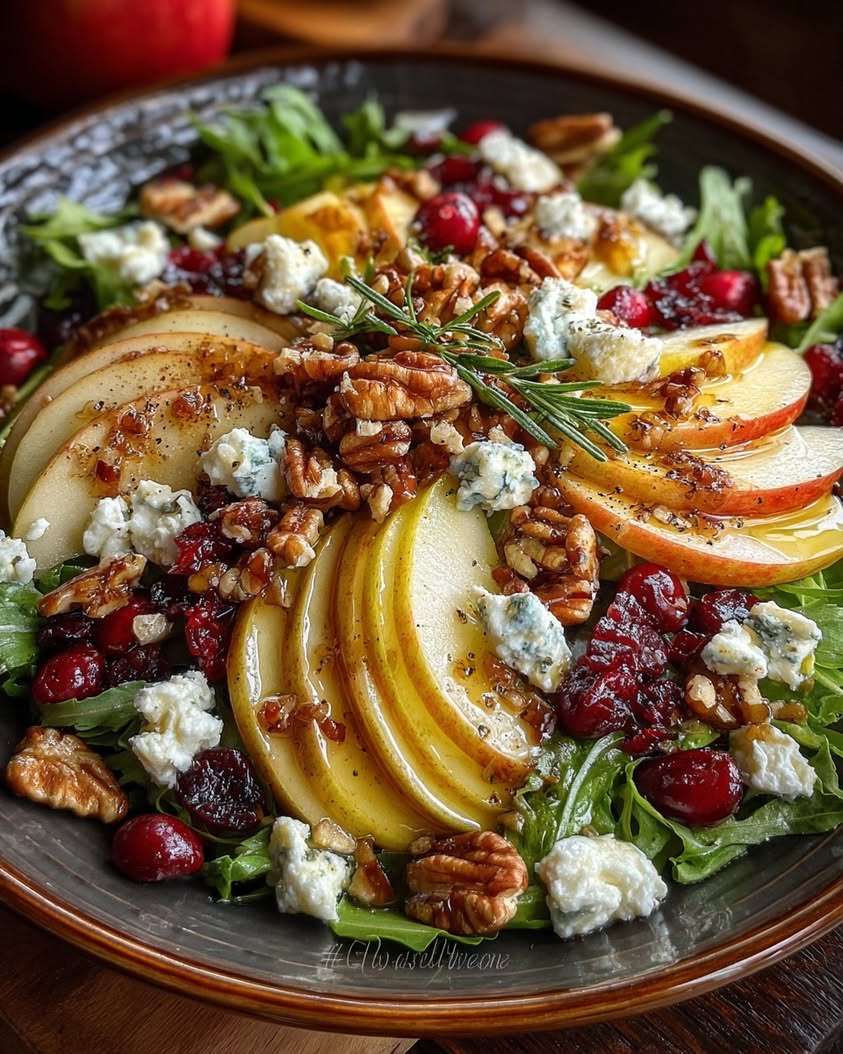
Pear, Apple & Cranberry Winter Salad with Goat Cheese Snowflakes: A Festive Holiday Masterpiece
Welcome the holiday season with a stunning and delicious centerpiece salad that is as beautiful as it is flavorful. This Pear, Apple & Cranberry Winter Salad with Goat Cheese Snowflakes is the perfect blend of sweet, tart, creamy, and crunchy. Moreover, it captures the very essence of a festive winter table with its vibrant colors and elegant presentation. This dish is not just a side; it is a conversation starter, a burst of freshness amidst richer holiday fare, and a guaranteed crowd-pleaser for any gathering.
Imagine crisp, juicy pears and apples mingling with tart dried cranberries and crunchy candied pecans. Then, picture a delicate maple-dijon vinaigrette tying everything together with a perfect sweet and tangy balance. Finally, the crowning glory: whimsical goat cheese snowflakes that add a creamy, tangy element and make the entire dish look like a winter wonderland. This winter salad is designed to impress, but thankfully, it comes together with minimal effort, allowing you to focus on your guests and the rest of your holiday meal preparation.
Ultimately, this recipe is about creating memorable food experiences. The combination of textures and flavors is sophisticated yet approachable. Every bite offers a delightful contrast, making it a refreshing palate cleanser during a heavy holiday feast. This Pear, Apple & Cranberry Winter Salad with Goat Cheese Snowflakes will undoubtedly become a cherished seasonal tradition in your home.
Quick Recipe Highlights
- Flavor Profile: This winter salad masterfully balances sweet and tart. Fresh pears and apples provide a juicy sweetness, while dried cranberries and the maple-dijon vinaigrette introduce a bright, tangy counterpoint. The goat cheese snowflakes add a final, creamy, and slightly savory note that brings all the flavors into perfect harmony.
- Texture: Expect a fantastic crunch in every forkful. Crisp fresh fruit, crunchy candied pecans, and the hearty base of mixed greens create a satisfying mouthfeel. Meanwhile, the soft, crumbly goat cheese snowflakes melt slightly on contact, adding a luxurious creamy texture that contrasts beautifully with the other components.
- Aroma: The aroma is fresh and inviting. You will immediately notice the sweet scent of ripe pears and apples, followed by the warm, toasty notes from the candied pecans. The vinaigrette adds a subtle sharpness from the Dijon mustard and a warm sweetness from the pure maple syrup, creating a complex and appetizing fragrance.
- Visual Appeal: This salad is a feast for the eyes. Vibrant green lettuce forms the base, dotted with the pale hues of pear and apple, the deep red of cranberries, and the golden brown of pecans. The white goat cheese snowflakes scattered on top look like a delicate dusting of snow, making the presentation truly magical and festive.
- Skill Level Needed: This is an easy recipe perfect for cooks of all levels. The most advanced technique is simply whisking a vinaigrette and using a small cookie cutter to shape cheese. Therefore, it is an ideal project for a beginner looking to create something impressive or a seasoned cook wanting a quick, beautiful side dish.
- Special Equipment: You need only basic kitchen tools: a good chef’s knife, a cutting board, a mixing bowl, and a whisk. For the whimsical goat cheese snowflakes, a small snowflake-shaped cookie cutter (about 1-inch wide) is recommended. However, you can easily shape the cheese with your hands or use a simple round cutter if needed.
Recipe Overview
- Difficulty Level: We rate this winter salad as “Easy” because it involves no cooking beyond toasting nuts and requires only fundamental kitchen skills like chopping and whisking. The goat cheese snowflake step is simple and fun, even for kids to help with. Consequently, you can assemble a stunning, restaurant-quality dish with very little stress or time investment.
- Category: This dish fits beautifully into several categories. Primarily, it is a spectacular holiday salad or a festive side dish for winter dinners. Additionally, you can easily add grilled chicken or shrimp to transform it into a hearty and complete main course salad for a lighter lunch or dinner.
- Cuisine: While not tied to one specific tradition, this salad draws inspiration from modern American holiday cuisine and farm-to-table cooking. It celebrates seasonal winter produce and incorporates classic holiday flavors like cranberry, maple, and pecan, which are staples in North American festive cooking.
- Cost: This is a moderately priced dish that uses a mix of affordable and special ingredients. Greens, apples, and pears are typically budget-friendly. Meanwhile, items like goat cheese, pure maple syrup, and candied pecans are splurge items that elevate the salad. Overall, you can create an impressive dish for a holiday table without a huge grocery bill.
- Season: This recipe is perfect for late fall through winter, specifically during the holiday season from Thanksgiving to New Year’s. This is when pears and crisp apples are at their peak, and the flavors of cranberry and maple feel most appropriate. The salad’s colors and theme also perfectly match the festive decor of the season.
- Occasion: It is ideal for any festive gathering. Serve it at your Thanksgiving feast, Christmas dinner, holiday potluck, or a festive winter brunch. Furthermore, its elegant look makes it suitable for more formal dinners, while its easy preparation makes it perfect for casual family meals.
Why You’ll Love This Recipe
First and foremost, the taste and texture appeal is undeniable. This winter salad delivers a symphony of sensations in every single bite. You get the initial crisp crunch from the fresh fruit and greens, followed by the chewy sweetness of the cranberries and the rich, buttery crunch of the pecans. Then, the creamy, tangy goat cheese snowflake melts on your tongue, tying all the vibrant flavors together with the sweet and sharp maple-dijon vinaigrette. It is a refreshing and complex dish that wakes up the palate, especially when served alongside heavier holiday mains like roast turkey or ham.
Next, consider the convenience and preparation benefits. Despite its stunning appearance, this salad comes together in about 30 minutes with very little active cooking time. You can prepare the candied pecans and vinaigrette ahead of time. Then, simply slice the fruit and assemble the components just before serving. The goat cheese snowflakes can be shaped hours in advance and kept chilled. This make-ahead flexibility is a lifesaver during the busy holiday season when oven space and last-minute tasks are at a premium.
Furthermore, this winter salad offers notable nutritional advantages. It is packed with vitamins, fiber, and antioxidants from the fresh pears, apples, cranberries, and leafy greens. Goat cheese provides protein and calcium, while the pecans contribute healthy fats. Using a vinaigrette with olive oil and maple syrup is a healthier alternative to creamy, heavy dressings. Therefore, you can enjoy a decadent-tasting dish that also fuels your body with good nutrients during the indulgent holiday period.
Additionally, the social and entertaining value of this dish is incredibly high. The “wow” factor of the goat cheese snowflakes never fails to impress guests and spark conversation. It shows thoughtfulness and care in your presentation, making everyone feel special. Because it is so visually striking, it often becomes the centerpiece of the table, elevating the entire dining experience. It is a recipe that people will remember and likely ask you for, making you the star of any potluck or dinner party.
Finally, the cost-effectiveness and accessibility are major wins. While it looks gourmet, most ingredients are readily available at any standard grocery store. You can often find sales on winter fruit and greens during the holiday season. If needed, you can make simple swaps, like using walnuts instead of pecans or feta instead of goat cheese, to fit your budget. This means you can create a luxurious, festive dish without the luxury price tag, making beautiful holiday dining accessible to everyone.
Historical Background and Cultural Significance
The concept of fruit and nut salads has deep roots in many culinary traditions, but the modern holiday winter salad is a relatively recent innovation. Historically, winter meals relied on stored root vegetables and hardy greens. The inclusion of fresh, delicate fruits like pears and apples in a salad was a luxury often reserved for special feasts. The practice of combining sweet and savory elements, however, dates back centuries, seen in medieval cookery with meat and fruit pairings. This salad is a contemporary, vegetarian-friendly evolution of that ancient flavor philosophy, celebrating the bounty that cold storage and modern agriculture provide during the winter months.
Culturally, this salad embodies the spirit of North American holiday gatherings. Ingredients like cranberries and maple syrup are intrinsically linked to the fall and winter harvests in the United States and Canada. Cranberries, native to North America, have been a part of celebratory meals since long before the first Thanksgiving. Maple syrup, tapped from trees in late winter, symbolizes resourcefulness and the sweetness of the season. Consequently, using these ingredients together in a dish immediately evokes feelings of tradition, harvest, and festive celebration, connecting us to the land and the season’s rhythms.
The evolution of this specific recipe follows broader food trends toward lighter, fresher, and more visually creative holiday sides. As holiday menus became heavier over the 20th century, there was a growing desire for a bright, acidic, and fresh component to balance the richness. The “winter salad” category was born, moving beyond simple lettuce to incorporate seasonal fruits, nuts, cheeses, and vibrant dressings. The addition of shaped cheese, like these goat cheese snowflakes, reflects the modern emphasis on food presentation and the joy of creating edible art for social media and special occasions.
Regional variations of this winter salad concept are plentiful. In the Pacific Northwest, you might find hazelnuts instead of pecans and a blackberry vinaigrette. In the South, candied pecans are a staple, and a bourbon-spiked dressing could be common. Some versions incorporate blue cheese instead of goat cheese for a stronger flavor, or add segments of citrus like orange or pomegranate arils for extra color and tartness. This recipe serves as a fantastic base template, encouraging cooks to incorporate their local ingredients and personal tastes, thus creating a dish that is both classic and personally meaningful.
Ingredient Deep Dive
Let us start with the foundation: mixed greens. Typically a blend of baby spinach, arugula, and various lettuces, they provide a nutrient-dense base rich in vitamins A, C, and K, as well as folate and iron. Their slightly bitter and peppery notes are crucial for balancing the salad’s sweetness. For the best result, choose a pre-washed blend for convenience, or select crisp, vibrant heads of romaine and butter lettuce. Store greens in the crisper drawer of your refrigerator in a bag with a paper towel to absorb excess moisture, which will keep them fresh for days.
Next, the stars: Anjou or Bosc pears and crisp apples (like Honeycrisp or Fuji). Pears have been cultivated for thousands of years and are a symbol of divine sustenance in many myths. They are an excellent source of fiber and vitamin C. Apples, deeply woven into American folklore and history, provide antioxidants and quercetin. Choose fruit that is firm but yields slightly to pressure at the stem for perfect ripeness. To prevent browning after slicing, toss them in a little lemon juice from the vinaigrette. Store uncut fruit at room temperature until ripe, then refrigerate.
Dried cranberries and candied pecans are the supporting flavor actors. Cranberries, native to North American bogs, are packed with proanthocyanidins, which support urinary tract health. Their intense tartness is a perfect counterpoint to sweet fruit. Candied pecans, with roots in Southern American cooking, add buttery crunch and caramelized sweetness. You can use store-bought or easily make your own by toasting pecans with a bit of maple syrup and salt. For a less sweet option, use plain toasted pecans or walnuts. Store nuts in an airtight container to maintain crispness.
The goat cheese snowflakes are the showstopper. Goat cheese, or chèvre, has a history dating back over a thousand years. It is easier to digest for some people than cow’s milk cheese and is rich in protein, calcium, and healthy fats. Its distinct tangy flavor cuts through the salad’s sweetness. For the snowflakes, use a cold, firm log of plain goat cheese. If it is too soft, chill it thoroughly. For a dairy-free version, a firm vegan almond or cashew-based cheese can be pressed into the cutter. Always add the cheese just before serving to maintain its shape.
Finally, the maple-dijon vinaigrette is the unifying element. Extra virgin olive oil, a cornerstone of the Mediterranean diet, provides heart-healthy monounsaturated fats. Pure maple syrup, a true North American treasure, offers a complex sweetness with minerals like manganese and zinc. Dijon mustard, from the Burgundy region of France, adds sharpness and acts as an emulsifier to bind the dressing. Use the highest quality ingredients you can for the best flavor. This vinaigrette can be made days ahead and stored in the refrigerator; just let it come to room temperature and shake vigorously before using.
Common Mistakes to Avoid
- Soggy Greens: Dressing the salad too far in advance is the top mistake. The acid in the vinaigrette will wilt delicate greens. Always dress the salad just moments before serving. Alternatively, you can dress the greens lightly and serve extra dressing on the side for guests to add as they wish.
- Brown, Mushy Fruit: Slicing the pears and apples hours ahead leads to unappetizing oxidation. Slice them right before assembly. If you must prep ahead, toss the slices in a tablespoon of lemon juice or a bit of the prepared vinaigrette to create a protective barrier against air.
- Soft Goat Cheese Snowflakes: Trying to shape cheese that is too warm is frustrating. Ensure your goat cheese log is very cold, almost straight from the fridge. If your kitchen is warm, work quickly or chill the shaped snowflakes on a parchment-lined tray before adding them to the salad.
- Burnt Candied Pecans: Toasting nuts with sugar requires constant attention. They can go from perfectly golden to burnt in seconds. Use medium-low heat, stir constantly, and spread them on a plate to cool immediately once they are done. They will continue to harden as they cool.
- A Broken Vinaigrette: Adding oil too quickly to the mustard and vinegar causes separation. The key is to whisk the oil in a slow, steady stream. If it does break, simply put it in a small jar with a tight lid and shake vigorously until it re-emulsifies.
- Overpowering Dressing: Using too much dressing drowns the delicate flavors and textures. Start with half the amount, toss gently, and add more only if needed. The salad should be lightly coated, not swimming in dressing.
- Using the Wrong Apple: A mealy apple like a Red Delicious will become mushy and lack texture. Always choose a firm, crisp variety such as Honeycrisp, Fuji, or Granny Smith for the best crunch and flavor that holds up in the salad.
- Skipping the Toasting Step for Nuts: Using raw pecans results in a bland, sometimes bitter flavor and a softer texture. Toasting nuts, whether candied or plain, is a non-negotiable step that unlocks their essential oils and maximizes their flavor and crunch.
- Not Tasting as You Go: Ingredients vary in sweetness and tartness. Taste your vinaigrette and adjust the balance of maple syrup, mustard, and vinegar before dressing the salad. Also, taste a piece of pear and apple to gauge their sweetness.
- Poor Assembly Order: Layering everything haphazardly can lead to uneven distribution of ingredients. Gently toss the greens, fruit, cranberries, and pecans with the dressing in a large bowl first. Then, artfully arrange the mixture on a platter and strategically place the goat cheese snowflakes on top for maximum visual impact.
Essential Techniques
Emulsifying a Vinaigrette: This technique is crucial for a smooth, cohesive dressing that clings to salad ingredients instead of pooling at the bottom of the bowl. The process involves slowly incorporating oil into an acidic base (vinegar, lemon juice) that contains an emulsifier like Dijon mustard. The mustard’s lecithin helps bind the oil and water-based elements together. To master it, whisk your vinegar, mustard, and maple syrup vigorously in a bowl. Then, while whisking constantly, add the olive oil in a very thin, steady stream. The mixture will thicken and become creamy. A common pitfall is adding the oil too fast, which causes separation. If this happens, simply start with a fresh teaspoon of mustard in a clean bowl and slowly whisk in the broken dressing to re-bind it.
Toasting and Candying Nuts: Toasting nuts deepens their flavor by releasing their natural oils, while candying adds a sweet, crunchy shell. For toasting, spread nuts in a single layer on a dry baking sheet and bake at 350°F for 8-10 minutes, shaking once, until fragrant. For stovetop candying, combine nuts with a small amount of maple syrup and a pinch of salt in a non-stick skillet over medium-low heat. Cook, stirring constantly, for 3-5 minutes until the syrup bubbles and coats the nuts. Immediately transfer them to a parchment-lined plate to cool and harden. The key is constant attention; the sugar can burn in an instant. Visual cues for success are a glossy coating and a rich, toasted aroma.
Preventing Fruit Oxidation: Apples and pears turn brown when cut because enzymes react with oxygen. This is called enzymatic browning. To prevent it, you must create a barrier. The most effective method for this salad is to toss the sliced fruit directly with a small amount of the finished vinaigrette. The acid (vinegar/lemon juice) in the dressing denatures the browning enzymes. You can also use straight lemon juice, but the vinaigrette integrates the flavor seamlessly. Work quickly after slicing, and do not soak the fruit—just a gentle toss is enough. This technique ensures your fruit stays bright, fresh-looking, and appetizing for the entire meal.
Shaping Goat Cheese: Creating the snowflakes requires cold, firm cheese and a light touch. First, ensure your goat cheese log is thoroughly chilled. Using a small (about 1-inch), clean snowflake cookie cutter, press it directly into the log to cut out shapes. Gently push the shaped cheese out from the back of the cutter with your finger. If the cheese sticks, dip the cutter in cold water between shapes. If you lack a cutter, you can roll small bits of cheese into balls and flatten them slightly with a fork, or simply crumble it decoratively. The goal is a whimsical, wintry appearance, so do not stress over perfection. Chill the shapes until ready to use to keep them firm.
Pro Tips for Perfect Pear, Apple & Cranberry Winter Salad
Chill Your Salad Plates or Platter. For an extra-refreshing presentation, place your serving dish in the refrigerator for 20-30 minutes before assembling the salad. A cold surface helps keep the greens crisp and the overall salad cooler for longer during your meal.
Massage Your Greens. If using hearty greens like kale as part of your mix, give them a quick massage with a tiny bit of the dressing before adding the other ingredients. This breaks down their fibrous structure slightly, making them more tender and palatable.
Use a Mandoline for Consistent Slices. For uniformly thin and elegant slices of pear and apple, use a mandoline slicer on a medium setting. This ensures even distribution and professional presentation. Always use the safety guard to protect your fingers.
Toast Extra Nuts. Always make a double batch of candied pecans. They store beautifully in an airtight container and are irresistible as a snack, a yogurt topping, or a garnish for other dishes like oatmeal or ice cream.
Garnish with Fresh Herbs. Just before serving, sprinkle the salad with a small amount of finely chopped fresh thyme or rosemary. The herbal note adds another layer of wintery fragrance and sophistication that complements the fruit and cheese beautifully.
Serve Dressing on the Side for Potlucks. If taking this salad to a gathering, pack the dressed greens/fruit/nut mixture in one container, the goat cheese snowflakes in another, and the dressing in a small jar. Assemble on-site to guarantee perfect texture and presentation.
Adjust Sweetness Seasonally. The natural sweetness of pears and apples can vary. Taste a slice before adding the dressing. If the fruit is particularly tart, you may want to add an extra teaspoon of maple syrup to the vinaigrette to balance it.
Create a “Snowdrift” Effect. For a truly magical presentation, arrange a few of the goat cheese snowflakes on top of the salad and then gently crumble a few more over the surface to resemble a light dusting of snow. This adds visual depth and ensures cheese in every bite.
Variations and Adaptations
Regional Variations: Embrace local ingredients to make this salad your own. In the Northeast, use maple candied walnuts. In the South, try pecans with a touch of bourbon in the dressing. On the West Coast, substitute hazelnuts and add segments of blood orange or Meyer lemon. In the Southwest, add a sprinkle of chili powder to the candied pecans for a sweet-heat twist and use a lime-cilantro vinaigrette.
Seasonal Adaptations: While perfect for winter, this salad adapts year-round. In spring, use strawberries and sliced almonds with a champagne vinaigrette. For summer, try peaches, blueberries, and pecans with a white balsamic dressing. In autumn, incorporate roasted butternut squash cubes, dried figs, and pumpkin seeds with a sage-infused vinaigrette.
Dietary Modifications: For a vegan version, omit the goat cheese or use a firm vegan cheese alternative. Ensure your sugar for candying nuts is vegan. For a nut-free salad, replace pecans with roasted pumpkin seeds (pepitas) or sunflower seeds. To make it gluten-free, simply verify that your Dijon mustard and other packaged ingredients are certified gluten-free, which they typically are.
Flavor Variations: Experiment with different cheese profiles. Try crumbled blue cheese for a stronger flavor, shaved Parmesan for a salty bite, or creamy burrata for ultimate luxury. Swap dried cranberries for cherries, golden raisins, or chopped dried apricots. Add a teaspoon of orange zest to the vinaigrette for a bright citrus note.
Texture Modifications: For added creaminess, include slices of ripe avocado. For extra crunch, add thinly sliced fennel or radish. For a chewier element, include farro or quinoa to make it a heartier grain salad. Simply cook and cool a cup of grain and toss it with the other ingredients.
Presentation Alternatives: Serve the salad in individual portions on chilled plates for a formal dinner. For a buffet, create a stunning layered salad in a large glass trifle bowl. You can also deconstruct it: arrange piles of each ingredient artfully on a large board or platter and let guests build their own salads.
Serving and Presentation Guide
Plating Techniques: For the most impact, use a large, wide, shallow platter or a beautiful wooden board. Pile the dressed salad mixture loosely in the center, allowing some ingredients to spill towards the edges for a casual, abundant look. Avoid mounding it too high, which makes it difficult to serve. The goal is to showcase all the colorful components from above.
Garnishing Ideas: Beyond the goat cheese snowflakes, consider final flourishes. A few whole, un-candied pecans scattered around look elegant. Fresh pomegranate arils add brilliant red jewels and a burst of tart juice. Edible flowers like pansies or nasturtiums make an extraordinary impression for a special occasion. A final crack of black pepper over the top adds visual contrast and a flavor pop.
Traditional Accompaniments: This winter salad is a classic partner for holiday roasts. Serve it alongside herb-roasted turkey, honey-glazed ham, or prime rib. It also pairs wonderfully with creamy soups like butternut squash or potato leek for a lighter meal. For a festive brunch, it complements quiche, frittatas, and savory pastries perfectly.
Modern Serving Suggestions: Transform it into a main course by topping it with sliced grilled chicken, seared scallops, or flaked smoked salmon. Serve it as a pre-dinner “salad course” on smaller plates to awaken the palate. For a holiday cocktail party, serve mini versions in endive leaves or small phyllo cups as a passed appetizer.
Temperature Considerations: All components should be cold, but not ice-cold, which can mute flavors. Remove the dressed salad from the fridge 5-10 minutes before serving if pre-assembled. The vinaigrette should be at room temperature to flow easily. The goat cheese should be cold enough to hold its shape but not so cold it feels like ice on the tongue.
Portion Control Tips: As a side dish, plan for about 1.5 to 2 cups of salad per person. As a main course, aim for 3-4 cups. To ensure everyone gets a bit of everything, toss the bulk ingredients well before plating, then strategically place the goat cheese and a few “showpiece” ingredients on top where they will be visible and distributed as people serve themselves.
Wine and Beverage Pairing
Wine Pairings: The sweet, tart, and creamy elements of this winter salad call for wines with good acidity and some fruitiness. A dry Riesling or Gewürztraminer from Alsace is a brilliant match, as their stone fruit notes and slight sweetness harmonize with the pears and apples. A crisp, unoaked Chardonnay or a Sauvignon Blanc with citrus notes can cut through the creaminess of the goat cheese beautifully. For red wine lovers, a light-bodied, low-tannin Pinot Noir with red fruit flavors complements the dish without overwhelming it.
Non-Alcoholic Alternatives: Sparkling apple cider is a festive and perfect pairing, mirroring the salad’s apple component. A cranberry spritzer made with unsweetened cranberry juice, sparkling water, and a squeeze of lime echoes the tart notes. For a warmer option, a lightly sweetened ginger tea or a pear-infused white tea would be delightful, as their subtle spices and fruitiness align with the salad’s profile.
Coffee/Tea Pairings: While not a typical pairing for salad, if serving at a brunch or lunch, consider light roast coffees with fruity or floral notes, like an Ethiopian Yirgacheffe. For tea, a white tea with hints of pear or a green tea with a clean, vegetal finish would be lovely after the meal, as they cleanse the palate without clashing with the vinaigrette’s acidity.
Temperature Considerations: Serve white wines and sparkling ciders well-chilled, around 45-50°F. Red wines should be slightly cooler than room temperature, around 55°F. Non-alcoholic sparkling drinks should be ice-cold. Warm beverages like tea should be served hot but not scalding, allowing their delicate aromas to shine alongside the salad.
Serving Suggestions: Offer a choice of pairings to cater to different preferences. You can set up a small beverage station with bottles of Riesling and Pinot Noir, a carafe of sparkling cider, and a pitcher of water infused with lemon and cranberries. Always provide plenty of still water as well to cleanse the palate between bites of the flavorful salad and other rich holiday foods.
Storage and Shelf Life
Storage Methods: This salad is best enjoyed immediately. However, you can store components separately for 1-2 days. Keep undressed, washed greens in a sealed container with a paper towel. Store sliced fruit in a separate airtight container, ideally tossed with a teaspoon of lemon juice. Keep candied pecans at room temperature in an airtight container. Store vinaigrette in a jar in the fridge. Keep goat cheese snowflakes on a parchment-lined plate, covered with plastic wrap, in the fridge.
Temperature Requirements: All perishable components (greens, fruit, cheese, dressing) must be refrigerated at or below 40°F. The candied nuts are the only item that can be stored at cool room temperature (away from heat and sunlight). Never leave the assembled salad at room temperature for more than two hours to prevent bacterial growth.
Container Recommendations: Use glass or BPA-free plastic containers with tight-fitting lids. For greens, a salad spinner bowl with a lid is ideal. For the vinaigrette, a small mason jar is perfect for shaking and storing. For the goat cheese snowflakes, use a shallow container so they are not stacked and crushed.
Signs of Spoilage: Discard the salad if greens are slimy, wilted beyond recognition, or have an off odor. Fruit that is excessively brown, mushy, or fermenting should be thrown out. If the vinaigrette develops mold or a strange smell, discard it. Goat cheese that develops blue or green mold (beyond its natural rind) or a strong ammonia smell is no longer safe to eat.
Reheating Instructions: This is a cold salad and should not be reheated. If you have added a warm component like roasted squash, store it separately and reheat gently in the oven or microwave before adding to the cold salad during assembly.
Freezing Guidelines: Freezing is not recommended for this salad. Greens, fresh fruit, and the dressed salad will become mushy and watery upon thawing. The only component you can freeze is the candied pecans in an airtight freezer bag for up to 3 months. Thaw at room temperature before using.
Make Ahead Strategies
Prep Timeline: You can prepare almost everything 1-2 days in advance. Day 1: Make the candied pecans and the vinaigrette. Wash and thoroughly dry the greens, then store them. Day 2 (or several hours before serving): Slice the pears and apples, toss them with a bit of the vinaigrette, and store in their container. Shape the goat cheese snowflakes and chill. About 15-30 minutes before serving, combine all components except cheese in a large bowl, add dressing, toss, plate, and garnish with the snowflakes.
Storage Between Steps: The key to successful make-ahead is airtight, separate storage. This prevents cross-contamination of textures and flavors. Label containers if helpful. Ensure the fridge is not overcrowded so cold air can circulate properly, keeping everything at a consistent, safe temperature.
Quality Impact Assessment: Prepping ahead has minimal impact on quality if done correctly. The nuts stay crunchy. The vinaigrette’s flavors meld and improve. The fruit, if treated with acid, stays fresh-looking. The only element that suffers slightly is the greens, which may lose a tiny bit of crispness after washing, but proper drying and storage mitigate this. The final assembled salad will be nearly indistinguishable from one made completely from scratch at the last minute.
Assembly Tips: When ready to serve, use your largest mixing bowl. Add the greens, the pre-dressed fruit (and any accumulated juices), the cranberries, and most of the candied pecans. Pour about three-quarters of the dressing over the top. Using clean hands or salad tongs, toss gently but thoroughly until everything is lightly coated. Add more dressing only if necessary.
Reheating Guidelines: Not applicable for this cold salad. If you have pre-plated individual salads on chilled plates for a dinner party, you can cover them loosely with damp paper towels and refrigerate for up to 30 minutes before bringing them to the table.
Fresh Element Additions: The goat cheese snowflakes and any final fresh herb garnish (like thyme) should always be added at the very last moment. This preserves their shape, texture, and vibrant color. You can also reserve a small handful of the candied pecans to sprinkle on top after tossing for an extra visual and textural highlight.
Scaling Instructions
Halving the Recipe: To serve 2-3 people, simply divide all ingredient quantities by two. Use a smaller skillet for candying the nuts to ensure the syrup coats them properly. You may only get a few goat cheese snowflakes from half a log; alternatively, crumble the remaining cheese. The vinaigrette will make more than needed, but it keeps well for other salads. Mixing can be done in a standard-sized bowl; just toss gently to avoid bruising the smaller volume of greens.
Doubling or Tripling: For a large crowd, multiply the ingredients consistently. Use the largest mixing bowl you have, or mix in batches in a very large, clean stockpot. Candy the nuts in batches to ensure even coating; do not overcrowd the pan. Consider using two full logs of goat cheese for ample snowflakes. When making a large batch of vinaigrette, use a blender or food processor for easy emulsification. Add the dressing to the salad in increments, tossing well between additions, to avoid over-dressing.
Equipment{“success”:true,”message”:”Recipe created successfully”,”post_id”:8760,”tasty_recipe_id”:8760,”shortcode”:” Print A festive winter salad featuring crisp pears, apples, and dried cranberries, topped with creamy goat cheese snowflakes and a tangy maple vinaigrette. You can customize the seasonings to taste.Pear, Apple & Cranberry Winter Salad with Goat Cheese Snowflakes
Description
Ingredients
For the Crust:
Instructions
1. Prepare the Crust:
Notes

I’m Billy, a classically trained culinary school graduate from The Culinary Institute of America with over 12 years in the restaurant industry and over 19 years of cooking experience.