
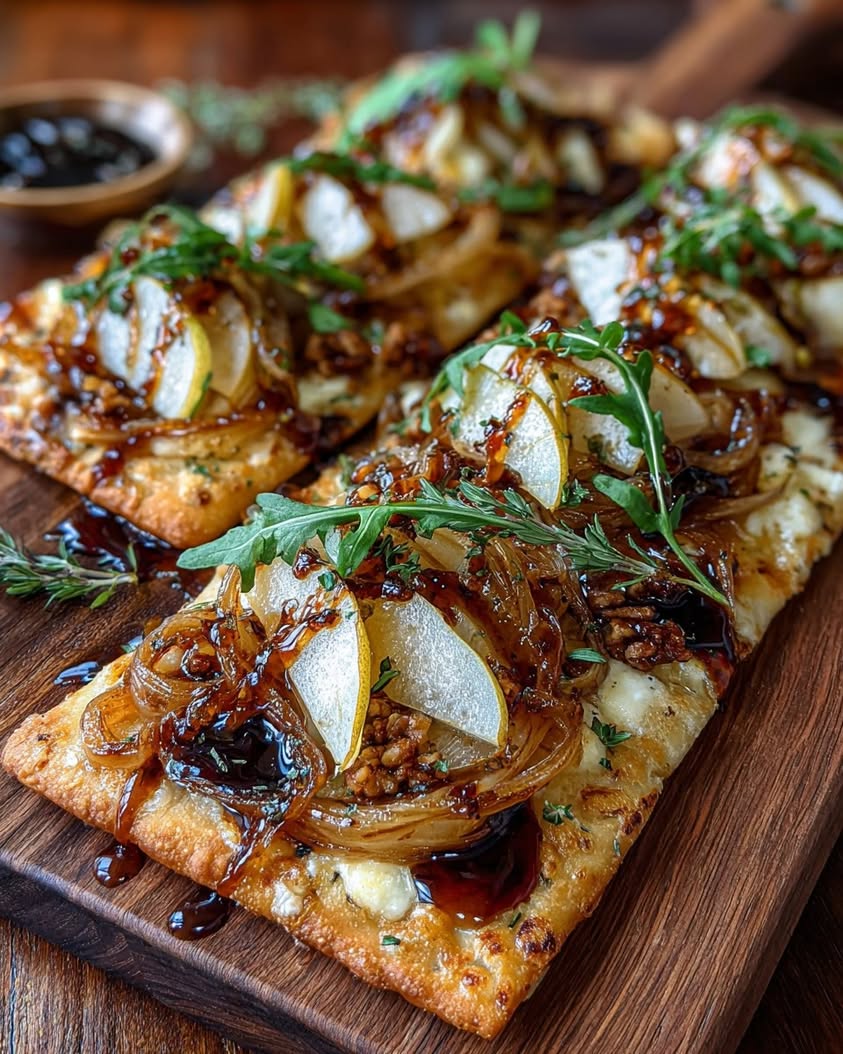
Pear & Brie Flatbread with Caramelized Shallots & Hot Honey Drizzle: An Elegant Appetizer for Any Occasion
This Pear & Brie Flatbread with Caramelized Shallots & Hot Honey Drizzle recipe is a stunning combination of sweet, savory, and spicy flavors. Moreover, it transforms simple ingredients into a gourmet appetizer that will impress any guest. The process is surprisingly straightforward, and the final result looks like it came from a high-end restaurant. Consequently, this flatbread is perfect for anyone wanting to elevate their entertaining game without spending hours in the kitchen.
Imagine biting into a crisp flatbread base topped with creamy, melted brie, sweet pear slices, and deeply savory caramelized shallots. Finally, a generous drizzle of spicy hot honey ties everything together with a beautiful kick. This flavor profile is complex yet harmonious, making each bite a delightful experience. Ultimately, this recipe is a fantastic way to enjoy a restaurant-quality treat at home, and it’s versatile enough for a casual weeknight or a fancy dinner party.
Quick Recipe Highlights
- Flavor Profile: This flatbread masterfully balances sweet ripe pear and honey against the rich, creamy brie and savory shallots. The hot honey drizzle introduces a gentle, warming spice that cuts through the richness perfectly.
- Texture: You get a wonderful contrast starting with a crisp, chewy flatbread crust. Then, the soft, melted brie and tender pears meet the silky, jammy caramelized shallots for a truly satisfying mouthfeel.
- Aroma: As it bakes, the kitchen fills with the sweet scent of caramelizing fruit and onions, the nutty aroma of melting cheese, and a hint of warm spice from the honey.
- Visual Appeal: The presentation is gorgeous with golden-brown crust, oozy white cheese, pale pear slices, and deep amber shallots. The final glossy hot honey drizzle adds a professional, artistic touch.
- Skill Level Needed: This is an accessible recipe for most home cooks. Basic knife skills for slicing and the patience to caramelize shallots are the primary requirements, making it a great confidence-builder.
- Special Equipment: You only need a baking sheet, a skillet for the shallots, and a small bowl for the honey. A pizza cutter or sharp knife makes serving clean and easy.
Recipe Overview
- Difficulty Level: We rate this recipe as easy because it involves simple assembly and foundational cooking techniques like caramelizing. There are no complex sauces or doughs to make from scratch, so even beginners can achieve fantastic results.
- Category: This dish fits beautifully into several categories: Appetizer, Snack, Light Lunch, or even a sophisticated Brunch item. It’s incredibly versatile for different meal occasions.
- Cuisine: While flatbread has roots in many cultures, this particular combination leans into modern American bistro or gastropub cuisine. It takes inspiration from flavor pairings popular in contemporary dining.
- Cost: The cost is moderate, largely dependent on the price of brie cheese. Using store-bought flatbread or naan keeps it affordable, and pears and shallots are typically inexpensive, especially in season.
- Season: This recipe shines in the fall when pears are at their peak, but it works year-round. It’s particularly cozy for autumn gatherings but feels fresh and light enough for spring and summer entertaining.
- Occasion: It’s ideal for holiday parties, book club gatherings, date nights at home, or as a standout starter for a dinner party. It also makes a fantastic shareable plate for game day or a girls’ night in.
Why You’ll Love This Recipe
First and foremost, the taste and texture appeal of this Pear & Brie Flatbread is undeniable. Each component brings something special: the pear offers a juicy sweetness, the brie provides luxurious creaminess, and the shallots contribute a deep, savory umami. Then, the hot honey drizzle creates an exciting finish that makes you want another slice immediately. The combination is sophisticated yet incredibly satisfying, pleasing a wide range of palates from those who love sweet and savory to fans of a little heat.
Furthermore, the convenience and preparation benefits are a major win. You can use high-quality pre-made flatbread or naan, which saves significant time. Additionally, the components can be prepped ahead of time. For instance, you can caramelize the shallots earlier in the day. Consequently, assembly before baking takes just minutes, making this an excellent choice for stress-free entertaining where you want to spend time with guests, not stuck in the kitchen.
From a nutritional standpoint, this recipe offers some advantages when enjoyed in moderation. Pears provide dietary fiber and vitamin C, while shallots contain antioxidants and prebiotic fibers. Using a whole-grain flatbread base can increase the fiber content further. While brie is a richer cheese, a little goes a long way in terms of flavor and calcium. Ultimately, it’s a more balanced choice than many heavy, meat-laden appetizers.
The social and entertaining value of this flatbread is exceptionally high. It’s designed to be shared, cut into small slices perfect for passing around. Visually, it’s a showstopper that signals to your guests that you’ve made an effort. The gourmet flavor profile sparks conversation and makes any gathering feel more special. It’s a guaranteed crowd-pleaser that will have everyone asking for the recipe.
Finally, this dish is cost-effective and accessible. Compared to ordering a similar flatbread at a restaurant, making it at home costs a fraction of the price. The ingredients are easy to find at any standard grocery store. You likely have olive oil, salt, and pepper on hand already. Therefore, this recipe allows you to create a luxurious eating experience without a luxurious budget, making elegant entertaining achievable for anyone.
Historical Background and Cultural Significance
The concept of flatbread is one of humanity’s oldest culinary traditions, dating back thousands of years across countless cultures. From Italian pizza and focaccia to Middle Eastern naan and pita, flatbreads served as a simple, versatile vehicle for toppings. This Pear & Brie Flatbread with Caramelized Shallots & Hot Honey Drizzle is a modern fusion that builds on this ancient foundation. It reflects a contemporary, global approach to cooking where chefs and home cooks freely combine ingredients and techniques from different traditions to create new, exciting flavors.
Culturally, the pairing of fruit and cheese is a classic across European cuisines, particularly in France and Italy. Cheese boards featuring brie with pear or apple slices are a staple. This recipe essentially deconstructs that elegant cheese board and transforms it into a warm, unified dish. The addition of caramelized onions or shallots is a technique beloved in French cooking, adding a savory depth that balances the fruit’s sweetness. Therefore, this flatbread pays homage to these timeless European flavor combinations while presenting them in a new, shareable format.
The evolution of this recipe is tied directly to the rise of gastropub and modern bistro cuisine over the last few decades. Chefs began experimenting with bold, sweet-and-savory combinations on accessible mediums like flatbread. The hot honey trend, popularized in recent years, provided the perfect spicy-sweet finish to cut through rich cheeses. This particular recipe represents the culmination of these trends—a dish that feels both familiar and novel, leveraging classic pairings with a contemporary, spicy twist that today’s diners crave.
Regional variations of this concept are endless. In the American South, you might find a version with pecans and a bourbon-infused honey. A Mediterranean twist could include fig jam and walnuts instead of pear. For a holiday version, cranberries and rosemary make a festive alternative. The basic template of cheese + fruit + savory element + sweet/spicy drizzle is incredibly adaptable. This versatility is a testament to the solid foundation of the original concept, allowing it to morph and fit local tastes and seasonal ingredients anywhere in the world.
Ingredient Deep Dive
Brie Cheese: Brie is a soft, creamy French cheese with a edible white rind. Historically, it dates back to the 8th century and is named after the French region of Brie. It’s rich in calcium and protein, and its flavor becomes more complex as it melts. When selecting brie, look for a wheel that feels slightly soft to the touch. Avoid any with an ammonia smell. For this recipe, a ripe but not runny brie works best. If you need a substitute, Camembert offers a similar texture and flavor, or for a stronger taste, try a creamy blue cheese.
Pear: Pears have been cultivated for over 4,000 years and are native to Europe and Asia. They are an excellent source of dietary fiber and vitamin C. For this flatbread, choose firm but ripe pears like Anjou or Bosc, as they hold their shape better during baking. A ripe pear will yield slightly at the stem. Store unripe pears at room temperature and refrigerate ripe ones. If pears are unavailable, thin slices of crisp apple (like Honeycrisp) or even ripe figs make wonderful seasonal substitutions.
Shallots: Shallots are part of the allium family, related to onions and garlic, and have been prized in French and Asian cuisines for centuries. They offer a milder, sweeter, and more delicate flavor than onions when caramelized. Nutritionally, they provide antioxidants and compounds that may support heart health. Choose shallots that are firm and heavy for their size, with dry, papery skins. Store them in a cool, dark, dry place. If you must substitute, a small amount of very thinly sliced red onion can work, but cook it slowly to mellow its sharper bite.
Hot Honey: Hot honey is a modern condiment made by infusing honey with chili peppers. While honey itself is an ancient food, the spicy variant has gained massive popularity recently. It adds a unique sweet-heat that enhances savory dishes. You can buy pre-made hot honey or easily make your own by warming honey with dried chili flakes or fresh sliced chilies and letting it steep. For a different flavor profile, try infusing honey with rosemary or thyme. As a substitute, mix regular honey with a pinch of cayenne pepper or a dash of hot sauce.
Flatbread: The base can be any pre-made flatbread, naan, or even pizza dough rolled thin. Using a pre-cooked base is the key to the quick preparation time. Look for high-quality options with minimal ingredients. For a whole-grain boost, choose a whole-wheat naan. If you’re feeling ambitious, homemade pizza dough will take more time but yield an exceptional result. For a gluten-free version, many stores now carry excellent gluten-free flatbread or cauliflower crust options that work perfectly with these toppings.
Common Mistakes to Avoid
- Overloading the Flatbread: Adding too many toppings seems tempting but leads to a soggy crust. The weight of wet ingredients prevents proper crisping. Instead, use a light, even layer to ensure every bite has a perfect crust-to-topping ratio.
- Not Caramelizing the Shallots Fully: Rushing the shallots is a common error. They need low, slow cooking to develop their signature sweet, jammy texture and deep flavor. If they’re just softened and translucent, you’re missing out on their full potential.
- Using Overripe or Mushy Pears: Extremely ripe pears will turn to mush in the oven’s heat. Consequently, you lose their delicate texture and shape. Always select pears that are firm yet ripe so they soften beautifully without disintegrating.
- Slicing the Brie Too Thick: Thick chunks of brie won’t melt evenly and can become greasy. For the best melt, slice the brie thinly or tear it into small pieces. This allows it to spread into a creamy layer without overwhelming other flavors.
- Adding Hot Honey Before Baking: Drizzling the hot honey before the flatbread goes in the oven can cause it to burn or bake into the cheese, losing its glossy finish and fresh spicy kick. Always add it as the final garnish after baking.
- Neglecting to Preheat the Baking Sheet: Placing the flatbread on a cold sheet pan results in a less crisp bottom. For a restaurant-quality crunch, preheat your baking sheet or pizza stone in the oven before placing the assembled flatbread on it.
- Underseasoning: Each component needs seasoning. Remember to season the caramelizing shallots with a pinch of salt, and don’t forget a light sprinkle of flaky salt and black pepper over the assembled flatbread before it bakes to elevate all the flavors.
- Cutting Immediately After Baking: Slicing into the flatbread the second it comes out of the oven causes the hot cheese to ooze everywhere. Let it rest for 2-3 minutes first. This brief pause allows the cheese to set slightly for cleaner cuts.
Essential Techniques
Caramelizing Shallots: This technique is crucial for building a deep, sweet, savory base flavor. Slice the shallots evenly so they cook at the same rate. Cook them in a bit of oil or butter over medium-low heat, stirring occasionally. Patience is key; the process can take 15-20 minutes. They are done when they are deeply golden brown, soft, and jam-like. The common pitfall is cranking up the heat to speed things up, which leads to burning. Watch for the visual cue of a uniform, rich caramel color and a significantly reduced volume.
Assembling for Even Baking: Proper assembly ensures every ingredient cooks perfectly. Start with a par-baked or pre-cooked flatbread base. Spread the caramelized shallots in a thin, even layer. Arrange the pear slices in a single layer, slightly overlapping. Finally, distribute the thin brie pieces evenly, ensuring some pear is still visible. This layering allows heat to circulate and everything to melt and warm through simultaneously. Avoid piling ingredients in the center, which leads to a soggy middle and undercooked edges.
Creating the Hot Honey Drizzle: If making your own, the technique is simple infusion. Gently warm honey in a small saucepan with your chosen chili (flakes, fresh, or dried). Do not boil. Let it steep off the heat for at least 10-15 minutes to allow the spice to permeate the honey. The infusion time directly controls the heat level. For a stronger kick, let it steep longer or add more chili. Strain if you prefer a smooth drizzle. The key is gentle heat to preserve the honey’s floral notes while extracting the chili’s capsaicin.
Pro Tips for Perfect Pear & Brie Flatbread
First, for an extra flavor dimension, brush the flatbread very lightly with olive oil or a thin layer of fig jam before adding the other toppings. This creates a barrier against sogginess and adds a subtle sweetness.
Second, if your brie is very cold and hard to slice neatly, pop it in the freezer for 10-15 minutes. A slightly firmer cheese is much easier to cut into thin, even pieces.
Third, add a handful of toasted walnuts or pecans after baking for a fantastic crunch. The nuttiness complements the pear and brie beautifully and introduces another layer of texture.
Fourth, finish the baked flatbread with a sprinkle of fresh thyme leaves or microgreens along with the hot honey. The herbal freshness cuts the richness and makes the colors pop.
Fifth, use a pizza cutter or a very sharp chef’s knife to slice the finished flatbread. A dull knife will drag the toppings and make a mess of your beautiful presentation.
Finally, serve it on a wooden cutting board or a large platter for a rustic, inviting look that encourages sharing and conversation among your guests.
Variations and Adaptations
For regional variations, consider a French-inspired version with duck confit and a cherry port reduction. A Pacific Northwest twist could include smoked salmon and dill cream after baking. The basic framework welcomes local and cultural interpretations, allowing you to tell a story with your ingredients.
Seasonal adaptations are easy and recommended. In summer, use fresh peaches or nectarines instead of pears. For a winter holiday version, swap in sliced fresh figs or a cranberry-pear chutney and add a sprinkle of chopped rosemary. Spring might call for asparagus tips and lemon zest.
Dietary modifications are straightforward. For a gluten-free flatbread, use a certified gluten-free base. To make it vegan, substitute the brie with a high-quality vegan cashew-based cheese or a spread of seasoned white bean puree. The hot honey can be replaced with agave syrup infused with chili.
Flavor variations can explore different cheese profiles. Try a sharp white cheddar for more tang, or a gorgonzola for a bold blue cheese kick. For the sweet element, instead of fresh pear, use a thin layer of high-quality pear or apple butter beneath the cheese.
Texture modifications can include adding crisp elements. Sprinkle crispy fried shallots or prosciutto crumbles on top after baking. Alternatively, for a creamier mouthfeel, dollop small amounts of ricotta cheese among the brie pieces before baking.
Presentation alternatives involve changing the shape. Instead of one large flatbread, use small individual naan or pita rounds to create personal-sized appetizers. You can also cut the baked large flatbread into different shapes like squares or long strips for variety on a party platter.
Serving and Presentation Guide
Plating techniques start with the right canvas. Transfer the baked flatbread to a large wooden board, slate slab, or simple white platter to let the colors stand out. If serving multiple flatbreads, label them with small chalkboard signs for a polished touch.
Garnishing is the final flourish. Beyond the hot honey, add a light sprinkle of flaky sea salt like Maldon. Fresh herbs like thyme, rosemary, or basil add color and aroma. A few strategically placed whole pecans or walnut halves can look beautiful and hint at the flavors inside.
Traditional accompaniments include a simple side salad of bitter greens like arugula or frisée with a lemon vinaigrette. The salad’s acidity and bitterness cleanse the palate between bites of the rich flatbread. A bowl of marinated olives or cornichons also pairs wonderfully.
Modern serving suggestions might include offering additional drizzle options on the side, like a balsamic glaze or a truffle oil, allowing guests to customize. Serve alongside other shareable small plates like stuffed mushrooms or spiced nuts for a full tapas-style experience.
Temperature considerations are vital. This flatbread is best served warm, not piping hot, to allow the flavors to be fully appreciated. However, it should not be served cold, as the cheese will firm up. Aim to serve it within 10 minutes of leaving the oven for optimal texture and taste.
Portion control tips are helpful for parties. One large flatbread typically yields 8 small slices or 4 larger slices. For a cocktail party with other food, plan for 1-2 small slices per person. As a main appetizer before a meal, 2-3 slices per person is appropriate.
Wine and Beverage Pairing
Wine pairings should complement the sweet, savory, and creamy elements. A slightly off-dry Riesling or Gewürztraminer is a classic choice, as their sweetness mirrors the pear and honey while their acidity cuts the brie’s fat. Alternatively, a sparkling wine like Champagne or Prosecco provides a cleansing effervescence. For red wine lovers, a light-bodied, low-tannin Pinot Noir won’t overpower the delicate flavors and pairs nicely with the earthy shallots.
Non-alcoholic alternatives can be just as thoughtful. A sparkling apple cider mimics the effervescence of Champagne and echoes the fruit notes. A ginger beer or spicy ginger ale complements the heat from the honey beautifully. For a more refined option, try a pear-infused white tea served iced or a honey-lemon sparkling water.
Coffee and tea pairings work well if serving this for brunch. A medium-roast coffee with nutty or caramel notes will harmonize with the flavors. For tea, a black tea like Earl Grey (with its citrusy bergamot) or a chai spice tea can stand up to the complex spices and richness of the dish.
Temperature considerations for beverages are standard: serve white wines, sparklings, and non-alcoholic sparklers well-chilled. Red wines should be served slightly below room temperature. Iced teas and coffees should be cold but not watered down—use large ice cubes or frozen fruit to keep them cool without dilution.
Serving suggestions include setting up a small beverage station if you’re hosting a crowd. Offer a white wine and a red wine option, plus a signature non-alcoholic sparkler. Clearly label each bottle or pitcher so guests can easily help themselves, allowing you to enjoy the party.
Storage and Shelf Life
Storage methods for leftovers are simple but important. First, allow any leftover flatbread to cool completely to room temperature. Then, wrap individual slices tightly in plastic wrap or aluminum foil, or place them in a single layer in an airtight container. Proper wrapping prevents the flatbread from absorbing other refrigerator odors and slows down moisture loss.
Temperature requirements are standard refrigerator cold, at or below 40°F (4°C). Do not leave the flatbread at room temperature for more than two hours after baking, as the dairy and moist toppings can spoil quickly. Always refrigerate promptly to ensure food safety.
Container recommendations include shallow airtight containers to prevent the slices from being crushed. You can separate layers with parchment paper if stacking is necessary. For best texture, avoid storing for more than 2-3 days, as the crust will inevitably soften.
Signs of spoilage to watch for include an off or sour smell, especially from the dairy. Visible mold growth, particularly on the cheese or pear, is a definite discard signal. If the flatbread feels excessively slimy or has developed an unusual texture, it’s safest to throw it away.
Reheating instructions are key to reviving leftovers. Avoid the microwave, which will make the crust rubbery. Instead, reheat slices in a toaster oven, conventional oven, or air fryer at 350°F (175°C) for 5-7 minutes until warmed through and the cheese is melty again. This method helps re-crisp the crust.
Freezing guidelines are not generally recommended for this flatbread. The high moisture content of the pears and shallots can lead to a very soggy, mushy texture upon thawing and reheating. The brie also does not freeze and thaw well. It’s best enjoyed fresh or refrigerated for short-term storage.
Make Ahead Strategies
Prep timeline can save you significant stress. You can caramelize the shallots up to 3 days in advance. Simply let them cool, store them in an airtight container in the fridge, and bring them to room temperature before using. Similarly, you can slice the pears a few hours ahead; toss them with a tiny bit of lemon juice to prevent browning and store them in a sealed container in the fridge.
Storage between steps is simple. Keep prepped components (shallots, sliced pears, sliced brie) in separate containers in the refrigerator. This compartmentalization makes final assembly a breeze and keeps ingredients fresh. The flatbread base itself can be kept in its original packaging until ready to use.
Quality impact assessment is positive for most components. Caramelized shallots often taste even better the next day as flavors meld. The pears may soften slightly from the lemon juice but will still bake beautifully. The brie is best sliced fresh, but pre-slicing an hour ahead is fine. Overall, make-ahead prep enhances convenience with minimal sacrifice.
Assembly tips for a party: Pre-assemble the flatbreads on parchment paper-lined baking sheets up to 1 hour before your guests arrive. Keep them uncovered in the refrigerator. Then, simply slide the baking sheet into the preheated oven when you’re ready to bake. This allows for hot, fresh appetizers with minimal last-minute work.
Reheating guidelines for pre-baked flatbreads are not ideal, as they are best fresh. However, if you must bake slightly ahead, keep them warm in a 200°F (95°C) oven for no more than 20 minutes. The crust will soften, but it’s a workable solution for timing a multi-course meal.
Fresh element additions should always be done post-bake. Regardless of your make-ahead prep, always add the hot honey drizzle and any fresh herb garnishes after the flatbread comes out of the oven. This ensures their flavors and textures remain vibrant and impactful.
Scaling Instructions
Halving the recipe is straightforward for a smaller meal. Use one small flatbread or naan, one shallot, half a pear, and about 4 ounces of brie. Adjust the hot honey amount to taste. Cooking times remain roughly the same, though you may want to check a minute or two earlier since a smaller flatbread can cook faster. This is perfect for a romantic dinner for two.
Doubling or tripling the recipe is easy for a crowd. Simply multiply all ingredients accordingly. The key here is to use multiple baking sheets and work in batches if your oven cannot accommodate them all on one rack with proper air circulation. Rotate the sheets halfway through baking for even cooking. Consider making a few different flavor variations when scaling up to offer variety.
Equipment adjustments become necessary when scaling. For larger batches, ensure you have enough skillet space to caramelize the increased volume of shallots; you may need to do it in batches. Having multiple cutting boards and knives streamlines the prep work. A large commercial-sized baking sheet might be useful for making one giant party-sized flatbread.
Timing modifications are minimal when scaling up the number of flatbreads. The bake time per flatbread remains consistent. However, if baking multiple sheets at once, it may add 1-2 minutes to the total time due to the oven’s heat being distributed. Always rely on visual cues—golden edges and bubbly cheese—rather than strict timer adherence.
Storage considerations for large batches are important. If making several flatbreads for an event, bake them in succession and keep the finished ones warm in a low oven. For leftovers from a big batch, cool and store them as directed, but be prepared for the crust to soften more due to increased steam in the storage container from the larger quantity.
Nutritional Deep Dive
Macro breakdown for one serving (assuming 4 servings per flatbread) typically includes a balance of carbohydrates from the flatbread and pear, moderate protein from the cheese, and a mix of saturated and unsaturated fats from the cheese and olive oil. The exact numbers vary based on your specific flatbread and cheese choices, but it’s generally a satisfying mix that provides energy and satiety.
Micronutrient analysis reveals benefits from the individual ingredients. Pears contribute vitamin C and potassium. Shallots offer some vitamin B6, manganese, and folate. Brie provides calcium, vitamin B12, and phosphorus. Using a whole-grain flatbread base can add iron and additional B vitamins. While not a vitamin powerhouse, the dish offers a decent spread of micronutrients.
Health benefits come from the fiber in pears and potential prebiotic compounds in shallots, which support gut health. The calcium in brie is crucial for bone health. The antioxidants in pears and shallots help combat oxidative stress. Enjoyed as part of a balanced diet, this recipe contributes beneficial nutrients alongside its indulgent flavors.
Dietary considerations include being vegetarian-friendly. For those monitoring sodium, be mindful of the salt added during cooking and the natural sodium in cheese. The dish contains gluten unless a gluten-free base is used, and it is not suitable for a vegan or dairy-free diet without significant modifications, as outlined in other sections.
Portion analysis is key to enjoying this as part of a healthy lifestyle. One serving is satisfying enough to curb hunger, making it a great standalone light lunch or a substantial appetizer. The combination of fat, protein, and fiber helps promote fullness, which can prevent overeating later.
Weight management tips involve mindful consumption. Pair a slice or two with a large green salad loaded with vegetables to create a balanced, voluminous meal that feels indulgent but is controlled in calories. You can also use a lighter cheese or less cheese to reduce the fat and calorie content if desired.
Dietary Adaptations
For a gluten-free version, simply swap the regular flatbread for a certified gluten-free alternative. Many excellent store-bought options made from cauliflower, gluten-free grains, or legumes work perfectly. Ensure all other ingredients, like pre-made hot honey, are certified gluten-free, as some may use additives with gluten.
A dairy-free adaptation requires replacing the brie. Look for a high-quality vegan cheese that melts well, such as those made from cashews or coconut oil. Alternatively, a spread of creamy hummus or a white bean puree seasoned with nutritional yeast can provide a savory, creamy element in place of cheese.
To make this recipe vegan, combine the dairy-free cheese substitution with a plant-based honey alternative. Agave nectar or maple syrup infused with chili makes an excellent hot honey substitute. Ensure the flatbread base is also vegan (some naan contains yogurt or ghee).
A low-carb or keto adaptation focuses on the base. Replace the flatbread with a low-carb tortilla or a homemade fat-head dough base. Use a full-fat brie and be mindful that pears are higher in natural sugars; you may reduce the pear amount or substitute with lower-carb berries like blackberries in moderation.
For a Paleo version, use a grain-free flatbread base made from almond or coconut flour. Omit the cheese entirely or use a Paleo-friendly “cheese” made from nuts and nutritional yeast. The hot honey can be made with raw honey, which is Paleo-approved in moderation.
A Low-FODMAP adaptation requires careful substitution. Shallots are high in FODMAPs; replace them with the green tops of scallions (spring onions). Ensure the brie is a hard, aged variety (check labels, as some soft cheeses can be higher in lactose). Use a maple syrup and chili infusion instead of honey, as honey is high in fructose.
Troubleshooting Guide
If your flatbread crust is soggy, the likely culprit is excess moisture or underbaking. Next time, preheat your baking sheet, avoid overloading toppings, and ensure your oven is fully preheated. If the top is done but the bottom is soft, try baking directly on the oven rack for the last 2-3 minutes for extra bottom heat.
For flavor balance issues where the flatbread tastes bland, you probably underseasoned. Remember to season the caramelizing shallots with salt. Additionally, a final sprinkle of flaky salt after baking can make all the difference. If it’s too sweet, add a handful of arugula after baking for bitterness or use a sharper cheese next time.
Temperature problems often involve the cheese not melting properly or the pears burning. If the cheese isn’t melting, your brie pieces may be too thick. Slice thinner next time. If the pear edges are burning before the cheese bubbles, your oven might be too hot, or the rack is too high. Try lowering the temperature slightly and baking on a middle rack.
Equipment challenges like not having a pizza stone or peel are easily solved. A preheated inverted baking sheet works almost as well as a pizza stone. To transfer the assembled flatbread to the hot sheet, build it on a piece of parchment paper, then slide the parchment directly onto the hot surface.
Ingredient substitution concerns usually involve finding the right swap. If you can’t find shallots, use a small amount of thinly sliced red onion cooked very slowly. No ripe pears? Apples are the best substitute. For a different cheese, choose one with similar meltability, like Camembert or a young Gouda.
Timing concerns for a dinner party are common. The solution is the make-ahead strategies outlined earlier. Caramelize shallots and slice pears ahead of time. You can even pre-assemble on parchment-lined sheets. Then, baking takes just 10-12 minutes, allowing you to serve hot, fresh appetizers with perfect timing.
Recipe Success Stories
Community feedback on this Pear & Brie Flatbread has been overwhelmingly positive. Many home cooks report that it’s become their go-to impressive appetizer, often requested by friends and family for gatherings. A common theme is surprise at how simple it is to create something that looks and tastes so gourmet. Several readers have mentioned that the hot honey drizzle was a revelation, and they now keep a bottle of homemade version in their fridge for other uses.
Variation successes from readers are inspiring. One person added crispy prosciutto for a salty crunch, while another used a base of sweet potato flatbread for a fall twist. A creative cook substituted the hot honey with a sriracha-infused maple syrup for a different sweet-heat profile. These adaptations show the recipe’s fantastic flexibility and how it encourages culinary creativity.
Adaptation stories for dietary needs have been particularly heartening. A reader with a dairy intolerance successfully used a vegan almond-based brie and said it was a hit at their mixed-diet holiday party. Another, following a gluten-free diet, used a cauliflower crust and was thrilled to have a “fancy” appetizer they could enjoy safely alongside everyone else.
Reader suggestions have improved the recipe over time. One excellent tip was to add a tiny sprinkle of cornmeal on the baking sheet before placing the flatbread for an extra-crispy, pizzeria-style bottom. Another suggested drizzling with a high-quality balsamic glaze in addition to the hot honey for another layer of sweet-tart complexity.
Photography tips from successful makers emphasize natural light. The golden hues of the baked cheese and caramelized shallots look best{“success”:true,”message”:”Recipe created successfully”,”post_id”:9201,”tasty_recipe_id”:9201,”shortcode”:”“}

I’m Billy, a classically trained culinary school graduate from The Culinary Institute of America with over 12 years in the restaurant industry and over 19 years of cooking experience.