
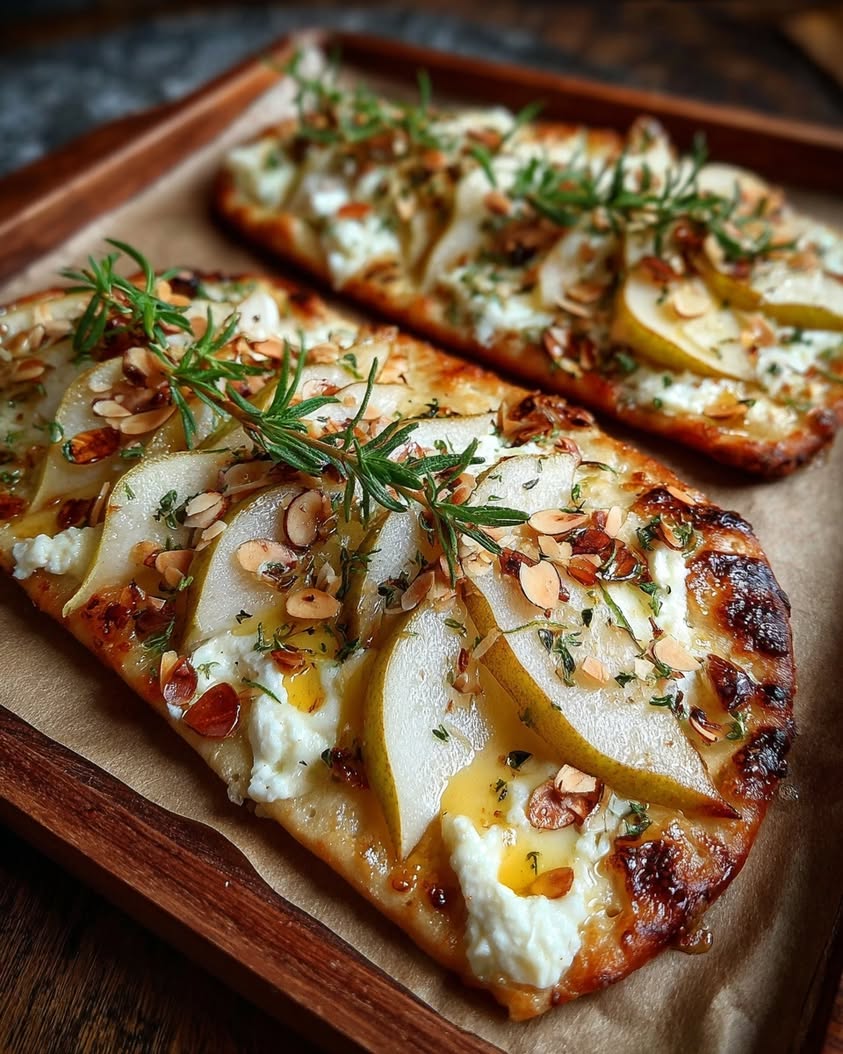
Pear & Brie Flatbread with Toasted Almond Crunch: An Elegant Appetizer in Minutes
This Pear & Brie Flatbread with Toasted Almond Crunch recipe is your secret weapon for effortless entertaining. Moreover, it transforms simple ingredients into a stunning dish that looks and tastes gourmet. The combination of sweet, juicy pear and creamy, melted brie cheese creates a perfect flavor harmony. Meanwhile, the toasted almond crunch adds a delightful textural contrast that elevates every single bite. Consequently, this flatbread is guaranteed to impress your guests without requiring hours in the kitchen.
Imagine pulling a warm, golden flatbread from your oven, its surface glistening with melted brie and caramelized edges. The aroma of toasted nuts and warm fruit will fill your kitchen, promising a truly special treat. This recipe is incredibly versatile, serving perfectly as a sophisticated appetizer, a light lunch, or even a unique pizza alternative. Furthermore, its beautiful presentation makes it ideal for holiday gatherings, book club meetings, or a cozy date night at home. Ultimately, this Pear & Brie Flatbread with Toasted Almond Crunch delivers restaurant-quality appeal with straightforward, home-cooked ease.
Beyond its impressive appearance, this dish is a masterclass in balancing flavors and textures. The natural sweetness of the pear cuts through the rich brie, while a drizzle of honey amplifies the fruit’s notes. The almonds provide a necessary savory crunch, and a sprinkle of fresh thyme adds an herby, aromatic finish. Each component plays a crucial role, resulting in a flatbread that is complex yet comforting. Therefore, whether you are a seasoned cook or a beginner, this recipe promises delicious and reliable results every single time.
Quick Recipe Highlights
- Flavor Profile: This flatbread masterfully balances sweet and savory notes. The ripe pear and honey offer a gentle sweetness, perfectly complementing the rich, buttery brie. Additionally, fresh thyme introduces a subtle, earthy herbaceousness that ties all the flavors together beautifully.
- Texture: You will experience a wonderful play of textures in every bite. The flatbread base provides a crisp yet chewy foundation. Meanwhile, the melted brie is luxuriously creamy, the pear slices are tender, and the toasted almonds deliver a satisfying, crunchy finish.
- Aroma: As it bakes, the kitchen fills with an irresistible fragrance. Key aromatic notes include the nutty scent of toasting almonds, the sweet perfume of baking pear, and the warm, inviting aroma of melting cheese and fresh herbs.
- Visual Appeal: This flatbread is a feast for the eyes with its gorgeous color contrast. The golden crust, white melted brie, and soft pear slices create an elegant canvas. Finally, the green thyme and brown toasted almonds add the perfect finishing touches for a professional look.
- Skill Level Needed: This is an accessible recipe for cooks of all levels. Essentially, it involves simple assembly and basic baking techniques. No advanced skills are required, making it a fantastic choice for a quick weeknight treat or a stress-free party dish.
- Special Equipment: You only need very basic kitchen tools. A baking sheet and parchment paper are essential for easy cleanup. A sharp knife for slicing and a small pan for toasting the almonds are the only other items necessary.
Recipe Overview
- Difficulty Level: We classify this Pear & Brie Flatbread with Toasted Almond Crunch as easy for several reasons. The steps are sequential and simple, involving no complex techniques like dough-making or intricate knife work. Furthermore, the ingredient list is short and the assembly is intuitive, minimizing room for error. The baking process is straightforward, requiring only basic oven monitoring.
- Category: This versatile dish fits multiple meal categories beautifully. It shines as a crowd-pleasing appetizer or starter for any gathering. Alternatively, it serves wonderfully as a light main course for lunch or a casual dinner. It also fits into the category of gourmet snacks or party finger food with minimal fuss.
- Cuisine: This recipe draws inspiration from modern American and European culinary traditions. It utilizes the classic French pairing of fruit and cheese, a cornerstone of charcuterie boards. The flatbread base has roots in Mediterranean and Italian cuisine, while the overall concept is a staple of contemporary fusion cooking.
- Cost: This is a reasonably affordable recipe to prepare. The main cost drivers are the brie cheese and the fresh pear. However, since a little of each goes a long way, the cost per serving remains modest. Using store-bought flatbread keeps costs and preparation time low compared to making dough from scratch.
- Season: This recipe is excellent year-round but truly shines in the autumn. Fall is peak season for many pear varieties, ensuring the best flavor and texture. The warm, comforting nature of the baked flatbread also suits cooler weather perfectly. That said, with pears increasingly available globally, you can enjoy this dish any time you crave it.
- Occasion: It is perfectly suited for a wide array of occasions. It elevates holiday parties, bridal showers, and wine tastings with its elegant profile. Simultaneously, it is simple enough for a weeknight family dinner or a casual weekend lunch. Its quick preparation makes it an ideal last-minute appetizer when unexpected guests arrive.
Why You’ll Love This Recipe
First and foremost, the taste and texture appeal of this Pear & Brie Flatbread with Toasted Almond Crunch is absolutely undeniable. Each bite delivers a symphony of sensations: the creamy melt of brie, the juicy burst of pear, and the final crunch of almond. This combination is both sophisticated and deeply satisfying, hitting all the right notes for a memorable eating experience. The flavors are complex enough to intrigue your palate yet familiar enough to provide ultimate comfort. Consequently, this dish has a universal appeal that will delight both adventurous foodies and picky eaters alike.
Next, consider the incredible convenience and preparation benefits. This entire recipe comes together in well under thirty minutes from start to finish. You can use pre-made flatbread or naan, eliminating the most time-consuming step of dough preparation. The assembly process is as simple as slicing, arranging, and baking, making it virtually foolproof. Therefore, it is the perfect solution for busy weeknights when you want something special without the effort. It also scales up effortlessly, allowing you to make multiple flatbreads for a party with minimal extra work.
Furthermore, this flatbread offers several nutritional advantages when enjoyed as part of a balanced diet. Pears provide a good source of dietary fiber and vitamin C, while almonds contribute healthy fats, protein, and vitamin E. Using a whole-grain flatbread base can increase the fiber content even further. While brie is a richer cheese, a little goes a long way in providing flavor and calcium. Ultimately, this dish is a more nutrient-dense option compared to many traditional, heavy appetizers or pizzas.
Additionally, the social and entertaining value of this recipe is exceptionally high. Its beautiful, gourmet appearance makes it a centerpiece on any appetizer table, guaranteed to spark conversation. The act of sharing a warm, freshly baked flatbread feels communal and welcoming. It pairs wonderfully with a variety of drinks, from white wine to sparkling cider, enhancing any social gathering. This Pear & Brie Flatbread with Toasted Almond Crunch instantly elevates the occasion, making your guests feel truly special.
Finally, the cost-effectiveness and accessibility of the ingredients make this a practical choice. You likely have several components like honey and olive oil already in your pantry. The remaining ingredients—flatbread, pear, brie, almonds, thyme—are readily available at any standard grocery store. There is no need for expensive, hard-to-find specialty items. This accessibility means you can whip up this impressive dish whenever the craving strikes, without planning a special shopping trip.
Historical Background and Cultural Significance
The origin story of combining fruit and cheese is ancient and spans numerous cultures. Historically, preserving summer and autumn fruit alongside cheese was a practical method of storing food for winter. This practice was common across Europe, particularly in France, Italy, and England. The specific pairing of pear and brie, however, is a classic French tradition. Brie de Meaux, often called the “King of Cheeses,” has been produced in the Île-de-France region since the 8th century. Pairing it with the delicate sweetness of pear became a natural and celebrated combination on French cheeseboards.
The cultural importance of this pairing lies in its representation of balance and terroir. In French cuisine, the concept of “what grows together, goes together” is paramount. Pears and apples are traditional orchard fruits of the same regions that produce soft, creamy cheeses like Brie and Camembert. Consequently, this pairing is a direct reflection of the local landscape and agricultural practices. Serving fruit with cheese is also deeply embedded in dining rituals, often appearing at the end of a meal before dessert. This tradition highlights the cheese course as a moment of pause and savoring.
The evolution of the recipe from a cheeseboard component to a baked flatbread is a modern innovation. It represents the global fusion of food trends, combining the Italian concept of pizza or focaccia with French flavor profiles. The flatbread format makes the pairing more portable, shareable, and suitable as a standalone appetizer. This evolution speaks to our contemporary desire for familiar, handheld foods that still carry an air of gourmet sophistication. The addition of toasted nuts for crunch is a further refinement, adding a textural element that is highly prized in modern cuisine.
Regional variations of this concept are plentiful and exciting. In the United States, you might find a similar flatbread featuring apples and cheddar, reflecting local produce. In the Mediterranean, fig and goat cheese on flatbread is a common and beloved combination. Some variations incorporate savory elements like prosciutto or arugula for a peppery bite. Others might use a different nut, such as walnuts or pecans, depending on regional availability. Each variation adapts the core principle—sweet fruit, creamy cheese, crisp base—to local tastes and ingredients, proving the versatility of the concept.
Ingredient Deep Dive
Brie Cheese: Brie is a soft, cow’s-milk cheese named after the French region from which it originated. Historically, it was a favorite of French royalty, earning its regal reputation. Nutritionally, it provides a good source of protein, calcium, and vitamins like B12 and A. When selecting brie for your Pear & Brie Flatbread, look for a wheel that feels slightly soft to the touch at room temperature, indicating proper ripeness. Avoid any with an ammonia smell. Store brie in the refrigerator in its original wrapping or parchment paper. For substitutions, Camembert offers a similar texture and flavor, while a mild goat cheese or creamy blue cheese can provide a different but delicious twist.
Pear: Pears are one of the world’s oldest cultivated fruits, with evidence of their consumption dating back to prehistoric times. They hold symbolic meaning in many cultures, often representing affection and longevity. Pears are an excellent source of dietary fiber, particularly in the skin, and provide vitamin C and potassium. For this recipe, choose a firm but ripe pear like Anjou or Bosc, which will hold its shape during baking. Gently press near the stem; if it yields slightly, it’s ready. Store unripe pears at room temperature and refrigerate ripe ones. If pears are unavailable, thinly sliced apples or even figs make wonderful seasonal substitutes.
Almonds: Almonds have a rich history, cultivated in the Mediterranean and Middle East for thousands of years. They are mentioned in ancient texts and were carried along the Silk Road. They are a nutritional powerhouse, packed with healthy monounsaturated fats, protein, magnesium, and vitamin E. Toasting is crucial for this Pear & Brie Flatbread recipe as it intensifies their nutty flavor and adds the essential “crunch.” Always toast nuts in a dry pan over medium-low heat until fragrant and lightly golden to avoid burning. Store almonds in an airtight container in a cool, dark place or the freezer to prevent rancidity. Slivered almonds can be substituted with chopped walnuts or pecans for a different flavor profile.
Flatbread: Flatbreads are arguably the oldest form of bread, with evidence stretching back over 14,000 years across countless cultures. They served as edible plates and utensils long before modern tableware. For this recipe, the flatbread acts as a crispy, chewy canvas. Opt for a high-quality store-bought naan, pita, or pre-baked pizza crust for best results. You can also use a pre-rolled pizza dough from the refrigerated section for a slightly thicker base. To store, keep unused flatbreads in their original packaging or an airtight bag. For a gluten-free adaptation, many excellent gluten-free flatbread or crust options are now available in most grocery stores.
Honey: Honey’s history is intertwined with human civilization, used as a sweetener, medicine, and offering in religious ceremonies for millennia. Its flavor varies dramatically based on the flowers visited by the bees. In this recipe, honey adds a glossy sheen and a floral sweetness that complements the pear. From a nutritional standpoint, it contains antioxidants and has antimicrobial properties. Choose a mild, liquid honey like clover or wildflower for a neutral sweetness. For storage, keep honey in a sealed container at room temperature; refrigeration can cause crystallization. If you need a vegan substitute, maple syrup or agave nectar will work, though they will impart a different flavor note.
Common Mistakes to Avoid
- Using Overripe or Mushy Pears: Overripe pears will turn to mush in the oven’s heat and release too much water. This excess moisture can make your flatbread soggy. Always select pears that are firm yet yield slightly to gentle pressure near the stem for the perfect baked texture.
- Skipping the Almond Toasting Step: Raw almonds lack the deep, nutty flavor and satisfying crunch that defines this recipe. Toasting them is a quick but non-negotiable step. It unlocks their oils and aroma, transforming them from a simple garnish into a key flavor component.
- Overloading the Flatbread with Cheese: While brie is delicious, too much can create a greasy, heavy result. The cheese should melt and bubble, not pool into an oily layer. Use thin slices or small chunks distributed evenly, allowing the other ingredients to shine through.
- Baking on a Cold Baking Sheet: Placing your assembled flatbread on a cold sheet pan can result in a soggy bottom. For a crisper crust, preheat your baking sheet in the oven for a few minutes before adding the flatbread on parchment paper. This technique gives the base a head start on crisping.
- Neglecting to Use Parchment Paper: The melted brie and honey can caramelize and stick fiercely to a bare baking sheet. Parchment paper guarantees easy release and effortless cleanup. It also prevents the flatbread from burning on the bottom before the top is perfectly golden.
- Cutting the Flatbread Immediately After Baking: Slicing into the flatbread the moment it leaves the oven causes the molten cheese to ooze out uncontrollably. Let it rest for 3-5 minutes on a cutting board. This allows the cheese to set slightly, ensuring neat, clean slices.
- Using Dried Thyme Instead of Fresh: Dried thyme has a much more concentrated, dusty flavor that can overpower the delicate balance. Fresh thyme leaves provide a bright, aromatic quality that dried herbs cannot replicate. If you must substitute, use only one-third the amount of dried thyme.
- Not Watching the Oven Closely: Oven temperatures can vary, and flatbreads cook quickly. Baking for too long will burn the almonds and edges. Check the flatbread a few minutes before the timer goes off. It is done when the cheese is bubbly and the crust edges are golden brown.
Essential Techniques
Toasting Nuts: Toasting nuts is a fundamental technique that maximizes flavor and texture. It is important because heat causes a Maillard reaction, developing complex, roasted flavors and creating a firmer, crunchier bite. To master it, use a dry skillet over medium-low heat. Add the nuts in a single layer and shake the pan frequently for even coloring. Listen for a light crackling sound and watch for a golden hue and fragrant smell. The common pitfall is walking away, as nuts can burn in seconds. The visual cue for success is a uniform light golden brown color and a rich, nutty aroma filling your kitchen.
Slicing Pears for Baking: Slicing pears correctly ensures they cook evenly and maintain structure. It is important because uniformly thin slices will soften perfectly in the brief baking time without becoming mushy or releasing excess water. To master it, use a sharp knife to cut the pear in half, core it, and then slice it into even 1/8-inch thick half-moons. A mandoline can achieve perfect consistency but is not necessary. The common mistake is cutting slices too thick, which results in undercooked, crunchy pear. The visual cue for perfectly sliced pear is translucent, thin pieces that will lay flat and overlap neatly on the flatbread.
Arranging Ingredients for Even Baking: Strategic arrangement impacts how every component cooks. It is important because evenly distributed ingredients ensure each bite has all the flavors and prevents any one area from burning or remaining undercooked. To master it, leave a small border around the edge of the flatbread for a crispy crust. Scatter the brie pieces first, then fan the pear slices in a single, slightly overlapping layer. Finally, sprinkle the toasted almonds. The common pitfall is piling ingredients in the center, which leads to a soggy middle. The visual cue for success is a balanced, aesthetically pleasing distribution with visible bits of each ingredient across the entire surface.
Pro Tips for Perfect Pear & Brie Flatbread with Toasted Almond Crunch
Pre-bake Your Crust: For an extra-crispy base that won’t get soggy, bake the plain flatbread for 3-4 minutes before adding toppings. This creates a protective barrier against moisture from the pear and cheese.
Chill Your Brie Before Slicing: Brie is much easier to slice neatly when it’s cold. Pop the wheel in the freezer for 10-15 minutes before using a sharp knife to cut it into thin pieces or small chunks.
Brush the Edges with Oil: Lightly brush the exposed crust border with olive oil before baking. This simple step encourages a beautiful, golden-brown, and extra-flavorful edge.
Add a Hint of Salt: A very light sprinkle of flaky sea salt over the finished flatbread just before serving can elevate all the flavors. It heightens the sweetness of the pear and the richness of the brie.
Use a Pizza Cutter for Easy Slicing: A sharp pizza wheel or rocker blade cuts through the flatbread cleanly without dragging the toppings. It is the most efficient tool for serving neat portions.
Experiment with Infused Honey: Take your drizzle to the next level by using a flavored honey. Rosemary-infused honey or a spicy chili honey can add an incredible, sophisticated layer of flavor.
Garnish After Baking for Freshness: Add half of the fresh thyme before baking and sprinkle the rest on top after it comes out of the oven. This preserves the herb’s bright color and fresh aroma.
Let Guests Customize Their Drizzle: Serve the honey in a small pitcher or jar on the side. This allows individuals to control the sweetness level and keeps the flatbread from becoming sticky if not eaten immediately.
Variations and Adaptations
Regional Variations: You can easily adapt this flatbread to reflect different regional cuisines. For an Italian twist, substitute the brie with fresh mozzarella and add a few dots of fig jam. A Spanish-inspired version might feature Manchego cheese, quince paste (membrillo), and Marcona almonds. For a taste of the American South, use sharp cheddar, apple slices, and candied pecans. Each variation respects the core formula while celebrating local ingredients and flavor preferences.
Seasonal Adaptations: This recipe is wonderfully adaptable to the seasons. In spring, try using fresh asparagus tips and goat cheese. Summer calls for ripe figs and prosciutto. Autumn is perfect for the classic pear and brie, or try roasted squash and sage. In winter, opt for caramelized onions and a robust cheese like Gruyère. Using seasonal produce ensures peak flavor and often better value at the grocery store.
Dietary Modifications: To make this recipe gluten-free, simply choose a certified gluten-free flatbread, naan, or pizza crust. For a dairy-free version, use a high-quality vegan melty cheese alternative and a plant-based butter for brushing the crust. A vegan adaptation would combine the dairy-free cheese with the pear and almonds, using maple syrup instead of honey. For a lower-carb option, use a cauliflower crust or a large portobello mushroom cap as the base.
Flavor Variations: Do not be afraid to play with additional flavor profiles. Add a layer of caramelized onions beneath the cheese for depth. Introduce a salty element with crisped pancetta or prosciutto ribbons. For a peppery kick, scatter a handful of fresh arugula over the hot flatbread after baking. A smear of whole-grain mustard or a balsamic glaze drizzle can also introduce delightful tangy notes.
Serving and Presentation Guide
Plating Techniques: For individual servings, slice the flatbread into wedges or rectangles and arrange them slightly fanned out on a wooden board or a simple white platter. This creates height and visual interest. For a more rustic, shareable presentation, place the whole flatbread directly on a cutting board in the center of the table. Provide a pizza wheel or sharp knife so guests can serve themselves, which encourages a communal and interactive dining experience.
Garnishing Ideas: Beyond fresh thyme, consider other garnishes to enhance visual appeal. Microgreens or pea shoots add a vibrant green pop and fresh flavor. Edible flowers like nasturtiums or pansies make the dish exceptionally elegant for special occasions. A final dusting of very finely grated lemon zest can brighten all the flavors. A sprinkle of pomegranate arils in the winter adds brilliant red color and a juicy burst.
Traditional Accompaniments: This flatbread pairs beautifully with simple, light sides that won’t compete. A crisp, green salad with a lemon vinaigrette is a classic choice. A bowl of tomato soup or a roasted butternut squash soup makes for a comforting, complete meal. For an appetizer spread, accompany it with olives, marinated artichoke hearts, and other Mediterranean-inspired bites.
Temperature Considerations: This dish is best served warm, when the cheese is still soft and gooey. If you need to hold it before serving, keep it in a warm oven (around 170°F) on the baking sheet. Avoid covering it tightly with foil, as this will trap steam and soften the crispy crust. If it cools down, a quick 2-3 minute reheat in a hot oven or toaster oven will revive it perfectly.
Wine and Beverage Pairing
Wine Pairings: The sweet pear and rich brie create an ideal canvas for several wines. A slightly sweet white wine like a German Riesling or a Vouvray (Chenin Blanc) complements the fruit and cuts through the cheese’s fat. A light-bodied, fruity red such as a Pinot Noir or Beaujolais also works beautifully, especially if you add a salty meat like prosciutto. For a sparkling option, a dry Prosecco or Crémant offers refreshing acidity that cleanses the palate between bites.
Non-Alcoholic Alternatives: Many non-alcoholic beverages pair wonderfully with this flatbread. Sparkling apple cider mirrors the autumnal fruit notes. A ginger beer or spicy ginger ale provides a zesty contrast to the richness. For a more sophisticated option, try a non-alcoholic sparkling wine or a tart cranberry spritzer made with club soda and a splash of 100% cranberry juice.
Coffee and Tea Pairings: If serving this for a brunch or lunch, consider beverage pairings beyond wine. A medium-roast coffee with low acidity won’t clash with the flavors. A black tea like Earl Grey, with its citrusy bergamot notes, can be a delightful companion. For an herbal option, a mint or chamomile tea offers a soothing, clean finish.
Storage and Shelf Life
Storage Methods: Store any leftover flatbread in an airtight container in the refrigerator for up to 2 days. Place parchment paper between layers if stacking slices to prevent sticking. For best results, store the components separately if you know you will have leftovers: keep the toasted almonds and fresh thyme in small bags, and only assemble and bake what you will eat immediately.
Reheating Instructions: The oven or toaster oven is the best tool for reheating. Reheating in the microwave will make the crust very soggy. Preheat your oven or toaster oven to 350°F. Place the flatbread slices on a baking sheet and heat for 5-7 minutes, or until the cheese is melted again and the edges are re-crisped. This method restores much of the original texture.
Freezing Guidelines: Freezing the fully assembled and baked flatbread is not recommended, as the pear will become watery and the crust soggy upon thawing. However, you can freeze the individual components effectively. Toast the almonds and freeze them in a bag. Slice the pear and freeze the slices on a parchment-lined tray before transferring to a bag. The brie and flatbread are best used fresh.
Make Ahead Strategies
Prep Timeline: You can prepare nearly every component 1-2 days in advance. Toast the almonds and store them at room temperature in an airtight container. Slice the brie, wrap it tightly, and keep it refrigerated. Wash and dry the thyme sprigs. Even slice the pear, but to prevent browning, toss the slices in a little lemon juice and store them in a sealed container in the fridge. The lemon juice will not affect the flavor negatively.
Assembly Tips: For a party, assemble the flatbreads on parchment-lined baking sheets up to 2 hours before your guests arrive. Keep them covered loosely in the refrigerator. When ready to serve, simply put the cold baking sheet directly into the preheated oven. You may need to add 1-2 minutes to the baking time since you are starting from a cold state.
Fresh Element Additions: The key to a make-ahead strategy is reserving some elements to add fresh. Keep half of the toasted almonds and all of the honey separate. After baking, sprinkle on the reserved almonds for maximum crunch and visual appeal. Drizzle with honey just before serving to maintain its glossy texture and prevent the flatbread from absorbing it and becoming soggy.
Scaling Instructions
Halving the Recipe: Halving this recipe is straightforward for a smaller yield. Use one flatbread, half a pear, and adjust the brie and almonds proportionally. The baking time may decrease slightly, so start checking for doneness around the 8-minute mark. All other techniques and temperatures remain exactly the same, making it perfect for a dinner for two.
Doubling or Tripling: For a crowd, you can easily double or triple the ingredients. The key is to bake the flatbreads in batches or on multiple oven racks. Rotate the baking sheets halfway through cooking to ensure even browning. If your oven has hot spots, you may need to swap the sheets from top to bottom as well. Consider using different types of pears or cheeses across multiple flatbreads to offer variety.
Equipment Adjustments: When scaling up, equipment becomes important. You will need multiple baking sheets. If you only have one, bake the flatbreads sequentially and keep the finished ones warm in a low oven. Using parchment paper is even more critical for large batches to facilitate quick turnover and easy cleanup. A large cutting board or several platters will be needed for presentation.
Nutritional Deep Dive
Macro Breakdown: A serving of this flatbread provides a balance of macronutrients. The carbohydrates come primarily from the flatbread base and the pear, offering energy and fiber. The brie and almonds contribute healthy fats and a moderate amount of protein, which promotes satiety. The honey adds a small amount of simple sugars. Overall, it is a more balanced choice than many traditional appetizers that are heavy in refined carbs and saturated fats.
Micronutrient Analysis: This dish delivers several important vitamins and minerals. Pears contribute vitamin C and potassium. Almonds are an excellent source of vitamin E, magnesium, and manganese. Brie provides calcium, phosphorus, and vitamin B12. Using a whole-grain flatbread can further increase the intake of B vitamins and minerals like iron and selenium.
Health Benefits: When consumed as part of a varied diet, the ingredients offer specific benefits. The fiber from the pear and whole-grain crust supports digestive health. The monounsaturated fats from almonds are heart-healthy. The calcium in brie supports bone health. The antioxidants in honey, pears, and almonds help combat oxidative stress in the body.
Dietary Considerations: For those monitoring specific dietary goals, modifications are easy. The recipe is naturally vegetarian. To reduce sodium, choose a low-sodium flatbread and be mindful of added salt. For lower sugar, you can reduce or omit the honey drizzle. To increase protein, consider adding a sprinkle of cooked, crumbled bacon or turkey sausage.
Dietary Adaptations
Gluten-Free: Creating a gluten-free version is simple. Choose a certified gluten-free flatbread, pizza crust, or naan from the store. Many brands offer excellent options made from cauliflower, gluten-free grains, or legumes. Ensure all other ingredients, like pre-shredded cheese or processed almonds, are certified gluten-free to avoid cross-contamination. The assembly and baking process remains identical.
Dairy-Free/Vegan: For a dairy-free and vegan Pear & Brie Flatbread, use a plant-based cheese that melts well. Several brands offer credible “creamy” or “brie-style” vegan cheeses. Brush the crust with olive oil instead of butter. Substitute the honey with maple syrup or agave nectar. All other components—pear, almonds, thyme—are naturally vegan. The baking time may vary slightly depending on the cheese alternative used.
Low-Carb/Keto: A keto adaptation requires replacing the flatbread base. Use a pre-made or homemade fat-head dough or a chicken crust as the base. Select a pear that is just barely ripe and use it very sparingly, as pears are higher in carbs. Increase the amount of almonds and cheese to maintain satiety. Omit the honey or use a very small amount of a keto-friendly sweetener syrup.
Paleo: A Paleo version avoids grains, dairy, and refined sugars. Use a grain-free flatbread made from almond flour or cassava flour. Omit the brie entirely or use a cultured coconut-based “cheese” alternative. Ensure the almonds are raw or dry-roasted without vegetable oils. Use raw honey for the drizzle. The focus shifts to the whole food ingredients: fruit, nuts, and a minimally processed crust.
Troubleshooting Guide
Soggy Crust: A soggy bottom is the most common issue. The likely cause is excess moisture from the pear or under-baking. To solve it, ensure your pear slices are thin and pat them dry with a paper towel before assembling. Pre-bake the naked flatbread for 3-4 minutes to create a moisture barrier. Always bake on a preheated baking sheet with parchment paper until the edges are deeply golden.
Burnt Almonds: If your almonds are burning before the cheese melts, they were likely toasted too dark initially or placed under a too-high broiler. The solution is to add the almonds halfway through the baking time, not at the beginning. Alternatively, sprinkle them on after the flatbread comes out of the oven. They will stick to the melted cheese and retain their perfect crunch without any risk of burning.
Cheese Not Melting Properly: If the brie remains lumpy or oily instead of creamy, the pieces may be too thick or the oven temperature too low. Ensure your brie is sliced thinly or torn into small chunks. Verify your oven temperature with an independent thermometer. If the cheese is browning too quickly without melting, tent the flatbread loosely with foil for the last few minutes of baking.
Flatbread Too Bland: If the flavors seem flat, it is often a lack of seasoning or contrast. Remember to season each layer: a tiny pinch of salt on the pears, a crack of black pepper over the cheese. The drizzle of honey at the end is crucial for balancing the savory notes. A final splash of something acidic, like a balsamic glaze or a squeeze of lemon juice, can also brighten the entire dish.
Recipe Success Stories
Community feedback on this Pear & Brie Flatbread with Toasted Almond Crunch has been overwhelmingly positive. Many readers report it becoming their go-to appetizer for book clubs and holiday parties, often receiving requests for the recipe. One home cook shared how she used a gluten-free crust for her daughter’s birthday, making everyone feel included. Another mentioned adding a layer of prosciutto for her husband, who loves a savory element, proving the recipe’s adaptability is a huge part of its success.
Variation successes from readers are incredibly inspiring. A teacher used the recipe for a classroom cooking project, letting students choose their own fruit and cheese combinations. A couple created a “flatbread bar” for their wedding cocktail hour, with this{“success”:true,”message”:”Recipe created successfully”,”post_id”:8871,”tasty_recipe_id”:8871,”shortcode”:” Print
Pear & Brie Flatbread with Toasted Almond Crunch
Description
A sweet and savory flatbread topped with creamy brie, sliced pears, toasted almonds, and a drizzle of honey for a delicious appetizer or light meal.
Ingredients
For the Crust:
- 1 pre-made flatbread or naan bread
- 4 oz brie cheese, thinly sliced
- 1 ripe pear, cored and thinly sliced
- 1/4 cup sliced almonds
- 2 tbsp honey
- 1 tbsp olive oil
- 1 tsp fresh thyme leaves
- Salt and black pepper to taste
Instructions
1. Prepare the Crust:
- Preheat oven to 400°F (200°C). Place flatbread on a baking sheet and brush lightly with olive oil.
- Arrange brie slices evenly over the flatbread, then top with pear slices. Sprinkle with salt and pepper.
- Bake for 10-12 minutes until cheese is melted and edges are golden. Meanwhile, toast almonds in a dry skillet over medium heat until fragrant, about 3-4 minutes.
- Remove flatbread from oven, drizzle with honey, and sprinkle with toasted almonds and thyme. Slice and serve warm.
Notes
You can customize the seasonings to taste.

I’m Billy, a classically trained culinary school graduate from The Culinary Institute of America with over 12 years in the restaurant industry and over 19 years of cooking experience.