
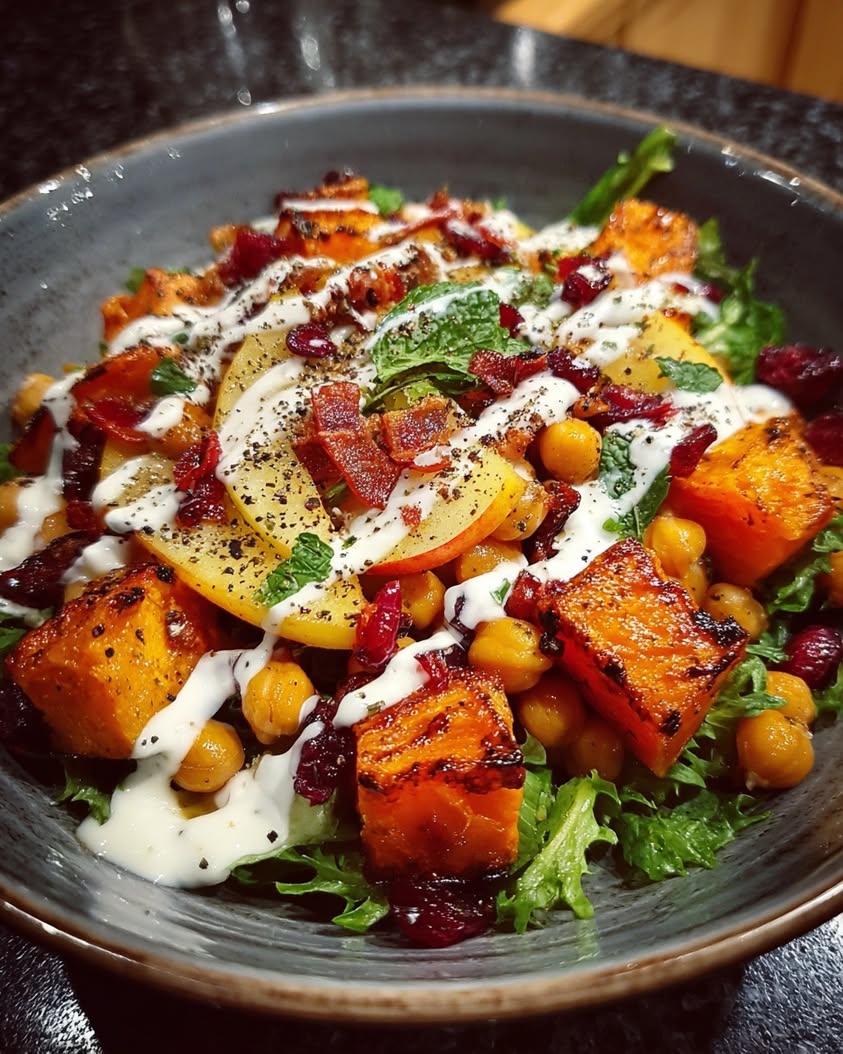
Pear, Sweet Potato, Apple, Chickpea & Cranberry Christmas Salad with Mint Yogurt Dressing: A Festive Feast for the Senses
Welcome the holiday season with a vibrant and nourishing centerpiece that redefines festive dining. This Festive Christmas Salad with Pear, Sweet Potato, and Mint Yogurt Dressing is a symphony of winter’s best produce, combining roasted sweetness, fresh crunch, and creamy tang in every single bite. Moreover, it brings a stunning burst of color to your holiday table, effortlessly balancing indulgence with wholesome ingredients. Consequently, this dish is not just a side salad; it’s a celebration of flavor and texture designed to impress your guests and delight your palate.
Imagine tender cubes of sweet potato, caramelized and warm, nestled against crisp slices of juicy pear and tart apple. Furthermore, protein-packed chickpeas add a satisfying heartiness, while vibrant dried cranberries contribute little bursts of festive cheer. Ultimately, the entire creation is brought together with a brilliantly green and refreshing mint yogurt dressing that cuts through the richness with its cool, herbal notes. This Festive Christmas Salad with Pear, Sweet Potato, and Mint Yogurt Dressing is the perfect answer to heavy holiday meals, offering a light yet substantial option that everyone will love.
Creating this holiday masterpiece is surprisingly straightforward. Essentially, you will roast the sweet potatoes and chickpeas to golden perfection, which fills your kitchen with an irresistible aroma. Meanwhile, you can whisk together the simple, no-cook dressing and prepare the fresh fruits. Finally, a quick assembly transforms these components into a visually spectacular dish. Whether you serve it as a standout side or a satisfying vegetarian main, this salad guarantees to become a cherished new tradition in your Christmas feast repertoire.
Quick Recipe Highlights
- Flavor Profile: This Festive Christmas Salad with Pear, Sweet Potato, and Mint Yogurt Dressing delivers a masterful balance. You experience the natural sweetness of roasted root vegetables and ripe fruit, contrasted by the tangy creaminess of the dressing and the sharp pop of dried cranberries.
- Texture: Every forkful is a textural adventure. Expect the soft, caramelized bite of sweet potato, the firm crunch of fresh pear and apple, the creamy give of chickpeas, and the delightful chew of cranberries.
- Aroma: The roasting process releases deep, sweet, and earthy notes from the sweet potatoes and chickpeas. Subsequently, the fresh mint in the dressing adds a bright, cooling herbal scent that makes the salad incredibly inviting.
- Visual Appeal: This salad is a Christmas color palette on a platter. It features vibrant orange sweet potatoes, green and red apple and pear skin, white chickpea crescents, and ruby-red cranberries, all drizzled with a pale green dressing.
- Skill Level Needed: This is a beginner-friendly recipe. It requires basic skills like chopping, roasting, and whisking. Therefore, even novice cooks can achieve spectacular results with minimal stress.
- Special Equipment: You only need standard kitchen tools: a good baking sheet, a sharp knife, a cutting board, and a mixing bowl. A blender or food processor can make the dressing extra smooth, but a vigorous whisk works perfectly.
Recipe Overview
- Difficulty Level: We classify this Festive Christmas Salad with Pear, Sweet Potato, and Mint Yogurt Dressing as “Easy.” The steps are sequential and simple: chop, roast, whisk, and toss. There is no complex technique or precise timing required beyond monitoring the oven. Essentially, it’s a very forgiving recipe perfect for busy holiday cooks.
- Category: This versatile dish fits multiple categories beautifully. It shines as a spectacular holiday side dish, a hearty vegetarian main course, or a vibrant potluck contribution. Additionally, it works wonderfully as a make-ahead lunch for the busy days between Christmas and New Year’s.
- Cuisine: While not tied to one specific tradition, this salad draws inspiration from modern American holiday cooking and Middle Eastern flavors via the chickpeas and yogurt dressing. It’s a fusion dish that celebrates global, plant-forward eating with a festive twist.
- Cost: This recipe is incredibly cost-effective, especially when you consider it serves six generously. Sweet potatoes, apples, and carrots are affordable winter staples. Canned chickpeas and dried cranberries are pantry heroes. Ultimately, you create an impressive, restaurant-quality dish for a fraction of the price.
- Season: This is the quintessential winter and holiday season recipe. It utilizes produce that is at its peak during the colder months. The warm, roasted elements are comforting, while the fresh fruit adds a necessary brightness that contrasts with heavier holiday fare.
- Occasion: Obviously, it’s perfect for Christmas Day dinner, Christmas Eve supper, or a holiday brunch. Furthermore, it’s an excellent choice for Friendsgiving, office potlucks, or any winter gathering where you want to offer a colorful, healthy option.
Why You’ll Love This Recipe
First and foremost, the taste and texture combination is genuinely unforgettable. This Festive Christmas Salad with Pear, Sweet Potato, and Mint Yogurt Dressing offers a playful dance on your tongue. You get the warm, earthy sweetness from the perfectly roasted vegetables, immediately followed by the juicy, crisp snap of fresh pear. Then, the creamy, protein-rich chickpeas and the tangy-sweet cranberries create layers of flavor that keep you coming back for more. The mint yogurt dressing is the unifying star, adding a cool, herbal freshness that prevents the salad from feeling too heavy or sweet. It’s a complex flavor profile that feels both indulgent and clean.
From a convenience standpoint, this recipe is a holiday host’s dream. You can prepare nearly every component ahead of time. Roast the sweet potatoes and chickpeas a day in advance and store them in the fridge. Likewise, whip up the mint yogurt dressing and keep it in a sealed container. When you’re ready to serve, simply slice the fresh fruit, toss everything together, and drizzle. This make-ahead strategy transforms a seemingly elaborate salad into a stress-free, last-minute assembly job, freeing you up to focus on the turkey or ham. It’s practical elegance at its best.
Nutritionally, this dish is a powerhouse. It’s packed with fiber from the chickpeas, sweet potatoes, and fresh fruit, which aids digestion—a welcome benefit during a season of rich foods. The chickpeas and Greek yogurt provide a solid dose of plant-based and dairy-based protein, helping to keep you full and satisfied. Additionally, sweet potatoes are loaded with Vitamin A, while the fresh fruits offer Vitamin C. You’re serving a side dish that actively contributes to your guests’ well-being, making it easy to enjoy the holidays without completely abandoning healthy habits.
For entertaining, this Festive Christmas Salad with Pear, Sweet Potato, and Mint Yogurt Dressing has immense social value. Its stunning visual appeal is an instant conversation starter. It caters beautifully to diverse dietary needs, being vegetarian and easily adaptable to vegan and gluten-free requirements. Serving a show-stopping, health-conscious dish makes all your guests feel considered and cared for. It shows thoughtfulness and culinary creativity, elevating your status as a host who provides both beauty and substance.
Finally, its cost-effectiveness and accessibility cannot be overstated. You don’t need expensive, out-of-season ingredients or specialty store runs. The components are humble, readily available at any grocery store, and affordable. This means you can create a luxurious-feeling holiday centerpiece without blowing your food budget. Consequently, you can allocate funds to other parts of your feast or simply enjoy the savings. It’s a recipe that delivers maximum impact for minimal investment, which is always a winning formula.
Historical Background and Cultural Significance
The concept of a hearty winter salad is ancient, but the modern iteration we enjoy today is a relatively recent development. Historically, salads in winter were limited to hardy, stored root vegetables and preserved fruits. The idea of combining roasted vegetables with fresh fruit and a creamy yogurt dressing is a fusion of several culinary traditions. It reflects a 21st-century approach to cooking: globally inspired, health-conscious, and visually driven. This Festive Christmas Salad with Pear, Sweet Potato, and Mint Yogurt Dressing is a product of our desire for meals that are as nourishing as they are beautiful, especially during celebratory times.
Culturally, salads have often played a secondary role in holiday feasts, particularly Christmas, which is traditionally dominated by roasted meats and decadent sides. However, a significant shift has occurred in recent decades. As dining becomes more vegetable-forward and dietary preferences diversify, the demand for substantial, celebratory plant-based dishes has soared. This salad answers that call. It carries the cultural significance of modern holiday inclusivity, ensuring that the festive table has a vibrant, satisfying option for everyone, regardless of how they choose to eat.
The evolution of this specific recipe follows the trend of “composed” or “grain bowl” style salads. Chefs began moving away from simple leafy greens, instead building salads with a base of roasted vegetables, grains, or legumes and topping them with contrasting textures and bold dressings. The addition of seasonal fruit like pears and apples for sweetness and crunch became a hallmark of autumn and winter menus. The mint yogurt dressing borrows from Mediterranean and Middle Eastern cuisines, where yogurt-based sauces are ubiquitous. This salad is a delicious melting pot of these contemporary culinary movements.
Regionally, you can find countless variations. In the American South, a similar salad might include pecans and a bourbon-spiked dressing. In Europe, it could feature roasted squash and a hazelnut oil vinaigrette. The use of chickpeas points to Mediterranean influences, while the sweet potato is a staple of North American harvests. The cranberry is inextricably linked to North American Thanksgiving and Christmas. Therefore, this Festive Christmas Salad with Pear, Sweet Potato, and Mint Yogurt Dressing is a beautiful representation of a New World holiday table, blending native ingredients with global techniques.
Ingredient Deep Dive
Sweet Potato: This vibrant root vegetable is native to the Americas and was a staple for indigenous peoples long before European colonization. Nutritionally, it’s a superstar, exceptionally high in beta-carotene (which converts to Vitamin A), fiber, and Vitamin C. When selecting sweet potatoes, look for firm specimens with smooth, unbruised skin. Avoid any with soft spots or signs of sprouting. Store them in a cool, dark, well-ventilated place—not the refrigerator, as cold temperatures can alter their texture and flavor. For substitutions, you can use butternut squash, pumpkin, or even carrots for a similar sweet, roasted quality.
Pear: Pears have been cultivated for thousands of years, originating in Asia and Europe before spreading worldwide. They symbolize immortality in Chinese culture and were sacred to Greek and Roman goddesses. They are a good source of dietary fiber, Vitamin C, and copper. For this salad, choose firm but ripe pears like Anjou or Bosc, which hold their shape well when sliced. Test for ripeness by gently pressing near the stem; it should yield slightly. Store ripe pears in the refrigerator to slow further ripening. If pears are unavailable, a firm, sweet apple like Fuji is the best substitute.
Apple: Apples hold a deep place in mythology and history, from the Garden of Eden to Johnny Appleseed. They are rich in fiber and Vitamin C, and their skin contains beneficial antioxidants. For optimal texture and a tart contrast, use a crisp, slightly tart variety like Granny Smith or Honeycrisp. These apples provide a necessary acidic bite that balances the sweetness in the salad. Store apples in the refrigerator’s crisper drawer. To prevent browning after slicing, you can toss them with a little lemon juice, though it’s not strictly necessary if you assemble the salad just before serving.
Chickpeas (Garbanzo Beans): With a history dating back over 7,000 years in the Middle East, chickpeas are one of the world’s oldest cultivated legumes. They are a phenomenal source of plant-based protein, fiber, iron, and folate. For this recipe, canned chickpeas are perfectly convenient—just be sure to rinse and drain them thoroughly to remove the starchy liquid and reduce sodium. Drying them well with a towel before roasting is the key to getting them crispy. If you prefer, you can cook dried chickpeas from scratch. For a substitution, white beans like cannellini would work, though they have a softer texture.
Dried Cranberries: The cranberry is one of North America’s few native fruits. Native Americans used them for food, dye, and medicine long before the Pilgrims’ first Thanksgiving. Dried cranberries add concentrated sweetness, chewy texture, and a festive red color. While they contain sugars, they also offer antioxidants and a small amount of fiber. Look for brands with no added sugar or juice-sweetened varieties if you prefer. As an alternative, dried cherries or chopped dried apricots would provide a similar sweet-tart chew. For a fresh option, pomegranate arils are a brilliant, juicy substitute.
Greek Yogurt & Mint (for the Dressing): Greek yogurt, strained to remove whey, has its roots in Eastern Mediterranean and Middle Eastern cuisines. It provides a thick, protein-rich, and tangy base for the dressing. Mint has been used for millennia for both culinary and medicinal purposes, prized for its refreshing aroma and digestive properties. Together, they create a sauce that is both cooling and rich. Use full-fat Greek yogurt for the creamiest texture and best flavor balance. Fresh mint is non-negotiable for its vibrant color and taste. If you must substitute the yogurt, a dairy-free coconut or almond yogurt can work, though the flavor profile will shift.
Common Mistakes to Avoid
- Overcrowding the Baking Sheet: When roasting the sweet potatoes and chickpeas, spreading them in a single, uncrowded layer is crucial. If the pan is too full, the vegetables will steam instead of roast, resulting in soggy, rather than caramelized, results. Always use two sheets if necessary.
- Not Drying the Chickpeas: Failing to pat the canned chickpeas completely dry is a common error. Excess moisture prevents them from crisping up in the oven. Take the extra minute to dry them thoroughly with a clean kitchen towel or paper towels.
- Cutting Vegetables Inconsistently: Chopping the sweet potatoes into uneven pieces means some will be burnt while others are undercooked. Aim for uniform ¾-inch cubes to ensure even roasting and a consistent texture throughout the salad.
- Adding Fresh Fruit Too Early: Slicing the pear and apple long before assembly will cause them to oxidize and turn brown. To maintain their crisp, fresh texture and bright color, prepare them just before you are ready to toss and serve the salad.
- Using Dried Mint in the Dressing: The fresh, bright flavor of the mint yogurt dressing depends entirely on using fresh mint leaves. Dried mint will taste dusty and lack the vibrant green color and aromatic punch that makes this dressing special.
- Neglecting to Season the Roasting Vegetables: Sweet potatoes and chickpeas need seasoning before they go into the oven. A simple toss with olive oil, salt, and pepper is essential. Otherwise, they will taste bland and flat, no matter how well they are roasted.
- Making the Dressing Too Thick: If your Greek yogurt is very thick, the dressing can become gloppy. Always thin it with a tablespoon or two of water, milk, or lemon juice until it reaches a drizzle-able consistency that coats the salad ingredients lightly.
- Over-mixing the Final Salad: Gently fold the components together to maintain their distinct shapes and textures. Vigorous tossing can break down the soft sweet potatoes and crush the fresh fruit, leading to a mushy salad.
Essential Techniques
Roasting for Caramelization: Roasting is the technique that transforms humble sweet potatoes and chickpeas into deeply flavorful, textured components. The high, dry heat of the oven concentrates their natural sugars, creating delicious browned, caramelized edges. To master this, ensure your oven is fully preheated and use a rimmed baking sheet lined with parchment paper for easy cleanup. The key visual cue for success is golden-brown spots on the sweet potatoes and a slight crispness on the chickpeas. Avoid the pitfall of stirring too frequently; let them sit undisturbed to develop that perfect crust.
Creating an Emulsified Dressing: While this mint yogurt dressing is simpler than a vinaigrette, the principle of creating a smooth, unified sauce is similar. The goal is to fully incorporate the oil, lemon juice, and yogurt with the fresh herbs. Technique matters: finely chop the mint to release its oils, then whisk everything together vigorously until no streaks of oil or yogurt remain. For an ultra-smooth, vibrant green dressing, you can blend all ingredients in a small food processor. The pitfall to avoid is adding too much liquid at once, which can make the dressing runny. Add water or lemon juice gradually until you achieve the desired consistency.
Composing a Salad for Visual Appeal: This is a “composed” salad, meaning the ingredients are often arranged with intention rather than tossed haphazardly. The technique involves considering color, height, and distribution. After tossing gently, you might artfully arrange a few pear slices on top or sprinkle extra cranberries and mint in a deliberate pattern. This elevates the dish from everyday to extraordinary. The key is to work quickly with cooled components and fresh fruit to keep everything looking pristine. The common mistake is over-handling, which can make the salad look messy instead of elegant.
Pro Tips for Perfect Festive Christmas Salad
First, roast your sweet potatoes and chickpeas on separate halves of the same baking sheet. This allows you to remove the chickpeas if they crisp up faster than the potatoes, preventing them from burning.
For an extra flavor dimension, toss the chickpeas with a pinch of smoked paprika or cumin before roasting. This adds a warm, subtle spice that complements the sweet elements beautifully.
To prevent the fresh pear and apple from browning, you can toss the slices in a small bowl with a teaspoon of lemon juice from the dressing recipe. This adds a hint of extra acidity without making them taste overly lemony.
If your mint yogurt dressing seems too thick after chilling, simply whisk in a teaspoon of warm water at a time until it flows nicely off the spoon. The consistency should be similar to a runny honey.
For the ultimate texture contrast, add a handful of toasted nuts or seeds just before serving. Toasted pecans, walnuts, or pumpkin seeds add a fantastic crunch and nutty flavor.
Let the roasted sweet potatoes and chickpeas cool completely before adding them to the fresh ingredients. Adding them warm can wilt the delicate pear and apple slices.
Use a microplane to zest the lemon directly into the dressing bowl before juicing it. The fragrant zest adds an incredible layer of citrus aroma that you can’t get from juice alone.
When chopping the mint for the dressing, stack the leaves, roll them tightly into a cigar shape, and then slice thinly crosswise. This “chiffonade” technique creates beautiful, fine ribbons that distribute evenly.
Variations and Adaptations
For regional variations, consider the ingredients local to your area. In the Pacific Northwest, you might add roasted hazelnuts and use blackberries instead of cranberries. A Southern twist could include candied pecans and a spoonful of sorghum syrup in the dressing. In the Mediterranean region, you might swap the sweet potato for roasted eggplant and add a sprinkle of sumac to the yogurt.
Seasonal adaptations are easy. In late fall, use roasted cubes of butternut squash and fresh pomegranate arils. For a spring version, switch to roasted asparagus and strawberries, using a basil yogurt dressing instead of mint. The template of roasted vegetable + fresh fruit + creamy herb dressing is endlessly versatile across the calendar.
Dietary modifications are straightforward. For a vegan Festive Christmas Salad with Pear, Sweet Potato, and Mint Yogurt Dressing, simply use a plain, unsweetened plant-based yogurt. To make it gluten-free, ensure all packaged ingredients like dried cranberries are certified GF—this recipe is naturally gluten-free otherwise. For a nut-free version, skip added nuts and use sunflower seeds for crunch.
Flavor variations can personalize the dish. Add crumbled feta or goat cheese for a salty, creamy element. Incorporate a tablespoon of maple syrup or honey into the dressing for more sweetness. A teaspoon of Dijon mustard in the dressing adds a pleasant sharpness. For an herbaceous twist, use half mint and half fresh dill or parsley.
Texture modifications can cater to different preferences. If you prefer a softer salad, you can roast the apples alongside the sweet potatoes. For maximum crunch, add raw, shaved Brussels sprouts or fennel bulb to the mix. Swapping the chickpeas for roasted, cubed tofu or cooked farro changes the protein texture entirely.
Presentation alternatives offer creative freedom. Instead of one large platter, serve individual portions in wide, shallow bowls or on lettuce leaves. You can layer the ingredients in a clear glass trifle dish for a stunning vertical presentation. For a more rustic feel, serve it straight from the mixing bowl with the dressing on the side.
Serving and Presentation Guide
Plating techniques make all the difference. For a family-style presentation, choose a large, wide platter or a shallow serving bowl with a neutral color to let the salad’s vibrant hues pop. Mound the salad gently in the center, allowing ingredients to spill over naturally for an abundant, welcoming look. Alternatively, use a large spoon and fork to lift and twist portions onto individual plates, creating a little height and structure on each serving.
Garnishing is the final, elegant touch. A few whole mint leaves scattered over the top add instant freshness. A final drizzle of the mint yogurt dressing in a zig-zag pattern looks professional. A light dusting of freshly cracked black pepper or a tiny sprinkle of flaky sea salt on top enhances both flavor and visual appeal. For a festive touch, edible flowers or a few extra whole cranberries are beautiful.
Traditional accompaniments for this salad include the classic holiday proteins: roasted turkey, glazed ham, or prime rib. It also pairs wonderfully with other vegetarian mains like a mushroom Wellington or a hearty lentil loaf. For a lighter holiday spread, it can stand confidently next to a quiche or a savory tart.
Modern serving suggestions might feature this salad as the main event. Top it with grilled halloumi cheese, seared scallops, or shredded roast chicken to transform it into a complete meal. Serve it alongside a warm, crusty bread and a glass of wine for a sophisticated lunch or simple dinner during the busy holiday week.
Temperature considerations are key. This salad is best served at room temperature. The roasted components should be cooled, and the fresh fruit should not be ice-cold from the fridge, as this can mute the flavors. Assemble it about 15-20 minutes before serving to allow everything to come together without the ingredients getting soggy.
Portion control tips are helpful for planning. This recipe yields about six generous side-dish servings or four ample main-course servings. If serving as part of a large buffet with many other dishes, it can stretch to eight smaller portions. Remember that the salad is satisfying but not overly heavy, so people often enjoy larger helpings.
Wine and Beverage Pairing
Wine pairings for this salad should complement its sweet, earthy, and fresh characteristics. A dry Riesling is a fantastic choice, as its bright acidity and slight stone-fruit notes mirror the pear and apple while cutting through the creamy dressing. Alternatively, a Pinot Noir with its light body and red fruit flavors (like cranberry) can stand up to the roasted vegetables without overpowering the dish. For a sparkling option, a dry Prosecco or Cava adds celebratory flair and cleanses the palate between bites.
Non-alcoholic alternatives can be just as thoughtful. A sparkling apple cider served in a flute feels festive and echoes the fruit in the salad. For a herbal pairing, a chilled mint or ginger tea complements the dressing’s flavors beautifully. A lemonade spritzer (sparkling water mixed with lemonade) provides the necessary acidity to balance the salad’s sweetness.
Coffee and tea pairings work well if serving this salad for a holiday brunch. A medium-roast coffee with low acidity won’t clash with the food. A pot of Earl Grey tea, with its bergamot citrus notes, is a lovely, aromatic companion. Avoid overly bitter or dark roasts that might overwhelm the salad’s delicate balance.
Temperature considerations for beverages are standard: white wines, sparkling wines, and non-alcoholic spritzers should be well-chilled. Red wines should be served slightly below room temperature. Non-alcoholic hot teas should be freshly brewed and served hot. The goal is to have the beverage temperature provide a pleasant contrast or complement to the room-temperature salad.
Serving suggestions include offering a choice. During a holiday meal, set out both a white and a red wine option so guests can choose based on their preference or what else they are eating. For non-alcoholic drinks, consider a self-serve station with a carafe of sparkling cider and a pitcher of infused water with cranberries and orange slices.
Storage and Shelf Life
Storage methods for this salad require a bit of strategy due to the fresh components. The undressed salad (with cooled roasted vegetables and chickpeas stored separately from the fresh sliced fruit) can be kept in airtight containers in the refrigerator for up to 2 days. The mint yogurt dressing should be stored in its own sealed container for up to 4 days. This separation is crucial to prevent sogginess.
Temperature requirements are simple: always refrigerate all components. The dressing contains dairy and must be kept cold. The roasted vegetables and chickpeas are safe at room temperature for serving but should be refrigerated promptly after cooling if not used immediately. Do not leave the assembled salad out for more than 2 hours.
Container recommendations are key for freshness. Use glass or BPA-free plastic containers with tight-fitting lids. For the dressing, a small mason jar is perfect because you can shake it to recombine before using. For the dry components, shallow containers are better than deep ones, as they allow for more even cooling and prevent condensation from making the bottom layer soggy.
Signs of spoilage are easy to spot. If the yogurt dressing separates irreversibly, develops an off smell, or shows any mold, discard it. The roasted vegetables or chickpeas will become unpleasantly soft or slimy if they’ve gone bad. The fresh fruit will brown and become mushy. When in doubt, trust your senses and err on the side of caution.
Reheating instructions apply only to the roasted components if you wish to serve them warm. Spread the sweet potatoes and chickpeas on a baking sheet and warm in a 300°F oven for about 10 minutes, just until heated through. Do not microwave, as this can make the chickpeas rubbery and the potatoes soggy. Always reheat separately before assembling with fresh, cold ingredients.
Freezing guidelines are not recommended for the complete salad or the fresh ingredients. However, you can freeze the plain roasted sweet potato cubes on a parchment-lined tray before transferring to a freezer bag. They’ll keep for 2-3 months. Thaw in the refrigerator and re-crisp in the oven before use. The dressing and fresh fruit should never be frozen.
Make Ahead Strategies
Your prep timeline can span up to two days before serving. Day 1: Roast the sweet potatoes and chickpeas. Let them cool completely, then store them together in an airtight container in the refrigerator. Also, make the mint yogurt dressing and store it in a jar in the fridge. Day 2 (or day of): Up to 2 hours before serving, slice the pear and apple. You can toss them with a tiny bit of lemon juice to prevent browning and store them in a container. Keep all components separate until just before you are ready to serve.
Storage between steps is all about maintaining texture and preventing cross-contamination of flavors and moisture. Use separate containers for roasted items, fresh fruit, and dressing. Label them if needed. This organized approach makes final assembly incredibly fast and stress-free, especially when you have other dishes demanding your attention.
Quality impact assessment is positive when you make components ahead. The flavors of the roasted vegetables and the dressing often improve as they meld overnight. The key is protecting the crisp texture of the fresh fruit and the integrity of the chickpeas by keeping them dry and separate. The overall quality of a make-ahead salad, when assembled correctly, is just as high as one made completely from scratch at the last minute.
Assembly tips for make-ahead success are simple. When ready to serve, take all components from the fridge. Give the dressing a good shake or whisk. In your large serving bowl, combine the cooled roasted mix and the fresh fruit. Give a very gentle toss. Drizzle with about half the dressing and toss again lightly. Add more dressing as needed, reserving a little for a final drizzle on top after plating. This prevents over-dressing and keeps the salad looking fresh.
Reheating guidelines for the roasted components, if you prefer them warm, are mentioned above. However, for the best flavor balance in this particular Festive Christmas Salad with Pear, Sweet Potato, and Mint Yogurt Dressing, room temperature or slightly cool components are ideal. They allow the individual flavors to shine without the heat wilting the delicate fresh fruit.
Fresh element additions are your last-minute secret weapon. Even if you pre-slice the pear and apple, adding a final handful of whole fresh herbs (like mint or parsley) or a quick squeeze of lemon juice right before serving wakes up all the pre-made flavors and adds a burst of freshness that says “just made.”
Scaling Instructions
Halving the recipe is straightforward for smaller gatherings. Simply divide all ingredient quantities by two. Use one standard baking sheet for the reduced amount of sweet potatoes and chickpeas—they’ll have plenty of room to roast properly. The dressing can be halved easily, but consider making the full batch if you enjoy it; it’s delicious as a dip or on other salads. The prep and cook times remain roughly the same, though the roasting time might be slightly less due to the smaller volume, so check for doneness a few minutes early.
Doubling or tripling the recipe for a large crowd requires some adjustments. You will need to roast the vegetables in multiple batches or on multiple oven racks with rotated baking sheets to ensure even cooking. Do not pile the ingredients higher on a single sheet. For the dressing, simply multiply the ingredients in a large bowl or blend in batches. When assembling a large quantity, mix in a very large bowl or divide the mixing into two batches to ensure even distribution of dressing without crushing the ingredients.
Equipment adjustments are necessary when scaling. For a double batch, you’ll need at least two large baking sheets. For a triple batch, three sheets or roasting in consecutive batches is a must. Ensure you have a mixing bowl large enough to toss the final salad—a very large stainless steel bowl or even a clean, food-safe plastic tub works well. For dressing, a blender or food processor becomes very helpful for large quantities.
Timing modifications are minimal for scaling up. The active prep time (chopping) will increase linearly. The roasting time may need a slight increase (5-10 minutes) if the oven is very full, as this can lower the ambient temperature. It’s always better to check for doneness using visual cues (golden brown edges) rather than strictly adhering to the original timer when working with larger volumes.
Storage considerations become more important with larger batches. You will need multiple airtight containers for the separate components. If making a double or triple batch for a potluck, consider transporting the components separately and assembling on-site to guarantee the best texture. This also allows you to set out a beautiful display as you build the salad in front of your guests.
Nutritional Deep Dive
The macro breakdown of this Festive Christmas Salad with Pear, Sweet Potato, and Mint Yogurt Dressing is well-balanced. A serving provides a healthy dose of complex carbohydrates from the sweet potatoes and fruit, offering sustained energy. The chickpeas and Greek yogurt contribute a significant amount of plant-based and dairy-based protein, which is crucial for satiety and muscle maintenance. The fats come primarily from the olive oil in the dressing and roasting process, which are heart-healthy monounsaturated fats. This combination makes the salad both satisfying and nutritionally complete.
Micronutrient analysis reveals a wealth of vitamins and minerals. Sweet potatoes are famously rich in beta-carotene (Vitamin A), essential for vision and immune function. The fresh pear and apple provide Vitamin C and various antioxidants. Chickpeas are a good source of iron, magnesium, and folate. The Greek yogurt adds calcium and probiotics for gut health. The mint and lemon juice contribute smaller amounts of Vitamin K and additional antioxidants. Together, they create a micronutrient powerhouse.
Health benefits extend across several bodily systems. The high fiber content from all the vegetables, legumes, and fruit promotes digestive health and helps regulate blood sugar levels. The antioxidants combat oxidative stress and inflammation. The healthy fats support brain function and cardiovascular health. The protein aids in tissue repair and keeps you feeling full. Consuming this salad is a proactive choice for supporting overall wellness during a season often associated with overindulgence.
Dietary considerations are largely positive. The salad is naturally vegetarian and can be easily made vegan. It is inherently gluten-free, provided all packaged ingredients are verified. It is nut-free in its base form. For those on specific plans like Weight Watchers, the ingredients are mostly zero-point or low-point foods (depending on the plan), making it an excellent choice. However, those on strict low-carb or keto diets would need to significantly modify the recipe due to the carbohydrate content of the sweet potatoes and fruit.
Portion analysis shows that a serving is volumous and filling without being excessively high in calories. The bulk comes from high-fiber, water-rich ingredients, which is the ideal scenario for healthy eating. It’s a dish where you can enjoy a large, satisfying portion that aligns with health goals, unlike many traditional holiday sides that are calorie-dense in small amounts.

I’m Billy, a classically trained culinary school graduate from The Culinary Institute of America with over 12 years in the restaurant industry and over 19 years of cooking experience.