
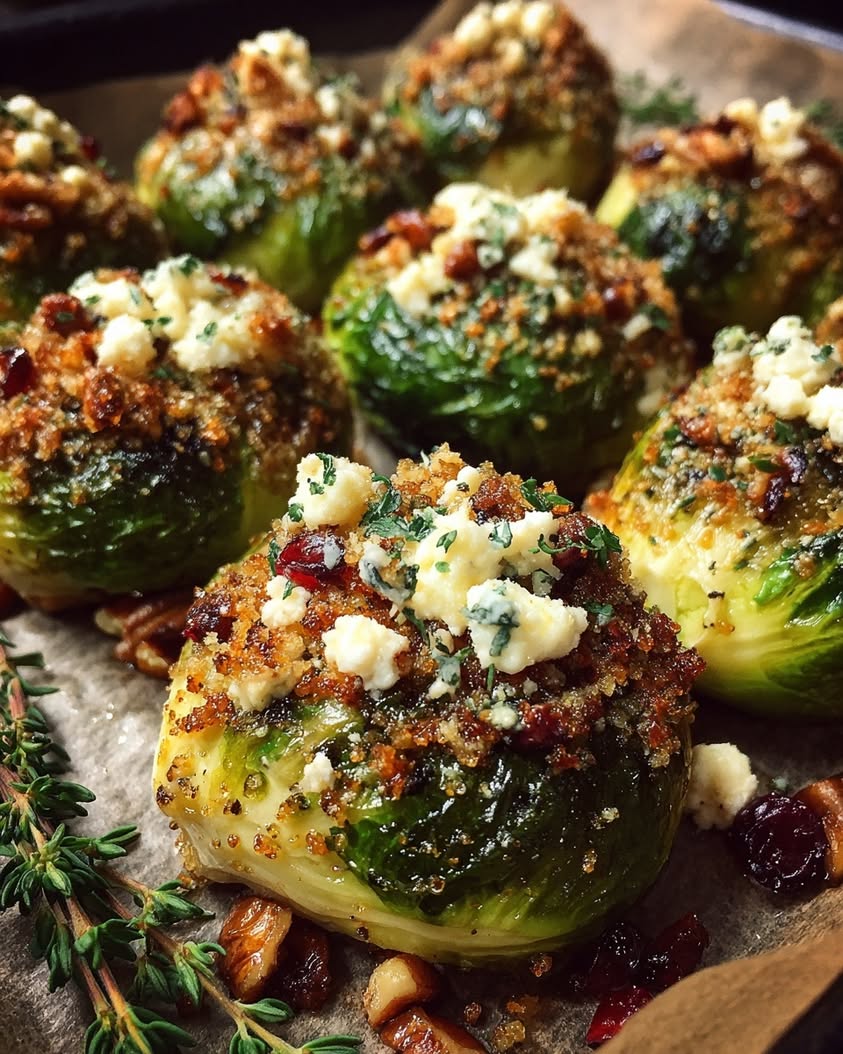
Pecan-Crusted Crispy Brussels Sprouts with Feta, Walnuts & Cranberry-Honey Glaze: The Ultimate Holiday Side Dish
Forget everything you thought you knew about Brussels sprouts. This recipe for Pecan-Crusted Crispy Brussels Sprouts with Feta, Walnuts & Cranberry-Honey Glaze transforms the humble green vegetable into a show-stopping masterpiece. It is the perfect side dish for your holiday table or a special weeknight dinner. The combination of textures and flavors is nothing short of spectacular. Imagine tender-crisp sprouts coated in a savory, nutty crust, then drizzled with a sweet-tart glaze and finished with creamy feta. Each bite delivers a symphony of taste that will have everyone asking for seconds.
This dish is a celebration of contrasts. The deep, savory notes of the roasted sprouts and pecans perfectly balance the bright pop of the cranberry glaze. Meanwhile, the salty feta and crunchy walnuts add layers of complexity. Consequently, this recipe elevates a simple vegetable into a gourmet experience. It is a fantastic way to introduce skeptics to the joys of Brussels sprouts. Ultimately, this recipe proves that vegetables can be the star of the meal with just a little creativity and the right ingredients.
Quick Recipe Highlights
- Flavor Profile: This dish masterfully combines savory, sweet, salty, and tart notes. The nutty, earthy flavor of the pecan-crusted Brussels sprouts pairs beautifully with the tangy-sweet cranberry-honey glaze. Finally, the salty feta brings everything together for a perfectly balanced bite.
- Texture: You get a delightful crunch from the pecan crust and toasted walnuts against the tender interior of the roasted sprouts. The creamy crumbles of feta add a soft, luxurious mouthfeel. This contrast makes every forkful exciting and satisfying.
- Aroma: As the sprouts roast, your kitchen fills with the warm, toasty scent of pecans and caramelizing vegetables. The glaze adds a festive aroma of honey and simmering cranberries. It is an irresistible fragrance that promises a delicious meal.
- Visual Appeal: The dish is a feast for the eyes with its deep golden-brown sprouts, vibrant red glaze, white feta crumbles, and toasted walnuts. It looks elegant and rustic at the same time. This makes it perfect for holiday plating and social media photos.
- Skill Level Needed: This is an accessible recipe for most home cooks. It involves straightforward techniques like trimming, roasting, and making a simple stovetop glaze. Therefore, even beginners can achieve impressive results with careful attention to the roasting time.
- Special Equipment: You only need basic kitchen tools: a baking sheet, parchment paper, a mixing bowl, and a small saucepan. A good chef’s knife for prepping the sprouts is helpful. No fancy gadgets are required, making this recipe very approachable.
Recipe Overview
- Difficulty Level: We rate this recipe as “Easy” because it breaks down into simple, manageable steps. The most complex technique is achieving a crispy roast on the sprouts, which is largely hands-off. With clear instructions, anyone can create this stunning dish successfully.
- Category: This versatile dish fits multiple categories beautifully. It is a standout vegetable side dish, a potential appetizer when served with toothpicks, or even a light main course for a vegetarian meal. Its flexibility is one of its greatest strengths.
- Cuisine: While not tied to one specific tradition, the recipe draws inspiration from modern American holiday cooking and Mediterranean flavors. The use of feta and walnuts nods to Greek cuisine, while the pecan crust is a Southern American touch. It is a delicious fusion.
- Cost: This is a moderately priced recipe, especially if you make it during the fall and winter when Brussels sprouts are in season. Pecans and walnuts are the priciest components, but they provide immense flavor payoff. You can create a gourmet side dish for about the cost of a restaurant appetizer.
- Season: This recipe shines brightest in the autumn and winter months. Brussels sprouts are at their peak sweetness after a frost, and the warm, festive flavors complement holiday menus perfectly. However, it is delicious year-round thanks to the widespread availability of sprouts.
- Occasion: It is ideal for Thanksgiving, Christmas, or any festive gathering where you want to impress. It also works for a special date night at home or a potluck where you want your dish to stand out. It is truly a special-occasion vegetable recipe.
Why You’ll Love This Recipe
First and foremost, the taste and texture are utterly irresistible. The magic of these Pecan-Crusted Crispy Brussels Sprouts lies in the contrast. You experience a satisfying crunch from the nut coating, followed by the tender, almost sweet heart of the sprout. Then, the cranberry-honey glaze introduces a burst of fruity tartness that cuts through the richness. Finally, the salty feta and earthy walnuts bring everything back into balance. Every single bite is a complex and delightful journey. This dish will convert even the most ardent Brussels sprouts skeptic at your table.
Furthermore, the preparation is surprisingly convenient. Despite its gourmet appearance, the recipe uses simple techniques. You can prepare the glaze while the sprouts roast, maximizing your time in the kitchen. Most of the cook time is hands-off, allowing you to focus on other parts of your meal. The ingredients are also easy to find at any well-stocked grocery store. Consequently, you can whip up an impressive dish without stress or special trips to a specialty market. It is elegance made simple.
From a nutritional standpoint, this dish is a powerhouse. Brussels sprouts are loaded with vitamins C and K, fiber, and antioxidants. Pecans and walnuts provide healthy fats, protein, and essential minerals. Using honey as a natural sweetener is a better choice than refined sugar. While the feta adds calcium and protein. Therefore, you are serving a side dish that is as nourishing as it is delicious. It is a fantastic way to enjoy vegetables in a form that feels indulgent but is fundamentally good for you.
For entertaining, this recipe offers incredible social value. It is a guaranteed conversation starter. Guests will be intrigued by the beautiful presentation and unique flavor combination. It looks like you spent hours on a complicated recipe, yet the process is straightforward. This allows you to be a relaxed host, confident that your side dish will be a hit. Moreover, it pairs wonderfully with a wide range of main courses, from roast turkey to grilled salmon. It is the ultimate versatile crowd-pleaser.
Finally, it is cost-effective and accessible. Creating a restaurant-quality dish at home saves significant money. You control the quality of every ingredient, from the freshness of the sprouts to the type of honey. Additionally, the recipe is adaptable; you can use maple syrup instead of honey or swap almonds for walnuts based on what you have. This flexibility makes it a practical choice for any home cook wanting to elevate their meals without breaking the bank. It is luxury dining on a home cook’s budget.
Historical Background and Cultural Significance
The story of the Brussels sprout begins in ancient Rome, but the vegetable as we know it was likely cultivated in the 13th century near Brussels, Belgium, hence its name. For centuries, it was a staple in Northern European winter diets due to its hardiness. However, its reputation in America suffered for decades from overcooking, often resulting in a bitter, sulfurous flavor. The modern culinary renaissance of the Brussels sprout is a fascinating tale of transformation, largely credited to better cooking methods like roasting and the creative use of complementary flavors.
Culturally, the Brussels sprout has evolved from a simple, utilitarian vegetable to a gourmet ingredient. Its rise in popularity parallels the farm-to-table movement and a broader interest in hearty, nutrient-dense foods. Chefs began treating it with respect, highlighting its natural sweetness through caramelization. Today, it holds a place of honor on trendy restaurant menus and holiday tables alike. This recipe reflects that evolution, taking a historically maligned vegetable and adorning it with luxurious ingredients like pecans, honey, and feta, symbolizing its journey from peasant food to a celebrated dish.
The recipe itself is a beautiful example of modern fusion cuisine. The pecan crust is a nod to Southern American cooking, where pecans are a native crop and a staple in both sweet and savory dishes. The use of feta and walnuts connects to Mediterranean culinary traditions, known for their bold, simple flavors and healthful ingredients. The cranberry-honey glaze brings in a classic North American holiday element. This blending of traditions creates a dish that feels both familiar and excitingly new, representing how global food cultures inspire contemporary home cooking.
Regional variations on glazed or nut-crusted vegetables abound. In the Middle East, roasted vegetables might be finished with pomegranate molasses and nuts. In Italy, Brussels sprouts are often paired with pancetta and balsamic. This Pecan-Crusted Crispy Brussels Sprouts recipe sits comfortably within this global tradition of enhancing vegetables with fats, acids, and textures. It is a testament to the universal desire to make healthy food irresistibly delicious. By understanding this context, we appreciate the recipe not as a novelty, but as part of a rich, ongoing culinary conversation.
Ingredient Deep Dive
Brussels Sprouts: Select firm, bright green sprouts with tightly packed leaves; smaller sprouts are often sweeter and more tender. Avoid any with yellowing leaves or a strong odor. To prepare, trim the dry stem end and remove any loose outer leaves. For even cooking, halve them from stem to crown. Brussels sprouts are rich in vitamins C and K, fiber, and antioxidants like kaempferol, which has anti-inflammatory properties. Store them unwashed in a plastic bag in your refrigerator’s crisper drawer for up to a week.
Pecans: Native to North America, pecans are a cornerstone of Southern U.S. cuisine. They add a buttery, rich flavor and essential crunch to the crust. For the best taste, toast them lightly before chopping to deepen their nutty aroma. Pecans are an excellent source of healthy monounsaturated fats, manganese, and copper. Purchase them from a store with high turnover to ensure freshness, as their high fat content can lead to rancidity. Store extra pecans in an airtight container in the freezer to extend their shelf life for months.
Feta Cheese: Traditionally made from sheep’s or goat’s milk, feta originated in Greece and offers a tangy, salty punch that balances the sweet glaze. Its crumbly texture provides a lovely contrast. For this recipe, a block of feta in brine is superior to pre-crumbled varieties, which often contain anti-caking agents and can be drier. Feta is a good source of calcium and protein. If you need a dairy-free alternative, a firm, salty vegan cheese or even chopped, salted olives can provide a similar briny flavor profile.
Cranberries: These vibrant red berries are one of only three fruits native to North America. Their intense tartness is the perfect counterpoint to rich, savory dishes. When cooked with honey, they break down into a beautiful, glossy glaze. Cranberries are famed for their proanthocyanidins, which support urinary tract health. Use fresh or frozen cranberries without thawing. If fresh are out of season, you can substitute a high-quality cranberry sauce or jam, thinning it with a little water or citrus juice to a glaze consistency.
Honey: As one of humanity’s oldest sweeteners, honey adds a complex, floral sweetness that refined sugar cannot match. Its viscosity helps create a clingy, shiny glaze. The flavor of honey varies dramatically based on the flowers the bees visited; a wildflower or orange blossom honey works wonderfully here. Honey contains trace enzymes, minerals, and antioxidants. For a vegan version, maple syrup is an excellent substitute, though it will impart a distinct, warm flavor. Agave nectar is another neutral-tasting alternative.
Common Mistakes to Avoid
- Overcrowding the Pan: This is the number one reason sprouts steam instead of roast. Arrange them in a single layer with space between each piece. If necessary, use two baking sheets. Crowding creates moisture, which prevents the crispy pecan crust from forming and leads to soggy sprouts.
- Using Whole Cranberries in the Glaze Without Simmering: Cranberries need time to burst and release their pectin to thicken the glaze. Do not just warm the ingredients. You must simmer the mixture for several minutes until the berries pop and the liquid reduces to a syrupy consistency.
- Adding the Feta Before Baking: Feta will dry out, melt unevenly, or burn if added before or during roasting. Always add the cheese as a fresh garnish after the sprouts are out of the oven and plated. The residual heat will slightly soften it without ruining its texture.
- Neglecting to Toast the Nuts: While the pecans will toast somewhat on the sprouts, toasting them separately first maximizes their flavor. Simply place chopped pecans and walnuts in a dry skillet over medium heat for 3-5 minutes until fragrant. This step adds a deeper, richer nuttiness.
- Skipping the Preheating Step: Always preheat your oven fully. Putting sprouts into a lukewarm oven causes them to cook unevenly and lose moisture before browning begins. A hot oven (400°F is ideal) ensures immediate caramelization for a crispy exterior.
- Not Drying the Sprouts Thoroughly: After washing, pat the sprouts completely dry with a clean kitchen towel. Excess water will create steam, hindering the roasting process and making it difficult for the oil and pecan mixture to adhere properly to the vegetable’s surface.
- Using Old, Stale Nuts: Nuts contain oils that can turn rancid. Taste a pecan or walnut before using. If it tastes bitter or smells like old paint, discard them. Fresh nuts are sweet, buttery, and crucial for the recipe’s success.
- Forgetting to Season the Sprouts: The pecan mixture adds flavor, but the sprouts themselves need seasoning. Do not forget to toss them with salt and pepper before adding the oil and crust mixture. Seasoning in layers builds a more complex and balanced final flavor.
Essential Techniques
Roasting for Caramelization: Roasting at a high heat (400°F) is the most important technique here. It causes the natural sugars in the Brussels sprouts to caramelize, transforming their flavor from potentially bitter to sweet and nutty. The key is high, dry heat. Arrange the sprouts cut-side down on the hot baking sheet; this maximizes contact with the pan for better browning. The visual cue for success is deeply golden-brown, crispy edges and tender stems when pierced with a fork. Avoid steaming by ensuring your oven is fully preheated and the pan is not overcrowded.
Creating a Simple Fruit Glaze: A glaze adds shine and concentrated flavor. The technique involves simmering fruit (cranberries) with a sweetener (honey) and a liquid (water or juice) until the fruit breaks down and the mixture thickens. The pectin released from the cranberries naturally thickens the sauce. Stir frequently to prevent scorching. The glaze is ready when it coats the back of a spoon and leaves a clear trail when you run your finger through it. It will thicken further as it cools. If it becomes too thick, whisk in a teaspoon of warm water to loosen it.
Building a Nut Crust: This technique adds incredible texture and flavor. The goal is to get the nut mixture to adhere to the vegetable and become crispy. Tossing the halved sprouts in oil first helps the crumb mixture stick. Using finely chopped, but not powdered, nuts ensures a crunchy coating that won’t burn before the sprouts cook through. For even coating, toss everything in a large bowl until each sprout half is well-covered. Spreading them cut-side down on the sheet then presses the crust onto the flat surface, helping it adhere and brown beautifully.
Pro Tips for Perfect Pecan-Crusted Crispy Brussels Sprouts
For the crispiest results, use a heavy-duty, rimmed baking sheet. Lightweight pans can warp and cause uneven cooking. Lining it with parchment paper prevents sticking and makes cleanup a breeze, but you can also roast directly on the sheet for more browning.
Take the time to trim and halve your sprouts uniformly. Similar sizes ensure they all finish cooking at the same time. If you have very large sprouts, consider quartering them so the cores cook through without the leaves burning.
Do not discard the loose outer leaves that fall off while trimming. Toss them in oil and salt and scatter them on the baking sheet. They will become delicious, crispy “chips” that are a cook’s treat and add great textural variety to the finished dish.
Let the roasted sprouts rest for a minute on the baking sheet after removing them from the oven. This allows them to firm up slightly, making them less likely to shed their crust when you transfer them to a serving platter.
When making the glaze, add a small pinch of salt. This is a chef’s secret that balances the sweetness and enhances all the other flavors in the glaze, making it taste more complex and less one-dimensionally sweet.
Garnish with the feta and additional toasted walnuts just before serving. This keeps the feta creamy and the walnuts crunchy. If added too early, the feta can weep moisture and the walnuts can soften from the heat of the glaze.
If your nuts are burning before the sprouts are tender, tent the baking sheet loosely with aluminum foil for the last 5-10 minutes of cooking. This will slow the browning on top while allowing the sprouts to finish cooking through.
For an extra flavor boost, add a teaspoon of fresh thyme or rosemary to the pecan mixture before tossing with the sprouts. The earthy herbs complement the nuts and vegetables perfectly, adding another layer of aromatic complexity.
Variations and Adaptations
Regional Variations: For a Mediterranean twist, substitute pine nuts for the pecans and use a balsamic-honey glaze instead of cranberry. Finish with crumbled goat cheese. For a Southern-inspired version, use a blend of pecans and cornmeal for the crust and drizzle with a bourbon-infused honey glaze.
Seasonal Adaptations: In spring, use a lemon-honey glaze and garnish with fresh peas and mint. In summer, try a peach or apricot glaze with sliced almonds. The basic roasting technique remains the same; simply swap the fruit in the glaze and the nut topping to match what’s fresh.
Dietary Modifications: For a vegan version, use maple syrup in the glaze and a vegan feta alternative or omit the cheese entirely, adding a sprinkle of nutritional yeast for a cheesy flavor. For a gluten-free diet, this recipe is naturally compliant—just ensure all packaged ingredients like honey are certified GF.
Flavor Variations: Add warmth with spices: mix a half-teaspoon of smoked paprika or cumin into the pecan coating. For an Asian-inspired profile, use a glaze of soy sauce, ginger, and orange juice, and garnish with sesame seeds and chopped cilantro instead of feta and walnuts.
Texture Modifications: If you prefer a smoother eating experience, you can pulse the pecans into a finer meal for a more even, less chunky crust. For maximum crunch, keep the nuts coarsely chopped and add an extra handful of toasted walnuts at the end.
Presentation Alternatives: Serve individual portions in small bowls or on slate boards. For a family-style appetizer, present the sprouts in a shallow bowl with the glaze drizzled over and garnishes on top, accompanied by toothpicks for easy grabbing.
Serving and Presentation Guide
Plating is key for visual impact. Choose a wide, shallow serving platter or a beautiful ceramic bowl with a contrasting color, like a white or dark slate board, to make the colors pop. Arrange the Pecan-Crusted Crispy Brussels Sprouts with the cut, crusted sides facing up to showcase their golden-brown texture. Avoid piling them high in a mound, which can make the bottom pieces soggy; instead, spread them out in a slightly overlapping single layer.
Garnishing should be deliberate and elegant. Drizzle the cranberry-honey glaze in zig-zags or a loose spiral over the sprouts, allowing some to pool on the platter. Do not drown the dish. Sprinkle the crumbled feta and toasted walnuts evenly across the top, letting some fall into the gaps. Finally, a few fresh whole cranberries or a sprinkle of finely chopped parsley or thyme adds a final touch of color and freshness.
For traditional accompaniments, this dish is a natural partner for holiday roasts like turkey, ham, or prime rib. It also pairs wonderfully with roasted chicken, pork chops, or seared salmon. For a vegetarian feast, serve it alongside a hearty grain salad, stuffed squash, or a lentil loaf. The sweet, savory, and tangy notes complement a wide range of mains.
Modern serving suggestions include presenting it as a shareable appetizer in the center of the table with cocktail picks. You can also chop the roasted sprouts more finely after cooking and serve them warm on crostini with a smear of goat cheese. For a lunch option, toss the leftovers with mixed greens, a light vinaigrette, and some grilled chicken for a fantastic salad.
Temperature is crucial. Serve these sprouts immediately after assembling while they are still warm. The glaze should be warm or at room temperature, not cold from the fridge. If you must hold them, keep the roasted sprouts, glaze, and garnishes separate. Assemble just before serving to preserve the crispy texture of the crust and the fresh quality of the feta.
For portion control, this recipe yields about four servings as a substantial side dish. As an appetizer, it can serve 6-8 people. If you are serving a crowd with many other sides, you can reasonably stretch it to 6 servings. When doubling the recipe, remember to use two baking sheets and rotate them in the oven halfway through cooking for even results.
Wine and Beverage Pairing
The complex flavors in this dish call for a versatile wine. A dry Riesling is an excellent choice because its bright acidity cuts through the richness of the nuts and cheese, while its subtle stone fruit notes complement the sweet-tart glaze. Alternatively, a Pinot Noir with its light body and red berry flavors mirrors the cranberry and won’t overpower the vegetables. For a richer white, an oaked Chardonnay with notes of butter and vanilla can stand up to the savory pecan crust beautifully.
For non-alcoholic alternatives, sparkling apple cider offers festive bubbles and apple notes that pair wonderfully with the autumn flavors. A tart cranberry spritzer made with club soda, a splash of cranberry juice, and a squeeze of lime provides a refreshing, thematic counterpoint. Ginger beer, with its spicy kick, also cleanses the palate between bites of the rich, savory sprouts and creamy feta.
While not a classic pairing for vegetables, coffee and tea can work if serving this as part of a brunch or holiday breakfast spread. A medium-roast coffee with low acidity won’t clash with the tart glaze. A cup of spiced chai tea, with its warm notes of cinnamon and cardamom, can be a cozy and complementary beverage, especially on a cold day.
Always consider serving temperature. White wines and sparkling ciders should be well-chilled. Red wines like Pinot Noir are best served slightly below room temperature, around 55-60°F. Non-alcoholic sparklers should be ice-cold. This ensures the beverages refresh the palate rather than competing with the warm, complex flavors of the dish.
Presentation matters for drinks too. Serve wine in appropriate glassware to enhance aroma. Pour sparkling beverages into flutes or coupes to maintain their effervescence. Offering a choice of two beverages—one alcoholic and one not—caters to all your guests and allows them to find their perfect pairing for these spectacular Pecan-Crusted Crispy Brussels Sprouts.
Storage and Shelf Life
Proper storage is essential for maintaining quality. Store any leftover Pecan-Crusted Crispy Brussels Sprouts in an airtight container in the refrigerator for up to 3 days. It is best to store the components separately if possible: keep the plain roasted sprouts in one container, the glaze in another, and the feta and walnuts separate. This prevents the sprouts from becoming soggy and the nuts from softening.
Temperature control is critical. Always allow the roasted sprouts to cool to room temperature before sealing them in a container and refrigerating. Placing hot food directly in the fridge can raise the internal temperature of your appliance and promote condensation inside the container, leading to sogginess. The glaze can be stored at room temperature if used within a day, otherwise, refrigerate it.
For containers, glass is ideal as it does not absorb odors and allows you to see the contents. If using plastic, ensure it is BPA-free and has a tight-sealing lid. For the nuts and feta, small reusable bags or small jars work perfectly. Labeling containers with the date helps you track freshness and practice good food safety.
Signs of spoilage include an off or sour smell, visible mold (especially on the cheese or glaze), or a slimy texture on the sprouts. If the nuts taste stale or rancid, the dish should be discarded. When in doubt, remember the old adage: when in doubt, throw it out. It is not worth the risk of foodborne illness.
Reheating requires care to restore crispiness. Avoid the microwave, as it will steam the sprouts and make them rubbery. Instead, reheat them in a single layer on a baking sheet in a 375°F oven for 5-10 minutes, or until heated through and re-crisped. You can also use an air fryer at 350°F for 3-4 minutes for a quick and effective revival.
Freezing is not recommended for the assembled dish. The high water content in the Brussels sprouts causes them to become mushy and watery upon thawing. The dairy in the feta will separate and become grainy. The nuts will lose their crunch. It is best to enjoy this recipe fresh or refrigerated for short-term leftovers.
Make Ahead Strategies
You can significantly streamline your cooking process with smart make-ahead steps. Up to two days in advance, wash, trim, and halve your Brussels sprouts. Dry them thoroughly, then store them in a sealed container or zip-top bag lined with a paper towel in the refrigerator. This paper towel absorbs excess moisture, keeping them crisp and ready for roasting.
For the crust component, you can toast and chop the pecans and walnuts up to a week ahead. Store them in an airtight container at room temperature. You can even mix the chopped nuts with the breadcrumbs (if using) and any dried spices. Having this mixture ready means you just need to toss it with oil and the sprouts when you are ready to cook.
The cranberry-honey glaze is an excellent candidate for making ahead. Prepare it completely, let it cool, and store it in a jar in the refrigerator for up to 5 days. When ready to use, gently reheat it on the stove or in the microwave, adding a teaspoon of water if it has thickened too much. This allows the flavors to meld beautifully.
Assessing the quality impact is important. Pre-prepped sprouts may lose a minimal amount of vitamin C but will roast just fine. The nuts will retain their flavor if stored properly. The glaze’s flavor often improves after a day. The only element that must be absolutely fresh is the feta cheese, which should be crumbled just before serving to maintain its texture and prevent drying.
For assembly, roast the sprouts as directed. If serving warm, you can roast them up to an hour before your meal. Hold them at room temperature on the baking sheet. Then, give them a quick 3-4 minute blast in a hot oven or air fryer just before serving to re-crisp the exterior. This method ensures they are hot and crunchy for your guests.
For reheating guidelines, always re-crisp the sprouts in a dry, hot oven or air fryer rather than a microwave. Add the room-temperature or warmed glaze and the fresh garnishes immediately after reheating. This final-minute assembly is the secret to a dish that tastes like it just came out of the oven, even with advanced prep.
Scaling Instructions
Halving the recipe is straightforward for smaller households. Simply divide all ingredient quantities by two. Use a standard baking sheet, but keep the sprouts in a single layer; they will just occupy less space. The cook time may decrease by 3-5 minutes, so start checking for doneness a bit earlier. The glaze will also cook faster in a smaller saucepan, so watch it closely to prevent burning.
Doubling or tripling the recipe for a crowd requires more planning. Do not simply pile more sprouts onto one pan. You must use multiple baking sheets to maintain proper air circulation. Rotate the sheets from top to bottom and front to back halfway through the roasting time for even cooking. For the glaze, use a larger saucepan to prevent boil-overs and stir more frequently as the volume increases.
Equipment adjustments are necessary when scaling. For a doubled recipe, you will need two large baking sheets and a correspondingly larger mixing bowl for tossing. If tripling, consider roasting in batches to ensure each sprout gets properly crispy. Your oven’s capacity is the limiting factor; overcrowding even across multiple sheets can still trap steam if the oven is too full.
Timing modifications are minimal when scaling up. The roasting time for a single sheet remains about 20-25 minutes. However, when using multiple sheets, the total oven time might increase slightly due to the added mass and the need to rotate pans. Factor in an extra 5-10 minutes of total active cooking time when preparing a double or triple batch.
Storage considerations change with scale. Leftovers from a large batch will be more abundant. Plan to store components separately as advised in the storage section. If you know you will have lots of leftovers, consider holding back some of the glaze and garnishes and only dressing the portion you plan to serve immediately, saving the rest for future meals where you can re-crisp the sprouts fresh.
Nutritional Deep Dive
This dish offers a favorable macro breakdown. A serving provides a balance of complex carbohydrates from the Brussels sprouts, healthy fats from the olive oil, pecans, and walnuts, and a moderate amount of protein from the nuts and feta cheese. The honey in the glaze adds simple sugars, but because it is used sparingly as a flavor accent rather than a main component, the overall carbohydrate impact remains reasonable, especially for a side dish.
The micronutrient profile is impressive. Brussels sprouts are exceptionally high in vitamin K, crucial for blood clotting and bone health, and vitamin C, a powerful antioxidant. They also provide folate, potassium, and manganese. Pecans and walnuts contribute vitamin E, magnesium, and zinc. Feta cheese adds calcium and phosphorus. The cranberries bring their unique proanthocyanidins and additional vitamin C. Together, they create a nutrient-dense side dish.
Specific health benefits include support for heart health from the monounsaturated fats in the nuts and the fiber in the sprouts. The antioxidants in the sprouts and cranberries combat oxidative stress and inflammation. The fiber promotes digestive health and helps regulate blood sugar levels. The healthy fats aid in the absorption of the fat-soluble vitamins (A, D, E, K) present in the dish.
For dietary considerations, this recipe is naturally gluten-free and vegetarian. Those monitoring sodium should note that feta cheese is quite salty; you can reduce the amount or choose a lower-sodium variety. For diabetics, the sugar content primarily comes from the natural honey and cranberries; pairing this dish with a protein-rich main can help mitigate blood sugar spikes. Always consult your dietary guidelines.
Portion analysis shows that a single serving as a side dish is satisfying without being overly heavy. It provides substantial volume and fiber, which promotes satiety. As part of a balanced plate—paired with a lean protein and perhaps a whole grain—it contributes to a meal that is both indulgent-tasting and nutritionally complete.
For weight management, this is an excellent choice because it is flavorful and satisfying, which can prevent overeating on less nutritious options. The fiber and protein help keep you full. To reduce calories slightly, you can decrease the oil by a tablespoon or use a light spray, and be mindful of the amount of glaze drizzled over each serving. The core ingredients are whole foods that support a healthy diet.
Dietary Adaptations
Gluten-Free: This recipe is naturally gluten-free as written. Simply ensure that any packaged ingredients like breadcrumbs (if you added them to the crust) or honey are certified gluten-free. Cross-contamination is rarely an issue with these whole ingredients, making it a safe and delicious choice for those with celiac disease or gluten sensitivity.
Dairy-Free/Vegan: Omit the feta cheese. For a cheesy, salty element, sprinkle with nutritional yeast or a vegan feta alternative made from tofu or almonds. For the glaze, substitute the honey with an equal amount of maple syrup or agave nectar. Ensure the sweetener is labeled vegan, as some strict vegans avoid commercial honey. The result is still rich, crunchy, and bursting with flavor.
Low-Carb/Keto: This dish can fit into a low-carb lifestyle with modifications. The primary carbs come from the Brussels sprouts and honey. Reduce the number of sprouts slightly and increase the ratio of nuts in the crust. For the glaze, make a sugar-free version using a keto-friendly sweetener like erythritol or allulose and a few fresh or frozen cranberries for flavor (though cranberries are moderately high in carbs). Omit the honey entirely.
Paleo: To make this Paleo-compliant, omit the feta cheese (dairy is excluded). Ensure the pecans and walnuts are raw or dry-roasted without vegetable oils. For the glaze, use raw honey and ensure it is pure. The recipe then consists entirely of vegetables, nuts, fruits, and natural sweeteners, aligning perfectly with Paleo dietary principles.
Low-FODMAP: Brussels sprouts are high in FODMAPs (specifically{“success”:true,”message”:”Recipe created successfully”,”post_id”:8808,”tasty_recipe_id”:8808,”shortcode”:” Print
Pecan-Crusted Crispy Brussels Sprouts with Feta, Walnuts & Cranberry-Honey Glaze
Description
A festive and flavorful side dish featuring crispy Brussels sprouts coated in a crunchy pecan crust, topped with tangy feta, toasted walnuts, and a sweet-tart cranberry-honey glaze.
Ingredients
For the Crust:
- 1 lb Brussels sprouts, trimmed and halved
- 1/2 cup pecans, finely chopped
- 1/4 cup panko breadcrumbs
- 2 tbsp olive oil
- 1/4 cup crumbled feta cheese
- 1/4 cup walnuts, roughly chopped and toasted
- 1/4 cup dried cranberries
- 2 tbsp honey
- 2 tbsp cranberry juice
- 1 tbsp balsamic vinegar
- Salt and black pepper to taste
Instructions
1. Prepare the Crust:
- Preheat oven to 400°F (200°C). Line a baking sheet with parchment paper.
- In a bowl, toss Brussels sprouts with olive oil, salt, and pepper. In a separate bowl, mix chopped pecans and panko breadcrumbs. Press the Brussels sprouts into the pecan mixture to coat evenly, then arrange on the baking sheet in a single layer.
- Bake for 20-25 minutes, flipping halfway, until sprouts are crispy and golden.
- While baking, make the glaze: In a small saucepan, combine honey, cranberry juice, and balsamic vinegar. Simmer over medium heat for 5-7 minutes until slightly thickened. Stir in dried cranberries and remove from heat.
- Transfer roasted Brussels sprouts to a serving dish. Drizzle with cranberry-honey glaze, then top with crumbled feta and toasted walnuts. Serve warm.
Notes
You can customize the seasonings to taste.

I’m Billy, a classically trained culinary school graduate from The Culinary Institute of America with over 12 years in the restaurant industry and over 19 years of cooking experience.