
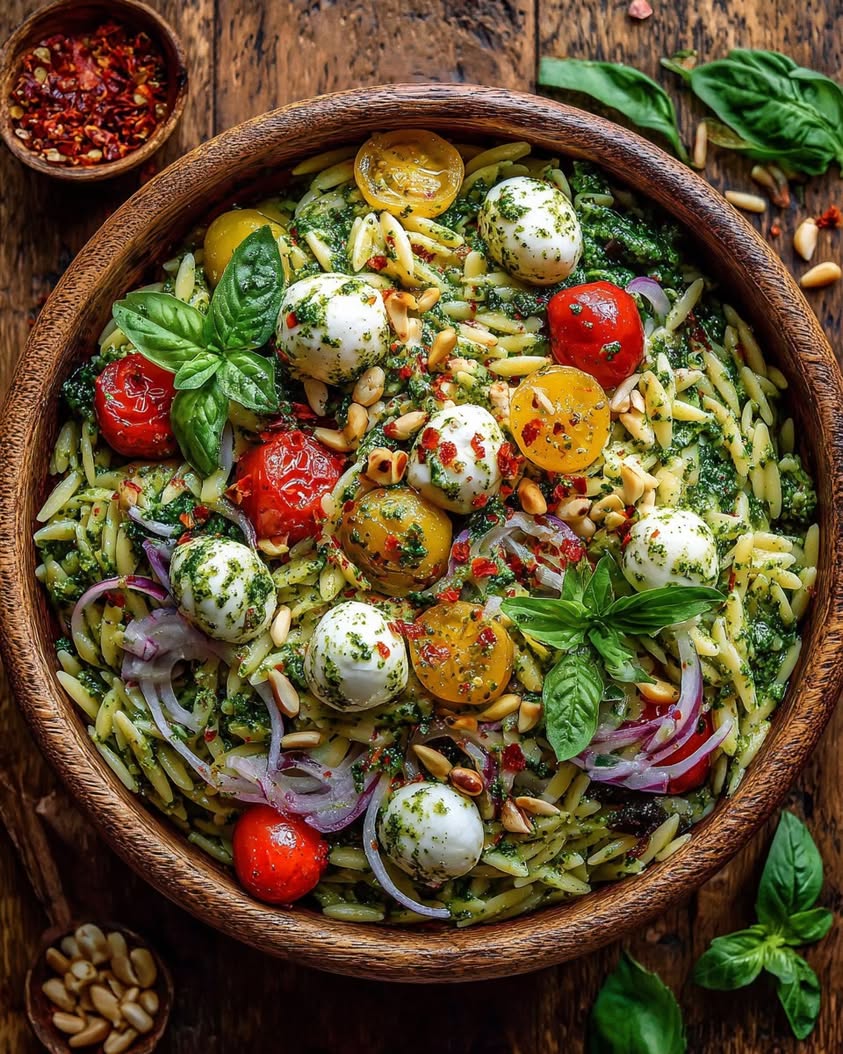
Pesto Orzo with Cherry Tomatoes & Mini Mozzarella Balls: A Vibrant Summer Pasta Salad
This Pesto Orzo with Cherry Tomatoes & Mini Mozzarella Balls is the ultimate no-fuss summer meal. Consequently, it bursts with fresh, vibrant flavors and comes together in under twenty minutes. Moreover, it perfectly captures the essence of a sunny garden on a plate. The combination of nutty pesto, sweet tomatoes, and creamy mozzarella creates a dish that is both satisfying and refreshingly light.
Imagine a bowl filled with tender orzo pasta, each little grain coated in a fragrant, herby pesto. Then, picture juicy cherry tomatoes that pop with sweetness in every bite. Finally, add delicate mini mozzarella balls for pockets of cool, milky creaminess. This dish is a celebration of simple ingredients working in perfect harmony. Ultimately, it is a guaranteed crowd-pleaser for any weeknight dinner or casual gathering.
Furthermore, this recipe is incredibly versatile. For instance, you can serve it warm, at room temperature, or chilled. Therefore, it works beautifully as a main course, a substantial side dish, or a standout potluck contribution. The beauty of this Pesto Orzo with Mozzarella and Tomatoes lies in its effortless elegance and foolproof method.
Quick Recipe Highlights
- Flavor Profile: This dish delivers a bright, herbaceous punch from the basil pesto, balanced by the natural sweetness of burst cherry tomatoes. The mini mozzarella balls add a mild, creamy richness that mellows the sharp garlic and cheese in the pesto, creating a perfectly rounded taste.
- Texture: You will enjoy a delightful mix of textures. The orzo pasta is tender yet retains a slight bite. Meanwhile, the cherry tomatoes offer a juicy burst, and the mozzarella provides soft, creamy pockets. This combination makes every forkful interesting and satisfying.
- Aroma: As soon as you mix the pesto into the warm orzo, the kitchen fills with the unmistakable scent of fresh basil, garlic, and toasted pine nuts. This aromatic base is complemented by the sweet, summery fragrance of the tomatoes, making the dish smell as good as it tastes.
- Visual Appeal: The presentation is stunningly colorful. The vibrant green pesto coats the pale orzo, while the red cherry tomatoes and white mozzarella balls create a festive, confetti-like appearance. A final sprinkle of fresh basil leaves adds a touch of green elegance.
- Skill Level Needed: This is a beginner-friendly recipe requiring only basic kitchen skills like boiling pasta and chopping tomatoes. There is no complicated sauce-making or precise techniques, making it accessible for cooks of all experience levels.
- Special Equipment: You need only standard kitchen tools: a pot for boiling the orzo, a colander for draining, a mixing bowl, and a knife for halving the tomatoes. No food processor or special gadgets are required if you use store-bought pesto.
Recipe Overview
- Difficulty Level: We classify this Pesto Orzo with Cherry Tomatoes & Mini Mozzarella Balls as easy. The steps are straightforward and sequential. Basically, you cook pasta, drain it, and mix it with a few fresh ingredients. There is no finicky timing or advanced culinary techniques involved, so it is perfect for a stress-free cooking experience.
- Category: This dish fits multiple categories beautifully. It functions as a hearty vegetarian main course, a fantastic pasta salad for picnics, or a elegant side dish alongside grilled chicken or fish. Its flexibility is one of its greatest strengths for meal planning.
- Cuisine: While orzo is a Greek pasta shape and pesto hails from Italy, this recipe is a modern fusion of Mediterranean flavors. It draws inspiration from the Italian tradition of pasta al pesto and the Greek love for fresh cheese and tomatoes, resulting in a universally appealing dish.
- Cost: This is a very cost-effective meal, especially in summer when basil and tomatoes are plentiful. Using store-bought pesto keeps costs and time down, while the orzo, mozzarella, and tomatoes are generally affordable pantry and refrigerator staples.
- Season: This recipe shines brightest in late spring and summer. This is when basil is most aromatic and cherry tomatoes are at their peak sweetness. However, it can be made year-round with greenhouse tomatoes and stored pesto, offering a taste of summer in any season.
- Occasion: It is ideal for casual weeknight dinners, last-minute lunches, potlucks, barbecues, and picnics. Additionally, it is elegant enough for a light al fresco lunch with friends. The make-ahead potential makes it a smart choice for entertaining.
Why You’ll Love This Recipe
First and foremost, the taste and texture are utterly irresistible. Each component of this Pesto Orzo with Mozzarella and Tomatoes plays a specific role. The pesto delivers a garlicky, herbal depth, while the tomatoes offer a juicy, acidic contrast. Meanwhile, the mozzarella balls provide a cooling, creamy balance. Together, they create a symphony of flavors that is both familiar and exciting. The orzo pasta, with its unique rice-like shape, holds the sauce perfectly in every bite.
Next, consider the sheer convenience. This entire meal comes together in the time it takes to boil water and cook pasta. There is no need to prepare a complicated sauce from scratch. Consequently, you can have a restaurant-quality dish on the table with minimal effort. It is the perfect solution for busy evenings when you want something delicious and wholesome without spending hours in the kitchen. The cleanup is equally simple.
From a nutritional standpoint, this dish offers several benefits. Basil pesto is rich in antioxidants and healthy fats from olive oil and nuts. Cherry tomatoes are packed with vitamins A and C, and lycopene. Orzo provides carbohydrates for energy, and mozzarella offers protein and calcium. By using whole wheat orzo, you can increase the fiber content even further. It is a balanced meal that feels indulgent but is made from wholesome ingredients.
For social gatherings, this Pesto Orzo with Cherry Tomatoes & Mini Mozzarella Balls is a superstar. It scales up effortlessly to feed a crowd and can be made hours in advance. Served at room temperature, it is ideal for buffets or picnics where keeping food hot is a challenge. Its bright colors and fresh flavors are always a hit with guests, making you look like a culinary pro with very little work.
Finally, it is incredibly cost-effective and accessible. The ingredients are easy to find at any standard grocery store. You can adapt it based on what you have; for example, using sun-dried tomato pesto or adding chopped olives. This flexibility means you can often make it without a special trip to the store. It transforms inexpensive staples into a meal that feels special and gourmet.
Historical Background and Cultural Significance
The story of this dish begins with its individual components, each with a rich history. Orzo, meaning “barley” in Italian, is a pasta shape designed to resemble grains of rice or barley. It is particularly popular in Greek cuisine, often used in soups and pilafs called “youvetsi”. Pesto, from the Italian word “pestare” (to crush or pound), originates from Genoa in the Liguria region. Traditionally, it is made with a mortar and pestle, crushing basil, garlic, pine nuts, Parmesan, and olive oil into a vibrant sauce.
Combining pasta with pesto is a classic Italian tradition, famously seen in dishes like Trenette al Pesto. The addition of fresh tomatoes and cheese is a natural progression, celebrating the Mediterranean trinity of basil, tomato, and cheese. This particular recipe with cherry tomatoes and mini mozzarella balls reflects a more modern, salad-style approach to pasta. It borrows from the Italian “pasta salad” concept but uses specifically chosen ingredients for maximum flavor and visual appeal.
The evolution of this recipe is a testament to global fusion cooking. While the roots are firmly Mediterranean, the use of cherry tomatoes and bocconcini (mini mozzarella balls) speaks to contemporary tastes for bite-sized, fresh ingredients. This style of dish became particularly popular in American cuisine in the late 20th and early 21st centuries. It aligns with a growing desire for meals that are quick, flavorful, and suitable for casual entertaining.
Regional variations are endless. In the south of Italy, one might find a version with sun-dried tomatoes and ricotta salata. A Greek variation could include kalamata olives and feta cheese. The basic formula of pesto, pasta, tomato, and cheese is a canvas for creativity. This specific combination, however, has become a standard for its perfect balance of color, texture, and ease. It represents how traditional flavors can be adapted to fit modern, fast-paced lifestyles without sacrificing quality.
Ingredient Deep Dive
Orzo: Orzo is a form of short-cut pasta, typically made from semolina flour. Despite its rice-like appearance, it is pure pasta and cooks quickly, usually in 8-10 minutes. It is excellent at absorbing sauces and flavors, making it ideal for this recipe. When selecting orzo, you can choose between traditional semolina, whole wheat for added fiber, or even a gluten-free rice-based version. Store it in a cool, dry pantry. For best results, cook it al dente so it retains structure when mixed with the other ingredients.
Basil Pesto: Pesto is the flavor engine of this dish. Traditionally from Genoa, it is a blend of fresh basil, garlic, pine nuts, Parmesan or Pecorino cheese, and olive oil. Store-bought versions are perfectly convenient, but for maximum freshness, homemade is superior. Pesto is rich in healthy fats and antioxidants. Look for pesto in the refrigerated section for the best flavor. You can substitute with sun-dried tomato pesto, arugula pesto, or a dairy-free version. Always taste it before adding salt to the overall dish.
Cherry Tomatoes: These little tomatoes are prized for their intense sweetness and low acidity compared to larger varieties. They are packed with vitamins A and C and the antioxidant lycopene. Select tomatoes that are firm, deeply colored, and fragrant. For this recipe, halving them exposes their juicy interior, which mingles with the pesto. Off-season, grape tomatoes are a good substitute as they are often sweeter. Never refrigerate tomatoes, as cold temperatures degrade their texture and flavor; store at room temperature.
Mini Mozzarella Balls (Bocconcini): Bocconcini are small, fresh mozzarella balls stored in water or whey to maintain moisture. They have a mild, milky flavor and a soft, springy texture that contrasts beautifully with the pasta. Nutritionally, they provide protein and calcium. Drain them well before adding to the salad to prevent watering down the pesto. For a different twist, you can use cubed fresh mozzarella, crumbled feta, or even small burrata balls. Always buy fresh mozzarella from the refrigerator section, not the shelf-stable, low-moisture kind.
Fresh Basil: Fresh basil is used both in the pesto and as a garnish. It belongs to the mint family and has a sweet, peppery flavor with notes of anise. It contains antioxidants and essential oils like eugenol. To select the best bunch, look for vibrant green leaves without black spots. Store it like a bouquet of flowers—stems in water at room temperature. For a garnish, tear the leaves instead of chopping to prevent bruising and blackening. You can substitute with fresh parsley or arugula for a different herbal note.
Common Mistakes to Avoid
- Overcooking the Orzo: Overcooked orzo becomes mushy and loses its ability to hold the sauce properly. Always cook it al dente, which means it should still have a slight bite to it. Remember, it will soften slightly further as it absorbs the pesto and cools.
- Not Reserving Pasta Water: Before draining the orzo, save about a half cup of the starchy cooking water. This water is magic for adjusting the sauce consistency. If your pesto orzo seems too thick or dry, a splash of pasta water helps loosen it and helps the sauce cling to the pasta.
- Adding Cold Mozzarella to Hot Pasta: If you plan to serve the dish warm, let the mozzarella balls come to room temperature before adding them. Adding very cold cheese directly from the fridge to hot pasta can cause the cheese to seize up and become rubbery.
- Using Low-Quality Pesto: The pesto is the primary flavor agent. A cheap, overly oily, or bland pesto will result in a bland dish. Invest in a good-quality refrigerated pesto or take the time to make a quick homemade version. The difference in flavor is profound.
- Not Seasoning in Layers: Do not assume the pesto has enough salt. Taste the dish after combining all elements. The orzo, tomatoes, and mozzarella are bland on their own. You will likely need to add a pinch of salt and a crack of black pepper at the end to make all the flavors pop.
- Chopping the Basil Garnish Too Early: If you chop the fresh basil for garnish ahead of time, it will wilt and turn black. Always tear or chop the basil just before serving to maintain its vibrant color and fresh aroma.
- Serving Immediately Without Resting: While you can serve it right away, letting the Pesto Orzo with Mozzarella and Tomatoes sit for 10-15 minutes allows the flavors to meld. The orzo absorbs the pesto, and the tomatoes release some of their juices, creating a more cohesive dish.
- Storing with Garnish On Top: If you have leftovers, store them without the fresh basil garnish. The basil will wilt and discolor in the refrigerator. Add fresh basil each time you serve the leftovers for the best appearance and taste.
Essential Techniques
Cooking Pasta Al Dente: This Italian phrase means “to the tooth.” It is crucial for texture. To achieve it, cook the orzo for the minimum time listed on the package. Start tasting a minute or two before the time is up. The pasta should be tender but still offer a slight resistance when bitten. Properly cooked al dente pasta holds its shape better when mixed with other ingredients and provides a more satisfying mouthfeel.
Proper Draining and Dressing: Drain the orzo thoroughly but do not rinse it. Rinsing washes away the surface starch that helps the pesto sauce adhere. Immediately after draining, transfer the hot orzo to your mixing bowl and toss it with the pesto. The residual heat helps the orzo absorb the sauce more effectively. This step ensures every grain is flavorful.
Balancing Flavors at the End: After combining all ingredients, the final taste test is non-negotiable. The dish may need a pinch of salt, a squeeze of lemon juice for brightness, or a drizzle of extra virgin olive oil for richness. Adjusting at this stage transforms a good dish into a great one. Remember, ingredients vary in saltiness and acidity, so your palate is the best guide.
Pro Tips for Perfect Pesto Orzo
Toast your orzo in a dry pan with a little olive oil before adding boiling water. This adds a wonderful nutty depth to the pasta’s flavor. It is a simple extra step with a big payoff.
If using homemade pesto, make a large batch and freeze it in ice cube trays. Then, you can pop out a cube or two whenever you want to make this dish quickly.
For an extra flavor dimension, briefly blister the halved cherry tomatoes in a hot skillet before adding them. This concentrates their sweetness and adds a subtle smoky note.
Add a handful of toasted pine nuts or slivered almonds for added crunch. This contrasts beautifully with the creamy mozzarella and soft pasta.
If serving as a main course, bulk it up with protein. Grilled shrimp, shredded rotisserie chicken, or canned chickpeas are excellent additions that make the meal more substantial.
Use a microplane to grate a little lemon zest into the salad just before serving. The citrus oils brighten all the other flavors incredibly well.
For the best presentation, use a mix of yellow and red cherry tomatoes. The dual colors make the dish even more visually appealing and festive.
Always let the finished dish rest for a short time before serving. This allows the orzo to fully absorb the pesto and the flavors to marry, resulting in a more unified taste.
Variations and Adaptations
Regional Variations: Give the dish a Greek twist by substituting the pesto with a lemon-oregano vinaigrette and using crumbled feta instead of mozzarella. Add kalamata olives and cucumber. For a Southern Italian feel, use sun-dried tomato pesto and add roasted red peppers and artichoke hearts.
Seasonal Adaptations: In fall, use roasted butternut squash cubes and sage pesto. In winter, incorporate roasted Brussels sprout halves and a kale-based pesto. Spring invites the addition of fresh peas and asparagus tips. This Pesto Orzo with Mozzarella and Tomatoes is a template for seasonal produce.
Dietary Modifications: For a vegan version, use dairy-free pesto (often made with nutritional yeast) and substitute the mozzarella with marinated tofu cubes or vegan cheese. A gluten-free version simply requires using certified gluten-free orzo, which is often made from rice or corn flour.
Flavor Variations: Experiment with different pesto types: cilantro-lime pesto for a Mexican flair, roasted red pepper pesto for sweetness, or a walnut and parsley pesto for earthiness. Each pesto creates a completely new dish using the same basic method.
Texture Modifications: For more crunch, add diced bell peppers, celery, or radishes. For a creamier texture, stir in a spoonful of Greek yogurt or ricotta cheese along with the pesto. You can also use a smaller pasta like ditalini or a larger one like orecchiette.
Presentation Alternatives: Serve the orzo in hollowed-out beefsteak tomatoes or bell peppers for individual portions. Layer it in a trifle dish with the mozzarella and tomatoes for a stunning vertical presentation. Or, pack it into a ring mold for a elegant, restaurant-style plating.
Serving and Presentation Guide
Plating Techniques: For a family-style meal, present the Pesto Orzo with Cherry Tomatoes & Mini Mozzarella Balls in a wide, shallow bowl to showcase the colors. Use a large spoon to give it a gentle toss at the table. For individual servings, use a ring mold to create a neat cylinder in the center of the plate, then carefully lift the mold away.
Garnishing Ideas: The classic garnish is fresh basil leaves, either whole or torn. Beyond that, a drizzle of high-quality extra virgin olive oil adds sheen. A sprinkle of flaky sea salt, cracked black pepper, red pepper flakes, or toasted breadcrumbs adds texture and flavor. A few shavings of Parmesan cheese never hurt.
Traditional Accompaniments: In a Mediterranean meal, this dish pairs wonderfully with simply grilled proteins like lemon-herb chicken, fish, or lamb chops. It also works as part of a mezze platter with hummus, pita, olives, and stuffed grape leaves.
Modern Serving Suggestions: Serve it as a packed lunch in a mason jar—layer the orzo at the bottom, then tomatoes, then mozzarella, and seal. For a party, serve it in endive leaves or small lettuce cups as a cold appetizer. It is also perfect for a “build-your-own-bowl” bar with various toppings.
Temperature Considerations: This dish is truly versatile. Serve it warm for a comforting dinner, at room temperature for a picnic or potluck (this is when flavors are most balanced), or chilled straight from the fridge for a refreshing pasta salad. Adjust the consistency with a splash of water or olive oil if it thickens when cold.
Portion Control Tips: As a main course, plan for about 1.5 to 2 cups per person. As a side dish, ¾ to 1 cup is sufficient. Remember, orzo is deceptively filling. Using a kitchen scale to portion the dry orzo (about 2-3 oz per person as a side) ensures you make the right amount and avoid waste.
Wine and Beverage Pairing
Wine Pairings: The herbal, garlicky notes of pesto and the acidity of tomatoes call for a wine with good acidity and herbal character. A crisp Italian white like Vermentino, Pinot Grigio, or a dry Greco di Tufo is perfect. For a red option, choose a light-bodied, low-tannin red like a chilled Beaujolais or a Bardolino. These wines complement without overpowering the dish’s freshness.
Non-Alcoholic Alternatives: Sparkling water with a squeeze of lemon or lime is a classic, cleansing choice. For something more flavorful, try a basil-infused lemonade, which echoes the herbal notes in the dish. Iced herbal teas, like mint or hibiscus, also pair beautifully. A tart cherry spritzer can mirror the sweetness of the tomatoes.
Coffee/Tea Pairing: This is not a traditional dish for coffee pairing. However, if serving for lunch, a light roast coffee or a citrusy tea like Earl Grey could work after the meal. The key is to avoid heavy, bitter beverages that would clash with the pesto’s bright flavors.
Temperature Considerations: Always serve white wines well-chilled, around 45-50°F. Light reds should be slightly chilled, about 55°F. Non-alcoholic beverages should be cold but not ice-cold to allow their flavors to come through. The dish itself is best enjoyed at room temperature when paired with drinks.
Serving Suggestions: Pour wine into appropriate stemware to enhance aroma. For non-alcoholic drinks, use tall glasses with plenty of ice and a fresh herb garnish. Always offer water alongside any pairing to cleanse the palate, especially given the garlic in the pesto.
Storage and Shelf Life
Storage Methods: Store leftover Pesto Orzo with Mozzarella and Tomatoes in an airtight container in the refrigerator. It is best to store it without the fresh basil garnish, adding that fresh when serving. Ensure the salad has cooled to room temperature before sealing and refrigerating to prevent condensation.
Temperature Requirements: This is a perishable dish due to the dairy and fresh ingredients. It must be kept refrigerated at 40°F or below. Do not leave it at room temperature for more than 2 hours, or 1 hour if the ambient temperature is above 90°F.
Container Recommendations: Glass containers with tight-fitting lids are ideal as they do not absorb odors or stains. Alternatively, use BPA-free plastic containers. For best results, press a piece of plastic wrap directly onto the surface of the orzo before sealing the lid to minimize oxidation.
Signs of Spoilage: Discard the orzo if you notice an off or sour smell, significant discoloration (especially a grayish hue), or visible mold. The texture of the mozzarella may become unpleasantly slimy if it has gone bad. When in doubt, throw it out.
Reheating Instructions: This dish is best enjoyed cold or at room temperature. If you must reheat it, do so gently. Place it in a microwave-safe dish, add a tablespoon of water or broth, cover loosely, and heat in 30-second intervals, stirring in between, until just warmed through. Avoid high heat which can make the mozzarella rubbery.
Freezing Guidelines: Freezing is not recommended. The texture of the orzo, tomatoes, and mozzarella will deteriorate significantly upon thawing, becoming mushy and watery. The pesto may also separate. It is a dish best made fresh or stored in the refrigerator for short-term use.
Make Ahead Strategies
Prep Timeline: You can fully prepare this dish up to 24 hours in advance. In fact, letting it rest allows the flavors to develop more depth. For the best texture, cook the orzo al dente and combine it with the pesto while warm. Then, let the mixture cool completely before adding the tomatoes and mozzarella. Add the final garnish of fresh basil just before serving.
Storage Between Steps: After cooking and dressing the orzo with pesto, you can store that base mixture alone in the refrigerator for up to two days. Keep the halved tomatoes and drained mozzarella in separate containers. Combine all components a few hours before you plan to serve, allowing time for the salad to come to the desired serving temperature.
Quality Impact Assessment: Making it ahead generally improves the flavor as the orzo soaks up the pesto. The only potential downside is the tomatoes may release more juice, making the salad slightly wetter. You can combat this by using a slotted spoon to add the tomatoes, leaving excess juice behind, or by adding them closer to serving time.
Assembly Tips: For a large gathering, set up an assembly line: a bowl of pesto-coated orzo, a bowl of tomatoes, a bowl of mozzarella, and your garnishes. Combine everything in a large serving bowl just before guests arrive. This keeps elements fresh and prevents the mozzarella from absorbing too much color from the pesto.
Reheating Guidelines: As mentioned, reheating is not ideal. If you made it ahead and it is very cold, let it sit on the counter for 30-60 minutes before serving to take the chill off. The ideal serving temperature is cool room temperature, not ice-cold from the fridge.
Fresh Element Additions: Always reserve some of your add-ins for last-minute freshness. Keep a few extra cherry tomatoes and mozzarella balls aside. Toss them in right before serving along with the fresh basil. This gives the dish a just-made appearance and bursts of fresh texture.
Scaling Instructions
Halving the Recipe: Halving is straightforward. Use 4 oz of dry orzo, ¼ cup of pesto, ½ pint of cherry tomatoes, and 4 oz of mozzarella balls. The cook time for the orzo remains the same. Use a smaller pot to cook the pasta. This yields two generous main course servings or four small side servings.
Doubling or Tripling: For a crowd, simply multiply the ingredients. Key tip: cook the orzo in batches to avoid overcrowding the pot, which leads to uneven cooking. Use a very large bowl for mixing, or mix directly in a clean, food-safe storage container. Taste and season the large batch carefully, as seasoning needs may not scale linearly.
Equipment Adjustments: When scaling up, ensure you have a pot large enough to cook the pasta with plenty of boiling water (at least 4 quarts per pound of pasta). You will also need a colander large enough to drain it and an oversized mixing bowl. For very large batches, consider using a stockpot and a hotel pan for mixing.
Timing Modifications: The prep time will increase slightly when chopping more tomatoes and draining more mozzarella. However, the cook time for the orzo per batch remains constant. If cooking multiple batches of orzo sequentially, factor in the time to bring new water to a boil for each batch.
Storage Considerations: A large batch will last the same amount of time in the fridge (3-4 days). Store it in several smaller containers rather than one enormous one. This makes it easier to cool quickly (important for food safety) and allows you to take out only what you need, keeping the rest fresh.
Nutritional Deep Dive
Macro Breakdown: A serving of Pesto Orzo with Cherry Tomatoes & Mini Mozzarella Balls provides a balance of macronutrients. The orzo is primarily carbohydrates, offering energy. The pesto and olive oil contribute healthy monounsaturated fats. The mozzarella provides protein and some fat. Together, they create a satiating meal that stabilizes blood sugar when portioned appropriately.
Micronutrient Analysis: This dish is a good source of several vitamins and minerals. Basil and tomatoes provide Vitamin K, Vitamin C, and potassium. The olive oil in pesto offers Vitamin E. Mozzarella contributes calcium and phosphorus. Using whole wheat orzo would add B vitamins and magnesium.
Health Benefits: The ingredients support heart health (olive oil), provide antioxidants to combat inflammation (basil, tomatoes), and support bone health (calcium from cheese). The lycopene in tomatoes is best absorbed with fat, making the olive oil in the pesto a perfect partner for nutrient uptake.
Dietary Considerations: As written, the recipe contains gluten (orzo), dairy (pesto cheese and mozzarella), and nuts (pine nuts in pesto). It is vegetarian. For those monitoring sodium, be mindful of the salt content in store-bought pesto and cheese. You can control this by making your own lower-sodium pesto.
Portion Analysis: A standard serving is about 1.5 to 2 cups. This is a satisfying portion that provides roughly 400-500 calories, depending on the specific brands and amounts of pesto and cheese used. It is a complete meal but can be paired with a lean protein or large salad for added volume.
Weight Management Tips: To make this dish more weight-conscious, increase the ratio of vegetables. Add a cup of steamed spinach or zucchini ribbons to bulk it up with low-calorie volume. Use a lighter hand with the pesto, supplementing with lemon juice and herbs. Choose part-skim mozzarella balls.
Dietary Adaptations
Gluten-Free: Use certified gluten-free orzo, which is typically made from rice, corn, or quinoa flour. Ensure your pesto is also gluten-free, as some brands may include additives with gluten. All other ingredients are naturally gluten-free. The cooking method remains identical.
Dairy-Free: Select a dairy-free pesto, often made with nutritional yeast instead of Parmesan. Substitute the mini mozzarella balls with marinated tofu cubes, vegan mozzarella shreds, or creamy white beans like cannellini. Check that the pesto does not contain casein or other dairy derivatives.
Vegan: Follow the dairy-free guidelines above. Additionally, ensure the pesto does not contain any cheese or honey. A homemade vegan pesto with basil, nuts, garlic, nutritional yeast, and olive oil is perfect. For the “cheese” element, cubed avocado can add creaminess, though it will not melt like mozzarella.
Low-Carb/Keto: Orzo is high in carbs, so a direct substitution is needed. Replace the orzo with cauliflower rice. Sauté the cauliflower rice until tender-crisp, let it cool, then mix with pesto. Keep the tomatoes (in moderation, as they have carbs) and mozzarella. Be sure to use a pesto without added sugar.
Paleo: Similar to keto, replace the orzo with a vegetable base like spiralized zucchini (zoodles) or cauliflower rice. Omit the cheese or use a paleo-approved cheese alternative. Ensure the pesto is made with paleo-friendly ingredients (no dairy or processed oils).
Low-FODMAP: Use gluten-free orzo and ensure it is not made from legume flour, which can be high-FODMAP. Replace garlic-infused pesto with a garlic-free basil oil or make your own pesto using garlic-infused olive oil (the fructans are not oil-soluble). Use only a few cherry tomatoes per serving and swap mozzarella for a lactose-free cheese.
Troubleshooting Guide
Texture Issues (Mushy Orzo): If your orzo is mushy, you likely overcooked it. Unfortunately, you cannot reverse this. For future attempts, set a timer and taste early. If the dish is already mixed and too soft, try chilling it thoroughly; cold pasta salads can tolerate a softer texture better. Add crunchy elements like diced celery or peppers to offset the mush.
Flavor Balance (Too Bland): A bland Pesto Orzo with Mozzarella and Tomatoes usually needs acid and salt. Add a squeeze of fresh lemon juice or a dash of red wine vinegar. Season with salt and pepper, tasting as you go. A pinch of red pepper flakes can also wake up the flavors. Finally, a drizzle of good extra virgin olive oil can add richness.
Temperature Problems (Serving Cold Dish): If you need to serve it warm but it was prepared ahead and is cold, gently reheat it. Place it in a skillet over low heat with a splash of water, broth, or milk. Stir constantly until just warmed through. Avoid high heat. Alternatively, you can serve it as intended: a cold pasta salad.
Equipment Challenges (No Colander): If you lack a colander, carefully use the pot lid to hold back the orzo while pouring the hot water into the sink. Wear oven mitts! Alternatively, scoop the orzo out with a slotted spoon or spider strainer into your mixing bowl. It is less efficient but works in a pinch.
<{"success":true,"message":"Recipe created successfully","post_id":9216,"tasty_recipe_id":9216,"shortcode":"[tasty-recipe id=\"9216\"]"}

I’m Billy, a classically trained culinary school graduate from The Culinary Institute of America with over 12 years in the restaurant industry and over 19 years of cooking experience.