
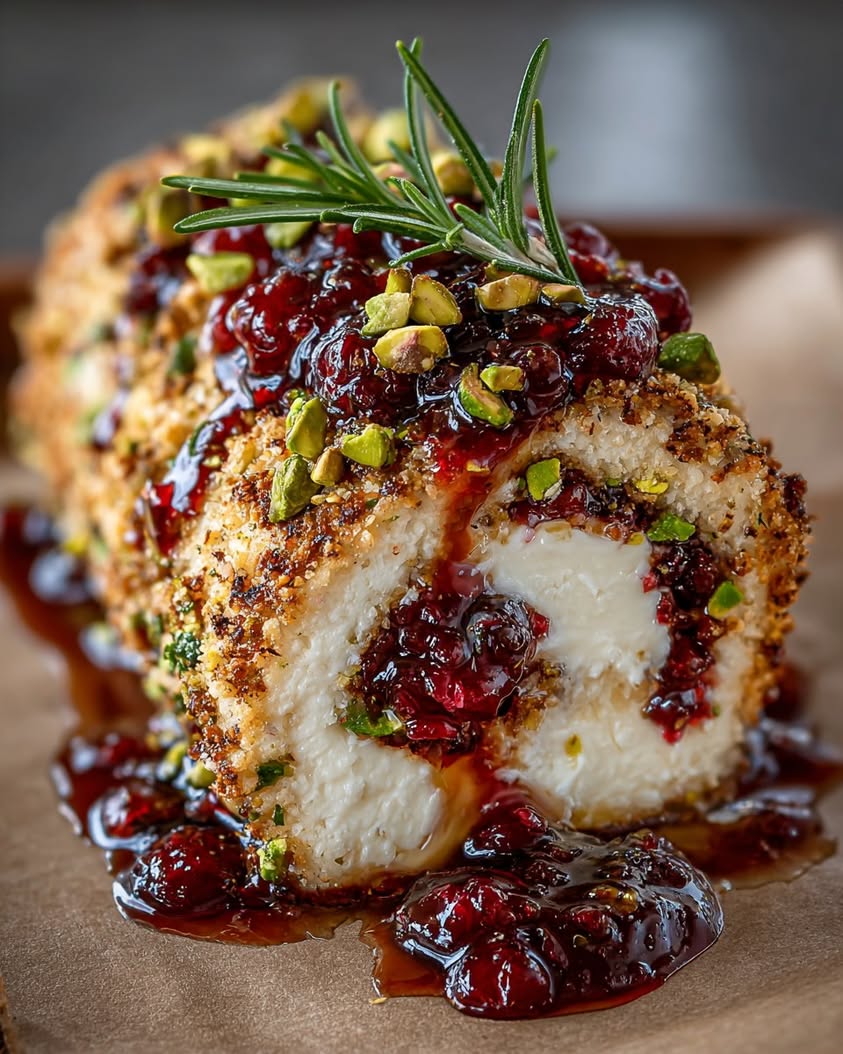
Pistachio-Crusted Goat Cheese Log with Warm Cranberry Chutney: An Elegant Holiday Appetizer
Picture this: a creamy, tangy log of goat cheese rolled in a vibrant green crust of salty pistachios, served alongside a warm, jewel-toned cranberry chutney that’s equal parts sweet, tart, and spiced. This Pistachio-Crusted Goat Cheese Log with Warm Cranberry Chutney is not just an appetizer; it’s a centerpiece for your holiday table or a sophisticated star for any gathering. Moreover, it masterfully combines textures and flavors in a way that feels both luxurious and comforting. The visual contrast alone—the creamy white cheese peeking through the green nut crust against the deep red chutney—is enough to make your guests’ eyes light up before they even take a bite.
Fundamentally, this recipe celebrates the beautiful harmony of simple, high-quality ingredients. The tangy creaminess of the goat cheese provides a perfect canvas for the rich, buttery crunch of pistachios. Meanwhile, the warm cranberry chutney introduces a layer of complex sweetness and acidity that cuts through the richness. Consequently, each component elevates the others, creating a bite that is truly greater than the sum of its parts. This dish is a testament to how a few thoughtful elements can create a memorable culinary experience. Whether you’re hosting a festive party or enjoying a cozy night in, this appetizer promises to impress.
Ultimately, the magic of this Pistachio Goat Cheese Cranberry Chutney recipe lies in its elegant simplicity. Despite its stunning appearance, it requires minimal hands-on time and no advanced culinary skills. You can prepare elements ahead of time, allowing you to be a relaxed host. The combination of cool, creamy cheese and warm, spiced chutney is a sensory delight that feels special and celebratory. Therefore, this dish is your secret weapon for effortless entertaining that delivers maximum flavor and visual impact every single time.
Quick Recipe Highlights
- Flavor Profile: This dish offers a spectacular balance. You get the tangy, earthy notes from the goat cheese, the rich, slightly salty crunch from the pistachios, and the sweet-tart-spiced burst from the warm cranberry chutney. Each element complements the others perfectly, creating a complex and satisfying taste experience.
- Texture: The experience is a delightful textural journey. First, you encounter the crisp, crunchy exterior of crushed pistachios. Then, your spoon glides through the incredibly smooth and creamy chilled goat cheese log. Finally, you get the soft, jammy bursts of cranberry in the warm chutney, which adds a lovely contrast.
- Aroma: As the chutney simmers, your kitchen will fill with the warm, inviting scents of cinnamon, orange zest, and bubbling cranberries. Meanwhile, the toasted pistachios add a subtle, nutty fragrance. When served, the aroma is a festive blend of sweet spices and savory cheese that immediately whets the appetite.
- Visual Appeal: This appetizer is a feast for the eyes. The vibrant green pistachio crust encasing the white cheese log creates stunning visual contrast. Subsequently, the deep crimson red of the warm cranberry chutney served alongside makes the colors pop dramatically on any platter, guaranteeing it will be the most photographed dish on your table.
- Skill Level Needed: This is a fantastically beginner-friendly recipe. You need no special techniques—just mixing, simmering, and rolling. Consequently, even novice cooks can achieve professional-looking, restaurant-quality results. It’s a confidence-building dish that looks far more complicated than it actually is to prepare.
- Special Equipment: You need only basic kitchen tools. A small saucepan for the chutney, a mixing bowl, and some plastic wrap are the essentials. A food processor or a knife and cutting board will help you chop the pistachios finely. Otherwise, no fancy equipment is required for this elegant appetizer.
Recipe Overview
- Difficulty Level: We rate this recipe as “Easy” for several compelling reasons. The steps are straightforward and sequential, with no complicated techniques like tempering or baking involved. The chutney simply requires simmering, and forming the cheese log is a fun, hands-on process that’s hard to mess up. Therefore, cooks of all levels can tackle it with success.
- Category: This dish falls squarely into the appetizer or starter category. It’s perfect for kicking off a festive meal, serving at a cocktail party, or setting out as part of a grazing board. Additionally, it can function as a luxurious cheese course. Its rich and flavorful profile makes it ideal for the beginning of a dining experience.
- Cuisine: While not tied to one specific tradition, this recipe draws inspiration from modern American entertaining cuisine and French cheeseboard culture. The combination of cheese, nuts, and fruit preserves is a classic trope elevated here with homemade elements. It’s a fusion of simple, quality-focused ingredients presented in an elegant, accessible way.
- Cost: This is a moderately priced appetizer, considering its impressive payoff. Goat cheese and shelled pistachios are the primary cost drivers. Fortunately, cranberries are very affordable, especially in season. Overall, you can create this stunning dish for a fraction of the cost of a similar offering at a restaurant or gourmet shop.
- Season: This Pistachio Goat Cheese Cranberry Chutney shines brightest during the fall and winter holidays. Cranberries are freshest in late autumn, making the chutney particularly vibrant. Furthermore, the warm spices and rich cheese feel inherently cozy and festive, perfectly matching the mood of Thanksgiving, Christmas, and New Year’s celebrations.
- Occasion: It’s exceptionally versatile for entertaining. It’s ideal for holiday parties, potlucks, book club gatherings, or even a romantic appetizer for a special date night at home. Because it can be mostly made ahead, it also reduces host stress, allowing you to enjoy your own party alongside your guests.
Why You’ll Love This Recipe
First and foremost, the taste and texture appeal is absolutely undeniable. The creamy, tangy goat cheese provides a luxurious base that is beautifully offset by the salty, crunchy pistachio crust. Then, the warm cranberry chutney arrives with its symphony of sweet, tart, and spicy notes, tying everything together in one perfect bite. This combination is sophisticated yet deeply satisfying, appealing to a wide range of palates. Consequently, it’s a guaranteed crowd-pleaser that will have guests coming back for just one more scoop.
From a convenience standpoint, this recipe is a host’s dream. The entire Pistachio-Crusted Goat Cheese Log can be assembled a day or two in advance and simply chilled until serving. Similarly, the cranberry chutney can be made ahead and gently reheated. This make-ahead flexibility is a game-changer for entertaining, as it eliminates last-minute kitchen chaos. Moreover, the assembly requires no cooking skill, just a bit of simple mixing and rolling. Therefore, you achieve maximum impact with minimal day-of effort.
Nutritionally, this appetizer offers some distinct advantages. Goat cheese is often easier to digest than cow’s milk cheese for some people and provides a good source of protein and calcium. Pistachios are packed with healthy fats, fiber, and antioxidants like lutein. Cranberries are famously rich in vitamin C and proanthocyanidins, which support urinary tract health. While it’s a treat, using whole, recognizable ingredients means you’re enjoying real food. So, you can indulge feeling good about what you’re serving.
The social and entertaining value of this dish is incredibly high. It serves as a beautiful focal point on a buffet or coffee table, encouraging conversation and interaction as guests gather around to serve themselves. It feels special and celebratory, setting a tone of care and hospitality. Because it’s shareable, it fosters a communal, relaxed dining atmosphere. Ultimately, this Pistachio Goat Cheese Cranberry Chutney isn’t just food; it’s an experience that enhances the entire mood of your gathering.
Finally, it is remarkably cost-effective and accessible. Compared to purchasing a pre-made gourmet cheese ball or log from a specialty store, making it yourself saves a significant amount of money. The ingredients are easy to find at most well-stocked supermarkets year-round. Furthermore, you control the quality, opting for organic cranberries or a specific type of goat cheese if you prefer. This accessibility ensures that creating a luxurious appetizer is within reach for any home cook, for any occasion.
Historical Background and Cultural Significance
The tradition of pairing cheese with fruit and nuts is ancient and spans countless cultures. Historically, preserving summer and autumn harvests through drying, curing, or turning them into preserves like chutney was essential for winter survival. Consequently, pairing these preserved fruits with aged cheeses and foraged nuts became a practical and delicious way to enjoy varied flavors and textures during colder months. Our modern Pistachio Goat Cheese Cranberry Chutney is a direct descendant of this timeless, resourceful culinary practice, now refined for contemporary palates and presentation.
Goat cheese itself, or chèvre, has a history dating back thousands of years, particularly in the Mediterranean and Middle Eastern regions. Its production was a way to preserve milk in a portable, nutrient-dense form. Meanwhile, pistachios are one of the oldest flowering nut trees, native to Central Asia and the Middle East, and have long been valued as a precious food. Combining them is a relatively modern innovation in Western cuisine, symbolizing a fusion of Old World ingredients with New World entertaining styles. This blend creates a dish that feels both classic and freshly inventive.
Cranberry sauce and chutney have their own distinct evolutions. Native Americans used cranberries for food, dye, and medicine long before European settlers arrived. The settlers adopted the berry, often sweetening it to offset its intense tartness. Chutney, on the other hand, originates from the Indian subcontinent, referring to a wide range of condiments from fresh, herb-based sauces to cooked, preserved relishes. The “cranberry chutney” in this recipe represents a Western adaptation—taking a native North American berry and preparing it with spices and cooking techniques inspired by global traditions, resulting in a condiment that is uniquely suited to modern holiday tables.
Regarding regional variations, the core concept is endlessly adaptable. In the American South, you might find a similar cheese log rolled in pecans and served with a pepper jelly. In France, a goat cheese might be served with a fig compote. The specific combination of pistachios, goat cheese, and cranberry chutney has become a modern classic in its own right, particularly popular in North American holiday entertaining. It represents a contemporary, chef-driven approach to appetizers that prioritizes bold flavor contrasts, visual appeal, and make-ahead convenience, perfectly capturing the spirit of 21st-century hospitality.
Ingredient Deep Dive
Let’s start with the star: fresh goat cheese (chèvre). This soft, tangy cheese is made from goat’s milk and has been a staple for millennia, particularly in regions where goats thrived better than cattle. Nutritionally, it’s often lower in lactose and contains different proteins than cow’s milk cheese, which some people find easier to digest. It’s a good source of calcium, protein, and healthy fats. For this recipe, select a plain, creamy log from the cheese section. Avoid pre-crumbled cheese, as it won’t hold its shape. Store it tightly wrapped in the refrigerator and bring it to cool room temperature for easier handling when forming your log.
Next, examine the shelled pistachios. These vibrant green nuts are technically seeds and have been cultivated for over 9,000 years. They are nutritional powerhouses, rich in healthy fats, protein, fiber, and antioxidants like lutein. Their slightly sweet, buttery flavor and beautiful green color make them perfect for a crust. For the best result, use unsalted, roasted pistachios. If you can only find salted, simply omit any added salt in the recipe. Chop them finely but not into dust; you want a distinct crunchy texture. Store unused nuts in an airtight container in the freezer to prevent their oils from turning rancid.
Now, focus on the fresh cranberries. These native North American berries are a true seasonal treasure, harvested in the fall. They are famously tart due to high levels of proanthocyanidins, which also provide significant health benefits, particularly for urinary tract health. They are also an excellent source of Vitamin C and fiber. When selecting cranberries, look for firm, plump, brightly colored berries. Avoid any that are shriveled, soft, or discolored. You can store fresh cranberries in their original bag in the refrigerator for weeks, or freeze them for up to a year to enjoy this Pistachio Goat Cheese Cranberry Chutney anytime.
Finally, consider the supporting cast for the chutney: orange zest and juice, brown sugar, cinnamon, and a pinch of salt. The orange adds a crucial bright, citrusy acidity that enhances the cranberry flavor. Use the zest from an organic orange if possible, as you’ll be using the outer peel. Brown sugar provides a deep molasses-like sweetness that pairs beautifully with the warm cinnamon. These spices are not just for flavor; they evoke the very essence of the holiday season. Together, these simple ingredients transform tart cranberries into a complex, spoonable chutney that is the perfect partner for the rich, nutty cheese log.
Common Mistakes to Avoid
- Using Cold Goat Cheese Straight from the Fridge: Attempting to shape a cold, firm goat cheese log is frustrating and can cause it to crack. Always let the cheese sit out for 15-20 minutes to soften slightly. This makes it pliable and easy to roll into a smooth log that will hold the pistachio crust beautifully.
- Over-Processing the Pistachios: If you pulse the pistachios in a food processor for too long, you’ll end up with pistachio butter or a fine, dusty powder. You want a mixture of small pieces and some slightly larger bits for optimal crunch. Pulse briefly, or chop by hand for the best control over the texture.
- Not Toasting the Pistachios: While the recipe often calls for roasted pistachios, toasting raw ones briefly in a dry skillet can elevate their flavor immensely. It brings out their natural oils and nuttiness. However, watch them closely, as nuts can burn in seconds. Let them cool completely before chopping.
- Overcooking the Cranberry Chutney: Simmer the chutney just until the cranberries pop and the mixture thickens slightly. If you cook it too long, it can become overly thick and jam-like, losing its bright, fresh flavor and vibrant color. Remember, it will continue to thicken as it cools.
- Skipping the Orange Zest: The orange zest is not optional; it’s essential. The fragrant oils in the zest provide a powerful aromatic punch that bottled juice alone cannot replicate. It cuts through the richness of the cheese and adds a layer of complexity to the chutney that makes the whole dish sing.
- Serving the Components at the Wrong Temperature: The magic is in the contrast. The cheese log should be chilled and firm, providing a cool, creamy base. The cranberry chutney should be gently warmed, not piping hot. This temperature play is a key part of the sensory experience. Serving both cold dulls the flavors.
- Not Using Parchment or Plastic Wrap for Shaping: Trying to roll the cheese log directly on a counter or plate is messy. Laying the chopped pistachios on a piece of parchment paper or plastic wrap allows you to easily roll the cheese through them, applying even pressure for a perfect, uniform crust.
- Forgetting to Season the Goat Cheese: While goat cheese is flavorful, a tiny pinch of black pepper mixed in can enhance its savory depth. Don’t go overboard, but a light seasoning makes a noticeable difference, ensuring the cheese itself is perfectly seasoned before it gets its nutty coating.
Essential Techniques
Mastering the cheese log formation is crucial for a beautiful presentation. Start with cheese that is slightly softened. Place it on a clean piece of plastic wrap. Then, use the wrap to help you gently roll and shape it into an even cylinder, applying light pressure from all sides. The plastic wrap prevents sticking and gives you control. Don’t rush this step. A smooth, crack-free log will coat more evenly and look more professional. The goal is a uniform shape that will provide consistent bites when served.
Next, perfect the crusting technique. Spread your finely chopped pistachios in a thin, even layer on a new piece of parchment or plastic wrap. Unwrap your shaped cheese log and roll it gently through the nuts, pressing lightly so they adhere. Roll it a few times, picking up any stray nuts, until the entire surface is covered. If you have bare spots, you can press additional nuts in by hand. The key is an even, generous coating that completely hides the cheese, creating that stunning visual contrast and textural crunch.
Simmering the cranberry chutney correctly is another vital technique. Combine all chutney ingredients in a saucepan over medium heat. As it heats, the sugar will dissolve and the cranberries will begin to pop and release their pectin. Stir occasionally to prevent sticking. You’ll know it’s done when most berries have burst, the liquid has thickened to a syrupy consistency, and the chutney coats the back of a spoon. Avoid vigorous boiling, as it can break down the berries too much and muddy the color. Gentle simmering preserves the fruit’s integrity and bright flavor.
Finally, understand the importance of resting and chilling. Once your Pistachio-Crusted Goat Cheese Log is formed, wrap it tightly in plastic wrap and refrigerate for at least an hour, preferably longer. This chilling time allows the cheese to firm up again, making it easy to slice and ensuring the crust stays firmly attached. Similarly, let the cranberry chutney cool slightly after cooking before serving it warm. This brief rest allows the flavors to meld and the texture to set perfectly. Proper timing of these resting phases is the secret to a flawless final presentation.
Pro Tips for Perfect Pistachio-Crusted Goat Cheese Log
For an extra-flavorful crust, toast your shelled pistachios in a dry skillet over medium heat for 2-3 minutes before chopping. This deepens their nutty flavor significantly. Just let them cool completely first, otherwise, they might steam and become soggy when chopped.
Add a teaspoon of fresh thyme or rosemary, very finely minced, to the chopped pistachios. This introduces an herby, savory note that complements the cranberry chutney beautifully and makes the dish feel even more gourmet.
If your goat cheese log is very soft or you’re working in a warm kitchen, chill the shaped log for 15 minutes before rolling it in the nuts. A firmer surface helps the pistachios adhere better and prevents the log from losing its shape during handling.
Use a microplane to get the finest, fluffiest orange zest. This tool extracts the flavorful oils from the orange peel without any of the bitter white pith, ensuring your cranberry chutney has the brightest, cleanest citrus aroma possible.
For a smoother chutney, you can pulse it a few times with an immersion blender or mash it lightly with a fork after cooking. However, leaving some whole berries provides delightful bursts of tartness and a more rustic, appealing texture.
Present your dish on a wooden board or a sleek slate platter. Place the chilled cheese log slightly off-center and spoon the warm cranberry chutney into a small bowl or directly onto the board beside it. Add a few extra whole pistachios and a sprig of rosemary for garnish.
If serving with crackers, choose a neutral, sturdy variety like water crackers or plain baguette slices. You want the cracker to be a vehicle, not compete with the complex flavors of the Pistachio Goat Cheese Cranberry Chutney itself.
For easy serving, provide a small cheese knife for the log and a spoon for the chutney. This encourages guests to take a bit of each component together, ensuring they experience the perfect flavor combination you worked so hard to create.
Variations and Adaptations
Consider regional variations by swapping the nuts and fruit. For a Southern twist, use finely chopped toasted pecans and serve with a spicy pepper jelly instead of cranberry chutney. For a Mediterranean feel, use toasted pine nuts and a fig and balsamic reduction. These changes transport the core concept to different culinary landscapes while maintaining the elegant cheese log format.
For seasonal adaptations, the chutney is wonderfully flexible. In summer, try a fresh peach and ginger chutney. In spring, a rhubarb and strawberry compote would be delightful. The cheese and nut crust remains constant, acting as a perfect canvas for whatever fruit is at its peak, allowing you to enjoy this appetizer year-round.
Dietary modifications are straightforward. For a gluten-free option, simply ensure your serving crackers or bread are certified gluten-free. To make it dairy-free, use a high-quality vegan cream cheese or almond-based cheese log; look for one that is firm enough to shape. The pistachio crust and fruit chutney are naturally vegan and gluten-free.
Experiment with flavor variations in the cheese itself. Before shaping, mix a tablespoon of finely chopped sun-dried tomatoes or a teaspoon of harissa paste into the goat cheese for a savory, spicy kick. You could also blend in some honey for a sweeter profile. Just adjust the seasoning of your chutney accordingly to maintain balance.
For texture modifications, try a dual-nut crust. Use half pistachios and half finely chopped dried apricots for a sweet-and-salty crunch. Alternatively, mix in some panko breadcrumbs with the pistachios for an even crispier exterior. These additions create new layers of interest in every bite.
Presentation alternatives offer fun ways to serve. Instead of one large log, form the cheese into small individual balls or mini logs for a passed appetizer. You can also press the cheese into a small mold or ramekin, then invert it onto a plate and coat the sides with nuts for a elegant, terrine-like presentation.
Serving and Presentation Guide
First, consider your plating canvas. A rustic wooden cheese board, a sleek marble slab, or a simple white platter all work beautifully, as they provide a neutral background that makes the green and red colors pop. Place your chilled Pistachio-Crusted Goat Cheese Log slightly off-center. Then, spoon the warm cranberry chutney into a small ceramic bowl or ramekin and place it beside the log. This separation keeps the cheese crust crisp until serving.
Garnishing is the final touch that elevates the dish from homemade to professional. Scatter a few whole pistachios and fresh cranberries around the board. Add a sprig or two of fresh rosemary or thyme for a fragrant, green accent. You can also drizzle a tiny bit of high-quality honey over the cheese log just before serving for extra sheen and a hint of floral sweetness.
For traditional accompaniments, offer an array of neutral, sturdy crackers. Plain water crackers, thinly sliced and toasted baguette, or crispbread are ideal because they provide crunch without competing flavors. Additionally, include some slices of crisp apple or pear; their fresh sweetness and crunch pair wonderfully with the creamy cheese and rich chutney.
Modern serving suggestions might include deconstructing the elements. Create a “build-your-own” crostini station with toasted baguette slices, a bowl of the goat cheese spread (instead of a log), a bowl of pistachios for sprinkling, and the warm chutney. This interactive approach is great for larger parties and lets guests customize their bites.
Temperature considerations are non-negotiable for the best experience. The cheese log must be served cold—straight from the refrigerator to ensure it’s firm and sliceable. Conversely, the cranberry chutney should be gently warmed. You can reheat it in a microwave for 30 seconds or in a saucepan over low heat. The contrast between the cool, creamy cheese and the warm, spiced chutney is a signature part of this recipe’s appeal.
For portion control, a standard 8-ounce log comfortably serves 8 people as part of a larger appetizer spread. If it’s the only starter, it might serve 6. Provide a small knife for the cheese and a spoon for the chutney to guide guests. Typically, a serving is one or two crackers topped with a slice of cheese and a dollop of chutney.
Wine and Beverage Pairing
Wine pairings for this dish should balance its creamy, tangy, and sweet-tart elements. A crisp, slightly sweet white wine like a Riesling or Gewürztraminer is a classic and excellent choice. Their acidity cuts through the goat cheese’s richness, and their fruit notes harmonize with the cranberry. Alternatively, a light-bodied Pinot Noir with bright red fruit flavors can work beautifully, especially if served slightly chilled. The wine’s subtle earthiness complements the nuts and cheese without overpowering the delicate chutney.
For non-alcoholic alternatives, consider a sparkling apple cider or a tart cranberry spritzer. The effervescence cleanses the palate between bites of rich cheese. A warm mulled cider also echoes the warm spices in the chutney, making for a cozy, thematic pairing. Iced herbal tea, like hibiscus or peppermint, offers a refreshing counterpoint that won’t compete with the complex flavors of the Pistachio Goat Cheese Cranberry Chutney.
While not a typical pairing for an appetizer, coffee or tea can work if this is part of a brunch or afternoon gathering. A medium-roast coffee with low acidity won’t clash with the tart cranberries. A pot of Earl Grey tea, with its bergamot citrus notes, can surprisingly complement the orange zest in the chutney and cut through the cheese’s creaminess quite nicely.
Temperature is key for beverage service. White wines and sparkling drinks should be well-chilled. Red wines like Pinot Noir are best served at a cool cellar temperature, around 55°F. Non-alcoholic sparkling options should also be served cold to provide that refreshing contrast. Warm beverages like cider or tea should be served hot to maintain the comforting element alongside the warm chutney.
Finally, for a truly festive presentation, consider setting up a small pairing station. Offer two wine options (one white, one red) in labeled carafes and a signature non-alcoholic spritzer in a pitcher. This allows guests to choose their preferred pairing and adds an interactive, thoughtful element to your entertaining that shows extra care and attention to detail.
Storage and Shelf Life
For storage, keep the Pistachio-Crusted Goat Cheese Log and cranberry chutney separate. Wrap the cheese log tightly in plastic wrap or place it in an airtight container. It will keep in the refrigerator for up to 3-4 days. The crust may soften slightly over time but will still be delicious. The chutney should be cooled completely, then transferred to a sealed jar or container and refrigerated for up to 10-14 days.
Temperature requirements are straightforward: both components must be refrigerated at all times when not being served. Do not leave the assembled platter at room temperature for more than 2 hours to prevent bacterial growth. The cheese log can sit out during your party, but any leftovers should be promptly rewrapped and returned to the fridge.
Container recommendations are important for freshness. Use a glass or BPA-free plastic container with a tight-fitting lid for the chutney. For the cheese log, a shallow container where it can lie flat without being squashed is ideal. You can place parchment paper under and over it to prevent sticking if you’re concerned.
Signs of spoilage to watch for include an off smell (sour or ammonia-like) from the cheese, visible mold (beyond the intended blue in some goat cheeses), or an excessively slimy texture. For the chutney, look for any signs of fermentation like bubbling, an alcoholic smell, or mold growth on the surface. When in doubt, throw it out.
Reheating instructions apply only to the chutney. Gently warm it in a small saucepan over low heat, adding a splash of water or orange juice if it has thickened too much in the fridge. Alternatively, microwave it in a microwave-safe bowl in 15-second intervals, stirring between each, until just warm. Never reheat the cheese component.
Freezing is not recommended for the assembled cheese log, as the texture of the goat cheese can become grainy and the crust soggy upon thawing. However, you can freeze the cranberry chutney for up to 3 months. Thaw it overnight in the refrigerator before reheating and serving with a freshly made cheese log.
Make Ahead Strategies
Your prep timeline can be spread over two days for ultimate convenience. Day 1: Make the cranberry chutney and let it cool completely before refrigerating. Also, shape and crust the goat cheese log, wrap it tightly, and refrigerate. Day 2 (day of serving): Simply remove the cheese log 10 minutes before plating to take the chill off slightly, and gently reheat the chutney. This plan ensures you have almost no work to do when guests arrive.
For storage between steps, keep the components completely separate until serving time. Storing the cheese log with the chutney on top would make the crust unpleasantly soggy. The beauty of this Pistachio Goat Cheese Cranberry Chutney recipe is that the elements are meant to be combined by the eater at the last moment, preserving their individual textures.
Assessing quality impact is reassuring. The cheese log actually benefits from a day in the fridge, as the flavors meld and the crust adheres more firmly. The chutney’s flavors also deepen and improve overnight, much like a soup or stew. Therefore, making this dish ahead doesn’t compromise quality; in fact, it enhances it, making your planning even more effective.
Assembly tips for the day-of are minimal. Unwrap the cheese log and place it on your serving board. If any pistachios have fallen off, you can press a few back on. Reheat the chutney until just warm, not hot. Then, spoon it into its serving vessel. The final assembly takes less than 5 minutes, leaving you calm and ready to host.
Reheating guidelines for the chutney are simple but important. Always reheat gently to preserve the bright berry flavor and prevent burning. Stir frequently. If it seems too thick after storage, loosen it with a teaspoon of water, orange juice, or even a splash of port wine for extra depth.
For fresh element additions, consider garnishes added just before serving. Sprinkle on some flaky sea salt over the cheese log for a final flavor boost. Add a final zest of orange over the chutney to revive its citrus aroma. These last-minute touches add a layer of freshness that makes the dish taste newly made.
Scaling Instructions
Halving the recipe is simple for a smaller gathering. Use a 4-ounce log of goat cheese and reduce all other ingredients proportionally. You may need to chop a smaller quantity of pistachios by hand for better control. The chutney can be halved in a small saucepan; just watch it closely as it will cook a bit faster. This yields a perfect appetizer for 3-4 people.
Doubling or tripling is easy for a large party. Shape two or three separate cheese logs rather than one giant one, as they are easier to handle, crust, and serve. For the chutney, use a larger, wider pot to allow for proper evaporation and even cooking. Stir more frequently to prevent scorching on the bottom when making a larger batch.
Equipment adjustments may be needed when scaling up. A very large batch of chutney is best made in a Dutch oven or stockpot. For crushing a large volume of pistachios, a food processor is almost essential—pulse in batches to ensure even chopping. Ensure you have enough refrigerator space for multiple cheese logs on flat plates or containers.
Timing modifications are minimal. The chutney will take slightly longer to come to a simmer and thicken when doubled or tripled, but not proportionally longer. The cheese log assembly time increases linearly with the number of logs. The chilling time remains the same—at least one hour, regardless of size.
Storage considerations remain similar. Store multiple cheese logs separately or with parchment between them in a large container. Ensure all chutney is cooled completely before transferring to storage containers; you may need several jars. Label and date everything, especially if making components well in advance of a big event.
Nutritional Deep Dive
Looking at the macro breakdown, this appetizer provides a balance of fats, proteins, and carbohydrates. The goat cheese and pistachios contribute healthy fats and protein, which promote satiety. The cranberries and brown sugar in the chutney are the primary sources of carbohydrates, including natural sugars and fiber. Per serving (approx. 1/8 of the recipe), you can expect a moderate amount of calories, with the majority coming from the nutrient-dense fats in the nuts and cheese.
A micronutrient analysis reveals a wealth of vitamins and minerals. Goat cheese offers calcium, phosphorus, and vitamin A. Pistachios are rich in B vitamins, potassium, and antioxidants like lutein. Cranberries are an excellent source of vitamin C, vitamin E, and manganese. Together, they create a snack that provides more than just empty calories; it delivers essential nutrients that support bone health, vision, and immune function.
The health benefits are notable. The combination of protein and fat helps slow the absorption of sugars from the chutney, preventing a blood sugar spike. The antioxidants in both the pistachios and cranberries combat oxidative stress. Furthermore, the fiber from the nuts and fruit supports digestive health. While it’s a treat, it’s made from whole foods that offer genuine nutritional value.
For dietary considerations, this dish is naturally gluten-free if served with appropriate crackers. It is vegetarian. Those on a low-carb or keto diet{“success”:true,”message”:”Recipe created successfully”,”post_id”:9060,”tasty_recipe_id”:9060,”shortcode”:”“}

I’m Billy, a classically trained culinary school graduate from The Culinary Institute of America with over 12 years in the restaurant industry and over 19 years of cooking experience.