
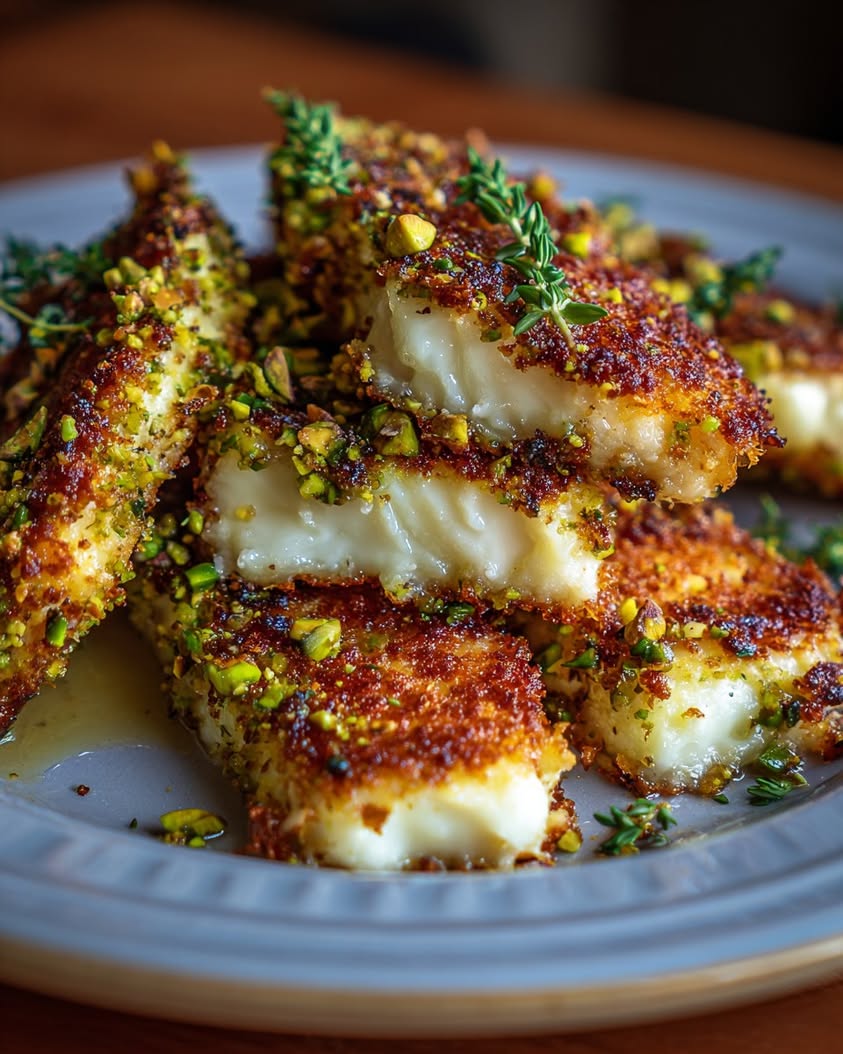
Pistachio-Crusted Halloumi with Honey and Thyme Recipe: A Crispy, Salty-Sweet Appetizer
Imagine a dish that delivers a perfect symphony of textures and flavors in every single bite. This Pistachio-Crusted Halloumi with Honey and Thyme recipe does exactly that. It transforms a simple block of cheese into a gourmet appetizer or light meal that will impress any guest. The process is surprisingly simple, yet the result feels incredibly luxurious and restaurant-worthy.
This recipe centers on the magical combination of salty, squeaky halloumi cheese and a crunchy, nutty pistachio crust. A final drizzle of warm, fragrant honey infused with fresh thyme brings everything together. Consequently, you get a beautiful balance of savory, sweet, and herbal notes. It is a fantastic option for a quick weeknight treat or an elegant starter for a dinner party.
The beauty of this Pistachio-Crusted Halloumi with Honey and Thyme recipe lies in its versatility. You can serve it over a simple salad for a complete lunch, arrange it on a platter with fresh fruit, or simply enjoy it straight from the pan. Moreover, it comes together in under thirty minutes, making it the ultimate solution for last-minute entertaining or a craving for something special.
Quick Recipe Highlights
- Flavor Profile: This dish masterfully combines the salty, briny flavor of pan-fried halloumi with the rich, buttery taste of crushed pistachios. The warm honey and thyme drizzle adds a delicate sweetness and an aromatic, earthy finish that ties all the elements together perfectly.
- Texture: You experience a fantastic contrast between the crispy, golden-brown pistachio crust and the soft, slightly chewy interior of the melted halloumi cheese. Each bite offers a satisfying crunch followed by a creamy, stretchy mouthfeel that is utterly addictive.
- Aroma: As the halloumi fries, it releases a savory, milky scent. Simultaneously, the toasting pistachios fill your kitchen with a warm, nutty fragrance. Finally, the gentle heating of honey with fresh thyme creates a sweet and herbaceous aroma that announces the dish is ready.
- Visual Appeal: The presentation is stunning, featuring golden-brown cheese medallions speckled with vibrant green pistachio pieces. A glossy drizzle of golden honey and the tiny green leaves of thyme provide a beautiful finish that looks both rustic and refined on any plate.
- Skill Level Needed: This is a beginner-friendly recipe that requires only basic cooking skills like slicing, coating, and pan-frying. No advanced techniques are necessary, making it an excellent project for novice cooks wanting to create something impressive.
- Special Equipment: You only need a good non-stick or cast-iron skillet and a food processor or a sturdy bag and rolling pin to crush the pistachios. A small saucepan is helpful for warming the honey, but you can also use the microwave.
Recipe Overview
- Difficulty Level: We rate this Pistachio-Crusted Halloumi with Honey and Thyme recipe as easy. The steps are straightforward and sequential. You simply coat the cheese, pan-fry it until golden, and make a quick honey-thyme syrup. There is no complex timing or tricky techniques involved, so success is almost guaranteed.
- Category: This dish fits beautifully into multiple categories. It works perfectly as a standout appetizer or a savory snack. Additionally, served with a side salad or grains, it becomes a satisfying vegetarian main course or a luxurious light lunch.
- Cuisine: While halloumi is a Cypriot cheese, this preparation takes inspiration from modern fusion cuisine. It combines Mediterranean ingredients with a contemporary approach to texture and plating. The use of honey and nuts with cheese is a practice seen across various Middle Eastern and Mediterranean culinary traditions.
- Cost: This is a moderately priced recipe. Halloumi cheese and shelled pistachios are the primary cost drivers. However, because a little goes a long way in terms of flavor and presentation, the dish offers excellent value for special occasions or treating yourself.
- Season: This Pistachio-Crusted Halloumi with Honey and Thyme recipe is wonderful year-round. It feels light and fresh for spring and summer gatherings. Conversely, the warm, nutty elements make it equally comforting during fall and winter months.
- Occasion: It is ideal for casual get-togethers, holiday parties, date nights at home, or even a fancy solo dinner. Its quick preparation and wow-factor presentation make it a reliable choice for any event where you want to serve something memorable.
Why You’ll Love This Recipe
First and foremost, the taste and texture combination is absolutely irresistible. The initial crunch of the salty pistachio crust gives way to the soft, stretchy halloumi. Then, the sweet, floral honey cuts through the richness, while the thyme adds a sophisticated herbal note. Every component has a purpose, creating a harmonious and complex flavor profile in a single bite. Furthermore, the contrast between hot, crispy cheese and cool, drizzled honey is a sensory experience you will want to repeat again and again.
From a practical standpoint, the convenience of this Pistachio-Crusted Halloumi with Honey and Thyme recipe is a major win. It requires minimal prep time and uses a handful of high-quality ingredients. You likely have honey and thyme already. The cooking process is fast and contained to one or two pans, meaning cleanup is a breeze. Therefore, you can create a gourmet-tasting dish with very little effort and almost no mess, which is a huge benefit for busy home cooks.
Nutritionally, this dish offers some interesting advantages. Halloumi is a good source of protein and calcium, though it is higher in sodium and fat. Pistachios contribute healthy fats, fiber, and essential nutrients like vitamin B6. Using a high-quality, raw honey also provides antioxidants. While it is a rich dish best enjoyed in moderation, it is certainly a more wholesome and satisfying option than many processed appetizers or snacks.
The social and entertaining value of this recipe cannot be overstated. It is a guaranteed conversation starter. Guests are always delighted by the innovative use of halloumi and the beautiful presentation. Because it is so quick to make, you can prepare it fresh while socializing, ensuring it arrives at the table perfectly hot and crispy. It elevates any gathering from ordinary to extraordinary with minimal stress on the host.
Finally, considering the cost-effectiveness and accessibility, this Pistachio-Crusted Halloumi with Honey and Thyme recipe performs well. While premium ingredients like halloumi and pistachios are an investment, they transform a simple block of cheese into a restaurant-quality dish that would cost significantly more to order out. The ingredients are also widely available in most well-stocked supermarkets, making this gourmet experience accessible to almost anyone.
Historical Background and Cultural Significance
The story of this dish begins with its star ingredient: halloumi. This unique cheese originated in Cyprus centuries ago, with its first recorded mention dating back to the medieval Byzantine era. Traditionally made from a mixture of sheep’s and goat’s milk, halloumi was prized for its high melting point. This characteristic allowed Cypriot shepherds to grill or fry it over open fires without it losing its shape. Consequently, it became a staple protein source that was both portable and durable in the Mediterranean climate.
Halloumi holds deep cultural importance in Cypriot and broader Levantine cuisine. It is more than just food; it is a symbol of heritage and communal living. Families often made large batches together, using recipes passed down through generations. The cheese was typically stored in its salty brine, which acted as a natural preservative. This made it a crucial resource during times when fresh food was scarce. Today, halloumi enjoys Protected Designation of Origin (PDO) status from the European Union, safeguarding its traditional production methods and Cypriot origin.
The evolution of the Pistachio-Crusted Halloumi with Honey and Thyme recipe is a modern tale of culinary fusion. While halloumi has long been served grilled with a squeeze of lemon, contemporary chefs began experimenting with crusts and glazes to enhance its texture and flavor profile. The practice of crusting proteins with nuts is common in various global cuisines. Applying this technique to halloumi was a natural, innovative step. The addition of honey and thyme draws directly from Mediterranean and Middle Eastern flavor pairings, where sweet and savory combinations are celebrated.
Regional variations on this concept are plentiful. In Greece, one might find halloumi drizzled with thyme honey from Mount Hymettus. In parts of the Middle East, a similar cheese might be coated in sesame seeds or served with a date syrup. Some modern interpretations use different nuts like almonds or walnuts, or incorporate spices like za’atar or sumac into the crust. The basic formula of crispy cheese with a sweet accent is wonderfully adaptable, allowing cooks to incorporate local ingredients and personal tastes.
Ingredient Deep Dive
Let us start with halloumi, the foundation of this recipe. This semi-hard, brined cheese from Cyprus is traditionally made from a blend of sheep’s and goat’s milk, though cow’s milk versions are now common. Its unique property is that it does not melt when heated; instead, it softens, browns beautifully, and develops a delightful squeaky texture. Nutritionally, it is high in protein and calcium but also in saturated fat and sodium due to the brining process. For the best results, look for halloumi packed in brine and pat it very dry before using. Store any unused portion submerged in its brine in the refrigerator.
Pistachios bring the essential crunch and flavor to the crust. Historically, pistachios have been cultivated in the Middle East for thousands of years and are often associated with luxury and wellness. They are packed with nutrients, including healthy fats, protein, fiber, and antioxidants like lutein. For this Pistachio-Crusted Halloumi with Honey and Thyme recipe, use raw, unsalted pistachios for the best control over seasoning. You can find them shelled to save time. Store pistachios in an airtight container in the fridge or freezer to prevent their oils from turning rancid.
Honey acts as the sweet, glossy bridge that balances the dish’s saltiness. Using a high-quality, flavorful honey like wildflower, orange blossom, or a robust thyme honey will elevate the recipe immensely. Honey has natural preservative qualities and has been used both as food and medicine across cultures for millennia. For a smoother drizzle, gently warm the honey before mixing in the thyme. If your honey has crystallized, simply place the jar in a bowl of warm water to liquefy it again. Always store honey at room temperature in a sealed container.
Fresh thyme provides the aromatic, earthy note that cuts through the richness. This hardy Mediterranean herb has a long history of culinary and medicinal use. Its tiny leaves are packed with essential oils that release their flavor when heated. For this recipe, you need only a few sprigs. Strip the leaves from the woody stems by running your fingers down the stem. If you cannot find fresh thyme, you can use half the amount of dried thyme, though the fresh herb provides a brighter, more complex aroma.
Common Mistakes to Avoid
- Not Drying the Halloumi: Failing to pat the halloumi completely dry with paper towels is a critical error. Excess moisture will steam the cheese instead of allowing it to sear properly. Consequently, you will not achieve that desirable golden, crispy crust. Always take a moment to dry each slice thoroughly on all sides.
- Overheating the Honey: When warming the honey with thyme, use very low heat. Boiling or overheating honey can destroy its delicate floral notes and cause it to become bitter. The goal is simply to warm it enough to become fluid and infuse the thyme flavor, not to cook it.
- Using a Cold Pan: Adding the halloumi to a cold skillet will cause it to absorb oil and become greasy. Always ensure your pan is properly preheated over medium heat before adding the oil and coated cheese. A properly heated pan ensures immediate searing and a clean release.
- Overcrowding the Pan: Placing too many slices in the pan at once will drop the temperature drastically. This leads to steaming and soggy crusts. Cook in batches if necessary, giving each piece ample space to fry evenly and develop a perfect crust on all sides.
- Moving the Cheese Too Soon: After placing the halloumi in the hot pan, resist the urge to move it immediately. Let it cook undisturbed for about 1-2 minutes to form a solid, golden crust. If you try to flip it too early, the pistachio coating may stick to the pan and tear off.
- Skipping the Pistachio Crushing Step: Simply chopping pistachios with a knife often results in uneven pieces. For the best adhesion and texture, pulse them in a food processor until they resemble coarse sand. Alternatively, place them in a sealed bag and crush them with a rolling pin for more control.
- Using Pre-Grated or Powdered Pistachios: Avoid using store-bought pistachio flour or very fine powder. The crust needs some texture from small pieces to provide that satisfying crunch. Finely ground nuts can also burn more easily in the hot pan.
- Serving Immediately Without Resting: While you want to serve the halloumi hot, letting it rest for just a minute on a wire rack after frying allows the crust to set slightly. This prevents the hot cheese from steaming inside the crust and making it soggy on the plate.
Essential Techniques
Proper Searing is the most important technique for this Pistachio-Crusted Halloumi with Honey and Thyme recipe. Searing creates the Maillard reaction, which is the chemical process that gives the cheese its deep golden-brown color and rich, nutty flavor. To master it, ensure your pan is hot before adding oil, and then add the cheese. Do not move the slices until a crust has formed. A common pitfall is a pan that is not hot enough, leading to pale, oily cheese. The visual cue for success is a crisp, browned crust that releases easily from the pan when gently nudged with a spatula.
Creating an Even Crust is another key skill. The goal is a uniform layer of crushed pistachios that adheres well to the cheese. First, ensure your halloumi slices are dry. Then, press each side firmly into the crushed nuts, using the palm of your hand to encourage adhesion. A common mistake is a patchy coating, which results from not applying enough pressure. The crust should look like a consistent, textured blanket on the cheese. If crumbs fall off, simply press them back on before frying.
Infusing the Honey correctly elevates the entire dish. This gentle technique involves warming the honey just enough to become fluid and allow the thyme’s essential oils to release into it. Do not boil the mixture. Simply combine them in a small saucepan over the lowest possible heat for 2-3 minutes, then remove from the heat and let it steep. A common pitfall is using high heat, which can caramelize the sugars and create a harsh flavor. Success is indicated by a beautifully aromatic honey that is warm and pourable.
Pro Tips for Perfect Pistachio-Crusted Halloumi
For an extra-flavorful crust, toast the pistachios in a dry pan for a few minutes before crushing them. This deepens their nutty flavor and adds another layer of complexity to the dish.
If your halloumi is very salty, you can soak the slices in cold water or milk for 10-15 minutes before drying and coating. This helps draw out some excess salt for a more balanced final flavor.
Use a neutral, high-smoke-point oil for frying, such as avocado oil or refined coconut oil. Olive oil can burn at the temperatures needed for a good sear and may impart a bitter taste.
After frying, place the halloumi on a wire rack instead of a paper towel-lined plate. This allows air to circulate around the entire piece, preventing the bottom crust from getting soggy from trapped steam.
Add a pinch of flaky sea salt to the finished dish just before serving. The different salt textures and the final salty pop enhance the sweet honey and rich cheese beautifully.
For a more pronounced thyme flavor, add a fresh thyme sprig to the hot oil for a few seconds before frying the halloumi. Remove the sprig before adding the cheese to avoid burning.
If serving as part of a platter, drizzle the honey-thyme syrup over and around the halloumi, not just on top. This creates a more elegant presentation and allows guests to drag each piece through the sauce.
Let the honey-thyme infusion cool slightly before drizzling. Very hot honey can cause the halloumi’s crust to soften. A warm drizzle is perfect.
Variations and Adaptations
For regional variations, consider incorporating spices from different cuisines. Add a teaspoon of za’atar or sumac to the crushed pistachios for a Levantine twist. Alternatively, use crushed almonds and drizzle with pomegranate molasses for a Persian-inspired version. In a Greek direction, use chopped walnuts and finish with a fig jam reduction instead of honey.
Seasonal adaptations are simple and effective. In the summer, serve the halloumi over a bed of peppery arugula with fresh peach or nectarine slices. During the fall, pair it with roasted squash or pear. For a winter appetizer, serve it alongside a spiced pear chutney. In spring, fresh mint or lemon zest can be added to the honey-thyme syrup for a brighter note.
Dietary modifications are straightforward. For a gluten-free version, ensure your pistachios are processed in a gluten-free facility. The recipe is naturally vegetarian. To make it vegan, seek out a reliable vegan halloumi alternative, though searing results may vary. For a lower-fat option, you can bake the coated halloumi on a parchment-lined sheet at 400°F until golden, flipping once.
Flavor variations can keep this recipe exciting. Mix grated lemon or orange zest into the pistachio crust. Add a pinch of chili flakes or smoked paprika to the crust for a spicy kick. Substitute the thyme with fresh rosemary or sage for a different herbal profile. You can even use maple syrup instead of honey for a distinct, earthy sweetness.
Texture modifications can also be fun. For a finer, more delicate crust, process the pistachios into a slightly finer meal. For more crunch, mix in some panko breadcrumbs with the crushed pistachios. You could also create a “double-crust” by dipping the halloumi in a light egg wash or yogurt before pressing into the nuts for maximum adhesion.
Presentation alternatives include cutting the halloumi into different shapes. Try cubes for skewers, or thin strips for a finger-food style. Instead of drizzling, serve the honey-thyme mixture in a small dipping bowl on the side. You can also present the halloumi on individual spoons or small slate boards for a passed appetizer at a party.
Serving and Presentation Guide
Plating techniques matter for visual impact. For a composed appetizer, place one or two slices of the Pistachio-Crusted Halloumi slightly off-center on a white or neutral-colored plate. Use a spoon to artistically drizzle the warm honey-thyme syrup around the cheese, not just on top. This creates negative space and makes the golden crust the star. Alternatively, for a family-style presentation, arrange all the slices overlapping on a rustic wooden board or a simple platter.
Garnishing ideas should enhance, not overwhelm. A few extra whole or roughly chopped pistachios scattered around the plate add texture. Tiny fresh thyme sprigs or leaves provide a pop of green. A light sprinkle of edible flowers, like nasturtiums or chive blossoms, makes the dish exceptionally elegant for a special occasion. A final dusting of very finely grated lemon zest adds color and a citrus aroma.
Traditional accompaniments keep the focus Mediterranean. Serve with warm pita bread or flatbread for scooping up any leftover honey. A simple salad of chopped cucumber, tomato, red onion, and parsley with a lemon-olive oil dressing cuts through the richness. Olives, marinated artichoke hearts, and roasted red peppers also make excellent companions on a mezze platter.
Modern serving suggestions can be more inventive. Slice the halloumi and serve it atop a grain bowl with quinoa, roasted vegetables, and a lemony tahini dressing. Crumble it over a hearty fall salad with apples and walnuts. Alternatively, use it as a luxurious topping for a creamy soup, like butternut squash or tomato basil.
Temperature considerations are crucial. Halloumi is best served immediately after frying while the crust is hot and crisp and the interior is soft. The honey-thyme syrup should be warm, not hot. If you must hold the dish, keep the components separate until the last possible moment. Place fried halloumi on a rack in a warm oven, and gently re-warm the honey just before serving.
Portion control tips depend on the context. As an appetizer, one to two slices per person is sufficient. For a light main course, plan for three to four slices alongside a substantial salad or grain. If serving as part of a larger mezze spread with many other dishes, one slice per person is adequate, as guests will be trying multiple items.
Wine and Beverage Pairing
Wine pairings should complement the dish’s salty, sweet, and rich characteristics. A crisp, dry white wine with good acidity works wonderfully. Consider a Sauvignon Blanc, Pinot Grigio, or a Greek Assyrtiko; their bright citrus notes cut through the fat and refresh the palate. For a rosé option, a dry Provençal style with herbal notes mirrors the thyme beautifully. If you prefer red, choose a light-bodied, low-tannin option like a Pinot Noir or a Beaujolais, which will not overpower the cheese.
Non-alcoholic alternatives can be just as sophisticated. A sparkling water with a squeeze of lemon or lime cleanses the palate between bites. For something more special, try a chilled, non-alcoholic ginger beer; its spice complements the savory notes. A tart pomegranate juice spritzer or a homemade lemon-thyme iced tea also makes a fantastic pairing, echoing the Mediterranean flavors on the plate.
Coffee and tea pairings are excellent if serving this as a brunch item. A medium-roast coffee with nutty or citrusy notes can mirror the pistachios and balance the honey’s sweetness. For tea, a green tea like Sencha or a herbal tea with mint or lemon verbena would be refreshing. Avoid overly bitter or smoky varieties that might clash with the delicate flavors.
Temperature considerations for beverages are standard. White wines, rosés, and non-alcoholic spritzers should be served well-chilled. Red wines should be slightly cooler than room temperature. Non-alcoholic beers or ginger beers are also best served cold. This contrast between the cool drink and the warm, crispy halloumi is part of the enjoyable experience.
Serving suggestions for a party include offering a couple of options. Set out a bottle of chilled white wine and a carafe of a signature non-alcoholic beverage, like a thyme-lemonade. Labeling the pairings with a small card explaining why they work with the Pistachio-Crusted Halloumi with Honey and Thyme adds a thoughtful, educational touch for your guests.
Storage and Shelf Life
Storage methods for leftovers are limited but effective. Halloumi is best enjoyed fresh, but if you have leftovers, let them cool completely to room temperature. Do not stack the slices, as the crust will become soggy. Place them in a single layer on a plate, cover loosely with parchment paper, and refrigerate for up to 24 hours. The honey-thyme syrup can be stored in a sealed jar at room temperature for several weeks.
Temperature requirements are straightforward. Always refrigerate any leftover cooked halloumi. Do not leave it at room temperature for more than two hours after cooking. The honey syrup is shelf-stable due to honey’s natural preservative qualities, but for best flavor, store it in a cool, dark pantry.
Container recommendations include using an airtight container for the halloumi, but place a paper towel at the bottom to absorb any moisture. For the syrup, a glass jar with a tight-fitting lid is perfect. Avoid storing the fried halloumi and the syrup together, as the moisture from the syrup will immediately ruin the crispy crust.
Signs of spoilage for the halloumi include a sour smell, significant moisture or slime on the surface, or any visible mold. The honey-thyme syrup is very stable, but if you see fermentation (bubbles), an off smell, or mold, discard it immediately. When in doubt, it is always safer to throw it out.
Reheating instructions aim to restore crispiness. The oven or toaster oven is your best friend. Preheat to 375°F and place the halloumi on a wire rack set over a baking sheet. Heat for 5-8 minutes until warmed through and crisp. Avoid the microwave, as it will make the crust rubbery and soggy. Gently re-warm the honey syrup in a saucepan or the microwave for a few seconds.
Freezing guidelines are not recommended for this Pistachio-Crusted Halloumi with Honey and Thyme. The texture of the fried cheese and the pistachio crust will suffer dramatically upon thawing and reheating. The high water content in the cheese leads to ice crystals that destroy its texture. This is a dish best made and enjoyed fresh.
Make Ahead Strategies
Prep timeline can ease party-day stress. You can crush the pistachios and store them in an airtight container at room temperature up to 2 days ahead. You can also make the honey-thyme syrup up to a week in advance; simply store it in a jar and gently re-warm it before serving. Slice the halloumi and pat it dry, then store it between layers of paper towels in a sealed container in the fridge for up to a day ahead.
Storage between steps is simple. Keep the prepared components—dry cheese slices, crushed nuts, and infused syrup—in separate containers. This prevents the nuts from getting stale from fridge moisture and keeps the cheese ready for its quick fry. Do not coat the cheese in the pistachios until you are ready to cook, as the moisture from the cheese will soften the crust.
Quality impact assessment is important. Pre-crushing nuts has no negative impact. Making the syrup ahead may even improve the flavor as the thyme infuses more deeply. However, pre-slicing and drying the halloumi is fine, but avoid doing it more than a day ahead, as it can dry out slightly at the edges.
Assembly tips for efficiency: Set up a station with your dried halloumi slices, bowl of crushed pistachios, and a clean plate. Coat all slices just before cooking. Have your honey syrup warming on the lowest stove setting while you fry. This streamlined process means you can go from fridge to plate in under 15 minutes.
Reheating guidelines for pre-fried halloumi are not ideal, but if you must, use the oven method described above. The quality will be lower than fresh, so it is better to do all prep ahead and execute the quick fry just before guests arrive.
Fresh element additions are key. Even if you make the syrup ahead, consider adding a few fresh thyme leaves right before drizzling for a burst of color and aroma. You can also garnish with freshly chopped pistachios at the end to reinforce the nutty flavor and add a textural contrast to any nuts that softened in the crust during frying.
Scaling Instructions
Halving the recipe is simple for a smaller meal. Use half a block of halloumi (about 7 oz), and proportionally reduce the pistachios, honey, and thyme. The cooking time remains the same, but you may use a smaller skillet. This is perfect for a romantic dinner for two. Ensure you still cook in a single layer without overcrowding the pan, even with fewer slices.
Doubling or tripling the recipe for a crowd requires some planning. You will need to fry in multiple batches to avoid overcrowding. Keep the cooked batches warm on a wire rack set over a baking sheet in a 200°F oven. You may need to wipe the skillet and add fresh oil between batches to prevent burnt pistachio crumbs from affecting the flavor of subsequent batches. Scale the honey-thyme syrup accordingly.
Equipment adjustments for larger batches are minimal. You will likely need a larger bowl for the crushed pistachios and a bigger plate for the coated cheese. Having two skillets going simultaneously can speed up the process if you are comfortable managing both. A baking sheet with a wire rack is essential for keeping multiple batches warm and crisp in the oven.
Timing modifications are mostly about batch cooking. The active cooking time will increase linearly with the number of batches. For a doubled recipe (8 servings), plan for about 15-20 minutes of total fry time, working in 2-3 batches. Keep the prep time the same, as slicing and coating more cheese does not take significantly longer.
Storage considerations for scaled-up recipes are the same. This dish does not hold well, so only cook what you plan to serve immediately. You can prepare all components ahead (slice cheese, crush nuts, make syrup) and then fry in batches as needed throughout your event to ensure every guest gets a hot, crispy piece.
Nutritional Deep Dive
Macro breakdown for one serving (approximately two slices) is rich. You can expect a significant amount of protein from the halloumi and pistachios, along with a high fat content, primarily from the cheese’s saturated fat and the healthy monounsaturated fats in the nuts. Carbohydrates come mainly from the honey. This makes it a high-energy, satisfying dish that is low in sugar outside of the added honey. It is not a low-calorie food, but it is nutrient-dense.
Micronutrient analysis reveals some benefits. Halloumi provides a good dose of calcium and phosphorus for bone health. Pistachios contribute B vitamins, copper, and manganese. Honey contains small amounts of antioxidants and minerals. Thyme offers vitamin C, vitamin A, and iron. While not a primary source of vitamins, the dish does provide a range of micronutrients from its whole-food ingredients.
Health benefits are tied to its components. The protein and fat promote satiety, which can help with portion control. The healthy fats from pistachios support heart health. The antioxidants in honey and thyme have anti-inflammatory properties. However, the high sodium and saturated fat content mean it should be enjoyed as part of a balanced diet, not a daily staple.
Dietary considerations are important to note. This recipe is naturally gluten-free and vegetarian. It is not suitable for vegans, those on a dairy-free diet, or people with nut allergies. The high sodium content may be a concern for individuals with hypertension or heart conditions. The honey makes it unsuitable for infants under one year old.
Portion analysis is key to enjoyment. As an appetizer or part of a mezze spread, the portion is reasonable. Eaten as a main course, be mindful of the total calorie and fat intake for the meal. Balancing it with a large, non-starchy vegetable side salad is an excellent way to create a more complete and balanced meal.
Weight management tips include being mindful of the oil used for frying. Use a measured amount and a good non-stick pan to minimize absorption. You can also try the baking method for a lower-fat version. Most importantly, savor this rich dish slowly and mindfully as a treat, rather than a routine meal, to align with any health or weight goals.
Dietary Adaptations
Gluten-free adaptation is simple, as the core recipe contains no gluten. The only potential source is cross-contamination in processed nuts. To ensure it is gluten-free, purchase pistachios that are certified gluten-free and processed in a dedicated facility. All other ingredients are naturally gluten-free.
Dairy-free adaptation requires a cheese substitute. While halloumi is dairy-based, some brands make vegan halloumi alternatives from ingredients like tofu or coconut oil. These can be sliced and prepared in the same way, though searing results and texture will differ. Test your chosen brand ahead of time to manage expectations.
Vegan adaptation combines the dairy-free cheese swap with a sweetener alternative. Use a vegan halloumi substitute and replace the honey with agave nectar, maple syrup, or vegan “bee-free” honey. Ensure all other ingredients, like the nuts, are vegan-friendly. The cooking method remains identical.
Low-carb and Keto adaptations focus on reducing the carbohydrate source. The primary carb here is honey. For a keto version, omit the honey-thyme syrup. Instead, after frying, sprinkle the halloumi with fresh thyme and a few drops of a keto-friendly sweetener like stevia or monk fruit syrup, if desired. The pistachios do contain some carbs, so keep portions moderate to fit your macros.
Paleo adaptation requires omitting the dairy. Use a paleo-friendly cheese alternative if available, or focus on a different protein base like chicken or fish prepared with the same pistachio crust and an herb-infused olive oil drizzle instead of honey. If using honey, ensure it is raw and unprocessed to fit paleo guidelines.
Low-FODMAP adaptation is tricky due to multiple ingredients. Halloumi is high in lactose, pistachios are high in fructans in larger servings, and honey is high in fructose. A true low-FODMAP version would require significant changes: a lactose-free cheese, a small serving of macadamia nuts for the crust (low in FODMAPs), and a maple syrup glaze. Consult a Monash University FODMAP guide for precise serving sizes.
Troubleshooting Guide
Texture issues like a soggy crust often stem from moisture. Ensure the halloumi is thoroughly dried and your oil is hot enough before adding the cheese. If the crust is falling off, you may not have pressed the nuts firmly enough onto the dry cheese surface. Another cause could be moving the cheese too soon in the pan before a crust has formed to seal it on.
Flavor{“success”:true,”message”:”Recipe created successfully”,”post_id”:7899,”tasty_recipe_id”:7899,”shortcode”:” Print
Pistachio-Crusted Halloumi with Honey and Thyme
Description
A savory and sweet appetizer featuring crispy halloumi cheese coated in crushed pistachios, drizzled with honey, and garnished with fresh thyme.
Ingredients
For the Crust:
- 8 oz halloumi cheese, sliced into 1/2-inch thick pieces
- 1/2 cup shelled pistachios, finely chopped
- 1/4 cup all-purpose flour
- 1 large egg, beaten
- 2 tbsp olive oil
- 2 tbsp honey
- 1 tbsp fresh thyme leaves
- Salt and black pepper to taste
Instructions
1. Prepare the Crust:
- Pat the halloumi slices dry with a paper towel and season lightly with salt and pepper.
- Dredge each halloumi slice in flour, dip into the beaten egg, then coat evenly with chopped pistachios, pressing gently to adhere.
- Heat olive oil in a non-stick skillet over medium heat. Cook the coated halloumi slices for 2-3 minutes per side until golden brown and crispy.
- Transfer the halloumi to a serving plate. Drizzle with honey and sprinkle with fresh thyme leaves. Serve immediately.
Notes
You can customize the seasonings to taste.

I’m Billy, a classically trained culinary school graduate from The Culinary Institute of America with over 12 years in the restaurant industry and over 19 years of cooking experience.