
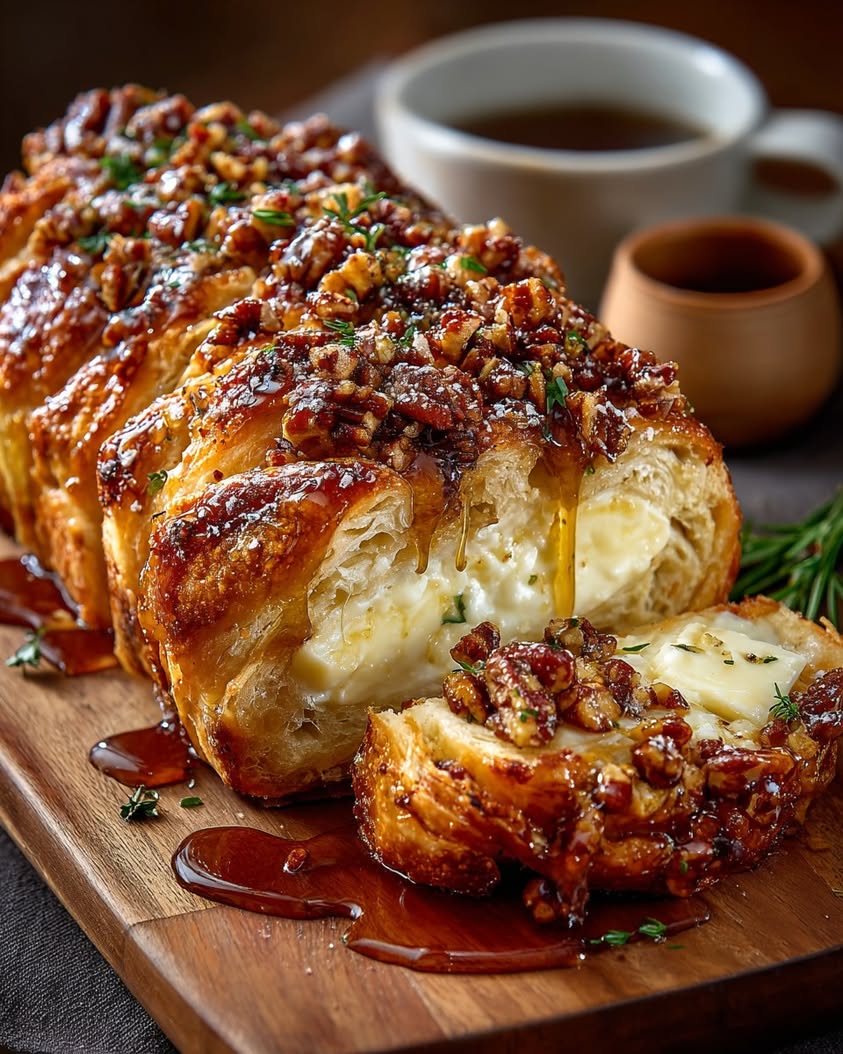
Pull-Apart Brie Croissant Bread with Toasted Pecans and Maple-Honey Glaze: The Ultimate Crowd-Pleasing Appetizer
Imagine pulling apart warm, flaky croissant pieces to reveal a river of melted, creamy Brie cheese. Now picture that decadent pull-apart bread drizzled with a sweet and sticky maple-honey glaze and sprinkled with crunchy toasted pecans. This Maple Pecan Brie Croissant Pull-Apart Bread is not just a recipe; it is a centerpiece, a conversation starter, and the easiest way to become the hero of any gathering. Consequently, it transforms a few simple ingredients into a show-stopping appetizer that feels gourmet but requires minimal effort. The combination of savory, sweet, and nutty flavors creates a perfect bite every single time.
This recipe is the ultimate solution for effortless entertaining. Whether you are hosting a holiday party, a game day get-together, or a cozy brunch, this pull-apart bread delivers maximum impact with minimal kitchen time. The process is wonderfully straightforward: you start with store-bought croissant dough, which bakes into golden, buttery layers. Meanwhile, you nestle rich Brie cheese inside, allowing it to melt into gooey perfection. Finally, you finish the whole creation with a homemade glaze and pecans for that essential textural contrast. Ultimately, this dish proves that impressive food does not have to be complicated.
The sensory experience is truly unforgettable. As the Maple Pecan Brie Croissant Pull-Apart Bread bakes, your kitchen will fill with the irresistible aromas of baking pastry and toasting nuts. Upon pulling it from the oven, you will see the golden-brown, puffed crown begging to be torn into. The first pull reveals long, cheesy strings of melted Brie, while the sweet glaze drips down the sides. Each bite offers a symphony of textures: the crisp exterior of the croissant, the soft, molten cheese, the sticky-sweet glaze, and the satisfying crunch of pecans. It is a guaranteed crowd-pleaser that disappears within minutes.
Quick Recipe Highlights
- Flavor Profile: This dish masterfully balances rich, creamy Brie with the deep, caramel-like sweetness of pure maple syrup and honey. The toasted pecans add a nutty, buttery depth that cuts through the richness, creating a complex and addictive taste experience in every single bite.
- Texture: You get a fantastic contrast between the flaky, layered croissant exterior and the impossibly gooey, melted Brie interior. Furthermore, the sticky glaze adds a lovely tackiness, while the toasted pecans provide the essential crunchy element that makes the texture profile complete and utterly satisfying.
- Aroma: While baking, the scent of buttery pastry and warming cheese will permeate your home. The final drizzle of warm maple-honey glaze introduces sweet, woody notes, and the toasted pecans contribute a warm, earthy fragrance that makes the dish impossible to resist.
- Visual Appeal: This pull-apart bread is a rustic beauty. It emerges from the oven golden and puffed, with visible, tempting layers. The glossy glaze cascades over the top, catching the light, and the toasted pecans add visual texture and a promise of crunch, making it perfect for social media or your holiday table.
- Skill Level Needed: This is a beginner-friendly recipe designed for success. If you can unroll dough, use a knife, and operate an oven, you can absolutely make this stunning appetizer. There are no advanced techniques required, making it an ideal project for novice cooks who want to impress their guests effortlessly.
- Special Equipment: You only need very basic kitchen tools. A sharp knife for cutting, a small bowl for mixing the glaze, a baking sheet, and parchment paper are the only essentials. A pastry brush can be helpful for applying the glaze, but a spoon works perfectly well in a pinch.
Recipe Overview
- Difficulty Level: We classify this Maple Pecan Brie Croissant Pull-Apart Bread as “Easy” for several compelling reasons. First, it utilizes convenient, pre-made croissant dough, eliminating the need for any pastry-making skills. Second, the assembly involves simple cutting and stuffing, not precise shaping or folding. Finally, the glaze is a straightforward two-ingredient mix. Therefore, even a kitchen novice can achieve spectacular, professional-looking results without stress.
- Category: This versatile dish fits beautifully into multiple categories. Primarily, it shines as a warm, shareable appetizer or party snack. Additionally, it makes a luxurious addition to a brunch or breakfast spread alongside fresh fruit and coffee. Some may even enjoy it as a unique and indulgent dessert option, particularly when served with a scoop of vanilla ice cream.
- Cuisine: This recipe is a modern fusion creation with roots in American comfort food and French-inspired ingredients. It takes the classic French croissant and Brie cheese and combines them with distinctly North American flavors like maple syrup and pecans. The result is a contemporary, crowd-pleasing dish that feels both familiar and excitingly new.
- Cost: Making this pull-apart bread is surprisingly economical for its impressive payoff. A tube of croissant dough, a small wheel of Brie, maple syrup, honey, and pecans are all relatively affordable, especially when you consider the recipe serves six. Compared to ordering a similar appetizer at a restaurant, you can create this at home for a fraction of the price, making it a cost-effective choice for entertaining.
- Season: While this recipe is fantastic year-round, it feels particularly special during the fall and winter holidays. The warm, cozy flavors of maple and toasted nuts evoke autumn, making it perfect for Thanksgiving or Halloween. Simultaneously, its festive, shareable nature makes it a star for Christmas parties, New Year’s Eve, and any cold-weather gathering where comfort food is king.
- Occasion: This is the ultimate party food. It is ideal for potlucks, book clubs, game day celebrations, and holiday open houses. Moreover, it is a wonderful treat for a cozy girls’ night in or a family movie night. Any event where people gather to share food and conversation is the perfect occasion for this interactive, delicious centerpiece.
Why You’ll Love This Recipe
First and foremost, the taste and texture appeal is absolutely undeniable. This Maple Pecan Brie Croissant Pull-Apart Bread delivers a perfect bite every single time. You experience the initial crunch of the flaky, golden croissant layers, followed by the luxurious, creamy melt of the Brie cheese. Next, the sweet and slightly smoky maple-honey glaze coats your palate, and finally, the toasted pecans provide a satisfying, buttery crunch. This combination of savory, sweet, and nutty flavors is complex yet harmonious, making it utterly addictive and impossible to stop eating. Consequently, it satisfies multiple cravings in one spectacular dish.
Furthermore, the convenience and preparation benefits are a major win for any home cook. This recipe is the epitome of “semi-homemade” done right. By starting with quality store-bought croissant dough, you save hours of labor without sacrificing any of the buttery, layered pastry texture people love. The assembly is intuitive and fun, almost like a culinary craft project. You simply cut, stuff, and bake. Therefore, you can focus your energy on presentation and hosting rather than being stuck in the kitchen, which is a huge advantage when you have guests arriving.
Additionally, while this is an indulgent treat, it offers some nutritional advantages when enjoyed in moderation. Pecans are a good source of healthy fats, fiber, and important minerals like manganese. Pure maple syrup contains antioxidants and minerals like zinc and manganese, offering a more natural sweetener option compared to refined sugars. Brie cheese provides protein and calcium. Of course, this is a celebratory food, but understanding that its components have some nutritional merit makes enjoying it feel like a more balanced choice within a varied diet.
Moreover, the social and entertaining value of this dish is through the roof. Food that encourages interaction and sharing naturally brings people together. This pull-apart bread is inherently communal; there are no plates or forks required initially. Guests gather around, tearing off pieces, laughing, and enjoying the gooey, cheesy spectacle. It breaks the ice and becomes a focal point for conversation. Serving this dish shows thoughtfulness and a desire to create a memorable, engaging experience for your friends and family, which is the true heart of hospitality.
Finally, the cost-effectiveness and accessibility of the ingredients make this recipe a smart choice. You likely already have honey in your pantry. The other components—refrigerated croissant dough, a small Brie wheel, maple syrup, and pecans—are readily available at any standard grocery store and are not prohibitively expensive. For the price of one fancy cheese board at a restaurant, you can make this entire show-stopping appetizer at home. This accessibility means you can recreate a gourmet experience anytime the craving strikes, without needing a special occasion or a big budget.
Historical Background and Cultural Significance
The story of pull-apart bread is deeply rooted in the universal human tradition of sharing bread. From ancient flatbreads torn by hand to modern monkey bread, the act of pulling food apart to share is a primal form of community dining. This Maple Pecan Brie Croissant Pull-Apart Bread is a contemporary, elevated twist on that ancient practice. It specifically draws inspiration from American “monkey bread” or “pull-apart bread,” a sweet, sticky treat popularized in the mid-20th century, often made with canned biscuit dough, cinnamon, and sugar. Our savory-sweet version swaps the cinnamon for cheese and nuts, reflecting modern flavor trends.
Culturally, this dish sits at a fascinating intersection. It uses the croissant, a symbol of French patisserie with a history dating back to Austria. It incorporates Brie, one of France’s most famous and beloved cheeses, known as the “King of Cheeses.” However, it then introduces distinctly North American ingredients: maple syrup, a staple sweetener first used by Indigenous peoples, and pecans, a native North American nut. This fusion creates a dish that is not tied to one tradition but celebrates a global pantry, which is very characteristic of modern American cooking that freely blends influences from around the world.
The evolution of this specific recipe follows the larger trend of “cheese pull” foods dominating social media and contemporary appetizer menus. Consumers today are drawn to visually engaging, interactive foods. The dramatic, stringy cheese pull from a baked Brie or melted mozzarella is incredibly photogenic and satisfying to watch. This Maple Pecan Brie Croissant Pull-Apart Bread is designed to maximize that visual and tactile appeal. It takes the viral concept of baked Brie and encases it in a portable, shareable bread vessel, making it even more perfect for parties and digital sharing. It is a recipe born for the Instagram era.
Regarding regional variations, the core concept is wonderfully adaptable. In the South, you might find a version using bourbon in the glaze instead of plain maple syrup. In areas with strong Italian influences, the Brie could be swapped for fresh mozzarella with a rosemary-infused honey. For a holiday version, cranberries or dried cherries might be added to the nut topping for a festive tartness. The use of local honey or different native nuts can also personalize the dish. This adaptability is key to its widespread appeal; it is a template that welcomes creativity based on local tastes and seasonal ingredients, ensuring it never gets boring.
Ingredient Deep Dive
Refrigerated Croissant Dough: This is the convenient foundation of our Maple Pecan Brie Croissant Pull-Apart Bread. Croissants originated in Austria but were perfected in France, becoming a global symbol of a leisurely breakfast. The laminated dough is made by folding butter into the dough repeatedly, creating those iconic, flaky layers when baked. Using a high-quality, pre-made version saves immense time. For best results, ensure the dough is cold when you work with it to keep the butter layers distinct. If unavailable, canned crescent roll dough can be pinched together, or you could use pre-made puff pastry for an even richer, flakier result.
Brie Cheese: Brie is a soft-ripened cow’s milk cheese named after the French region from which it originated. Its edible, bloomy white rind is created by a specific mold, which helps the interior mature into a creamy, buttery texture. When baked, Brie transforms into a velvety, liquid center that is pure luxury. For this recipe, choose a ripe but not oozing wheel; it should give slightly when pressed. You can leave the rind on—it is perfectly edible and helps contain the melt. For a stronger flavor, try a triple-cream Brie. If substituting, Camembert is the closest relative, offering a similar texture and flavor profile.
Pure Maple Syrup: Maple syrup is the boiled-down sap of sugar maple trees, a process first developed by Indigenous peoples of northeastern North America. It takes about 40 gallons of sap to make one gallon of syrup. Grade A Amber Color syrup is ideal for this recipe, offering a robust maple flavor without being too dark. It provides a natural, complex sweetness with notes of caramel and wood. Avoid “pancake syrup,” which is typically corn syrup with artificial flavor. Maple syrup is rich in antioxidants like polyphenols. Store it in the refrigerator after opening to prevent mold. For a deeper flavor, you could use Grade B syrup.
Honey: Honey is one of the world’s oldest sweeteners, produced by bees from flower nectar. Its flavor varies dramatically based on the floral source; clover or wildflower honey works beautifully here. Honey not only sweetens but also helps create a glossy, sticky glaze that sets slightly as it cools. It contains natural enzymes and has antimicrobial properties. When combined with maple syrup, it creates a more complex sweetness than either could achieve alone. For a unique twist, try a flavored honey like orange blossom or chestnut. If the honey is crystallized, gently warm the jar in a bowl of hot water to liquefy it before using.
Pecans: Pecans are the only major tree nut indigenous to North America, primarily grown in the southern United States and Mexico. Their name comes from an Algonquin word meaning “a nut requiring a stone to crack.” They have a rich, buttery flavor and a satisfying crunch that is essential for balancing the soft textures in this pull-apart bread. Toasting them is a non-negotiable step; it deepens their flavor and maximizes crunch. Store pecans in the freezer to prevent their high oil content from turning rancid. For a different nut profile, walnuts are an excellent substitute, offering a slightly more bitter, earthy note that also pairs wonderfully with maple and cheese.
Common Mistakes to Avoid
- Using Dough That’s Too Warm: If the croissant dough becomes overly soft and sticky while you are handling it, the butter layers will melt prematurely. Consequently, you will lose the distinct, flaky texture in the final bake. Always work quickly and return the dough to the fridge for a few minutes if it feels like it is getting too warm or difficult to manage.
- Not Toasting the Pecans: Skipping the toasting step is a major flavor misstep. Raw pecans are soft and lack the deep, nutty aroma that defines this dish. Toasting them in a dry skillet or the oven for just 5-7 minutes wakes up their oils and intensifies their flavor, providing the necessary crunchy contrast to the soft cheese and bread.
- Overbaking the Brie: While you want the croissant dough to be fully golden brown, baking for too long can cause the Brie to separate and become oily or grainy. The cheese should be completely melted and oozy, not broken. Watch the bread carefully in the last few minutes of baking and remove it as soon as the pastry is deeply golden.
- Cutting the Brie with the Rind Still On Into the Dough: While the rind is edible and should be left on the bottom of the wheel, you must remove the top rind before placing the cheese on the dough. If you leave it on top, it will create a tough, chewy barrier that prevents the creamy cheese from properly melting and integrating with the bread as it bakes.
- Applying the Glaze While the Bread is Cold: The maple-honey glaze should be drizzled over the warm bread immediately after it comes out of the oven. The residual heat helps the glaze thin out and seep into the nooks and crannies. If you wait until the bread cools, the glaze will just sit on top in a thick, sticky layer and not permeate the pastry.
- Using Imitation Maple Syrup: “Pancake syrup” or table syrup is primarily high-fructose corn syrup with artificial flavoring and coloring. It will give your glaze a one-dimensional, cloying sweetness and an artificial taste. Always opt for 100% pure maple syrup for its complex, caramelized flavor that is irreplaceable in this recipe and pairs authentically with the pecans.
- Not Letting it Rest Before Serving: As tempting as it is to dive in immediately, allowing the Maple Pecan Brie Croissant Pull-Apart Bread to rest for 5-10 minutes after glazing is crucial. This brief rest allows the molten cheese to set slightly, preventing severe burns and making it easier to pull apart without everything collapsing into a single gooey mass.
- Using a Dull Knife to Cut the Dough: A dull knife will drag and press down on the delicate croissant layers, sealing them together instead of creating clean cuts. Use a very sharp chef’s knife or even a pizza wheel to make clean, swift cuts through the dough. This ensures the segments will pull apart cleanly after baking.
Essential Techniques
Toasting Nuts: Toasting nuts is a simple but transformative technique. It drives off moisture and triggers the Maillard reaction, which develops hundreds of new flavor compounds, making the nuts taste richer, deeper, and more complex. To master it, spread the pecans in a single layer on a dry baking sheet. Toast in a 350°F oven for 5-8 minutes, shaking the pan once, until fragrant and slightly darkened. Alternatively, toast them in a dry skillet over medium heat, stirring constantly. The common pitfall is walking away; nuts can burn in seconds. Watch for visual cues: they are done when you can smell their aroma and they have taken on a slightly darker color.
Working with Laminated Dough: Laminated dough, like croissant dough, has thin layers of butter folded between layers of dough. The key to preserving its flaky texture is keeping the butter cold. If the butter melts before baking, it will soak into the dough instead of creating steam pockets between the layers. Therefore, work quickly, use a sharp tool for cutting, and handle the dough as little as possible with warm hands. If the dough becomes soft and sticky, chill it for 10 minutes. The visual cue for success is seeing distinct, separate layers on the edges of your cut pieces before they go into the oven.
Creating a Glaze: A good glaze should be thick enough to coat but thin enough to drizzle. For this maple-honey glaze, simply whisking the two ingredients together is the technique. However, if your honey is very thick, you may need to gently warm the mixture in the microwave for 10-15 seconds to make it more fluid. The goal is a cohesive, pourable syrup. A common mistake is making it too thick, which results in globs, or too thin, which will make the bread soggy. The perfect consistency ribbons off a spoon. If it’s too thick, add a few drops of warm water. If too thin, add a bit more honey.
Baking for Optimal Melt and Color: This technique involves managing two components with different ideal doneness points: the dough needs to be fully cooked and golden, while the cheese needs to be just melted. Place the bread on the middle rack to ensure even heating. The visual cue for the dough is a deep, golden-brown color on the highest points. To check the cheese, gently nudge the pan; you should see the cheese jiggle like a liquid. If the top is browning too quickly before the center is hot, tent the bread loosely with aluminum foil for the last few minutes of baking.
Pro Tips for Perfect Pull-Apart Brie Croissant Bread
- For an extra flavor boost, add a pinch of flaky sea salt over the glaze right after drizzling. The salty crystals will contrast beautifully with the sweet glaze and rich cheese, elevating every single bite.
- If your Brie wheel is very cold and firm, let it sit at room temperature for 15-20 minutes before attempting to slice off the top rind. A slightly softened cheese is much easier and safer to cut with a sharp knife.
- Consider adding a teaspoon of fresh thyme leaves or a pinch of crushed rosemary to the glaze mixture. The herbal note adds a wonderful aromatic complexity that cuts through the richness and makes the dish feel even more gourmet.
- For easier cleanup and to prevent any sticky glaze from baking onto your pan, always line your baking sheet with parchment paper. Silicone baking mats also work perfectly for this recipe.
- To ensure even baking and a beautiful rise, arrange the stuffed dough triangles in a circle with the points facing the center, like the petals of a flower. This shape is not only attractive but also helps the heat circulate evenly.
- If you want to prep ahead, you can cut the dough, place the Brie, and assemble the whole bread on the parchment-lined sheet. Then, cover it tightly with plastic wrap and refrigerate for up to 4 hours before baking. Add 2-3 minutes to the bake time if starting from cold.
- For a more dramatic presentation, use kitchen shears to cut the baked bread into serving portions right at the table. The sound of the crisp pastry cutting is part of the fun and spectacle for your guests.
- If you have any leftover glaze, warm it slightly and serve it on the side for dipping. This allows guests who want an extra hit of sweetness to customize their own pieces perfectly.
Variations and Adaptations
Regional Variations: Embrace local flavors to create a unique twist. In the South, add a tablespoon of bourbon to the glaze and use toasted Georgia pecans. For a Pacific Northwest version, use hazelnuts instead of pecans and a blackberry-infused honey. In New England, a sprinkle of dried cranberries over the glaze before baking adds a classic tart note that complements the maple perfectly.
Seasonal Adaptations: Make this dish work for any season. In spring, incorporate lemon zest into the glaze and top with chopped pistachios. For summer, use a lighter honey like orange blossom and add fresh basil ribbons after baking. In autumn, stick with the classic maple-pecan but add a pinch of pumpkin pie spice to the glaze. For a winter holiday version, fold a handful of chopped dried cranberries or cherries in with the Brie before baking.
Dietary Modifications: This recipe is wonderfully adaptable. For a gluten-free version, use a certified gluten-free crescent dough or puff pastry. To make it dairy-free, substitute the Brie with a high-quality vegan cream cheese or a melty vegan cheese alternative, though the pull may be less dramatic. For a nut-free version, simply omit the pecans and consider a topping of toasted pumpkin seeds (pepitas) or sunflower seeds for crunch.
Flavor Variations: The basic formula is a perfect canvas for creativity. Swap the Brie for Camembert and add a layer of fig jam beneath the cheese. For a savory herb version, mix chopped fresh rosemary and garlic into the melted butter brushed on the dough before adding cheese. For a spicy kick, add a teaspoon of chili crisp or red pepper flakes to the glaze. A “Everything Bagel” version could include everything bagel seasoning sprinkled over the glaze.
Texture Modifications: Play with the textural elements. For extra crunch, mix the toasted pecans with some panko breadcrumbs tossed in melted butter before sprinkling over the glaze. For a softer, more bread-pudding-like interior, brush the dough triangles with a mix of egg and cream before assembling, which will yield a richer, more custardy final product.
Presentation Alternatives: Instead of a free-form circle, assemble the stuffed triangles in a well-greased Bundt pan for a stunning wreath-shaped pull-apart bread that inverts onto a platter. For individual servings, use a muffin tin: place one dough triangle in each cup, add a small cube of Brie, fold over, and bake. These mini versions are perfect for portion control and easy serving at larger parties.
Serving and Presentation Guide
Plating Techniques: Present your Maple Pecan Brie Croissant Pull-Apart Bread directly on the parchment-lined baking sheet for a rustic, casual feel, or carefully transfer it to a wooden cutting board or a large, decorative platter. If transferring, use two large spatulas for support. Place the bread in the center of your serving area with a small bowl for discarded parchment scraps nearby. This central placement encourages gathering and interaction, which is the whole point of this shareable dish.
Garnishing Ideas: While the toasted pecans are part of the recipe, additional garnishes can elevate the visual appeal. After drizzling the glaze, add a final sprinkle of whole toasted pecans for height. Fresh herb sprigs like rosemary or thyme add color and fragrance. A light dusting of powdered sugar (applied after the glaze sets) creates a beautiful snowy effect, perfect for winter holidays. Edible flowers would make a stunning garnish for a spring brunch.
Traditional Accompaniments: This rich bread pairs beautifully with items that offer acidity or freshness to balance its decadence. Serve with a side of crisp apple slices, pear wedges, or a small bunch of red grapes. Cornichons or other pickled vegetables provide a sharp, tangy contrast that cleanses the palate. For a brunch setting, a simple mixed green salad with a vinaigrette dressing is an ideal companion.
Modern Serving Suggestions: For a contemporary twist, offer small dipping bowls of complementary sauces. A balsamic reduction, a spicy pepper jelly, or a coarse-grained mustard provide different flavor adventures for your guests. You could also deconstruct it for a buffet: serve the baked, pulled-apart bread pieces in a basket with a bowl of warm Brie dip and a separate bowl of the maple-pecan glaze for drizzling.
Temperature Considerations: This dish is best served warm, when the cheese is at its ooiest and the pastry is at its crispiest. Plan your timing so it comes out of the oven about 10 minutes before you want to serve it. It will stay warm for about 30 minutes, but the cheese will begin to firm up as it cools. If it does cool down, a quick 5-minute warm-up in a 300°F oven will revive it nicely.
Portion Control Tips: While it is meant to be pulled apart freely, you can guide serving by pre-cutting the bread partially with a sharp knife or kitchen shears into 6 or 8 wedges before bringing it to the table. This gives guests a clear starting point without sacrificing the interactive fun. Providing small plates, napkins, and cocktail forks or spreaders can help manage the gooey cheese and prevent messy fingers if that is a concern for your event.
Wine and Beverage Pairing
Wine Pairings: The rich, creamy Brie and sweet glaze call for wines that can balance sweetness and cut through fat. A sparkling wine like Champagne or Crémant is a classic pairing with Brie; the bubbles and acidity cleanse the palate beautifully. An off-dry Riesling or Gewürztraminer has the fruitiness to complement the maple and the acidity to handle the cheese. For red wine lovers, a lighter, low-tannin red like a Pinot Noir or Beaujolais works well, as heavy tannins can clash with the sweetness. A rosé, especially one with a hint of sweetness, can be a perfect middle-ground choice for this versatile dish.
Non-Alcoholic Alternatives: Many wonderful non-alcoholic options pair excellently. Sparkling apple cider mimics the effervescence of Champagne and echoes the apple-serving suggestion. A tart cranberry spritzer (cranberry juice mixed with club soda and a lime wedge) provides the necessary acidity. For a warmer option, a chai tea latte offers spices that complement the maple and nuts. Even a simple glass of very cold milk can be a surprisingly delightful and nostalgic pairing with the rich, sweet bread.
Coffee and Tea Pairings: For a brunch setting, coffee and tea are natural companions. A medium-roast coffee with notes of caramel or nut will echo the flavors in the bread. Avoid very dark, bitter roasts. For tea, a black tea like Earl Grey (the bergamot is lovely with Brie) or an English Breakfast tea stands up well. A chai tea or a rooibos tea with vanilla would also complement the sweet and spicy notes beautifully. Serve these beverages hot to contrast the warm, gooey texture of the bread.
Temperature Considerations: Serve your chosen beverages at their ideal temperatures to maximize the pairing experience. Sparkling wines and ciders should be well-chilled. White wines and rosés should be served cold but not ice-cold, which can mute their flavor. Red wines should be slightly cooler than room temperature. Non-alcoholic spritzers should be icy cold, while coffee and tea should be piping hot. This attention to temperature ensures each sip refreshes the palate effectively between bites of the rich bread.
Serving Suggestions: Create a dedicated drink station near where you are serving the Maple Pecan Brie Croissant Pull-Apart Bread. Offer a couple of options—perhaps a sparkling wine and a non-alcoholic cider—in ice buckets or chillers. Provide appropriate glassware: flutes for sparkling drinks, wine glasses, or sturdy tumblers for iced drinks. For coffee and tea, set up a carafe with mugs, sugar, and cream nearby. Making the drinks easily accessible encourages guests to help themselves and creates a more relaxed, flowing atmosphere.
Storage and Shelf Life
Storage Methods: Once cooled completely, store any leftover Maple Pecan Brie Croissant Pull-Apart Bread in an airtight container. If the bread is still whole, you can wrap it tightly in aluminum foil or plastic wrap. For already-pulled-apart pieces, place them in a sealed container with a paper towel at the bottom to absorb excess moisture from the glaze. Do not refrigerate it while still warm, as this will create condensation and make the pastry soggy.
Temperature Requirements: For short-term storage (1-2 days), you can keep the bread at room temperature in a cool, dry place, especially if your kitchen is not too warm. However, because it contains dairy (Brie), refrigeration is recommended for any storage longer than a few hours. The cold will firm up the cheese and glaze significantly, so you will need to reheat it properly to restore texture. Never leave this dish out at room temperature for more than 2 hours total for food safety reasons.
Container Recommendations: Use an airtight container that is just large enough to hold the bread without crushing it. A cake carrier with a lid is ideal for a whole loaf. For pieces, a glass or plastic food storage container works well. If using foil or plastic wrap, ensure it is sealed tightly to prevent the bread from drying out and absorbing other odors from the refrigerator.
Signs of Spoilage: Discard the bread if you notice any visible mold growth, which may appear as fuzzy spots in white, green, or blue. An off or sour smell is a clear indicator of spoilage, especially from the dairy component. If the texture becomes unpleasantly soggy or slimy, it is past its prime. The pecans may also become rancid if stored for too long, giving an unpleasant, bitter taste.
Reheating Instructions: To restore the warm, gooey texture, reheating is essential. Preheat your oven to 300°F. Place the bread (whole or in pieces) on a parchment-lined baking sheet. If it seems dry, you can brush it very lightly with a tiny bit of milk or water. Heat for 5-10 minutes, until warm throughout and the cheese is soft again. Avoid the microwave, as it will make the pastry very tough and chewy while overheating the cheese unevenly.
Freezing Guidelines: This bread is best enjoyed fresh, but you can freeze it before baking for a make-ahead option. Assemble the bread completely but do not add the glaze or nuts. Wrap the unbaked, assembled loaf tightly in plastic wrap, then in foil. Freeze for up to 1 month. To bake, do not thaw; place the frozen loaf on a parchment-lined sheet and bake in a preheated 350°F oven, adding 10-15 minutes to the bake time, until deep golden brown. Then add the glaze and nuts. Freezing after baking is not recommended, as the texture of the croissant dough and melted cheese does not recover well.
Make Ahead Strategies
Prep Timeline: You can prepare components of this Maple Pecan Brie Croissant Pull-Apart Bread well in advance. Toast the pecans up to 3 days ahead and store them at room temperature in an airtight container. Mix the maple-honey glaze up to a week ahead and store it in a jar in the refrigerator. The full assembly can be done 4-6 hours before baking; cover the assembled, unbaked bread tightly with plastic wrap and refrigerate. This staged approach makes party day much less stressful.
Storage Between Steps: For the pre-toasted pecans, ensure they are completely cool before sealing them in a container to prevent steam from making them soft. The pre-mixed glaze may thicken in the fridge; simply let it sit at room temperature for 30 minutes or warm it gently for 10 seconds in the microwave before using. The assembled, unbaked bread must be kept refrigerated, not at room{“success”:true,”message”:”Recipe created successfully”,”post_id”:9147,”tasty_recipe_id”:9147,”shortcode”:”“}

I’m Billy, a classically trained culinary school graduate from The Culinary Institute of America with over 12 years in the restaurant industry and over 19 years of cooking experience.