
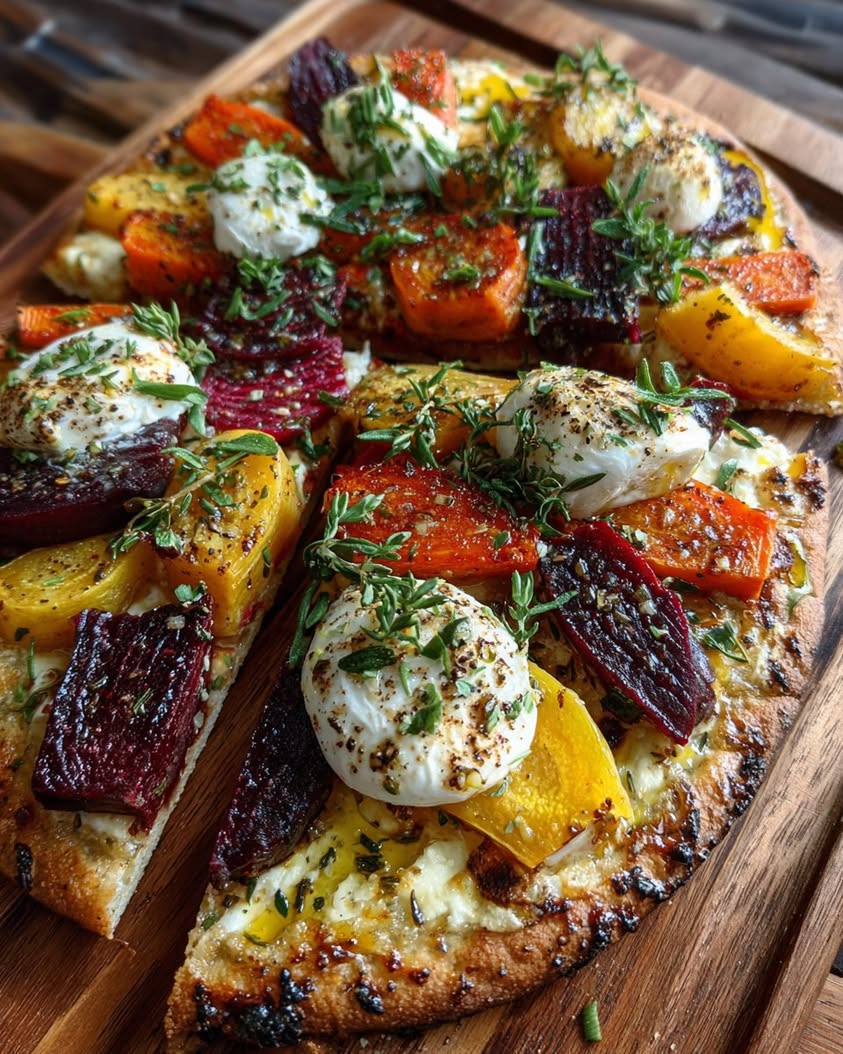
Roasted Carrot & Beet Flatbread with Brie & Honey Orange Drizzle: A Vibrant and Elegant Appetizer
Imagine a dish that looks like a masterpiece and tastes like a celebration. This Roasted Carrot & Beet Flatbread with Brie & Honey Orange Drizzle is exactly that. It transforms simple, earthy ingredients into a stunning and sophisticated appetizer or light meal. The process is surprisingly straightforward, but the final result feels incredibly special. Ultimately, this recipe is perfect for anyone wanting to impress guests or simply treat themselves to a restaurant-quality meal at home.
The magic of this Roasted Carrot & Beet Flatbread with Brie & Honey Orange Drizzle lies in its beautiful balance of flavors and textures. Sweet, caramelized roasted carrots and beets meet creamy, decadent brie cheese. Then, a bright honey orange drizzle cuts through the richness with a touch of citrusy sweetness. Each component plays a crucial role, creating a harmonious bite that is both comforting and exciting. Furthermore, the vibrant colors make it a feast for the eyes before you even take the first bite.
This flatbread is incredibly versatile. You can serve it as a show-stopping starter for a dinner party, a elegant lunch with a simple side salad, or even a unique addition to a brunch spread. The recipe uses store-bought flatbread or naan as a base, which saves a tremendous amount of time without sacrificing quality. Consequently, you can focus on roasting the vegetables to perfection and assembling a beautiful, flavorful dish that everyone will adore.
Quick Recipe Highlights
- Flavor Profile: This flatbread offers a sophisticated sweet and savory experience. Earthy roasted root vegetables pair with rich, creamy brie, while the honey orange drizzle adds a bright, floral acidity that ties everything together beautifully.
- Texture: You get a wonderful contrast in every bite. The flatbread base provides a satisfying chew, the roasted vegetables are tender yet slightly caramelized, and the melted brie is luxuriously smooth and creamy.
- Aroma: While baking, your kitchen will fill with the warm, sweet scent of roasting carrots and beets mingled with the nutty aroma of melting cheese and the fresh, zesty promise of the orange drizzle.
- Visual Appeal: The presentation is stunning. The deep ruby red of the beets and the bright orange of the carrots create a jewel-toned canvas against the golden flatbread and white brie, finished with a glossy drizzle and green herbs.
- Skill Level Needed: This is a beginner-friendly recipe. The techniques involve simple vegetable roasting, basic assembly, and making a quick sauce. No advanced culinary skills are required for success.
- Special Equipment: You only need a standard baking sheet, a small bowl for the drizzle, and a sharp knife. A mandoline can help slice vegetables evenly but is not essential.
Recipe Overview
- Difficulty Level: We rate this recipe as easy because it breaks down into simple, manageable steps. Roasting vegetables is a fundamental technique, and assembly requires no special skills. The most complex part is making the drizzle, which is simply whisking ingredients together. Therefore, cooks of all levels can achieve fantastic results.
- Category: This dish fits perfectly into several categories. It’s an elegant appetizer, a satisfying vegetarian main course, or a standout brunch item. Its flexibility makes it a valuable recipe to have in your repertoire for various dining situations.
- Cuisine: This flatbread draws inspiration from modern American and Mediterranean culinary traditions. It uses the flatbread base common in Mediterranean cooking and combines it with a contemporary, vegetable-forward, and cheese-centric approach popular in modern American cuisine.
- Cost: The recipe is moderately priced. Root vegetables like carrots and beets are typically affordable, especially in season. Brie cheese is the main splurge, but a little goes a long way. Using pre-made flatbread keeps costs down compared to making dough from scratch.
- Season: This recipe shines in the fall and winter when carrots and beets are at their peak sweetness and most abundant. However, you can find these root vegetables year-round, making it a colorful and healthy option even in colder months when fresh produce is limited.
- Occasion: It’s ideal for casual entertaining, holiday gatherings, date nights at home, or a fancy weekend lunch. The impressive presentation makes it feel special, while the easy preparation means you won’t be stuck in the kitchen all day.
Why You’ll Love This Recipe
First and foremost, the taste is absolutely unforgettable. The combination of sweet roasted vegetables, decadent brie, and tangy honey orange drizzle creates a complex flavor profile that delights the palate. Each ingredient complements the others perfectly, resulting in a dish that is greater than the sum of its parts. Moreover, the experience of eating it—from the visual appeal to the contrasting textures—is deeply satisfying and gourmet.
From a practical standpoint, this Roasted Carrot & Beet Flatbread with Brie & Honey Orange Drizzle is remarkably convenient. By using a pre-made flatbread base, you eliminate the most time-consuming step of making dough. The vegetables roast hands-off in the oven, and the drizzle comes together in minutes. Consequently, you can create an impressive, multi-component dish without professional chef skills or an entire day to devote to cooking.
Nutritionally, this flatbread packs a powerful punch. Carrots and beets are loaded with vitamins, minerals, and antioxidants. They provide fiber, which aids digestion and promotes a feeling of fullness. Using a whole-grain flatbread base can add even more fiber and nutrients. While brie is indulgent, it also offers protein and calcium. Altogether, this dish is a more balanced and vegetable-centric option compared to many traditional appetizers.
For social and entertaining value, this recipe is a true winner. It’s designed to be shared and is guaranteed to spark conversation when you bring it to the table. The stunning colors and elegant presentation make it look like you ordered from a high-end restaurant. Additionally, it caters well to vegetarians and can be easily adapted for other dietary needs, making it a thoughtful choice for mixed groups.
Finally, this dish is cost-effective and accessible. The core ingredients are not exotic or prohibitively expensive. You can often find carrots, beets, and flatbread on sale. Investing in a good wedge of brie is worthwhile for the flavor payoff. Because the recipe uses whole, recognizable ingredients, you know exactly what you’re eating, which aligns with a healthy, conscious approach to cooking at home.
Historical Background and Cultural Significance
The concept of topping flatbreads dates back thousands of years across numerous cultures. From the ancient focaccia of Italy to the naan of South Asia, flatbreads have served as a versatile edible plate for toppings. Our modern interpretation, like this Roasted Carrot & Beet Flatbread with Brie & Honey Orange Drizzle, continues this tradition by using a convenient base to showcase seasonal, gourmet ingredients. It represents a fusion of historical practicality with contemporary culinary trends focused on vegetable-forward, visually striking dishes.
Culturally, the use of roasted root vegetables speaks to rustic, hearth-centered cooking traditions found in Europe and North America. Roasting was a fundamental preservation and cooking method before modern ovens. Combining sweet vegetables with cheese and honey also has historical precedent in various Mediterranean and Middle Eastern cuisines, where contrasting flavors are celebrated. This recipe respectfully nods to those traditions while feeling entirely fresh and modern.
The evolution of this specific recipe mirrors broader food trends of the last two decades. There has been a significant shift towards highlighting vegetables as the star of the plate, moving beyond mere side dishes. The “gourmet flatbread” or “artisan pizza” trend in restaurants popularized using non-traditional, high-quality toppings. This Roasted Carrot & Beet Flatbread with Brie & Honey Orange Drizzle is a direct descendant of that movement, designed for the home cook who wants to replicate a chic café experience.
Regarding regional variations, the core idea is endlessly adaptable. In the Mediterranean, one might find a similar concept with halloumi cheese and a pomegranate molasses drizzle. In a French bistro, the beets might be paired with goat cheese and walnuts. Our version uses accessible ingredients common in American grocery stores, like brie and navel oranges, creating a fusion that is both approachable and sophisticated. This adaptability is key to the recipe’s enduring appeal and relevance.
Ingredient Deep Dive
Carrots: Carrots have a long history, originally cultivated in Central Asia. They were initially prized for their aromatic leaves and seeds, not their roots. The orange carrot we know today was developed by Dutch growers in the 17th century. Nutritionally, they are famous for beta-carotene, which the body converts to vitamin A, essential for vision and immune health. When selecting carrots, look for firm, smooth skins without cracks. For this recipe, choose medium-sized carrots that will roast evenly. You can store them in the crisper drawer of your refrigerator for several weeks.
Beets: Beets have been consumed since ancient times, with both the root and greens being used. They are native to the Mediterranean region. Beets get their vibrant color from betalains, powerful antioxidants with anti-inflammatory properties. They are also a good source of folate and fiber. Choose beets that are firm with smooth skin and vibrant, unwilted greens if attached. To prevent staining, you can wear gloves while peeling. For a time-saving option, pre-cooked vacuum-packed beets can be used, though roasting fresh beets delivers superior sweetness.
Brie Cheese: Brie is a soft, creamy cow’s milk cheese named after the French region from which it originated. It has been produced since the Middle Ages. True French Brie is protected by an AOC designation, but many excellent versions are made worldwide. It’s rich in protein and calcium. For this flatbread, a ripe but not oozing brie works best—it should give slightly when pressed. Allow it to come to room temperature for easier slicing. If brie is unavailable, Camembert or a creamy goat cheese are excellent substitutes.
Flatbread/Naan: Using pre-made flatbread is the ultimate shortcut for this recipe. Naan, a leavened Indian flatbread, or pocketless pita work perfectly. Look for high-quality options without too many preservatives. You can often find fresh naan in the bakery section of grocery stores. For a crispier base, you can brush it lightly with olive oil before adding toppings. For a gluten-free version, many brands offer gluten-free flatbread or cauliflower crusts that work well as a base.
Honey Orange Drizzle: This simple sauce brings the whole dish together. Honey is one of the world’s oldest sweeteners, used for millennia. It contains antioxidants and has antimicrobial properties. Use a mild, floral honey like clover or orange blossom. The orange juice and zest provide vitamin C and bright acidity that cuts the richness of the cheese. Freshly squeezed juice and zest are non-negotiable for the best flavor. For a vegan version, substitute maple syrup or agave nectar for the honey.
Common Mistakes to Avoid
- Overcrowding the Baking Sheet: When roasting the carrots and beets, spread them in a single layer with space between pieces. Overcrowding causes them to steam instead of roast, preventing the caramelization that develops their sweetness and depth of flavor.
- Using Cold Brie: Attempting to slice cold brie straight from the fridge often leads to tearing and messy chunks. Let the brie sit at room temperature for 20-30 minutes before slicing. This allows it to soften slightly for clean, beautiful pieces.
- Skipping the Zest in the Drizzle: The orange zest is crucial. It contains aromatic oils that provide intense citrus flavor without additional liquid. Using only juice will result in a watery, less flavorful drizzle. Always zest the orange before juicing it.
- Underseasoning the Vegetables: Root vegetables need ample seasoning. Toss them generously with salt and pepper before roasting. Proper seasoning enhances their natural flavors and ensures the final flatbread is not bland.
- Burning the Flatbread Edges: Since the flatbread is already cooked, it only needs to be in the oven long enough to warm through and melt the cheese. Watch it closely during the final bake to prevent the edges from burning or becoming too hard.
- Cutting the Vegetables Too Thick: If the carrot and beet slices are too thick, they won’t roast through in the given time and may remain unpleasantly crunchy. Aim for uniform, 1/4-inch thick slices for even cooking.
- Adding the Drizzle Before Baking: The honey orange drizzle should always be added after the flatbread comes out of the oven. Adding it before will cause the honey to burn and the fresh citrus flavor to dissipate from the heat.
- Not Preheating the Baking Sheet: For an extra-crispy flatbread bottom, place your empty baking sheet in the oven while it preheats. Carefully place the assembled flatbread on the hot sheet to start crisping the crust immediately.
Essential Techniques
Roasting Root Vegetables: Roasting is a dry-heat cooking method that concentrates flavors and caramelizes natural sugars. For perfect roasted carrots and beets, cut them uniformly, toss with oil and seasoning, and spread in a single layer on a preheated sheet pan. The high heat (around 400°F) is essential for creating a slightly crispy exterior and tender interior. The visual cue for success is edges that are browned and caramelized, and the vegetables should be easily pierced with a fork.
Making an Emulsified Drizzle: The honey orange drizzle is a simple emulsion, meaning two liquids that don’t normally mix (honey and oil) are combined. Whisking vigorously incorporates the olive oil into the honey and citrus, creating a slightly thickened, cohesive sauce. The key is to add the oil in a slow, steady stream while whisking constantly. If the drizzle separates, simply whisk again before using.
Assembling a Flatbread: Proper assembly ensures every bite has all the components. Start with a light base layer, like a schmear of ricotta or a brush of oil, to prevent a soggy crust. Then, distribute the roasted vegetables evenly, followed by the brie. Leave a small border around the edge for a “crust.” This technique guarantees structural integrity and balanced flavor distribution.
Pro Tips for Perfect Roasted Carrot & Beet Flatbread with Brie & Honey Orange Drizzle
First, roast the beets on a separate section of the pan or wrap them in foil to prevent their vibrant color from bleeding onto the carrots. This keeps the presentation clean and distinct.
For an extra flavor boost, toss the vegetable slices with a teaspoon of fresh thyme leaves or chopped rosemary before roasting. The herbs will toast slightly and infuse the oil.
If your brie has a very thick, edible rind, you can choose to slice it off for a creamier texture on the flatbread. However, the rind is perfectly edible and adds a subtle earthy flavor.
To achieve restaurant-style presentation, use a microplane to finely zest the orange directly over the finished flatbread for a final pop of color and aroma.
Let the flatbread rest for 2-3 minutes after adding the drizzle before slicing. This allows the cheese to set slightly, making for cleaner cuts.
For a nutty crunch, sprinkle toasted walnuts or pecans over the flatbread after adding the drizzle. The textural contrast is delightful.
Variations and Adaptations
For regional variations, consider a Greek-inspired version with crumbled feta, kalamata olives, and a oregano-infused honey drizzle. Alternatively, a Middle Eastern twist could feature za’atar-spiced vegetables, labneh instead of brie, and a pomegranate drizzle.
Seasonal adaptations are simple. In spring, use roasted asparagus and fresh peas with goat cheese. For summer, try grilled zucchini, corn, and cherry tomatoes with burrata. The honey orange drizzle can become a honey lemon or honey basil drizzle depending on the season.
Dietary modifications are straightforward. For a vegan flatbread, use a plant-based creamy cheese and maple syrup in the drizzle. A gluten-free version requires a certified gluten-free flatbread base. For a nut-free option, simply omit any nut garnishes.
Flavor variations can explore different cheese profiles. Try a sharp goat cheese for tang, a smoked gouda for depth, or a blue cheese for boldness. Each cheese will create a completely different but equally delicious experience.
Serving and Presentation Guide
Plating is key for visual impact. Transfer the baked flatbread to a large wooden cutting board or a clean, neutral-colored platter. Use a sharp pizza wheel or chef’s knife to slice it into uneven, rustic pieces or clean triangles. Scatter fresh microgreens, arugula, or chopped parsley over the top just before serving to add a fresh green contrast against the vibrant vegetables.
For traditional accompaniments, serve with a simple side salad dressed with a light vinaigrette to balance the richness. A bowl of marinated olives or spiced nuts also makes a lovely complement. For a heartier meal, pair with a cup of roasted tomato or butternut squash soup.
Consider temperature carefully. This flatbread is best served warm, when the cheese is still soft and the drizzle is fresh. If serving as part of a larger buffet, you can assemble it ahead and pop it in the oven just before guests arrive. Portion control is easy—one standard-sized naan typically serves 2-3 people as an appetizer.
Wine and Beverage Pairing
Wine pairings should complement the sweet, earthy, and creamy elements. A dry Rosé with its bright acidity and berry notes is a fantastic all-around choice. A crisp, unoaked Chardonnay or a French Chablis can handle the richness of the brie without overpowering the vegetables. For red wine lovers, a light-bodied Pinot Noir with earthy undertones pairs beautifully with the beets.
Non-alcoholic alternatives are just as important. A sparkling water with a twist of orange or a dash of bitters mimics the citrus notes. A chilled, slightly sweet ginger beer provides a spicy contrast. For a sophisticated mocktail, mix fresh orange juice with club soda and a sprig of thyme.
If serving for brunch, coffee and tea pairings work well. A medium-roast coffee with low acidity won’t clash with the dish. A pot of Earl Grey tea, with its citrusy bergamot notes, echoes the orange in the drizzle beautifully. Always serve beverages at their proper temperature—chilled for sparkling drinks, hot for coffee and tea.
Storage and Shelf Life
Storage methods for leftovers are simple but time-sensitive. Store any leftover flatbread in an airtight container in the refrigerator for up to 2 days. Note that the flatbread base will soften from the toppings, so it’s best enjoyed fresh. For optimal results, store the components separately if you anticipate leftovers: keep roasted vegetables, sliced brie, and drizzle in their own containers.
Signs of spoilage include an off smell, especially from the dairy, or visible mold. The vegetables may become excessively soggy. Reheating instructions are specific: reheat slices in a toaster oven or conventional oven at 350°F for 5-7 minutes until warmed through. Avoid the microwave, as it will make the crust very soggy. This dish does not freeze well due to the high moisture content of the vegetables and the dairy, which can separate upon thawing.
Make Ahead Strategies
You can significantly streamline your prep with a smart timeline. The day before, wash, peel, and slice the carrots and beets. Store them in separate airtight containers in the fridge. You can also make the honey orange drizzle and store it in a jar in the refrigerator. The flavors will actually meld and improve overnight.
For storage between steps, keep the pre-cut vegetables chilled. The drizzle can sit at room temperature for an hour before serving to loosen up. Assemble the flatbread just before you plan to bake it to prevent the base from getting soggy. When ready to cook, simply toss the vegetables with oil and seasoning, roast, and assemble.
Assess the quality impact: pre-cutting vegetables may lead to slight moisture loss but won’t affect flavor. The drizzle benefits from make-ahead time. The only element that must be added fresh is any final herb garnish. Reheating guidelines for a fully assembled, unbaked flatbread are not recommended; it’s best to assemble and bake just before serving.
Scaling Instructions
Halving the recipe is easy for a smaller meal. Use one medium carrot and one small beet, half a round of brie, and one piece of flatbread. Adjust the drizzle by halving all ingredients. The roasting time may be slightly less due to a less crowded pan, so keep an eye on the vegetables.
Doubling or tripling for a crowd requires equipment adjustments. You will need multiple baking sheets to roast the vegetables in batches without overcrowding. Consider rotating the sheets in the oven for even cooking. You may also need to bake the assembled flatbreads in batches or use two oven racks, rotating them halfway through.
Timing modifications are minimal when scaling up. The vegetable roasting time remains the same if spread properly. The final bake time for multiple flatbreads may require an extra minute or two. Storage considerations are important for large batches; have platters and serving tools ready to serve them warm as they come out of the oven.
Nutritional Deep Dive
A macro breakdown of this flatbread shows a balance of carbohydrates from the vegetables and flatbread, healthy fats from olive oil and brie, and protein from the cheese. It’s a satisfying dish that provides sustained energy. The exact numbers will vary based on specific ingredients used, but it’s generally a nutrient-dense choice compared to processed snacks or appetizers.
The micronutrient analysis is impressive. Carrots deliver a huge dose of Vitamin A (as beta-carotene), vital for eye health. Beets offer folate, important for cell function, and manganese. The olive oil provides Vitamin E, an antioxidant. Together, these ingredients support immune function, reduce inflammation, and promote healthy skin.
For dietary considerations, this is a vegetarian dish. Portion analysis suggests one flatbread serves 2-3 as an appetizer, making it a reasonable part of a balanced meal. For weight management tips, focus on the vegetable-heavy composition and use a lighter hand with the cheese and drizzle if desired. Pairing it with a large green salad can increase volume and fiber for greater satiety.
Dietary Adaptations
Gluten-free: Use a certified gluten-free flatbread, naan, or pizza crust as the base. Many excellent store-bought options are available, or you can use a portobello mushroom cap for a low-carb, gluten-free vessel.
Dairy-free/Vegan: Substitute the brie with a high-quality vegan creamy cheese or a thick, seasoned cashew cream. For the drizzle, replace honey with maple syrup or agave nectar. The result is a plant-based dish that’s still rich and flavorful.
Low-carb/Keto: Skip the traditional flatbread base. Instead, roast the vegetables and serve them on a bed of greens as a warm salad, topped with brie and the drizzle. You can also use a low-carb tortilla or a fathead dough base if desired.
Paleo: Omit the grain-based flatbread and cheese. Serve the roasted vegetables drizzled with the honey-orange mixture (using raw honey) over a bed of greens, topped with avocado slices for creaminess.
Troubleshooting Guide
Vegetables are Soggy, Not Roasted: This is almost always due to overcrowding on the pan. Vegetables release steam as they cook. If they’re too close together, they steam each other. Always ensure space between pieces for proper air circulation and caramelization. Also, make sure your oven is fully preheated before adding the pan.
Flatbread is Soggy in the Middle: This happens if the flatbread is overloaded with toppings or if a very wet ingredient was added. Ensure your roasted vegetables have cooled slightly and aren’t piping hot when you assemble. Using a light base layer (like oil or a thin cheese spread) can also create a protective barrier.
Drizzle is Too Thick or Too Thin: If your honey orange drizzle is too thick, whisk in a teaspoon of warm water or more orange juice until it reaches a pourable consistency. If it’s too thin, you likely need to whisk more vigorously to emulsify the oil, or you can add a bit more honey to thicken it.
Brie Didn’t Melt Properly: If the brie is still firm after baking, the slices may have been too thick, or the oven temperature was too low. Slice brie no thicker than 1/4 inch. Also, ensure your oven rack is in the center position for even heat distribution during the final bake.
Recipe Success Stories
Community feedback on this Roasted Carrot & Beet Flatbread with Brie & Honey Orange Drizzle has been overwhelmingly positive. Many home cooks report that it’s become their go-to “impress the in-laws” recipe. One reader shared that she made it for a book club and received multiple requests for the recipe before the evening was over. The combination of ease and elegance consistently wins people over.
Variation successes are fun to hear about. A reader from California added sliced avocado after baking for extra creaminess. Another used rainbow carrots for an even more spectacular color display. Someone else substituted fig jam for the honey in the drizzle for a deeper, autumnal flavor. These adaptations show how the recipe serves as a perfect, flexible template.
Photography tips from successful makers emphasize natural light. The vibrant colors photograph beautifully near a window. Using a dark slate or wooden background makes the reds and oranges pop. Sprinkling on extra fresh herbs or orange zest right before taking the photo adds texture and a professional, finished look to your food photography.
Frequently Asked Questions
Can I use pre-cooked beets from the store? Absolutely. Pre-cooked vacuum-packed beets are a great time-saver. Just slice them and toss with a little oil, salt, and pepper. Add them to the baking sheet for the last 5-10 minutes of the carrot roasting time just to warm through and caramelize slightly.
My brie is very runny. Can I still use it? Yes, but handle it differently. If your brie is very ripe and soft, you can simply tear it into pieces and dot them over the flatbread instead of trying to slice it. The flavor will be excellent, and it will melt beautifully.
Can I make this without honey? Certainly. For a vegan version or if you prefer, maple syrup or agave nectar are perfect one-to-one substitutes in the drizzle. The flavor will be slightly different but still delicious.
What can I use instead of flatbread or naan? Pizza dough, a pre-baked pizza crust, or even large portobello mushroom caps make excellent bases. For a low-carb option, try it on a bed of hearty greens as a warm salad.
How do I prevent the beet juice from staining everything? Wear disposable gloves while handling raw beets. You can also roast them whole in foil, then slip the skins off after cooking, which minimizes direct handling. Immediately wash any utensils and cutting boards used.
Can I prepare the components ahead of time? Definitely. Roast the vegetables and make the drizzle up to 2 days in advance. Store them separately in the fridge. Assemble and bake the flatbread just before you want to serve it for the best texture.
Is this recipe served hot or cold? It is best served warm. The ideal time is right after baking, when the cheese is melted and the flatbread is crisp. It can be served at room temperature but may become slightly soggy if left out too long.
What herbs work best as a garnish? Fresh thyme, rosemary, chopped parsley, or chives are all fantastic. Delicate microgreens or arugula also add a nice peppery note and beautiful color contrast.
My drizzle separated. How do I fix it? Simply whisk it vigorously again. Emulsions can separate when sitting. If it’s being stubborn, you can add all ingredients to a small jar with a tight lid and shake it until recombined.
Can I add protein to this flatbread? Of course. For a non-vegetarian version, crispy prosciutto, cooked shredded chicken, or even flaked smoked salmon added after baking would be delicious complements to the existing flavors.
Additional Resources
For related recipes, explore other vegetable-forward flatbreads like a Caramelized Onion and Fig Flatbread with Goat Cheese or a Summer Squash and Pesto Flatbread. These follow a similar easy-assembly philosophy. If you love roasting vegetables, our guide to Perfectly Roasted Root Vegetables Every Time offers deeper techniques and seasoning ideas.
Technique guides that will help you master this recipe include our posts on How to Emulsify a Vinaigrette (the same principle as the drizzle) and Knife Skills 101: Slicing and Dicing Vegetables. These foundational skills will improve your efficiency and results in the kitchen far beyond this single dish.
For ingredient information, we have deep dives on Selecting and Storing Cheese and The Ultimate Guide to Seasonal Produce. These resources help you choose the best ingredients year-round. For equipment, a good half-sheet pan, a sharp chef’s knife, and a microplane zester are the only tools you truly need to make this recipe shine.
{“success”:true,”message”:”Recipe created successfully”,”post_id”:7625,”tasty_recipe_id”:7625,”shortcode”:” Print
Roasted Carrot & Beet Flatbread with Brie & Honey Orange Drizzle
Description
A vibrant and savory flatbread topped with roasted carrots and beets, creamy brie, and a sweet-tart honey orange drizzle.
Ingredients
For the Crust:
- 1 large flatbread or naan
- 2 medium carrots, peeled and sliced into thin rounds
- 1 medium beet, peeled and sliced into thin rounds
- 4 oz brie cheese, sliced
- 2 tbsp olive oil
- 1 tsp dried thyme
- Salt and black pepper to taste
- 2 tbsp honey
- 1 tbsp fresh orange juice
- 1 tsp orange zest
- Fresh arugula for garnish (optional)
Instructions
1. Prepare the Crust:
- Preheat oven to 400°F (200°C). Toss carrot and beet slices with olive oil, thyme, salt, and pepper. Spread on a baking sheet and roast for 20-25 minutes until tender.
- Place flatbread on a baking sheet. Arrange roasted carrots and beets evenly over the flatbread, then top with sliced brie.
- Bake flatbread in the oven for 8-10 minutes until the cheese is melted and the edges are crisp.
- While baking, whisk together honey, orange juice, and orange zest in a small bowl to make the drizzle.
- Remove flatbread from oven, drizzle with honey orange mixture, and garnish with arugula if desired. Slice and serve warm.
Notes
You can customize the seasonings to taste.

I’m Billy, a classically trained culinary school graduate from The Culinary Institute of America with over 12 years in the restaurant industry and over 19 years of cooking experience.