
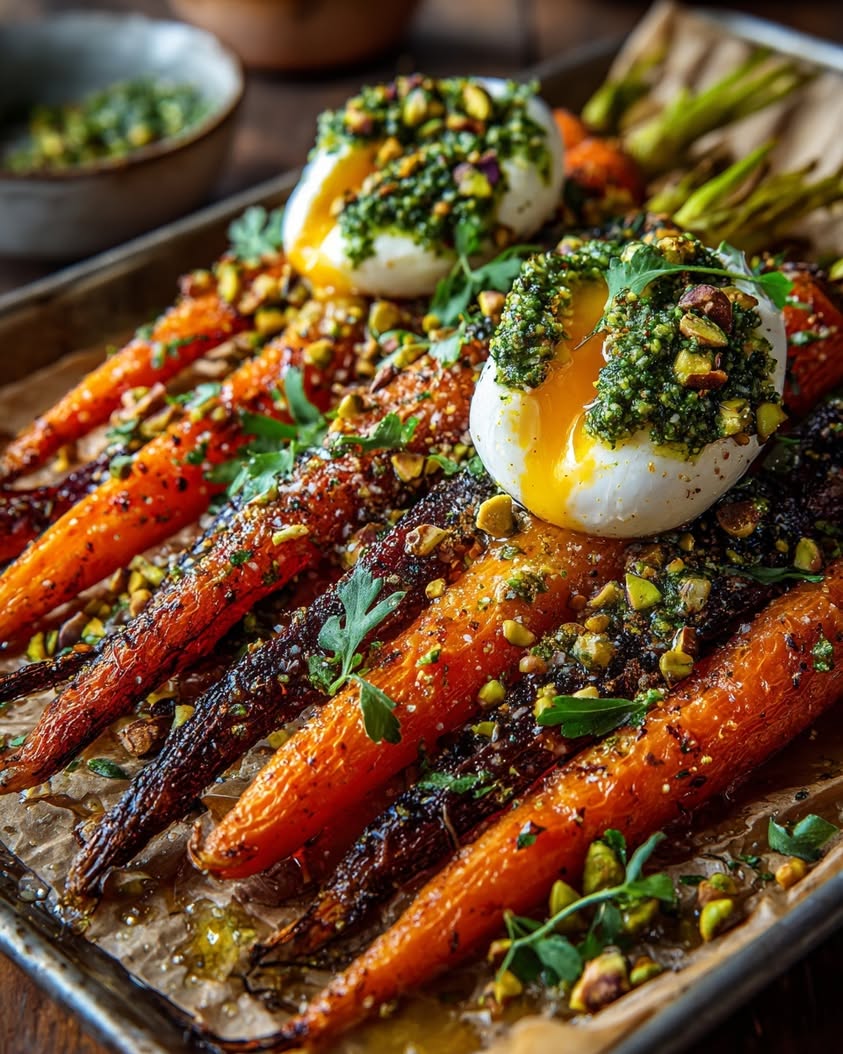
Roasted Carrots with Burrata and Pesto: A Sweet and Creamy Side Dish
Imagine a dish that transforms humble carrots into a stunning centerpiece. This recipe for Roasted Carrots with Burrata and Pesto does exactly that. It combines the natural sweetness of caramelized roasted carrots with the luxurious creaminess of fresh burrata cheese. Finally, a vibrant pistachio pesto adds a nutty, herby punch that ties everything together beautifully.
This dish is a celebration of textures and flavors. You get the tender, slightly crisp exterior of the roasted carrots against the impossibly soft, rich burrata. The pesto brings a bright, garlicky note that cuts through the richness. Consequently, every bite is a perfect balance. It is an elegant yet surprisingly simple side dish that will impress any dinner guest.
Furthermore, this recipe is incredibly versatile. You can serve it as a standout vegetarian main course, a fancy side for a holiday meal, or a beautiful appetizer for a dinner party. The colors alone—deep orange, snowy white, and emerald green—make it a feast for the eyes. Ultimately, it proves that simple ingredients, when treated with care, can create something truly special.
Quick Recipe Highlights
- Flavor Profile: This dish features sweet, caramelized roasted carrots paired with rich, milky burrata. The pistachio pesto introduces a savory, garlicky, and herbaceous element with a delightful nutty crunch.
- Texture: Enjoy a wonderful contrast between the tender, slightly charred carrots and the decadently soft, creamy burrata. The pesto adds a coarse, textured finish that makes each bite interesting.
- Aroma: As the carrots roast, they release a sweet, earthy scent. Meanwhile, the pesto fills the kitchen with the fresh aromas of basil and garlic, toasted nuts, and grassy olive oil.
- Visual Appeal: The plate is a masterpiece of color: vibrant orange carrots, stark white cheese, and brilliant green pesto. A sprinkle of crushed pistachios and fresh herbs adds the final touch.
- Skill Level Needed: This is a beginner-friendly recipe. It requires basic knife skills for trimming carrots and the ability to use a food processor or blender for the pesto. Roasting is a hands-off, forgiving technique.
- Special Equipment: You only need a baking sheet, a food processor or blender for the pesto, and a good chef’s knife. Parchment paper is helpful for easy cleanup.
Recipe Overview
- Difficulty Level: We rate this recipe as easy. The steps are straightforward: roast vegetables, blend sauce, and assemble. There are no complex techniques. However, achieving perfect caramelization on the carrots requires paying attention to oven temperature and spacing.
- Category: This dish fits multiple categories beautifully. It is a spectacular vegetable side dish, a luxurious vegetarian main, or an impressive appetizer for sharing. It blurs the line between simple and sophisticated.
- Cuisine: The recipe draws inspiration from Italian culinary traditions, featuring iconic ingredients like burrata, basil, and olive oil. However, the use of pistachios and the focus on roasted carrots give it a modern, fusion-style appeal.
- Cost: The cost is moderate, primarily due to the burrata cheese and pistachios. Carrots are very affordable. You can control cost by using a less expensive nut like walnuts in the pesto, though pistachios offer a unique flavor.
- Season: This dish shines in late summer through fall when carrots are at their sweetest. However, it works year-round as grocery store carrots are reliable. It is a fantastic way to add color to a winter table.
- Occasion: It is perfect for dinner parties, holiday meals like Thanksgiving or Easter, date nights at home, or whenever you want to elevate a weeknight dinner into something memorable.
Why You’ll Love This Roasted Carrots with Burrata and Pesto Recipe
First, the taste and texture combination is utterly irresistible. The roasting process concentrates the carrots’ sugars, creating a deep, candy-like sweetness. That sweetness plays perfectly against the mild, creamy salinity of the burrata. Then, the pesto arrives with its bold, garlicky, and herbal notes, ensuring the dish never feels one-dimensional. Every component has a purpose, creating a harmonious and satisfying flavor journey in your mouth.
Next, consider the convenience and preparation benefits. This recipe for Roasted Carrots with Burrata and Pesto requires minimal active cooking time. You simply toss the carrots in oil and seasonings, then let the oven do the work. Meanwhile, you can quickly whip up the pesto in a food processor. The assembly is just artful arranging. Therefore, you can create a restaurant-quality dish with very little fuss, making it ideal for entertaining.
Moreover, the dish offers notable nutritional advantages. Carrots are packed with beta-carotene, which supports eye health and immunity. Olive oil and pistachios provide heart-healthy fats. Basil is rich in antioxidants. While burrata is indulgent, it also offers protein and calcium. So, you are enjoying a decadent-tasting dish that also delivers valuable nutrients, which is always a win.
Additionally, the social and entertaining value is high. This plate is a guaranteed conversation starter. Its stunning visual appeal makes it look like you spent hours in the kitchen. Serving a beautiful, shareable dish like this Roasted Carrots with Burrata and Pesto creates a warm, celebratory atmosphere. It shows your guests you care about presenting a memorable meal.
Finally, it is cost-effective and accessible. While burrata and pistachios are premium items, the rest of the ingredients are pantry staples. You can often find good-quality burrata at larger grocery stores now. Compared to dining out, making this at home saves significant money while allowing you to control the quality of every ingredient. It is luxury you can afford to create in your own kitchen.
Historical Background and Cultural Significance
The story of this dish begins with its individual components, each with a rich history. Carrots, originally purple and yellow, were cultivated thousands of years ago in Central Asia. Their transformation into the sweet orange vegetable we know today largely occurred in the Netherlands in the 17th century. Roasting as a technique is ancient, one of the earliest methods of cooking, used to draw out natural sugars and create deep, comforting flavors.
Burrata, on the other hand, is a relatively modern Italian invention. Cheese makers in the Puglia region created it in the early 20th century as a way to use up the scraps of mozzarella production. The word “burrata” means “buttered,” a perfect description of its rich, creamy interior. It represents the Italian genius for creating luxurious, fresh cheeses with simple ingredients.
Pesto has its roots in Genoa, Italy, with a history stretching back to Roman times. The ancient Romans ate a paste of crushed garlic, cheese, and herbs called “moretum.” The classic Genovese pesto, with basil, pine nuts, and Parmigiano-Reggiano, evolved over centuries. The use of pistachios in pesto is a more contemporary variation, often seen in Sicilian cooking, showcasing the adaptability of the basic pesto formula.
Therefore, this recipe for Roasted Carrots with Burrata and Pesto is a beautiful fusion of food histories. It marries the ancient practice of roasting, a 20th-century Italian cheese innovation, and a sauce with Roman ancestry. It is a testament to how global cuisine evolves, blending techniques and ingredients from different times and places to create something new and delightful.
Ingredient Deep Dive
Carrots are the foundational vegetable in this recipe. Historically, they were valued more for their aromatic leaves and seeds than their roots. Today, they are a global kitchen staple prized for their sweetness and versatility. Nutritionally, they are famous for beta-carotene, which the body converts to vitamin A, crucial for vision and immune function. When selecting carrots, look for firm, smooth skins with vibrant color and fresh, green tops if attached. Avoid limp or rubbery carrots. Store them in the crisper drawer of your refrigerator in a plastic bag. For a twist, try using multi-colored heirloom carrots for a stunning visual effect.
Burrata is the star of the show. This fresh Italian cheese consists of a mozzarella shell filled with stracciatella (cream and soft cheese curds). Its cultural significance lies in the “cucina povera” tradition of wasting nothing. Cheesemakers created burrata to utilize leftover mozzarella scraps. It provides a luxurious texture and mild, milky flavor that pairs with almost anything. Always seek the freshest burrata possible, ideally from a cheese counter or specialty store. Check the packaging date. It is highly perishable, so use it within a day or two of purchase. For a dairy-free version, a high-quality vegan mozzarella or a scoop of creamy vegan ricotta can stand in.
Pistachios bring a unique flavor to the pesto. These green nuts have been cultivated in the Middle East for millennia and are synonymous with Persian and Mediterranean cuisines. They are a good source of protein, fiber, and healthy fats. Their distinctive slightly sweet, vibrant green color makes this pesto special. For the best flavor, buy raw, unsalted pistachios. You can toast them lightly to enhance their nuttiness. Store nuts in the freezer to prevent their oils from going rancid. If pistachios are cost-prohibitive, walnuts, pine nuts, or even almonds make excellent, more traditional pesto bases.
Fresh basil is the soul of the pesto. This herb is deeply associated with Italian cooking and summer gardens. It contains antioxidants and has anti-inflammatory properties. The key to a vibrant pesto is using the freshest, brightest green basil you can find. Avoid leaves that are blackened or wilted. For storage, treat basil like a bouquet of flowers: trim the stems and place them in a glass of water on the counter. If you must substitute, arugula or spinach mixed with a little dried basil can work in a pinch, though the flavor profile will change.
Common Mistakes to Avoid
- Crowding the Pan: Overloading the baking sheet steams the carrots instead of roasting them. You will get soft, soggy carrots without the desirable caramelized edges. Always ensure space between each piece for proper air circulation and browning.
- Using Old, Woody Carrots: Large, thick carrots can sometimes be woody and bitter in the center. They also take much longer to cook. Instead, choose medium-sized, firm carrots for consistent sweetness and tender results throughout.
- Over-processing the Pesto: Blending the pesto into a completely smooth paste can make it bitter and cause it to oxidize (turn brown) faster. Pulse the ingredients just until they are finely chopped and combined, leaving some texture.
- Serving Cold Burrata: Burrata’s magic is in its creamy, room-temperature texture. Taking it straight from the fridge results in a firm, cold ball that won’t ooze properly. Always let it sit out for 20-30 minutes before serving.
- Underseasoning the Carrots: Carrots need a generous amount of salt before roasting to enhance their natural flavor. Do not be shy. Season with salt and pepper before they go into the oven, and taste after roasting.
- Adding Garlic to the Pesto Raw: Raw garlic can be overwhelmingly pungent. For a smoother, sweeter garlic flavor, try roasting a clove with the carrots or quickly blanching it before adding it to the food processor.
- Using Stale Nuts or Old Olive Oil: Nuts and olive oil can go rancid. Rancid ingredients will give your pesto an unpleasant, bitter off-flavor. Always taste a nut or smell your oil before using it in this uncooked sauce.
- Drizzling Oil on Cold Burrata: When you add olive oil to cold burrata, it congeals and doesn’t absorb. Let the cheese come to room temperature so the oil melds beautifully with the creamy interior.
Essential Techniques
Roasting Vegetables is the core technique here. Roasting uses dry, high heat to caramelize the natural sugars in vegetables, creating concentrated flavor and a tender interior with a slightly crisp exterior. To master it, preheat your oven fully and use a heavy-duty baking sheet. Do not overcrowd the pan, as steam is the enemy of browning. Toss the vegetables in enough oil to coat them lightly but thoroughly. The visual cue for success is golden-brown, caramelized spots on the carrots and they should be easily pierced with a fork.
Making Pesto from scratch is simpler than you think. The key is balancing the ingredients and avoiding over-processing. Traditionally, pesto is made with a mortar and pestle, but a food processor is perfectly acceptable for home cooks. Start by pulsing the nuts and garlic first to break them down. Then add the basil and pulse until chopped. Finally, with the motor running, slowly drizzle in the olive oil until emulsified. Stir in the cheese by hand to preserve texture. The pesto should be coarse, not a smooth puree.
Handling Fresh Burrata requires a gentle touch. The goal is to preserve its beautiful, creamy interior. Always bring it to room temperature before serving. To open it, use a sharp knife to make a shallow incision on top, then gently pull the sides apart to reveal the creamy center. Place it whole on the carrots or tear it into large, rustic pieces. Avoid over-handling it, as it can lose its shape quickly. The visual cue is a glorious, slow ooze of creamy stracciatella when you cut into it.
Pro Tips for Perfect Roasted Carrots with Burrata and Pesto
Cut your carrots on a bias. This creates more surface area for caramelization and makes for a more elegant, restaurant-style presentation on the plate.
Par-cook thicker carrots. If using very large carrots, you can blanch them in boiling water for 2-3 minutes before roasting. This ensures the inside is tender by the time the outside is perfectly browned.
Add a splash of balsamic vinegar. Tossing the hot roasted carrots with a teaspoon of good balsamic vinegar when they come out of the oven adds a wonderful sweet-tart complexity.
Toast your nuts for the pesto. A quick toast in a dry skillet or the oven for a few minutes deepens the nutty flavor of the pistachios and makes your pesto even more aromatic.
Reserve some whole pistachios. Before making the pesto, set aside a tablespoon of chopped pistachios. Use them as a garnish for added crunch and visual appeal.
Warm your serving platter. Place your empty serving dish in the turned-off oven for a minute before assembling. A warm platter keeps the dish at the perfect temperature longer.
Season in layers. Season the carrots before roasting, season the pesto to taste, and finish the whole dish with a final flaky sea salt just before serving for maximum flavor.
Variations and Adaptations
For regional variations, look to different culinary traditions. A French twist might use goat cheese instead of burrata and hazelnuts in the pesto. A Middle Eastern version could feature carrots roasted with cumin and coriander, served with a tahini-yogurt sauce instead of pesto. The basic formula is wonderfully adaptable.
Seasonal adaptations are easy and fun. In spring, use tender baby carrots with their tops on and a pesto made with fresh peas and mint. In winter, roast carrots with hardy herbs like rosemary and swap the pesto for a warm brown butter and sage sauce. The dish evolves beautifully throughout the year.
Dietary modifications are straightforward. For a vegan Roasted Carrots with Burrata and Pesto, use a high-quality vegan mozzarella ball or a cashew-based “cream” and nutritional yeast in place of the cheese in the pesto. For a nut-free version, use sunflower seeds or pepitas in the pesto. The recipe is naturally gluten-free.
Flavor variations can personalize the dish. Add a teaspoon of harissa paste to the olive oil for tossing the carrots for a spicy kick. Incorporate roasted garlic cloves into the pesto for sweetness. A sprinkle of sumac or za’atar over the finished plate adds an earthy, lemony note.
Texture modifications can cater to different preferences. For extra crunch, add toasted breadcrumbs or panko on top. For a smoother experience, blend the pesto until silky or even drizzle a balsamic reduction over the plate for a sweet, glossy contrast.
Presentation alternatives can change the vibe. Instead of a large platter, serve individual portions in shallow bowls. Skewer roasted carrot rounds and small burrata balls on appetizer sticks for a passed hors d’oeuvre. Deconstruct the elements for a modern plating style.
Serving and Presentation Guide
Plating techniques matter for this visually stunning dish. Start by artfully arranging the warm roasted carrots on a large, flat platter or individual plates. Create a bed for the burrata to nestle into. Place the whole ball of burrata in the center or tear it into two or three large pieces and scatter them among the carrots. The goal is to look rustic yet intentional.
Garnishing is the final touch. Dollop the pistachio pesto generously over and around the carrots and cheese. Do not mix it in completely; let the vibrant green stand out. Then, sprinkle the reserved crushed pistachios, some fresh basil leaves or microgreens, a crack of black pepper, and a flurry of flaky sea salt. A final drizzle of high-quality extra virgin olive oil adds shine.
For traditional accompaniments, crusty bread is non-negotiable. It is essential for scooping up every last bit of creamy burrata and pesto. A simple arugula salad with a lemon vinaigrette makes a perfect light side to balance the richness of the cheese.
Modern serving suggestions might include serving it alongside grilled chicken or fish for a complete meal. Alternatively, present it as part of a Mediterranean-inspired mezze platter with olives, hummus, and flatbread. It is versatile enough to fit many menus.
Temperature considerations are crucial. The carrots should be warm or at room temperature. The burrata must be at room temperature to be creamy. The pesto can be cool or room temp. Assembling just before serving ensures the cheese doesn’t melt and the pesto stays bright.
Portion control tips are simple. This recipe generously serves four as a side dish or appetizer. For a main course for two, the portion is perfect as is. When doubling for a crowd, use two baking sheets and rotate them in the oven for even cooking.
Wine and Beverage Pairing
Wine pairings should complement the dish’s sweet, creamy, and herbal notes. A crisp, unoaked white wine like a Sauvignon Blanc or Pinot Grigio works beautifully. Their acidity cuts through the richness of the burrata. Alternatively, a light-bodied, fruity red with low tannins, such as a Pinot Noir or Beaujolais, can pair well with the earthy sweetness of the carrots. For a special occasion, a glass of dry Prosecco or Champagne adds celebratory bubbles that cleanse the palate.
Non-alcoholic alternatives are just as important. A sparkling water with a twist of lemon or lime is always refreshing. For something more crafted, try a basil-infused lemonade or iced tea, which echoes the herbal notes in the pesto. A ginger-based mocktail would also provide a nice spicy contrast to the dish’s creaminess.
While not typical for this dish, coffee or tea pairings could follow if serving as part of a larger meal. After a dinner featuring this recipe, a light, floral tea like jasmine green tea would be soothing. A medium-roast coffee with low acidity would not clash with the lingering flavors.
Temperature considerations for beverages are standard. Serve white wines and sparkling options well-chilled. Red wines should be slightly cooler than room temperature. Non-alcoholic drinks are best served cold to provide a refreshing counterpoint to the warm, rich food.
Serving suggestions include offering both a white and a red wine option if you have guests with different preferences. Always provide plenty of still and sparkling water on the table. For non-drinkers, having a dedicated, interesting non-alcoholic option makes the meal feel more inclusive and special.
Storage and Shelf Life
Storage methods for leftovers require separating the components. Store any leftover roasted carrots, burrata, and pesto in separate airtight containers in the refrigerator. This prevents the carrots from becoming soggy and the pesto from discoloring.
Temperature requirements are strictly refrigeration for all components after assembly. The burrata is a fresh cheese and must be kept cold. The pesto, containing fresh basil and garlic, also requires refrigeration to maintain food safety and slow oxidation.
Container recommendations are key. Use shallow containers for the carrots to allow them to cool quickly. Store pesto in a jar with a thin layer of olive oil poured on top to create a seal against air, which causes browning. Burrata should stay in any liquid it came in.
Signs of spoilage to watch for include an off or sour smell from the cheese, mold growth on any component, or pesto that has turned a very dark brown or black. The carrots themselves are fairly stable but will eventually become slimy if bad.
Reheating instructions apply only to the carrots. Gently reheat them in a 350°F oven or a skillet until warmed through. Do not microwave, as they can become rubbery. The burrata and pesto should never be reheated; serve them cold or at room temperature.
Freezing guidelines are limited. You can freeze the pesto successfully (without the cheese added for best texture). Place it in an ice cube tray for easy portioning. Thaw in the refrigerator. Do not freeze the roasted carrots or burrata, as their textures will be ruined upon thawing.
Make Ahead Strategies
A prep timeline can make entertaining stress-free. You can roast the carrots up to a day in advance. Let them cool, then store them covered in the fridge. The pesto can be made 1-2 days ahead. Prepare the burrata by taking it out of the fridge 30 minutes before serving; do not open it until then.
Storage between steps is simple. Keep the cooled carrots in a container in the fridge. Store the pesto in a jar with oil on top. About an hour before serving, take the carrots out to come to room temperature, or give them a quick warm-up in the oven.
Quality impact assessment is positive. Roasted carrots hold up very well and may even develop more flavor overnight. Pesto may darken slightly but will still taste fantastic. The only element that must be absolutely fresh is the burrata, which you handle at the last minute.
Assembly tips for make-ahead: Arrange the room-temperature or warmed carrots on your platter. Just before guests arrive, place the room-temperature burrata, dollop the pesto, and add all your garnishes. This takes only two minutes but makes the dish look freshly made.
Reheating guidelines for pre-cooked carrots: Spread them on a baking sheet and warm in a 375°F oven for 5-8 minutes. This refreshes their texture better than a microwave. Ensure they are just warmed, not cooked further, before assembling.
Fresh element additions are the key to a make-ahead dish tasting fresh. Always garnish with newly chopped pistachios, fresh basil leaves, and a final drizzle of oil right before serving. These last-minute touches revive all the aromas and textures.
Scaling Instructions
Halving the recipe is straightforward for a smaller meal. Use one bunch of carrots and one ball of burrata. Make a half-batch of pesto by simply halving all pesto ingredients. Use a smaller baking sheet. The cook time may decrease slightly, so check for doneness a few minutes early.
Doubling or tripling for a crowd requires planning. You will need multiple baking sheets. Roast the carrots in batches or on separate oven racks, rotating the sheets halfway through for even cooking. Double or triple the pesto recipe in a large food processor. You may need to blend in batches. Provide multiple balls of burrata spaced around the platter for easy serving.
Equipment adjustments are necessary when scaling up. Ensure you have enough large, rimmed baking sheets. If making a very large batch of pesto, you might use a high-powered blender instead of a food processor for efficiency. Have a very large platter or use multiple serving dishes.
Timing modifications are minimal when scaling. The roasting time for the carrots remains the same if they are in a single layer on multiple sheets. The pesto takes only marginally longer to blend in a larger quantity. The main increase in time is in the prep work—washing and cutting more carrots.
Storage considerations for large batches are the same: store components separately. You may have more leftovers, so ensure you have enough containers. A large batch of pesto freezes well, so consider freezing half for future quick meals.
Nutritional Deep Dive
The macro breakdown of this dish provides a balance. The roasted carrots contribute complex carbohydrates and fiber. The burrata offers a significant amount of protein and fat, primarily from its creamy interior. The pesto adds more healthy fats from olive oil and pistachios, along with a small amount of protein from the nuts and cheese. It is a satisfying dish that covers multiple macronutrient groups.
A micronutrient analysis reveals a wealth of vitamins and minerals. Carrots are famously rich in Vitamin A (from beta-carotene) and Vitamin K. Basil provides Vitamin K, iron, and calcium. Pistachios offer B vitamins, phosphorus, and potassium. Olive oil is a source of Vitamin E. Together, they create a nutrient-dense plate.
Health benefits are linked to the individual ingredients. The beta-carotene supports eye and skin health. Monounsaturated fats from olive oil and nuts promote heart health. Antioxidants in basil and olive oil combat inflammation. The fiber from carrots aids digestion. It is a dish that tastes indulgent while supporting overall wellness.
Dietary considerations are mostly favorable. The recipe is naturally gluten-free and vegetarian. For those monitoring sodium, you can control the amount of salt added. For low-carb diets, the carrots are the primary source of carbs, so portion size matters. The dish contains dairy from the cheese.
Portion analysis shows that one serving as a side dish is a reasonable addition to a meal. As a main, it is quite filling due to the fat and protein from the burrata and pesto. Being mindful of the portion of burrata can help manage calorie intake if that is a concern.
Weight management tips include being generous with the carrots and pesto, which are nutrient-dense and satisfying, and moderating the amount of burrata if desired. Using a lighter hand with the olive oil in the pesto can also reduce overall calories without sacrificing major flavor.
Dietary Adaptations
For a gluten-free diet, this recipe is already perfect. Ensure all packaged ingredients, like pre-grated cheese for the pesto, are certified gluten-free, as cross-contamination can sometimes occur. Serve with gluten-free bread for dipping.
A dairy-free version of Roasted Carrots with Burrata and Pesto is achievable. Substitute the burrata with a high-quality vegan mozzarella ball or a dollop of thick, creamy vegan cashew cheese. For the pesto, use nutritional yeast or a vegan parmesan alternative in place of the pecorino cheese.
To make this recipe vegan, follow the dairy-free adaptations and also ensure the cheese in the pesto is replaced. A combination of nutritional yeast, miso paste, and a few cashews can mimic the savory, cheesy depth in the pesto beautifully.
For a low-carb or keto adaptation, reduce the number of carrots significantly or replace them with low-carb vegetables like roasted zucchini or bell pepper strips. Increase the amount of burrata and pesto to maintain satiety. Ensure the pesto uses no sweeteners.
A Paleo adaptation requires omitting the dairy. Replace the burrata with sliced avocado for creaminess. For the pesto, omit the cheese and ensure you use a Paleo-compliant nutritional yeast if desired. All other core ingredients—carrots, nuts, herbs, oil—are Paleo-friendly.
For a Low-FODMAP diet, this requires careful modification. Use only the green tops of carrots (the orange root is high in FODMAPs in larger servings). Replace garlic in the pesto with garlic-infused oil (with solids removed). Use a lactose-free fresh cheese if tolerated, or omit it.
Troubleshooting Guide
If your carrots are soggy instead of caramelized, the issue is likely overcrowding or insufficient oven heat. Next time, ensure your oven is fully preheated and use two baking sheets if needed to give each piece space. Also, pat the carrots very dry before tossing with oil.
If the pesto is too bitter, it could be from over-blended basil, stale nuts, or very pungent raw garlic. To fix it, try adding a bit more olive oil or a pinch of salt to balance. For the future, blanch the garlic for 30 seconds or use roasted garlic, and pulse rather than puree.
If the burrata is too firm and not creamy, it was likely too cold. Unfortunately, you cannot fix this once served. For next time, always plan to take the burrata out of the refrigerator at least 30 minutes before you plan to serve the dish.
If you lack a food processor for the pesto, you can use a blender, though you may need to scrape down the sides more. A mortar and pestle is the traditional tool and works wonderfully. As a last resort, you can very finely chop all ingredients by hand and whisk them together with the oil.
If you need to substitute an ingredient, remember the formula: sweet vegetable + creamy element + herby sauce. No burrata? Try fresh mozzarella, ricotta, or even hummus. No pistachios? Walnuts, pine nuts, or almonds work. No fresh basil? Use arugula or spinach with a teaspoon of dried basil.
If your timing is off and the carrots are done before guests arrive, simply turn off the oven and leave the door slightly ajar. The carrots will stay warm for about 20 minutes without overcooking. Assemble the dish at the very last possible moment.
Recipe Success Stories
Community feedback on this Roasted Carrots with Burrata and Pesto recipe has been overwhelmingly positive. Many home cooks report that it has become their go-to “impress dish” for in-laws and special dinners. They love how the simplicity of the ingredients belies the stunning final result. Several have mentioned that even vegetable-skeptical family members ask for seconds.
Variation successes are fun to hear about. One reader used rainbow carrots and said the color presentation was breathtaking. Another added a drizzle of hot honey over the top for a sweet-spicy twist that was a huge hit. A third made it for a potluck by skewering roasted carrot coins and small mozzarella balls with pesto for dipping, which was ingenious.
Adaptation stories from those with dietary restrictions are inspiring. A vegan follower used a cashew-based burrata alternative and said it was one of the best plant-based dishes they’d ever made. Someone with a nut allergy used toasted sunflower seeds in the pesto and reported it was delicious, proving the recipe’s versatility.
Reader suggestions have improved the recipe over time. One tip that came from the community is adding a tiny bit of lemon zest to the pesto to make the basil flavor pop even more. Another suggested roasting a whole head of garlic alongside the carrots and squeezing the soft cloves into the pesto, which is now a favorite pro-tip.
Photography tips from successful makers include using natural light and a dark, rustic background to make the orange and green colors stand out. Getting a close-up shot of the knife cutting into the burrata to show the creamy interior is always a winner. Many say the dish is so beautiful it practically photographs itself.
Frequently Asked Questions
Can I make the pesto without nuts? Yes, absolutely. For a nut-free pesto, you can use toasted sunflower seeds or pumpkin seeds (pepitas). They provide a similar texture and richness. You could also omit nuts entirely for a more herb-forward sauce, though you may want to add a tablespoon of breadcrumbs for body.
What can I use instead of burrata? Fresh mozzarella (mozzarella di bufala is excellent) is the closest substitute. For a different take, a soft goat cheese log or even a few dollops of high-quality ricotta would work. The key is a soft, creamy cheese that contrasts with the carrots.
How do I know when the carrots are done roasting? The carrots are done when they are easily pierced with a fork and have developed dark, caramelized spots around the edges. They should be tender but not mushy. The total time is usually 20-25 minutes at 425°F.
Can I prepare this dish entirely ahead of time? You can roast the carrots and make the pesto 1-2 days ahead. However, assemble the dish just before serving. Adding the burrata and pesto in advance will make the carrots soggy and the pesto may brown.
Why did my pesto turn brown? Pesto turns brown from oxidation when exposed to air. To prevent this, press plastic wrap directly onto the surface of the pesto in its container, or cover it with a thin layer of olive oil before sealing. It will still taste fine but loses its vibrant green color.
Is this served hot or cold? It is best served warm or at room temperature. The carrots are warm, the burrata is room temp, and the pesto is cool. This combination of temperatures is part of what makes the dish so interesting.
Can I use bagged baby carrots? We do not recommend the bagged, pre-peeled “baby carrots” as they are often cut from larger carrots{“success”:true,”message”:”Recipe created successfully”,”post_id”:8742,”tasty_recipe_id”:8742,”shortcode”:” Print
Roasted Carrots with Burrata & Pistachio Pesto
Description
A vibrant, elegant dish featuring sweet roasted carrots topped with creamy burrata and a nutty, herbaceous pistachio pesto.
Ingredients
For the Crust:
- 1.5 lbs rainbow carrots, peeled and halved lengthwise
- 2 tbsp olive oil
- 1 tsp honey
- Salt and black pepper to taste
- 8 oz burrata cheese
- 1/2 cup shelled pistachios, toasted
- 1 cup fresh basil leaves
- 1/4 cup grated Parmesan cheese
- 1 garlic clove
- 1/4 cup extra virgin olive oil
- 1 tbsp lemon juice
Instructions
1. Prepare the Crust:
- Preheat oven to 400°F (200°C). Toss carrots with olive oil, honey, salt, and pepper on a baking sheet.
- Roast carrots for 20-25 minutes until tender and caramelized at the edges.
- While carrots roast, make pesto: blend pistachios, basil, Parmesan, garlic, lemon juice, and extra virgin olive oil until smooth. Season with salt.
- Arrange roasted carrots on a platter. Tear burrata over the carrots.
- Drizzle pistachio pesto generously over the carrots and burrata. Serve immediately.
Notes
You can customize the seasonings to taste.

I’m Billy, a classically trained culinary school graduate from The Culinary Institute of America with over 12 years in the restaurant industry and over 19 years of cooking experience.