
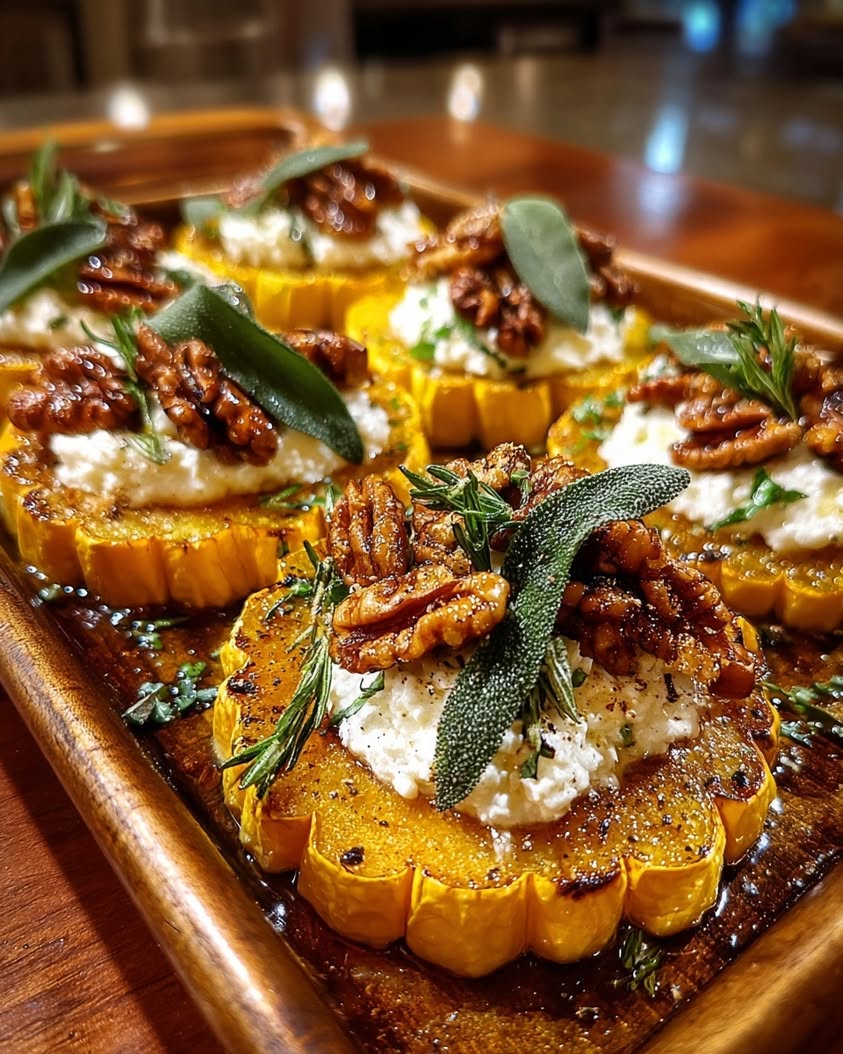
Roasted Delicata Squash Rings with Ricotta and Sage Brown Butter: An Elegant Fall Appetizer
Welcome to the ultimate guide for creating stunning Roasted Delicata Squash Rings with Ricotta and Sage Brown Butter. This recipe transforms humble seasonal produce into a show-stopping dish that is as beautiful as it is delicious. Imagine sweet, caramelized squash rings topped with creamy ricotta, nutty brown butter, and crunchy candied walnuts. Consequently, every bite delivers a perfect harmony of flavors and textures. This dish is a true celebration of autumn on a plate.
Moreover, this recipe is surprisingly simple to prepare. The delicate squash requires no peeling, which saves you significant time and effort. Meanwhile, the sage brown butter and candied walnuts come together in minutes. Ultimately, you will create an impressive appetizer or side dish that will wow your guests. Whether you are hosting a holiday dinner or simply enjoying a cozy weeknight meal, these Roasted Delicata Squash Rings with Ricotta and Sage Brown Butter are sure to become a seasonal favorite.
Finally, the visual appeal of this dish is undeniable. The golden rings of squash create a stunning base for the white ricotta and toasted walnuts. A drizzle of fragrant brown butter adds a final touch of elegance. Therefore, this recipe is perfect for your holiday table or any special occasion. Let us dive into the details of creating this masterpiece.
Quick Recipe Highlights
- Flavor Profile: These Roasted Delicata Squash Rings with Ricotta and Sage Brown Butter offer a complex taste experience. The natural sweetness of the roasted squash perfectly balances the savory, nutty brown butter. Additionally, the candied walnuts introduce a delightful caramelized crunch that ties everything together.
- Texture: This dish is a textural dream. You get the tender, almost creamy flesh of the squash against the pillowy ricotta. Furthermore, the crispy sage leaves and crunchy walnuts provide a satisfying contrast in every single bite.
- Aroma: The kitchen will fill with the warm, comforting scent of roasting squash and toasting walnuts. As the butter browns with fresh sage, it releases an earthy, aromatic fragrance that is quintessentially autumnal.
- Visual Appeal: The presentation is naturally artistic. The circular squash rings make for a beautiful plating canvas. Subsequently, the white ricotta dollops and golden-brown walnuts create a visually striking contrast that is perfect for photography.
- Skill Level Needed: This is an accessible recipe for most home cooks. It involves basic techniques like roasting and making a simple pan sauce. Importantly, no advanced skills are required to achieve a restaurant-quality result.
- Special Equipment: You only need a good baking sheet, a skillet, and a sharp knife. A mandoline can help with even slicing, but a steady hand works perfectly fine for cutting the Roasted Delicata Squash Rings.
Recipe Overview
- Difficulty Level: We rate this recipe as easy. The steps are straightforward and logical. First, you roast the squash. Next, you prepare the toppings while it cooks. Finally, there is minimal hands-on time, and the process is forgiving, making it ideal for cooks of all levels.
- Category: This versatile dish fits multiple categories beautifully. It shines as an elegant appetizer for a dinner party. Alternatively, it serves as a luxurious side dish for roasted meats or a hearty vegetarian main course when portioned generously.
- Cuisine: The dish draws inspiration from rustic Italian and American farmhouse traditions. The use of ricotta and brown butter is classically Italian. Meanwhile, the focus on seasonal squash and walnuts reflects a modern, farm-to-table American sensibility.
- Cost: This is a cost-effective recipe, especially during the fall squash season. Delicata squash, ricotta, and walnuts are relatively inexpensive ingredients. Therefore, you can create an impressive dish without straining your grocery budget.
- Season: This recipe is perfect for fall and winter. Delicata squash is at its peak sweetness during these cooler months. Consequently, the warm, comforting flavors are exactly what you crave when the weather turns chilly.
- Occasion: It is ideal for holiday gatherings like Thanksgiving or Christmas. It also works wonderfully for a fancy weekend brunch or a date night dinner at home. Essentially, it elevates any meal into a special event.
Why You’ll Love This Recipe
First and foremost, the taste and texture combination is utterly irresistible. The Roasted Delicata Squash Rings with Ricotta and Sage Brown Butter deliver a symphony in your mouth. The squash caramelizes in the oven, becoming intensely sweet and tender. Then, the rich, nutty brown butter sauce adds a deep savory note. The creamy ricotta cools the palate, while the candied walnuts provide a necessary sweet crunch. Every element has a purpose, and together they create a perfectly balanced dish that is both comforting and sophisticated.
Secondly, the convenience factor is a major win. Unlike many winter squashes, delicata has an edible skin that becomes perfectly tender when roasted. This means no struggling with a tough peel or risking your fingers. You simply slice, season, and roast. Meanwhile, the toppings come together in one skillet. This efficient workflow means you can have an elegant dish on the table in under an hour with minimal fuss. It is the kind of recipe that makes you look like a culinary pro without the associated stress.
From a nutritional standpoint, this dish is packed with benefits. Delicata squash is an excellent source of vitamin A, fiber, and potassium. Walnuts add healthy fats, protein, and omega-3s. Ricotta provides a boost of calcium and protein. Therefore, you are enjoying a meal that is as nourishing as it is delicious. It is a fantastic way to incorporate more vibrant, whole foods into your diet during the colder months.
Furthermore, the social and entertaining value of this recipe is incredibly high. The presentation is stunning and guaranteed to draw compliments. It is a conversation starter on any buffet or dinner table. Because the components can be partially prepared ahead of time, you can spend more moments with your guests and less time stuck in the kitchen. Serving these Roasted Delicata Squash Rings with Ricotta and Sage Brown Butter shows thoughtfulness and care, making any gathering feel more special.
Finally, this recipe is wonderfully cost-effective and accessible. The ingredients are not exotic or expensive. You can find delicata squash at most farmers’ markets and grocery stores in season. The rest of the components are pantry and dairy staples. This accessibility means you can enjoy gourmet flavors without a gourmet price tag. It is a brilliant example of how simple, quality ingredients can be transformed into something extraordinary with just a little technique and care.
Historical Background and Cultural Significance
The story of this dish begins with its star ingredient: the delicata squash. Originally cultivated by Native Americans, this squash was a staple food long before European colonization. However, it nearly disappeared in the early 20th century because its thin skin made it difficult to ship commercially. Thankfully, dedicated seed savers and heirloom gardeners revived the variety. Today, its popularity has soared due to the farm-to-table movement and its convenient, edible skin. The modern iteration of Roasted Delicata Squash Rings with Ricotta and Sage Brown Butter is a celebration of this culinary comeback story.
Culturally, the dish sits at an intersection of traditions. Squash has been a centerpiece of autumnal harvest festivals across North America for centuries. Meanwhile, the use of browned butter and sage is a hallmark of Northern Italian cuisine, particularly in regions like Lombardy and Emilia-Romagna. Combining these elements reflects a contemporary cooking philosophy that respects heritage while encouraging creative fusion. This recipe is less about strict tradition and more about a global appreciation for seasonal, comforting flavors.
The evolution of the recipe follows broader food trends. Initially, winter squash was often boiled or mashed. The roasting technique gained popularity for intensifying sweetness. The addition of brown butter, a French technique known as beurre noisette, adds a layer of chef-driven sophistication. The final touch of candied nuts and fresh cheese speaks to the modern love for contrasting textures. Consequently, this dish is a product of evolving home cooking, where techniques from professional kitchens become accessible and are applied to humble ingredients.
Regional variations of this concept abound. In the American South, you might find a similar dish with pecans and a bourbon glaze. In a more Mediterranean take, one could substitute feta for ricotta and add toasted pine nuts. Some versions incorporate maple syrup into the roasting process for extra caramelization. The basic formula of roasted squash, a creamy element, a nutty fat, and a crunchy garnish is incredibly adaptable. This versatility ensures the concept of Roasted Delicata Squash Rings can travel across borders and suit local tastes and ingredients.
Ingredient Deep Dive
Let us start with the delicata squash. This heirloom variety, sometimes called a “peanut squash” due to its striped skin, is a type of winter squash. Unlike its cousins butternut or acorn, its skin is thin and tender enough to eat after cooking, which is a huge time-saver. Nutritionally, it is rich in beta-carotene (which converts to vitamin A), fiber for digestive health, and potassium for heart function. When selecting squash, look for firm, heavy fruits with vibrant, unblemished stripes and no soft spots. Store them in a cool, dark place for up to a month. If you cannot find delicata, a good substitution is acorn squash, though you will need to peel it after roasting.
Next, consider the ricotta cheese. Ricotta, meaning “recooked” in Italian, is a fresh whey cheese with a mild, slightly sweet flavor and a creamy, granular texture. For this recipe, opt for whole-milk ricotta for the richest flavor and creamiest mouthfeel. It is a good source of protein and calcium. Importantly, look for ricotta with minimal ingredients—just milk, whey, salt, and an acid. Avoid brands with stabilizers, as they can be grainy. If you need a dairy-free version, a high-quality almond or cashew-based ricotta can work, though the flavor profile will shift. Always drain excess liquid from ricotta before using it to prevent a watery dish.
The sage brown butter is the flavor engine. Butter is slowly melted and cooked until the milk solids turn a nutty brown, creating beurre noisette. This process unlocks deep, toasty flavors. Fresh sage is crucial here; its earthy, slightly peppery aroma infuses the butter perfectly. Sage has a long history in both culinary and medicinal traditions, valued for its digestive properties. When making brown butter, use unsalted butter to control the seasoning and watch it closely, as it can burn quickly. The visual cue is a golden-brown color and a nutty fragrance. For a nut-free version, you could use ghee or a high-heat oil, though you will lose the distinctive brown butter flavor.
Finally, the candied walnuts provide the essential crunch. Walnuts are one of the oldest tree foods, prized for their brain-healthy omega-3 fatty acids. Candying them in a simple syrup of sugar and water (or maple syrup) enhances their natural sweetness and gives them a glossy, crisp coating. This process also protects them from becoming rancid too quickly. When selecting walnuts, choose plump, light-colored halves. You can toast them before candying for an even deeper flavor. For substitutions, pecans or hazelnuts would be excellent. Store candied walnuts in an airtight container to maintain their crunch.
Common Mistakes to Avoid
- Uneven Slicing: Cutting the squash rings unevenly leads to inconsistent roasting. Some pieces will burn while others remain undercooked. Always aim for half-inch thick slices for uniform cooking and a pleasing presentation.
- Crowding the Pan: Placing the squash rings too close together on the baking sheet causes them to steam instead of roast. This prevents the beautiful caramelization you want. Use two pans if necessary to ensure each ring has space.
- Underseasoning the Squash: Do not be shy with salt and pepper before roasting. Seasoning at this stage is crucial as it draws out moisture and flavors the squash from within. The toppings will not compensate for bland squash.
- Burning the Brown Butter: This is the most common pitfall. Butter goes from brown to black in seconds. Use a light-colored pan so you can see the color change, and remove it from the heat the moment it smells nutty and turns amber.
- Using Stale or Bitter Walnuts: Walnuts can turn rancid. Always taste one before using. A bitter walnut will ruin the candying process and the final dish. Store nuts in the freezer to prolong their freshness.
- Skipping the Ricotta Drain: Using ricotta straight from the tub often means adding excess water to your beautiful dish. Draining it in a fine-mesh sieve for 15 minutes results in a thicker, creamier dollop that holds its shape.
- Adding Sage Too Early: If you add fresh sage to the butter at the beginning, it will burn and become bitter. Instead, add the sage leaves just as the butter starts to brown, letting them crisp up for about 30 seconds.
- Not Tossing the Walnuts Enough: When candying the walnuts, you must stir constantly once the sugar syrup is added. Otherwise, the sugar will crystallize unevenly or burn, resulting in a gritty or bitter coating.
Essential Techniques
Roasting for Caramelization: Roasting is the key to unlocking the squash’s natural sugars. The high, dry heat of the oven causes the sugars on the surface to brown and caramelize, creating complex flavors and a tender interior. To master this, preheat your oven fully and use a hot temperature (around 425°F). Do not overcrowd the pan, as mentioned, and flip the rings halfway through cooking to ensure even browning. The visual cue for success is golden-brown edges and a fork-tender center.
Making Brown Butter (Beurre Noisette): This technique transforms ordinary butter into a fragrant, nutty sauce. The process involves gently melting unsalted butter in a pan over medium heat. The water will evaporate, and the milk solids will separate, sink, and then toast. It is important to swirl the pan occasionally for even cooking. The cue for perfection is a foamy top, a nutty aroma, and the milk solids at the bottom turning a golden brown. Immediately transfer it to a cool bowl to stop the cooking. The biggest pitfall is stepping away, which leads to burning.
Candying Nuts: Candying creates a sweet, crunchy, and glossy coating on nuts. The basic method involves dissolving sugar in a small amount of water, then cooking it to a syrup before adding the nuts. Constant stirring is non-negotiable to ensure the sugar coats each nut evenly and does not crystallize. As the water evaporates, the sugar will recrystallize onto the nuts, creating a sandy texture that melts into a smooth coating. The process is complete when the nuts are well-coated and no syrup remains in the pan. Spread them on parchment to cool and harden.
Pro Tips for Perfect Roasted Delicata Squash Rings
First, for perfectly round rings, slice off a small piece from both ends of the squash to create stable flat surfaces before cutting your half-inch rounds. This prevents rolling and makes slicing safer and more uniform.
Second, toss your squash rings in oil and seasoning in a large bowl, not on the pan. This ensures every surface is evenly coated, leading to better browning and flavor distribution across all your Roasted Delicata Squash Rings.
Third, roast the squash on the middle oven rack. Placement matters because if the pan is too high, the tops may burn before the centers cook. If it is too low, you will not get good caramelization on top.
Fourth, make your brown butter in a stainless steel or light-colored saucepan. You cannot monitor the color change in a dark non-stick pan, which greatly increases your risk of burning this precious ingredient.
Fifth, reserve a few whole, pretty sage leaves to fry crisp in the brown butter for garnish. Use the rest of the leaves, chopped, to infuse the butter flavor more thoroughly before drizzling.
Sixth, let your candied walnuts cool completely on the parchment paper before breaking them apart. If you touch them while warm, the sugar coating can stick to your fingers and pull off the nuts.
Seventh, bring your ricotta to room temperature for about 15 minutes before serving. Cold ricotta straight from the fridge can dull the flavors and slightly cool down the warm squash.
Eighth, assemble the dish just before serving. If you assemble too early, the ricotta will melt, the walnuts may soften from the heat, and the presentation will lose its distinct layers and textures.
Variations and Adaptations
For regional variations, consider a Southern twist by using pecans instead of walnuts and adding a touch of bourbon to the brown butter. A Mediterranean adaptation could feature crumbled feta cheese, toasted pine nuts, and a drizzle of good olive oil with oregano. These changes transport the core concept to different culinary landscapes while maintaining its structural integrity.
Seasonal adaptations are simple and fun. In spring, try this with roasted asparagus spears or thick slices of fennel. For summer, zucchini or eggplant rounds could be a lighter base. The brown butter and ricotta toppings are versatile enough to complement almost any roasted vegetable, making this a year-round template.
Dietary modifications are straightforward. For a vegan version, use a plant-based butter alternative for browning and a high-quality almond or cashew ricotta. Omit the honey in the walnuts and use maple syrup. For a gluten-free diet, this recipe is naturally compliant, just ensure any pre-made ingredients like candied walnuts are certified GF.
Flavor variations can keep this recipe exciting. Add warmth by incorporating a pinch of red pepper flakes into the brown butter. For an herbal note, use thyme or rosemary alongside or instead of sage. A drizzle of balsamic glaze or pomegranate molasses after plating adds a sweet-tart complexity that cuts through the richness beautifully.
Texture modifications can cater to personal preference. If you prefer a smoother component, whip the ricotta with a little lemon zest until light and fluffy. For extra crunch, add a sprinkle of panko breadcrumbs toasted in olive oil on top of the assembled dish just before serving.
Presentation alternatives offer creative freedom. Instead of plating individual rings, you can slice the roasted squash into half-moons and arrange them in a rustic pile on a platter, then top with the ricotta, nuts, and butter. Alternatively, serve the components in separate bowls for a build-your-own interactive appetizer station.
Serving and Presentation Guide
Plating techniques can elevate this dish from home-cooked to restaurant-worthy. For individual appetizer portions, arrange three overlapping squash rings in the center of a small plate. Place a generous dollop of ricotta in the center, allowing it to nestle into the rings. Drizzle the sage brown butter around the plate artistically, not directly over the ricotta to keep it white. Finally, scatter the candied walnuts and a few crispy sage leaves on top.
Garnishing ideas extend beyond the crispy sage. A final flake of sea salt, such as Maldon, adds a burst of salinity and texture. A light dusting of smoked paprika or sumac provides color and a subtle flavor twist. Freshly cracked black pepper is always a welcome finish. For a touch of green, microgreens or delicate parsley leaves work well.
Traditional accompaniments for a dish like this are simple. It pairs wonderfully with a bitter green salad dressed in a sharp vinaigrette to balance the squash’s sweetness. Crusty bread is essential for soaking up every last drop of the delicious sage brown butter left on the plate.
Modern serving suggestions might include presenting it as part of a larger autumnal grazing board. Arrange the Roasted Delicata Squash Rings alongside other seasonal items like sliced prosciutto, figs, grapes, and assorted cheeses. This turns it into a shareable, communal eating experience.
Temperature considerations are key. The squash and brown butter should be warm, even hot, when served. The ricotta should be at cool room temperature. This contrast between warm and cool is part of the sensory pleasure. Assemble and serve immediately to maintain these distinct temperatures.
Portion control tips depend on the meal’s role. As an appetizer, two to three rings per person is sufficient. As a side dish, four to five rings are appropriate. For a vegetarian main course, plan on six to eight rings per person, perhaps with a side of a hearty grain like farro or quinoa.
Wine and Beverage Pairing
Wine pairings should complement the dish’s sweet, savory, and nutty notes. A rich, oaked Chardonnay is a classic choice because its buttery texture mirrors the brown butter, and its stone fruit flavors harmonize with the squash. Alternatively, a dry Riesling or Gewürztraminer offers a pleasing contrast with bright acidity and slight sweetness that cuts through the richness. For red wine lovers, a lighter-bodied Pinot Noir with earthy, cherry notes works beautifully without overwhelming the delicate squash.
Non-alcoholic alternatives can be just as thoughtful. A sparkling apple cider provides autumnal sweetness and effervescence. A warm, mulled cranberry juice punch with cinnamon and orange zest echoes the seasonal spices. For a simpler option, a glass of chilled dry kombucha, especially one with ginger or apple flavor, offers acidity and complexity that cleanses the palate between bites.
While not a classic coffee dish, certain warm beverages can pair nicely if serving this for a brunch or late autumn lunch. A medium-roast coffee with low acidity and notes of caramel or nut would not clash. A chai tea latte, with its warm spices of cinnamon, cardamom, and clove, can create a wonderfully cozy flavor synergy with the dish’s autumnal character.
Temperature considerations for beverages are straightforward. White wines should be served chilled but not ice-cold, around 50-55°F, to allow their aromas to shine. Red wines like Pinot Noir should be slightly cool, around 55-60°F. Non-alcoholic sparkling drinks are best served well-chilled. Warm beverages should be hot but not scalding.
Serving suggestions include offering a choice. When hosting, you might set out a bottle of Chardonnay and a carafe of sparkling cider. This ensures all guests have a complementary drink option. Always provide water on the table to cleanse palates, as the rich brown butter and ricotta benefit from a neutral reset between bites.
Storage and Shelf Life
Storage methods must account for the separate components. Store leftover roasted squash rings in an airtight container in the refrigerator for up to 4 days. Keep the ricotta in its original container or a separate sealed tub. Pour the sage brown butter into a small jar or ramekin. Store the candied walnuts at room temperature in an airtight container to maintain their crunch. Never store the assembled dish, as the walnuts will soften and the ricotta will weep.
Temperature requirements are specific. The squash, ricotta, and brown butter must be refrigerated. The brown butter will solidify when chilled, which is normal. The candied walnuts are the only component that should stay at cool room temperature; refrigeration can introduce moisture and make them sticky.
Container recommendations are important for quality. Use glass or BPA-free plastic containers for the squash. For the solidified brown butter, a small mason jar is perfect. Ensure the ricotta container is tightly sealed to prevent it from absorbing other refrigerator odors.
Signs of spoilage to watch for include mold (fuzzy spots) on the squash or ricotta, an off or sour smell from the dairy, or rancidity in the walnuts (a sharp, bitter smell). If the brown butter develops any unusual odors beyond its normal nutty scent, discard it.
Reheating instructions are simple for the squash. Reheat rings on a baking sheet in a 350°F oven for about 10 minutes, or until warmed through. You can also reheat them in a skillet over medium heat. Avoid the microwave, as it can make them soggy. Gently re-warm the brown butter in a small saucepan over low heat.
Freezing guidelines are limited. You can freeze the roasted squash rings on a parchment-lined tray before transferring to a freezer bag. They will keep for 2-3 months but may be slightly softer upon thawing. Do not freeze the ricotta, as it will separate and become grainy. The brown butter can be frozen in an ice cube tray for future use in other recipes.
Make Ahead Strategies
An efficient prep timeline can make entertaining stress-free. Up to two days ahead, candy the walnuts and store them at room temperature. The day before, roast the squash rings, let them cool, and refrigerate them. Also, measure out your ricotta and drain it if needed, keeping it sealed in the fridge. Up to a few hours before serving, make the sage brown butter, let it cool slightly, and refrigerate it; it will solidify.
Storage between steps is crucial for quality. Keep the cooled squash in a single layer between sheets of parchment in a container to prevent sticking. Store the solidified brown butter in its jar. Keep the drained ricotta covered. This compartmentalized approach preserves the texture of each component until you are ready for the final act.
Assessing the quality impact of make-ahead steps is important. The walnuts actually improve when made ahead, as the sugar coating fully hardens. The roasted squash retains excellent flavor and texture for 2 days. The brown butter reheats beautifully. The only element that truly must be fresh is the final assembly and the crisping of the sage garnish, which takes mere seconds.
Assembly tips for last-minute ease are simple. Have all your components ready and at the correct temperature. Reheat the squash in the oven. Gently rewarm the brown butter in a saucepan, adding a few fresh sage leaves to crisp up. Dollop the room-temperature ricotta. This streamlined process takes less than 10 minutes of active time before serving.
Reheating guidelines ensure everything is perfect. Always reheat the squash in a dry oven or skillet to re-crisp the edges. Warm the brown butter over low heat just until liquid again; do not boil it. If the ricotta seems thick after draining, you can loosen it with a teaspoon of milk or cream when you take it out of the fridge.
Fresh element additions are the final touch. Even if you made the brown butter ahead, always fry a few fresh sage leaves in it during the final rewarm for that vibrant aroma and crisp texture. A last-minute sprinkle of flaky salt on the assembled dish makes all the difference.
Scaling Instructions
Halving the recipe is straightforward for a smaller household. Use one medium delicata squash, halve all other ingredient quantities, and use a single baking sheet. The cook times will remain roughly the same, but keep a close eye as a smaller batch may cook slightly faster. This is a great way to test the recipe before making it for a crowd.
Doubling or tripling the recipe for a party is easy but requires planning. You will need multiple baking sheets; rotate them from top to bottom racks halfway through roasting to ensure even cooking. Make the brown butter in batches to avoid overcrowding the pan, which can lead to uneven browning. Candy the walnuts in a larger, wide skillet or in batches to ensure even coating.
Equipment adjustments are necessary when scaling up. For a double batch, you will likely need two large baking sheets. For the brown butter, use a wider, heavy-bottomed skillet or Dutch oven to give the butter more surface area. For candying a large volume of walnuts, a large non-stick skillet or a wide saucepan is essential for proper stirring and coating.
Timing modifications are minimal when scaling. The roasting time may increase by 5-10 minutes if the oven is very full, as this can lower the ambient temperature. Start checking for doneness a few minutes early. The hands-on time for preparing the toppings will increase linearly, so budget accordingly.
Storage considerations change with volume. If making a large batch ahead, use several shallow containers for the roasted squash to prevent steaming and sogginess. Store the brown butter in multiple smaller jars for easier reheating. Large batches of candied walnuts should be spread in a single layer on a parchment-lined sheet pan to cool completely before storing in a large airtight container.
Nutritional Deep Dive
A macro breakdown of a serving reveals a balanced profile. The dish provides healthy complex carbohydrates from the squash for sustained energy. The ricotta and walnuts contribute a good amount of protein and healthy fats, which promote satiety. The brown butter adds additional fat, making the dish satisfying and helping your body absorb the fat-soluble vitamins present in the squash.
The micronutrient analysis is impressive. Delicata squash is exceptionally high in vitamin A (from beta-carotene), crucial for vision and immune health. It also provides vitamin C, potassium, and manganese. Walnuts are a top source of plant-based omega-3 fatty acids (ALA) and contain antioxidants. Ricotta adds calcium for bone health and phosphorus.
Overall health benefits are significant. This meal supports eye health, reduces inflammation thanks to the omega-3s, and provides fiber for digestive wellness. The combination of protein, fat, and fiber helps regulate blood sugar levels, preventing the spikes and crashes associated with more carbohydrate-heavy meals.
Dietary considerations are mostly positive. The recipe is naturally gluten-free. It is vegetarian. For those monitoring sodium, you can control the amount of added salt. The dish does contain dairy and nuts, which are common allergens, but substitutions are available as outlined earlier.
Portion analysis shows this dish can fit into various dietary goals. As an appetizer or side, the portion is modest and adds valuable nutrients to a meal. As a main, it provides a complete and satisfying plate. The fats are primarily unsaturated (from walnuts and olive oil) with some saturated fat from butter and cheese.
Weight management tips include being mindful of the ricotta and brown butter portions if you are closely tracking calories. You can lightly brush the squash with oil instead of tossing for a lighter version. The dish is inherently filling due to its fiber and protein content, which can help prevent overeating later.
Dietary Adaptations
For a gluten-free diet, this recipe is already perfect. Just double-check that your candied walnuts were made without any wheat-based additives, or make them yourself. All other components—squash, ricotta, butter, sage—are naturally gluten-free.
A dairy-free adaptation requires substitutions for both the ricotta and butter. Use a high-quality vegan butter alternative for the brown butter sauce. For the ricotta, several brands make excellent almond, cashew, or soy-based ricotta alternatives. Choose one with a neutral flavor and creamy texture for the best result.
Creating a vegan version combines the dairy-free adaptations with one more change: the honey in the candied walnuts. Simply replace the honey with maple syrup or agave nectar to candy the walnuts. Ensure your vegan butter is used for the sauce and your plant-based ricotta is well-drained.
For a low-carb or keto adaptation, the squash is the main challenge as it contains carbohydrates. You could use this topping combination on a base of roasted zucchini or eggplant rounds instead. The brown butter, ricotta, and walnuts (in moderation) can fit into a keto framework.
A Paleo adaptation would omit the dairy. Use ghee instead of butter for the brown sauce, as it is Paleo-approved. Omit the ricotta entirely or replace it with a dollop of coconut cream. Ensure the walnuts are candied with a Paleo-friendly sweetener like coconut sugar or maple syrup.
For a Low-FODMAP diet, delicata squash is considered low-FODMAP in servings of about 1/2 cup per meal, so stick to a moderate portion. Use lactose-free ricotta, as the lactose has been removed. The butter, sage, and walnuts (limit to 10 halves) are all low-FODMAP friendly.
Troubleshooting Guide
If your squash is soggy instead of caramelized, the issue is likely moisture. You may have overcrowded the pan, used too much oil, or not had a hot enough oven. Solution: Next time, ensure rings are spaced apart, blot squash slices dry before oiling, and verify your oven temperature with a thermometer. For salvage, you can try broiling the cooked squash for 2-3 minutes to crisp up the edges.
If the flavor balance seems off—perhaps too sweet or too bland—you can adjust post-cooking. For excessive sweetness, a generous squeeze of lemon juice over the assembled dish or a drizzle of a tangy yogurt can add acidity. If it is bland, a vigorous seasoning with flaky sea salt and black pepper just before serving can wake up all the flavors dramatically.
Temperature problems usually involve the butter or the assembled dish being cold. If your brown butter seized or hardened on cool squash, gently rewarm the butter and drizzle it while warm. If the whole dish is lukewarm, briefly place the assembled plates under a broiler for 60 seconds, watching carefully, to warm the ricotta slightly and re-melt the butter.
Equipment challenges often involve baking sheet size. If you only have one small sheet and need to roast in batches, keep the first batch warm in a 200°F oven while the second batch cooks. For browning butter without a light-colored pan, use your nose as the primary guide and remove it from heat the second you smell nuts.
Ingredient substitution concerns are common. If you had to substitute butternut squash, the skin will be inedible. Simply scoop the soft flesh out of the skin after roasting and plate it that way. If you used dried sage instead of fresh, the flavor will be more potent and earthy; use about one-third the amount and add it to the butter at the very beginning to infuse.
Timing concerns often arise when coordinating multiple components. The key is to start the squash first, as it takes the longest. While it ro{“success”:true,”message”:”Recipe created successfully”,”post_id”:8028,”tasty_recipe_id”:8028,”shortcode”:” Print
Roasted Delicata Squash Rings with Ricotta, Sage Brown Butter & Candied Walnuts
Description
A stunning fall dish featuring sweet roasted delicata squash rings topped with creamy ricotta, nutty sage brown butter, and crunchy candied walnuts.
Ingredients
For the Crust:
- 2 medium delicata squash, sliced into 1/2-inch rings and seeds removed
- 2 tablespoons olive oil
- 1 teaspoon kosher salt
- 1/2 teaspoon black pepper
- 1 cup whole-milk ricotta cheese
- 1/2 cup unsalted butter
- 10 fresh sage leaves
- 1 cup walnuts
- 1/4 cup maple syrup
- 1/4 teaspoon cayenne pepper (optional)
- Flaky sea salt for garnish
Instructions
1. Prepare the Crust:
- Preheat oven to 425°F (220°C). Toss squash rings with olive oil, salt, and pepper. Arrange in a single layer on a baking sheet and roast for 20-25 minutes until tender and caramelized.
- While squash roasts, make candied walnuts: In a skillet over medium heat, combine walnuts, maple syrup, and cayenne. Cook, stirring, for 3-5 minutes until walnuts are coated and syrup bubbles. Spread on parchment to cool.
- In a small saucepan, melt butter over medium heat. Add sage leaves and cook until butter turns golden brown and smells nutty, about 5 minutes. Remove sage leaves and set aside.
- To serve, arrange roasted squash rings on a platter. Dollop with ricotta, drizzle with sage brown butter, and sprinkle with candied walnuts and flaky sea salt. Garnish with crispy sage leaves.
Notes
You can customize the seasonings to taste.

I’m Billy, a classically trained culinary school graduate from The Culinary Institute of America with over 12 years in the restaurant industry and over 19 years of cooking experience.