
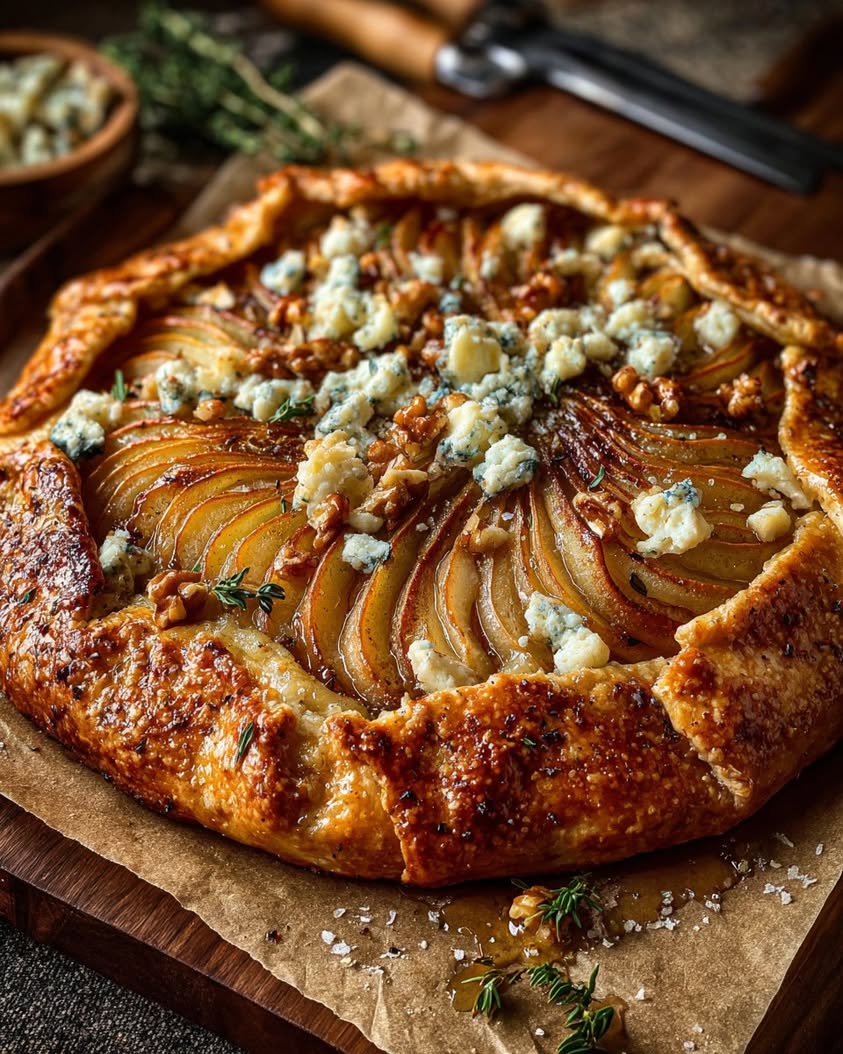
Roasted Pear and Blue Cheese Galette with Black Pepper Honey: A Rustic Masterpiece
This roasted pear and blue cheese galette recipe delivers an unforgettable blend of sweet, savory, and spicy flavors. Moreover, it presents a stunning centerpiece for any table. The rustic, free-form pastry cradles tender roasted pears and creamy, tangy cheese. Ultimately, a drizzle of black pepper honey ties everything together with a warm, aromatic finish.
Creating this dish feels like a special occasion, but the process remains surprisingly approachable. The galette’s beauty lies in its imperfections; you don’t need perfect pastry skills. Consequently, even novice bakers can achieve a show-stopping result. The aroma of baking fruit and pastry filling your kitchen is simply divine. This roasted pear and blue cheese galette truly elevates simple ingredients into something extraordinary.
Imagine the first bite: flaky, buttery crust gives way to soft, caramelized pear. Next, the bold punch of blue cheese cuts through the sweetness. Finally, the spicy-sweet black pepper honey glaze adds a final, sophisticated layer. This recipe masterfully balances contrasting elements. Therefore, it will impress your guests and satisfy your own culinary curiosity. Let’s explore how to make this stunning roasted pear and blue cheese galette.
Quick Recipe Highlights
- Flavor Profile: This roasted pear and blue cheese galette offers a sophisticated play of tastes. Sweet, juicy pears roast to caramelized perfection. Meanwhile, the pungent, salty blue cheese provides a bold counterpoint. The black pepper honey introduces a subtle heat that lingers pleasantly.
- Texture: Expect a delightful contrast in every bite. The pastry bakes up shatteringly crisp and flaky. The pear filling becomes luxuriously soft and almost jam-like. Crumbled blue cheese adds creamy pockets that melt slightly in the oven.
- Aroma: As this galette bakes, your kitchen will fill with incredible scents. First, you’ll notice the sweet, buttery fragrance of the pastry. Then, the scent of roasting fruit and warm spices emerges. Finally, a hint of sharp cheese and peppery honey completes the olfactory experience.
- Visual Appeal: This dish boasts a beautiful, rustic appearance. The golden-brown, folded crust frames the glistening pear and cheese filling. Vibrant green thyme leaves or arugula garnish add a fresh pop of color. Drizzled honey creates an elegant, glossy finish.
- Skill Level Needed: This recipe requires basic pastry skills and careful attention to temperature. You must handle the dough confidently to prevent toughness. Additionally, balancing the flavors demands a thoughtful palate. However, clear instructions make the process manageable for dedicated home cooks.
- Special Equipment: You need a rolling pin and a large baking sheet, preferably lined with parchment. A sharp knife and cutting board are essential for prepping pears. A pastry brush helps with the egg wash, and a small saucepan prepares the honey glaze.
Recipe Overview
- Difficulty Level: We rate this roasted pear and blue cheese galette as intermediate. The challenge lies in making a flaky, tender pastry crust that holds its shape. You must also slice the pears evenly for consistent roasting. Balancing the strong flavors of blue cheese and black pepper honey requires a confident hand. However, the free-form nature of a galette is forgiving of small imperfections.
- Category: This versatile dish fits multiple categories beautifully. Serve it as an impressive appetizer for a dinner party. Alternatively, it makes a luxurious main course for a light lunch or vegetarian supper. You can also present it as a unique and savory dessert option after a rich meal.
- Cuisine: This galette draws inspiration from French rustic cooking, known for its simple, ingredient-focused tarts. The combination of fruit and cheese is classic in many European traditions. The use of black pepper honey adds a modern, global twist. Ultimately, it’s a fusion of pastoral elegance and contemporary flavor pairing.
- Cost: Making this galette is moderately affordable, especially when pears are in season. The most significant cost is often a quality blue cheese. Using store-bought puff pastry can lower the cost and preparation time. Overall, the impressive result far outweighs the relatively modest investment in ingredients.
- Season: This recipe shines in the autumn and early winter. That’s when pears are at their peak of flavor and sweetness. The warm, spiced notes are perfect for cooler weather. However, with proper pear selection, you can enjoy this savory tart year-round.
- Occasion: This galette is perfect for an intimate dinner party or a festive holiday gathering. Its elegant yet rustic look makes it ideal for a special weekend brunch. It’s also a wonderful project for a cozy afternoon of baking. Simply put, it turns any meal into an occasion.
Why You’ll Love This Recipe
You will adore the complex symphony of flavors in this roasted pear and blue cheese galette. Each component plays a crucial role. The sweet pears mellow during roasting, becoming deeply caramelized and tender. The blue cheese, however, brings a sharp, salty tang that wakes up your palate. Then, the black pepper honey sweeps in with a gentle heat and floral sweetness. This combination creates a memorable eating experience that is both comforting and exciting. Furthermore, the contrasting textures keep every bite interesting.
The convenience of this recipe is another major benefit. Unlike a precise pie, a galette is meant to look rustic and handmade. Consequently, you don’t need a pie dish or to worry about perfect crimping. The free-form style is forgiving and encourages creativity. You can prepare components ahead of time for easy assembly. Therefore, it reduces last-minute stress when entertaining. This approach makes impressive cooking accessible even on a busy schedule.
From a nutritional perspective, this dish offers some valuable benefits. Pears provide a good source of dietary fiber and vitamin C. Using whole-grain flour in the crust adds complex carbohydrates and nutrients. Blue cheese offers calcium and protein, though it should be enjoyed in moderation. Choosing a high-quality honey introduces antioxidants. When enjoyed as part of a balanced meal, this galette is a nourishing choice.
The social and entertaining value of this roasted pear and blue cheese galette is immense. It serves as a fantastic conversation starter at any gathering. Guests are always intrigued by the unique flavor pairing. Presenting a homemade pastry conveys care and effort. It pairs wonderfully with a simple salad for a complete, elegant meal. Ultimately, it makes you look like a culinary rockstar with relatively manageable effort.
Finally, this recipe is cost-effective and accessible. The ingredient list is short and focused. You can often find pears and honey on sale. While good blue cheese is an investment, a little goes a long way in terms of flavor. The recipe uses common kitchen tools, so you likely have everything you need already. This accessibility means you can recreate a restaurant-quality dish in your own kitchen without a hefty price tag.
Historical Background and Cultural Significance
The galette has humble origins in French country cooking. Traditionally, it referred to any flat, round cake made from pastry or bread. French peasants created galettes as a practical way to use available ingredients. They would fold dough over seasonal fruits, creating a simple, handheld meal. This rustic tradition celebrated local produce and minimized waste. The free-form style was born from necessity, not aesthetics. Over time, this practicality evolved into a beloved culinary art form.
Culturally, the galette represents a connection to the land and the seasons. It is a dish deeply rooted in terroir, reflecting what is fresh and local. In many regions of France, specific galettes became signature dishes. For instance, the Galette des Rois is a celebratory cake for Epiphany. The savory galette, often filled with cheese and vegetables, is a staple of Breton cuisine. This history shows how a simple concept can become culturally significant.
The evolution of the roasted pear and blue cheese galette is a modern story. It combines the ancient tradition of the fruit galette with contemporary flavor profiling. The pairing of fruit and cheese is classic, seen in dishes like figs with prosciutto or apples with cheddar. However, using blue cheese and a peppered honey glaze is a more recent innovation. Chefs began experimenting with bold, contrasting flavors to elevate rustic dishes. This recipe is a product of that modern culinary exploration.
Regional variations of the savory galette are endless. In Italy, a similar concept exists with crostata. American cooks have embraced the galette for its simplicity and versatility. You can find versions with stone fruits in summer, apples in fall, and citrus in winter. The addition of cheese transforms it from a dessert to a main attraction. This adaptability ensures the galette’s continued popularity across cultures and kitchens worldwide.
Ingredient Deep Dive
Pears: Pears have been cultivated for thousands of years, originating in Asia and Europe. They symbolize immortality and comfort in various cultures. Nutritionally, they are rich in fiber, particularly in the skin, which aids digestion. They also provide vitamin C, potassium, and antioxidants. For this galette, choose firm, slightly under-ripe pears like Bosc or Anjou. These varieties hold their shape during roasting. Store pears at room temperature until they yield slightly to pressure at the stem. If they ripen too quickly, refrigerate them to slow the process. For substitutions, try firm apples or even quince for a more floral note.
Blue Cheese: Blue cheese’s history is legendary, often attributed to accidental mold growth in caves. Cultures like the French and English have perfected its production over centuries. It offers a significant amount of calcium, protein, and vitamins like B12. However, it is also high in sodium and saturated fat, so moderation is key. Select a creamy, flavorful blue like Roquefort, Gorgonzola Dolce, or Stilton. Avoid overly dry or crumbly varieties. Store blue cheese tightly wrapped in the refrigerator’s cheese drawer. If you dislike blue cheese, a sharp aged white cheddar or creamy goat cheese makes a fine substitute.
Black Pepper Honey: Honey is one of humanity’s oldest sweeteners, with evidence of its use dating back 8,000 years. Infusing it with black pepper is a practice found in many global cuisines for its medicinal and culinary benefits. Honey contains antioxidants and has natural antimicrobial properties. Black pepper adds piperine, which may aid nutrient absorption. Use raw, high-quality honey for the best flavor. Combine it with freshly cracked black pepper; the heat will mellow into a warm background note. Store honey at room temperature in a sealed container. For a substitute, try maple syrup infused with a pinch of cayenne or a balsamic glaze reduction.
Pastry Dough: The foundation of any great galette is a flaky, tender crust. This requires cold butter and a light hand. Using a combination of all-purpose and whole wheat flour adds flavor and structure. The key is to keep all ingredients cold to prevent the butter from melting before baking. This creates steam pockets that result in flaky layers. You can make the dough ahead and refrigerate it for up to two days. For a shortcut, high-quality store-bought puff pastry or pie dough works well. For a gluten-free version, use a trusted 1:1 gluten-free flour blend.
Common Mistakes to Avoid
- Using Overly Ripe Pears: Soft, juicy pears will turn to mush during roasting. They also release too much liquid, which can make the pastry soggy. Always choose firm, slightly under-ripe fruit that will soften beautifully in the oven without disintegrating.
- Not Chilling the Dough: Skipping the chill time for the pastry is a critical error. Warm dough is difficult to handle and will shrink excessively in the oven. Furthermore, the butter will melt too quickly, resulting in a tough, greasy crust instead of a flaky one.
- Rolling the Dough Too Thin: If you roll the pastry too thin, it may tear or leak filling. A thickness of about 1/8-inch provides enough structure to contain the juicy pears and melted cheese. It also ensures a satisfying, substantial bite of crust in every serving.
- Overloading the Filling: Piling on too many pears and cheese seems tempting. However, an overstuffed galette is difficult to fold and will likely leak. More importantly, the center may not cook through properly, leaving a soggy bottom layer.
- Neglecting the Egg Wash: The egg wash is not just for color; it helps seal the folded edges and creates a beautiful, glossy, golden-brown finish. Without it, the crust can look pale and dull. A sprinkle of coarse sugar on the wash adds delightful texture and shine.
- Skipping the Pre-roasting of Pears: Adding raw pears directly to the galette often leads to excess moisture. Pre-roasting them concentrates their flavor and evaporates some water. This step is crucial for preventing a soggy crust and achieving deep, caramelized pear taste.
- Using Pre-ground Black Pepper: The flavor of pre-ground pepper fades quickly and lacks potency. For the honey glaze, always use freshly cracked black pepper. The larger pieces provide bursts of aromatic heat that complement the honey’s sweetness perfectly.
- Cutting the Galette While Hot: The filling needs time to set after leaving the oven. If you slice into it immediately, the juices will run everywhere, and the structure will collapse. Allow it to cool on the baking sheet for at least 15-20 minutes before serving.
Essential Techniques
Keeping Ingredients Cold: This is the single most important technique for flaky pastry. Cold butter creates steam when it hits the oven’s heat, lifting the dough into separate, delicate layers. Therefore, use butter straight from the fridge and ice-cold water. Work quickly to prevent the butter from warming in your hands. If the dough becomes soft or sticky during rolling, immediately return it to the refrigerator to firm up.
Blind Roasting the Pears: Roasting the pears before assembling the galette serves multiple purposes. First, it intensifies their natural sweetness through caramelization. Second, it drives off excess water that would otherwise steam the pastry from the inside. Arrange the slices in a single layer on a baking sheet. Roast until just tender and slightly golden at the edges. This step ensures a crisp bottom crust and a concentrated fruit flavor.
Folding the Galette Edges: The rustic folded edge is both functional and decorative. After placing the filling in the center, lift the dough’s border and fold it over the filling, pleating as you go. These folds contain the juices and create the galette’s signature look. Press gently to seal each pleat. There’s no need for perfection; uneven folds add to the homemade charm.
Creating the Black Pepper Honey Glaze: Infusing honey with pepper requires gentle heat. Warm the honey slightly in a small saucepan just until it becomes fluid. Stir in the cracked pepper and let it steep off the heat. The warmth opens up the pepper’s aromatic oils. Avoid boiling the honey, as high heat can destroy its delicate flavors and beneficial properties.
Pro Tips for Perfect Roasted Pear and Blue Cheese Galette
First, freeze your butter and then grate it into the flour using a box grater. This method distributes the fat evenly and quickly, minimizing handling and keeping it cold.
Add a teaspoon of apple cider vinegar to your ice water. The acid inhibits gluten development, ensuring a more tender and flaky pastry crust.
After roasting your pears, pat them gently with a paper towel to absorb any surface moisture. This extra step provides an additional safeguard against a soggy bottom.
Use a pizza stone or baking steel if you have one. Preheat it with the oven and place your baking sheet on top. This technique delivers intense bottom heat for an exceptionally crisp crust.
Let the black pepper honey sit for at least 30 minutes before using. This allows the pepper flavor to fully permeate the honey, creating a more complex and integrated glaze.
For a stunning presentation, garnish the finished galette with fresh microgreens or arugula and edible flowers. The green color provides a beautiful contrast to the golden-brown pastry.
If your crust is browning too quickly, tent the edges with aluminum foil. This will protect them from burning while the center of the galette finishes cooking.
Serve each slice with a small side of extra black pepper honey for dipping. This allows guests to adjust the sweetness and spice level to their personal preference.
Variations and Adaptations
Regional Variations: Explore global twists on this concept. For a French touch, use Roquefort cheese and add a layer of sautéed leeks. An Italian version might feature Gorgonzola, walnuts, and a balsamic reduction instead of honey. For an American spin, try sharp cheddar with apples and a sprinkle of crispy bacon.
Seasonal Adaptations: This galette framework works year-round. In spring, use asparagus, goat cheese, and lemon zest. Summer calls for peaches, burrata, and basil. Autumn is perfect for this roasted pear version or one with figs. In winter, try caramelized onions, gruyère, and thyme.
Dietary Modifications: For a gluten-free galette, use a reliable gluten-free flour blend in the dough. To make it dairy-free, substitute a vegan butter and a tangy cashew or almond-based “cheese.” For a nutty flavor without nuts, use tahini in the crust.
Flavor Variations: Infuse the honey with other spices like rosemary, thyme, or red pepper flakes. Add a layer of caramelized onions beneath the pears for extra depth. Incorporate toasted nuts like walnuts or pecans for crunch. A sprinkle of fresh thyme or rosemary over the filling before baking adds an herbal note.
Texture Modifications: For extra crunch, sprinkle coarse cornmeal or semolina on the rolled-out dough before adding filling. Incorporate crispy pancetta or bacon bits into the cheese layer. A sprinkle of coarse sugar on the crust before baking creates a delightful sweet-and-salty contrast.
Presentation Alternatives: Make individual mini galettes for a personalized appetizer. Cut the dough into squares for a more modern, deconstructed look. After baking, top with fresh pear slices and extra cheese for a dual-texture experience. Serve it on a wooden board with the honey in a small pitcher for a rustic tableside presentation.
Serving and Presentation Guide
Plating Techniques: Transfer the cooled galette to a large, clean cutting board or a simple ceramic platter. Use a sharp, serrated knife for clean slices. Wipe the knife between cuts to keep edges neat. For individual plates, place a slice slightly off-center. Add a small drizzle of the black pepper honey in an artistic swirl around the plate’s edge.
Garnishing Ideas: Fresh herbs are your best friend. Sprigs of thyme, rosemary, or tarragon add color and fragrance. A handful of peppery arugula or watercress tossed in lemon juice makes a vibrant, fresh bed. Edible flowers like nasturtiums or pansies provide a stunning, elegant touch. Finally, a light dusting of flaky sea salt just before serving enhances all the flavors.
Traditional Accompaniments: A simple green salad with a sharp vinaigrette is the classic partner. It cuts through the richness of the cheese and pastry. For a heartier meal, serve with a cup of roasted butternut squash or tomato soup. A charcuterie board with cured meats and olives makes for a fantastic appetizer spread.
Modern Serving Suggestions: Pair a slice with a poached egg for a spectacular brunch. Crumble leftover galette over a bed of greens for a next-day salad. Serve small, bite-sized pieces on spoons as a passed appetizer at a cocktail party. Include it as part of a “savory pie” tasting menu with other mini quiches and tarts.
Temperature Considerations: This galette is best served warm, not piping hot. The warm temperature allows the cheese to be soft and the honey to be fluid. If you’ve made it ahead, reheat it gently in a 300°F oven for about 10 minutes. Avoid the microwave, as it will make the pastry soggy.
Portion Control Tips: A standard 10-inch galette yields six generous slices as a main course or eight smaller slices as an appetizer. For a large gathering, consider making two galettes with different fillings. This provides variety and ensures everyone gets a taste. Remember, this is a rich dish, so smaller portions are often satisfying when served with sides.
Wine and Beverage Pairing
Wine Pairings: The sweet, savory, and spicy notes in this galette call for versatile wines. A slightly sweet Riesling or Gewürztraminer complements the pears and tames the blue cheese’s saltiness. For red wine lovers, a fruity Pinot Noir with low tannins works beautifully. Its red berry notes harmonize with the roasted fruit. A dry Rosé, especially from Provence, offers acidity and berry flavors that bridge all components. For a truly special pairing, try a Sauternes; its honeyed sweetness mirrors the glaze and contrasts the cheese perfectly.
Non-Alcoholic Alternatives: Sparkling apple cider provides festive bubbles and echoes the fruit element. A ginger beer or spicy ginger ale plays off the black pepper in the honey. For a sophisticated option, try a pear or apple shrub (drinking vinegar) mixed with soda water. The acidity cuts through the richness. A simple honey-lemon-thyme infused water is a refreshing and thematic choice.
Coffee and Tea Pairings: After a meal featuring this galette, offer a medium-roast coffee with notes of caramel or nut. Avoid dark, bitter roasts that could clash. For tea, a smoky Lapsang Souchong stands up to the strong cheese flavors. A floral Earl Grey or a spiced Chai tea also pairs wonderfully, complementing the warm spices and honey.
Temperature Considerations: Serve white wines and sparkling beverages well-chilled, around 45-50°F. Serve red wines slightly cooler than room temperature, around 55-60°F, to keep them refreshing. Non-alcoholic sparkling drinks should be ice-cold. Coffee and tea, of course, should be served hot to provide a comforting contrast to the warm pastry.
Serving Suggestions: Pour wine into appropriate glassware to enhance the aroma. For non-alcoholic options, use elegant tumblers or champagne flutes for the sparkling cider. Present coffee in a French press or a carafe for guests to serve themselves. Always offer beverage choices alongside the galette to allow guests to discover their preferred pairing.
Storage and Shelf Life
Storage Methods: Once completely cooled, store leftover galette in an airtight container. You can also wrap it tightly in aluminum foil. Place it in the refrigerator. Do not leave it at room temperature for more than two hours due to the dairy content.
Temperature Requirements: Refrigeration is mandatory. The galette will keep in the fridge for up to 3 days. For longer storage, freezing is the best option. The ideal refrigerator temperature is below 40°F to prevent bacterial growth.
Container Recommendations: A large, shallow airtight container is ideal as it prevents the crust from getting crushed. If using foil or plastic wrap, place the galette on a flat plate first to support its structure. For individual slices, separate them with parchment paper in a container.
Signs of Spoilage: Discard the galette if you notice any off odors, especially a sour or ammonia-like smell. Visible mold growth, particularly on the cheese or fruit filling, is a clear sign it has spoiled. If the pastry becomes uncharacteristically soggy or slimy, it is no longer safe to eat.
Reheating Instructions: To restore crispness, reheat in a preheated 350°F oven for 10-15 minutes. Use a baking sheet, not a microwave. The microwave will steam the pastry and make it rubbery. You can also reheat individual slices in a toaster oven for about 5-7 minutes.
Freezing Guidelines: Freeze the galette after it has fully cooled. Wrap it tightly in plastic wrap, then in foil. Label with the date. It will keep for up to 2 months. Thaw overnight in the refrigerator before reheating in the oven. Freezing may slightly alter the texture of the pears, making them softer.
Make Ahead Strategies
Prep Timeline: You can break this recipe into stages over two days. On Day 1, prepare and chill the pastry dough. Roast the pears and let them cool, then store them covered in the fridge. Make the black pepper honey and let it infuse. On Day 2, assemble the galette with the cold components and bake. This spreads the work and makes entertaining effortless.
Storage Between Steps: Wrap the disk of pastry dough tightly in plastic wrap; it can refrigerate for up to 2 days or freeze for a month. Store roasted pears in a sealed container in the fridge for 1-2 days. The black pepper honey can sit at room temperature in a jar for several days, its flavor improving over time.
Quality Impact Assessment: Making components ahead often improves flavor. The dough relaxes, reducing shrinkage. The pears’ flavors concentrate when chilled. The honey infusion deepens. The only step best done just before baking is the final assembly and egg wash. This ensures the pastry bakes up flaky and the filling is fresh.
Assembly Tips: When assembling ahead of guests, you can construct the entire galette on a parchment-lined baking sheet. Keep it unbaked in the refrigerator for up to 4 hours. Brush with egg wash right before putting it in the preheated oven. This prevents the wash from drying out or soaking in.
Reheating Guidelines: If you bake the galette completely ahead, let it cool fully. Reheat it in a 325°F oven for 12-15 minutes until warmed through. Add a fresh drizzle of honey and any green garnishes after reheating to keep them vibrant and fresh.
Fresh Element Additions: Always add delicate garnishes like fresh herbs, greens, or a final drizzle of honey after reheating or just before serving. This preserves their color, texture, and bright flavor, elevating the presentation and taste of the make-ahead dish.
Scaling Instructions
Halving the Recipe: To make a smaller galette, simply divide all ingredient quantities by two. Use a standard 8-inch circle of dough. Reduce the baking time by 5-10 minutes, as a smaller galette will cook faster. Keep a close eye on the crust’s color. This is perfect for a dinner for two with minimal leftovers.
Doubling or Tripling: For a crowd, you can easily double or triple the ingredients. However, mix and roll the dough in separate batches to maintain control. Bake multiple galettes on separate oven racks, rotating the sheets halfway through for even cooking. Consider using different fillings for variety if making more than one.
Equipment Adjustments: When scaling up, ensure you have enough baking sheets. Do not overcrowd the oven; bake in batches if necessary. For a single, very large galette, you may need to roll the dough on a piece of parchment paper and transfer it on the paper to a large, rimless baking sheet or pizza pan.
Timing Modifications: A larger galette will require a slightly longer baking time. Start checking at the original time, but expect it may need 5-15 minutes more. The crust should be deeply golden brown, and the filling should be bubbling. Conversely, mini galettes may bake in as little as 20-25 minutes.
Storage Considerations: Scaling up means more leftovers. Plan your storage containers in advance. Sliced and stored portions are more convenient than trying to store a giant pastry. Label and date all containers clearly, especially if freezing multiple batches.
Nutritional Deep Dive
Macro Breakdown: A typical slice of this galette provides a balance of macronutrients. The pastry crust contributes carbohydrates and fats. The pears add natural sugars and fiber. The blue cheese offers protein and fat, particularly saturated fat. The honey adds simple carbohydrates. Overall, it’s an energy-dense dish best enjoyed as part of a balanced meal that includes lean proteins and vegetables.
Micronutrient Analysis: This dish delivers several key micronutrients. Pears provide vitamin C, vitamin K, and potassium. Blue cheese is an excellent source of calcium, essential for bone health, and vitamin B12. Whole wheat flour in the crust adds B vitamins and minerals like iron and magnesium. Honey contains small amounts of antioxidants.
Health Benefits: The fiber from pears and whole grains supports digestive health. Calcium from cheese is crucial for bone density. Antioxidants in pears and honey help combat oxidative stress. The use of whole foods without processed ingredients is a significant health advantage over many store-bought pastries.
Dietary Considerations: This is a vegetarian dish. It is not suitable for vegan, gluten-free, or dairy-free diets without modifications. It is also high in sodium from the cheese and may be high in saturated fat depending on the cheese and butter used. Those with hypertension or heart health concerns should be mindful of portion size.
Portion Analysis: One-sixth of a 10-inch galette is a satisfying portion. It is rich, so you may find a smaller slice (one-eighth) is sufficient when served with a large salad. Paying attention to portion control allows you to enjoy the indulgent flavors without overconsumption of calories, fat, and sodium.
Weight Management Tips: To enjoy this galette while managing weight, focus on a single, reasonable slice. Balance your day with lighter, vegetable-forward meals. Increase the ratio of pears to cheese slightly to boost fiber and volume. Use a strong-flavored blue cheese so a little goes a long way. Serve it as an occasional treat rather than a daily staple.
Dietary Adaptations
Gluten-Free: Replace the all-purpose and whole wheat flour with a trusted 1:1 gluten-free flour blend that contains xanthan gum. Brands like Bob’s Red Mill or King Arthur work well. Handle the dough gently, as it may be more fragile. Chill it thoroughly before rolling, and use plenty of gluten-free flour on your surface to prevent sticking.
Dairy-Free: Use a high-quality vegan butter stick (not spread) for the pastry. For the cheese, seek out a creamy, tangy vegan blue cheese alternative, or use a crumbled firm tofu marinated in lemon juice, miso, and nutritional yeast for a savory, cheese-like topping. Ensure the egg wash is replaced with plant-based milk or aquafaba.
Vegan: Follow the dairy-free guidelines and replace the egg wash. Mix 1 tablespoon of maple syrup or agave with 1 tablespoon of plant-based milk for a golden glaze. Check that your sugar is vegan-friendly. All other components—pears, honey (or maple syrup substitute), and spices—are naturally vegan.
Low-Carb/Keto: This is a challenging adaptation due to the pastry and pears. For a crust, use a fat-based dough made from almond flour, coconut flour, and cream cheese. Replace pears with very low-carb berries like blackberries or raspberries, using just a small handful. Choose a full-fat blue cheese and sweeten the glaze with a keto-friendly syrup like monk fruit.
Paleo: Create a grain-free crust using almond flour, tapioca flour, and coconut oil. Omit the dairy cheese entirely. Instead, use a layer of ground nuts (like macadamias) mixed with nutritional yeast for a cheesy flavor. Sweeten the glaze with raw honey, which is paleo-approved in moderation.
Low-FODMAP: Replace pears with a low-FODMAP fruit like firm, unripe bananas or a small amount of rhubarb. Use a lactose-free hard cheese instead of blue cheese, as aged cheeses are typically lower in lactose. Infuse the honey with pepper but use only a small drizzle, as honey is high in fructose. Consider using maple syrup in a smaller quantity as an alternative.
Troubleshooting Guide
Soggy Bottom Crust: This is the most common issue. The solution is multi-pronged. First, ensure you pre-roasted the pears to remove excess moisture. Second, avoid overloading the filling. Third, bake the galette on the bottom rack of a fully preheated oven. Finally, let it cool completely on a wire rack so steam can escape from the bottom.
Tough, Chewy Pastry: Tough pastry results from overworking the dough, which develops gluten. Handle the dough as little as possible. Use a light touch when mixing and rolling. Ensure your butter and water are very cold. If the dough becomes warm and sticky during rolling, chill it again before proceeding.
Filling is Too Sweet or Not Sweet Enough: Balancing flavors is key. If too sweet, you may have used very ripe pears or too much honey. Counteract it with a squeeze of lemon juice over the pears before roasting. If not sweet enough, choose riper pears next time or add a light sprinkle of sugar on them before roasting.
Cheese Burning or Oozing Excessively: If the cheese burns, it was likely placed on top or in large cl{“success”:true,”message”:”Recipe created successfully”,”post_id”:9132,”tasty_recipe_id”:9132,”shortcode”:”“}

I’m Billy, a classically trained culinary school graduate from The Culinary Institute of America with over 12 years in the restaurant industry and over 19 years of cooking experience.