
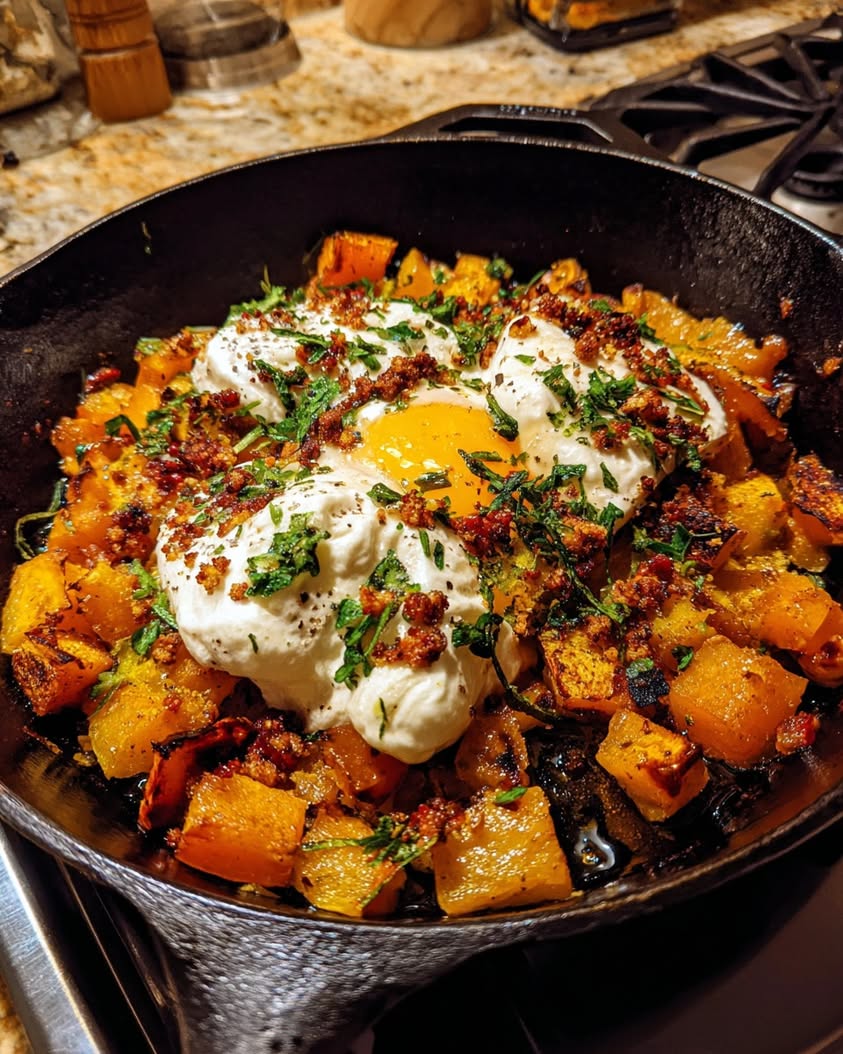
Roasted Squash Skillet with Burrata & Hot Honey Crunch: A Sweet, Spicy, and Creamy Fall Feast
Imagine a dish that captures the very essence of autumn in one stunning, shareable skillet. This Roasted Squash Skillet with Burrata & Hot Honey Crunch is exactly that, a celebration of seasonal produce and bold flavors. It transforms humble winter squash into a caramelized, tender masterpiece, then crowns it with the luxurious creaminess of burrata cheese. Finally, a drizzle of spicy-sweet hot honey and a shower of crunchy seeds create a symphony of textures and tastes that will have everyone reaching for seconds.
Furthermore, this recipe is a perfect centerpiece for any fall gathering, from a cozy weeknight dinner to an impressive holiday side. The process is straightforward, yet the result feels incredibly special and restaurant-worthy. As the squash roasts, its natural sugars deepen, filling your kitchen with an irresistible, warm aroma. Ultimately, when you break into that creamy burrata ball and let it mingle with the hot honey and roasted vegetables, you will understand why this dish is destined to become a seasonal staple.
Additionally, the beauty of this Roasted Squash Skillet with Burrata lies in its versatility. You can easily adapt it based on what squash you find at the market or what nuts you have in your pantry. It is a vegetarian showstopper that even meat-lovers will adore, and it teaches you how to balance sweet, savory, spicy, and creamy elements in one harmonious dish. Let us dive into how to create this unforgettable autumn meal.
Quick Recipe Highlights
- Flavor Profile: This dish masterfully balances sweet roasted squash, rich and milky burrata cheese, spicy and floral hot honey, and savory herbs. Each bite offers a complex journey from earthy sweetness to creamy tang and a final kick of heat.
- Texture: You will experience a wonderful contrast between the tender, caramelized cubes of squash, the ultra-creamy and soft burrata, and the satisfying crunch of toasted pepitas or nuts. This interplay makes every mouthful exciting.
- Aroma: While roasting, the squash and onions release a deep, sweet, and nutty fragrance. Subsequently, the fresh thyme and spicy honey add layers of herbal and warm, peppery notes that fill your kitchen.
- Visual Appeal: The dish is a feast for the eyes with vibrant orange squash, white and oozing burrata, golden-brown crispy edges, and a glossy honey drizzle. It is rustic, elegant, and incredibly inviting straight from the skillet.
- Skill Level Needed: This is an accessible recipe for cooks of all levels. The techniques involve simple chopping, roasting, and assembling. Therefore, if you can use a knife and an oven, you can absolutely create this impressive meal.
- Special Equipment: You only need a good chef’s knife, a sturdy cutting board, a large mixing bowl, and a reliable oven-safe skillet or baking sheet. A cast-iron skillet is ideal for achieving perfect caramelization.
Recipe Overview
- Difficulty Level: We rate this recipe as easy because it involves fundamental cooking techniques like chopping vegetables and roasting. There is no intricate pastry work or advanced sauce-making. However, attention to detail in roasting the squash until perfectly tender and caramelized is key to maximizing flavor.
- Category: This dish shines as a spectacular vegetarian main course, a substantial side dish for a holiday feast, or a luxurious appetizer for a dinner party. It is versatile enough to anchor a meal or complement a larger spread.
- Cuisine: The recipe draws inspiration from modern American farm-to-table cuisine and Italian influences, notably through the use of burrata cheese. The hot honey element adds a contemporary, artisanal twist that has become popular in trendy eateries.
- Cost: This is a moderately priced dish that delivers high-end appeal. Winter squash is an economical vegetable, especially in season. Burrata is the splurge ingredient, but a little goes a long way. Overall, you can create a restaurant-quality dish for a fraction of the cost.
- Season: This recipe is perfect for fall and winter when hard squash like butternut, acorn, or delicata are at their peak of sweetness and flavor. It is a wonderful way to enjoy seasonal, comforting produce.
- Occasion: Serve it for a festive Friendsgiving, as a cozy Sunday supper, or as a show-stopping side for Thanksgiving or Christmas dinner. It is also ideal for a date night in or a potluck where you want to impress.
Why You’ll Love This Recipe
First and foremost, the taste and texture combination is utterly addictive. The natural sweetness of the roasted squash becomes almost candy-like, creating a perfect base. Then, the cool, rich burrata provides a creamy counterpoint that melts into the warm vegetables. The hot honey introduces a gentle, building heat and floral sweetness that ties everything together. Finally, the crunchy seeds add a necessary textural pop that completes each bite. This Roasted Squash Skillet with Burrata is a masterclass in balancing multiple flavor and texture elements in one cohesive dish.
From a convenience standpoint, this recipe is a dream. It primarily uses hands-off oven time, allowing you to prepare other components of your meal or simply relax. The ingredient list is relatively short and focuses on whole foods. Moreover, the entire meal comes together in one skillet, meaning minimal cleanup. You can easily scale it up for a crowd or down for a quiet dinner for two. Essentially, it delivers maximum impact with manageable effort, which is the holy grail of home cooking.
Nutritionally, this dish is packed with benefits. Winter squash is an excellent source of beta-carotene, fiber, and vitamins A and C. The pepitas provide healthy fats, plant-based protein, and minerals like magnesium and zinc. Using olive oil and fresh herbs adds heart-healthy fats and antioxidants. While burrata is indulgent, it also offers calcium and protein. Consequently, this Roasted Squash Skillet with Burrata is a nourishing meal that feels decadent but is rooted in wholesome ingredients.
For entertaining, this recipe is a guaranteed crowd-pleaser. Its visual drama—presented right in the skillet with the burrata centerpiece—creates an instant “wow” factor. It is a fantastic conversation starter and encourages a communal, shareable dining experience. Guests can dig in family-style, which always fosters a warm and welcoming atmosphere. Whether your guests are vegetarian or not, they will appreciate the thoughtful, seasonal, and delicious centerpiece you have created.
Finally, it is cost-effective and accessible. Butternut squash is one of the most affordable vegetables, especially in autumn. You can often find it for less than a dollar per pound. The other ingredients are pantry staples or simple splurges. Compared to dining out, making this Roasted Squash Skillet with Burrata at home saves you significant money while allowing you to control the quality of every component. You can source local squash and artisanal honey, elevating the dish even further without breaking the bank.
Historical Background and Cultural Significance
The story of this dish begins with the ancient history of squash itself. Indigenous peoples across the Americas cultivated squash for thousands of years, long before European contact. They developed the “Three Sisters” agricultural method, planting squash alongside corn and beans. The squash vines provided ground cover, retaining moisture and suppressing weeds. These winter squash varieties were essential for survival, as their hard shells allowed for long-term storage through harsh winters. The roasted squash in our skillet is a direct descendant of these foundational crops, a testament to indigenous agricultural wisdom.
Culturally, roasting vegetables is one of humanity’s oldest and most universal cooking techniques. It concentrates flavors and creates appealing caramelization. The Italian contribution comes via burrata, a relatively modern cheese invented in the Puglia region in the early 20th century. “Burrata” means “buttered,” referring to its incredibly rich, creamy interior. It was traditionally a way for cheesemakers to use up scraps of mozzarella curd, enveloping them in cream and a fresh mozzarella shell. Incorporating this luxurious cheese into a vegetable-focused dish reflects a contemporary, global approach to cooking.
The evolution of the recipe is a classic example of modern fusion cuisine. The base of roasted squash and onions is timeless. The addition of burrata brings Italian decadence. The hot honey drizzle is a distinctly American innovation, popularized in the last decade by chefs and food artisans looking to add a sweet-heat element to everything from fried chicken to pizza. Combining these elements into a single skillet dish represents the current culinary trend of elevating simple, seasonal ingredients with one or two high-impact, gourmet touches.
Regional variations of this concept are endless. In the American South, you might find a similar skillet with roasted sweet potatoes and a bourbon-infused honey. In the Mediterranean, it could feature roasted eggplant and a drizzle of tahini instead of burrata. In Mexico, roasted calabaza squash might be topped with queso fresco and a chili-lime syrup. The core concept—sweet roasted vegetable + creamy/fresh cheese + a sweet/spicy condiment—is a versatile template that travels beautifully across culinary traditions, adapting to local ingredients and palates.
Ingredient Deep Dive
Butternut Squash: This is the star of our Roasted Squash Skillet with Burrata. Butternut squash is a type of winter squash, known for its sweet, nutty flavor and vibrant orange flesh, which comes from its high beta-carotene content. It is an excellent source of vitamins A and C, potassium, and fiber. When selecting one, choose a squash that feels heavy for its size with a firm, matte skin and no soft spots. Store whole squash in a cool, dark place for months. You can substitute with acorn squash, delicata squash (which does not need peeling), or even sweet potatoes.
Burrata Cheese: Burrata is the luxurious heart of this dish. Externally, it resembles a ball of fresh mozzarella. However, the inside is a decadent mixture of stracciatella (soft mozzarella shreds) and cream, giving it an unforgettable, rich, and creamy texture. It originated in Puglia, Italy. For the best experience, seek out the freshest burrata possible, often sold in a tub of water or whey. It should be consumed within a day or two of purchase. If unavailable, fresh mozzarella (bocconcini), a log of goat cheese, or even ricotta can be good, though different, substitutes.
Hot Honey: This condiment adds the essential sweet-heat element. You can purchase artisanal hot honey or easily make your own by gently warming honey with sliced fresh chili peppers (like red pepper flakes, Fresno, or jalapeño) and letting it infuse. The heat level is customizable. Honey itself has antimicrobial properties and has been used as a sweetener for millennia. For a vegan version, use agave nectar or maple syrup infused with chili. The hot honey not only adds flavor but also creates a beautiful glossy finish on the finished Roasted Squash Skillet with Burrata.
Pepitas (Pumpkin Seeds): These green pumpkin seeds provide the essential “crunch” in the recipe. They are packed with nutrients like magnesium, zinc, iron, and plant-based protein. Toasting them in a dry skillet for a few minutes until puffed and fragrant maximizes their nutty flavor and crunch. You can substitute with chopped walnuts, pecans, pine nuts, or even sunflower seeds. They add a necessary textural contrast to the soft squash and creamy cheese, completing the sensory experience of the dish.
Common Mistakes to Avoid
- Unevenly Cut Squash: Cutting the squash into wildly different sizes is a common error. Consequently, smaller pieces will burn before larger pieces are tender. Aim for uniform 1-inch cubes to ensure even roasting.
- Overcrowding the Pan: If you cram all the squash onto one baking sheet, it will steam instead of roast. You need space for moisture to evaporate so the edges can caramelize. Use two pans if necessary.
- Underseasoning the Squash: Do not be shy with salt and pepper before roasting. The squash is a blank canvas that needs proper seasoning from the inside out. Taste a piece after roasting and adjust if needed.
- Using Cold Burrata: Adding burrata straight from the refrigerator can dull its creamy texture and flavor. Let it sit at room temperature for 20-30 minutes before serving to allow it to soften and become luxuriously oozy.
- Adding Burrata Too Early: If you place the burrata on the hot skillet and then put it back in the oven, it will completely melt and lose its beautiful form. Always add the burrata as the final step, after the squash is out of the oven.
- Not Toasting the Pepitas: Raw pepitas can be chewy and lack flavor. Taking two minutes to toast them in a dry pan transforms them, unlocking a nutty taste and a satisfying crispness that is crucial for the “crunch” component.
- Drizzling Hot Honey in One Spot: Pouring all the honey in one area creates an overly sweet bite. Instead, drizzle it in a zig-zag pattern across the entire skillet to distribute the sweet heat evenly.
- Skipping the Fresh Herb Finish: The fresh thyme or sage added at the end is not just garnish. It provides a bright, aromatic lift that cuts through the richness. Do not omit it.
Essential Techniques
Properly Peeling and Cubing Squash: This is the most hands-on step. First, use a sharp chef’s knife to slice off the top and bottom of the squash to create stable flat ends. Stand it upright and carefully slice downward to remove the hard skin. Then, cut it in half lengthwise and scoop out the seeds with a spoon. Finally, cut the flesh into uniform 1-inch cubes. A sharp knife is crucial for safety and control, as a dull blade can slip on the tough skin.
High-Heat Roasting for Caramelization: Roasting at a high temperature (around 425°F) is non-negotiable. This heat encourages the natural sugars in the squash to caramelize on the surface, creating deep flavor and appealing browned edges. Tossing the squash in oil ensures each piece is coated and will not dry out. Halfway through cooking, give the pan a good shake or use a spatula to flip the pieces. This promotes even browning on all sides for the best texture and taste in your Roasted Squash Skillet with Burrata.
Infusing Hot Honey: While you can buy it, making hot honey is simple and allows you to control the heat level. Combine honey and your chosen chili (crushed red pepper, sliced fresh chilis) in a small saucepan. Warm over low heat for 5-10 minutes—do not boil. Then, let it steep off the heat as it cools. The longer it steeps, the spicier it becomes. Strain out the solids before drizzling for a smooth finish. This technique imbues the honey with a complex, warm spice that elevates the entire dish.
Toasting Seeds and Nuts: Toasting is a dry-heat technique that intensifies flavor and improves texture. Place pepitas in a single layer in a dry skillet over medium heat. Shake the pan frequently. They are done when they become slightly puffed, turn a shade darker, and you can smell a nutty aroma. This usually takes 3-5 minutes. Immediately transfer them to a plate to stop the cooking process and prevent burning. This quick step adds a professional touch to your crunch topping.
Pro Tips for Perfect Roasted Squash Skillet with Burrata
- For easier peeling, microwave the whole squash for 2-3 minutes first. This slightly softens the skin, making it much simpler to cut and peel with a vegetable peeler or knife.
- Toss the squash cubes with a tablespoon of maple syrup or brown sugar along with the oil. This promotes even deeper caramelization and a richer, more complex sweetness.
- Add whole, unpeeled garlic cloves to the roasting pan. They will become soft, sweet, and spreadable, offering a delicious bonus flavor to mash into the squash or spread on bread served on the side.
- If using a cast-iron skillet for roasting, preheat it in the oven. Adding the oiled squash to a hot skillet gives an incredible sear and helps prevent sticking, mimicking restaurant-style results.
- Garnish with a sprinkle of flaky sea salt (like Maldon) after adding the burrata and hot honey. The large salt crystals provide delightful bursts of salinity that enhance all the other flavors.
- For an extra aromatic touch, add a few sprigs of fresh thyme or rosemary to the roasting pan with the squash. The herbs will perfume the oil and the vegetables as they cook.
- Let the roasted squash sit for 5 minutes after it comes out of the oven before adding the burrata. This allows the intense heat to subside slightly, so the cheese softens perfectly without melting into a puddle.
- Serve with crusty, warmed bread on the side. It is perfect for scooping up every last bit of creamy burrata, sweet squash, and spicy honey from the skillet.
Variations and Adaptations
Regional Variations: Explore global flavors by changing the cheese and seasoning. For a Greek twist, use roasted squash with crumbled feta, Kalamata olives, and a drizzle of oregano-infused honey. For a Mexican-inspired version, top with cotija cheese, pickled red onions, and a chili-lime crema instead of hot honey. An Italian riff could include roasted cherry tomatoes and a balsamic glaze reduction alongside the burrata.
Seasonal Adaptations: While perfect for fall, this template works year-round. In spring, use roasted asparagus and radishes with goat cheese and lemon-infused honey. In summer, try roasted zucchini and eggplant with fresh ricotta and basil oil. In winter, swap the squash for roasted Brussels sprouts and parsnips with blue cheese and a walnut honey.
Dietary Modifications: For a vegan Roasted Squash Skillet, replace the burrata with a dollop of cashew cream or a vegan almond ricotta. Use maple syrup infused with chili instead of honey. Ensure all other ingredients are plant-based. For a nut-free version, use toasted sunflower seeds instead of pepitas. The recipe is naturally gluten-free.
Flavor Variations: Experiment with different spice blends on the squash before roasting. Try smoked paprika and cumin for a smoky note, or curry powder and turmeric for an Indian-inspired flavor profile. You can also infuse the olive oil with garlic or herbs before tossing it with the squash.
Texture Modifications: For added heartiness, mix in a can of drained and rinsed chickpeas or white beans before roasting. They will get crispy and add plant-based protein. For extra creaminess without more cheese, blend a portion of the roasted squash with broth to create a sauce base before adding the rest back in.
Presentation Alternatives: Instead of one large skillet, you can create individual portions in small cast-iron pans or oven-safe bowls. For a more formal plated presentation, arrange the roasted squash on a platter, place the burrata in the center, and artfully drizzle the honey and sprinkle the crunch around it.
Serving and Presentation Guide
Plating Techniques: The most dramatic way to serve this dish is directly in the skillet it was roasted in, placed on a trivet or heat-safe pad in the center of the table. This rustic, family-style presentation is inviting and minimizes cleanup. Ensure the burrata is placed prominently in the center or slightly off-center for visual interest. Use a spoon to gently break it open just before serving to reveal the creamy interior.
Garnishing Ideas: Beyond the toasted pepitas and fresh thyme, consider additional garnishes for color and flavor. A sprinkle of pomegranate arils adds a beautiful jewel-toned pop and a burst of tartness. Freshly cracked black pepper, microgreens, or edible flowers elevate the visual appeal. A light dusting of sumac or smoked paprika around the rim of the skillet adds a final touch of color and complexity.
Traditional Accompaniments: This Roasted Squash Skillet with Burrata is substantial on its own but pairs beautifully with simple sides. A crisp, bitter green salad with a lemony vinaigrette helps cut the richness. Crusty bread or focaccia is essential for soaking up the creamy honey sauce. For a fuller meal, serve alongside grilled chicken, pork chops, or seared salmon.
Modern Serving Suggestions: For a trendy appetizer or party food, serve the roasted squash mixture in small bowls or on crostini, each topped with a small dollop of burrata and a drizzle of hot honey. You can also use it as a luxurious topping for a grain bowl, spooned over farro, quinoa, or wild rice.
Temperature Considerations: This dish is best served warm, not piping hot. Let the roasted squash cool for 5-10 minutes after coming out of the oven so the burrata softens but does not melt. The hot honey should be at room temperature or slightly warmed for easy drizzling. Serving it at this ideal temperature allows all the flavors and textures to be perceived clearly.
Portion Control Tips: As a main course, this recipe serves 4 generously. As a side dish, it can comfortably serve 6-8 people. If serving as part of a larger holiday spread with multiple sides, you can stretch it to 10-12 servings. Remember, a little of this rich, flavorful dish goes a long way.
Wine and Beverage Pairing
Wine Pairings: The sweet, spicy, and creamy elements of this dish call for wines with good acidity and some sweetness to balance. An off-dry Riesling or Gewürztraminer is a classic and excellent choice—their floral notes and slight sweetness complement the squash and honey beautifully. For a red option, a light, fruity Beaujolais or Pinot Noir with low tannins won’t overpower the dish. A dry rosé with bright berry notes can also bridge the gap between the sweet and savory components wonderfully.
Non-Alcoholic Alternatives: Sparkling apple cider is a festive and perfect pairing, mirroring the autumnal theme. For a more complex option, try a ginger beer or a spicy ginger kombucha; the ginger’s bite plays nicely with the hot honey. A tart cranberry spritzer (cranberry juice mixed with club soda and a squeeze of lime) provides a refreshing contrast to the richness of the burrata.
Coffee/Tea Pairings: After the meal, a cup of coffee or tea can be a lovely finish. A medium-roast coffee with notes of caramel or nut will echo the flavors of the roasted squash. For tea, consider a spiced chai, which complements the warm spices in the hot honey, or an Earl Grey, whose bergamot citrus notes can cleanse the palate after the creamy cheese.
Temperature Considerations: Serve white wines and sparkling ciders well-chilled, around 45-50°F. Red wines should be served slightly cooler than room temperature, around 55-60°F, to keep them refreshing. Non-alcoholic sparkling drinks should be ice-cold. This attention to serving temperature ensures each beverage provides the intended refreshing counterpoint to the warm, rich skillet.
Serving Suggestions: Always offer water on the table to cleanse the palate between bites. If serving wine, consider pouring a small taste for everyone to try with the first bite before committing to a full glass. For a crowd, offering one white and one non-alcoholic option covers most preferences beautifully and simply.
Storage and Shelf Life
Storage Methods: Store components separately for best results. Place cooled, plain roasted squash in an airtight container in the refrigerator for up to 4 days. Store burrata in its original liquid in the fridge. Keep hot honey in a sealed jar at room temperature. The toasted pepitas can be stored in a pantry jar for a week. Do not assemble the entire dish until you are ready to serve, as the burrata will weep and the squash may become soggy.
Temperature Requirements: The roasted squash must be refrigerated promptly after cooling to room temperature. Burrata is highly perishable and must stay refrigerated at all times until use. Hot honey is shelf-stable due to honey’s natural preservative qualities, but if you added fresh chili, refrigeration is safer to prevent fermentation.
Container Recommendations: Use glass or BPA-free plastic containers with tight-fitting lids for the squash. For the burrata, keep it submerged in its brine or whey in a sealed container. A mason jar is perfect for storing homemade hot honey.
Signs of Spoilage: Discard the squash if it develops an off smell, becomes slimy, or shows visible mold. Burrata is bad if it smells sour or ammonia-like, or if the outer shell is slimy or deflated. Honey may crystallize, which is normal—simply warm the jar in a bowl of hot water to reliquify. If honey ferments, you will see bubbles or smell alcohol.
Reheating Instructions: Reheat only the roasted squash. Spread it on a baking sheet and warm in a 350°F oven for 10-15 minutes, or until heated through. You can also reheat it in a skillet over medium heat. Avoid the microwave, as it can make the squash mushy. Add fresh burrata, hot honey, and toppings after reheating.
Freezing Guidelines: You can freeze plain roasted squash for up to 3 months. Spread cooled squash on a parchment-lined baking sheet to freeze individually, then transfer to a freezer bag. Thaw in the refrigerator overnight before reheating. Do not freeze the assembled dish or the burrata, as the textures will be ruined.
Make Ahead Strategies
Prep Timeline: You can prep almost every component 1-2 days in advance. Cube the squash and store it raw in a sealed container in the fridge. Make the hot honey and let it infuse. Toast the pepitas. Chop any fresh herbs. This leaves only the roasting and assembly for the day of serving, cutting your active kitchen time to just 30 minutes.
Storage Between Steps: Keep pre-chopped raw squash in the fridge. Store toasted pepitas at room temperature in an airtight container. Keep infused hot honey at room temperature or in the fridge. Store washed and dried herbs wrapped in a damp paper towel in a produce bag in the fridge.
Quality Impact Assessment: Prepping the squash ahead has no negative impact; it may even concentrate its sugars slightly. Toasted seeds stay crunchy for days if sealed properly. Hot honey’s flavor improves with longer infusion time. The only element that must be absolutely fresh is the burrata, which you should purchase as close to serving day as possible.
Assembly Tips: On serving day, simply toss the pre-cut squash with oil, salt, and pepper, then roast. While it roasts, take the burrata out of the fridge to come to room temperature. Gently rewarm the hot honey if it has solidified. Have all your garnishes ready in small bowls. Once the squash is out of the oven, assembly takes just 60 seconds.
Reheating Guidelines: If you roasted the squash a day ahead, reheat it as described in the storage section. It is best to reheat it in the oven or skillet to restore some of the crispy edges that soften in the fridge.
Fresh Element Additions: Always add the burrata, fresh herbs, and final drizzle of honey at the very last moment before serving. This ensures the cheese is at the perfect temperature and texture, the herbs are bright, and the honey is glossy and appealing.
Scaling Instructions
Halving the Recipe: To serve two, simply use half a medium squash (about 1 lb cubed), one ball of burrata, and reduce all other ingredients by half. Use a smaller skillet or quarter-sheet pan for roasting. The cook time may be slightly shorter, so start checking for doneness at the 20-minute mark. This is a perfect, intimate dinner option.
Doubling or Tripling: For a large crowd, double or triple the ingredients. The key is to use multiple baking sheets or roast in batches. Do not pile the squash more than one layer deep on any pan, or it will steam. You may need to rotate the pans in the oven and extend the cooking time by 5-10 minutes. Use two or three balls of burrata, placing them strategically around the serving platter or in multiple skillets.
Equipment Adjustments: Scaling up requires planning your equipment. For a double batch, you will likely need two large sheet pans. For a triple batch, you might need three. Ensure your oven can accommodate multiple racks with enough space for air circulation. Consider serving on a very large platter instead of in a skillet if making a huge quantity.
Timing Modifications: When roasting multiple trays, increase the oven temperature by 25°F to compensate for the heat loss from opening the door. Switch the positions of the trays (top to bottom, front to back) halfway through cooking to ensure even browning. Total time may increase by 10-15 minutes for very large batches.
Storage Considerations: If making a large batch for a party, you can roast the squash a few hours ahead and hold it at room temperature. Re-crisp in a 400°F oven for 5-10 minutes just before serving. Assemble with burrata and toppings right as guests are ready to eat.
Nutritional Deep Dive
Macro Breakdown: A serving of this Roasted Squash Skillet with Burrata provides a balanced mix of macronutrients. The squash and honey contribute complex carbohydrates and natural sugars for energy. The olive oil and burrata offer healthy fats, including monounsaturated fats from the oil. The burrata and pepitas contribute a moderate amount of protein. This combination helps create a satiating meal that provides sustained energy without a heavy, overly rich feeling.
Micronutrient Analysis: This dish is a micronutrient powerhouse. Butternut squash is exceptionally high in Vitamin A (as beta-carotene), crucial for vision and immune health, and a good source of Vitamin C and potassium. Pepitas are rich in magnesium, important for muscle and nerve function, and zinc for immunity. Olive oil provides Vitamin E, an antioxidant. Burrata contributes calcium for bone health. Together, they create a nutrient-dense plate.
Health Benefits: The high fiber content from the squash and seeds promotes digestive health and helps regulate blood sugar. The antioxidants (beta-carotene, Vitamin E) combat oxidative stress and inflammation. The healthy fats support heart health and aid in the absorption of fat-soluble vitamins (A, E, K) present in the squash. This dish is an excellent example of how delicious food can also be deeply nourishing.
Dietary Considerations: The recipe is naturally gluten-free and vegetarian. It can be adapted to be vegan (see adaptations). For those watching sodium, you can reduce the added salt. For lower sugar, you can omit the honey drizzle or use a sugar-free syrup alternative, though this changes the classic flavor profile.
Portion Analysis: A standard serving (one-quarter of the recipe) is satisfying as a main course. As a side dish, a smaller portion (one-sixth) is appropriate. The richness of the burrata and the fiber from the squash contribute to a feeling of fullness, helping with natural portion control. Listen to your body’s hunger cues when serving yourself.
Weight Management Tips: This dish is filling and nutrient-dense, which can support weight management goals by preventing overeating of less nutritious foods. To make it slightly lighter, you can reduce the amount of olive oil by a tablespoon or use a cooking spray. You can also use a smaller amount of burrata or a lighter fresh mozzarella. The bulk of the dish is low-calorie, high-fiber squash.
Dietary Adaptations
Gluten-free: This recipe is naturally gluten-free as written. Simply ensure that any pre-made hot honey you purchase is certified gluten-free, as some flavorings or additives might contain gluten. All other ingredients—squash, cheese, oil, seeds—are inherently gluten-free.
Dairy-free/Vegan: To make a vegan Roasted Squash Skillet, omit the burrata. Instead, top with a dollop of rich, creamy vegan alternatives. Cashew cream is excellent: blend soaked cashews with water, lemon juice, and salt until smooth. A high-quality vegan almond or cashew “ricotta” also works well. Use maple syrup or agave nectar infused with chili instead of honey. Ensure the bread you serve on the side is vegan.
Low-carb/Keto: Butternut squash is moderately high in carbs, so for a strict keto diet, substitute with lower-carb vegetables. Try roasting cauliflower florets, broccoli, or radishes instead. Use full-fat burrata. The hot honey is high in sugar, so replace it with a sugar-free syrup (like monk fruit or allulose syrup) warmed with chili flakes. Increase the amount of pepitas or add crushed pork rinds for the crunch component.
Paleo: Omit the burrata, as dairy is not Paleo. Top the roasted squash with sliced avocado or a dollop of homemade coconut cream for richness. Use raw honey for the hot honey. Ensure all ingredients are whole, unprocessed foods. This adaptation keeps the spirit of{“success”:true,”message”:”Recipe created successfully”,”post_id”:8895,”tasty_recipe_id”:8895,”shortcode”:” Print
Roasted Squash Skillet with Burrata & Hot Honey Crunch
Description
A cozy, savory-sweet skillet dish featuring tender roasted squash, creamy burrata cheese, and a spicy-sweet honey crunch topping.
Ingredients
For the Crust:
- 1 medium butternut squash, peeled and cubed
- 2 tablespoons olive oil
- 1 teaspoon smoked paprika
- Salt and black pepper to taste
- 1 ball burrata cheese
- 2 tablespoons honey
- 1/2 teaspoon red pepper flakes
- 1/4 cup chopped pecans
- Fresh thyme leaves for garnish
Instructions
1. Prepare the Crust:
- Preheat oven to 400°F (200°C). Toss squash cubes with olive oil, smoked paprika, salt, and pepper on a baking sheet.
- Roast squash for 25-30 minutes until tender and lightly browned, stirring halfway through.
- While squash roasts, combine honey and red pepper flakes in a small saucepan over low heat. Stir until warm and blended, then mix in chopped pecans.
- Transfer roasted squash to a skillet. Top with burrata cheese, then drizzle with the hot honey-pecan mixture.
- Garnish with fresh thyme leaves and serve warm directly from the skillet.
Notes
You can customize the seasonings to taste.

I’m Billy, a classically trained culinary school graduate from The Culinary Institute of America with over 12 years in the restaurant industry and over 19 years of cooking experience.