
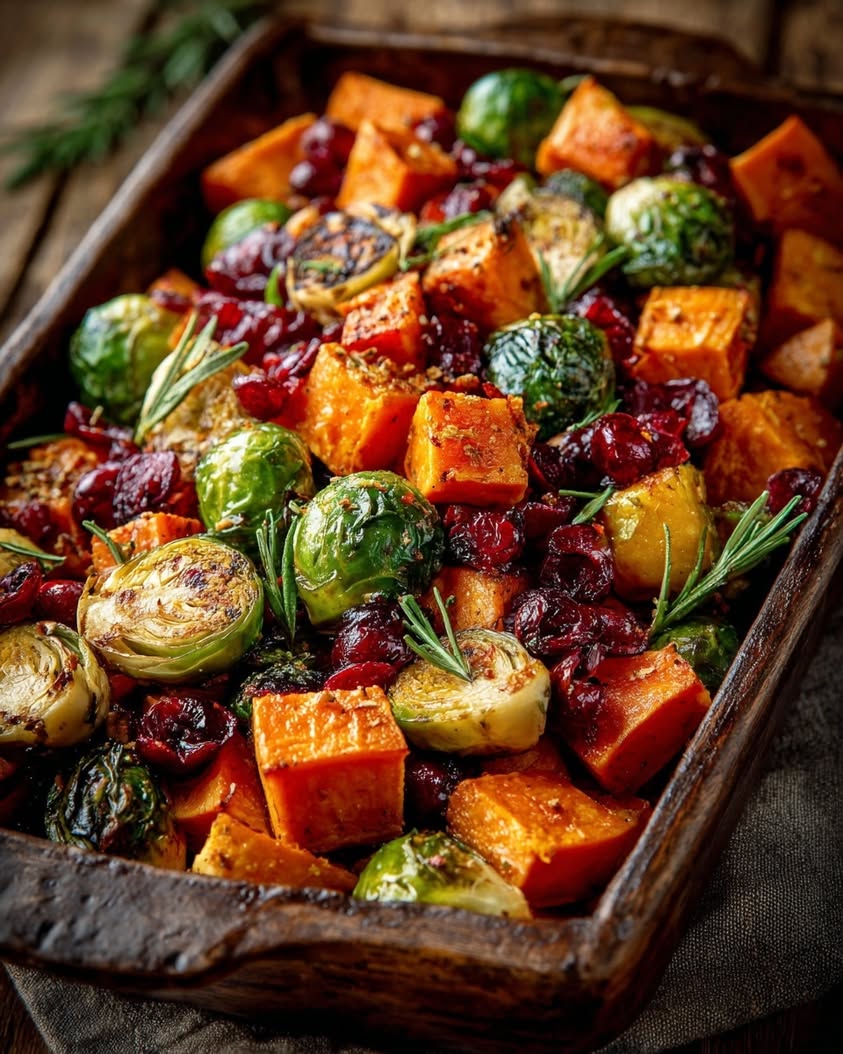
Roasted Sweet Potato and Brussels Sprouts with Balsamic Cranberry Glaze: A Festive Fall Side Dish
This stunning Roasted Sweet Potato and Brussels Sprouts with Balsamic Cranberry Glaze recipe is a true celebration of autumn’s bounty. Imagine tender, caramelized sweet potatoes and crispy-edged Brussels sprouts, all tossed with tart dried cranberries and finished with a sweet-tangy balsamic reduction. This dish is not just a side; it’s a vibrant centerpiece that brings warmth and color to any table. Moreover, it masterfully balances sweet, savory, and tangy flavors in every single bite.
Perfect for holiday dinners or a simple weeknight upgrade, this recipe is incredibly versatile. The process is straightforward, relying on the magic of high-heat roasting to transform humble vegetables into something extraordinary. Consequently, you get a dish that feels gourmet without requiring complex techniques. Ultimately, this Roasted Sweet Potato and Brussels Sprouts with Balsamic Cranberry Glaze will become your new go-to for impressing guests and satisfying your own cravings for hearty, healthy comfort food.
Quick Recipe Highlights
- Flavor Profile: This dish delivers a perfect harmony of earthy sweetness from the roasted vegetables, bright tartness from the cranberries, and a rich, complex acidity from the balsamic glaze. Each component complements the others, creating a sophisticated taste that is far greater than the sum of its parts.
- Texture: You get a delightful contrast of creamy, soft sweet potato interiors against the crispy, almost charred leaves of the Brussels sprouts. The chewy dried cranberries add a pleasant pop, while the sticky glaze coats everything in a glossy, luxurious finish.
- Aroma: As it roasts, your kitchen will fill with the warm, nutty scent of caramelizing vegetables and the deep, sweet fragrance of reducing balsamic vinegar. It’s an unmistakably cozy and inviting aroma that signals a delicious meal is on the way.
- Visual Appeal: The color palette is a feast for the eyes: vibrant orange sweet potatoes, deep green Brussels sprouts, ruby-red cranberries, and a dark, shiny glaze. This combination makes for a stunning presentation that looks beautiful on any plate or platter.
- Skill Level Needed: This is a beginner-friendly recipe. If you can chop vegetables, toss them with oil, and use an oven, you can absolutely master this dish. The glaze is simple to prepare, often while the vegetables roast.
- Special Equipment: You only need a large baking sheet, a good chef’s knife, and a small saucepan for the glaze. Parchment paper or a silicone baking mat is highly recommended for easy cleanup and to prevent sticking.
Recipe Overview
- Difficulty Level: We rate this recipe as “Easy” because it involves fundamental kitchen skills: chopping, tossing, and roasting. There are no tricky techniques like emulsifying or precise temperature control. The most important step is giving the vegetables enough space on the pan to roast properly instead of steam.
- Category: This dish fits perfectly into several categories: Side Dishes, Holiday Recipes, Vegetarian Mains, and Healthy Weeknight Dinners. It’s substantial enough to be a main course for a light meal yet designed to accompany a protein like roasted chicken, turkey, or ham.
- Cuisine: While not tied to one specific tradition, it draws inspiration from modern American and Mediterranean cuisines. The use of olive oil, balsamic vinegar, and roasted vegetables is classic Mediterranean, while the inclusion of sweet potatoes and cranberries speaks to contemporary American fall and holiday cooking.
- Cost: This is a very cost-effective recipe, especially in the fall and winter when its main ingredients are in season. Sweet potatoes and Brussels sprouts are typically affordable, and dried cranberries and balsamic vinegar are pantry staples with a long shelf life. You can easily feed a crowd for a fraction of the cost of a pre-made side dish.
- Season: This recipe is ideal for autumn and winter. These seasons are peak time for both sweet potatoes and Brussels sprouts, meaning you’ll get the best flavor and price. The warm, hearty nature of the dish is also perfectly suited to cooler weather.
- Occasion: It’s a superstar for Thanksgiving, Christmas, and Friendsgiving celebrations. Additionally, it’s excellent for weekly meal prep, potlucks, or as an elegant side for a dinner party. Basically, it works for any occasion where you want a reliable, crowd-pleasing vegetable dish.
Why You’ll Love This Recipe
First and foremost, the taste and texture are utterly irresistible. The natural sugars in the sweet potatoes caramelize in the oven’s heat, creating deep, rich flavors. Simultaneously, the outer leaves of the Brussels sprouts become delightfully crispy, offering a satisfying crunch. When you add the chewy, tart cranberries and drizzle the syrupy balsamic glaze over the top, you create a symphony of flavors and textures in your mouth. Every forkful is a balanced mix of sweet, savory, tangy, creamy, and crisp.
From a convenience standpoint, this recipe is a dream. Preparation is minimal, involving mostly chopping and tossing. Once the vegetables are in the oven, you have hands-off time to prepare the rest of your meal or simply relax. The balsamic glaze comes together in minutes on the stovetop. Furthermore, the ingredients are easy to find at any grocery store, and the recipe is forgiving. You don’t need to be a professional chef to achieve fantastic results.
Nutritionally, this dish is a powerhouse. Sweet potatoes are loaded with beta-carotene, vitamin A, and fiber. Brussels sprouts are cruciferous vegetables famous for their antioxidants, vitamin C, and vitamin K. Olive oil provides healthy fats, and cranberries add a dose of antioxidants. This combination makes the Roasted Sweet Potato and Brussels Sprouts with Balsamic Cranberry Glaze not just delicious but also a genuinely nourishing choice for your body.
For entertaining, this recipe is a true asset. It looks incredibly impressive on a buffet or dinner table, often becoming the most talked-about side dish. It caters to a wide range of dietary preferences, being naturally vegetarian, vegan, and gluten-free. Therefore, you can serve it confidently to almost any guest. Its vibrant colors also make it photograph beautifully, perfect for sharing your culinary success.
Finally, it’s remarkably cost-effective and accessible. You can prepare a large, beautiful platter for a fraction of the cost of store-bought specialty sides. The ingredients are humble but transform into something special through simple roasting. This accessibility means you can enjoy gourmet-level flavors any night of the week without straining your budget.
Historical Background and Cultural Significance
The individual components of this dish have rich and varied histories. Sweet potatoes, native to Central and South America, have been cultivated for thousands of years. They traveled to Europe with explorers and later became a staple in Southern United States cuisine. Brussels sprouts, however, have a very different origin. They are believed to have been cultivated in what is now Belgium as early as the 13th century, hence their name. The marriage of these two New World and Old World vegetables in one dish is a relatively modern culinary innovation.
Cranberries are one of North America’s few native fruits, long used by Indigenous peoples for food, dye, and medicine. Their incorporation into sweet and savory dishes, especially alongside roasted meats and vegetables, became a cornerstone of American holiday cooking, particularly after the advent of commercially dried cranberries. This recipe taps directly into that tradition, using the tart berry to cut through the richness of the other components.
Balsamic vinegar, or *aceto balsamico*, hails from the Modena and Reggio Emilia regions of Italy. Traditionally, it is a lovingly aged, complex condiment made from cooked grape must. While true traditional balsamic is a treasure, the more affordable, commercially produced balsamic vinegar and glaze have become pantry staples worldwide. Their sweet-and-sour profile makes them a perfect finishing touch for roasted vegetables, a technique popularized by the rise of rustic, vegetable-forward Mediterranean cooking in home kitchens.
The evolution of this specific recipe is a testament to modern fusion cooking. It combines the American tradition of sweet potato casseroles and cranberry sauces with European techniques of roasting and glazing. This blend creates a side dish that feels both familiar and novel. Regional variations might include adding pecans or walnuts for crunch, swapping maple syrup for honey in the glaze, or incorporating different herbs like rosemary or thyme. The core concept, however, remains a celebration of seasonal produce through simple, high-heat cooking.
Ingredient Deep Dive
Sweet Potatoes: Often confused with yams, the orange-fleshed sweet potato is a nutritional champion. It’s packed with beta-carotene, which your body converts to vitamin A, crucial for vision and immunity. They also provide a good amount of fiber, vitamin C, and potassium. When selecting, look for firm potatoes with smooth, unblemished skin. Avoid any with soft spots or signs of sprouting. Store them in a cool, dark, well-ventilated place—not the refrigerator, as cold temperatures can alter their texture and flavor. For a twist, you could substitute with cubed butternut squash or even carrots.
Brussels Sprouts: These mini-cabbages are part of the esteemed cruciferous vegetable family, known for compounds that may support health. They are an excellent source of vitamins K and C, folate, and fiber. Choose sprouts that are bright green, firm, and compact, with tightly closed leaves. Smaller sprouts are often sweeter and more tender. Store them unwashed in a plastic bag in your refrigerator’s crisper drawer. For a different flavor, broccolini or cauliflower florets can be used, though cooking times may vary slightly.
Dried Cranberries: These chewy, tart jewels provide essential bursts of flavor and color. They are made by partially dehydrating fresh cranberries, often with added sugar to balance their intense tartness. Look for varieties without added oils. For a less sweet option, try dried cherries or chopped dried apricots. To plump them up before adding to the roast, you can soak them in warm water or a bit of orange juice for 10 minutes, then drain.
Balsamic Vinegar & Glaze: The quality of your balsamic vinegar significantly impacts the final dish. For a glaze, a moderately priced, syrupy commercial “balsamic glaze” works perfectly. If using regular balsamic vinegar, you’ll simmer it to reduce and thicken it, concentrating its flavors. The reduction process caramelizes the natural sugars, creating a beautiful sweet-tangy balance. A high-quality aged balsamic can be drizzled on at the end without reduction. For a different profile, a pomegranate molasses or a maple-Dijon mixture can be a delicious alternative glaze.
Olive Oil & Seasonings: A good extra-virgin olive oil helps the vegetables caramelize and adds fruity notes. Salt is non-negotiable for enhancing all the natural flavors. Freshly cracked black pepper adds a subtle heat. These simple seasonings allow the primary ingredients to shine. You can infuse the oil with garlic or herbs like rosemary before tossing for an extra layer of flavor.
Common Mistakes to Avoid
- Crowding the Pan: This is the number one mistake. If the vegetables are piled on top of each other, they will steam instead of roast. Steaming makes them soggy and prevents the beautiful caramelization you want. Always use a large enough baking sheet and spread the pieces in a single layer.
- Uneven Chopping: Cutting your sweet potatoes and Brussels sprouts into wildly different sizes means some pieces will burn while others remain undercooked. Aim for uniform, bite-sized pieces to ensure everything cooks evenly and is done at the same time.
- Skipping the Preheating: Putting vegetables into a cold oven drastically changes the cooking process. A properly preheated oven ensures immediate, high-heat cooking, which is essential for creating a crispy exterior and tender interior.
- Not Drying the Vegetables: If you wash your Brussels sprouts and don’t dry them thoroughly, the excess water will create steam on the pan. Pat them completely dry with a clean kitchen towel after washing for the crispiest results.
- Overlooking the Glaze: Reducing the balsamic vinegar requires attention. If you cook it over too high a heat or for too long, it can become bitter and overly thick, almost like candy. Conversely, if you don’t reduce it enough, it will be thin and runny. Aim for a syrup that coats the back of a spoon.
- Adding Cranberries Too Early: Tossing dried cranberries in at the beginning of roasting will cause them to burn and become unpleasantly bitter. They only need a few minutes in the oven’s residual heat to warm through and soften slightly.
- Underseasoning: Vegetables need a generous amount of salt to taste their best. Don’t be shy with the salt and pepper before roasting. You can always adjust the seasoning after cooking, but it’s harder to penetrate the vegetables then.
- Using a Dark, Non-Stick Pan at High Heat: Dark-colored baking sheets absorb more heat and can cause the bottoms of the vegetables to burn before the tops are done. A light-colored aluminum sheet pan is ideal. If you only have a dark pan, consider reducing the oven temperature by 25 degrees Fahrenheit.
Essential Techniques
High-Heat Roasting: This technique is the foundation of the recipe. Roasting at a high temperature (around 400-425°F) causes the natural sugars in the vegetables to caramelize, creating complex, sweet, and nutty flavors. It also drives off moisture, leading to a crispy exterior. The key is ensuring your oven is fully preheated and your vegetables are in a single layer. This method is far superior to boiling or steaming for developing deep flavor in root vegetables and brassicas.
Creating a Balsamic Reduction/Glaze: Reducing balsamic vinegar concentrates its flavor and thickens its consistency. You simmer it in a small saucepan over medium heat until it reduces by about half. Watch it carefully, as it can go from perfectly syrupy to burnt quickly. The glaze is ready when it coats the back of a spoon and leaves a trail when you run your finger through it. It will continue to thicken as it cools.
Proper Vegetable Prep: For sweet potatoes, peel them and cut into ¾-inch cubes for even cooking. For Brussels sprouts, trim the dry stem end and remove any loose or yellow outer leaves. Cut larger sprouts in half lengthwise through the stem; keep small ones whole. Uniformity is critical for consistent roasting. Taking the time to prep correctly ensures every piece is perfectly cooked.
Pro Tips for Perfect Roasted Sweet Potato and Brussels Sprouts with Balsamic Cranberry Glaze
1. Toss Vegetables Separately: Sweet potatoes are denser than Brussels sprouts. For ultimate control, toss each vegetable with oil and salt on its own section of the pan. You can then remove the sprouts if they finish cooking first.
2. Preheat Your Baking Sheet: For extra-crispy bottoms, place your empty baking sheet in the oven as it preheats. Carefully add the oiled vegetables to the hot pan—they will sizzle and start cooking immediately.
3. Finish with Freshness: After roasting and glazing, add a final bright element. A sprinkle of fresh chopped parsley, thyme, or a zest of orange lemon can lift the entire dish and add a layer of fresh aroma.
4. Add Nuts for Crunch: In the last 5 minutes of roasting, scatter a handful of pecans, walnuts, or pepitas onto the pan. They will toast beautifully alongside the vegetables, adding a wonderful textural contrast.
5. Use a Microplane for Garlic: If you love garlic, grate a clove directly over the hot vegetables as soon as they come out of the oven. The residual heat will cook it just enough to mellow the raw bite while infusing incredible aroma.
6. Glaze Twice: For maximum flavor impact, drizzle half of the balsamic glaze over the vegetables and toss to coat. Then, drizzle the remaining glaze over the top just before serving. This ensures every bite is flavorful and the presentation is glossy.
7. Check for Doneness with a Fork: Don’t just rely on time. The sweet potatoes should be easily pierced with a fork, and the Brussels sprouts should be tender inside with crispy, browned outer leaves.
Variations and Adaptations
Regional Variations: In the American South, you might find a version with a pecan streusel topping or a splash of bourbon in the glaze. A Mediterranean twist could include Kalamata olives and crumbled feta cheese added after roasting. For a Nordic feel, substitute lingonberries for the cranberries and add a pinch of cardamom to the vegetables.
Seasonal Adaptations: In spring, swap the sweet potatoes for new potatoes and the Brussels sprouts for asparagus spears. Summer calls for zucchini, bell peppers, and eggplant with a lighter balsamic drizzle. The core roasting method remains, but the vegetables change with what’s freshest at the market.
Dietary Modifications: For a vegan version, ensure your balsamic glaze uses a sweetener like maple syrup instead of honey. To make it nut-free, simply omit any nut additions and use seeds like sunflower or pumpkin for crunch. For a lower-sugar option, use reduced-sugar dried cranberries and less sweetener in the glaze.
Flavor Variations: Infuse the olive oil with smoked paprika and cumin for a smoky, warm flavor profile. Add a tablespoon of whole grain mustard to the balsamic glaze for tangy complexity. For an herbal note, toss the vegetables with fresh rosemary or thyme sprigs before they go into the oven.
Texture Modifications: If you prefer all-soft vegetables, cover the pan with foil for the first 20 minutes of roasting, then uncover to finish. For maximum crispiness, use the convection setting on your oven if available, and turn the vegetables twice during cooking.
Presentation Alternatives: Serve the roasted mixture on a bed of creamy polenta or quinoa for a hearty bowl. Alternatively, stuff it into a roasted acorn squash half for an individual presentation. You can also chop everything smaller after roasting and use it as a flavorful topping for a fall-inspired salad with mixed greens.
Serving and Presentation Guide
Plating Techniques: For a family-style presentation, pile the glazed vegetables high on a large, rustic platter. Drizzle any remaining glaze over the top and let the vibrant colors shine. For individual plates, use a ring mold to create a neat, vertical stack in the center of the plate. Alternatively, spoon the vegetables into a shallow bowl for a more casual, comforting look.
Garnishing Ideas: Fresh herbs are your best friend. Sprigs of rosemary, thyme, or flat-leaf parsley add color and freshness. Toasted nuts or seeds (pecans, walnuts, pepitas) provide visual and textural contrast. A final sprinkle of flaky sea salt, like Maldon, just before serving enhances flavor and adds a gourmet touch.
Traditional Accompaniments: This dish is a classic partner for holiday roasts like turkey, baked ham, or prime rib. It also pairs beautifully with simpler proteins like pan-seared chicken breasts, pork chops, or baked salmon. For a vegetarian feast, serve it alongside a lentil loaf or stuffed mushrooms.
Modern Serving Suggestions: Transform leftovers by tossing them with cooked farro or wild rice, adding some arugula and a lemon vinaigrette for a fantastic grain bowl. Use them as a gourmet pizza topping with goat cheese. Or, fold them into scrambled eggs or an omelet for a luxurious breakfast.
Temperature Considerations: This dish is best served warm, shortly after coming out of the oven. However, it is also delicious at room temperature, making it excellent for buffets or potlucks where it might sit out. Avoid serving it cold from the refrigerator, as the fats in the olive oil will solidify, dulling the flavors.
Portion Control Tips: As a side dish, plan for about 1 to 1.5 cups per person. If serving as a vegetarian main course, aim for 2 to 3 cups per person, perhaps with the addition of a protein like chickpeas or quinoa mixed in. Remember, the vegetables will shrink slightly during roasting.
Wine and Beverage Pairing
Wine Pairings: The sweet, earthy, and tangy notes of this dish pair wonderfully with several wines. A medium-bodied Pinot Noir with its red fruit and earthy notes complements the vegetables without overpowering them. A dry Riesling or Gewürztraminer handles the sweetness and acidity beautifully. For a richer option, an oaked Chardonnay can stand up to the caramelized flavors. Ultimately, choose a wine with good acidity to match the balsamic glaze.
Non-Alcoholic Alternatives: Sparkling apple cider is a festive and perfect match, mirroring the autumn flavors. For something more sophisticated, try a tart cranberry spritzer made with unsweetened cranberry juice, sparkling water, and a squeeze of lime. A warm mug of mulled apple juice with cinnamon and orange peel also makes a cozy companion.
Coffee and Tea Pairings: After a meal featuring this dish, a cup of coffee with mild, nutty notes would be delightful. A tea pairing could include a smoky Lapsang Souchong, which echoes the roasted flavors, or a spiced chai that complements the warm spices if you’ve added any to the recipe.
Temperature and Serving Suggestions: Serve white wines and sparkling beverages well-chilled. Red wines should be served slightly below room temperature. For non-alcoholic options, consider the season—a cold spritzer in fall or a warm cider in winter. Always provide options to cater to all your guests’ preferences.
Storage and Shelf Life
Storage Methods: Allow the roasted vegetables to cool completely to room temperature before storing. Transfer them to an airtight container. It’s best to store the balsamic glaze separately in a small jar or container to prevent the vegetables from becoming soggy.
Temperature Requirements: Store the container in the refrigerator. The dish will keep well for 3 to 4 days. Do not leave it at room temperature for more than 2 hours to prevent bacterial growth.
Container Recommendations: Glass containers with tight-sealing lids are ideal as they won’t absorb odors and allow you to see the contents. If using plastic, ensure it is BPA-free and designed for food storage.
Signs of Spoilage: Discard the vegetables if you notice an off or sour smell, significant sliminess on the surface, or any signs of mold. The colors will fade over time, but that is normal and not a sign of spoilage if stored correctly.
Reheating Instructions: For best results, reheat in the oven or toaster oven at 350°F until warmed through. This helps restore some crispiness. You can also reheat in a skillet over medium heat with a tiny bit of oil. Avoid the microwave if possible, as it will make the vegetables soft and steamy.
Freezing Guidelines: Freezing is not recommended for this dish. The high water content in the vegetables causes them to become mushy and watery upon thawing. The texture will be severely compromised. It’s best enjoyed fresh or refrigerated for a few days.
Make Ahead Strategies
Prep Timeline: You can prep this dish up to 24 hours in advance. Chop the sweet potatoes and Brussels sprouts the day before. Store them separately in airtight containers or resealable bags in the refrigerator. The balsamic glaze can also be made ahead and stored in the fridge.
Storage Between Steps: Keeping the chopped vegetables separate is key, as their moisture content differs. This prevents the sweet potatoes from drying out or the Brussels sprouts from getting soggy. The pre-made glaze will thicken in the fridge; simply warm it gently on the stove or in the microwave before using.
Quality Impact Assessment: Pre-chopping has minimal impact on flavor. In fact, some chefs believe pre-cutting sweet potatoes allows their starches to convert to sugars, potentially enhancing sweetness. The main goal is to save active prep time on the day of cooking.
Assembly Tips: When ready to cook, simply toss your pre-chopped, cold vegetables with oil and seasoning. You may need to add 2-3 minutes to the roasting time since you’re starting with refrigerator-cold ingredients instead of room-temperature ones.
Reheating Guidelines: If you fully cook the dish ahead, reheat it in a 375°F oven spread on a baking sheet until hot and re-crisped, about 10-15 minutes. Add the cranberries and fresh glaze just before serving the second time to maintain their texture and brightness.
Fresh Element Additions: Always add delicate components like fresh herbs, toasted nuts, or a final drizzle of glaze after reheating. This ensures they retain their intended texture, flavor, and visual appeal, making the dish taste freshly made.
Scaling Instructions
Halving the Recipe: Halving is straightforward for a smaller household. Simply divide all ingredient quantities by two. Use a standard quarter-sheet pan or a smaller baking dish. The cook time may decrease by 5-7 minutes, so start checking for doneness earlier. Keep an eye on the balsamic glaze as it will reduce much faster in a smaller volume.
Doubling or Tripling: For a crowd, doubling or tripling works well. The key is to use multiple baking sheets and rotate them between oven racks halfway through cooking. Do not pile all the vegetables onto one giant sheet, as they will steam. You may need to roast in batches. For the glaze, use a wider saucepan to allow for faster, more even reduction when making a larger quantity.
Equipment Adjustments: Scaling up requires more baking sheets. If you’re short on pans, roast in consecutive batches and keep the finished batches warm in a low oven (200°F) on a wire rack to prevent sogginess. Ensure your oven can accommodate multiple sheets with proper air circulation.
Timing Modifications: When cooking multiple sheets, the total oven time may increase slightly due to the added mass and potential for lower oven temperature when the door is opened. Allow for a few extra minutes and rely on visual and textural cues for doneness rather than the timer alone.
Storage Considerations: If making a large batch for later use, cool the vegetables completely before dividing into meal-sized portions for refrigeration. This makes reheating easier and prevents you from having to reheat the entire batch multiple times, which degrades quality.
Nutritional Deep Dive
Macro Breakdown: This dish is primarily a source of complex carbohydrates from the sweet potatoes and Brussels sprouts, providing sustained energy. The olive oil contributes healthy monounsaturated fats. There is a small amount of protein from the vegetables, but this is a side dish, so pair it with a protein source for a balanced meal. The dried cranberries add simple sugars, so their quantity moderates the overall sugar content.
Micronutrient Analysis: It’s a micronutrient powerhouse. Sweet potatoes deliver massive amounts of Vitamin A (as beta-carotene), vital for eye and immune health. Brussels sprouts are exceptional sources of Vitamin K (for blood and bone health) and Vitamin C (an antioxidant). Both vegetables provide potassium, folate, and manganese. The olive oil adds Vitamin E.
Health Benefits: The combination of high fiber, antioxidants, and vitamins supports digestive health, reduces inflammation, and boosts the immune system. The low glycemic index of the sweet potatoes (when not overcooked) helps regulate blood sugar. The cruciferous compounds in Brussels sprouts are studied for their potential protective health properties.
Dietary Considerations: This recipe is naturally gluten-free, dairy-free, and vegan (if the glaze uses maple syrup). It is also nut-free unless you add nuts as a garnish. It fits well into Mediterranean, vegetarian, and vegan dietary patterns.
Portion Analysis: A standard serving (about 1.5 cups) is satisfying and nutrient-dense without being excessively high in calories. It provides volume and fiber, which promotes satiety, helping you feel full and satisfied.
Weight Management Tips: This is an excellent dish for weight management due to its high fiber and water content. To keep calories in check, be mindful of the amount of olive oil and glaze used. Measuring the oil with a spoon instead of pouring freely can help control added fats without sacrificing flavor.
Dietary Adaptations
Gluten-Free: This recipe is naturally gluten-free as written. Always double-check labels on pre-made balsamic glazes, as very rarely they might contain additives derived from gluten, but this is extremely uncommon. Most are simply reduced balsamic vinegar and sweetener.
Dairy-Free: The recipe contains no dairy. For added creaminess if desired, use a dollop of dairy-free yogurt or sour cream alternative when serving, not during cooking.
Vegan: To ensure the dish is vegan, confirm that your dried cranberries are not processed with animal-derived sugar and use pure maple syrup or agave nectar as the sweetener in the balsamic glaze instead of honey.
Low-Carb/Keto: This dish, as written, is not suitable for strict low-carb or keto diets due to the high carb content of sweet potatoes and cranberries. For a keto adaptation, replace the sweet potatoes with lower-carb vegetables like cauliflower, broccoli, and radishes. Omit the cranberries or use a very small amount of fresh berries, and make the glaze with a keto-friendly sweetener like monk fruit or erythritol.
Paleo: The recipe is nearly Paleo. Use coconut oil or avocado oil instead of olive oil if preferred. Ensure the balsamic glaze is made without refined sugar—use raw honey or maple syrup as the sweetener. Check that dried cranberries are unsweetened or sweetened only with fruit juice.
Low-FODMAP: For a low-FODMAP version, limit the sweet potato to a ½ cup serving per person, as it contains polyols (mannitol) in larger amounts. Replace the Brussels sprouts with low-FODMAP vegetables like green beans, carrots, or parsnips, as Brussels sprouts are high in FODMAPs. Omit the garlic if used. The cranberries and balsamic glaze are typically low-FODMAP in moderate amounts.
Troubleshooting Guide
Vegetables Are Soggy: This is almost always due to overcrowding the pan. Next time, use two baking sheets to ensure a single layer. Also, make sure your oven is fully preheated and that you are not covering the pan with foil during roasting. Sogginess can also occur if the vegetables are stored while still warm, creating condensation in the container.
Vegetables Are Burning: If the edges are charring before the interiors are tender, your oven temperature may be too high, or your pieces may be cut too small. Check your oven’s accuracy with a thermometer. Cut vegetables into uniform, slightly larger chunks. Using a lighter-colored baking sheet can also prevent the bottoms from burning.
Glaze Is Too Thin: If your balsamic reduction hasn’t thickened, you likely haven’t reduced it enough. Return it to a simmer and cook for a few more minutes, watching it closely. Remember, it will continue to thicken as it cools. The goal is a syrup that coats the back of a spoon.
Glaze Is Too Thick or Bitter: You’ve reduced it for too long. To salvage it, stir in a tablespoon of warm water at a time until it reaches a pourable consistency. If it tastes burnt, it’s best to start over, as the bitter flavor is difficult to mask.
Flavor Is Bland: Underseasoning is the culprit. Vegetables need a generous amount of salt before roasting. Don’t forget to season again with a little salt after roasting and glazing. A splash of fresh lemon juice or a drizzle of good quality olive oil at the end can also brighten and enhance flavors.
Cranberries Are Burnt: You added them too early. Dried cranberries only need to warm through in the residual heat of the roasted vegetables. Stir them in right after the pan comes out of the oven, or even just before serving.
Recipe Success Stories
This Roasted Sweet Potato and Brussels Sprouts with Balsamic Cranberry Glaze recipe has become a beloved staple in many home kitchens. One reader, Sarah from Colorado, shared that it was the first vegetable dish her kids ever asked for seconds of, thanks to the sweet glaze and crispy sprouts. She now makes it weekly during the fall. Another home cook, Mark, used it as the centerpiece for his entirely vegetarian Thanksgiving, adding toasted pecans and crumbled goat cheese, and received rave reviews from his meat-loving family.
Many have found creative adaptations successful. A reader following a Whole30 diet omitted the dried cranberries and used a date-sweetened balsamic reduction with great success. Another added pre-cooked sausage slices to the pan for the last 10 minutes of roasting, turning{“success”:true,”message”:”Recipe created successfully”,”post_id”:8013,”tasty_recipe_id”:8013,”shortcode”:” Print
Roasted Sweet Potato, Brussels Sprouts & Cranberries with Balsamic Glaze
Description
A vibrant, sweet and savory roasted vegetable dish featuring tender sweet potatoes, crispy Brussels sprouts, and tart cranberries, all drizzled with a rich balsamic glaze.
Ingredients
For the Crust:
- 2 medium sweet potatoes, peeled and cubed
- 1 lb Brussels sprouts, trimmed and halved
- 1 cup fresh or frozen cranberries
- 3 tbsp olive oil
- 1 tsp garlic powder
- 1 tsp dried thyme
- Salt and black pepper to taste
- 1/4 cup balsamic vinegar
- 1 tbsp honey or maple syrup
- 1/4 cup chopped pecans or walnuts (optional)
Instructions
1. Prepare the Crust:
- Preheat the oven to 400°F (200°C). Line a large baking sheet with parchment paper.
- In a large bowl, toss the sweet potato cubes and Brussels sprout halves with olive oil, garlic powder, thyme, salt, and pepper until evenly coated.
- Spread the vegetables in a single layer on the prepared baking sheet. Roast for 25-30 minutes, stirring halfway, until tender and lightly browned.
- While the vegetables roast, combine the balsamic vinegar and honey in a small saucepan. Simmer over medium heat for 5-7 minutes, stirring occasionally, until slightly thickened to form a glaze.
- Add the cranberries to the baking sheet with the vegetables during the last 5 minutes of roasting, just until they begin to soften and burst.
- Transfer the roasted vegetables and cranberries to a serving dish. Drizzle with the balsamic glaze and sprinkle with chopped nuts if using. Serve warm.
Notes
You can customize the seasonings to taste.

I’m Billy, a classically trained culinary school graduate from The Culinary Institute of America with over 12 years in the restaurant industry and over 19 years of cooking experience.