
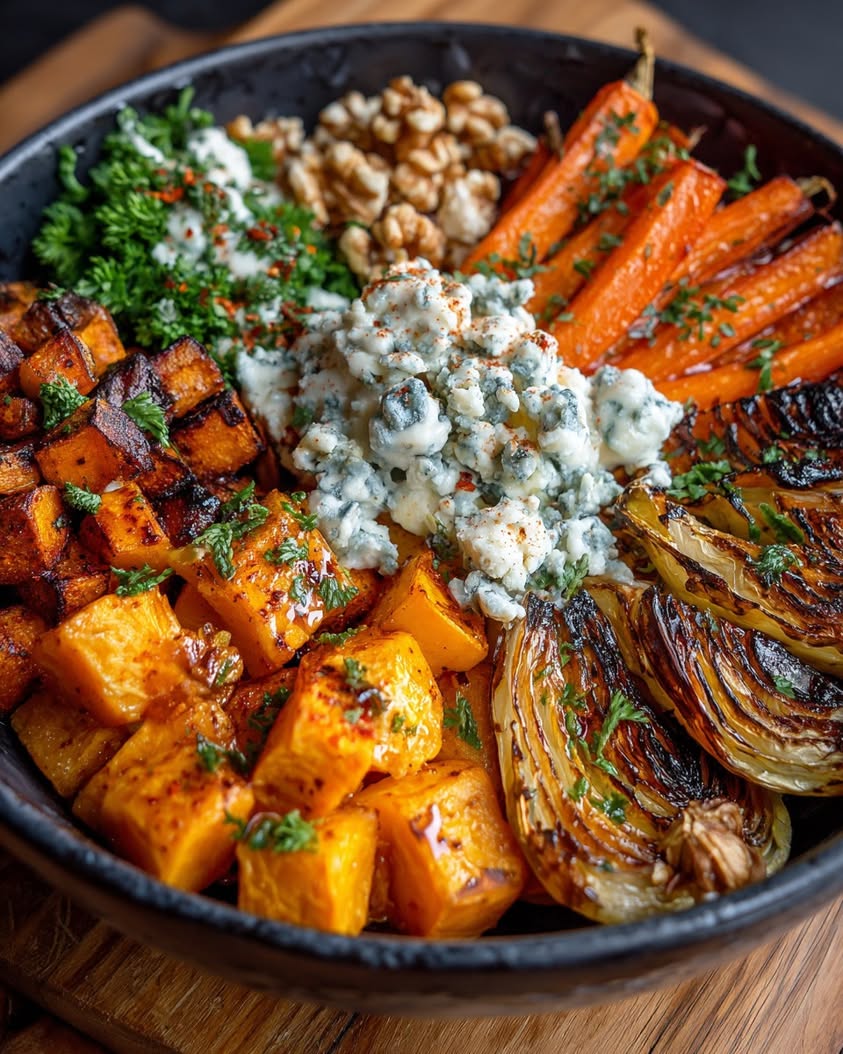
Roasted Sweet Potato, Squash & Carrot Bowl with Blue Cheese Crumble & Walnut Maple Glaze: A Perfectly Balanced Fall Feast
Imagine a dish that captures the very essence of autumn in a single, satisfying bowl. This Roasted Sweet Potato, Squash & Carrot Bowl with Blue Cheese Crumble & Walnut Maple Glaze is exactly that. It is a vibrant celebration of seasonal produce, transforming humble root vegetables into a spectacular meal. The process is wonderfully simple, allowing the oven to do most of the work while you enjoy the incredible aroma filling your kitchen. Ultimately, this recipe delivers a perfect balance of sweet, savory, and tangy flavors in every single bite.
This roasted harvest bowl with maple walnut glaze is designed to be both nourishing and deeply comforting. It features caramelized sweet potatoes, tender butternut squash, and sweet carrots, all roasted to perfection. A glossy, fragrant maple glaze coats toasted walnuts, adding a sticky-sweet crunch. Finally, a generous crumble of sharp, creamy blue cheese cuts through the sweetness with its bold, tangy punch. The result is a textural masterpiece that is as beautiful to look at as it is delicious to eat. It is a versatile dish that works equally well as a hearty vegetarian main or an impressive side.
Furthermore, this bowl is a testament to how simple ingredients can create extraordinary food. You likely have most of the spices in your pantry already. This recipe is a fantastic way to enjoy the bounty of the fall farmers’ market. It is a meal that feels special enough for a weekend dinner party yet easy enough for a busy weeknight. Let us dive into how to create this stunning roasted harvest bowl with maple walnut glaze that will become a seasonal staple in your home.
Quick Recipe Highlights
- Flavor Profile: This bowl masterfully balances natural vegetable sweetness with earthy spices, a tangy blue cheese punch, and a rich, sticky-sweet maple glaze. The combination creates a complex and addictive taste experience that is both comforting and sophisticated.
- Texture: Enjoy a delightful contrast between the soft, caramelized flesh of the roasted vegetables, the satisfying crunch of maple-glazed walnuts, and the creamy, crumbly texture of the blue cheese. Each component adds a unique mouthfeel.
- Aroma: As the vegetables roast, your kitchen will fill with the warm, inviting scents of cinnamon, cumin, and caramelizing sugars. The maple glaze toasting with the walnuts adds a final layer of sweet, nutty fragrance.
- Visual Appeal: This dish is a feast for the eyes with its vibrant orange and yellow vegetables, deep brown glazed walnuts, and white-blue cheese crumbles. It is a colorful presentation that looks stunning on any table.
- Skill Level Needed: This is a beginner-friendly recipe. The primary skills required are simple vegetable chopping and tossing. The oven handles the cooking, making it a low-stress, high-reward dish perfect for cooks of all levels.
- Special Equipment: You only need a good baking sheet, a mixing bowl, and a small saucepan. Parchment paper is highly recommended for easy cleanup and to prevent the maple glaze from sticking to the pan.
Recipe Overview
- Difficulty Level: We rate this recipe as “Easy” because it involves straightforward techniques like chopping, tossing, and roasting. There is no intricate knife work or complicated sauces. The steps are sequential and simple, making it nearly impossible to mess up. Even a first-time cook can achieve fantastic results by following the clear instructions.
- Category: This dish is incredibly versatile. It proudly stands as a complete and satisfying vegetarian main course, packed with fiber and complex carbs. Alternatively, it serves as a spectacular side dish for holiday meals or alongside roasted chicken or pork. It fits into lunch, dinner, and even meal-prep categories beautifully.
- Cuisine: This recipe draws inspiration from modern American farm-to-table cuisine, emphasizing seasonal, whole ingredients. The use of maple syrup nods to North American traditions, while the technique of roasting vegetables and combining sweet with savory (blue cheese) has roots in various European culinary styles. It is a contemporary fusion that celebrates local produce.
- Cost: This is a very cost-effective meal, especially during the autumn months when root vegetables are at their peak and most affordable. Sweet potatoes, carrots, and squash are typically inexpensive. Blue cheese and walnuts are the “splurge” items, but a little goes a long way. Overall, you can feed four people a restaurant-quality meal for a fraction of the price.
- Season: This roasted harvest bowl with maple walnut glaze is quintessentially a fall and winter recipe. These vegetables are at their sweetest and most abundant during the cooler months. The warm spices and hearty nature of the dish provide comfort against chilly weather, making it the perfect seasonal centerpiece.
- Occasion: It is ideal for a cozy family dinner, a meatless Monday celebration, or a festive Thanksgiving side. Its beautiful presentation makes it worthy of a dinner party, while its simplicity ensures the host is not stuck in the kitchen all day. It is also excellent for weekly meal prep.
Why You’ll Love This Recipe
First and foremost, the taste and texture of this roasted harvest bowl with maple walnut glaze are utterly irresistible. The vegetables become deeply caramelized and sweet in the oven, their natural sugars concentrating into something magical. The warm spices of cinnamon and cumin add an earthy, aromatic depth that feels like a hug in food form. Then, you get the double textural delight: the crunchy, sweet walnuts and the creamy, sharp blue cheese. This combination creates a symphony in your mouth where no single note overpowers the others. Every forkful is a perfect balance, making the dish incredibly moreish and satisfying.
Convenience is another major winning point for this recipe. Once you have chopped your vegetables, the oven does the heavy lifting. This hands-off time is perfect for setting the table, preparing a simple green salad, or simply relaxing. The recipe uses one sheet pan for the vegetables and one small saucepan for the glaze, meaning cleanup is a breeze. Additionally, the components are forgiving; a few extra minutes in the oven will only make the vegetables more caramelized and delicious. This stress-free approach to cooking a beautiful meal is a huge benefit for busy home cooks.
From a nutritional standpoint, this bowl is a powerhouse. Sweet potatoes and carrots are loaded with beta-carotene, which supports eye health and immunity. Butternut squash provides a great dose of vitamins A and C, along with fiber for digestive health. Walnuts add healthy omega-3 fats and plant-based protein. Together, these ingredients create a meal that is high in fiber, rich in antioxidants, and full of complex carbohydrates for sustained energy. It is food that truly makes you feel good from the inside out.
This dish also holds tremendous social and entertaining value. Its vibrant, colorful presentation is guaranteed to impress guests and make them feel special. Serving a beautiful, vegetable-forward centerpiece is increasingly appreciated. It is a fantastic conversation starter and shows thoughtfulness in preparation. Because it is so visually appealing, it encourages people to eat with their eyes first, building anticipation for the delicious flavors to come. It is a recipe that makes any meal feel like an occasion.
Finally, the cost-effectiveness and accessibility of this roasted harvest bowl with maple walnut glaze cannot be overstated. Root vegetables are some of the most affordable produce items year-round, especially in season. You can adapt the recipe based on what is on sale or available at your local market. The blue cheese can be swapped for feta or goat cheese if needed, and the walnuts could be replaced with pecans or pepitas. This flexibility ensures you can create a gorgeous, nutritious meal without straining your grocery budget, making gourmet, healthy eating accessible to everyone.
Historical Background and Cultural Significance
The story of this dish begins with ancient agricultural practices. Humans have been roasting root vegetables in fire pits for millennia, a simple cooking method that transforms hard, starchy tubers into sweet, edible food. Sweet potatoes originated in Central or South America, while carrots have roots in Persia. Butternut squash is a New World vegetable, cultivated by Indigenous peoples long before European contact. The technique of combining these roasted vegetables is a modern interpretation of a very ancient, global tradition of cooking what the earth provides.
Culturally, the combination of sweet and savory elements has deep significance in many food traditions. The use of maple syrup, a distinctly North American ingredient pioneered by Indigenous communities, connects the dish to the land and seasons of the continent. Blue cheese, with its European origins, represents the fusion of Old World preservation techniques (cheesemaking) with New World ingredients. This bowl is a culinary melting pot, reflecting how food traditions migrate and blend to create new, beloved dishes.
The evolution of the “bowl” as a meal format is a relatively recent phenomenon in home cooking, popularized by health and wellness trends. However, the concept of a composed, one-dish meal is ancient. This recipe modernizes that concept by focusing on plant-based ingredients, bold flavor contrasts, and Instagram-worthy presentation. It takes the humble roasted vegetable side dish and elevates it to a starring role, reflecting a contemporary desire for meals that are healthy, visually appealing, and packed with flavor.
Regional variations of this concept are endless. In the American South, you might find roasted sweet potatoes with pecans and a bourbon glaze. In the Mediterranean, roasted vegetables are often paired with feta and herbs. A Japanese influence might include a miso-based glaze instead of maple. This particular recipe with its cinnamon and cumin spice blend leans into the warm, comforting flavors associated with American and Canadian fall harvest celebrations. It is a dish that celebrates seasonal abundance, a cultural tradition shared by agricultural societies worldwide.
Ingredient Deep Dive
Let us start with the sweet potato. This vibrant tuber has a rich history, domesticated over 5,000 years ago in the Americas. It was a staple for Polynesian voyagers and remains crucial to diets across the globe. Nutritionally, it is a superstar, packed with beta-carotene (which converts to Vitamin A), fiber, and Vitamin C. When selecting sweet potatoes, look for firm tubers with smooth, unblemished skin. Avoid any with soft spots or sprouts. Store them in a cool, dark, well-ventilated place—not the refrigerator, as cold temperatures can alter their taste and texture.
Butternut squash, another New World native, is beloved for its sweet, nutty flavor and creamy texture when cooked. It is a fantastic source of vitamins A and C, potassium, and fiber. A good squash should feel heavy for its size and have a hard, matte rind with a uniformly beige color. The stem should be intact and dry. Store whole squash in a cool, dark place for months. Once cut, wrap it tightly and refrigerate for up to five days. For a quicker prep, look for pre-cubed squash in the produce section.
Carrots have a fascinating history, originally cultivated for their aromatic leaves and seeds rather than their roots. The orange carrot we know today was developed by Dutch growers in the 17th century. They are rich in beta-carotene, antioxidants, and vitamin K1. Choose carrots that are firm, smooth, and brightly colored, with vibrant green tops if attached. Store them in the crisper drawer of your refrigerator in a plastic bag. For the best flavor in this roasted harvest bowl with maple walnut glaze, use fresh, whole carrots rather than pre-cut “baby” carrots, which are often less sweet.
Pure maple syrup is the soul of the glaze and a product of patience and tradition, primarily from the northeastern United States and Canada. It takes about 40 gallons of sap to make one gallon of syrup. Opt for “Grade A” syrup for its clean flavor. It contains antioxidants and minerals like manganese and zinc, though it is still a sugar and should be used mindfully. Store it in the pantry before opening and in the refrigerator afterward to prevent mold. For a vegan version of this bowl, ensure your maple syrup is 100% pure and not processed with animal-derived filters.
Blue cheese brings a bold, tangy complexity that cuts through the dish’s sweetness. This cheese is created by introducing Penicillium cultures, which create the characteristic blue veins. It is a good source of calcium and protein. When buying blue cheese, look for a moist but not soggy texture. It should smell pungent but not ammonia-like. Crumbled blue cheese is convenient, but a block you crumble yourself will have better flavor and texture. Store it tightly wrapped in the refrigerator. If you are not a blue cheese fan, a creamy goat cheese or tangy feta are excellent substitutes.
Common Mistakes to Avoid
- Cutting Vegetables Unevenly: If your vegetable pieces are different sizes, they will cook unevenly. Smaller pieces will burn while larger ones remain hard. Take the time to cut them into uniform 1-inch cubes for consistent roasting.
- Overcrowding the Pan: Crowding forces vegetables to steam instead of roast, preventing that crucial caramelization. Use a large, rimmed baking sheet and spread the veggies in a single layer. If necessary, use two pans.
- Using Old, Dried-Out Spices: Ground spices lose potency over time. The cinnamon and cumin are essential for the warm, earthy flavor profile. If your spices are more than a year old, consider replacing them for the best taste.
- Neglecting to Toss the Vegetables Midway: Roasting without turning can lead to one side becoming too dark. Gently toss and flip the vegetables with a spatula about halfway through the cooking time. This ensures all sides get beautifully caramelized.
- Burning the Maple Glaze: Maple syrup burns easily due to its high sugar content. When making the glaze, warm it gently over low heat just until it thins and combines with the butter. Do not let it boil vigorously.
- Adding the Walnuts Too Early: If you add the walnuts to the glaze and then bake them for the full vegetable time, they will almost certainly burn. They only need the last 5-7 minutes in the oven to toast and glaze perfectly.
- Using Pre-Crumbled, Dry Blue Cheese: The anti-caking agents in pre-crumbled cheese can make it dry and less flavorful. For the best creamy, tangy burst, buy a small wedge of blue cheese and crumble it yourself just before serving.
- Skipping the Salt: Salt is not just for seasoning; it draws moisture out of the vegetables, aiding in caramelization. Do not be shy with seasoning the vegetables before they go into the oven. Taste and adjust after roasting if needed.
- Forgetting Parchment Paper: The maple glaze on the walnuts will create a sticky mess on your bare baking sheet. Lining the pan with parchment paper guarantees easy cleanup and prevents the walnuts from sticking and breaking.
- Serving Immediately from a Hot Pan: Let the roasted vegetables rest for 5 minutes after coming out of the oven. This allows them to firm up slightly and makes them easier to handle and plate without falling apart.
Essential Techniques
Uniform Vegetable Cubing: This is the foundational technique for even cooking. Using a sharp chef’s knife, trim the ends of your vegetables. Cut them into halves or quarters lengthwise to create flat, stable surfaces. Then, slice them crosswise into even 1-inch pieces. Consistent size is more important than perfect geometric shapes. This ensures every piece roasts at the same rate, giving you a mix of tender interiors and caramelized edges throughout the entire batch.
Dry Roasting for Caramelization: The secret to deeply flavorful vegetables is driving off moisture. After tossing the veggies in oil and spices, spread them in a single layer with space between each piece. A hot oven (400°F) then evaporates surface water, allowing the natural sugars to concentrate and brown—a process called the Maillard reaction. Do not cover the pan or add liquid. This dry heat is what transforms soft vegetables into sweet, slightly crispy, complex-tasting gems.
Creating a Simple Glaze: A glaze adds shine and concentrated flavor. The technique here is gentle heating. Combine maple syrup and butter in a small saucepan over low heat. Stir just until the butter melts and the mixture becomes fluid and combined. Overheating can cause the syrup to foam up and burn, creating a bitter taste. The goal is a warm, pourable syrup that will coat the walnuts and help them toast to a glossy finish in the oven’s final minutes.
Toasting Nuts with Glaze: This two-step process maximizes flavor. First, toss raw walnuts in the warm maple glaze until fully coated. Spread them on a parchment-lined section of your baking sheet during the last 5-7 minutes of roasting. The oven’s heat toasts the nuts, deepening their flavor, while the maple syrup caramelizes onto their surface, creating a sweet, crunchy, and sticky coating. Watch them closely, as the high sugar content means they can go from perfect to burnt quickly.
Pro Tips for Perfect Roasted Harvest Bowl with Maple Walnut Glaze
For the sweetest flavor, choose vegetables that feel heavy for their size. This indicates high moisture and sugar content, which leads to better caramelization.
Let your chopped vegetables sit at room temperature for 10-15 minutes after oiling and seasoning. This allows the salt to draw out a little moisture, which then evaporates quickly in the oven for better browning.
Invest in an oven thermometer. Oven temperatures are often inaccurate, and 25 degrees can be the difference between roasting and steaming. A true 400°F is key for this recipe.
Use a light-colored, heavy-duty baking sheet. Dark pans absorb more heat and can cause the bottoms of the vegetables to burn before the tops are done.
If you love fresh herbs, add a handful of chopped rosemary or thyme to the vegetables before roasting. The herbal notes pair beautifully with the sweet and savory elements.
For an extra layer of texture and protein, serve the bowl over a bed of warm quinoa, farro, or massaged kale. This turns it into an even heartier meal.
To make the blue cheese crumble easier, pop the wedge in the freezer for 10-15 minutes before crumbling. The cold cheese will break into neat chunks without smearing.
If preparing for meal prep, keep the blue cheese crumble and maple walnuts separate from the roasted vegetables until ready to eat. This preserves their distinct textures.
Variations and Adaptations
For regional variations, consider a Southern twist using pecans instead of walnuts and a splash of bourbon in the maple glaze. A Mediterranean version could feature olive oil, lemon zest, oregano, and a crumble of feta cheese. For an Asian-inspired take, replace the spice blend with five-spice powder and use a miso-sesame-maple glaze.
Seasonal adaptations are simple. In winter, add roasted Brussels sprout halves or parsnips to the mix. For a spring version, use asparagus tips and new potatoes, reducing the roasting time. Summer might feature zucchini and bell peppers, though they have a higher water content and will roast differently.
Dietary modifications are straightforward. For a vegan bowl, use olive oil instead of butter in the glaze and omit the blue cheese, perhaps using a sprinkle of nutritional yeast or vegan feta. To make it nut-free, replace the walnuts with roasted pumpkin seeds (pepitas). For a lower-sugar version, reduce the maple syrup by half and add a pinch of smoked paprika to the glaze for depth.
Flavor variations can keep this recipe exciting. Try swapping the cumin for smoked paprika or curry powder. Add a tablespoon of Dijon mustard or balsamic vinegar to the vegetable oil mixture for tang. A drizzle of tahini or a sprinkle of za’atar after plating can introduce exciting new flavor profiles.
Texture modifications might include adding a handful of cooked, crispy chickpeas on top for extra crunch. Alternatively, blend a portion of the roasted vegetables with broth to create a creamy soup base, then top with the remaining veggies, walnuts, and cheese.
Presentation alternatives are fun for entertaining. Instead of one large bowl, serve individual portions in wide, shallow bowls or on decorative plates. You can also deconstruct the elements for a stylish plating: a swipe of yogurt on the plate, a mound of vegetables, artful walnut clusters, and delicate cheese crumbles.
Serving and Presentation Guide
Plating techniques matter for this visually stunning dish. For a family-style presentation, pile the warm roasted vegetables in a large, shallow serving bowl. Drizzle any remaining pan juices over the top. Scatter the maple walnuts generously across the vegetables, then finish with the blue cheese crumble. This layered approach looks abundant and inviting.
Garnishing adds the final touch. Beyond the walnuts and cheese, a sprinkle of fresh, chopped parsley or chives adds a pop of green color and fresh flavor. A few delicate microgreens or edible flowers can elevate the dish for a special occasion. A final light drizzle of high-quality extra virgin olive oil or a balsamic reduction can add shine and a hint of acidity.
Traditional accompaniments for a hearty vegetable bowl like this include a simple green salad with a bright vinaigrette to cut through the richness. A crusty loaf of whole-grain bread or warm dinner rolls are perfect for soaking up any delicious remnants on the plate. For a heartier meal, consider serving it alongside a simply prepared protein like grilled chicken or seared salmon.
Modern serving suggestions embrace the bowl’s versatility. Serve it warm or at room temperature, making it excellent for picnics or potlucks. You can also use it as a luxurious topping for a bed of greens, turning a salad into a substantial meal. For brunch, top it with a fried or poached egg, letting the runny yolk create a luxurious sauce.
Temperature considerations are flexible. This dish is best served warm, with the vegetables just out of the oven and the cheese slightly softened. However, it is also delicious at room temperature, as the flavors remain vibrant. Avoid serving it cold from the refrigerator, as the fats in the cheese and glaze will solidify, muting the flavors and textures.
Portion control is easy with this nutrient-dense meal. As a main course, aim for about 2 cups of the vegetable mixture per person, topped with the garnishes. As a side dish, 1 to 1.5 cups per person is sufficient. The beauty of bowl meals is their inherent balance, making it simple to gauge a satisfying and healthy portion size.
Wine and Beverage Pairing
Wine pairings for this dish should complement its sweet, savory, and tangy profile. A slightly off-dry Riesling or Gewürztraminer is a classic choice, as their sweetness mirrors the maple and roasted vegetables, while their acidity balances the blue cheese. A medium-bodied Pinot Noir with its red fruit and earthy notes also pairs beautifully, especially if you lean into herbs like rosemary. For a richer option, an oaked Chardonnay can stand up to the creamy cheese and caramelized flavors.
Non-alcoholic alternatives can be just as sophisticated. A sparkling apple cider provides festive effervescence and autumnal flavor. For a warmer option, a ginger-turmeric tea highlights the earthy spices in the dish. A tart cherry juice spritzer (mixed with sparkling water) offers a sweet-tart balance that cuts through the richness beautifully.
Coffee and tea pairings work wonderfully post-meal. A medium-roast coffee with notes of caramel or nut will echo the flavors in the bowl. For tea, consider a smoky Lapsang Souchong to complement the roasted vegetable notes, or a spiced chai that mirrors the warm cinnamon and cumin in the recipe.
Temperature considerations are key. Serve white wines and sparkling beverages well-chilled. Red wines like Pinot Noir are best served slightly below room temperature. Non-alcoholic sparkling drinks should be icy cold to provide a refreshing contrast to the warm, rich food.
Serving suggestions include offering a choice to guests. You might set out a bottle of Riesling and a carafe of sparkling cider. Always provide water on the table to cleanse the palate. If serving coffee or tea, offer it after the meal to allow the complex flavors of the roasted harvest bowl with maple walnut glaze to be fully appreciated on their own first.
Storage and Shelf Life
Storage methods are straightforward but important for maintaining quality. Allow the roasted vegetables to cool completely to room temperature before storing. Place them in an airtight container in the refrigerator. Store the maple walnuts and blue cheese crumble in separate small containers. This prevents the walnuts from becoming soggy and the cheese from melting into the vegetables.
Temperature requirements are simple: the refrigerator is essential. All components of this dish must be stored in the fridge at or below 40°F. Do not leave the assembled bowl at room temperature for more than two hours, as the dairy and moist vegetables create an environment where bacteria can grow.
Container recommendations include glass or BPA-free plastic containers with tight-fitting lids. For the walnuts, a small jar or zip-top bag works well. For the vegetables, a shallow container helps them cool faster and prevents condensation from making them mushy.
Signs of spoilage to watch for include an off or sour smell, visible mold (especially on the cheese or vegetables), or a slimy texture on the vegetables. If any component shows these signs, discard it immediately. The maple walnuts may lose their crunch over time but are still safe to eat unless rancid (a sharp, unpleasant smell).
Reheating instructions are best for the vegetables only. Reheat them in a 350°F oven for 10-15 minutes, or in a skillet over medium heat, until warmed through. This method helps restore some of their texture. Avoid microwaving, as it can make them rubbery and steam the walnuts if they are mixed in. Always add the cold blue cheese crumble and walnuts after reheating.
Freezing guidelines are not generally recommended for the assembled dish. The high water content of the vegetables means they will become mushy upon thawing. The dairy in the blue cheese will separate and become grainy. However, you can freeze the plain roasted vegetables (without glaze or cheese) for up to 3 months. Thaw in the refrigerator and reheat in the oven. The texture will be softer but acceptable for soups or purees.
Make Ahead Strategies
Your prep timeline can be spread over two days for stress-free entertaining. On Day 1, wash, peel, and cube all the vegetables. Store them in a large zip-top bag or container in the refrigerator. Measure out your dry spices and set them aside. Crumble the blue cheese and store it in a sealed container. On Day 2 (or just before cooking), toss the cold vegetables with oil and spices, then proceed with roasting. The vegetables roast best from a cold start, so no need to bring them to room temperature.
Storage between steps is simple. Keep pre-chopped vegetables refrigerated for up to 24 hours. The blue cheese crumble can be refrigerated for 2-3 days. You can even make the maple glaze a day ahead; gently reheat it on the stove or in the microwave until fluid before tossing with the walnuts.
Quality impact assessment is positive for most components. Pre-chopping vegetables has minimal impact, especially if they are stored properly. The blue cheese may dry out slightly on the surface if crumbled too far in advance; a piece of plastic wrap pressed directly on the cheese in the container can help. The walnuts are best glazed and toasted just before serving to preserve their crunch.
Assembly tips for a make-ahead meal are key. For meal prep, divide the cooled roasted vegetables into individual containers. Keep the walnuts and cheese in separate small compartments or containers. Assemble just before eating by sprinkling the toppings over the reheated or room-temperature vegetables. This keeps everything fresh.
Reheating guidelines for make-ahead portions suggest using an oven or toaster oven to restore the vegetables’ roasted texture. If using a microwave, reheat in short bursts and consider adding a splash of water to the container to create steam and prevent drying out. Always add the cold toppings after reheating.
Fresh element additions are the final touch. Even with make-ahead components, a last-minute garnish of fresh herbs or a final drizzle of olive oil before serving makes the dish taste and look freshly made. This little step bridges the gap between convenient prep and vibrant, just-cooked flavor.
Scaling Instructions
Halving the recipe is easy for smaller households. Simply divide all ingredient quantities by two. Use a standard-sized baking sheet; the smaller volume of vegetables will have even more room to caramelize beautifully. Cooking time may reduce by 5-10 minutes, so start checking for doneness at the 25-minute mark. The glaze and walnut step will also go faster, so watch them closely after 3-4 minutes.
Doubling or tripling the recipe for a crowd requires some adjustments. Double all ingredients. You must use two or three large baking sheets to avoid overcrowding. Rotate the pans in the oven (top to bottom, front to back) halfway through cooking to ensure even roasting. You may need to extend the cooking time by 5-10 minutes. Make the maple glaze in a larger saucepan and toss the walnuts in batches to ensure even coating.
Equipment adjustments are necessary when scaling. For larger batches, ensure you have enough large mixing bowls for tossing the vegetables. A rimmed sheet pan is non-negotiable for containing oil and juices. If you only have one pan, roast in consecutive batches, keeping the first batch warm in a low oven (200°F) while the second cooks. This is better than overcrowding.
Timing modifications are minimal but important. While the active prep time increases with scale, the oven time remains similar if using multiple pans. However, if you are roasting sequentially on one pan, total cook time will essentially double. Plan accordingly and keep the earlier batches warm. The glaze can be made once and used for all batches of walnuts.
Storage considerations change with volume. A large batch of roasted vegetables will take longer to cool, which is a food safety concern. Spread the hot vegetables out on a clean baking sheet or large platter to cool quickly before transferring to storage containers. This prevents condensation and bacterial growth. Label and date all containers clearly.
Nutritional Deep Dive
The macro breakdown of this roasted harvest bowl with maple walnut glaze is well-balanced. It is primarily a complex carbohydrate source from the sweet potatoes, squash, and carrots, providing sustained energy. The olive oil and walnuts contribute healthy monounsaturated and polyunsaturated fats, including omega-3s from the walnuts. The blue cheese adds protein and saturated fat. This combination of carbs, fats, and protein helps keep you full and satisfied for hours.
A micronutrient analysis reveals a vitamin and mineral powerhouse. The orange vegetables are exceptionally high in Vitamin A (as beta-carotene), crucial for vision and immune function. They also provide significant Vitamin C, potassium, and manganese. Walnuts add magnesium and phosphorus. Blue cheese contributes calcium and Vitamin B12. This diverse micronutrient profile supports overall health, from bone strength to antioxidant defense.
Health benefits are extensive. The high fiber content promotes digestive health and stable blood sugar levels. The antioxidants in the vegetables (like beta-carotene and Vitamin C) combat oxidative stress and inflammation. The healthy fats support brain health and cardiovascular function. This meal is a perfect example of how delicious food can also be profoundly nourishing and protective for the body.
Dietary considerations are mostly positive. This dish is naturally gluten-free and vegetarian. It is high in fiber and nutrients. However, those monitoring sodium should be mindful of the cheese and added salt. Individuals with lactose intolerance may need to modify the cheese component. The dish is not suitable for a strict keto diet due to the high carbohydrate content from the root vegetables.
Portion analysis shows that one serving as a main course provides a substantial volume of food that is nutrient-dense rather than calorie-dense. The combination of fiber, water content in the vegetables, and satisfying fats creates a high satiety index. You are likely to feel full on a reasonable portion, which naturally aids in calorie control without feeling deprived.
Weight management tips include using this bowl as a template. You can slightly reduce the oil by using an oil mister. Increase the proportion of non-starchy vegetables (like adding broccoli) to bulk up the volume for fewer calories. Be mindful of the portion of walnuts and cheese, as these are the most calorie-dense components. Enjoying this as a regular meal can support weight goals by displacing less nutritious, processed options.
Dietary Adaptations
For a gluten-free adaptation, this recipe is naturally compliant. Ensure all packaged ingredients, like spices or pre-crumbled cheese, are certified gluten-free, as cross-contamination can occur. Use tamari instead of soy sauce if adding any for extra flavor. This makes the dish safe for those with celiac disease or gluten sensitivity.
A dairy-free version is simple. Omit the blue cheese entirely. For a creamy, tangy element, make a cashew cream sauce with lemon juice, or use a store-bought vegan feta or Parmesan sprinkle. Ensure the butter in the maple glaze is replaced with a plant-based alternative like vegan butter or coconut oil.
To make this recipe vegan, combine the dairy-free adaptations with one more check: ensure your maple syrup is processed without animal-derived filters (most are, but it is good to verify). Use olive oil or vegan butter. Top with nutritional yeast, vegan cheese, or a tahini-lemon drizzle for complexity. The roasted vegetables and maple walnuts are already vegan-friendly.
A low-carb or keto adaptation requires significant changes. Replace the root vegetables with low-carb options like cauliflower, broccoli, and bell peppers. Drastically reduce the amount of maple syrup in the glaze, using a sugar-free maple-flavored syrup or a small amount of monk fruit sweetener. Increase the portion of walnuts and blue cheese for fat and protein. The result will be a different but still delicious vegetable dish.
For a Paleo adaptation, omit the blue cheese, as dairy is excluded. Ensure the butter is replaced with ghee (clarified butter) or coconut oil. All other ingredients—vegetables, nuts, maple syrup, spices—are Paleo-friendly. This creates a wholesome, nutrient-dense bowl aligned with Paleo principles.
A Low-FODMAP version requires careful{“success”:true,”message”:”Recipe created successfully”,”post_id”:8862,”tasty_recipe_id”:8862,”shortcode”:” Print
Roasted Sweet Potato, Squash & Carrot Bowl with Blue Cheese Crumble & Walnut Maple Glaze
Description
A hearty and flavorful vegetarian bowl featuring roasted root vegetables, crunchy walnuts, tangy blue cheese, and a sweet maple glaze.
Ingredients
For the Crust:
- 2 medium sweet potatoes, peeled and cubed
- 1 small butternut squash, peeled and cubed
- 3 large carrots, peeled and sliced
- 2 tbsp olive oil
- 1 tsp smoked paprika
- 1/2 tsp garlic powder
- Salt and black pepper to taste
- 1/2 cup walnuts, roughly chopped
- 2 tbsp maple syrup
- 1/4 cup crumbled blue cheese
- 2 cups cooked quinoa or brown rice
- Fresh parsley for garnish
Instructions
1. Prepare the Crust:
- Preheat oven to 400°F (200°C). Line a baking sheet with parchment paper.
- In a large bowl, toss sweet potatoes, squash, and carrots with olive oil, smoked paprika, garlic powder, salt, and pepper. Spread evenly on the baking sheet.
- Roast for 25-30 minutes, stirring halfway, until vegetables are tender and slightly caramelized.
- While vegetables roast, toast walnuts in a dry skillet over medium heat for 3-4 minutes until fragrant. Remove from heat and stir in maple syrup until coated.
- Assemble bowls by dividing cooked quinoa or rice among four bowls. Top with roasted vegetables, maple-glazed walnuts, and crumbled blue cheese.
- Garnish with fresh parsley and serve warm.
Notes
You can customize the seasonings to taste.

I’m Billy, a classically trained culinary school graduate from The Culinary Institute of America with over 12 years in the restaurant industry and over 19 years of cooking experience.