
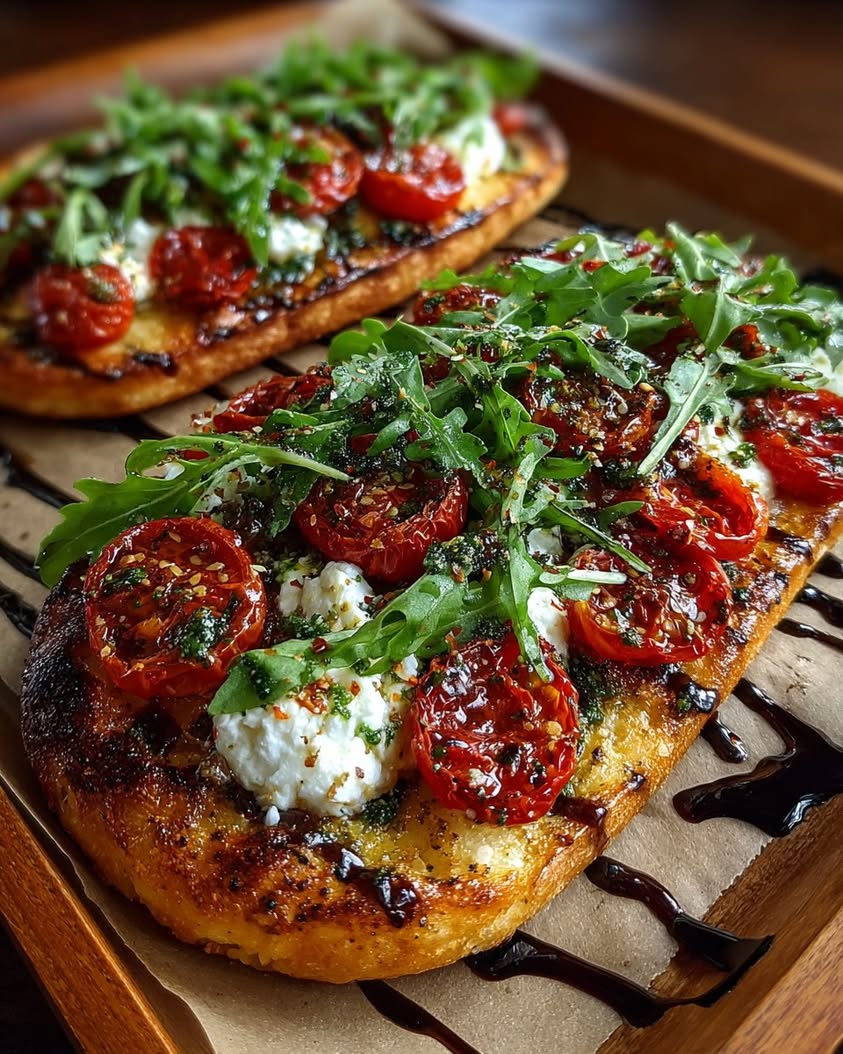
Roasted Tomato & Goat Cheese Flatbread with Pesto & Arugula: A Gourmet Pizza in Minutes
Imagine a crispy, golden flatbread topped with sweet roasted tomatoes, creamy goat cheese, and vibrant pesto. This Roasted Tomato Goat Cheese Flatbread recipe delivers a restaurant-quality meal directly from your own kitchen. Furthermore, it combines simple, fresh ingredients into a stunning and satisfying dish. The result is a perfect balance of flavors and textures that feels indulgent yet remains surprisingly easy to make.
This particular Roasted Tomato Goat Cheese Flatbread is a fantastic solution for busy weeknights or elegant entertaining. The recipe leverages the magic of high-heat roasting to concentrate the tomato flavor. Consequently, you get a sweet, jammy topping that pairs beautifully with the tangy goat cheese. Finally, the fresh arugula and pesto add a peppery, herbal finish that makes every bite exciting.
Ultimately, this dish celebrates the beauty of seasonal produce and straightforward cooking techniques. You will love how the creamy cheese melts slightly against the warm flatbread. Meanwhile, the pesto provides a fragrant, garlicky base that ties everything together. This Roasted Tomato Goat Cheese Flatbread is not just a meal; it’s a colorful, flavorful experience you can create in under thirty minutes.
Quick Recipe Highlights
- Flavor Profile: This flatbread boasts a sophisticated medley of sweet, tangy, and peppery notes. The roasted tomatoes offer a deep, caramelized sweetness that contrasts with the sharp, creamy goat cheese. Additionally, the basil pesto introduces a fresh, garlicky herbaceousness that elevates the entire dish.
- Texture: You will experience a wonderful contrast in every mouthful. The flatbread base provides a satisfyingly crispy and chewy foundation. Meanwhile, the roasted tomatoes are soft and jammy, and the goat cheese is luxuriously creamy. Finally, the fresh arugula adds a delightful, crisp finish.
- Aroma: As it bakes, your kitchen will fill with the irresistible scent of roasting garlic and tomatoes. The fragrance of fresh basil from the pesto mingles with the earthy aroma of the flatbread. This combination creates an anticipatory sensory experience before you even take the first bite.
- Visual Appeal: This dish is a feast for the eyes with its vibrant color palette. The red of the roasted tomatoes, white of the goat cheese, and green of the pesto and arugula create a stunning presentation. It looks artisanal and carefully crafted, perfect for sharing on social media or impressing guests.
- Skill Level Needed: This recipe is intentionally designed for cooks of all levels. It requires only basic assembly and oven skills, with no advanced techniques. Therefore, even a beginner can achieve fantastic, gourmet-looking results with minimal effort.
- Special Equipment: You need only a standard baking sheet and oven. A pizza stone can elevate the crispiness of the flatbread crust, but it is completely optional. Otherwise, no special tools are required, making this recipe highly accessible.
Recipe Overview
- Difficulty Level: We rate this Roasted Tomato Goat Cheese Flatbread as easy. The steps are straightforward: roast, assemble, and bake. There is no complex dough-making or intricate sauce preparation. Consequently, it is a nearly foolproof recipe that guarantees delicious results.
- Category: This versatile dish fits multiple meal categories beautifully. It works perfectly as a light main course for lunch or dinner. Alternatively, you can slice it into smaller pieces for an impressive appetizer or party snack. It also makes for a fantastic meatless Monday option.
- Cuisine: While flatbread has roots in many global cuisines, this recipe leans into modern Mediterranean and Californian influences. It uses classic ingredients like pesto, goat cheese, and fresh greens in a simple, health-conscious format. The focus is on fresh, high-quality components rather than a strict traditional preparation.
- Cost: This is a cost-effective gourmet meal, especially if you grow your own herbs or buy tomatoes in season. Store-bought pesto and pre-made flatbread keep costs and prep time low. Overall, you can create this impressive dish for a fraction of the price of a restaurant flatbread.
- Season: This recipe shines brightest in late summer when tomatoes and basil are at their peak. However, it is truly a year-round winner because roasting enhances even off-season tomatoes. For winter months, use cherry tomatoes, which often retain good flavor.
- Occasion: Its flexibility makes it suitable for countless occasions. Whip it up for a quick family dinner, serve it as a starter for a dinner party, or bring it to a potluck. It is also an ideal romantic meal for two that feels special without being overly complicated.
Why You’ll Love This Recipe
First and foremost, the taste and texture of this Roasted Tomato Goat Cheese Flatbread are utterly captivating. Each bite delivers a symphony of flavors: the sweet intensity of the roasted tomatoes, the tangy creaminess of the goat cheese, the sharp garlic and basil from the pesto, and the peppery freshness of the arugula. The contrasting textures—from the crispy crust to the soft cheese and crisp greens—keep your palate engaged. This combination is universally appealing and feels like a treat, yet it is made from wholesome ingredients.
Secondly, the convenience factor is a major win. This entire Roasted Tomato Goat Cheese Flatbread comes together in about thirty minutes from start to finish. By using a pre-made flatbread or naan as the base, you eliminate the most time-consuming step of making dough. The assembly is simple and intuitive, making it a perfect recipe for stressful weeknights when you want something delicious fast. Moreover, cleanup is minimal, often requiring just one baking sheet.
From a nutritional standpoint, this dish offers several advantages. Tomatoes are rich in lycopene, an antioxidant enhanced by roasting. Goat cheese provides protein and calcium with often easier digestibility than cow’s milk cheese for some people. The arugula adds a dose of vitamins A, C, and K. Using a whole-grain flatbread base can further increase the fiber content. Therefore, you get a meal that is as nourishing as it is delicious.
For social and entertaining purposes, this flatbread is a superstar. It presents beautifully on a board or platter, making it look like you spent hours in the kitchen. You can easily double or triple the recipe to feed a crowd. Guests can customize their slices with extra arugula or a drizzle of balsamic glaze. It is a crowd-pleaser that accommodates vegetarians and feels upscale without requiring advanced culinary skills from the host.
Finally, this Roasted Tomato Goat Cheese Flatbread is remarkably cost-effective and accessible. The ingredient list is short and uses items commonly found in grocery stores. You can adapt it based on what you have on hand, substituting different cheeses or greens. Compared to ordering a similar flatbread from a restaurant, making it at home saves significant money. This accessibility ensures you can enjoy a gourmet-inspired meal anytime the craving strikes.
Historical Background and Cultural Significance
The concept of flatbread as a vehicle for toppings is ancient and spans countless cultures. From the Italian pizza to the Middle Eastern manakish and Indian naan, flatbreads have been a global staple for millennia. They represent a fundamental and efficient way to bake bread and create a meal simultaneously. This Roasted Tomato Goat Cheese Flatbread is a modern interpretation of that timeless tradition, focusing on contemporary flavor combinations and convenience.
Goat cheese, or chèvre, has a history dating back thousands of years, particularly in Mediterranean and Middle Eastern regions. Its tangy flavor and creamy texture have made it a beloved ingredient in both savory and sweet dishes. The pairing of goat cheese with tomatoes and herbs is a classic in Provençal and other European cuisines. Incorporating it into a flatbread format is a natural fusion of old-world ingredients with a modern, casual presentation.
The use of pesto as a sauce base reflects the globalization of Italian cuisine. Traditional Genovese pesto, made with basil, pine nuts, garlic, Parmesan, and olive oil, has become a pantry staple worldwide. Its vibrant flavor and versatility make it an ideal shortcut for adding depth to dishes like this flatbread. This recipe evolution shows how traditional condiments can be repurposed in new culinary contexts to create quick, flavor-packed meals.
Ultimately, this Roasted Tomato Goat Cheese Flatbread is a product of contemporary food culture that values speed, freshness, and bold flavors. It embodies the “fast-casual” dining trend but in a homemade setting. The recipe respects its historical roots while freely adapting techniques and ingredients to suit modern kitchens and tastes. It is a testament to how food traditions evolve while still delivering comfort and satisfaction.
Ingredient Deep Dive
Flatbread or Naan: The foundation of your dish, the flatbread, provides the crucial crispy-chewy texture. Opt for a high-quality store-bought version, or use pocketless pita. For a homemade touch, many grocery stores sell fresh pizza dough that you can roll out thinly. Look for options with minimal additives for the best flavor. You can also choose whole wheat or gluten-free varieties to suit dietary needs. Store unused flatbread in a sealed bag at room temperature for a few days or freeze for longer storage.
Cherry or Grape Tomatoes: These small tomatoes are ideal for roasting because their high sugar content caramelizes beautifully, and they cook quickly. Roasting concentrates their flavor, transforming them from juicy and bright to deeply sweet and slightly smoky. They are packed with vitamins C and K and the antioxidant lycopene. Select tomatoes that are firm, shiny, and deeply colored. Avoid refrigerating them, as cold temperatures degrade their texture and flavor; store at room temperature instead.
Goat Cheese (Chèvre): This soft, tangy cheese is made from goat’s milk and is often easier to digest than cow’s milk cheese for some people. It adds a luxurious creaminess and sharp flavor that cuts through the sweetness of the tomatoes. Goat cheese is a good source of protein, calcium, and healthy fats. For this recipe, a plain, creamy log works best. You can crumble it with your fingers for an artisanal look. Store it tightly wrapped in the refrigerator.
Basil Pesto: Pesto serves as the flavor-packed “sauce” for the flatbread, offering herbal, garlicky, and nutty notes in one spoonful. You can use store-bought for convenience or make your own with fresh basil, pine nuts, garlic, Parmesan, and olive oil. Pesto adds healthy fats from the olive oil and nuts. Look for refrigerated pesto in the deli section for the freshest taste. Store any leftover pesto with a thin layer of oil on top to prevent browning.
Fresh Arugula: Also known as rocket, arugula adds a essential peppery bite and fresh crunch after baking. It provides a contrast in temperature and texture, along with vitamins A, C, and calcium. The slight bitterness balances the rich cheese and sweet tomatoes. Choose arugula with bright green, perky leaves. Wash and thoroughly dry it before using to prevent wilting. Store it in the refrigerator in a bag with a paper towel to absorb moisture.
Common Mistakes to Avoid
- Soggy Flatbread: Avoid applying pesto or toppings too thickly, as excess moisture can seep into the crust. Always pre-bake your flatbread base for 3-5 minutes before adding wet toppings to create a protective, crispy layer. Furthermore, ensure your roasted tomatoes have cooled slightly so their juices don’t immediately soak the bread.
- Burnt Edges, Undercooked Center: This happens when the oven rack is too high or the temperature is too extreme. Bake your Roasted Tomato Goat Cheese Flatbread on the middle rack for even heat circulation. If the edges brown too quickly, you can tent them with foil while the center finishes cooking.
- Overcrowding the Pan: Roasting tomatoes in a single, crowded layer steams them instead of roasting. Spread them out in one layer on the baking sheet with space between each tomato. This allows hot air to circulate, ensuring proper caramelization and flavor concentration.
- Using Cold Goat Cheese: Crumbling rock-hard goat cheese from the fridge is difficult and can tear the flatbread. Let the cheese sit at room temperature for 10-15 minutes before crumbling. This makes it easier to handle and allows it to melt more evenly during the brief bake.
- Adding Arugula Before Baking: The delicate arugula will wilt into nothingness if baked. Always add fresh greens like arugula as a final garnish after the flatbread comes out of the oven. The residual heat will slightly wilt it perfectly without making it soggy or bitter.
- Underseasoning the Tomatoes: Tomatoes need ample seasoning before roasting to enhance their natural sweetness. Toss them generously with salt, pepper, and olive oil. Remember, some seasoning will be lost on the pan, so don’t be shy. Proper seasoning is key to a flavorful final dish.
- Skipping the Olive Oil Drizzle: A final drizzle of high-quality extra virgin olive oil before serving adds a luxurious mouthfeel and ties all the flavors together. It also helps the arugula glisten and makes the presentation more appetizing. Do not omit this simple but impactful step.
- Not Preheating the Baking Sheet: For an extra-crispy bottom crust, place your empty baking sheet in the oven as it preheats. Carefully transfer the assembled flatbread onto the hot sheet. This technique gives a professional, pizzeria-like crunch to the base of your flatbread.
Essential Techniques
Roasting Tomatoes: Roasting is a transformative technique that intensifies flavor through caramelization. Toss tomatoes with oil, salt, and pepper, then spread them in a single layer on a parchment-lined sheet. Roast at a high heat (400°F or above) until they blister and collapse. The key is to avoid stirring too often; let the heat work to create those delicious, concentrated brown spots. You will know they are done when they are fragrant, shriveled, and easily pierced with a fork.
Assembling the Flatbread: Proper assembly ensures even cooking and perfect flavor distribution. Start with a thin, even layer of pesto, leaving a small border for the crust. Next, scatter the roasted tomatoes evenly. Finally, dot with crumbled goat cheese. This order allows the cheese to melt directly onto the pesto and tomatoes, bonding everything together. Avoid overloading any one area to prevent a soggy center and ensure every slice has all the components.
Baking for Optimal Crispness: The goal is a crispy, golden-brown crust with melted cheese. Bake on the middle rack of a fully preheated oven. Using a pizza stone or preheated baking sheet will give the best bottom crunch. Bake just until the cheese is soft and the edges of the flatbread are deeply golden. Watch closely near the end, as flatbread can go from perfect to burnt quickly due to its thin nature.
Pro Tips for Perfect Roasted Tomato Goat Cheese Flatbread
First, for an extra flavor boost, toss your tomatoes with a pinch of dried oregano or thyme before roasting. These herbs complement the Mediterranean profile beautifully. Second, if you have time, let your flatbread dough or base come to room temperature before baking; this promotes even browning. Third, use a microplane to grate a light shower of Parmesan or Pecorino Romano cheese over the flatbread after it bakes for an added salty, umami kick.
Fourth, for a beautiful presentation, finish the flatbread with not just arugula, but also a handful of fresh basil leaves or microgreens. Fifth, a light drizzle of balsamic glaze or reduction after baking adds a touch of sweetness and acidity that elevates the entire dish. Sixth, if you prefer a sharper cheese flavor, try using a marinated goat cheese or one rolled in herbs. Seventh, for a heartier meal, add a sprinkle of toasted pine nuts or walnuts over the top for added crunch and healthy fats.
Variations and Adaptations
For regional variations, consider a Greek-inspired version with kalamata olives, red onion, and feta cheese. A French twist might include herbes de Provence with the tomatoes and a layer of caramelized onions. For dietary modifications, this recipe is highly adaptable. Use a vegan pesto and dairy-free cheese alternative for a plant-based version. A gluten-free flatbread or cauliflower crust makes it celiac-friendly. For a lower-carb option, serve the toppings over a bed of fresh arugula as a hearty salad instead of on bread.
Experiment with flavor variations by changing the pesto. Try sun-dried tomato pesto for a deeper tomato flavor, or a kale and walnut pesto for a different herbal note. You can also swap the arugula for fresh spinach or baby kale. For texture modifications, add crispy pancetta or prosciutto before baking, or sprinkle with breadcrumbs for added crunch. Presentation alternatives include cutting the baked flatbread into small squares for appetizer bites or rolling it up and slicing it into pinwheels for a party platter.
Serving and Presentation Guide
For plating, transfer the baked flatbread to a large wooden cutting board or a simple, clean platter. This rustic presentation highlights its artisanal quality. Use a pizza wheel or sharp chef’s knife to slice it into portions. Garnish generously with the fresh arugula, allowing it to mound slightly in the center for visual height. Finally, drizzle with high-quality extra virgin olive oil and, if desired, balsamic glaze in a zigzag pattern.
Traditional accompaniments include a simple side salad with a lemon vinaigrette to complement the richness. A bowl of marinated olives or roasted nuts also pairs well. For a more substantial meal, serve alongside a bowl of soup, such as tomato basil or a white bean stew. Modern serving suggestions might include offering small bowls of additional toppings like chili flakes, flaky sea salt, or extra pesto for guests to customize their slices. Serve immediately while the crust is still crisp and the cheese is warm.
Wine and Beverage Pairing
This Roasted Tomato Goat Cheese Flatbread pairs wonderfully with a variety of wines. A crisp, acidic white wine like Sauvignon Blanc or Pinot Grigio cuts through the richness of the cheese and complements the herbal pesto. A light-bodied red, such as a Pinot Noir or Chianti, also works beautifully with the roasted tomatoes and won’t overpower the dish. For a rosé lover, a dry Provençal rosé offers the perfect middle ground with notes of red fruit and herbs.
For non-alcoholic alternatives, consider a sparkling water with a squeeze of lemon or lime to cleanse the palate. An herbal iced tea, like mint or basil, echoes the flavors in the pesto. A tart cherry or pomegranate spritzer also provides a nice fruity contrast to the savory elements. Serve all beverages well-chilled to contrast the warm flatbread. Ultimately, the goal is to choose a drink that refreshes the palate between bites of the flavorful, rich toppings.
Storage and Shelf Life
Store any leftover flatbread in an airtight container in the refrigerator for up to 2 days. Note that the arugula will wilt and the crust will soften significantly, so it’s best enjoyed fresh. For better results, store components separately: keep the baked flatbread (without arugula) in one container and the fresh arugula in another. Assemble with arugula just before eating the leftovers.
To reheat, avoid the microwave, as it will make the crust soggy. Instead, place slices on a baking sheet in a 350°F oven for 5-8 minutes, or until warmed through and re-crisped. You can also use a toaster oven for single servings. This flatbread does not freeze well after assembly due to the fresh toppings and pesto. However, you can freeze the roasted tomatoes separately for up to 3 months and use them later to streamline the process.
Make Ahead Strategies
You can prepare several components in advance to make assembly lightning-fast. Roast the tomatoes up to 3 days ahead and store them in the fridge. The pesto can be made or purchased ahead of time. You can even pre-crumble the goat cheese and store it in a container. When ready to eat, simply preheat the oven, assemble the flatbread on its base, and bake. This strategy turns a 30-minute meal into a 10-minute one.
For parties, consider a “flatbread bar” setup. Pre-bake the flatbread bases until just crisp. Arrange bowls of the roasted tomatoes, crumbled goat cheese, pesto, and other toppings like olives or onions. Let guests assemble their own personalized flatbreads, then pop them on a baking sheet for a quick 5-7 minute bake to melt the cheese and warm everything through. This interactive approach is fun and ensures everyone gets their favorite combinations.
Scaling Instructions
This recipe scales up or down with ease. For one serving, simply use half a flatbread and reduce other ingredients proportionally. To double or triple for a crowd, use multiple baking sheets and rotate them in the oven halfway through cooking for even browning. You may need to roast the tomatoes in batches to avoid steaming. When scaling up, consider using a variety of flatbreads (like naan, pita, and lavash) for visual interest on a buffet.
The main equipment consideration when scaling is oven space. Ensure you have enough baking sheets and racks. If oven space is limited, you can roast the tomatoes ahead of time and bake the flatbreads in succession, keeping the early ones warm in a low oven. Timing remains largely the same, as each flatbread bakes individually. Just be organized with your assembly line to keep the process smooth.
Nutritional Deep Dive
This Roasted Tomato Goat Cheese Flatbread offers a balanced profile of macronutrients. The flatbread provides complex carbohydrates for energy, while the goat cheese contributes protein and healthy fats. The olive oil in the pesto and for roasting adds heart-healthy monounsaturated fats. The tomatoes and arugula are low in calories but high in essential vitamins, minerals, and fiber. As a result, this dish is satisfying without being overly heavy.
Micronutrient-wise, it’s a powerhouse. Tomatoes are an excellent source of vitamin C, potassium, and the antioxidant lycopene, which is linked to reduced risk of certain diseases. Arugula provides vitamins A, C, K, and folate. Goat cheese offers calcium, phosphorus, and vitamin B12. For dietary considerations, this is a vegetarian dish that can be adapted to other needs. For portion control, one half of a standard-sized flatbread makes a generous individual serving, especially when paired with a side salad.
Dietary Adaptations
Gluten-Free: Use a certified gluten-free flatbread, pizza crust, or even a portobello mushroom cap as the base. Ensure all other ingredients, especially store-bought pesto, are labeled gluten-free, as some may contain additives with gluten.
Dairy-Free/Vegan: Substitute the goat cheese with a vegan cheese alternative that crumbles well, such as those made from almonds or cashews. Use a vegan pesto (often made without Parmesan) or make your own with nutritional yeast. The result is a completely plant-based, flavorful flatbread.
Low-Carb/Keto: Forgo the flatbread entirely. Serve the roasted tomatoes, goat cheese, and pesto over a large bed of arugula as a warm salad. You can also use a low-carb tortilla or a fathead dough base if you want a bread-like component.
Paleo: Omit the cheese and use a pesto made without dairy. Serve the roasted tomatoes and pesto over a base of zucchini noodles (zoodles) or on a grain-free flatbread made with almond or coconut flour.
Troubleshooting Guide
Soggy Bottom Crust: This is the most common issue. The solution is to create a moisture barrier. Always pre-bake your naked flatbread for 3-5 minutes before adding toppings. Additionally, let roasted tomatoes cool and drain off any excess liquid before scattering them on. Baking on a preheated sheet or pizza stone also helps vaporize moisture quickly.
Bland Flavor: If your flatbread tastes underwhelming, it likely needs more seasoning. Remember to season the tomatoes well before roasting. Don’t forget to salt the arugula lightly after adding it. A final sprinkle of flaky sea salt and a crack of black pepper just before serving can make a world of difference. A squeeze of fresh lemon juice over the top can also brighten all the flavors.
Burnt Toppings Before Cheese Melts: If the edges of your flatbread are burning before the center is hot, your oven temperature is too high or the rack is too close to the top element. Bake at a moderate 400°F on the middle rack. If the crust browns too quickly, you can loosely tent the entire flatbread with aluminum foil for the remainder of the baking time.
Recipe Success Stories
Readers and home cooks consistently rave about how this Roasted Tomato Goat Cheese Flatbread exceeds expectations for such a simple recipe. Many report that it has become their go-to “impress guests” dish, with several people mentioning they’ve successfully served it at book clubs and casual dinner parties. One home cook shared that she now keeps roasted tomatoes in her fridge at all times just to whip this up on busy nights.
Adaptation successes are plentiful. A reader with a nut allergy used sunflower seed pesto with great results. Another used leftover grilled vegetables alongside the tomatoes. For photography, the best tip is to shoot in natural light immediately after adding the vibrant green arugula. The contrast of the red tomatoes, white cheese, and green greens makes for a stunning, colorful image that captures the essence of the dish perfectly.
Frequently Asked Questions
Q: Can I use regular tomatoes instead of cherry tomatoes?
A: Absolutely. You can use Roma or vine-ripened tomatoes. Simply cut them into ½-inch chunks, remove excess seeds and gel to reduce moisture, and roast as directed. They may take a few minutes longer to caramelize properly.
Q: What can I use instead of goat cheese?
A: Feta cheese is a great tangy substitute. For a milder flavor, try fresh mozzarella (torn into pieces) or ricotta cheese dolloped over the top. Blue cheese crumbles would also work for those who enjoy a stronger flavor.
Q: Can I make the flatbread dough from scratch?
A: Yes, you can use your favorite pizza dough recipe. Roll it out thinly into an oval or rectangle to mimic a flatbread shape. Par-bake the dough for 5-7 minutes before adding toppings to prevent a soggy center.
Q: How do I prevent the pesto from making the bread soggy?
A> Use a light hand when spreading the pesto—a thin, even layer is sufficient. The pre-baking of the crust also creates a barrier. You can even mix a tablespoon of pesto with a tablespoon of olive oil to make it easier to spread thinly.
Q: Is this served hot or cold?
A: It is best served warm, right out of the oven, when the crust is crisp and the cheese is soft. The arugula will slightly wilt from the residual heat. It can be eaten at room temperature, but the crust will lose its crispness.
Q: Can I add protein like chicken or shrimp?
A: Definitely. For added protein, top with pre-cooked, shredded chicken, sautéed shrimp, or sliced grilled steak after baking. Add these proteins on top of the arugula so they don’t overcook in the oven.
Q: My tomatoes aren’t caramelizing. What’s wrong?
A: They might be too crowded on the pan, releasing too much steam. Ensure they are in a single layer with space. Also, your oven may not be hot enough; make sure it is fully preheated before roasting.
Q: How can I make this vegan?
A: Use a vegan pesto (check for dairy-free) and substitute the goat cheese with a vegan cheese alternative or a crumble of seasoned, roasted chickpeas for a tangy, protein-packed topping.
Additional Resources
If you loved this Roasted Tomato Goat Cheese Flatbread, explore other recipes that use similar techniques and flavors. A classic Margherita pizza or a white pizza with ricotta and spinach would be great next steps. For more flatbread inspiration, try a recipe with fig jam, prosciutto, and gorgonzola, or a Mediterranean version with hummus and vegetables.
To deepen your skills, learn more about the art of making homemade pesto or perfecting no-knead pizza dough. Understanding how to work with fresh herbs and cheeses will open up a world of quick, flavorful meals. For equipment, a reliable half-sheet pan, a pizza stone, and a sharp pizza cutter are invaluable tools for any flatbread or pizza enthusiast. Finally, follow seasonal produce guides to know when tomatoes and basil are at their peak for the ultimate flavor experience.
{“success”:true,”message”:”Recipe created successfully”,”post_id”:9289,”tasty_recipe_id”:9289,”shortcode”:”“}

I’m Billy, a classically trained culinary school graduate from The Culinary Institute of America with over 12 years in the restaurant industry and over 19 years of cooking experience.