
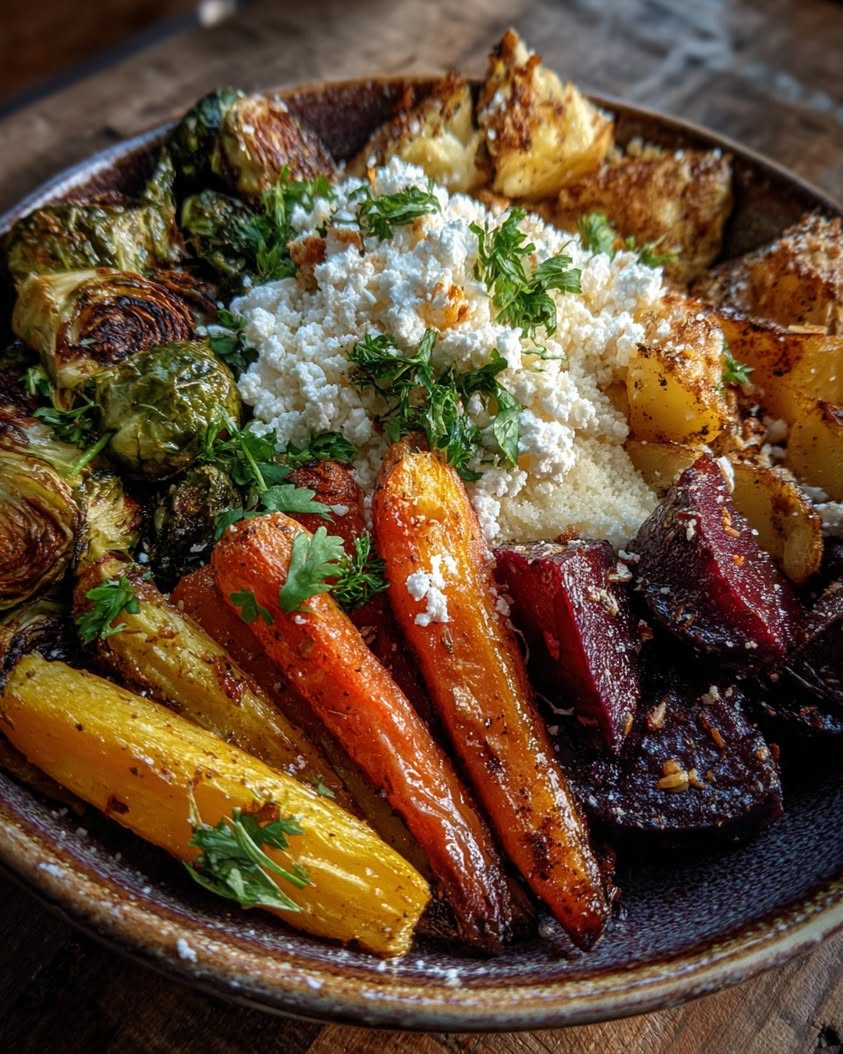
Cozy Roasted Veggie Winter Bowl with Whipped Feta Snow: A Nourishing Seasonal Feast
As the days grow shorter and the air turns crisp, our cravings shift toward meals that provide deep comfort and vibrant nourishment. This Cozy Roasted Veggie Winter Bowl with Whipped Feta Snow answers that call perfectly. It transforms humble root vegetables and hearty greens into a stunning, restaurant-worthy dish that feels like a warm hug in a bowl. Moreover, the magic lies in the contrast between the sweet, caramelized roasted vegetables and the cool, tangy cloud of whipped feta snow.
Imagine pulling a sheet pan from the oven, filled with jewel-toned beets, golden sweet potatoes, and crispy Brussels sprouts, all glistening with herbs and olive oil. Then, you dollop over a luxurious, airy spread made from feta cheese, yogurt, and lemon. The resulting combination is a symphony of textures and temperatures that will delight your senses. Ultimately, this recipe is a celebration of winter produce, proving that healthy food can be incredibly indulgent and satisfying.
This Cozy Roasted Veggie Winter Bowl is more than just a meal; it’s a versatile template for clean eating. You can easily adapt it based on what’s in your pantry or fresh at the market. Consequently, it becomes a reliable go-to for busy weeknights or an impressive centerpiece for a casual dinner party. The process is straightforward, the ingredients are wholesome, and the final presentation is guaranteed to earn compliments. Let’s dive into how to create this beautiful, balanced winter bowl.
Quick Recipe Highlights
- Flavor Profile: This bowl delivers a masterful balance of earthy, sweet, and tangy notes. The roasting process deepens the natural sugars in the vegetables, creating a caramelized sweetness. Meanwhile, the whipped feta snow introduces a bright, salty, and creamy element that cuts through the richness.
- Texture: You experience a wonderful play of textures in every bite. Expect crispy edges on the roasted veggies, tender interiors, and the creamy, cloud-like smoothness of the feta. Additionally, optional garnishes like toasted nuts or seeds can add a final crunch.
- Aroma: While roasting, your kitchen will fill with the irresistible scents of rosemary, thyme, and caramelizing vegetables. The aroma is deeply savory and herbaceous, promising a hearty and satisfying meal.
- Visual Appeal: This dish is a feast for the eyes with its vibrant colors. Think deep ruby beets, orange sweet potatoes, green Brussels sprouts, and white feta snow. The presentation is rustic yet elegant, making it perfect for photographing and sharing.
- Skill Level Needed: This is an accessible recipe for cooks of all levels. The primary techniques are simple chopping and roasting. Furthermore, the whipped feta comes together in minutes with a food processor or blender.
- Special Equipment: You only need basic kitchen tools: a good chef’s knife, a large sheet pan, and a food processor or blender for the whipped feta. Parchment paper is highly recommended for easy cleanup.
Recipe Overview
- Difficulty Level: We rate this recipe as easy because it involves fundamental cooking techniques. The steps are sequential and forgiving. You simply chop vegetables, toss them with oil and seasonings, and roast. Meanwhile, the sauce requires just blending a few ingredients. There’s no intricate timing or advanced skills required.
- Category: This dish fits beautifully into several categories: it’s a wholesome main course, a substantial vegetarian lunch, or a stunning side dish. It’s perfect for plant-forward meals, gluten-free diets, and anyone seeking a nourishing bowl.
- Cuisine: While not tied to one specific tradition, the recipe draws inspiration from Mediterranean and modern wellness cuisines. The use of olive oil, lemon, and herbs is classically Mediterranean. Conversely, the bowl format and focus on vegetables align with contemporary healthy eating trends.
- Cost: This is a very cost-effective meal, especially in winter when root vegetables are plentiful and affordable. The most expensive component is often the feta cheese. Overall, you can feed four people generously for a fraction of the cost of a restaurant meal.
- Season: This recipe is ideal for fall and winter. During these seasons, the featured vegetables like squash, beets, and Brussels sprouts are at their peak flavor and lowest price. The warm, hearty nature of the bowl is perfectly suited for cold weather.
- Occasion: Serve it for a simple family dinner, a healthy meal prep lunch, or a festive vegetarian option at a holiday gathering. Its flexibility and stunning looks make it suitable for both everyday and special occasions.
Why You’ll Love This Cozy Roasted Veggie Winter Bowl
First and foremost, the taste and texture combination is utterly addictive. The roasting process isn’t just cooking; it’s an act of transformation. Hardy vegetables become tender and sweet, with deliciously crispy bits. Paired with the cool, tangy, and impossibly smooth whipped feta, each forkful is a delightful contrast. This isn’t a boring salad; it’s a deeply satisfying culinary experience that makes eating your vegetables a true pleasure. The umami from the roasted veggies and the saltiness from the feta create a flavor profile that feels both gourmet and comforting.
From a convenience standpoint, this Cozy Roasted Veggie Winter Bowl is a weeknight hero. Once the vegetables are chopped and in the oven, your work is mostly done. You can use that time to prepare the whipped feta, set the table, or simply relax. The recipe is also incredibly forgiving. Don’t have sweet potato? Use butternut squash. Out of Brussels sprouts? Try broccoli or cauliflower. This adaptability means you can clear out your fridge and still create a magnificent meal. It’s the ultimate template for reducing food waste while eating well.
Nutritionally, this bowl is a powerhouse. It’s packed with fiber from all the vegetables, which aids digestion and keeps you feeling full. The healthy fats from the olive oil and feta help your body absorb the fat-soluble vitamins present in the veggies. Additionally, you get a spectrum of vitamins and antioxidants: vitamin A from the sweet potatoes, vitamin C from the Brussels sprouts and lemon, and various B vitamins. It’s a meal that fuels your body with clean energy and supports your immune system, which is especially valuable during the winter months.
For entertaining, this dish offers incredible social value. It’s visually impressive, making guests feel special, yet it doesn’t trap you in the kitchen. You can assemble the bowls individually for a plated dinner or serve everything family-style for a more casual vibe. The recipe is naturally vegetarian and gluten-free, so it easily accommodates various dietary needs without requiring separate meals. Serving a beautiful, healthy, and delicious dish like this always sparks conversation and makes any gathering feel more thoughtful and intentional.
Finally, the cost-effectiveness and accessibility are major wins. Root vegetables are some of the most affordable produce items, especially in season. A block of feta and a container of yogurt are pantry staples that go a long way. Compared to ordering takeout or dining out, this Cozy Roasted Veggie Winter Bowl delivers restaurant-quality results at a fraction of the price. It proves that eating vibrant, healthy food doesn’t require a fancy grocery haul or a big budget.
Historical Background and Cultural Significance
The concept of roasting vegetables over fire is as old as cooking itself. Ancient civilizations across the globe utilized this simple method to make hard, fibrous roots and tubers edible and delicious. Our modern Cozy Roasted Veggie Winter Bowl is a direct descendant of these ancient practices. However, the specific combination and presentation are a contemporary invention, reflecting our current love for bowl meals and globally-inspired flavors. The bowl format, or “Buddha bowl,” gained popularity in the last decade as a symbol of balanced, mindful eating, often featuring grains, proteins, and vegetables in one vessel.
Culturally, the ingredients tell a story of seasonal eating and preservation. In many cold-climate cultures, the vegetables featured—beets, potatoes, carrots, hardy greens—were traditionally stored in root cellars to provide sustenance through barren winter months. Roasting them was a practical way to bring warmth and depth to these storage crops. The addition of cheese and yogurt connects the dish to pastoral traditions in the Mediterranean and Middle East, where preserving milk in the form of cheese was essential. This bowl, therefore, represents a fusion of agrarian survival techniques from different parts of the world.
The evolution of this recipe is tied directly to the rise of food media and wellness culture. As home cooks sought ways to make healthy food exciting, the roasted vegetable bowl became a canvas for creativity. The whipped feta snow is a perfect example of this evolution. Traditionally, feta might be crumbled over a salad. By blending it into a light, spreadable cloud, we modernize its application, creating a dramatic textural element that elevates the entire dish. This technique showcases how classic ingredients can be reimagined for contemporary palates and presentations.
Regional variations of this concept are endless. In the American South, you might find a similar bowl with roasted okra, sweet potatoes, and a pepper jelly drizzle. In the Nordic countries, it could feature roasted parsnips and beets with a dollop of sour cream and dill. A Middle Eastern version might include roasted eggplant and chickpeas with a tahini sauce instead of feta. This global adaptability is a testament to the universal appeal of roasted vegetables and creamy, tangy sauces. Our specific Cozy Roasted Veggie Winter Bowl sits at the intersection of these traditions, offering a versatile and beloved template for a nourishing meal.
Ingredient Deep Dive
Sweet Potatoes: Cultivated for thousands of years in Central and South America, sweet potatoes were a staple for ancient civilizations. They made their way to Europe and beyond via explorers. Nutritionally, they are a superstar, loaded with beta-carotene (which converts to vitamin A), fiber, and vitamin C. When selecting sweet potatoes, choose firm ones with smooth, unblemished skin. Avoid any with soft spots or signs of sprouting. Store them in a cool, dark, well-ventilated place—not the refrigerator, as cold temperatures can alter their texture and flavor. For a substitution, try butternut squash, carrots, or regular potatoes.
Brussels Sprouts: These miniature cabbages have a history dating back to ancient Rome, but they were perfected and popularized in Brussels, Belgium, hence their name. They are part of the cruciferous vegetable family, renowned for their cancer-fighting compounds and high levels of vitamins K and C. Look for bright green, firm sprouts that are similar in size for even cooking. Smaller sprouts are often sweeter and more tender. Store them unwashed in a plastic bag in your refrigerator’s crisper drawer. Broccoli or cauliflower florets can be used as a direct substitute if needed.
Beets: Beets have been consumed since antiquity, with both the root and greens being used. They were initially cultivated for their leafy tops; the root itself wasn’t widely consumed until later. They are a great source of folate, manganese, and dietary nitrates, which can support blood flow and athletic performance. Choose beets that are firm with smooth skin and vibrant greens attached if possible. To store, separate the greens from the roots and keep both in separate plastic bags in the fridge. Golden beets can be used for a less messy, equally sweet alternative. If you must substitute, try roasted turnips or carrots for a different but delicious sweetness.
Feta Cheese: Feta is a brined curd cheese with a history protected by European law; true feta must be made in specific regions of Greece. It’s traditionally made from sheep’s milk or a blend with goat’s milk, giving it a distinctive tangy and salty flavor. It provides calcium, protein, and beneficial fats. For the best whipped feta snow, use a block of feta packed in brine, not pre-crumbled, as it tends to be creamier and less dry. Store opened feta in its brine in the refrigerator. For a dairy-free version, try whipped tofu with lemon and nutritional yeast, or a thick plant-based cream cheese.
Greek Yogurt: The straining process that creates thick, creamy Greek yogurt removes much of the whey, resulting in a product higher in protein and lower in sugar than regular yogurt. It contributes to the luxurious texture of the whipped feta snow while adding probiotics for gut health. For this recipe, use full-fat Greek yogurt for the richest texture and flavor. Low-fat versions can make the sauce a bit thinner. Store yogurt in its original container in the refrigerator. As a substitute, sour cream or a thick plant-based yogurt can work, though the flavor profile will shift slightly.
Common Mistakes to Avoid
- Crowding the Sheet Pan: This is the most common error. If you pile vegetables on top of each other, they will steam instead of roast. Consequently, you’ll miss out on the crucial caramelization and crispy edges. Always use two pans if necessary to ensure each piece has space.
- Uneven Vegetable Sizes: Chopping your vegetables into wildly different sizes guarantees uneven cooking. Smaller pieces will burn before larger ones are tender. Take the time to cut them into uniform, bite-sized chunks for perfect, synchronized roasting.
- Skipping the Preheating Step: Placing vegetables into a cold oven is a recipe for soggy results. Always preheat your oven fully. A hot oven immediately sears the outside of the veggies, locking in flavor and creating that desirable crispy texture.
- Using a Blender for Small Quantities: When making the whipped feta snow, a large blender might not effectively process the small amount of ingredients. The mixture will just stick to the sides. A small food processor or immersion blender with a cup attachment is far more effective for this task.
- Not Drying Vegetables Thoroughly: If your washed vegetables are still wet when you toss them with oil, the water will inhibit browning. Always pat your chopped veggies very dry with a clean kitchen towel or paper towels before seasoning and oiling them.
- Forgetting to Season in Layers: Don’t just rely on salt and pepper at the end. Season the vegetables generously with salt before roasting. Salt draws out moisture and enhances the natural flavors from the inside out. Then, you can adjust seasoning again after roasting if needed.
- Over-blending the Whipped Feta: While you want a smooth consistency, over-processing the feta and yogurt can sometimes cause the fats to separate or the mixture to become too thin. Blend just until smooth and creamy, then stop.
- Using Old, Dried-Out Herbs: Dried herbs lose their potency over time. If your dried rosemary or thyme has been in the cupboard for years, it will add little flavor. For the best results in this Cozy Roasted Veggie Winter Bowl, use fresh herbs or ensure your dried herbs are relatively new.
Essential Techniques
High-Heat Roasting: This technique is the backbone of the recipe. Roasting at a high temperature (around 425°F) causes the natural sugars in the vegetables to caramelize quickly. This creates complex, sweet, and savory flavors and a desirable textural contrast between a crispy exterior and a tender interior. The key is ensuring your oven is fully preheated and your vegetables are in a single, uncrowded layer. A visual cue for success is seeing browned, slightly blistered edges on the veggies. The common pitfall is roasting at too low a temperature, which results in steamed, rather than roasted, vegetables.
Creating an Emulsion for the Whipped Feta: Blending the feta, yogurt, lemon juice, and olive oil creates a stable, airy emulsion. The mechanical action of the food processor breaks down the feta’s curds and incorporates air, while the liquids and fats bind together into a smooth, spreadable consistency. Mastering this means using cold ingredients for better structure and blending in stages if needed. A pitfall is adding too much liquid too quickly, which can break the emulsion and make the sauce runny. The visual cue is a homogeneous, pale, and fluffy mixture that holds its shape.
Vegetable Preparation and Sizing: Properly washing, peeling (if desired), and cutting your vegetables is a foundational technique. Uniform sizing is non-negotiable for even cooking. For root vegetables like beets and sweet potatoes, aim for 1-inch cubes. For Brussels sprouts, halve them if they’re medium to large. This ensures that every piece roasts at the same rate. The importance lies in achieving a consistent texture and doneness across all components of your Cozy Roasted Veggie Winter Bowl. The visual cue is a sheet pan filled with evenly sized pieces, which will then roast to a uniform color and tenderness.
Pro Tips for Perfect Cozy Roasted Veggie Winter Bowl
First, toss your different vegetables in separate bowls with oil and seasonings before combining them on the sheet pan. Why? Because beets can stain other veggies, and denser vegetables like sweet potatoes might need a touch more oil than Brussels sprouts. This method gives you precise control.
For the whipped feta snow, ensure your feta and yogurt are cold straight from the fridge. Cold ingredients whip up better and hold their airy texture longer. If the mixture seems too thick, add the lemon juice or olive oil one teaspoon at a time until it reaches your desired consistency.
Don’t toss the beet greens! If your beets come with fresh, vibrant greens attached, wash them thoroughly, chop them, and sauté them with garlic for a delicious, nutrient-packed side or addition to the bowl. This maximizes your ingredients and reduces waste.
Invest in a high-quality, heavy-duty sheet pan. Thin, flimsy pans can warp in high heat and lead to uneven cooking and hot spots. A good pan ensures consistent heat distribution for perfectly roasted vegetables every time.
Let the roasted vegetables rest for 5 minutes after pulling them from the oven. This allows them to reabsorb some of their own steam, making them even more tender and concentrating their flavors before you assemble your winter bowls.
For a beautiful presentation, think about color and height. Place a base of grains or greens in the bowl, then artfully arrange the different colored roasted vegetables in sections. Finally, dollop or swoosh the whipped feta snow over the top, letting it cascade down the sides.
If you’re making this for meal prep, keep the whipped feta snow and the roasted vegetables in separate containers. Assemble your bowls just before eating to maintain the best texture contrast. The veggies can be reheated, while the feta snow should stay cold.
Season aggressively. Winter vegetables can handle—and need—a generous amount of salt and pepper. Taste a piece of vegetable after roasting and don’t be afraid to add another pinch of flaky sea salt or a crack of black pepper before serving.
Variations and Adaptations
Regional Variations: Take your Cozy Roasted Veggie Winter Bowl on a world tour. For a Mediterranean twist, add roasted chickpeas, Kalamata olives, and a drizzle of tahini. For a Mexican-inspired version, use chili powder and cumin on the veggies, and swap the feta snow for a lime crema with cotija cheese. An Asian-fusion bowl could feature miso-glazed vegetables and a whipped tofu-ginger sauce.
Seasonal Adaptations: This bowl is a year-round template. In spring, use asparagus, radishes, and new potatoes. Summer calls for zucchini, bell peppers, and eggplant. Autumn is perfect for the classic version with squash and Brussels sprouts. The base formula of roasted veggies + creamy sauce remains constant, letting the seasons guide your ingredient choices.
Dietary Modifications: For a vegan Cozy Roasted Veggie Winter Bowl, the whipped feta snow can be replaced with a cashew cream blended with lemon juice, nutritional yeast, and salt. For a higher-protein version, add a layer of quinoa, farro, or lentils to the bowl, or top with a perfectly cooked egg or grilled chicken.
Flavor Variations: Experiment with different herb and spice blends on the vegetables. Try smoked paprika and garlic powder, herbes de Provence, or a za’atar seasoning blend. For the sauce, blend in fresh dill, chives, or a roasted garlic clove into the whipped feta for an extra flavor dimension.
Texture Modifications: If you love crunch, incorporate texture throughout. Add toasted walnuts, pecans, or pumpkin seeds as a garnish. Include raw, thinly sliced radishes or apples on top of the warm veggies for a fresh, crisp contrast. A sprinkle of panko breadcrumbs toasted in olive oil can also add a wonderful crunch.
Presentation Alternatives: Instead of a deconstructed bowl, toss all the roasted vegetables directly with the whipped feta snow for a warm, creamy vegetable salad. Alternatively, serve the roasted veggies and feta snow as a hearty dip with pita chips or crusty bread. You can also use the components to fill a warm wrap or pita for a portable lunch.
Serving and Presentation Guide
Plating Techniques: Start with a warm, shallow bowl. Create a base layer, such as a handful of massaged kale, cooked farro, or creamy polenta. This adds substance and catches any delicious juices. Then, arrange the roasted vegetables in distinct, colorful groupings rather than mixing them all together. This intentional placement makes the bowl visually stunning and allows each vegetable’s flavor to shine individually.
Garnishing Ideas: Garnishes are the final touch that elevates your Cozy Roasted Veggie Winter Bowl from homemade to chef-worthy. A drizzle of high-quality extra virgin olive oil or a flavored oil (like chili or truffle) adds sheen. Fresh herbs like chopped parsley, dill, or microgreens bring color and freshness. A sprinkle of crunchy elements like toasted pine nuts, sesame seeds, or homemade croutons provides textural contrast.
Traditional Accompaniments: While delicious on its own, this bowl pairs wonderfully with simple sides. A slice of crusty, warmed artisan bread is perfect for scooping up any remaining whipped feta. A light, acidic side salad with a lemon vinaigrette can balance the richness. For a heartier meal, consider a cup of soup, like a creamy tomato or lentil soup.
Modern Serving Suggestions: For a dinner party, consider a DIY bowl bar. Place the roasted vegetables, whipped feta snow, various grains, greens, and garnishes in separate bowls and let guests build their own masterpiece. This is interactive, fun, and caters to all preferences. For a single serving, pack the components in a divided glass container for a gorgeous, ready-to-eat lunch.
Temperature Considerations: The magic of this dish is the contrast between the hot roasted vegetables and the cold, creamy feta snow. Serve immediately after the veggies come out of the oven. If you must hold the vegetables, keep them warm in a low oven (200°F) on the sheet pan to preserve their texture. Never microwave the whipped feta.
Portion Control Tips: This recipe is naturally filling and nutrient-dense. A good rule of thumb is to fill half your bowl with the roasted vegetables, a quarter with a whole grain or legume base if using, and the remaining quarter with the whipped feta and garnishes. Listen to your hunger cues; the high fiber and protein content are very satiating.
Wine and Beverage Pairing
Wine Pairings: The earthy sweetness of the vegetables and the tangy saltiness of the feta create a versatile palate for wine. A crisp, unoaked white wine like a Sauvignon Blanc or Pinot Grigio cuts through the richness beautifully. Alternatively, a light-bodied red with low tannins, such as a Pinot Noir or Gamay (Beaujolais), complements the roasted flavors without overpowering them. For a more adventurous pairing, try an orange wine, which has the texture to match the creaminess and the acidity to balance the dish.
Non-Alcoholic Alternatives: Sparkling water with a twist of lemon or lime is a classic, refreshing choice that cleanses the palate. For something more special, a homemade shrub (drinking vinegar) with ginger or berry flavors offers a sweet-tart complexity that pairs wonderfully. A lightly sweetened, minty iced herbal tea, like peppermint or lemongrass, also provides a lovely contrast to the savory bowl.
Coffee/Tea Pairings: While not a traditional pairing for the meal itself, a warm cup of herbal tea after dinner would be delightful. A ginger-turmeric tea supports digestion, or a chamomile tea promotes relaxation. If serving this as a brunch item, a medium-roast coffee with low acidity would be a robust and satisfying companion.
Temperature Considerations: Serve white and sparkling wines well-chilled, around 45-50°F. Light reds should be served slightly cooler than room temperature, about 55-60°F. Non-alcoholic sparkling drinks should be ice-cold to provide the most refreshing contrast to the warm food.
Serving Suggestions: Always offer water alongside any other beverage. The saltiness of the feta and the richness of the dish make hydration important. If serving wine, pour a small taste first to allow guests to experience how the pairing works before filling the glass.
Storage and Shelf Life
Storage Methods: Store the components of your Cozy Roasted Veggie Winter Bowl separately for best results. Place cooled roasted vegetables in an airtight container in the refrigerator. Store the whipped feta snow in a separate sealed container. Do not assemble the bowls until you are ready to eat, as the vegetables will release moisture and make the feta sauce runny.
Temperature Requirements: All components must be refrigerated at 40°F or below. The whipped feta snow is a dairy-based product and is highly perishable. The roasted vegetables are also best kept cold to prevent bacterial growth and maintain texture.
Container Recommendations: Use glass containers with tight-fitting lids for both elements. Glass doesn’t absorb odors or stains (important for beets) and allows you to see the contents easily. For the whipped feta, a smaller jar or container is ideal to minimize air exposure, which can cause oxidation and flavor loss.
Signs of Spoilage: For the vegetables, look for any signs of mold, an off (sour or fermented) smell, or excessive slime. The whipped feta snow may develop an unpleasant sour smell (different from its natural tang), visible mold, or separation that can’t be re-incorporated with a stir. When in doubt, throw it out.
Reheating Instructions: Reheat only the roasted vegetable portion. Spread them on a sheet pan and warm in a 350°F oven for 10-15 minutes until heated through. You can also use an air fryer for a quicker result that restores crispiness. Avoid the microwave, as it will make the veggies soggy. The whipped feta should be served cold straight from the fridge.
Freezing Guidelines: Freezing is not recommended for this dish. The roasted vegetables will become mushy and watery upon thawing due to their high water content. The whipped feta snow will separate and become grainy when frozen and thawed. This recipe is best enjoyed fresh or refrigerated for a few days.
Make Ahead Strategies
Prep Timeline: You can prep this Cozy Roasted Veggie Winter Bowl up to 3 days in advance. Day 1: Wash, peel, and chop all vegetables. Store them in separate airtight containers or bags in the fridge. Make the whipped feta snow and store it in a sealed container. Day of Serving: Simply toss the pre-chopped veggies with oil and seasonings, roast, and assemble.
Storage Between Steps: Keep pre-chopped, uncooked vegetables in the fridge. To prevent oxidation (especially for sweet potatoes), you can submerge them in cold water in a container, changing the water daily. The whipped feta snow will actually improve in flavor after resting for a few hours or overnight, as the flavors meld.
Quality Impact Assessment: Pre-chopping vegetables may lead to minimal moisture loss, but it won’t significantly affect the final roasted product. The whipped feta snow holds up exceptionally well. The only element that doesn’t make ahead well is the final roasted vegetable texture, which is best served immediately after cooking or reheated with dry heat.
Assembly Tips: For quick assembly, have all your components ready: warm bowls, reheated veggies, cold feta snow, and garnishes. Build the bowls in an assembly-line fashion. This is especially helpful when serving a group, allowing you to get food on the table quickly and efficiently.
Reheating Guidelines: As noted, reheat vegetables in the oven or air fryer to restore texture. If you must use a microwave, do so in short bursts and place a paper towel underneath the veggies to absorb excess moisture. Never reheat the whipped feta.
Fresh Element Additions: If making ahead, plan to add a fresh element just before serving. This could be a final sprinkle of flaky salt, a crack of black pepper, a drizzle of fresh olive oil, or a handful of just-chopped herbs. These last-minute touches revive the dish and make it taste freshly made.
Scaling Instructions
Halving the Recipe: Halving this Cozy Roasted Veggie Winter Bowl is straightforward. Simply divide all ingredient quantities by two. Use a standard sheet pan; the smaller amount of vegetables will have plenty of room to roast properly. The whipped feta snow can be tricky to halve in a large food processor. Consider making the full batch of sauce, as it keeps well and is delicious on sandwiches, crackers, or as a veggie dip.
Doubling or Tripling: For a crowd, doubling or tripling is easy. Multiply all ingredients accordingly. The key adjustment is equipment: you will need multiple sheet pans. Roast them on separate oven racks and rotate the pans top-to-bottom and front-to-back halfway through cooking to ensure even browning. For the whipped feta, you may need to make it in batches unless you have a very large food processor.
Equipment Adjustments: Scaling up requires more sheet pans and potentially larger mixing bowls for tossing. Ensure your oven can accommodate multiple pans with adequate air circulation. If roasting in batches, keep the first batch warm in a 200°F oven while the second batch cooks. For large-scale whipped feta, a stand mixer with a whisk attachment can work, though a food processor is still preferred for ultimate smoothness.
Timing Modifications: The roasting time may increase slightly when the oven is very full, as the internal temperature can drop. Start checking for doneness at the original time, but be prepared to add 5-10 minutes. The prep time will increase linearly with the amount of vegetables to chop.
Storage Considerations: When scaling up, remember you’ll have more leftovers. Ensure you have enough appropriate-sized containers for refrigerating the components separately. Leftovers will keep for the same duration (3-4 days) regardless of batch size.
Nutritional Deep Dive
Macro Breakdown: This Cozy Roasted Veggie Winter Bowl is a well-balanced meal. The complex carbohydrates from the vegetables provide sustained energy. The healthy fats from the olive oil and feta support hormone health and nutrient absorption. The protein comes primarily from the Greek yogurt and feta cheese, making this a satisfying vegetarian option. The high fiber content from the vegetables promotes digestive health and steady blood sugar levels.
Micronutrient Analysis: This dish is a micronutrient powerhouse. Sweet potatoes deliver a huge dose of vitamin A (as beta-carotene), essential for vision and immunity. Brussels sprouts are rich in vitamins K and C, crucial for bone health and collagen production. Beets provide folate and manganese. The dairy components add calcium and vitamin B12. The olive oil and herbs contribute antioxidants and anti-inflammatory compounds.
Health Benefits: Regular consumption of meals like this supports overall wellness. The combination of fiber, antioxidants, and healthy fats can help reduce inflammation, support heart health, and improve gut microbiome diversity. The low glycemic index of the vegetables helps manage energy levels. It’s a meal that truly nourishes the body from the inside out.
Dietary Considerations: This recipe is naturally gluten-free and vegetarian. It can be adapted to be vegan (see adaptations) or higher in protein. For those watching sodium, you can reduce the salt added to the vegetables and use a lower-sodium feta cheese. The dish is also relatively low in saturated fat, especially if you use a moderate amount of feta.
Portion Analysis: One serving provides a substantial volume of food, which is great for satiety. The bulk comes from low-calorie, high-fiber vegetables, making it a volume eater’s dream. The whipped feta snow adds richness and flavor without requiring a huge quantity, allowing you to enjoy creamy indulgence in a controlled portion.
Weight Management Tips: This bowl is an excellent choice for weight management due to its high fiber and protein content, which keep you full for hours. To make it even lighter, you can increase the ratio of non-starchy vegetables (like Brussels sprouts) to starchy ones (like sweet potato) and use a light hand with the olive oil when roasting.
Dietary Adaptations
Gluten-free: This recipe is naturally gluten-free as written. Simply ensure that any packaged ingredients, like vegetable broth if used for a grain base, are certified gluten-free. There are no hidden sources of gluten in the core components of the roasted veggies or whipped feta snow.
Dairy-free: To create a dairy-free Cozy Roasted Veggie Winter Bowl, replace the whipped feta snow with a creamy plant{“success”:true,”message”:”Recipe created successfully”,”post_id”:7857,”tasty_recipe_id”:7857,”shortcode”:” Print
Roasted Veggie Winter Bowl with Whipped Feta Snow
Description
A cozy, hearty bowl featuring roasted seasonal vegetables topped with a light, creamy whipped feta that resembles fresh snow, perfect for warming up on cold days.
Ingredients
For the Crust:
- 2 cups butternut squash, cubed
- 1 large sweet potato, peeled and cubed
- 1 cup Brussels sprouts, halved
- 1 red onion, sliced
- 2 tablespoons olive oil
- 1 teaspoon smoked paprika
- 1/2 teaspoon garlic powder
- Salt and black pepper to taste
- 1 cup cooked quinoa
- 4 ounces feta cheese
- 1/4 cup Greek yogurt
- 1 tablespoon lemon juice
- Fresh parsley for garnish
Instructions
1. Prepare the Crust:
- Preheat the oven to 400°F (200°C). Line a baking sheet with parchment paper.
- In a large bowl, toss butternut squash, sweet potato, Brussels sprouts, and red onion with olive oil, smoked paprika, garlic powder, salt, and pepper until evenly coated.
- Spread the vegetables in a single layer on the baking sheet. Roast for 25-30 minutes, stirring halfway, until tender and lightly browned.
- While the vegetables roast, prepare the whipped feta: In a food processor, blend feta cheese, Greek yogurt, and lemon juice until smooth and fluffy, about 1-2 minutes.
- To assemble, divide cooked quinoa among four bowls. Top with roasted vegetables, then dollop with whipped feta. Garnish with fresh parsley and serve warm.
Notes
You can customize the seasonings to taste.

I’m Billy, a classically trained culinary school graduate from The Culinary Institute of America with over 12 years in the restaurant industry and over 19 years of cooking experience.