
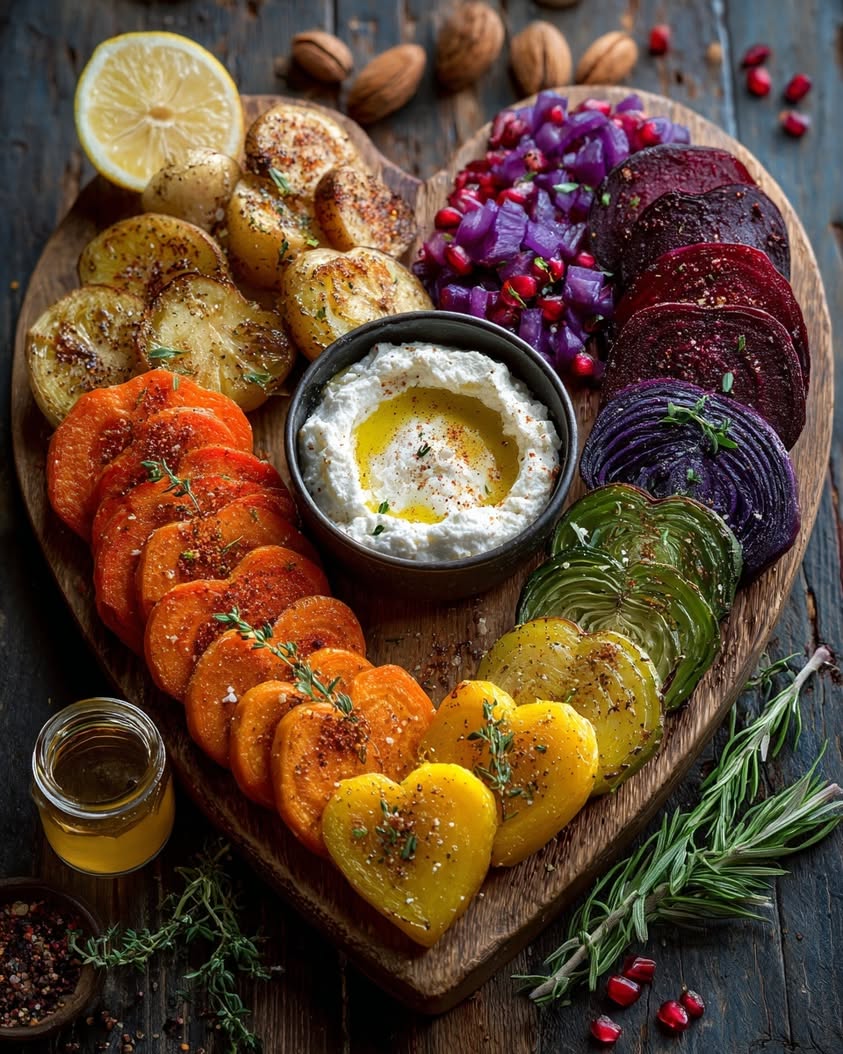
Root Veggie Valentine Board with Creamy Ricotta & Honey: A Show-Stopping Centerpiece for Your Table
Imagine a stunning platter that captures the essence of the season and the warmth of a shared meal. This Root Veggie Valentine Board with Creamy Ricotta & Honey is exactly that. It transforms humble root vegetables into a vibrant, edible masterpiece. The board features a beautiful array of roasted beets, carrots, and parsnips arranged around a cloud of creamy ricotta. Ultimately, a generous drizzle of golden honey ties everything together with a touch of sweetness.
The beauty of this recipe lies in its simplicity and its impressive presentation. Each component shines on its own but creates magic together. You get the earthy sweetness of caramelized roasted vegetables. Then, you experience the cool, mild tang of the ricotta. Finally, the floral honey adds a luxurious finish. This board is perfect for a romantic Valentine’s dinner, a cozy gathering with friends, or even a unique appetizer for a special occasion. It invites conversation and sharing, turning a meal into an interactive experience.
Furthermore, this dish celebrates winter produce at its peak. Root vegetables develop incredible depth of flavor when roasted. Their natural sugars caramelize, creating crispy edges and tender, flavorful interiors. Paired with the rich dairy and sweet honey, every bite is a delightful contrast. This Root Veggie Valentine Board is not just food; it’s a centerpiece that tells a story of seasonality, care, and connection.
Quick Recipe Highlights
- Flavor Profile: This board offers a beautiful harmony of savory, sweet, and earthy notes. The roasted root vegetables provide a deep, caramelized sweetness. Meanwhile, the creamy ricotta adds a mild, tangy contrast. Finally, the honey introduces a bright, floral sweetness that elevates the entire dish.
- Texture: You will enjoy a wonderful play of textures. The roasted veggies are tender on the inside with slightly crisp, caramelized edges. The ricotta is luxuriously smooth and spreadable. Additionally, optional crunchy elements like toasted nuts or seeds can add another delightful layer.
- Aroma: As the vegetables roast, your kitchen will fill with the warm, sweet scent of caramelizing sugars and earthy roots. The honey adds a light, floral note. When combined, these aromas create an incredibly inviting and comforting atmosphere.
- Visual Appeal: This board is a feast for the eyes with its vibrant colors. Deep red beets, orange carrots, and pale parsnips create a stunning rainbow. The white ricotta and golden honey drizzle make the colors pop even more. It’s a visually striking presentation that requires minimal effort.
- Skill Level Needed: This is an accessible recipe for cooks of all levels. The primary techniques are simple vegetable prep and roasting. Arranging the board is a creative, no-stress process. Consequently, even a beginner can create a show-stopping result with this guide.
- Special Equipment: You only need basic kitchen tools. A good baking sheet, a sharp knife, and a cutting board are essential. A mixing bowl for the ricotta is helpful. Most importantly, you need a beautiful board or large platter for serving.
Recipe Overview
- Difficulty Level: We rate this Root Veggie Valentine Board as easy. The steps are straightforward and involve fundamental cooking skills like chopping and roasting. There is no complex sauce work or precise baking required. The assembly is intuitive and forgiving, allowing for personal creativity.
- Category: This dish fits perfectly into several categories. It is an excellent appetizer or starter for a multi-course meal. Alternatively, it can serve as a light main course for a vegetarian lunch or dinner. It also excels as a shareable centerpiece for grazing-style entertaining.
- Cuisine: The dish draws inspiration from rustic Mediterranean and contemporary American farm-to-table traditions. The combination of roasted vegetables, fresh cheese, and honey is classic in Mediterranean cooking. The presentation as a curated board is a modern, social dining trend popular worldwide.
- Cost: This is a very cost-effective recipe, especially in the winter months. Root vegetables like carrots, beets, and parsnips are typically inexpensive. Ricotta cheese and honey are also budget-friendly staples. You can create an impressive platter for a fraction of the cost of a charcuterie board.
- Season: This board is ideal for late fall through winter. This is when root vegetables are at their sweetest and most abundant after a frost. The warm, roasted elements are comforting in cooler weather. However, you can adapt it year-round with seasonal produce.
- Occasion: It is perfect for Valentine’s Day as a shared, romantic meal. It also works wonderfully for Galentine’s celebrations, holiday parties, or weekend entertaining. Essentially, it suits any occasion where you want food to be both delicious and visually captivating.
Why You’ll Love This Recipe
First, the taste and texture appeal is undeniable. Each component on this Root Veggie Valentine Board brings something unique to your palate. The roasted vegetables offer a deep, satisfying umami and natural sweetness. The ricotta provides a creamy, cooling counterpoint that balances the warmth of the veggies. Moreover, the honey drizzle adds a luxurious finish that makes every bite special. The combination is sophisticated yet incredibly comforting, pleasing a wide range of tastes from adventurous foodies to picky eaters.
Next, consider the convenience and preparation benefits. This recipe is largely hands-off once the vegetables are in the oven. You can prepare the ricotta mixture and garnishes while they roast. The assembly requires no cooking skills, just an eye for color and arrangement. Therefore, you can host and entertain without being stuck in the kitchen. It’s a stress-free way to create a meal that looks like you spent hours, when in reality, the oven does most of the work.
Furthermore, the nutritional advantages are significant. Root vegetables are packed with essential vitamins, minerals, and dietary fiber. They support digestive health and provide sustained energy. Ricotta is a great source of protein and calcium. Using honey as a natural sweetener is a better alternative to refined sugars. This board is a celebration of whole, nourishing foods that make you feel good. It’s a delicious way to eat your vegetables without feeling like you’re sacrificing flavor.
Additionally, the social and entertaining value is through the roof. A shared board like this Root Veggie Valentine Board naturally encourages conversation and interaction. Guests can customize their bites, choosing their favorite combinations of veggies, cheese, and honey. It breaks down formal dining barriers and creates a relaxed, communal atmosphere. For a date night, it becomes a fun, interactive dining experience that is more engaging than two separate plates.
Finally, the cost-effectiveness and accessibility make this a go-to recipe. The ingredients are humble and easy to find at any grocery store, even on a budget. You can easily scale the recipe up or down depending on your guest count. There’s no need for expensive cuts of meat or exotic imports. This board proves that eating beautifully and healthily does not require a lavish budget, just a little creativity and care.
Historical Background and Cultural Significance
The concept of combining roasted vegetables with cheese and honey has ancient roots. Mediterranean and Middle Eastern cultures have paired fresh cheeses with honey for millennia. Similarly, roasting root vegetables over fire is one of humanity’s oldest cooking methods. These combinations were born from necessity and preservation, using readily available, storable ingredients. Over time, these simple pairings were refined into beloved dishes that celebrated local terroir and seasonal bounty.
Culturally, shared platters have always signified community and generosity. The modern “board” or “platter” trend, including this Root Veggie Valentine Board, draws directly from traditions like meze, antipasto, and smorgasbord. These styles of eating emphasize variety, sharing, and the social aspect of the meal. Presenting food on a beautiful board elevates simple ingredients and turns eating into an event. It honors the historical practice of breaking bread together, literally and figuratively.
The recipe has evolved significantly with contemporary dining trends. The specific focus on root vegetables reflects the modern farm-to-table and vegetable-forward movement. Chefs and home cooks alike are highlighting seasonal produce as the star. The “Valentine” aspect adds a layer of intentional presentation, using color and arrangement to convey care and celebration. This evolution shows how traditional flavor combinations can be repackaged for modern sensibilities and occasions.
Regional variations of this concept are endless. In the Eastern Mediterranean, you might find roasted carrots with labneh and date syrup. In Italy, roasted radicchio with ricotta and balsamic glaze is a classic. A French version could feature roasted salsify with fromage blanc and chestnut honey. Our Root Veggie Valentine Board is a versatile template. You can adapt it based on your local produce and cultural preferences, making it a truly global dish with a personal touch.
Ingredient Deep Dive
Let’s start with the root vegetables. Beets, carrots, and parsnips are the classic trio for this board. Beets have been cultivated since ancient times for both their roots and greens. They are rich in folate, manganese, and antioxidants like betalains. Choose beets that are firm with smooth skin. Store them unwashed in the refrigerator. You can substitute golden beets to prevent staining, or use sweet potatoes for a different flavor profile.
Carrots are one of the most widely consumed vegetables globally. Originally purple or white, the orange carrot was developed in the Netherlands. They are an excellent source of beta-carotene, which converts to vitamin A. Look for firm carrots with bright color and fresh greens if attached. Store them in the crisper drawer. Parsnips, a cousin of the carrot, offer a sweet, nutty flavor that intensifies after a frost. They provide fiber, vitamin C, and potassium.
Next, the creamy ricotta cheese. Ricotta is an Italian whey cheese with a mild, slightly sweet flavor and a grainy, soft texture. Traditionally, it was made from the whey leftover from producing other cheeses. It is a good source of protein and calcium, and is lower in fat than many hard cheeses. For the best flavor and texture, seek out whole-milk ricotta from the dairy section. Avoid non-fat versions for this board, as they can be grainy.
Finally, the honey. Honey is one of the world’s oldest sweeteners, used by humans for over 8,000 years. Its flavor varies dramatically based on the flowers visited by the bees. For this Root Veggie Valentine Board, a mild, floral honey like clover or orange blossom works beautifully. Honey contains antioxidants and has antimicrobial properties. Always choose raw, local honey if possible for the most complex flavor and potential local allergy benefits. As a substitute, maple syrup or a reduced balsamic glaze can offer a different kind of sweetness.
Common Mistakes to Avoid
- Overcrowding the Pan: Roasting vegetables too close together steams them instead of roasting. Consequently, you will get soggy, steamed veggies instead of caramelized ones with crispy edges. Always use a large enough baking sheet and spread the pieces in a single layer.
- Neglecting to Dry the Veggies: Moisture is the enemy of crispness. After washing your root vegetables, pat them thoroughly dry with a clean kitchen towel. This extra step ensures proper roasting and better browning on the exterior.
- Using Cold Ricotta: Serving ricotta straight from the refrigerator makes it dense and less flavorful. Always let your ricotta come to room temperature for at least 20-30 minutes before serving. This allows its creamy texture and mild flavor to fully shine.
- Skipping the Seasoning: Root vegetables need ample seasoning before roasting. Do not be shy with salt and pepper. Additionally, tossing them with a high-heat oil like avocado or grapeseed oil is crucial for even cooking and browning.
- Cutting Vegetables Inconsistently: If your vegetable pieces are different sizes, they will cook unevenly. Smaller pieces will burn before larger ones are tender. Aim for uniform, bite-sized chunks or wedges to ensure everything finishes roasting at the same time.
- Drizzling Honey Too Early: If you drizzle the honey over the entire board before serving, it can make the roasted vegetables soggy and the ricotta runny. Instead, serve the honey in a small jar or pitcher on the side, or drizzle it at the very last moment.
- Forgetting Acid Balance: While the honey provides sweetness, the dish can benefit from a touch of acidity. A squeeze of lemon juice over the roasted veggies or a sprinkle of zest in the ricotta can brighten all the flavors and prevent the board from tasting too heavy.
- Using a Warped or Thin Baking Sheet: A poor-quality baking sheet can cause uneven cooking and hot spots. Invest in a heavy-duty, rimmed baking sheet (often called a half-sheet pan) for the most consistent and reliable roasting results every time.
Essential Techniques
The first essential technique is uniform vegetable prep. Consistent sizing is non-negotiable for even cooking. Wash and scrub your vegetables well, then dry them thoroughly. Peel carrots and parsnips, but you can leave beet skins on if they are tender. Cut them into similar shapes—wedges for beets, sticks or rounds for carrots and parsnips. The goal is pieces that are hearty enough to hold their shape but small enough to be bite-sized after roasting.
Next, mastering the roast is key. Toss your dried, cut vegetables generously with oil, salt, and pepper. Use your hands to ensure every surface is coated. Preheat your baking sheet in the oven for a few minutes before adding the veggies. This hot-start method gives you instant sizzle and better caramelization. Spread the vegetables in a single, uncrowded layer. Roast until they are tender when pierced with a fork and have developed deep, browned spots. Rotate the pan halfway through for even browning.
Finally, board assembly is a technique in itself. Start by placing your bowl of ricotta on the board first. This acts as your anchor. Then, arrange the cooled roasted vegetables in groups or cascading piles around the cheese. Leave some space between items for visual appeal. Scatter any garnishes like fresh herbs, nuts, or seeds in the empty spaces. The goal is a composition that looks abundant and artful, not messy or overcrowded. Remember, you eat with your eyes first.
Pro Tips for Perfect Root Veggie Valentine Board
First, roast different vegetables on separate trays if needed. Beets can stain other veggies, so roasting them alone preserves the vibrant colors of the carrots and parsnips. This also allows you to pull each vegetable out at its perfect doneness time.
Second, enhance your ricotta. Before serving, stir in a pinch of salt, a crack of black pepper, and a teaspoon of lemon zest. This simple step elevates the ricotta from a plain ingredient to a seasoned, flavorful component of the board.
Third, play with fresh herbs for garnish. While the vegetables roast, chop fresh soft herbs like dill, parsley, or chives. Scattering them over the finished board adds a pop of green color and a fresh, aromatic element that cuts through the richness.
Fourth, add texture with nuts. Toasted walnuts, pecans, or Marcona almonds provide a crucial crunchy contrast to the soft vegetables and cheese. Toast them in a dry pan until fragrant, then let them cool before adding to the board.
Fifth, consider a savory sprinkle. A flaky finishing salt like Maldon or a sprinkle of za’atar or smoked paprika over the roasted vegetables just before serving can add an incredible layer of complex flavor.
Sixth, offer bread or crackers. Provide slices of a crusty baguette, crostini, or sturdy crackers on the side. These act as vehicles for the ricotta and roasted veggies, making the board more substantial and interactive for your guests.
Variations and Adaptations
For regional variations, look to different culinary traditions. A Middle Eastern twist could feature roasted eggplant and zucchini with labneh, pistachios, and pomegranate molasses. An Italian version might include roasted radicchio, figs, and ricotta salata with a balsamic reduction. A North African-inspired board could use roasted carrots and squash with harissa-spiced yogurt and dates.
Seasonal adaptations are easy and encouraged. In spring, use asparagus, baby carrots, and new potatoes. Summer calls for zucchini, bell peppers, and cherry tomatoes. Fall is perfect for different squash varieties, Brussels sprouts, and sweet potatoes. The template of roasted produce + creamy element + sweet drizzle remains constant, but the ingredients rotate with the seasons.
Dietary modifications are straightforward. For a vegan board, substitute the ricotta with a cashew cream or a thick, plant-based yogurt. Use maple syrup or agave instead of honey. Ensure all other garnishes are plant-based. For a gluten-free board, simply serve with gluten-free crackers or bread. The core vegetables are naturally gluten-free.
Flavor variations can come from your spice cabinet. Toss vegetables with different spices before roasting. Try cumin and coriander for a warm, earthy note, or smoked paprika and garlic powder for a smoky flavor. Infuse the ricotta with fresh chopped herbs, roasted garlic, or even a bit of truffle zest for a luxurious touch.
Serving and Presentation Guide
Plating techniques start with choosing the right canvas. A large wooden board, a slate slab, or a beautiful ceramic platter all work wonderfully. Place your bowl of ricotta slightly off-center to create visual interest. Arrange the vegetable piles in groups, allowing their distinct colors to create natural sections on the board. Let some vegetables spill into each other for a casual, abundant look.
Garnishing is the final touch that makes the board special. Beyond herbs and nuts, consider edible flowers for a Valentine’s touch, pomegranate arils for jewel-like color and crunch, or microgreens for a delicate finish. A small bowl of high-quality olive oil for dipping is also a lovely addition. Remember, garnishes should be edible and complement the flavors.
Traditional accompaniments include crusty bread, as mentioned, but also consider other dippers. Endive leaves, cucumber rounds, or blanched green beans make excellent low-carb vehicles. For a heartier board, add slices of cured meat or marinated olives on the side, keeping them separate for dietary preferences.
Temperature considerations are important. Serve the roasted vegetables warm or at room temperature. They should not be piping hot, as this will melt the ricotta. The ricotta should be cool or room temperature. This contrast in temperatures is part of the sensory pleasure of the dish.
Wine and Beverage Pairing
Wine pairings for this board should complement the earthy sweetness of the vegetables and the creamy ricotta. A crisp, dry rosé with good acidity cuts through the richness beautifully. A light-bodied Pinot Noir with earthy notes mirrors the flavors of the beets and mushrooms. For white wine lovers, an unoaked Chardonnay or a Grüner Veltliner offers a clean, mineral finish that won’t overpower the dish.
Non-alcoholic alternatives can be just as thoughtful. Sparkling water with a twist of orange or grapefruit zest is refreshing. A lightly sweetened herbal iced tea, like hibiscus or mint, pairs wonderfully. For a special touch, create a “mocktail” with ginger beer, a splash of lemon, and a sprig of rosemary.
Coffee and tea pairings work well if serving this board for a brunch or lunch. A medium-roast coffee with low acidity complements the caramelized vegetables. A pot of Earl Grey tea, with its bergamot notes, can highlight the floral character of the honey. Serve these beverages after the meal as a digestif rather than alongside.
Storage and Shelf Life
Storage methods depend on the component. Store leftover roasted vegetables in an airtight container in the refrigerator for up to 4 days. The ricotta should be kept in its own sealed container. It is best to store components separately to maintain their individual textures. The assembled board is meant for immediate consumption and does not store well once dressed.
Reheating instructions are simple. To revive roasted vegetables, spread them on a baking sheet and warm them in a 350°F oven for 5-10 minutes. This method helps re-crisp them better than a microwave, which can make them soggy. Do not reheat the ricotta; serve it cold or at room temperature.
Freezing guidelines are not recommended for this specific dish. Roasted vegetables can become mushy upon thawing, and ricotta does not freeze well due to texture separation. This is a fresh dish best enjoyed within a few days of preparation.
Make Ahead Strategies
Prep timeline can save you stress on the day of your event. You can wash, peel, and cut the root vegetables 1 day in advance. Store them submerged in water in airtight containers in the refrigerator to prevent oxidation. Dry them thoroughly before roasting. The ricotta can also be seasoned and stored in the fridge a day ahead.
You can fully roast the vegetables up to 2 days in advance. Let them cool completely, then store them in the refrigerator. Bring them to room temperature before serving, or give them a quick warm-up in the oven to refresh their texture. This makes assembly on the day of your gathering incredibly fast and easy.
Fresh element additions should always be done last. Chop your herbs, toast your nuts, and prepare any other garnishes the day of serving. Assemble the board no more than 30 minutes before guests arrive to keep everything looking and tasting its freshest. Have your honey ready to drizzle at the final moment.
Scaling Instructions
Halving the recipe is simple for a more intimate dinner for two. Use one baking sheet for a mix of vegetables. Reduce the ricotta to about 1 cup. All cooking times will remain roughly the same, but keep a closer eye on the oven as a smaller quantity may cook slightly faster. Use a smaller board or platter for serving.
Doubling or tripling for a party is easy. The key is to use multiple baking sheets and roast in batches if your oven cannot accommodate them all on separate racks with good air circulation. Rotate the sheets top to bottom and front to back halfway through cooking. Use a very large board or multiple boards to create a stunning display.
Equipment adjustments are necessary when scaling. For a large batch, you may need additional mixing bowls for tossing vegetables. Ensure you have enough serving utensils for multiple boards. Timing modifications are minimal for roasting, but assembly time will increase. Allow yourself extra time to artfully arrange the larger quantity of food.
Nutritional Deep Dive
Macro breakdown for a typical serving is favorable. The roasted vegetables provide complex carbohydrates and fiber for sustained energy. The ricotta contributes protein and healthy fats. The honey adds simple carbohydrates for quick energy, but in a modest amount. This combination offers a balanced mix of macros that is satisfying without being overly heavy.
Micronutrient analysis reveals a wealth of vitamins and minerals. Beets are rich in folate and manganese. Carrots provide a huge dose of vitamin A (as beta-carotene). Parsnips offer vitamin C and potassium. Ricotta contributes calcium and phosphorus for bone health. Together, they create a nutrient-dense plate that supports overall wellness.
Health benefits are numerous. The high fiber content supports digestive health and promotes satiety. The antioxidants in the vegetables combat oxidative stress. The calcium supports bone density. The natural sugars provide energy without the crash associated with refined sugars. This dish is a testament to how delicious food can also be powerfully good for you.
Dietary Adaptations
For a gluten-free board, this recipe is naturally compliant. Simply ensure that any bread, crackers, or other accompaniments you serve on the side are certified gluten-free. All the core components—vegetables, ricotta, honey, herbs, and nuts—are inherently gluten-free.
For a dairy-free or vegan adaptation, replace the ricotta. A thick, plain, unsweetened coconut yogurt or a homemade cashew cream are excellent substitutes. For the cashew cream, soak raw cashews, blend them with water, lemon juice, and salt until ultra-smooth. Use maple syrup or agave nectar instead of honey to keep it plant-based.
For a low-carb or keto version, focus on the lowest-carb vegetables. Use more radishes, turnips, and a moderate amount of carrots, while reducing or omitting beets and parsnips. Increase the proportion of ricotta for fat and protein. Use a sugar-free sweetener syrup instead of honey, or simply omit the sweet element and use a flavored olive oil.
For a Paleo adaptation, omit the dairy-based ricotta. Use a coconut-based alternative as mentioned above. Ensure the honey is raw and unprocessed. All vegetables and herbs are Paleo-friendly. This adaptation stays true to the board’s spirit while aligning with Paleo dietary principles.
Troubleshooting Guide
If your vegetables are soggy, the culprit is likely overcrowding on the pan or insufficient drying before roasting. For next time, ensure pieces are dry and spaced out. To salvage them, you can spread the cooked veggies on a fresh pan and broil for a few minutes to crisp up the edges, watching carefully to prevent burning.
If the flavors taste flat, you probably underseasoned. Seasoning should happen at multiple stages: on the raw vegetables before roasting, a light sprinkle on the ricotta, and a final flourish on the assembled board. To fix a finished board, sprinkle everything with a flaky finishing salt and a squeeze of fresh lemon juice to brighten it up.
If your ricotta is too watery, some brands separate. You can drain it in a fine-mesh sieve lined with cheesecloth for 30 minutes before using. If it’s already seasoned and loose, stir in a tablespoon of plain breadcrumbs or crushed nuts to help absorb excess moisture and add body.
If the vegetables are burning before cooking through, your oven temperature may be too high, or your pieces may be too small. Check your oven calibration with a thermometer. Next time, cut vegetables into slightly larger chunks and roast at a slightly lower temperature (400°F instead of 425°F) for a longer time.
Recipe Success Stories
Community feedback on this Root Veggie Valentine Board has been overwhelmingly positive. Many readers report it becoming their go-to “impress with less stress” recipe for date nights and dinner parties. One home cook shared how she used golden beets and purple carrots to create a stunning, non-staining board for a baby shower, and it was the hit of the party.
Variation successes are fun to hear about. A reader from California added roasted Meyer lemon slices to her board for a citrusy twist. Another incorporated black garlic into the ricotta for a deep, umami flavor that guests couldn’t stop talking about. These adaptations show the recipe’s fantastic flexibility.
Photography tips from successful makers include using natural light near a window and shooting from directly above to capture the beautiful board layout. Adding a few rustic elements in the frame, like a linen napkin or a wooden honey dipper, can enhance the cozy, inviting feel of the photo.
Frequently Asked Questions
Can I use pre-cut vegetables from the store? Yes, you can absolutely use pre-cut vegetables to save time. However, they are often cut smaller and may roast faster, so keep a close eye on them. Also, pre-cut veggies can dry out faster, so check them a few minutes early to avoid overcooking.
What can I use instead of ricotta cheese? Great alternatives include goat cheese, mascarpone, whipped feta, or a thick Greek yogurt or labneh. Each will bring a different flavor profile—goat cheese is tangier, mascarpone is richer—so choose based on your preference.
How do I prevent the beets from staining everything? Roast the beets on a separate baking sheet. You can also wrap them individually in foil packets before roasting, which contains the juices. Using golden beets is the most effective stain-free solution.
Can I make this board for a large crowd? Absolutely. It scales beautifully. Roast vegetables in batches to avoid steaming. Use a very large board or set up multiple boards around your serving area. Consider setting up a “build-your-own” station with bowls of components.
Is this served as an appetizer or a main course? It can be either! For 4-6 people as a main course with plenty of bread, it’s satisfying. For a larger group or as part of a multi-course meal, it functions perfectly as a substantial and shareable starter.
How far in advance can I assemble the board? Assemble the board no more than 30 minutes before serving. You can have all components prepped and ready to go, but putting them on the board too early can lead to dried-out vegetables and wilted herbs.
My honey is very thick and crystallized. What should I do? Place the honey jar (without the lid) in a bowl of warm water for 5-10 minutes. The gentle heat will liquefy the honey without damaging its beneficial properties. Do not microwave it, as that can overheat and degrade the honey.
What are the best herbs to use for garnish? Soft, fresh herbs work best. Dill, parsley, chives, and thyme are excellent choices. Avoid woody herbs like rosemary as a raw garnish, as they can be too strong. You can toss a sprig of rosemary in with the vegetables while roasting for flavor.
Can I add meat to this board? Certainly. For a non-vegetarian version, add folds of prosciutto, slices of salami, or chunks of grilled chicken on the side. Keep them separate from the vegetarian components so guests can choose their own combinations.
What’s the best way to reheat leftovers? Reheat roasted vegetables in the oven or toaster oven at 350°F until warm. This helps restore some crispness. The ricotta is best served cold or at room temperature, so do not reheat it. Store and reheat components separately.
Additional Resources
For related recipes, explore other vegetable-forward boards like a Summer Stone Fruit and Burrata Board or a Fall Harvest Board with Squash and Apples. If you love the roasted vegetable technique, try our recipe for Balsamic Glazed Roasted Root Vegetables or a hearty Roasted Vegetable Grain Bowl.
For technique guides, we have detailed posts on How to Roast Any Vegetable Perfectly and Knife Skills 101: Chopping Vegetables Safely and Efficiently. These will help you master the fundamentals that make this and many other recipes successful.
For ingredient information, deep dives on seasonal produce, guides to different types of honey, and a breakdown of fresh cheeses are available on our site. Understanding your ingredients empowers you to shop confidently and make smart substitutions.
For equipment recommendations, a list of our favorite kitchen essentials includes the best heavy-duty baking sheets, quality wooden cutting boards, and versatile serving platters. Having the right tools makes cooking more enjoyable and your results more consistent.
{“success”:true,”message”:”Recipe created successfully”,”post_id”:8687,”tasty_recipe_id”:8687,”shortcode”:” Print
Root Veggie Valentine Board with Creamy Ricotta & Honey
Description
A vibrant and shareable board featuring roasted root vegetables arranged in a heart shape, served with creamy ricotta, a drizzle of honey, and fresh herbs for a sweet and savory Valentine’s Day appetizer or light meal.
Ingredients
For the Crust:
- 2 large beets, peeled and sliced into 1/4-inch rounds
- 3 medium carrots, peeled and sliced into 1/4-inch rounds
- 2 parsnips, peeled and sliced into 1/4-inch rounds
- 1 sweet potato, peeled and sliced into 1/4-inch rounds
- 2 tablespoons olive oil
- 1 teaspoon salt
- 1/2 teaspoon black pepper
- 1 teaspoon dried thyme
- 1 cup whole milk ricotta cheese
- 2 tablespoons honey, plus extra for drizzling
- 1 tablespoon fresh rosemary, chopped
- Fresh thyme sprigs for garnish
- Optional: crusty bread or crackers for serving
Instructions
1. Prepare the Crust:
- Preheat oven to 400°F (200°C). Line two baking sheets with parchment paper.
- In a large bowl, toss the beet, carrot, parsnip, and sweet potato slices with olive oil, salt, pepper, and dried thyme until evenly coated.
- Arrange the vegetable slices in a single layer on the prepared baking sheets, keeping similar vegetables together for even roasting. Roast for 25-30 minutes, flipping halfway, until tender and slightly caramelized.
- While vegetables roast, mix the ricotta with 2 tablespoons of honey in a small bowl until smooth and creamy.
- On a large serving board or platter, spread the creamy ricotta mixture in the center. Arrange the roasted vegetables around the ricotta in a heart shape, alternating colors for visual appeal.
- Drizzle the vegetables lightly with additional honey, sprinkle with fresh rosemary, and garnish with thyme sprigs. Serve immediately with optional bread or crackers.
Notes
You can customize the seasonings to taste.

I’m Billy, a classically trained culinary school graduate from The Culinary Institute of America with over 12 years in the restaurant industry and over 19 years of cooking experience.