
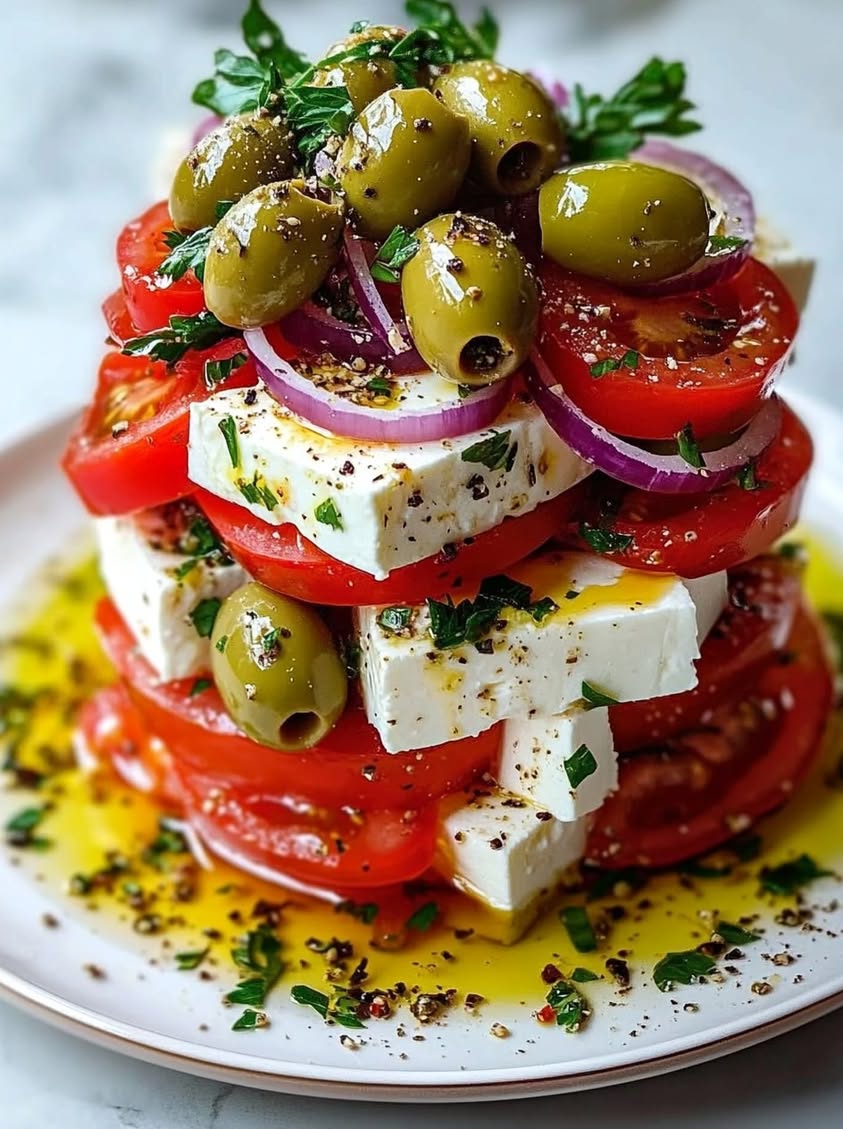
Santorini Feta Tomato Tower with Herb Olive Oil Recipe: A Taste of the Greek Isles
Imagine capturing the essence of a sun-drenched Greek island in a single, stunning dish. This Santorini Feta Tomato Tower with Herb Olive Oil Recipe does exactly that. It layers the bold, salty creaminess of feta with the juicy sweetness of ripe tomatoes, all drizzled with a fragrant, herb-infused olive oil. Consequently, you get a no-cook appetizer that feels both rustic and elegant. It is a celebration of fresh, simple ingredients that sing with Mediterranean flavor.
Moreover, this recipe is incredibly versatile. You can serve it as a light lunch, a sophisticated starter for a dinner party, or even as part of a vibrant mezze platter. The visual appeal is undeniable; the towering stack of red and white, glistening with green-flecked oil, is a guaranteed showstopper. Ultimately, it proves that the most memorable dishes often come from the fewest ingredients, prepared with care and an eye for beauty.
Finally, this Santorini-style dish is more than just food; it is an experience. It transports you to a cliffside taverna overlooking the Aegean Sea with every bite. The combination of textures and flavors is both refreshing and deeply satisfying. This recipe is your passport to a Greek culinary adventure, requiring minimal effort for maximum impact.
Quick Recipe Highlights
- Flavor Profile: This dish delivers a perfect balance of salty, tangy, and sweet notes. The briny feta cheese contrasts beautifully with the natural sugar of ripe tomatoes. Meanwhile, the herb-infused olive oil ties everything together with aromatic, grassy undertones.
- Texture: You experience a delightful contrast between the creamy, crumbly feta and the firm, juicy bite of fresh tomato. The olive oil adds a luxurious, smooth mouthfeel that coats each layer. Consequently, every forkful offers a satisfying and complex textural journey.
- Aroma: The scent of fresh oregano and thyme immediately evokes the Greek countryside. High-quality extra virgin olive oil provides a fruity, peppery base note. As a result, the aroma is fresh, herbal, and incredibly inviting.
- Visual Appeal: The stacked tower presentation is dramatic and elegant. The vibrant red of the tomato against the stark white feta creates a striking color contrast. Drizzled with the green-herbed oil, it looks like a piece of edible art on the plate.
- Skill Level Needed: This is a beginner-friendly recipe requiring no cooking. The primary skills involve careful slicing and a steady hand for stacking. Therefore, anyone can achieve impressive results with a bit of patience.
- Special Equipment: You only need a sharp chef’s knife for clean cuts and a small bowl for mixing the herb oil. A circular mold or cookie cutter can help form perfect towers, but it is not essential. Ultimately, the tools are simple and likely already in your kitchen.
Recipe Overview
- Difficulty Level: We rate this Santorini Feta Tomato Tower recipe as easy. There is no heat application or complex techniques involved. The challenge lies solely in assembling a stable tower, which is simple with a guide. Even a first-time cook can create this impressive dish successfully.
- Category: This recipe falls squarely into the appetizer or starter category. It also works beautifully as a light lunch or a side salad. Its versatility makes it suitable for multiple points in a meal.
- Cuisine: This is a modern interpretation of classic Greek and Mediterranean cuisine. It draws direct inspiration from the flavors of Santorini and the Cycladic islands. The use of feta, tomato, olive oil, and oregano is quintessentially Greek.
- Cost: The cost is moderate and depends heavily on ingredient quality. Investing in authentic Greek feta and premium olive oil makes a significant difference. However, you can make a delicious version with good supermarket ingredients.
- Season: This dish shines in late summer when tomatoes are at their peak sweetness and flavor. You can enjoy it year-round with quality greenhouse or vine-ripened tomatoes. Nevertheless, it truly sings when made with seasonal, sun-ripened produce.
- Occasion: It is perfect for summer entertaining, dinner parties, or romantic meals. The make-ahead potential makes it great for hosts. It also suits a fancy picnic or a light al fresco lunch.
Why You’ll Love This Recipe
First, the taste and texture are utterly captivating. Each bite delivers a burst of fresh tomato juice followed by the rich, salty tang of feta. The herb-infused oil seeps into every layer, adding depth and unifying the flavors. This combination is both refreshing and deeply savory, satisfying cravings for something light yet substantial. It is a flavor profile that feels indulgent but remains incredibly clean and natural.
Next, consider the sheer convenience. This Santorini Feta Tomato Tower requires zero cooking, meaning no heating up the kitchen. You can assemble it in about fifteen minutes with minimal cleanup. Furthermore, you can prepare the herb oil and slice the components ahead of time. This makes it an ideal last-minute appetizer that looks like you spent hours crafting it.
From a nutritional standpoint, this dish is a powerhouse of good fats and vitamins. High-quality olive oil provides heart-healthy monounsaturated fats and antioxidants. Tomatoes are rich in lycopene and vitamin C, while feta offers a good dose of calcium and protein. Therefore, you are enjoying a meal that is as wholesome as it is delicious. It aligns perfectly with the celebrated Mediterranean diet.
For social gatherings, this recipe is a guaranteed conversation starter. Its impressive, restaurant-quality presentation will wow your guests. It encourages sharing and pairs wonderfully with other mezze, fostering a communal dining experience. Serving this Santorini-style tower shows thoughtfulness and culinary flair. It elevates any table setting from ordinary to extraordinary.
Finally, it is cost-effective and accessible. The ingredient list is short and composed of pantry staples for many. You do not need expensive equipment or rare spices. By focusing on a few high-quality components, you create a dish that feels luxurious without breaking the bank. This accessibility is a core reason the Santorini Feta Tomato Tower with Herb Olive Oil Recipe deserves a spot in your repertoire.
Historical Background and Cultural Significance
The origin of this dish is rooted in the simple, rustic cuisine of the Greek islands, particularly Santorini. Farmers and villagers would combine what they had on hand: preserved cheese, sun-ripened tomatoes, wild herbs, and their own olive oil. The concept of stacking or layering these ingredients is a modern, presentation-focused twist. However, the flavor combination itself is ancient and deeply traditional to the region.
Culturally, these ingredients represent the backbone of Greek life. Feta cheese, protected by EU law, must come from specific regions of Greece. The tomato, though a New World import, became central to Mediterranean cuisine centuries ago. Olive oil is not just a cooking fat but a cultural treasure, used in everything from food to religious ceremonies. This dish, therefore, is a edible tribute to Greek agricultural heritage.
The evolution of the recipe from a simple salad to a structured tower reflects global dining trends. Chefs in upscale tavernas and restaurants began plating traditional flavors in contemporary ways to enhance visual appeal. This transformation brought international attention to the humble Greek farmer’s lunch. Consequently, the tower format has become a popular way to showcase the quality of each individual component.
Regional variations abound across Greece. On some islands, they might add capers or olives between the layers. In other regions, a sprinkle of dried rigani (Greek oregano) is essential. Some versions incorporate a drizzle of sweet balsamic glaze for contrast. The core principle, however, remains the same: celebrate pristine, local produce with minimal interference. This Santorini Feta Tomato Tower with Herb Olive Oil Recipe honors that timeless philosophy.
Ingredient Deep Dive
Let us start with Feta Cheese. Authentic Greek feta is a brined curd cheese made from at least 70% sheep’s milk, often blended with goat’s milk. This gives it a tangy, salty, and slightly crumbly texture that is irreplaceable. Nutritionally, it is a good source of calcium, protein, and beneficial fats. Always look for the PDO (Protected Designation of Origin) label to ensure authenticity. Store it submerged in its brine in the refrigerator. For a milder flavor, you can soak blocks of feta in fresh water or milk for an hour before using.
Next, the Tomato. For this Santorini Feta Tomato Tower, you need large, firm, beefsteak or heirloom tomatoes. They must be ripe but not overly soft, capable of holding the weight of the cheese. Tomatoes are rich in antioxidants like lycopene, which is enhanced when paired with olive oil. Select tomatoes that feel heavy for their size and have a vibrant, uniform color. Never refrigerate tomatoes, as cold temperatures degrade their texture and flavor. Keep them at room temperature until ready to slice and use.
Now, examine the Extra Virgin Olive Oil. This is the soul of the dish. True extra virgin olive oil is cold-pressed, unrefined, and boasts a fruity, peppery flavor. It contains high levels of polyphenols, powerful antioxidants with anti-inflammatory properties. For the herb infusion, choose a robust, high-quality oil that can carry the flavors of the herbs. Store olive oil in a cool, dark place away from heat and light to prevent rancidity. There is no good substitute for a great olive oil here; it is worth the investment.
Finally, the Fresh Herbs. Oregano and thyme are the classic choices, embodying the scent of the Greek mountains. Oregano offers a robust, slightly bitter punch, while thyme adds a subtle, earthy complexity. Fresh herbs provide volatile oils that are both aromatic and beneficial. Choose bunches that are vibrant green without any wilting or black spots. To store, wrap them in a damp paper towel and place in a sealed bag in the fridge. You can also use high-quality dried oregano in a pinch, but fresh is always superior for the oil infusion.
Common Mistakes to Avoid
- Using Soft, Meal Tomatoes: Overripe tomatoes will collapse under the weight of the feta, creating a messy tower. Always choose firm, ripe tomatoes that can provide structural integrity. This ensures clean slices and a stable presentation.
- Choosing Pre-Crumbled Feta: Pre-crumbled feta contains anti-caking agents and lacks the creamy texture of a block. Always buy a block of feta in brine. Then, crumble it yourself for superior flavor and the perfect crumbly-yet-creamy consistency.
- Skipping the Herb Infusion: Simply drizzling plain oil misses a key flavor layer. Taking five minutes to warm the oil with herbs unlocks their essential oils. This step transforms the dish from good to authentically Greek.
- Slicing Tomatoes Too Thin or Thick: Thin slices will tear, while overly thick slices make the tower unstable and difficult to eat. Aim for slices just under half an inch thick. Consistent thickness is crucial for even stacking.
- Assembling on a Wet Plate: Any moisture on the serving plate will make the tower slide and potentially fall. Always dry your plate thoroughly before building. You can also anchor it with a small smear of the herb oil.
- Not Salting the Tomatoes: A light sprinkle of sea salt on the tomato slices draws out their natural juices and enhances sweetness. Do this just before assembling to prevent them from becoming too watery. It is a simple step with a major impact on flavor.
- Using a Dull Knife: A dull knife will crush the tomato rather than slicing it cleanly, releasing too much juice. Use a sharp chef’s knife for clean, smooth cuts. This preserves the tomato’s structure and appearance.
- Pouring Cold Oil: Cold olive oil is viscous and will not drizzle elegantly or coat the ingredients well. Ensure your infused oil is at room temperature or slightly warm. This allows it to flow freely and seep into all the layers.
Essential Techniques
Mastering the Herb Infusion is your first key technique. Gently warming the olive oil with the herbs over low heat for just 3-5 minutes is crucial. This process, called steeping, releases the volatile aromatic oils from the herbs into the fat without cooking them. Do not let the oil simmer or smoke, as this will degrade its flavor and health benefits. The visual cue for success is tiny bubbles forming around the herbs and a fragrant aroma filling your kitchen. Then, you must let the oil cool completely to room temperature to allow the flavors to meld.
Next, focus on Proper Tomato Slicing. Use a serrated bread knife or a very sharp chef’s knife for this task. First, core the tomato by cutting a shallow cone around the stem. Then, place the tomato on its side and slice straight down through the center to create even rounds. Apply gentle pressure and let the knife do the work to avoid crushing. Consistent thickness ensures each layer of your Santorini Feta Tomato Tower bears weight evenly and provides a uniform eating experience.
The final essential technique is Stable Tower Assembly. If using a mold, place it on the serving plate and layer a tomato slice on the bottom. Add a layer of feta, pressing gently but firmly to compact it slightly. Repeat, finishing with a tomato slice. Carefully lift the mold straight up. If assembling freehand, start with your largest tomato slice as a base and build upward, ensuring each layer is centered. Chill the assembled tower for 10 minutes before drizzling with oil to help it set.
Pro Tips for Perfect Santorini Feta Tomato Tower
Chill your feta block for 15 minutes before crumbling. Consequently, cold feta crumbles more cleanly and is less likely to become pasty. You will achieve the ideal crumbly texture for layering.
Pat your tomato slices dry with a paper towel after slicing. This removes excess surface moisture that can make the tower slippery. Your layers will adhere to each other much better.
Add a single, perfect caper or a small olive in the center of each feta layer. This creates a surprise burst of flavor in the middle of the tower. It is a tiny detail that elevates the entire dish.
Use a spoon to drizzle the herb oil in a circular motion from the top down. This allows the oil to cascade down the sides evenly, coating every layer. The presentation will look professional and intentional.
Let the assembled tower sit for 5-10 minutes before serving. This allows the flavors to marry and the tomato juice to slightly soften the feta. The textures will harmonize perfectly.
Garnish with a final sprinkle of flaky sea salt and cracked black pepper on the very top. This adds a final textural crunch and a pop of seasoning. It is the finishing touch that makes all the difference.
Variations and Adaptations
For regional variations, consider adding a layer of chopped Kalamata olives or a smear of olive tapenade. A Cretan version might include a sprinkle of dakos (barley rusk) crumbs for texture. Some island recipes incorporate a few leaves of fresh mint in the herb oil for a brighter note. These small tweaks can transport your Santorini Feta Tomato Tower to different parts of Greece while keeping its soul intact.
Seasonal adaptations are straightforward. In winter, use the best greenhouse or campari tomatoes you can find. You can also roast cherry tomatoes with garlic and layer them warm for a comforting twist. For a spring version, incorporate thin slices of cucumber or radish between the layers. Adding seasonal produce keeps the concept fresh and exciting all year round.
Dietary modifications are easy to implement. For a vegan tower, use a high-quality almond or tofu-based feta alternative. Ensure your herb oil is vegan-friendly. A dairy-free version follows the same principle. For a lower-sodium option, seek out a less-salty feta or soak your feta in water longer. The recipe is naturally gluten-free, making it suitable for many dietary needs.
Experiment with flavor variations by changing the herb profile. Try infusing the oil with rosemary and lemon zest for a different aromatic profile. A spicy version could include a pinch of crushed red pepper flakes in the oil. For a sweeter note, add a few drops of aged balsamic vinegar to the drizzle. These changes allow you to customize the Santorini Feta Tomato Tower with Herb Olive Oil Recipe to your personal taste.
Serving and Presentation Guide
Plating is everything with this dish. Use a simple, white plate to make the colors of the tower pop. Place the tower slightly off-center for a more dynamic composition. You can also serve individual mini-towers on small appetizer plates for a seated dinner. Alternatively, deconstruct the elements for a more casual, family-style presentation on a large platter.
Garnishing adds the final flourish. Beyond the herb oil, consider a few whole oregano or thyme leaves scattered around the plate. Edible flowers like nasturtiums add a beautiful, peppery touch. A light dusting of sumac or smoked paprika on the top tomato slice introduces color and complexity. Always garnish just before serving to maintain freshness and vibrancy.
For traditional accompaniments, serve with warm, grilled pita bread or crusty baguette slices. This allows guests to scoop up any delicious oil and cheese that escapes. A simple Greek salad or a bowl of olives on the side completes the Mediterranean experience. These additions turn the tower into a more substantial meal.
Consider modern serving suggestions like pairing it with a chilled glass of Assyrtiko wine from Santorini itself. For a lunch, place the tower atop a bed of peppery arugula or mixed greens. You can also slice the tower horizontally after plating to reveal the beautiful interior layers. This encourages sharing and makes for a stunning photo.
Wine and Beverage Pairing
The classic wine pairing for this Santorini Feta Tomato Tower is a crisp, dry white wine from Greece. Assyrtiko, from the volcanic soil of Santorini, is the ultimate choice with its high acidity and mineral notes that cut through the richness of the feta. Alternatively, a Sauvignon Blanc or a Vermentino offers similar bright acidity and citrus flavors that complement the tomatoes and herbs beautifully. Serve these wines well-chilled to enhance their refreshing qualities.
For non-alcoholic alternatives, consider a sparkling water infused with cucumber and mint or lemon and rosemary. A chilled, unsweetened hibiscus iced tea provides a tart contrast that mirrors the acidity of a good wine. You could also serve a traditional Greek frappé coffee alongside for a truly authentic experience. These beverages cleanse the palate between bites of the savory, salty tower.
If you prefer red wine, choose a light-bodied, low-tannin option like a Beaujolais or a Greek Xinomavro rosé. Heavy, tannic reds will clash with the acidity of the tomato and the saltiness of the cheese. The key is to match the wine’s weight and acidity to the dish’s bright, fresh profile. Always serve reds slightly cooler than room temperature with this particular appetizer.
Storage and Shelf Life
This dish is best enjoyed immediately after assembly. However, you can store components separately for up to 24 hours. Keep the sliced tomatoes in a single layer on a plate covered with plastic wrap at room temperature. Store the crumbled feta in an airtight container in the refrigerator. The herb-infused oil can sit at room temperature in a sealed jar for several days.
If you have leftovers of an assembled tower, they will not keep their structural integrity well. You can deconstruct them and store the components in the fridge for a day. The tomatoes will release more water, and the feta will absorb flavors. While safe to eat, the texture and presentation will suffer. Therefore, plan to assemble only what you will serve.
Do not freeze any component of this recipe. Freezing will utterly destroy the texture of both the tomato and the feta, turning them mushy and watery upon thawing. The herb oil may separate and lose its fresh flavor. This is a fresh dish meant for immediate consumption, not for long-term preservation.
Make Ahead Strategies
You can prepare almost every element of this Santorini Feta Tomato Tower a day in advance. Make the herb-infused oil and store it at room temperature. Crumble the feta cheese and keep it sealed in the fridge. Wash and core the tomatoes, but do not slice them until you are ready to assemble. This prevents excess moisture loss and keeps the tomatoes firm.
On the day of serving, slice the tomatoes and assemble the towers no more than 2 hours before your event. Cover them loosely with plastic wrap and refrigerate. This brief chilling helps the tower set without causing the tomatoes to become too cold or the feta to harden. Remove them from the fridge 15 minutes before serving to take the chill off.
Add the final elements at the last possible moment. Drizzle the herb oil and add your garnishes just before presenting the dish to your guests. This ensures the oil is glossy and the herbs are vibrant. Following this timeline guarantees your Santorini-style tower tastes and looks absolutely perfect.
Scaling Instructions
Scaling this recipe is very straightforward because it is an assembly of whole ingredients. To halve the recipe, simply use one large tomato and four ounces of feta to make one tower. The herb oil recipe halves easily, but consider making the full batch as it keeps well and is useful for other dishes.
For doubling or tripling, the process is the same: multiply your ingredients. The only adjustment is to your assembly station. Set up a production line with all your sliced tomatoes and crumbled feta ready to go. Use multiple ring molds if you have them, or build freehand with care. Allow a little extra time for assembling multiple towers.
When scaling up for a large party, consider a deconstructed presentation for ease. Arrange all the tomato slices on a large platter, scatter the crumbled feta over them, and drizzle generously with the herb oil. This “tower salad” version captures all the flavors without the fuss of individual assembly. It is a practical and equally delicious adaptation.
Nutritional Deep Dive
This Santorini Feta Tomato Tower is a nutrient-dense appetizer. The primary macronutrients come from the healthy fats in olive oil and the protein and fat in feta cheese. Tomatoes contribute minimal carbohydrates, mostly in the form of natural sugars and fiber. Consequently, the dish is relatively low in carbs but satisfying due to its fat and protein content.
Micronutrient analysis reveals a wealth of vitamins and minerals. Tomatoes provide vitamin C, potassium, and the antioxidant lycopene. Feta cheese is an excellent source of calcium, phosphorus, and vitamin B12. High-quality extra virgin olive oil is rich in vitamin E and polyphenols, which have anti-inflammatory properties. Together, they form a powerful nutritional profile.
For dietary considerations, this recipe is naturally gluten-free and can be adapted for other needs. Those monitoring sodium should note that feta is a salty cheese; soaking it can help. The dish fits well into Mediterranean, low-carb, and vegetarian diets. It is a shining example of how delicious food can also be genuinely good for you.
Dietary Adaptations
For a gluten-free version, this recipe requires no changes, as it contains no gluten-containing ingredients. Just ensure all your herbs and spices are certified gluten-free if cross-contamination is a concern. This Santorini Feta Tomato Tower is naturally safe for those with celiac disease or gluten sensitivity.
To make it dairy-free or vegan, substitute the feta cheese with a block of firm, marinated tofu or a store-bought vegan feta. Many brands use almond or coconut base to mimic the crumbly, tangy quality. Ensure your herb oil is vegan, and you have a plant-based showstopper that retains the spirit of the original dish.
For a keto or low-carb adaptation, this recipe is already an excellent fit. The tomatoes are the main source of carbs, and you can control the portion size. Use a full-fat feta and increase the amount of high-quality olive oil to meet your macronutrient goals. It is a perfect, flavorful starter for a low-carb lifestyle.
Troubleshooting Guide
If your tower is wobbly or collapsing, the issue is usually uneven slicing or overly ripe tomatoes. Solution: Use a ring mold or cookie cutter as a guide for assembly. Ensure each tomato slice is of consistent thickness and pat it dry. Chill the assembled tower for 10 minutes to help it set before removing the mold.
If the flavors taste bland, you likely under-salted or used low-quality ingredients. Solution: Taste each component separately. The tomato needs a pinch of salt, the feta should be tangy and salty, and the oil must be flavorful. Do not be afraid to finish the plated dish with another sprinkle of flaky salt and a crack of black pepper.
If the herb oil is bitter or harsh, you may have overheated it, cooking the herbs. Solution: Next time, warm the oil very gently over low heat only until fragrant. For now, you can balance it by adding a teaspoon of fresh lemon juice to the oil and whisking. This can brighten and mellow the flavor.
Recipe Success Stories
Many home cooks have shared how this Santorini Feta Tomato Tower became their go-to impressive appetizer. One reader used it for a bridal shower and received countless compliments, with guests assuming it was catered. Another found that using heirloom tomatoes in different colors created a stunning rainbow effect that was a huge hit on Instagram. These stories highlight the recipe’s reliability and visual appeal.
Adaptation successes are common. A family with dairy allergies successfully used a vegan feta and reported that even dairy-lovers enjoyed it. Another cook added a layer of thinly sliced cucumber for extra crunch and freshness, creating a new family favorite. These variations show the recipe’s fantastic flexibility and how it can be personalized.
For photography tips, natural light is your best friend. Shoot the tower from a slight angle to show off its layers. A dark, rustic wooden board or a bright white plate makes an excellent backdrop. Drizzle a little extra oil around the base of the tower on the plate for a glossy, professional finish. A final sprinkle of fresh herbs right before the photo adds life and color.
Frequently Asked Questions
Can I use dried herbs instead of fresh for the oil? Yes, but use about one-third the amount, as dried herbs are more potent. Gently warm the oil with the dried herbs, then let it steep until cool. Strain it before using for a smoother finish.
What can I use if I don’t have a ring mold? You can use a clean, empty tin can with both ends removed, a wide pastry cutter, or even a sturdy round cookie cutter. Alternatively, build the tower freehand by carefully stacking and centering each layer.
Is there a substitute for feta cheese? For a similar texture and saltiness, you could use a firm goat cheese (chèvre) or ricotta salata. However, the flavor will be different, and it will no longer be an authentic Greek tower.
How far in advance can I assemble the towers? Assemble them no more than 2 hours before serving. Keep them covered in the refrigerator, then let them sit at room temperature for 10-15 minutes before adding the oil and serving.
Can I make a large version for a centerpiece? Absolutely. Use a wider mold, like a small soup can with ends removed, and create one large, impressive tower. Slice it into wedges at the table for a dramatic presentation.
My tomatoes are very juicy. What can I do? After slicing, lay the tomato slices on a paper towel and sprinkle lightly with salt. Let them sit for 5-10 minutes, then pat dry thoroughly. This draws out excess moisture and concentrates the flavor.
What type of olive oil is best? Use a high-quality, fruity extra virgin olive oil from Greece, Italy, or California. The flavor of the oil is central to the dish, so avoid bland or “light” tasting oils.
Can I add other ingredients between the layers? Certainly. Thin slices of cucumber, roasted red pepper, or a few capers or olives work beautifully. Just ensure any additions are not too wet, or they will compromise the structure.
Is this recipe suitable for a keto diet? Yes, it is naturally low in carbohydrates. Just be mindful of the tomato portion size to fit your specific daily carb limit. The fats from the olive oil and feta are perfect for keto.
How do I prevent the feta from sticking to the mold? Lightly brush the inside of the mold with a tiny bit of the herb oil before you begin layering. This will act as a non-stick barrier and make removal clean and easy.
Additional Resources
If you loved this Santorini Feta Tomato Tower with Herb Olive Oil Recipe, explore other Greek classics. Try your hand at authentic Tzatziki, a refreshing yogurt and cucumber dip, or spanakopita, savory spinach and feta pies. Mastering these dishes will build your confidence in Greek cuisine and flavor pairing.
For technique guides, look into resources on knife skills for perfect vegetable slicing, or the art of infusing oils and vinegars. Understanding these fundamental skills will improve not just this recipe but all your cooking. Many culinary websites and YouTube channels offer excellent free tutorials on these topics.
To dive deeper into ingredients, learn about the different varieties of Greek feta and olive oil. Understanding PDO labels and regional characteristics will help you make informed purchases. This knowledge elevates your cooking by ensuring you start with the best possible components for any Mediterranean dish.
{“success”:true,”message”:”Recipe created successfully”,”post_id”:8507,”tasty_recipe_id”:8507,”shortcode”:” Print
Santorini-Style Feta & Tomato Tower with Herb Olive Oil
Description
A vibrant, no-bake appetizer inspired by Greek island flavors, featuring layers of ripe tomatoes, creamy feta, and fresh herbs drizzled with a fragrant olive oil.
Ingredients
For the Crust:
- 2 large ripe tomatoes, sliced into 1/4-inch rounds
- 8 oz block of feta cheese, sliced into 1/4-inch squares
- 1/4 cup extra virgin olive oil
- 2 tbsp fresh oregano, chopped
- 1 tbsp fresh mint, chopped
- 1 clove garlic, minced
- Salt and black pepper to taste
- Kalamata olives for garnish
Instructions
1. Prepare the Crust:
- Arrange a tomato slice on a serving plate, top with a feta slice, and repeat to build a tower of 3-4 layers.
- In a small bowl, whisk together olive oil, oregano, mint, garlic, salt, and pepper.
- Drizzle the herb olive oil generously over the tomato-feta tower.
- Garnish with Kalamata olives and additional herbs if desired.
- Serve immediately as a refreshing appetizer.
Notes
You can customize the seasonings to taste.

I’m Billy, a classically trained culinary school graduate from The Culinary Institute of America with over 12 years in the restaurant industry and over 19 years of cooking experience.