
Savory Cheddar-Pecan Scones with Herbed Butter: Your New Favorite Brunch Star
Imagine pulling a tray of golden-brown scones from your oven, their aroma filling your kitchen with the promise of sharp cheddar, toasted nuts, and fresh herbs. This savory cheddar pecan scone recipe delivers exactly that experience, transforming simple ingredients into a spectacular treat. Consequently, these scones strike a perfect balance between rich, cheesy flavor and a delightful, crumbly texture. They are far from your average sweet pastry, offering a sophisticated twist perfect for any time of day.
Furthermore, the accompanying herbed butter elevates this dish from a simple baked good to a gourmet experience. Blending creamy butter with fresh chives and parsley creates a spread that melts luxuriously into the warm scone. Ultimately, this combination makes for an unforgettable bite. Whether you are hosting a fancy brunch, needing a impressive potluck contribution, or simply treating yourself to a special weekend breakfast, these savory scones are guaranteed to impress. Let’s explore how to master this easy yet elegant savory cheddar pecan scone recipe.
Quick Recipe Highlights
- Flavor Profile: These scones boast a robust, savory character. Sharp cheddar cheese provides a tangy backbone, while toasted pecans add a buttery, rich depth. Additionally, a hint of black pepper and the fresh herbed butter create a complex and satisfying taste.
- Texture: Expect a beautifully tender and flaky interior with a slightly crisp, golden exterior. The pecans offer a pleasant crunch in every bite, contrasting wonderfully with the soft, cheesy crumb. This textural contrast is a hallmark of a well-made scone.
- Aroma: As they bake, your kitchen will fill with the irresistible scents of browning cheese and toasting nuts. The herbal fragrance from the butter compound adds a final, fresh layer that makes the entire experience mouthwatering.
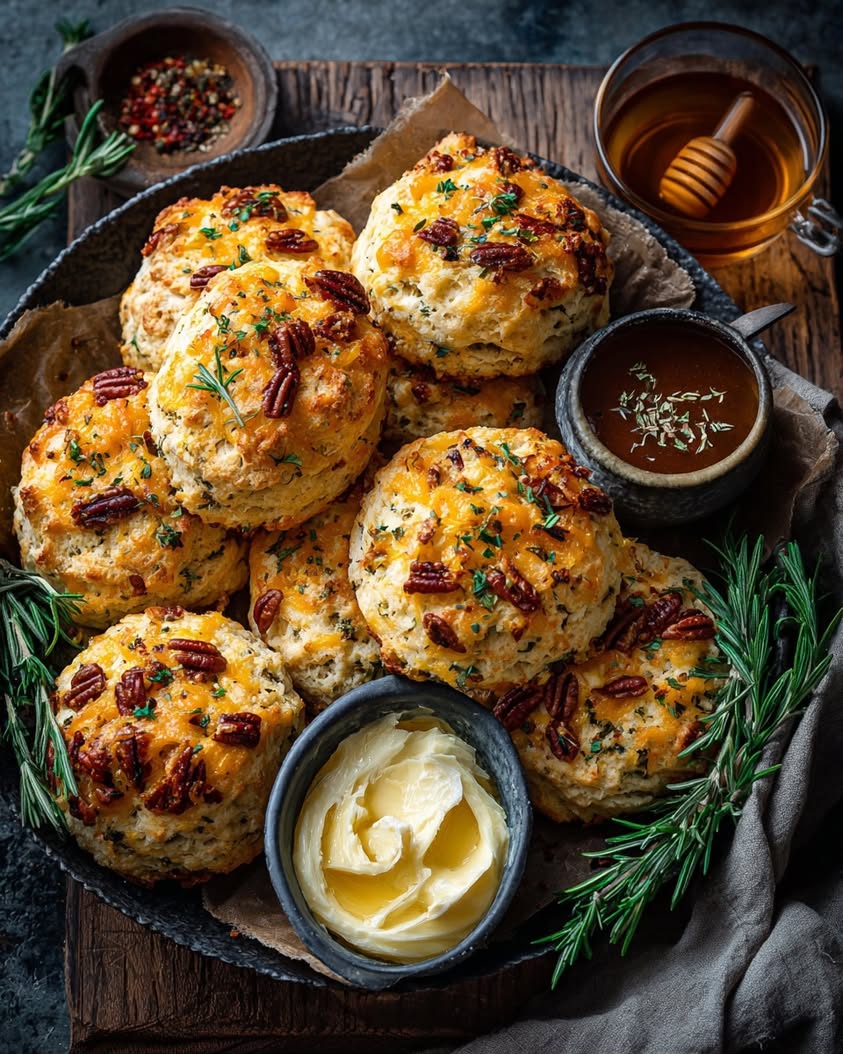
- Visual Appeal: These scones bake to a perfect golden-brown hue, with visible flecks of orange cheddar and brown pecans. The vibrant green herbed butter, served on the side or melted on top, creates a stunning color contrast that is instantly appetizing.
- Skill Level Needed: This is a beginner-friendly recipe. The process involves basic mixing and shaping techniques. Importantly, the key is handling the dough minimally to ensure a light, flaky result, a skill easily mastered on the first try.
- Special Equipment: You only need standard kitchen tools: a baking sheet, mixing bowls, a pastry cutter or fork, and a sharp knife or bench scraper. A box grater for the cheese and a small bowl for the butter are also helpful but not strictly necessary.
Recipe Overview
- Difficulty Level: We rate this savory cheddar pecan scone recipe as easy. The steps are straightforward and require no advanced pastry skills. However, it teaches foundational baking principles like keeping ingredients cold and avoiding overmixing, which are valuable for any home cook.
- Category: These scones fit beautifully into multiple categories. They are a star brunch item, a delightful side for soups and salads, or a fantastic standalone snack. Their versatility makes them a valuable addition to your recipe repertoire.
- Cuisine: While scones originate from the British Isles, this savory cheddar pecan version leans into American Southern influences with its use of sharp cheddar and pecans. The herbed butter adds a French touch, making it a delicious fusion bake.
- Cost: This recipe is quite cost-effective. Basic pantry staples like flour and butter form the base. Meanwhile, cheddar and pecans are affordable, especially when bought in bulk. The fresh herbs can be grown in a small pot, further reducing cost.
- Season: These scones are truly perfect for any season. They are cozy and comforting in fall and winter, yet fresh and herbal enough for spring and summer brunches. Particularly, they pair wonderfully with seasonal soups and stews.
- Occasion: Ideal for holiday brunches, Mother’s Day, bridal showers, or a casual weekend family breakfast. They also travel well for picnics and make a thoughtful homemade gift when packaged beautifully.
Why You’ll Love This Recipe
First and foremost, the taste and texture are utterly irresistible. The combination of sharp, melty cheddar and crunchy, buttery pecans is a classic for good reason. Each bite delivers a savory punch that is deeply satisfying. Moreover, the black pepper adds a subtle warmth that enhances the other flavors without overwhelming them. The herbed butter, melting into the warm crumb, introduces a burst of fresh, aromatic flavor that ties everything together. This isn’t a cloyingly sweet pastry; it’s a sophisticated, grown-up treat that appeals to a wide range of palates.
From a practical standpoint, this savory cheddar pecan scone recipe offers incredible convenience. The prep time is short, and the ingredients are simple. You likely have most of them in your kitchen already. Furthermore, the dough comes together quickly and requires no rising time, unlike yeast breads. You can go from idea to eating in well under an hour. This makes it perfect for spontaneous entertaining or when you need a impressive baked good without a full day of kitchen commitment. The process is also very forgiving for novice bakers.
Nutritionally, these scones provide more substance than a standard muffin or croissant. Pecans offer healthy fats, protein, and fiber, contributing to a feeling of fullness. Using a good sharp cheddar means you can use less cheese while still achieving maximum flavor impact. You control the ingredients, avoiding the excessive preservatives and sodium often found in store-bought versions. For a more balanced option, you can easily incorporate whole wheat pastry flour for part of the all-purpose flour.
For social gatherings, these scones are a guaranteed conversation starter. They look professionally made but carry the warm, personal touch of homemade food. Serving them on a wooden board with the herbed butter in a small ramekin creates a beautiful, inviting presentation. They are easy to eat with fingers, making them perfect for buffet-style events. Additionally, they pair wonderfully with both coffee and tea, as well as morning cocktails like mimosas, making them the ultimate brunch centerpiece.
Finally, this recipe is highly accessible and cost-effective. It uses common, affordable ingredients without sacrificing an ounce of flavor or elegance. You can easily double the batch for a crowd without straining your budget. The scones also freeze beautifully, allowing you to bake now and enjoy later. This practicality, combined with the spectacular results, ensures this savory cheddar pecan scone recipe will become a trusted favorite in your home cooking rotation for years to come.
Historical Background and Cultural Significance
The scone’s origin story is rooted in Scotland, with the name possibly deriving from the Dutch ‘schoonbrot’ (fine white bread) or the Gaelic ‘sgonn’ (a shapeless mass). Originally, scones were cooked on a griddle and made with oats, forming a quick, hearty bread for everyday sustenance. They were a staple of Scottish life for centuries before their popularity spread south to England. The classic British cream tea, featuring a split scone with clotted cream and jam, solidified the scone’s place as a beloved afternoon treat. This history of simplicity and adaptability paved the way for endless variations.
Culturally, scones hold a significant place in British and Irish tea traditions. However, their migration to America and other colonies led to fascinating adaptations. American cooks, with access to different ingredients like chemical leaveners (baking powder and soda), began creating the lighter, cake-like scones common today. The introduction of savory versions marked a departure from the sweet teatime standard, reflecting a more meal-oriented usage. This savory cheddar pecan scone recipe is a direct product of that evolution, combining a British form with distinctly American Southern ingredients.
The evolution of this specific recipe is a tale of culinary fusion. Cheddar cheese, with its origins in the English village of Cheddar, became a powerhouse in American cooking. Pecans are native to North America and a staple of Southern U.S. cuisine. Combining these two ingredients within a scone format is a relatively modern innovation, likely emerging in the late 20th century as home baking and brunch culture flourished. It represents a creative blending of Old World technique with New World flavors, resulting in a uniquely delicious hybrid.
Regional variations of the savory scone are endless. In the American South, adding chopped country ham or jalapeños is popular. In the Pacific Northwest, smoked salmon and dill might feature. Gluten-free and vegan versions are now commonplace, ensuring everyone can enjoy this format. Our savory cheddar pecan scone recipe sits comfortably in the center of this tradition—approachable, flavorful, and open to your own personal interpretation. It honors the scone’s history as a simple, satisfying quick bread while embracing global pantry influences.
Ingredient Deep Dive
All-Purpose Flour: This is the structural backbone of your scones. Flour provides the gluten that gives the dough elasticity and strength. For tender scones, using a light hand when mixing is crucial to avoid developing too much gluten, which leads to toughness. For best results, fluff your flour in the bag before spooning it into your measuring cup and leveling it off. This prevents packing and ensures you don’t use too much. While all-purpose is ideal, you can substitute up to half with whole wheat pastry flour for a nuttier flavor and more fiber.
Sharp Cheddar Cheese: The star flavor agent. Sharp cheddar is preferred because its intense, tangy flavor stands up to baking better than mild cheddar. Historically, cheddar is one of the world’s most popular cheeses, originating from England. It’s a good source of calcium and protein. Always grate your cheese from a block; pre-shredded cheese contains anti-caking agents that can affect melt and texture. For a different twist, try aged Gouda, Gruyère, or even a blue cheese for bold flavor lovers.
Pecans: Native to North America, pecans add essential crunch and a rich, buttery depth. They are packed with healthy monounsaturated fats, vitamins, and minerals. Toasting the pecans before adding them to the dough is a non-negotiable step; it intensifies their flavor and improves their crunch. Simply spread them on a baking sheet and toast in a 350°F oven for 5-7 minutes until fragrant. Watch them closely to prevent burning. For substitutions, walnuts or hazelnuts would work beautifully.
Unsalted Butter: Butter is responsible for the coveted flaky layers and rich taste. Using cold, unsalted butter is critical. As the cold butter pieces melt in the oven, they release steam, creating pockets that become flaky layers. Unsalted butter allows you to control the exact salt level of your recipe. Ensure your butter is very cold, and consider grating frozen butter on a box grater for easier, more even incorporation into the flour.
Heavy Cream: This adds richness, tenderness, and helps bind the dough. The high fat content inhibits gluten formation, ensuring a tender crumb. For the herbed butter, it also creates a luxurious, spreadable consistency. Buttermilk can be used as a substitute in the dough for a slight tang, though the scones may be slightly less rich. For a dairy-free version, full-fat canned coconut cream is the best alternative for both the scone and the compound butter.
Fresh Herbs (Chives & Parsley): These provide the fresh, aromatic element that cuts through the richness. Chives offer a mild onion flavor, while flat-leaf parsley adds a clean, grassy note. Always use fresh herbs for the butter for the brightest flavor and color. If you must substitute, freeze-dried chives can work in a pinch, but avoid dried parsley as it lacks vibrancy. You can also experiment with other soft herbs like dill, tarragon, or thyme.
Common Mistakes to Avoid
- Using Warm Ingredients: This is the top mistake. Warm butter or cream will melt prematurely, resulting in a greasy, dense scone instead of a flaky one. Always ensure your dairy is cold straight from the refrigerator.
- Overmixing the Dough: Once you add the liquid, mix just until the dough comes together. Overworking activates the gluten, making the scones tough and chewy. A few dry streaks are better than a smooth, overmixed ball.
- Not Toasting the Pecans: Raw pecans lack depth of flavor and can become soft in the bake. Toasting them beforehand maximizes their nutty taste and ensures they stay crunchy in the final product.
- Using Pre-Shredded Cheese: Pre-shredded cheese is coated in cellulose to prevent clumping. This coating can prevent proper melting and integration into the dough, leading to a grainy texture. Always grate your own cheese from a block.
- Rolling or Patting the Dough Too Thin: If your dough disc is too thin, you’ll get skimpy, over-baked scones. Aim for a 3/4-inch to 1-inch thickness before cutting to ensure a tall, fluffy interior.
- Twisting the Cutter: When cutting out your scones, press straight down and lift straight up. Twisting the cutter seals the edges, which can inhibit the scone’s ability to rise evenly during baking.
- Skipping the Chilling Step: If you have time, chilling the shaped scones for 15 minutes before baking helps re-solidify the butter and leads to a better rise. This is especially helpful in a warm kitchen.
- Overbaking: Scones bake quickly. They are done when the tops are just golden brown. Overbaking dries them out. Start checking a few minutes before the timer goes off.
- Spreading the Herbed Butter Too Early: If you spread the herbed butter on the scones before serving, do it just before eating. Doing it too far in advance can make the scone soggy.
- Not Adjusting for Altitude or Humidity: In humid climates, you may need a touch more flour. At high altitudes, adjustments to leavening might be necessary. Know your kitchen environment.
Essential Techniques
Keeping Ingredients Cold: This is the single most important technique for flaky scones. Cold butter creates steam pockets during baking, which lift the layers apart. Therefore, use butter and cream straight from the fridge. Some bakers even freeze their butter and grate it into the flour. If your dough feels warm at any point, pop the whole bowl into the freezer for 5-10 minutes before proceeding. This extra step guarantees maximum flakiness.
The Pastry Cutter Method: Cutting cold butter into flour is essential for creating that pebbly, sandy texture. Use a pastry cutter, two forks, or even your fingertips quickly. The goal is to break the butter down into pea-sized and smaller pieces coated in flour. Avoid using your hands too much, as body heat will warm the butter. Alternatively, you can pulse the mixture a few times in a food processor for speed, but be careful not to over-process.
Folding and Patting, Not Kneading: Once you add the wet ingredients, switch to a gentle folding motion with a spatula. Turn the dough over onto itself until it just holds together. Then, turn it out onto a surface and use your hands to gently pat it into a disc. Never knead it like bread dough. This gentle handling preserves the butter pieces and limits gluten development, which is the secret to tenderness.
Sharp Cutting for Clean Rises: Whether you use a round cutter, a knife, or a bench scraper, make sure your tool is sharp. A dull edge will drag and compress the dough layers at the edges. For cut-out scones, dip your cutter in flour between cuts to prevent sticking. For wedge-shaped scones, use a sharp knife or bench scraper to cut the disc into even portions without sawing back and forth.
Pro Tips for Perfect Savory Cheddar-Pecan Scones
First, freeze your butter for 30 minutes and then grate it on a box grater. This makes incorporating it into the flour effortless and ensures even, small distribution for consistent flakiness.
Second, toast your pecans on the baking sheet you’ll use for the scones. This saves a dish and preheats the sheet, which can help with browning the scone bottoms.
Third, use an egg wash for a deeper golden-brown, glossy top. Simply whisk one egg with a tablespoon of cream and brush it lightly over the scones just before baking.
Fourth, if you don’t have a round cutter, shape the dough into a rectangle and cut it into squares or triangles. This eliminates re-rolling scraps, which can toughen the dough.
Fifth, place your shaped scones close together on the baking sheet if you like soft sides, or farther apart for crispier edges. Both methods are valid, depending on your preference.
Sixth, let the baked scones cool on the sheet for 5 minutes before transferring to a wire rack. This allows them to set without becoming soggy from trapped steam.
Seventh, make a double batch of the herbed butter and freeze half. Roll it into a log in parchment paper, so you always have it ready for future scones, steaks, or baked potatoes.
Eighth, for extra flavor, add a teaspoon of Dijon mustard or a dash of Worcestershire sauce to the dough with the wet ingredients. These umami boosters complement the cheese beautifully.
Variations and Adaptations
Regional Variations: Embrace local flavors. For a Southern twist, add 1/4 cup of finely chopped country ham or crispy bacon. In the Southwest, incorporate 2 tablespoons of diced green chiles and swap the cheddar for pepper jack. A New England version might include lobster meat and Old Bay seasoning for a luxurious treat.
Seasonal Adaptations: In spring, fold in 1/3 cup of chopped asparagus tips and lemon zest. For summer, sun-dried tomatoes and basil are fantastic. Autumn calls for caramelized onions and a touch of rosemary. Winter pairs well with everything from leftover holiday ham to roasted garlic.
Dietary Modifications: For gluten-free scones, use a 1:1 gluten-free flour blend with xanthan gum. For dairy-free, use vegan butter, full-fat coconut cream, and a dairy-free cheese alternative. To make them vegan, also use a flax egg (1 tbsp ground flax + 3 tbsp water) as a binder.
Flavor Variations: The base recipe is a perfect canvas. Try blue cheese and walnut for a bold profile. Smoked Gouda and apple is a sweet-savory combo. For an Italian flair, use Parmesan, pine nuts, and chopped rosemary. The possibilities are truly endless.
Texture Modifications: For a more biscuit-like, layered texture, roll the dough into a rectangle, fold it into thirds like a letter, and repeat once before cutting. For a more craggy, rustic scone, simply drop rounded mounds of dough onto the baking sheet instead of cutting shapes.
Presentation Alternatives: Make mini scones for appetizers by cutting the dough into 1.5-inch rounds. For a pull-apart style, pat the dough into the bottom of a cast-iron skillet, score it into wedges, and bake. You can also top unbaked scones with everything bagel seasoning or flaky sea salt for extra crunch.
Serving and Presentation Guide
Plating is key for maximum appeal. Arrange the warm scones on a wooden cutting board, slate slab, or a simple white platter. Place the herbed butter in a small ceramic ramekin or on a butter dish with a small knife. Scatter a few extra toasted pecan halves and fresh herb sprigs around the board for a professional, finished look. This creates height and visual interest.
Garnishing adds the final touch. A light sprinkle of flaky sea salt and cracked black pepper over the scones just after they come out of the oven enhances flavor and looks elegant. A drizzle of honey over the top offers a surprising sweet contrast that complements the savory notes beautifully. For a brunch spread, consider adding small bowls of fruit preserves or apple butter as additional topping options.
Traditional accompaniments include a hearty soup like tomato bisque or butternut squash soup for a complete meal. They also pair wonderfully with a simple green salad dressed with a sharp vinaigrette to cut through the richness. For a classic British-inspired twist, serve them with a pot of hot tea or a robust coffee.
Modern serving suggestions lean into the brunch trend. Crumble a scone over a bowl of creamy scrambled eggs or a breakfast hash. Slice them in half and use them as a base for eggs Benedict with ham or smoked salmon. They can even stand in for biscuits in a savory shortcake with herbed chicken salad.
Temperature considerations are crucial. Scones are best served warm or at room temperature on the day they are baked. If you must make them ahead, reheat them gently in a 300°F oven for 5-8 minutes to refresh the texture and melt the butter. Never microwave them, as this will make them tough and chewy.
Portion control is easy with this recipe, as it yields 8 generous scones. For a larger gathering, simply double the batch. For smaller households, you can freeze unbaked scones and bake from frozen, adding a few extra minutes to the baking time. This allows you to enjoy fresh scones anytime without waste.
Wine and Beverage Pairing
Wine pairings for these savory scones should complement the rich cheese and nutty flavors. A crisp, unoaked Chardonnay works wonderfully, as its acidity cuts through the fat. Alternatively, a light-bodied Pinot Noir with its red fruit notes can balance the savory elements beautifully. For a brunch setting, a dry sparkling wine or Prosecco is always a celebratory and palate-cleansing choice.
Non-alcoholic alternatives are just as important. A tart cherry or pomegranate juice spritzer mimics the acidity of wine. Iced tea, especially a brisk black tea or an herbal citrus blend, is a classic and refreshing partner. For a creamy option, a chai latte or a dirty chai (with a shot of espresso) complements the warm spices and richness of the scones.
Coffee and tea are natural companions. A medium-roast coffee with nutty or chocolatey notes will echo the flavors of the pecans. For tea, choose a strong English Breakfast or an Earl Grey; the bergamot in Earl Grey pairs exceptionally well with the sharp cheddar. A smoky Lapsang Souchong tea can also create an intriguing flavor contrast.
Temperature considerations depend on the beverage. Serve white wines and sparkling options well-chilled. Red wines should be slightly cooler than room temperature. Coffee and tea should be piping hot to contrast with the warm scone. Iced beverages should be very cold to provide a refreshing counterpoint.
Serving suggestions include offering a small selection. For a brunch, set up a coffee station and a pitcher of iced tea alongside a bottle of chilled sparkling wine. Provide clear glassware for the bubbly and sturdy mugs for coffee. Labeling your beverage options can be a nice touch for guests, helping them choose the perfect pairing for your delicious savory cheddar pecan scone recipe.
Storage and Shelf Life
Proper storage is essential for maintaining quality. Once completely cooled, store scones in an airtight container at room temperature for up to 2 days. For longer storage, place them in a resealable plastic bag and refrigerate for up to 5 days. The refrigerator will dry them out slightly, so reheating is recommended. The herbed butter should always be stored in the refrigerator, tightly covered, for up to one week.
Temperature requirements are straightforward. Room temperature is fine for short-term storage of the scones. However, due to the dairy content in both the scone and the butter, prolonged storage at room temperature is not safe. Always refrigerate if you plan to keep them beyond two days. The butter must remain refrigerated at all times to prevent spoilage.
Container recommendations include airtight plastic or glass containers for scones. For the herbed butter, a small ramekin with a lid or butter crock is ideal. You can also roll the butter into a log in parchment paper, wrap it in plastic, and store it in the fridge or freezer. This method makes it easy to slice off rounds as needed.
Signs of spoilage to watch for include any off odors, a slimy texture on the scone surface, or visible mold. The herbed butter may develop a sour smell or discoloration. If the butter was left out for more than 2 hours (or 1 hour in hot weather), it should be discarded for safety. When in doubt, throw it out.
Reheating instructions are simple. To revive day-old scones, wrap them loosely in aluminum foil and warm in a 300°F oven for 8-10 minutes. For a crispier exterior, unwrap them for the last few minutes. You can also use a toaster oven on a low setting. Avoid the microwave, as it will make them rubbery.
Freezing guidelines are excellent for make-ahead ease. Freeze unbaked scones on a parchment-lined sheet, then transfer to a freezer bag for up to 3 months. Bake from frozen, adding 3-5 minutes to the baking time. You can also freeze baked scones. Thaw at room temperature and reheat in the oven. The herbed butter freezes beautifully for up to 3 months.
Make Ahead Strategies
A smart prep timeline can make brunch effortless. The night before, measure your dry ingredients into a bowl and cover it. Grate your cheese and store it in the fridge. Toast and chop your pecans. Make the herbed butter and refrigerate it. In the morning, simply combine the cold wet ingredients with the dry mix, shape, and bake. This streamlines the process dramatically.
Storage between steps is key. Keep your pre-measured dry mix at room temperature. Ensure your grated cheese and any other prepped ingredients (like cold cubed butter) are stored separately in the refrigerator. The goal is to have everything cold and ready to combine quickly. You can even cut the butter into the dry mix the night before and store the whole bowl in the fridge.
Assessing quality impact is important. Pre-mixing dry ingredients has no negative effect. Pre-cutting butter into flour is fine if kept very cold. However, do not mix the wet and dry ingredients until you are ready to bake, as this will activate the leavening and can result in less rise. The herbed butter’s flavor often improves after a night in the fridge, allowing the herbs to infuse.
Assembly tips for the final stretch include having your baking sheet lined and your oven preheated before you start mixing. Use a large bowl for the final mix to give yourself room to fold gently. Have your bench scraper or cutter ready and floured. Working efficiently from this point ensures your ingredients stay cold and your scones turn out perfectly.
Reheating guidelines for make-ahead baked scones are simple. If you bake them a day ahead, let them cool completely, then store in an airtight container. The next day, reheat in a 325°F oven for 5-7 minutes to restore warmth and freshness. They will not be quite as perfect as fresh-from-the-oven, but they will still be delicious.
Fresh element additions are a final touch. If you made components ahead, always add any fresh garnishes after reheating. Sprinkle with extra herbs, a final crack of pepper, or a flake of sea salt just before serving to brighten the presentation and flavor, making everything taste freshly made.
Scaling Instructions
Halving the recipe is straightforward for smaller households. Simply divide all ingredient quantities by two. Use a large egg is trickier; beat one egg, measure out half (about 1.5 tablespoons), and use that. You may get 4-5 scones instead of 8. Baking time may be reduced by 1-2 minutes, so watch closely. The herbed butter recipe halves easily as well.
Doubling or tripling for a crowd is highly recommended. Multiply all ingredients accurately. Mix in a very large bowl or in two separate batches to ensure even mixing. You may need to bake in multiple batches or on two oven racks, rotating the sheets halfway through. The herbed butter can be made in any quantity needed.
Equipment adjustments are necessary when scaling up. For a double batch, you’ll need a larger mixing bowl and likely two baking sheets. Ensure your oven can accommodate two sheets with proper air circulation; if not, bake one sheet at a time. For a triple batch, consider using a stand mixer with a paddle attachment to cut in the butter, but still finish mixing by hand to avoid overworking.
Timing modifications are minimal. The prep time will increase slightly with larger quantities, but not proportionally. The bake time remains essentially the same per batch. However, if baking multiple sheets at once, you may need to add 1-2 minutes and rotate the sheets top to bottom and front to back for even browning.
Storage considerations change with scale. A large batch means you’ll have more leftovers. Plan to freeze a portion of the unbaked or baked scones for future use. Label bags with the date and baking instructions. This makes your effort pay off multiple times, giving you ready-to-bake scones for busy mornings or unexpected guests.
Nutritional Deep Dive
A macro breakdown for one scone (without herbed butter) typically includes a balance of carbohydrates from the flour, fat from the butter, cream, cheese, and pecans, and protein from the cheese, pecans, and cream. They are an energy-dense food, making them a satisfying choice. The exact numbers will vary based on specific brands and measurements, but they provide sustained energy rather than a simple sugar rush.
The micronutrient analysis reveals benefits from the whole ingredients. Cheddar cheese provides calcium and vitamin A. Pecans are a source of zinc, magnesium, and vitamin E. Using whole wheat flour would add B vitamins and fiber. While not a health food, these scones contribute more nutritional value than a purely refined carbohydrate pastry due to the nuts and cheese.
Health benefits come from the quality ingredients. The monounsaturated fats in pecans are heart-healthy. The protein and fat content help with satiety, potentially preventing overeating. Making them at home allows you to control the sodium level and avoid artificial additives. Enjoying them as part of a balanced meal with protein and vegetables turns them into a wholesome option.
Dietary considerations are important to note. This standard recipe contains gluten (flour), dairy (butter, cream, cheese), and nuts (pecans). It is not suitable for those with related allergies or intolerances without modification. However, the recipe is highly adaptable, as outlined in the variations section, to accommodate many dietary needs.
Portion analysis is helpful. One scone is a satisfying serving. Their richness means most people will be content with one alongside other brunch items like eggs or fruit. This natural portion control helps manage calorie intake. Compared to a large muffin or slice of coffee cake, a scone can often be a more reasonable choice.
Weight management tips include enjoying these scones mindfully as an occasional treat rather than a daily staple. Pair a half-scone with a large salad or vegetable soup to balance the meal. Choose to add the herbed butter sparingly, or use a light smear. Remember, homemade allows you to control portion size and ingredient quality, which are key factors in any eating plan.
Dietary Adaptations
Gluten-Free: Use a 1:1 gluten-free all-purpose flour blend that contains xanthan gum. Brands like Bob’s Red Mill or King Arthur Measure for Measure work well. The dough may be slightly sticker, so handle it with lightly oiled hands or between two pieces of parchment paper. Chill the shaped dough well before baking to help it hold its structure.
Dairy-Free: Substitute the butter with a high-quality vegan butter stick (like Miyoko’s or Earth Balance). Use full-fat canned coconut cream in place of heavy cream. For the cheese, use a dairy-free cheddar-style shred that melts well, or simply omit it and increase the nuts and add nutritional yeast for a cheesy flavor.
Vegan: Follow the dairy-free guidelines and also replace the egg. A “flax egg” (1 tbsp ground flaxseed mixed with 3 tbsp water, left to thicken for 5 minutes) works perfectly as a binder. Ensure your sugar is vegan-certified if you use any. The herbed butter can be made with vegan butter and fresh herbs.
Low-Carb/Keto: Replace the all-purpose flour with a blend of almond flour and a small amount of coconut flour. You’ll need to add more binding agents like eggs or psyllium husk powder. Use a sugar substitute if the recipe includes any sugar. Be mindful that nuts and cheese are keto-friendly, but the carb count from flour substitutes still needs tracking.
Paleo: Use almond flour or cassava flour as a base. Omit the cheese or use a paleo-friendly “cheese” sauce made from nutritional yeast and cashews. Ensure any added fats are ghee or coconut oil instead of butter. Sweeteners must be paleo-approved like honey or maple syrup, though this is a savory recipe so that may not be necessary.
Low-FODMAP: This is challenging due to the wheat flour, dairy, and potentially garlic/herbs. Use a gluten-free flour blend and lactose-free heavy cream if available. Omit garlic if used in the herbed butter. Use only the green parts of chives. Stick to a 30g serving of pecans{“success”:true,”message”:”Recipe created successfully”,”post_id”:9078,”tasty_recipe_id”:9078,”shortcode”:”“}

I’m Billy, a classically trained culinary school graduate from The Culinary Institute of America with over 12 years in the restaurant industry and over 19 years of cooking experience.