
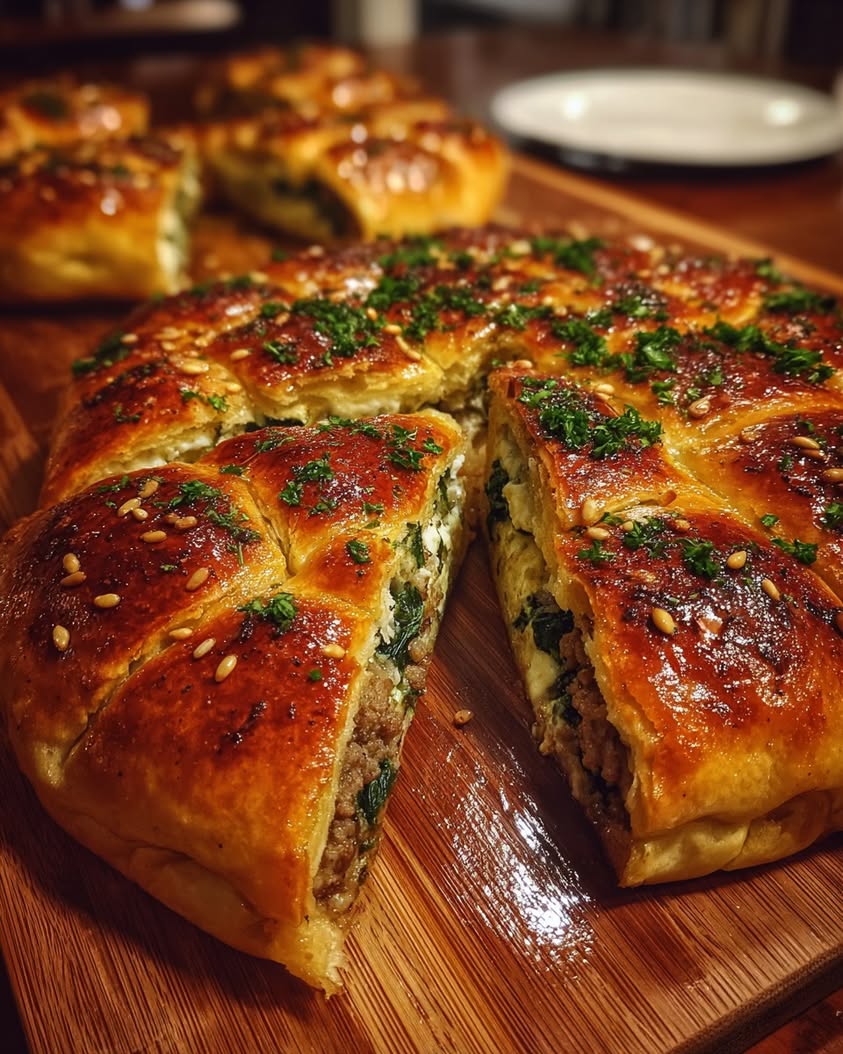
Savory Feta & Spinach Sfiha Recipe: A Flavorful Meat Pie with Lemon Pine Nuts
Imagine pulling a tray of golden, savory pastries from your oven. The aroma of spiced lamb, tangy feta, and toasted pine nuts fills your kitchen. This savory feta spinach sfiha recipe delivers that exact experience. Moreover, it brings the vibrant flavors of Middle Eastern cuisine right to your dinner table. These open-faced meat pies are a celebration of texture and taste. They feature a perfectly spiced filling cradled in a soft, yeasted dough. Ultimately, each bite offers a delicious harmony of savory, tangy, and nutty notes.
This savory feta spinach sfiha recipe is perfect for sharing. It works beautifully as an appetizer, a main course, or a portable snack. The process is engaging but approachable. You will create a simple dough from scratch. Meanwhile, you will prepare a filling that sings with flavor. The addition of bright lemon zest and crunchy pine nuts lifts the entire dish. Consequently, you end up with a homemade treat that far surpasses anything store-bought. This recipe invites you to explore the art of hand-formed pies. It is a rewarding culinary project with delicious results.
The beauty of this savory feta spinach sfiha recipe lies in its balance. The rich lamb and beef are lightened by fresh spinach. Simultaneously, the salty feta cheese is brightened by lemon. Every component has a purpose. The dough provides a soft, slightly chewy base that soaks up the savory juices. The pine nuts add a crucial textural contrast and a rich, buttery flavor. This dish is a feast for the senses. It is visually appealing, incredibly aromatic, and deeply satisfying to eat. Follow this guide to master these delightful meat pies.
Quick Recipe Highlights
- Flavor Profile: This savory feta spinach sfiha recipe boasts a complex and bold flavor. It features savory ground meat with warm spices like allspice and cinnamon. Additionally, tangy feta and fresh lemon zest cut through the richness. Finally, toasted pine nuts add a luxurious, nutty finish.
- Texture: The texture experience is multi-layered. You get a soft and slightly chewy yeasted dough base. Then, you encounter a juicy, well-seasoned meat and spinach filling. The crowning glory is the delightful crunch from toasted pine nuts on top.
- Aroma: As these bake, your kitchen will smell incredible. The scent of baking yeast dough blends with the earthy aroma of cooking meat and spices. Importantly, the citrusy hint of lemon and the toasty scent of pine nuts create an irresistible fragrance.
- Visual Appeal: These pies are rustic and beautiful. The golden-brown dough frames the dark, savory filling. The white flecks of feta and the toasted pine nuts create lovely visual contrast. They look wonderfully homemade and inviting on any platter.
- Skill Level Needed: This savory feta spinach sfiha recipe is ideal for a confident home cook. It involves basic dough-making and a straightforward filling. However, shaping the sfiha requires a bit of practice for consistent results. Overall, it is a fantastic recipe for expanding your baking skills.
- Special Equipment: You need minimal special equipment. A stand mixer with a dough hook makes the dough easier. Otherwise, you only need basic bowls, a skillet, and baking sheets. A kitchen scale is helpful for dividing the dough evenly.
Recipe Overview
- Difficulty Level: We rate this savory feta spinach sfiha recipe as intermediate. The steps are clear, but they require attention to detail. Making yeast dough demands patience during rising times. Furthermore, shaping the sfiha into uniform ovals takes a gentle hand. The techniques are not overly complex, but they build on foundational cooking skills.
- Category: These versatile pies cross several categories. They are a fantastic appetizer or mezze plate item. Served with a salad, they become a satisfying main course. They are also perfect party food or a make-ahead lunch option. This flexibility makes the recipe a valuable addition to your repertoire.
- Cuisine: This dish has deep roots in Levantine cuisine, particularly from Lebanon and Syria. Sfiha, or lahm bi ajeen, is a beloved street food and home-cooked meal. This version incorporates classic flavors like allspice and pine nuts. At the same time, it adds a personal twist with spinach and lemon for freshness.
- Cost: This savory feta spinach sfiha recipe is moderately priced. Ground lamb can be more expensive, but blending it with beef helps manage cost. Ingredients like flour, spinach, and spices are very affordable. Feta and pine nuts are the premium items. Overall, you create an impressive dish for a reasonable per-serving cost.
- Season: This recipe is truly excellent year-round. It feels hearty for cooler months but the lemon and spinach keep it bright for spring and summer. You can easily find good quality spinach any time. Consequently, it is a reliable choice for any season or gathering.
- Occasion: These sfiha are perfect for many occasions. They are ideal for casual family dinners or weekend cooking projects. Moreover, they shine at parties, potlucks, and holiday gatherings. You can even pack them for picnics or school lunches. They are universally appealing and always a hit.
Why You’ll Love This Recipe
First and foremost, the taste and texture of this savory feta spinach sfiha recipe are extraordinary. Each bite delivers a symphony of flavors. You experience the savory depth of spiced meat, the creamy saltiness of feta, and the bright pop of lemon. Then, you get the satisfying crunch of pine nuts. The soft dough ties it all together into a perfect handheld package. This combination is incredibly moreish. You will find it difficult to eat just one. The balance is masterful, making it a dish that appeals to a wide range of palates.
Next, consider the convenience and preparation benefits. While made from scratch, the steps are logical and broken down. You can prepare the dough and filling in parallel to save time. Additionally, the assembled sfiha freeze beautifully before or after baking. This means you can have a gourmet snack or meal ready at a moment’s notice. The portability is another huge plus. They are not messy to eat, making them perfect for on-the-go meals, lunchboxes, or outdoor events. This recipe rewards your effort with versatility and future convenience.
From a nutritional standpoint, this savory feta spinach sfiha recipe offers several advantages. Spinach packs vitamins A, C, and K, along with iron and fiber. Using lean ground meat adds protein. The homemade dough allows you to control the ingredients, avoiding preservatives. While it is a treat, incorporating vegetables and protein makes it a more balanced option compared to many pastries. You can feel good about serving these to your family, knowing exactly what is inside.
The social and entertaining value of this dish is immense. A platter of these warm, homemade pies is a guaranteed conversation starter. They feel special and lovingly made. Guests always appreciate the effort of handmade dough and a from-scratch filling. They are easy to serve and eat while mingling. Sharing food from another culture is a wonderful way to connect. This recipe provides a delicious entry point into Middle Eastern culinary traditions. It is a dish that fosters community and shared enjoyment.
Finally, this savory feta spinach sfiha recipe is cost-effective and accessible. Making a large batch at home is significantly cheaper than buying similar-quality pastries from a specialty store. Most ingredients are available at any standard grocery store. The process teaches valuable skills like dough handling and spicing. Investing time in this recipe builds your cooking confidence. It also yields a impressive result without a restaurant price tag. The return on investment, in terms of flavor, quantity, and satisfaction, is exceptionally high.
Historical Background and Cultural Significance
The origin story of sfiha stretches back centuries in the Levant region. Food historians believe it originated as a way for nomadic tribes to cook spiced meat on portable bread. The name “sfiha” itself comes from the Arabic word for “thin dough” or “flatbread.” Traditionally, it was a practical and nutritious meal for farmers and workers. The basic concept of spiced meat on dough traveled along trade routes. Over time, it evolved into the distinct open-faced pie we know today. Each community added its own signature spices and ingredients, creating regional variations.
The cultural importance of this dish cannot be overstated. In countries like Lebanon, Syria, Jordan, and Palestine, sfiha is a cornerstone of daily life and celebration. It is common street food, sold from bakeries and roadside stalls. Families also prepare it at home for weekend lunches and special occasions. Making sfiha is often a communal activity, with multiple generations gathering to shape the pies. It represents hospitality, generosity, and culinary heritage. Serving it to guests is a sign of warmth and welcome. The dish is deeply woven into the social fabric of the region.
The evolution of the recipe showcases adaptation and creativity. The classic version, lahm bi ajeen, typically uses a spiced lamb or beef topping without a top crust. The addition of vegetables like tomatoes and onions is standard. Our savory feta spinach sfiha recipe represents a modern interpretation. Incorporating spinach adds color and nutrition, while feta cheese introduces a tangy Greek influence. The lemon and pine nuts are traditional touches that elevate the flavor profile. This evolution shows how recipes breathe and change, absorbing new influences while honoring their roots.
Regional variations are fascinating and diverse. In some areas, the dough is made with yogurt for extra tenderness. The meat mixture might include pomegranate molasses for sweetness or sumac for tartness. In Brazil, where a large Lebanese diaspora settled, “esfiha” became a closed, triangular pastry, often with a cheese filling. Exploring these variations is a culinary adventure. Our version sits comfortably within this tradition of innovation. It respects the core principles of a spiced meat topping on yeast dough while inviting personal expression. This adaptability is key to the dish’s enduring global popularity.
Ingredient Deep Dive
Let us start with the dough. All-purpose flour provides the ideal protein content for a tender yet sturdy base. The yeast is the engine, creating air pockets for a light texture. Sugar feeds the yeast, while olive oil enriches the dough, adding flavor and keeping it soft. Using warm water is crucial to activate the yeast properly. This simple combination, when handled correctly, transforms into a pillowy canvas for the robust filling. For best results, use unbleached all-purpose flour and ensure your yeast is fresh. The dough should be smooth and elastic after kneading.
Ground lamb is the traditional star. It offers a distinct, rich flavor that is quintessential to the dish. Culturally, lamb is a prized meat in Middle Eastern cuisine, often associated with celebrations. Nutritionally, it is a great source of protein, iron, and B vitamins. Blending it with lean ground beef, as in this savory feta spinach sfiha recipe, balances the flavor and cost. When selecting lamb, look for a fine grind with a bright red color and minimal visible fat. If you prefer, you can use all beef or even ground turkey for a lighter version.
Fresh spinach brings vital color and nutrition. It wilts down significantly, concentrating its earthy flavor and nutrients like iron, calcium, and vitamins A and K. Historically, greens have always been a part of regional diets, foraged or cultivated. In this recipe, spinach lightens the heavy meat filling and adds moisture. Always use fresh, crisp spinach and wash it thoroughly to remove grit. Squeezing it completely dry after wilting is the most critical step to prevent a soggy filling. You can substitute with Swiss chard or kale, but adjust cooking times accordingly.
Feta cheese is the tangy counterpoint. This brined cheese has origins in Greece but is beloved across the Mediterranean. Its salty, acidic punch cuts through the richness of the meat beautifully. It also adds a creamy texture without melting into a pool. For the best flavor, buy a block of feta in brine rather than pre-crumbled. Pre-crumbled cheese often contains anti-caking agents and can be drier. You can rinse it lightly if you prefer less salt. For a dairy-free version, a firm, salty tofu crumble or a vegan feta alternative can work.
Pine nuts are the luxurious garnish. These edible seeds from pine trees have been foraged and traded for millennia. They add a buttery, rich crunch that is signature to the region’s cuisine. Toasting them is non-negotiable; it unlocks their full aroma and flavor. They can be expensive, so store them in the freezer to prevent rancidity. A small amount goes a long way in this savory feta spinach sfiha recipe. If needed, you can substitute with slivered almonds or chopped walnuts, though the flavor profile will shift. Their role is to provide textural contrast and a final layer of nutty richness.
Common Mistakes to Avoid
- Not squeezing the spinach dry. This is the number one error. Excess water from the spinach will steam during baking, making the filling watery and the dough soggy. After wilting, let the spinach cool, then gather it in a clean kitchen towel and wring it out with force until no more liquid releases.
- Using cold water for the dough. Yeast needs warmth to become active and bubbly. If your water is too cold, the yeast will not activate. If it is too hot, it will kill the yeast. The ideal temperature is between 105°F and 115°F (40-46°C). It should feel warm but not hot to the touch.
- Overloading the filling. While you want a generous amount, piling too much meat onto the dough rounds will cause several problems. The filling can spill over during baking, burn on the pan, and prevent the dough edges from forming a proper seal. It can also make the sfiha difficult to eat. Use a moderate, even layer.
- Neglecting to toast the pine nuts. Raw pine nuts are pale and lack depth. Toasting them in a dry skillet for a few minutes until golden brown intensifies their flavor exponentially and adds crucial crunch. Watch them closely, as they can burn in seconds. Always toast them before sprinkling on top.
- Rushing the dough rise. If the dough does not have sufficient time to double in size, it will be dense and tough. Place it in a warm, draft-free spot. Be patient. The rising time can vary based on kitchen temperature. The dough is ready when it holds an indentation when gently poked.
- Using pre-crumbled feta. Pre-crumbled feta is often coated in powder to prevent clumping, which can make it dry and less flavorful. For the best texture and taste in your savory feta spinach sfiha recipe, buy a block of feta in brine and crumble it yourself just before using.
- Baking on a cold pan. Placing the shaped sfiha on a room-temperature baking sheet and then into the oven can result in uneven baking and a less crisp bottom. Always preheat your baking sheets in the oven for a few minutes before placing the pies on them for a better bake.
- Not seasoning the filling adequately. Ground meat needs a good amount of seasoning. Taste the raw filling mixture before adding the egg. Remember, the feta is salty, but the meat itself still needs salt, pepper, and spices. Do not be shy with the allspice and cinnamon; they define the flavor profile.
- Forgetting the egg wash. The egg wash brushed on the dough edges serves two purposes. It helps the pine nuts adhere, and it gives the exposed dough a beautiful, glossy golden color as it bakes. Skipping it results in a pale, less professional-looking finish.
- Cutting into them immediately. It is tempting to eat a piping hot sfiha right from the oven. However, the filling will be extremely hot and can burn your mouth. More importantly, letting them rest for 5-10 minutes allows the juices to settle, making them easier to handle and the flavors to meld.
Essential Techniques
Kneading the dough is fundamental. This process develops the gluten network in the flour, which gives the dough its structure and chew. To knead effectively, use the heel of your hand to push the dough away from you, then fold it back over itself. Give it a quarter turn and repeat. You will know it is ready when the dough transforms from shaggy and sticky to smooth, elastic, and springs back when lightly pressed. This usually takes 8-10 minutes by hand or 5-7 minutes with a mixer. Under-kneading leads to a weak dough that tears easily.
Wilting and drying spinach is a two-step technique with one goal: removing water. First, wilt the spinach in a pan with just the water clinging to its leaves after washing. This concentrates its flavor and reduces its volume dramatically. The critical second step is removing all that released moisture. Let the spinach cool until you can handle it, then squeeze it in a towel with all your strength. You will be surprised how much liquid comes out. Properly dried spinach ensures your filling stays cohesive and does not make the pastry soggy.
Toasting pine nuts seems simple but requires vigilance. Use a dry skillet over medium-low heat. Add the pine nuts and shake the pan frequently for even toasting. They will turn a light golden brown and release a fragrant, nutty aroma. This process takes only 2-4 minutes. The moment they are golden, immediately transfer them to a plate to stop the cooking. They carryover cook in the hot pan and can burn in an instant. Toasted nuts add a deep flavor and crunch that raw nuts simply cannot provide.
Shaping the sfiha is the signature technique. After dividing the dough, roll each piece into a smooth ball. On a lightly floured surface, use your fingers to press and stretch the ball into an oval or round shape, about ⅛-inch thick. Aim for a slightly thicker border to contain the filling. This border is important. When adding the filling, use the back of a spoon to spread it evenly, leaving the raised edge clean. This creates a well for the filling and gives the pies their classic open-faced appearance. Practice makes perfect here.
Pro Tips for Perfect Savory Feta Spinach Sfiha
First, bloom your spices. Before adding the meat to the skillet, sauté the onion until soft, then add the allspice and cinnamon directly to the hot oil for 30 seconds. This quick toasting releases their essential oils and intensifies their flavor in the filling dramatically.
Second, chill the filling before assembly. After cooking the meat mixture and letting it cool, refrigerate it for 20-30 minutes. A cooler filling is much easier to handle and spread onto the dough rounds without making them greasy or difficult to shape.
Third, use a scale to divide the dough. Eyeballing portions leads to unevenly sized pies. Weighing the total dough ball and dividing by 18 ensures every sfiha is identical, which promotes even baking and a professional presentation.
Fourth, create a steam oven for the dough rise. Place the bowl of dough in your turned-off oven with a large pan of boiling water on the rack below. The warm, humid environment is perfect for yeast activity and speeds up the rising process reliably.
Fifth, do not skip preheating the baking sheets. As mentioned, placing the shaped pies on a hot pan gives the bottom crust an immediate burst of heat. This results in a crisper, more defined base that can support the juicy filling without getting soggy.
Sixth, rotate your pans halfway through baking. Ovens have hot spots. Switching the position of your baking sheets from top to bottom and front to back ensures all the sfiha bake evenly to a uniform golden brown color.
Seventh, make a double batch for the freezer. This savory feta spinach sfiha recipe freezes exceptionally well either before or after baking. Freeze unbaked pies on a tray, then transfer to a bag. Bake from frozen, adding a few extra minutes. It is the ultimate convenience food.
Eighth, let the dough rest after shaping. Once you have rolled your dough balls, cover them with a damp towel and let them rest for 10 minutes. This relaxes the gluten, making them much easier to press and stretch into thin rounds without springing back.
Variations and Adaptations
For regional variations, explore different spice blends. Add a teaspoon of sumac to the filling for a lemony tang, or a tablespoon of pomegranate molasses for sweet depth. Some regions use a tomato-based paste (tomato pepper paste) mixed into the meat. You could also top the pies with a slice of tomato or a drizzle of tahini sauce after baking for authentic Lebanese street food style.
Seasonal adaptations are easy. In summer, add finely diced fresh tomatoes (seeds removed) to the filling. In autumn, incorporate a handful of roasted, diced eggplant. For a winter version, use hearty kale instead of spinach, massaging it first to soften. These changes keep the recipe exciting and aligned with what is fresh and available at the market.
Dietary modifications are straightforward. For a gluten-free savory feta spinach sfiha recipe, use a high-quality 1:1 gluten-free flour blend for the dough. For dairy-free, omit the feta or use a vegan alternative. For a lower-carb option, skip the dough and bake the filling in a muffin tin as meatballs, or serve it over cauliflower rice. The flavorful filling is versatile enough to stand on its own.
Flavor variations can personalize the dish. Love heat? Add a finely chopped jalapeño or a pinch of red pepper flakes to the meat. For an herbal note, mix in a tablespoon of fresh chopped mint or dill. You could also swap the feta for a crumbled goat cheese or a sharp white cheddar for a different cheese profile. The basic template welcomes creativity.
Texture modifications can cater to preferences. If you enjoy more crunch, add a tablespoon of fine bulgur wheat to the meat mixture; it will absorb juices and add a slight bite. For a smoother filling, pulse the cooked meat mixture a few times in a food processor before adding the spinach and feta. This creates a more paste-like consistency, which is traditional in some styles.
Presentation alternatives offer fun twists. Instead of open-faced ovals, you can make smaller circles and fold them over to create half-moons, sealing the edges with a fork. Alternatively, press the dough into a greased rectangular baking pan, spread the filling evenly, and bake it as one large “sfiha pizza” to be sliced into squares after baking.
Serving and Presentation Guide
Plating techniques matter. For a family-style meal, pile the warm sfiha on a large, rustic wooden board or a colorful ceramic platter. Scatter extra fresh herbs like parsley or mint over the top for a pop of green. If serving as an appetizer, arrange them on a tiered stand for easy access. Always provide small plates and napkins, as they can be juicy. For individual plating, place two or three sfiha slightly overlapping on a white plate with a simple side salad.
Garnishing ideas extend beyond pine nuts. After baking, a light drizzle of extra virgin olive oil adds shine and flavor. A sprinkle of flaky sea salt, such as Maldon, enhances the savory notes. A dusting of paprika or sumac adds color. A few whole mint leaves or a small dollop of thick Greek yogurt or labneh on the side makes a beautiful and tasty garnish.
Traditional accompaniments are simple and refreshing. A side of plain yogurt, either regular or Greek, is classic for dipping and cooling the palate. A crisp, chopped salad of cucumber, tomato, and red onion with a lemon-olive oil dressing is perfect. Pickled vegetables, like turnips or cucumbers, provide a sharp, acidic contrast that cuts through the richness beautifully.
Modern serving suggestions can turn this into a full meal. Serve the sfiha alongside a bowl of lentil soup or a fattoush salad. For a brunch twist, pair them with scrambled eggs or a shakshuka. You can also deconstruct them: serve the baked filling in lettuce cups as a low-carb option, with the dough rounds on the side for dipping.
Temperature considerations are key. Savory feta spinach sfiha are best served warm, not scalding hot. The ideal window is within 10-20 minutes of leaving the oven. If they must sit longer, cover them loosely with foil to retain warmth. They are also delicious at room temperature, making them excellent for picnics. Reheating is best done in a toaster oven or conventional oven to re-crisp the bottom.
Portion control tips are helpful for planning. As a main course, plan for 3-4 sfiha per adult. As an appetizer or part of a mezze spread, 1-2 per person is sufficient. Remember, they are quite filling. If serving with multiple other dishes, adjust quantities downward. For parties, it is always better to have extra, as they disappear quickly and leftovers are never a problem.
Wine and Beverage Pairing
Wine pairings should complement the savory, spiced meat and tangy feta. A medium-bodied red with low tannins works wonderfully. Think of a Grenache from Spain, a Côtes du Rhône blend, or a Lebanese red like Château Musar Jeune Rouge. These wines have enough fruit to match the richness but will not overpower the spices. For white wine lovers, a robust, oak-aged Chardonnay or a Greek Assyrtiko can stand up to the bold flavors. The key is to avoid overly delicate wines that will be lost.
Non-alcoholic alternatives are just as important. A tart, unsweetened pomegranate juice or a pomegranate spritzer mirrors the fruitiness of some regional flavors. A minty lemonade provides a refreshing contrast. For a more authentic experience, serve strong, unsweetened black tea or a glass of ayran, a savory yogurt drink popular across the Middle East. These beverages cleanse the palate between bites.
Beer is also an excellent pairing. A crisp, clean lager or pilsner cuts through the fat and refreshes the palate. Alternatively, an amber ale or a malty brown ale can complement the toasted notes of the pine nuts and the savory meat. The carbonation and slight bitterness in beer work very well with the spiced filling and rich dough.
Temperature considerations for beverages are standard. Serve red wines slightly below room temperature, around 60-65°F. White wines and beers should be well chilled. Non-alcoholic drinks are best served cold or over ice. Having a variety of temperatures available allows guests to choose what feels most refreshing alongside the warm, savory pies.
Serving suggestions for a gathering are simple. Offer a red and a white wine option, a non-alcoholic spritzer, and chilled water with lemon. Place the drinks in a central location or circulate them with the food. Labeling the drinks can be helpful for guests. The goal is to provide options that enhance, not fight, the complex flavors of your savory feta spinach sfiha recipe.
Storage and Shelf Life
Storage methods depend on timing. For short-term storage, let the baked sfiha cool completely. Then, place them in a single layer in an airtight container, separated by parchment paper if stacking is necessary. Store them in the refrigerator for up to 3 days. Do not store them while still warm, as condensation will make them soggy. The dough can become slightly tough when refrigerated, but the flavor will still be excellent.
Freezing guidelines are essential for long-term storage. You can freeze them baked or unbaked. For unbaked sfiha, assemble them on a parchment-lined baking sheet and freeze until solid. Then transfer to a freezer bag or container. Bake directly from frozen, adding 5-7 minutes to the baking time. For baked sfiha, freeze them individually on a tray before bagging. Reheat frozen baked sfiha in a 350°F oven until hot throughout. They will keep for 2-3 months in the freezer.
Container recommendations are straightforward. Use rigid, airtight containers for the refrigerator to prevent odor absorption and drying out. For the freezer, heavy-duty freezer bags with the air pressed out are best to prevent freezer burn. Label the bags with the date and contents. Glass containers also work well for freezing, but ensure there is a little headspace for expansion.
Signs of spoilage are easy to spot. Discard any sfiha that develop an off smell, visible mold (often fuzzy green or white spots), or an excessively slimy texture on the filling. If they have been left at room temperature for more than 4 hours, it is safest to discard them due to the meat and dairy content. Always use your best judgment and when in doubt, throw it out.
Reheating instructions are crucial for texture. The oven or toaster oven is always superior to the microwave. Reheat on a baking sheet at 350°F for 5-10 minutes, or until warmed through and the bottom is crisp again. The microwave will steam them, making the dough rubbery and the filling watery. If you must use a microwave, do so briefly and then finish in a hot skillet to crisp the bottom.
Make Ahead Strategies
The prep timeline can be stretched over two days for convenience. Day 1: Prepare the filling completely, let it cool, and store it covered in the refrigerator. You can also mix the dry ingredients for the dough. Day 2: Take the filling out to lose its chill. Make the dough, let it rise, then assemble and bake. This breaks the work into manageable chunks and makes the final assembly day much quicker and less stressful.
Storage between steps is simple. The cooked, cooled filling can be refrigerated for up to 2 days. The crumbled feta and toasted pine nuts can be stored separately in the fridge. The dough can be made, given its first rise, punched down, and then refrigerated overnight in an oiled bowl covered tightly with plastic wrap. This slow, cold rise can actually improve the dough’s flavor. Let it come to room temperature for about an hour before shaping.
Quality impact assessment is positive. Making components ahead typically does not harm quality and can enhance flavors as they meld. The key is proper storage—airtight for the filling, well-wrapped for the dough. The only element best done fresh is the final assembly and baking, as the texture of the baked dough is best enjoyed soon after it comes out of the oven.
Assembly tips for make-ahead: If you want to assemble completely ahead of baking, follow the freezing method for unbaked sfiha. You can have a tray of ready-to-bake pies in your freezer at all times. This is the ultimate make-ahead strategy, turning this savory feta spinach sfiha recipe into a 20-minute meal from freezer to table.
Reheating guidelines for pre-baked make-ahead sfiha are the same as for storage. Use the oven to restore crispness. If you baked them a day ahead, let them cool, store in the fridge, and reheat in a 375°F oven for 5-8 minutes. They will taste nearly as good as fresh.
Fresh element additions can be done after reheating. If you made and baked the sfiha ahead, consider adding a final fresh garnish after reheating. A sprinkle of newly toasted pine nuts, a few fresh herb leaves, or a tiny drizzle of fresh lemon juice just before serving can wake up all the flavors and make them taste freshly made.
Scaling Instructions
Halving the recipe is straightforward for smaller households. Simply divide all ingredient quantities by two. Use one large egg for the filling; you will use about half of it. Beat the egg in a small bowl and add approximately half by sight. The dough will be smaller and may require slightly less kneading time. The first rise time may be a bit shorter. This yields 9 pies, perfect for a meal for two with leftovers.
Doubling or tripling is excellent for crowds. Multiply all ingredients precisely. For the dough, you may need to knead in two batches if your mixer bowl is not large enough. The rising time may increase slightly due to the larger mass of dough. Use multiple baking sheets and rotate them in the oven as described. Ensure your skillet is large enough to brown the increased amount of meat effectively; you may need to do it in batches.
Equipment adjustments are necessary when scaling up. For a double batch, you will likely need two large skillets for the filling or cook it in batches. Have enough baking sheets ready—you may need to bake in consecutive batches. For a triple batch, consider using the bowl of a stand mixer for the dough, but you may need to mix the dough in two separate portions if your mixer struggles with a very large quantity.
Timing modifications are minimal when scaling. The prep time will increase linearly as you have more ingredients to chop and more dough balls to shape. The actual bake time per tray remains the same. The key is organization: mise en place is even more critical. Have all your scaled ingredients measured and ready before you start cooking to keep the process smooth.
Storage considerations change with scale. Making a large batch inherently means you will have more leftovers to store or freeze. Plan your freezer space accordingly. Use multiple containers or bags to avoid having to thaw a huge batch at once. Label everything clearly. A large batch is a fantastic investment in future easy meals.
Nutritional Deep Dive
The macro breakdown per sfiha is balanced. You get a good amount of protein from the meat and feta, complex carbohydrates from the dough, and healthy fats from the olive oil, meat, and pine nuts. The spinach adds minimal calories but significant micronutrients and fiber. This combination provides sustained energy. While it is not a low-calorie food, it is a nutrient-dense one, meaning you get a lot of nutritional value for the calories consumed, especially when compared to processed snacks.
Micronutrient analysis reveals several strengths. Spinach is a powerhouse, providing vitamin K for bone health, vitamin A for vision, and folate. The meat contributes heme iron, which is easily absorbed, and B vitamins crucial for energy metabolism. Olive oil provides vitamin E, an antioxidant. Using whole spices like cinnamon may offer anti-inflammatory benefits. This savory feta spinach sfiha recipe packs a variety of vitamins and minerals into a delicious package.
Health benefits are tied to its whole-food ingredients. The protein supports muscle maintenance and satiety. The fiber from the spinach and flour aids digestion. The monounsaturated fats from olive{“success”:true,”message”:”Recipe created successfully”,”post_id”:9186,”tasty_recipe_id”:9186,”shortcode”:”“}

I’m Billy, a classically trained culinary school graduate from The Culinary Institute of America with over 12 years in the restaurant industry and over 19 years of cooking experience.