
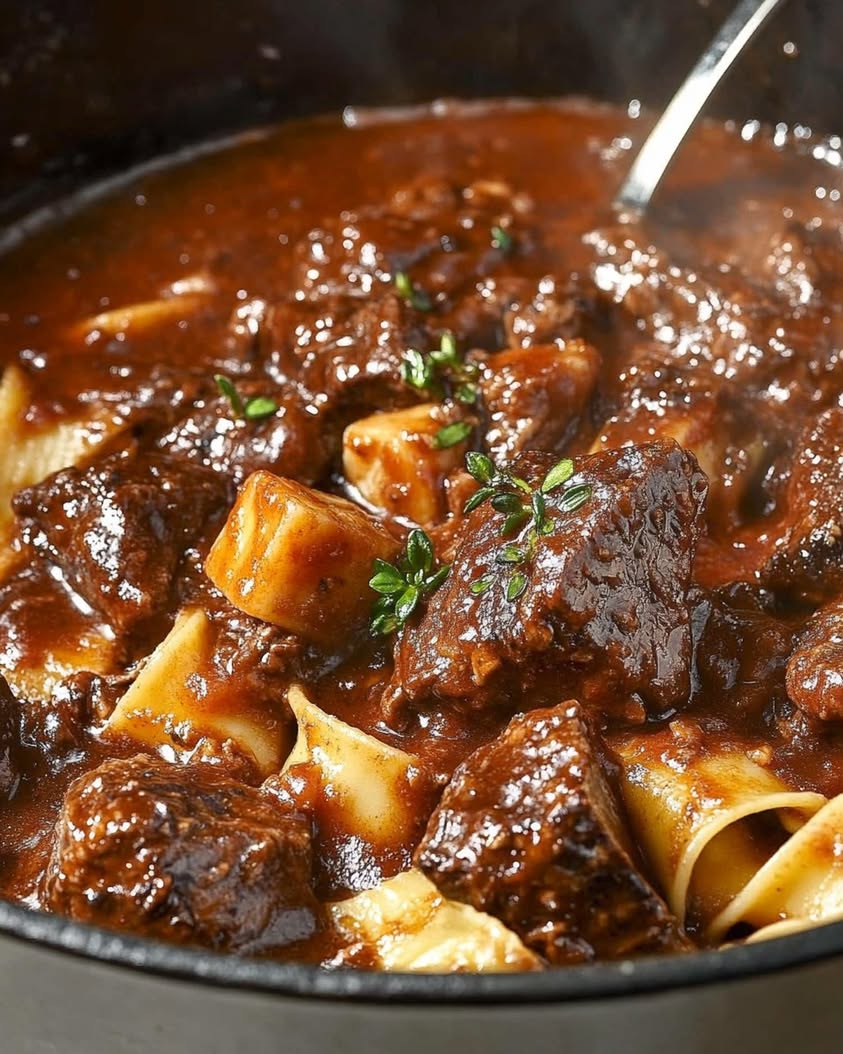
Slow-Braised Beef Bourguignon Pappardelle with Smoked Gouda & Herb Crust: A Comfort Food Masterpiece
Imagine the ultimate bowl of comfort. Tender, slow-braised beef melts in your mouth, bathed in a rich, velvety sauce of red wine and aromatics. Wide, silky pappardelle noodles cradle every morsel, creating the perfect vehicle for that luxurious stew. Finally, a golden, bubbling crust of smoked Gouda and fresh herbs adds a spectacular finish. This Slow-Braised Beef Bourguignon Pappardelle with Smoked Gouda & Herb Crust is not just a meal; it’s an experience that transforms your kitchen into a French bistro.
This recipe elevates the classic French beef bourguignon by pairing it with pasta and a cheesy topping. The process of slow braising breaks down tough beef chuck into unbelievable tenderness. Meanwhile, the sauce reduces to a deeply concentrated, glossy glaze. The smoked Gouda crust introduces a wonderful smoky, creamy element that contrasts beautifully with the savory depth of the stew. Ultimately, this dish is perfect for a special weekend project or an impressive dinner party centerpiece.
Furthermore, the magic of this Slow-Braised Beef Bourguignon Pappardelle with Smoked Gouda & Herb Crust lies in its layers of flavor. Each component builds upon the last, from the initial sear of the beef to the final broil of the cheese. The aroma that fills your home as it cooks is pure anticipation. Consequently, gathering around the table to share this creation feels like a true celebration. Let’s dive into how you can master this comforting masterpiece.
Quick Recipe Highlights
- Flavor Profile: This dish delivers profound savory depth from the slow-braised beef and red wine, balanced by the sweet earthiness of carrots and onions. The smoked Gouda crust adds a final, irresistible layer of creamy, smoky richness that ties everything together perfectly.
- Texture: You will enjoy incredibly tender, fall-apart beef against the smooth, wide ribbons of pappardelle pasta. The sauce is luxuriously thick and glossy, while the herb-flecked cheese crust provides a delightful contrast with its golden, slightly crisp top.
- Aroma: As it cooks, your kitchen will fill with the intoxicating scent of seared beef, woody herbs like thyme and bay, sweet caramelizing vegetables, and robust red wine. The final broil releases the nutty, smoky perfume of the Gouda, signaling it’s time to eat.
- Visual Appeal: This dish is a feast for the eyes with its deep, mahogany-colored sauce coating the wide pasta. The vibrant green herbs in the golden cheese crust create a beautiful color contrast, making it incredibly inviting straight from the oven.
- Skill Level Needed: This is an intermediate recipe ideal for a cook comfortable with foundational techniques like searing meat, building a sauce, and braising. Patience is the most crucial skill, as the slow braising process cannot be rushed for the best results.
- Special Equipment: You will need a large, heavy-bottomed Dutch oven or oven-safe pot with a tight-fitting lid for braising. A quality chef’s knife, cutting board, and a baking dish suitable for both oven and broiler are also essential for assembling the final dish.
Recipe Overview
- Difficulty Level: We rate this Slow-Braised Beef Bourguignon Pappardelle as intermediate. While the steps are straightforward, success hinges on proper technique. For example, achieving a good sear on the beef and patiently building layers of flavor are key. Additionally, managing the braising time and final assembly requires a bit of culinary confidence and timing.
- Category: This recipe brilliantly straddles categories as both a hearty main course and a spectacular pasta dish. It’s perfect for a cozy family dinner yet elegant enough for a dinner party. Moreover, it falls beautifully into the category of “project cooking” for a rewarding weekend.
- Cuisine: The foundation is deeply rooted in French Burgundian cuisine, honoring the classic beef bourguignon. The addition of pappardelle pasta nods to Italian influences, creating a delicious Franco-Italian fusion. The smoked Gouda crust is a modern, creative twist that adds a new dimension to the traditional stew.
- Cost: This is a moderately priced dish that delivers restaurant-quality results. The beef chuck is an affordable cut that becomes luxurious through braising. A mid-priced bottle of drinking red wine works perfectly. The smoked Gouda, bacon, and fresh herbs are the main splurges, making the overall cost worthwhile for a special meal.
- Season: This Slow-Braised Beef Bourguignon Pappardelle is the ultimate cold-weather comfort food. It’s ideal for fall and winter when you crave something rich, warming, and hearty. The long, slow cook time is also more appealing when you want to stay indoors and enjoy the aromas filling your home.
- Occasion: Serve this for a festive holiday gathering, a celebratory birthday dinner, or a sophisticated date night at home. It’s also a fantastic Sunday supper to share with loved ones. Because it can be made partially ahead, it reduces stress when entertaining.
Why You’ll Love This Recipe
First and foremost, the taste and texture of this Slow-Braised Beef Bourguignon Pappardelle are utterly sublime. The beef transforms into morsels of pure, savory tenderness after hours of gentle braising in wine and broth. Each wide noodle captures the glossy, deeply flavored sauce, ensuring every bite is perfectly balanced. Then, the smoked Gouda crust adds a fantastic finish with its creamy texture and smoky notes. Consequently, the combination creates a harmonious and deeply satisfying eating experience that feels both rustic and refined.
Next, consider the convenience and preparation benefits. Although it takes time, much of the cooking is hands-off braising in the oven. You can easily prep the vegetables and sear the beef ahead of time. Furthermore, the entire stew can be made a day or two in advance, often tasting even better as the flavors meld. On the day you serve, you simply cook the pasta, assemble the dish with the cheese topping, and broil. This make-ahead strategy makes entertaining remarkably stress-free.
From a nutritional perspective, this dish offers substantial benefits. Beef chuck is an excellent source of high-quality protein, iron, and B vitamins, which are essential for energy. The carrots, onions, and garlic provide vitamins, antioxidants, and fiber. Using a whole bottle of red wine may sound indulgent, but the alcohol cooks off, leaving behind beneficial antioxidants and incredible depth of flavor. Therefore, you enjoy a nourishing, hearty meal that fuels your body.
Additionally, the social and entertaining value of this recipe is incredibly high. Presenting a bubbling, cheese-crusted casserole at the table creates a memorable “wow” moment. It’s a shareable, family-style dish that encourages conversation and connection. Because it serves a crowd generously, it’s perfect for bringing people together. Serving this Slow-Braised Beef Bourguignon Pappardelle tells your guests they are worth the effort, making any meal feel like a special occasion.
Finally, this dish is cost-effective and accessible. You achieve a luxurious result without using expensive cuts of meat. The slow braising method turns affordable beef chuck into something extraordinary. Most ingredients are pantry staples or easily found at any grocery store. Investing in one good bottle of wine for cooking and drinking with the meal elevates the experience without breaking the bank. Ultimately, you create a restaurant-worthy feast at a fraction of the cost.
Historical Background and Cultural Significance
The story of beef bourguignon begins in the Burgundy region of France, known for its exceptional cattle and world-class wines. Originally, this was a peasant dish, a method for tenderizing tougher cuts of meat through long, slow cooking in local red wine. Farmers and vineyard workers needed hearty, sustaining meals, and this stew made excellent use of available ingredients. Over time, it evolved from humble fare to a celebrated symbol of French rustic cuisine, often called *boeuf bourguignon*.
This dish holds significant cultural importance as a cornerstone of French culinary tradition. It exemplifies the French philosophy of *cuisine du terroir*—cooking that expresses the unique flavors of a specific place. The mandatory use of Burgundy wine ties the recipe directly to its land of origin. Celebrated chef Auguste Escoffier helped codify the recipe in the early 20th century, bringing it from country kitchens into the realm of haute cuisine. Consequently, it became a benchmark for classic French cooking technique.
The evolution of the recipe shows how culinary traditions adapt. The classic version includes beef, bacon, pearl onions, mushrooms, and a bouquet garni. Our version with pappardelle and a smoked Gouda crust represents a modern, creative interpretation. While purists might raise an eyebrow at the pasta addition, it follows a logical path. Many cultures serve rich stews over starches like potatoes, noodles, or bread to soak up the sauce. This adaptation simply chooses wide Italian pasta as that perfect vehicle.
Regional variations of this concept exist across the globe. In Belgium, a similar dish called *carbonade flamande* uses beer instead of wine. In other parts of France, different local wines might be substituted. The addition of a cheese crust, while not traditional, draws inspiration from dishes like French onion soup or potato gratin. Our Slow-Braised Beef Bourguignon Pappardelle with Smoked Gouda Crust respectfully honors the original while embracing fusion and personal creativity, which is how food culture continues to thrive and delight new generations.
Ingredient Deep Dive
Beef Chuck Roast: Chuck roast comes from the shoulder of the cow, a well-exercised muscle rich with connective tissue and fat. Historically, butchers considered these “lesser” cuts, perfect for the slow, moist heat of braising. During cooking, the collagen melts into gelatin, creating that iconic fall-apart tenderness and enriching the sauce. Nutritionally, it’s a powerhouse of protein, iron, zinc, and B vitamins. For the best results, look for meat with good marbling (white fat streaks) and cut it yourself into large, uniform cubes for even cooking.
Burgundy or Pinot Noir Wine: The wine is not just a liquid; it’s the soul of the dish. Burgundy wine, made from Pinot Noir grapes, is traditionally used for its bright acidity and earthy, fruity notes that complement the beef. The alcohol helps extract flavors from the meat and vegetables while the acidity tenderizes. As it reduces, the sugars concentrate, adding natural sweetness and body to the sauce. Always choose a wine you would enjoy drinking. The alcohol cooks off completely, leaving behind a complex, non-alcoholic flavor foundation that is essential for an authentic taste.
Smoked Gouda Cheese: Gouda originates from the Netherlands, but smoked Gouda adds a distinct dimension. The smoking process, traditionally over real wood chips, infuses the cheese with a deep, savory aroma. When broiled on top of the stew, it melts into a creamy, golden crust with a subtle smoky sweetness that cuts through the richness of the beef. It provides fat, protein, and calcium. For the best melt and flavor, buy a block and grate it yourself, as pre-shredded cheese contains anti-caking agents that can hinder smooth melting.
Pappardelle Pasta: These wide, ribbon-like noodles hail from Tuscany, Italy. Their name comes from the Italian verb “pappare,” meaning to gobble up, which is exactly what you’ll want to do. Their broad, flat surface is ideal for capturing and holding thick, chunky sauces like this bourguignon. They provide a satisfying, hearty base that stands up to the robust stew. Look for fresh pappardelle if available, as it cooks quickly and has a delicate, silky texture. Dried pappardelle works perfectly well, offering a slightly more toothsome bite.
Bacon (Lardons or Pancetta): Bacon serves a dual purpose: it provides rendered fat for cooking the aromatics and adds a crucial layer of salty, umami depth. Traditional French lardons are thick-cut batons of salt-cured pork belly. Pancetta, Italian cured pork belly, is a excellent substitute. As the bacon renders and browns, it creates fond (the browned bits) on the bottom of the pot, which later deglazes with wine, building incredible flavor. This ingredient is fundamental for achieving the authentic, deeply savory base note of the stew.
Common Mistakes to Avoid
- Not Patting the Beef Dry: Skipping this step prevents a proper sear. Wet beef steams instead of browns, missing out on the Maillard reaction that creates complex, savory flavors. Always pat cubed beef thoroughly with paper towels before seasoning and searing.
- Crowding the Pot While Searing: Adding too much beef at once lowers the pan temperature dramatically, causing the meat to release liquid and stew in its own juices. Sear in small, manageable batches to ensure each piece gets a dark, caramelized crust, which is essential for flavor.
- Using Low-Quality Wine: Never cook with wine you wouldn’t drink. The flavor concentrates as it reduces, so a “cooking wine” with added salt or preservatives will make your sauce taste harsh and unpleasant. A decent, dry red wine is a non-negotiable investment for this recipe.
- Rushing the Braise: Trying to speed up the process with higher heat will result in tough, dry beef. The connective tissue needs time at a low, steady temperature to break down. Trust the process and let the oven do its work for the full, gentle cooking time.
- Adding Dairy Too Early: If your recipe includes a butter-flour paste (beurre manié) to thicken, add it at the end. Introducing dairy to a highly acidic wine sauce early in cooking can cause it to curdle or separate, ruining the sauce’s silky texture.
- Overcooking the Pasta: Pappardelle should be cooked al dente, as it will continue to absorb sauce and soften in the oven under the broiler. Mushy pasta will turn to mush in the final dish. Cook it just until tender but still firm to the bite.
- Broiling Without Watching: The cheese crust can go from perfectly golden to burnt in seconds. Never walk away from the broiler. Stay close, rotate the dish if needed for even browning, and remove it the moment the cheese is bubbly and spotted with brown.
- Skipping the Rest Time: Allowing the assembled dish to sit for 5-10 minutes after broiling lets the cheese set slightly and the flavors settle. Cutting into it immediately can cause the sauce to run and the cheese to be overly stringy. A brief rest improves serving texture dramatically.
Essential Techniques
Searing (The Maillard Reaction): This is the most critical step for building flavor. Searing creates hundreds of new flavor compounds through the Maillard reaction, where amino acids and sugars in the meat brown. To master it, ensure your pot is very hot and the beef is dry. Do not move the pieces for a few minutes to allow a proper crust to form. The common pitfall is impatience—flipping too soon. Look for a deep brown color and the meat releasing easily from the pot before turning.
Deglazing: After searing meat and sautéing vegetables, a layer of browned, caramelized bits (fond) sticks to the pot. Deglazing uses a liquid—here, red wine—to dissolve those bits. Pour in the wine and use a wooden spoon to vigorously scrape the bottom. This technique incorporates all that concentrated flavor into your sauce. The key is to do it while the pot is still hot. If the fond is burned (black, not brown), avoid deglazing with it, as it will impart a bitter taste.
Braising: Braising is a two-step cooking method using both dry and moist heat. First, you sear the meat (dry heat). Then, you cook it slowly submerged partially in liquid (moist heat) in a covered pot. The low, steady oven temperature gently breaks down collagen into gelatin. This makes tough cuts tender and thickens the sauce. The visual cue for success is meat that yields easily when pierced with a fork. The liquid should simmer gently, not boil aggressively, throughout the process.
Reducing a Sauce: After braising, you often need to concentrate and thicken the cooking liquid. This is done by simmering it uncovered, allowing water to evaporate. The sauce will slowly transform from thin and watery to glossy and coating the back of a spoon. Stir occasionally to prevent sticking. This step intensifies all the flavors. Be patient; rushing it with high heat can cause the sauce to burn or reduce too much, becoming overly salty.
Pro Tips for Perfect Slow-Braised Beef Bourguignon Pappardelle
First, cut your beef chuck into large, two-inch cubes. Smaller pieces will overcook and become dry during the long braise. Larger cubes ensure a tender interior and a flavorful exterior.
Second, after searing the beef, let the pot cool slightly before adding the tomato paste. Cooking tomato paste in the residual fat for a minute or two until it darkens slightly removes its raw, tinny taste and sweetens it.
Third, tie your fresh herbs—thyme, parsley stems, and a bay leaf—together with kitchen twine. This creates a classic bouquet garni that’s easy to remove before serving, preventing stray woody stems in your finished stew.
Fourth, if your sauce isn’t thickening to a glossy consistency after reducing, make a beurre manié. Mash equal parts soft butter and flour into a paste and whisk it into the simmering sauce in small bits. It will thicken smoothly and enrich the sauce.
Fifth, salt your pasta water very generously. It should taste like the sea. This is your only chance to season the pasta itself, and it makes a significant difference in the overall flavor balance of the dish.
Sixth, toss the cooked, drained pappardelle with a little of the bourguignon sauce before assembling in the baking dish. This prevents the noodles from sticking together and ensures every strand is flavored from within.
Seventh, for an extra-crispy cheese crust, use a mix of finely grated and coarsely grated smoked Gouda. The finer cheese melts into a base layer, while the coarser shreds create lovely crispy edges and bubbles.
Eighth, let the complete casserole rest for 5-10 minutes after broiling. This allows the molten cheese to set slightly, making it easier to serve neat portions, and lets the intense heat distribute evenly throughout the dish.
Variations and Adaptations
Regional Variations: For a Belgian twist, replace the red wine with a dark, malty beer like a stout or dubbel to make Carbonade Flamande. For a Provençal version, use a dry rosé wine and add olives and orange zest. In an American adaptation, you could use a bold Zinfandel and add a touch of molasses for depth.
Seasonal Adaptations: In spring, add fresh peas and asparagus tips during the last few minutes of pasta cooking. For summer, use lighter Pinot Noir and serve the stew at room temperature over cold pasta for a unique salad. In autumn, incorporate wild mushrooms like chanterelles or porcini when sautéing the button mushrooms.
Dietary Modifications: For a gluten-free version, use certified gluten-free pappardelle and thicken the sauce with a cornstarch slurry instead of a flour-based roux or beurre manié. Ensure your bacon is gluten-free, as some brands use gluten-containing additives in curing.
Flavor Variations: Add a tablespoon of miso paste when sautéing vegetables for an umami boost. A splash of balsamic vinegar at the end of reducing brightens the sauce. For a deeper flavor, include a small piece of dark chocolate (70% cacao) during the final sauce reduction.
Texture Modifications: For a smoother sauce, you can blend half of the stewed vegetables back into the braising liquid after removing the meat. For more texture, add sautéed pearl onions and mushrooms separately at the end, keeping them distinct and firm.
Presentation Alternatives: Instead of a large casserole, assemble individual portions in gratin dishes or cast-iron skillets for a personalized, restaurant-style presentation. You can also skip the broiling step and simply garnish with freshly grated Gouda and herbs for a lighter finish.
Serving and Presentation Guide
Plating Techniques: For family style, present the entire baking dish at the table, allowing guests to see the golden, bubbly crust. Use a large, shallow serving spoon to scoop down to the bottom, ensuring each serving gets pasta, beef, and crust. For individual plates, twirl the pappardelle with tongs into a nest in the center of a shallow bowl, ladle the beef and sauce over and around, and place a section of the cheese crust on top.
Garnishing Ideas: Fresh, finely chopped flat-leaf parsley or chives sprinkled over the crust just before serving adds a vital pop of color and fresh flavor. A final drizzle of high-quality extra virgin olive oil or a few cracks of black pepper enhances the aroma and appearance.
Traditional Accompaniments: In France, this stew is traditionally served with boiled potatoes, egg noodles, or crusty bread. A simple green salad with a sharp vinaigrette is essential to cut through the richness. Buttered green beans or glazed carrots also make excellent side dishes.
Modern Serving Suggestions: Consider starting the meal with a light frisée salad with a lemon vinaigrette. For a complete experience, end with a simple dessert like lemon sorbet or poached pears to cleanse the palate after the hearty main course.
Temperature Considerations: Serve this dish piping hot. Warm your serving bowls or plates to prevent the food from cooling too quickly. The cheese crust is best enjoyed immediately after broiling, while it’s still crisp and gooey.
Portion Control Tips: This is a rich dish, so a little goes a long way. A standard serving is about 1.5 cups of the pasta and stew mixture. Because it’s so satisfying, guests will be happily full without needing oversized portions. Offering a lighter first course helps manage overall portion sizes.
Wine and Beverage Pairing
Wine Pairings: The classic pairing is, unsurprisingly, a Burgundy (Pinot Noir). Its bright acidity and red fruit flavors cut through the richness and echo the wine used in cooking. A Cru Beaujolais (Gamay) is a fantastic, slightly lighter alternative. If you prefer bolder wines, a California Pinot Noir or a lighter-style Syrah/Shiraz can also stand up to the dish without overwhelming it.
Non-Alcoholic Alternatives: A rich, non-alcoholic red wine alternative works well. Alternatively, try a tart cherry juice spritzer with a splash of soda water and a rosemary sprig. For a savory option, a roasted vegetable or mushroom broth served hot in a mug can complement the umami notes beautifully.
Coffee/Tea Pairings: After the meal, a strong espresso or French press coffee is excellent for cutting through the fat and ending on a clean note. For tea, a smoky Lapsang Souchong black tea mirrors the smokiness of the Gouda, while an Earl Grey offers a bright, citrusy contrast.
Temperature Considerations: Serve red wine slightly below room temperature, around 60-65°F (15-18°C). Chilling it too much mutes the flavors. Non-alcoholic beverages should be served chilled if they are sparkling or at room temperature for broths. Coffee and tea, of course, should be served hot.
Serving Suggestions: Decant your red wine about 30 minutes before serving to allow it to breathe and open up. For non-alcoholic options, present them in elegant glassware to make them feel just as special as the alcoholic pairings. Always offer water on the table to cleanse palates between bites.
Storage and Shelf Life
Storage Methods: Store any leftovers in an airtight container in the refrigerator. It’s best to keep the components separate if possible: the beef bourguignon stew in one container and any unused cooked pasta in another. The assembled and baked casserole can be stored as a whole, though the pasta will continue to absorb sauce.
Temperature Requirements: Refrigerate within two hours of cooking. The stew must be cooled to room temperature before covering and refrigerating to prevent condensation, which can make the pasta soggy. Do not leave it out on the counter overnight.
Container Recommendations: Use glass or BPA-free plastic containers with tight-fitting lids. For the stew, a container that is wide rather than deep helps it cool faster and more evenly, which is important for food safety.
Signs of Spoilage: Discard the dish if you notice an off or sour smell, visible mold growth, or if the sauce has separated in an unusual way. If it has been stored for more than 4 days, it’s safest to err on the side of caution and throw it out.
Reheating Instructions: Reheat gently on the stovetop over low heat, adding a splash of broth or water to loosen the sauce. For the assembled casserole, reheat in a 350°F (175°C) oven covered with foil until warmed through, then briefly broil to re-crisp the cheese topping. Microwave reheating can make the pasta rubbery.
Freezing Guidelines: The beef bourguignon stew (without pasta or cheese) freezes exceptionally well for up to 3 months. Cool completely, then freeze in airtight containers or heavy-duty freezer bags, leaving some space for expansion. Thaw overnight in the refrigerator before reheating and assembling with fresh pasta and cheese.
Make Ahead Strategies
Prep Timeline: You can prepare the entire beef bourguignon stew up to 3 days in advance. In fact, it often tastes better as the flavors have more time to meld. The day you plan to serve, simply reheat the stew gently on the stovetop, cook the pappardelle fresh, assemble with the cheese, and broil.
Storage Between Steps: After braising and reducing the sauce, let the stew cool completely. Then, transfer it to an airtight container and refrigerate. You can also prep your vegetables (dice onions, carrots, slice mushrooms) a day ahead and store them separately in bags in the fridge to save time.
Quality Impact Assessment: Making the stew ahead has a positive impact on quality, improving flavor depth. However, cooking the pasta ahead is not recommended, as it will become gummy and sticky. The cheese should always be grated fresh just before assembly to prevent clumping and drying out.
Assembly Tips: When ready to serve, if your stew is thick from refrigeration, loosen it with a bit of beef broth or water as you reheat it. Toss the freshly cooked pasta with a little sauce before layering to prevent sticking. Assemble in your baking dish just before broiling.
Reheating Guidelines: Reheat the stew slowly over medium-low heat, stirring occasionally. If you reheat it from cold in the oven with the pasta, the center may take a very long time to get hot, potentially overcooking the edges. Stovetop reheating gives you the most control.
Fresh Element Additions: Always add the final cheese crust and fresh herb garnish right before the final broil and serving. This ensures the best texture and brightest flavor from these finishing components, which don’t benefit from being made ahead.
Scaling Instructions
Halving the Recipe: Halving the recipe is straightforward for a smaller household. Use a smaller Dutch oven or heavy pot. The braising time may be slightly reduced—check for tenderness after about 2 hours. Use a standard 8×8 inch baking dish for the final assembly. All other techniques remain the same.
Doubling or Tripling: For a crowd, you can double or triple the recipe. The key is to sear the beef in even more batches to avoid crowding—this step will take longer. You will need a very large Dutch oven or may need to braise in two separate pots. For assembly, use multiple baking dishes or a very large lasagna pan. Baking and broiling times may need a slight increase.
Equipment Adjustments: Scaling up requires matching your equipment to the volume. Ensure your oven can accommodate multiple large pots or baking dishes. You may need to use multiple oven racks and rotate them during braising and broiling for even cooking. A large commercial-style baking sheet can sometimes serve as a giant “casserole” in a pinch.
Timing Modifications: When doubling, the time to brown the meat and reduce the sauce will increase, but the braising time in the oven should remain roughly the same, as it depends on the size of the meat cubes, not the quantity. Always use tenderness, not just time, as your guide.
Storage Considerations: A large batch yields more leftovers. Plan your storage containers in advance. Consider freezing portions of the stew (without pasta) for future easy meals. Label and date everything clearly.
Nutritional Deep Dive
Macro Breakdown: A serving of this Slow-Braised Beef Bourguignon Pappardelle provides a balanced mix of macronutrients. It is rich in high-quality protein from the beef and cheese, essential for muscle repair and satiety. The pasta and vegetables contribute complex carbohydrates for sustained energy. The fats come from the beef marbling, bacon, butter, and cheese, providing flavor and helping absorb fat-soluble vitamins from the dish.
Micronutrient Analysis: This dish is an excellent source of iron and zinc from the red meat, crucial for immune function and oxygen transport in the blood. The carrots and onions provide Vitamin A (as beta-carotene), Vitamin C, and antioxidants. The tomato paste and red wine contribute lycopene and resveratrol, respectively, which are linked to various health benefits.
Health Benefits: When enjoyed as part of a balanced diet, this meal supports energy levels and provides essential nutrients. The slow-cooked meat is easier to digest. The lycopene in cooked tomatoes is more bioavailable. The dish is also very satiating, which can help prevent overeating later. The herbs like thyme have anti-inflammatory properties.
Dietary Considerations: This is not a low-calorie or low-fat dish; it is a hearty, celebratory meal. Those monitoring sodium intake should be mindful of the bacon, broth, and cheese. The dish contains gluten (from pasta and potential flour thickener) and dairy. Always check with your dietary needs and enjoy in moderation as part of an overall healthy eating pattern.
Portion Analysis: A reasonable portion is about 1.5 to 2 cups of the assembled dish. This provides a satisfying meal without excessive calories. Balancing your plate with a large side of non-starchy vegetables (like a green salad or steamed broccoli) increases fiber and nutrient density, making the meal more balanced.
Weight Management Tips: To lighten the dish slightly, you can use a leaner cut of beef like top round, though it may be less tender. Reduce the amount of bacon or cheese topping. Increase the proportion of vegetables in the stew, such as adding more mushrooms and carrots. Serve with a smaller portion of pasta or substitute with whole-wheat pappardelle for added fiber.
Dietary Adaptations
Gluten-Free: Use certified gluten-free pappardelle pasta. To thicken the sauce, avoid a flour-based roux. Instead, use a cornstarch slurry (mix 1 tbsp cornstarch with 2 tbsp cold water) stirred in during the final sauce reduction, or simply let the sauce reduce naturally to a thicker consistency. Ensure your beef broth is gluten-free.
Dairy-Free: Omit the smoked Gouda crust entirely. For a similar finishing touch, create a crust with dairy-free breadcrumbs mixed with nutritional yeast, smoked paprika, and olive oil, then broil until crisp. Use a plant-based butter alternative if making a beurre manié for thickening.
Vegan: This requires a significant adaptation. Substitute beef with large, meaty king oyster mushrooms or seitan. Use a rich, umami-packed vegetable broth and a full-bodied red wine. For the “bacon” flavor, use smoked tempeh or coconut bacon. The cheese crust can be made with vegan smoked cheese or the breadcrumb mixture mentioned above.
Low-Carb/Keto: Replace the pappardelle pasta with zucchini noodles (zoodles) or shirataki noodles. Be sure to sauté them briefly to remove excess moisture. Thicken the sauce with a xanthan gum slurry (a tiny pinch whisked in) instead of flour. Use full-fat ingredients and ensure any wine used is dry (not sweet).
Paleo: Omit the pasta, cheese, and any flour. Serve the beef bourguignon stew over mashed cauliflower, roasted spaghetti squash, or simply in a bowl. Use arrowroot powder instead of flour for thickening if needed. Ensure the bacon is sugar-free and the wine has no added sulfites if strictly adhering.
Low-FODMAP: This is challenging due to{“success”:true,”message”:”Recipe created successfully”,”post_id”:8321,”tasty_recipe_id”:8321,”shortcode”:” Print
Slow-Braised Beef Bourguignon Pappardelle with Smoked Gouda & Herb Crust
Description
A comforting fusion dish featuring tender beef braised in red wine, served over wide pappardelle pasta, and topped with a crispy smoked Gouda and herb crust.
Ingredients
For the Crust:
- 2 lbs beef chuck, cut into 1-inch cubes
- 1 bottle dry red wine (such as Pinot Noir)
- 4 cups beef broth
- 1 large onion, diced
- 3 carrots, sliced
- 8 oz cremini mushrooms, quartered
- 4 cloves garlic, minced
- 2 tbsp tomato paste
- 2 sprigs fresh thyme
- 2 bay leaves
- 12 oz pappardelle pasta
- 1 cup shredded smoked Gouda cheese
- 1/2 cup panko breadcrumbs
- 2 tbsp chopped fresh parsley
- 1 tbsp olive oil
- Salt and black pepper to taste
Instructions
1. Prepare the Crust:
- Season beef with salt and pepper. In a large Dutch oven, sear beef over medium-high heat until browned on all sides. Remove and set aside.
- In the same pot, sauté onion, carrots, and mushrooms until softened. Add garlic and tomato paste, cooking for 1 minute.
- Return beef to the pot. Pour in red wine and beef broth, adding thyme and bay leaves. Bring to a simmer, then cover and braise on low heat for 3 hours until beef is tender.
- Cook pappardelle according to package instructions until al dente. Drain and set aside.
- Preheat broiler. In a bowl, mix smoked Gouda, panko, parsley, and olive oil to form the crust mixture.
- Combine cooked pasta with the beef bourguignon sauce. Transfer to a baking dish, top evenly with the crust mixture, and broil for 3-5 minutes until golden and bubbly.
Notes
You can customize the seasonings to taste.

I’m Billy, a classically trained culinary school graduate from The Culinary Institute of America with over 12 years in the restaurant industry and over 19 years of cooking experience.