
Slow-Braised Lamb Shanks with Red Wine and Parsnip Mash: A Festive Feast for Special Occasions
Imagine a meal that fills your home with the most incredible aroma, promising a dinner of deep, soul-satisfying comfort. This recipe for Slow-Braised Lamb Shanks with Red Wine and Parsnip Mash delivers exactly that. It is a celebration of patience and flavor, transforming humble ingredients into a spectacular centerpiece. The process is a journey, one that results in meat so tender it falls from the bone and a sauce so rich it deserves to be sopped up with every bite.
Furthermore, this dish is the ultimate choice for a special dinner party or a festive holiday gathering. It feels luxurious and impressive, yet the hands-on work is surprisingly minimal. Once the initial sear is done and the pot is in the oven, you are free to relax and enjoy the anticipation. The parsnip mash, with its subtle sweetness and velvety texture, provides the perfect creamy counterpoint to the robust, savory lamb. Ultimately, this meal is about creating a memorable experience around the table.
Quick Recipe Highlights
- Flavor Profile: This dish boasts a complex symphony of savory, earthy, and rich notes. The red wine braising liquid reduces into a deeply concentrated sauce, while herbs like rosemary and thyme provide aromatic high notes. The natural sweetness of the parsnips in the mash beautifully balances the savory depth of the lamb.
- Texture: The slow-braised lamb shank achieves a legendary tenderness, yielding to the gentle pull of a fork. The parsnip mash is luxuriously smooth and creamy, creating a wonderful textural contrast. Festive garnishes like pomegranate seeds add a delightful, juicy pop that brightens each mouthful.
- Aroma: As the lamb shanks braise, your kitchen will fill with an intoxicating scent of roasting meat, red wine, garlic, and woody herbs. This is the kind of cooking perfume that builds excitement and makes everyone eagerly await dinner. The aroma is hearty, warm, and unmistakably festive.
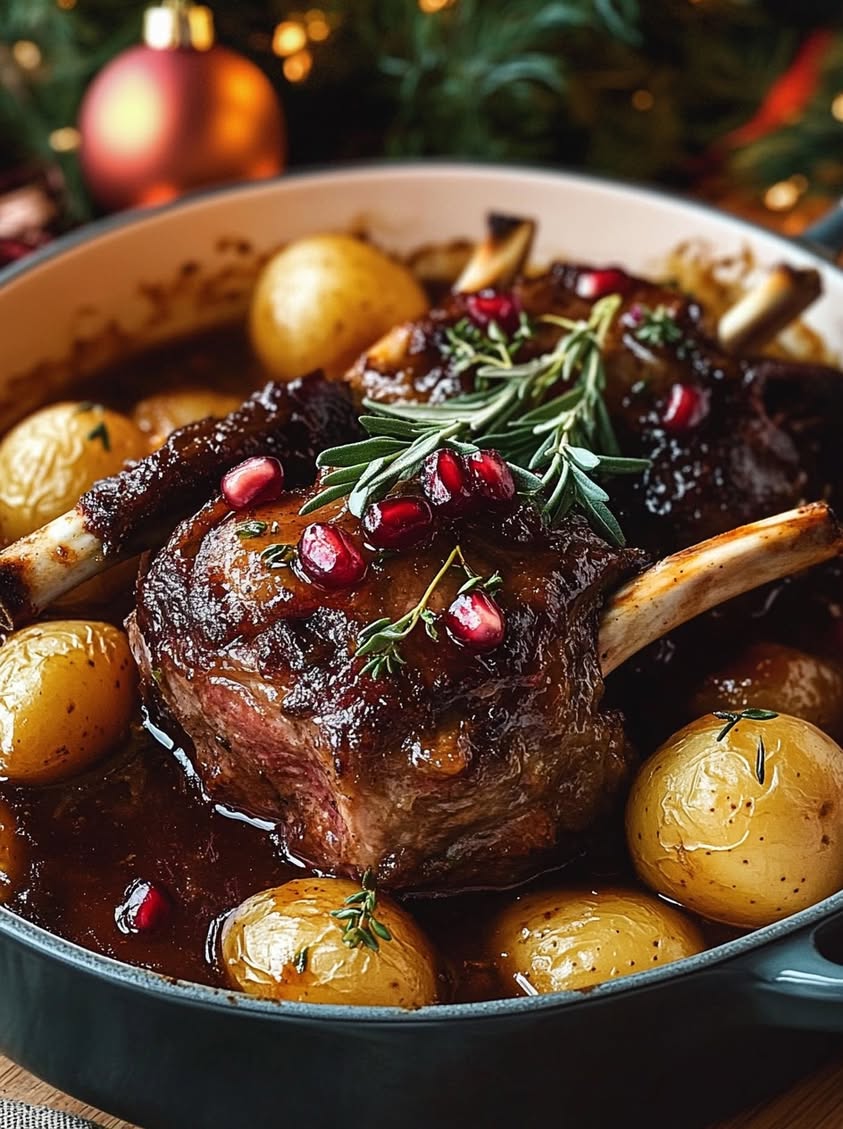
- Visual Appeal: Served on a bed of pale, creamy parsnip mash, the dark, glossy lamb shanks make a dramatic statement. The final garnishes of vibrant green herbs and jewel-like pomegranate seeds transform the plate into a work of art. This presentation is perfect for a special occasion meal.
- Skill Level Needed: This recipe is accessible to intermediate home cooks. The techniques involved—searing, sautéing, and braising—are foundational. Success relies more on patience and timing than on advanced culinary skill, making it a fantastic project for cooks looking to build confidence.
- Special Equipment: A large, heavy-bottomed Dutch oven or oven-safe pot with a tight-fitting lid is essential for even braising. You will also need a potato masher or ricer for the parsnip mash. A fine-mesh strainer is helpful for achieving a silky-smooth sauce.
Recipe Overview
- Difficulty Level: We rate this recipe as medium difficulty. The individual steps are straightforward, but the recipe requires attention to detail during the initial sear and sauce reduction. Managing oven time and coordinating the parsnip mash with the finishing of the braise also adds a layer of planning. However, the process is very forgiving, and the extended cook time allows for margin.
- Category: This dish firmly sits in the category of hearty main courses and celebratory dinners. It is a complete meal when paired with the parsnip mash and a simple green vegetable. Additionally, it fits perfectly into the realm of comfort food, albeit of a very elevated and special kind.
- Cuisine: While braised lamb is a technique found across Europe and the Mediterranean, this recipe leans into a modern, bistro-style presentation. The use of red wine, rosemary, and a mirepoix of vegetables is classically French. The parsnip mash is a contemporary British or Nordic twist on traditional potato puree.
- Cost: Lamb shanks are a relatively affordable cut compared to other lamb options, offering excellent value. The remaining ingredients—root vegetables, wine, herbs—are pantry staples. This makes the dish a cost-effective way to create a restaurant-quality meal at home for a special event.
- Season: This is the quintessential cold-weather dish, perfect for fall and winter. The rich, warming qualities of the braise are ideal for chilly evenings. That said, its elegance makes it suitable for festive spring holidays like Easter as well, especially when paired with seasonal garnishes.
- Occasion: This recipe is tailor-made for dinner parties, holiday feasts (Christmas, Easter, New Year’s), and any occasion where you want to impress. It is also a wonderful project for a leisurely weekend cooking session, resulting in incredible leftovers that often taste even better the next day.
Why You’ll Love This Recipe
First and foremost, the taste and texture of these Slow-Braised Lamb Shanks with Red Wine and Parsnip Mash are simply unforgettable. The long, slow cooking process breaks down the tough connective tissue in the lamb shank, transforming it into melt-in-your-mouth perfection. Meanwhile, the braising liquid reduces to a glossy, intensely flavorful sauce that clings to every forkful. The parsnip mash, with its natural earthy sweetness, cuts through the richness and creates a harmonious balance on the plate. Every element works together to deliver a deeply satisfying and complex dining experience.
Convenience is another major benefit, surprisingly so for such an impressive dish. After the initial half-hour of active prep work—searing the lamb and sautéing the vegetables—the oven does the heavy lifting for you. This hands-off time is a gift, allowing you to prepare the rest of your meal, set the table, or simply relax. The recipe is also very forgiving; a little extra time in the oven won’t hurt the lamb, making it stress-free for entertaining. You can confidently serve guests knowing the main course is virtually foolproof.
From a nutritional standpoint, this meal offers substantial benefits. Lamb is an excellent source of high-quality protein, iron, zinc, and B vitamins, which are crucial for energy and metabolism. Parsnips are rich in fiber, vitamin C, and potassium. Cooking the vegetables in the braise also means their nutrients infuse the sauce. While rich, this is a meal built on whole, unprocessed ingredients. You control the amount of salt and fat, making it a healthier alternative to rich restaurant dishes.
The social and entertaining value of this dish cannot be overstated. Presenting a whole, glistening lamb shank to each guest feels theatrical and generous. It sparks conversation and creates a sense of occasion. This is food meant for sharing and lingering over, perfect for long, conversational dinners. Cooking it also shows a level of care and effort that guests truly appreciate, making them feel special. It turns a simple meal into an event.
Finally, this recipe is remarkably cost-effective and accessible. Lamb shanks are an underutilized cut, often priced well below chops or racks. By using a slow, moist-heat cooking method, you turn an economical cut into a luxurious result. The other ingredients are simple and seasonal. You do not need rare or expensive components to create magic. This approachability makes gourmet, comforting meals possible for any home cook on any budget.
Historical Background and Cultural Significance
The practice of braising tough cuts of meat is one of humanity’s oldest and most universal cooking techniques. Essentially, every culture with access to meat developed some form of slow-cooked stew or braise to make the most of every part of the animal. The lamb shank, being a muscular and sinewy cut from the lower leg, was a prime candidate for this treatment. Historically, these methods were born of necessity, using low heat and extended time to tenderize meat over a hearth or fire.
In Mediterranean and Middle Eastern cultures, lamb holds deep cultural and religious significance. It is a centerpiece for celebrations like Easter, Passover, and Eid. Braising lamb with local herbs, wine, and vegetables became a way to honor guests and mark important occasions. The method ensured even large, tough cuts could feed a crowd in a celebratory way. These traditions traveled and evolved, influencing European peasant cooking where wine and root cellars provided the braising liquids and vegetables.
The evolution of this specific recipe reflects a move from peasant sustenance to haute cuisine. What was once a simple pot of meat and vegetables simmered for hours has been refined. Chefs began to focus on searing for flavor, carefully building layers of taste with mirepoix, tomato paste, and good wine, then straining and reducing the sauce to a refined glaze. The parsnip mash is a more modern accompaniment, replacing or supplementing potatoes for a more complex, sweet note that pairs exquisitely with the savory lamb.
Regional variations of braised lamb shank are fascinating. In Italy, you might find “stinco di agnello” braised with white wine, rosemary, and garlic. Greek “kleftiko” traditionally involves slow-baking lamb with oregano and lemon. A Persian “khoresh” might braise lamb with pomegranate molasses and walnuts. The French “souris d’agneau” (named for its mouse-like shape) is often braised in red wine. Our recipe is a contemporary fusion that borrows the red wine base from French tradition but presents it with a clean, modern aesthetic and global garnishes.
Ingredient Deep Dive
Lamb Shanks: Lamb shanks are cuts from the lower leg of the animal, full of collagen-rich connective tissue. This collagen melts during slow braising, creating unbelievably tender meat and contributing body to the sauce. Nutritionally, lamb is a powerhouse of heme iron, which is easily absorbed, and zinc, vital for immune function. When selecting shanks, look for ones that are well-trimmed of excess fat but still have a good layer of meat around the bone. They can be stored in the coldest part of your refrigerator for 2-3 days before use. For a substitute, beef shanks or short ribs would follow a similar braising process.
Red Wine: The red wine in this braise is not just for moisture; its acidity helps tenderize the meat and its complex fruit and tannic notes form the backbone of the sauce. Culturally, cooking with wine is a hallmark of French and Italian cuisine, used to deglaze pans and build fond. Choose a dry, drinkable red like Cabernet Sauvignon or Syrah—never “cooking wine.” The alcohol cooks off, leaving concentrated flavor. If you need a substitute, a rich beef or mushroom broth mixed with a tablespoon of red wine vinegar or pomegranate molasses can mimic some depth.
Parsnips: Parsnips are a root vegetable closely related to carrots, with a sweet, nutty, and earthy flavor that intensifies when cooked. They have been a European staple since Roman times. They are an excellent source of soluble fiber, vitamin C, and folate. When selecting parsnips, choose firm, medium-sized ones without soft spots or extensive hairy roots. Store them in the vegetable drawer of your fridge. For the mash, potatoes, celery root, or carrots can be used as substitutes or in combination, though the flavor profile will change.
Fresh Herbs (Rosemary & Thyme): These woody herbs are the aromatic soul of the dish. Rosemary, with its piney fragrance, and thyme, with its subtle earthiness, are classic partners for lamb and withstand long cooking times. They have been used for centuries in Mediterranean cooking both for flavor and for their purported digestive benefits. Always use fresh herbs for this recipe, as dried will lack brightness and can become gritty. If absolutely necessary, use half the amount of dried. Store fresh herbs stem-down in a glass of water in the fridge.
Common Mistakes to Avoid
- Not Searing the Lamb Properly: Skipping the sear or crowding the pan leads to steamed, gray meat instead of a flavorful, caramelized crust. This fond on the bottom of the pot is the foundation of your sauce. Always pat the shanks dry and sear in batches over medium-high heat to get a good color.
- Using Poor Quality Wine: Never use “cooking wine” from the supermarket, as it is often salted and of low quality. The rule is simple: cook with a wine you would enjoy drinking. A harsh, acidic, or overly sweet wine will impart those undesirable flavors to your entire dish.
- Adding Cold Liquid to Hot Pot: Pouring cold wine or stock directly onto seared meat can shock the proteins and make the meat tough. Always let your liquids come to room temperature first, or better yet, warm them slightly before adding to the braise.
- Braising at a Boil, Not a Simmer: A rolling boil will make the lamb shanks tough and dry. The ideal braise is a gentle, steady simmer, with just a few bubbles breaking the surface. This low-and-slow approach gently breaks down collagen without hardening the muscle fibers.
- Overcooking the Parsnips: Boiling parsnips into waterlogged mush will result in a thin, bland mash. Cook them until they are just fork-tender. Overcooking also causes them to absorb too much water, making it impossible to achieve a rich, creamy texture, even with ample butter.
- Not Straining the Sauce: Skipping the straining step leaves you with a rustic, chunky sauce. While not wrong, straining creates an elegant, velvety-smooth glaze that coats the lamb beautifully. It is a small extra step that dramatically elevates the presentation and mouthfeel.
- Seasoning at the End Only: Building layers of seasoning is key. Season the lamb before searing, season the vegetables as they sauté, and taste the braising liquid before it goes in the oven. This ensures every component is properly seasoned, not just the final sauce.
- Rushing the Reduction: After straining, reducing the sauce too quickly over high heat can cause it to become bitter or burn. A steady, medium simmer allows the flavors to concentrate and the sauce to thicken to a perfect, glossy consistency.
Essential Techniques
Searing for Flavor: Searing is the non-negotiable first step for building deep flavor. The high heat causes a Maillard reaction, creating hundreds of new flavor compounds on the surface of the meat. This also creates fond—the browned bits stuck to the pot—which will later dissolve into your braising liquid, enriching the entire sauce. To master it, ensure your pot is hot before adding oil, pat the meat completely dry, and do not move it until a crust forms. The visual cue for success is a deep, even brown color on all sides.
The Art of Braising: Braising is a combination cooking method: first dry heat (searing), then moist heat (simmering in liquid). The technique is important because it tenderizes tough cuts by slowly dissolving collagen into gelatin. This keeps the meat moist and creates a luxurious sauce. The key is maintaining a low, steady temperature, either on the stovetop or in the oven. A common pitfall is using too much liquid; the shanks should be partially submerged, not swimming. Success is evident when the meat pulls easily away from the bone.
Building a Flavor Base (Soffritto/Mirepoix): Cooking the diced onions, carrots, and celery is not just about softening vegetables. This step, called sweating, releases their natural sugars and water, building a sweet, savory foundation for the entire dish. Adding tomato paste and cooking it for a minute “toasts” it, mellowing its acidity and boosting its umami. The technique is crucial for depth. Cook over medium heat until the vegetables are soft and fragrant, but not browned. This forms the aromatic bed upon which your lamb will braise.
Reducing a Sauce: Reduction is the process of simmering a liquid to evaporate water, concentrating the flavors and thickening the consistency. For this recipe, it transforms the strained braising liquid into a glossy, restaurant-quality glaze. It is important because it balances the sauce, making it rich and cohesive. Do it over medium heat and stir occasionally. The visual cue is when the sauce coats the back of a spoon and leaves a clear trail when you run your finger through it.
Pro Tips for Perfect Slow-Braised Lamb Shanks with Red Wine and Parsnip Mash
For the best crust, let the seasoned lamb shanks sit uncovered on a rack in the fridge for an hour before searing. This dries the surface even further, promoting a superior sear. Additionally, tie a piece of kitchen twine around the circumference of each shank to help it maintain a neat shape during the long braise.
After removing the cooked shanks from the pot, strain the braising liquid into a fat separator or a measuring cup. Let it sit for a few minutes so the fat rises to the top; then, you can easily skim it off before reducing the sauce. This results in a cleaner, less greasy final product.
When making the parsnip mash, warm your cream and butter before adding them to the drained parsnips. Adding cold dairy to hot vegetables can make the mash gluey. For ultimate silkiness, pass the mashed parsnips through a fine-mesh sieve or food mill, though a good potato masher works perfectly well.
If your sauce is not thickening to your liking during the reduction, create a simple beurre manié. Knead together equal parts soft butter and flour into a paste, then whisk small bits into the simmering sauce until it reaches the desired consistency. This method prevents lumps.
For an extra layer of flavor, add a strip of orange zest or a small piece of dark chocolate to the sauce during the final reduction. These ingredients won’t make the sauce taste fruity or chocolaty, but they will add a subtle depth and complexity that is truly special.
Let the braised lamb shanks rest for 10-15 minutes after removing them from the sauce and before serving. This allows the juices to redistribute throughout the meat, ensuring every bite is moist and tender. You can tent them loosely with foil to keep them warm.
Variations and Adaptations
For regional variations, consider a Greek-inspired version using oregano, lemon zest, and a splash of ouzo in the braise. A Moroccan twist could include warming spices like cumin, coriander, and cinnamon, with dried apricots added to the pot. An Italian “stinco” might use white wine, garlic, and sage. Each variation offers a completely different but equally delicious journey for your taste buds.
Seasonal adaptations are easy and fun. In spring, garnish with fresh peas, mint, and edible flowers. For summer, a lighter braise with tomatoes, olives, and basil feels appropriate. In autumn, add wild mushrooms to the braise and garnish with crispy fried sage. The core recipe remains, but the supporting cast changes with what is fresh and available.
Dietary modifications are straightforward. For a gluten-free version, ensure your tomato paste and stock are certified gluten-free, and thicken the sauce with a cornstarch slurry instead of a flour-based beurre manié. To make it dairy-free, use olive oil or a plant-based butter alternative in the parsnip mash. The braise itself is naturally dairy-free.
Flavor variations can come from the braising liquid. Substitute the red wine with stout or porter beer for a malty, rich flavor. Use a combination of beef and chicken stock for a different savory profile. A tablespoon of miso paste or anchovy paste added with the tomato paste will boost the umami to incredible levels without being identifiable.
For texture modifications, try serving the lamb over a creamy polenta instead of parsnip mash for a coarser, grainier base. Alternatively, serve it with a celery root and potato puree for a different earthy note. You could even shred the braised meat and serve it as a ragu over pappardelle pasta for a completely different eating experience.
Serving and Presentation Guide
Plating is key to the wow factor. Start with a generous swoosh or quenelle of warm parsnip mash in the center of a wide, shallow bowl or plate. Nestle one lamb shank upright or on its side against the mash, bone pointing up for drama. Spoon the glossy red wine sauce generously over and around the lamb, allowing some to pool on the plate.
Garnishing adds the final touch of freshness and color. A sprinkle of finely chopped fresh parsley or rosemary provides a green contrast. The jewel-like pop of pomegranate seeds adds sweetness, acidity, and brilliant color. For extra texture and a festive feel, a few toasted pine nuts or walnuts scattered over the top work beautifully.
Traditional accompaniments include simple roasted or steamed green vegetables that won’t compete with the main event. Garlicky sautéed spinach, roasted Brussels sprouts with bacon, or glazed carrots are all excellent choices. A crusty baguette is essential for mopping up every last drop of the incredible sauce left on the plate.
For modern serving suggestions, consider deconstructing the dish. Shred the lamb meat from the bone and arrange it over the mash, then drizzle with sauce and garnishes. For a family-style presentation, place all the shanks on a large platter over a bed of mash, pour the sauce over everything, and let guests serve themselves.
Temperature considerations are crucial. Serve everything piping hot. Warm your serving plates in a low oven before plating to ensure the food stays hot at the table. The sauce should be hot enough to slightly warm the lamb shank when poured over it. Cold components, like the pomegranate garnish, should be added at the very last second.
Wine and Beverage Pairing
Choosing the right wine to drink alongside this dish elevates the entire meal. The rich, savory lamb and reduced red wine sauce call for a wine with enough structure and body to stand up to them. A classic pairing is a Syrah/Shiraz or a Cabernet Sauvignon, whose bold fruit and tannins complement the meat’s richness. Alternatively, a Grenache-based blend from the Rhône Valley or a robust Italian Barolo would be spectacular. The key is to match intensity with intensity.
For non-alcoholic alternatives, consider beverages that can cut through the fat and richness. A tart pomegranate juice spritzer with a squeeze of lime mimics the garnish’s flavor. A high-quality grape juice with complex notes can echo the wine in the sauce. Sparkling water with a twist of orange peel or a few muddled rosemary leaves provides a refreshing, aromatic palate cleanser between bites.
While less common, certain teas can pair wonderfully. A lightly smoked Lapsang Souchong tea can echo the savory, caramelized notes from the seared lamb. A robust, malty Assam black tea has the body to stand up to the dish. Serve these teas hot in a small cup alongside the meal, treating them like a sommelier would treat a wine flight.
Temperature is critical for beverage pairing. Red wines should be served at a cool room temperature, around 60-65°F, to allow their flavors to express themselves fully without the alcohol becoming harsh. Non-alcoholic sparkling drinks should be well-chilled. Teas should be brewed with water just off the boil and served hot to release their aromatic compounds.
Storage and Shelf Life
Proper storage is essential for enjoying leftovers. Allow the braised lamb shanks and sauce to cool completely to room temperature before storing. Place the shanks and sauce together in an airtight container. The parsnip mash should be stored separately. Both can be refrigerated for up to 3-4 days. The flavors often meld and improve after a day in the fridge.
For freezing, this dish is an excellent candidate. Place cooled lamb shanks and sauce in a freezer-safe bag or container, removing as much air as possible. The parsnip mash can also be frozen, though its texture may become slightly grainier upon thawing. Properly stored, the braised components will maintain best quality for up to 3 months. Thaw overnight in the refrigerator before reheating.
Signs of spoilage include an off or sour smell, a significant change in color, or the presence of mold. If the sauce appears bubbly or fizzy, it may have fermented and should be discarded. Always reheat leftovers to a minimum internal temperature of 165°F to ensure food safety, especially when reheating from a refrigerated or frozen state.
Reheating instructions are simple but important. For the best texture, reheat the lamb and sauce together gently in a covered saucepan over low heat, adding a splash of water or stock if the sauce has thickened too much. You can also reheat in a covered dish in a 300°F oven until warmed through. Reheat the parsnip mash slowly in a pot with a little extra cream or butter to restore its creamy consistency.
Make Ahead Strategies
This recipe is a dream for make-ahead entertaining. You can complete the entire braising process—searing, cooking in the oven, and straining the sauce—up to two days in advance. Simply let the shanks cool in the sauce, then store them together in the refrigerator. The flavors will deepen magnificently. The parsnip mash can also be made a day ahead and gently reheated.
For storage between steps, after the initial braise, cool the pot quickly by placing it in an ice bath. Once cool, transfer the shanks and all the braising contents to a storage container. Do not reduce the sauce until the day you plan to serve. Keeping the sauce unreduced with the meat helps prevent it from drying out during reheating.
Assembling the dish on the day of serving is simple. Gently reheat the shanks in their liquid on the stovetop or in a low oven. Once hot, remove the shanks and keep them warm. Strain the liquid into a saucepan and proceed with the reduction step. Reheat the parsnip mash separately. This method ensures every component is served at its peak texture and temperature.
Fresh elements should always be added just before serving. Prepare your garnishes—chopped herbs, pomegranate seeds, toasted nuts—and have them ready. Add them to the plated dish at the last moment so the herbs stay bright and the pomegranate seeds retain their juicy pop. This final touch makes the dish look freshly made and vibrant.
Scaling Instructions
Halving the recipe for two people is straightforward. Use two smaller lamb shanks or one very large one. Use a medium-sized pot and reduce all ingredient quantities by half. The cooking time may be slightly less, so start checking for tenderness around the 2-hour mark. The parsnip mash can also be easily halved.
Doubling or tripling the recipe for a crowd works well, but requires planning. You will need a very large Dutch oven or multiple pots. Brown the lamb shanks in batches to avoid steaming. Ensure your oven can accommodate the larger pot(s). The braising time may increase by 15-30 minutes due to the larger volume of food. Stir the contents gently once during cooking if using a very wide pot to ensure even cooking.
Equipment adjustments are necessary when scaling. For a double batch, a large roasting pan covered tightly with foil can work in place of a Dutch oven. For a half batch, a smaller, lidded braiser is ideal. When making more parsnip mash, use a larger pot to prevent overcrowding, which leads to uneven cooking. You may also need a larger fine-mesh strainer for the increased volume of sauce.
Timing modifications are minimal when scaling up or down. The active prep time scales linearly. The oven braising time remains largely the same, as the internal temperature of the meat is what matters. However, always use a fork to test for tenderness—the meat should offer no resistance when pulled. This is your true guide, not the clock.
Nutritional Deep Dive
This meal provides a robust macro breakdown. A single serving, including a generous portion of parsnip mash, offers a high amount of complete protein from the lamb, essential for muscle repair and satiety. The fat content, primarily from the lamb and butter in the mash, provides sustained energy and carries fat-soluble vitamins. The carbohydrates come mainly from the parsnips and vegetables in the braise, offering complex carbs and fiber for digestive health.
The micronutrient profile is impressive. Lamb is an exceptional source of heme iron, which is highly bioavailable and crucial for oxygen transport in the blood. It also provides significant amounts of zinc for immune function and B12 for neurological health. Parsnips contribute vitamin C, folate, and potassium. The vegetables in the braise add various antioxidants and phytonutrients that support overall wellness.
From a health perspective, this is a meal of whole, single-ingredient foods. It contains no processed additives. The cooking method preserves nutrients, and the bone-in cut may provide trace minerals like calcium and magnesium that leach into the sauce. The dish is satiating, which can help with portion control and prevent overeating later. The balance of protein, fat, and fiber promotes stable blood sugar levels.
For weight management, focus on portion size. One lamb shank with a moderate serving of mash is a complete meal. The high protein and fat content promote fullness. You can adjust the richness by skimming all visible fat from the sauce and using less butter in the mash. Pairing it with a large side of non-starchy vegetables like green beans can increase volume without adding many calories.
Dietary Adaptations
For a gluten-free adaptation, the recipe is naturally very close. Simply ensure the stock you use is certified gluten-free, as some brands contain wheat. Thicken the sauce by reduction alone or with a cornstarch slurry instead of a flour-based roux or beurre manié. All other core ingredients—lamb, vegetables, wine, herbs—are inherently gluten-free.
A dairy-free version is easily achieved by modifying the parsnip mash. Substitute the butter with a high-quality olive oil or a plant-based butter alternative. Replace the cream with unsweetened, unflavored oat milk, cashew cream, or even some of the starchy parsnip cooking water to achieve creaminess. The braise itself contains no dairy, so no changes are needed there.
Creating a vegan version requires a complete reimagining. Substitute the lamb shanks with large, meaty king oyster mushrooms or seitan “shanks.” Use a rich mushroom and vegetable stock instead of beef stock, and a non-alcoholic red wine or extra stock with a dash of vinegar for acidity. The parsnip mash can be made vegan with plant-based butter and cream. The cooking process would be similar but much shorter.
For a low-carb or keto adaptation, replace the parsnip mash with a cauliflower puree. Simply steam or boil cauliflower florets until tender, then blend with butter, cream, and seasoning until smooth. Be mindful of the carrots in the braising base, as they contain sugars; you can reduce the quantity or replace them with extra celery and mushrooms. The sauce reduction is fine, as most of the wine’s sugars cook off.
Troubleshooting Guide
If your sauce is too thin after reducing, you have a few options. First, ensure you have reduced it enough; it should coat the back of a spoon. If it is still thin, create a cornstarch slurry by mixing one tablespoon of cornstarch with two tablespoons of cold water. Whisk this into the simmering sauce until it thickens. Alternatively, you can knead equal parts soft butter and flour into a paste (beurre manié) and whisk in small pieces.
If the lamb is tough after the suggested cooking time, it simply needs more time. The collagen has not fully broken down. Return the shanks to the pot, ensure there is enough liquid to keep them partially submerged, cover, and continue braising. Check for tenderness every 20-30 minutes. Toughness is almost always a sign of undercooking, not overcooking, with braised meats.
If your parsnip mash is watery or gluey, the issue likely stems from the parsnips being overcooked or from using cold dairy. For watery mash, return the drained parsnips to the hot pot over low heat for a minute to evaporate excess moisture before mashing. For gluey mash, ensure your cream and butter are warm when added, and avoid over-mixing, which can release too much starch.
If the sauce tastes too acidic or winey, it likely needs more reduction or a balancing agent. Continue simmering to mellow the sharpness. You can also add a small pinch of sugar or a teaspoon of honey to balance acidity. A tablespoon of butter whisked in at the end (monter au beurre) will also smooth out sharp edges and add richness.
Frequently Asked Questions
Q: Can I use a slow cooker instead of the oven?
A: Absolutely. After searing the lamb and sautéing the vegetables, transfer everything to your slow cooker. Add the liquids, cover, and cook on LOW for 7-8 hours or on HIGH for 4-5 hours, until the meat is fork-tender. You will still need to strain and reduce the sauce on the stovetop afterwards to achieve the proper consistency.
Q: What can I use instead of red wine?
A: A good substitute is a combination of rich beef broth and a tablespoon of red wine vinegar or balsamic vinegar to mimic the acidity. You could also use a dark beer like a stout, which will give a malty, rich flavor. Non-alcoholic red wine is another option, though choose one with good depth.
Q: Do I have to strain the sauce?
A: Straining is recommended for an elegant, smooth sauce, but it is not mandatory. If you prefer a more rustic, chunky sauce, you can skip this step. Simply use a slotted spoon to remove the larger vegetable pieces after braising, then proceed with reducing the liquid. The texture will be different, but the flavor will{“success”:true,”message”:”Recipe created successfully”,”post_id”:8240,”tasty_recipe_id”:8240,”shortcode”:” Print
Slow-Braised Lamb Shanks with Red Wine, Herbs, Parsnip Mash, and Festive Garnishes
Description
Tender lamb shanks braised in a rich red wine and herb sauce, served over creamy parsnip mash and topped with festive garnishes for an elegant, comforting meal.
Ingredients
For the Crust:
- 4 lamb shanks
- 2 tablespoons olive oil
- 1 large onion, chopped
- 3 carrots, chopped
- 3 celery stalks, chopped
- 4 garlic cloves, minced
- 2 cups red wine
- 4 cups beef broth
- 2 tablespoons tomato paste
- 4 sprigs fresh rosemary
- 4 sprigs fresh thyme
- 2 bay leaves
- Salt and black pepper to taste
- For the parsnip mash: 4 large parsnips, peeled and chopped, 2 tablespoons butter, 1/4 cup cream, Salt to taste
- For garnish: Fresh parsley, chopped, Pomegranate seeds, Lemon zest
Instructions
1. Prepare the Crust:
- Preheat oven to 325°F (165°C). Season lamb shanks generously with salt and pepper.
- Heat olive oil in a large Dutch oven over medium-high heat. Sear lamb shanks on all sides until browned, about 3-4 minutes per side. Remove and set aside.
- In the same pot, add onion, carrots, and celery. Cook until softened, about 5 minutes. Add garlic and cook for 1 minute more.
- Stir in tomato paste, then pour in red wine to deglaze, scraping up browned bits. Simmer for 5 minutes to reduce slightly.
- Return lamb shanks to the pot. Add beef broth, rosemary, thyme, and bay leaves. Bring to a simmer, then cover and transfer to the oven. Braise for 2.5 to 3 hours, until lamb is very tender.
- While lamb braises, make the parsnip mash: Boil parsnips in salted water until soft, about 15-20 minutes. Drain and mash with butter and cream until smooth. Season with salt.
- Remove lamb from oven. Transfer shanks to a plate. Strain the braising liquid into a saucepan, discarding solids. Simmer liquid until reduced to a sauce consistency, about 10-15 minutes.
- Serve lamb shanks over parsnip mash, drizzled with the red wine sauce. Garnish with parsley, pomegranate seeds, and lemon zest.
Notes
You can customize the seasonings to taste.

I’m Billy, a classically trained culinary school graduate from The Culinary Institute of America with over 12 years in the restaurant industry and over 19 years of cooking experience.