
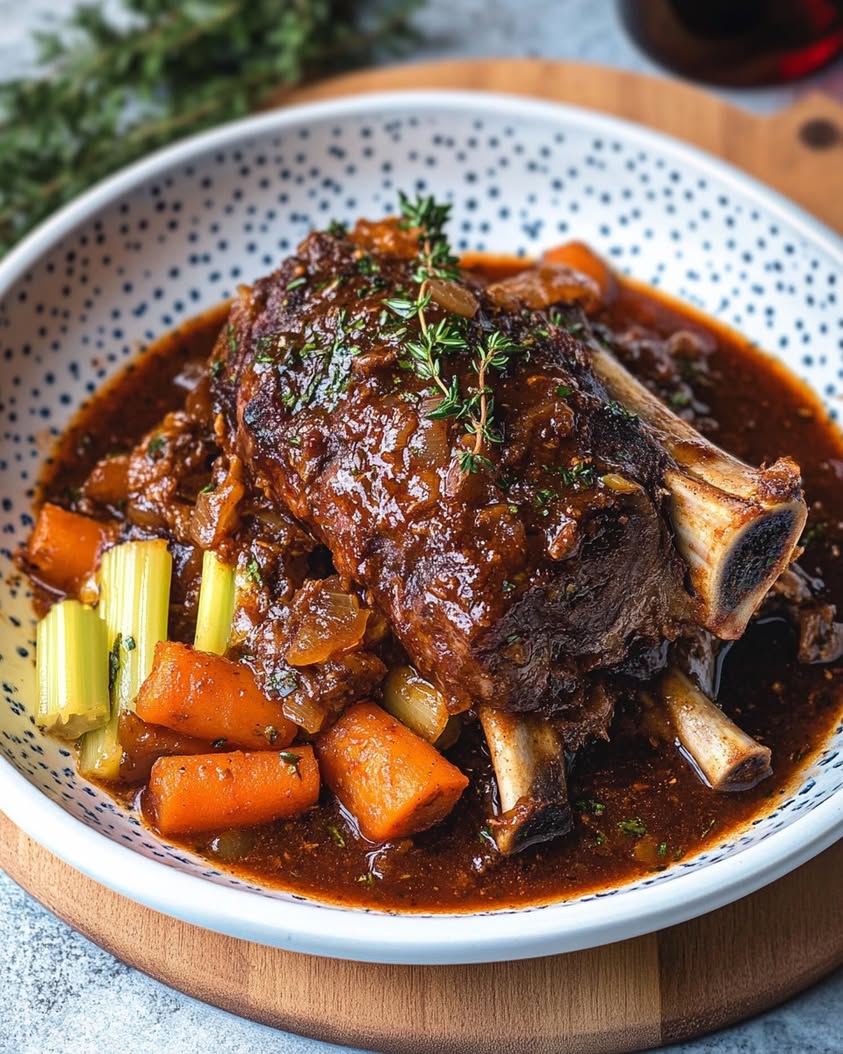
Slow-Braised Lamb Shanks in Rich Red Wine and Rosemary Jus: The Ultimate Comfort Food for Special Occasions
Imagine a dish so tender and flavorful that it falls off the bone with the mere touch of a fork. This Slow-Braised Lamb Shanks in Rich Red Wine and Rosemary Jus recipe delivers exactly that experience. It transforms humble ingredients into a luxurious, soul-warming meal perfect for a cozy dinner party or a celebratory family gathering. The process is a labor of love, but the result is an unforgettable culinary centerpiece.
Furthermore, the magic of this dish lies in the slow braising technique. This method gently coaxes every bit of flavor from the lamb shanks, vegetables, and herbs. Consequently, you create a complex, deeply savory sauce that is the star of the show. The rich red wine reduces into a glossy, aromatic jus, while the rosemary infuses the meat with its unmistakable piney fragrance. Ultimately, this recipe promises a restaurant-quality meal from the comfort of your own kitchen.
Additionally, this Slow-Braised Lamb Shanks in Red Wine Rosemary Jus recipe is incredibly forgiving. The long, slow cook time means there’s no need for perfect precision. In fact, it’s an ideal project for a relaxed weekend afternoon. As the shanks braise, your home will fill with an irresistible aroma that builds anticipation. Finally, serving these succulent shanks over creamy mashed potatoes or polenta creates the ultimate comfort food plate.
Quick Recipe Highlights
- Flavor Profile: This dish boasts a profound savory depth from the slow-braised lamb, balanced by the fruity acidity of red wine and the earthy, aromatic punch of fresh rosemary. Notes of sweet carrot and umami-rich tomato paste round out the complex sauce.
- Texture: The lamb shank meat becomes incredibly tender and succulent, literally falling away from the bone. The vegetables melt into the sauce, creating a velvety, luxurious jus that coats each bite perfectly.
- Aroma: While cooking, the kitchen fills with the warm, herbaceous scent of rosemary and thyme mingling with the rich smell of seared meat and reducing wine. It’s a quintessential comforting and hearty fragrance.
- Visual Appeal: Served whole, the lamb shanks make a dramatic presentation on the plate. The deep, glossy brown-red jus is visually stunning, especially when garnished with a sprig of fresh green rosemary.
- Skill Level Needed: This recipe requires basic searing and sautéing skills, but the braising process itself is hands-off. Patience and attention to building flavor layers are more important than advanced technique.
- Special Equipment: A large, heavy-bottomed Dutch oven or oven-safe pot with a tight-fitting lid is essential for even heat distribution during the long braise. You’ll also need a fine-mesh strainer for the final jus.
Recipe Overview
- Difficulty Level: We rate this Slow-Braised Lamb Shanks in Red Wine Rosemary Jus recipe as intermediate. While the steps are straightforward, success relies on properly searing the meat for flavor development and patiently allowing the braise to work its magic without disturbance. It’s a simple process that rewards care and attention.
- Category: This is a definitive main course, a centerpiece protein dish. It belongs to the category of hearty braises and stews, perfect for cold-weather dining and special occasion meals where you want to impress with minimal last-minute effort.
- Cuisine: The dish draws heavily from French and Mediterranean culinary traditions, where braising tough cuts of meat in wine with aromatic herbs is a classic technique. It’s a rustic yet refined preparation found in bistros and home kitchens across Europe.
- Cost: Lamb shanks are a relatively affordable cut compared to other lamb options. The other ingredients are pantry staples. Overall, this Slow-Braised Lamb Shanks recipe offers a high perceived value and luxurious taste for a moderate cost, especially when feeding a group.
- Season: This is the ultimate autumn and winter recipe. Its rich, warming qualities are best appreciated in cooler weather. However, it can be enjoyed year-round for a special dinner, particularly if you slow-braise it in the oven without heating the whole kitchen.
- Occasion: Ideal for dinner parties, holiday meals like Easter, intimate date nights at home, or any Sunday family supper where you want to create lasting memories around the table. It’s a showstopper that feels celebratory.
Why You’ll Love This Recipe
First and foremost, the taste and texture of these Slow-Braised Lamb Shanks are simply unparalleled. The slow cooking process breaks down the tough connective tissues in the shank, transforming them into gelatin that melts into the sauce, making it luxuriously thick and the meat impossibly tender. Each forkful is a harmonious blend of rich, savory lamb, the subtle fruitiness of the wine, and the fragrant rosemary. It’s a deeply satisfying eating experience that feels both rustic and elegant.
Moreover, the convenience factor is a major win. After the initial searing and sautéing, the dish cooks unattended in the oven for hours. This frees you up to prepare sides, set the table, or simply relax. Importantly, this Slow-Braised Lamb Shanks in Red Wine Rosemary Jus recipe is also fantastic for making ahead. In fact, the flavors often improve after a day in the refrigerator, making it a stress-free option for entertaining.
From a nutritional perspective, lamb is an excellent source of high-quality protein, iron, zinc, and B vitamins. The slow cooking method doesn’t require excessive added fats. Additionally, the vegetables in the braise contribute vitamins and fiber. While rich, it’s a wholesome meal when paired with healthy sides like roasted vegetables or a crisp salad.
Furthermore, the social and entertaining value of this dish is immense. Presenting a whole, slow-braised lamb shank to each guest is dramatic and generous. It sparks conversation and creates a sense of occasion. This recipe turns a simple meal into an event, fostering a warm, communal dining atmosphere that everyone will remember.
Finally, it’s cost-effective and accessible. Lamb shanks are an underutilized cut, making them more affordable than chops or racks. The braising technique is forgiving of less expensive, robust red wines. You likely have many of the aromatic vegetables and herbs already in your kitchen. Consequently, this Slow-Braised Lamb Shanks recipe delivers incredible flavor and impressive presentation without a luxury price tag.
Historical Background and Cultural Significance
The technique of braising tough cuts of meat is one of humanity’s oldest cooking methods, found across countless cultures. Essentially, slow cooking in liquid with aromatics tenderizes otherwise chewy meat, making it palatable and nutritious. The specific combination of lamb, red wine, and rosemary has strong roots in the pastoral and vineyard-rich regions of the Mediterranean, particularly in France, Italy, and Greece. Here, shepherds and home cooks would use readily available ingredients to create hearty, long-cooked meals.
In French cuisine, dishes like “Souris d’Agneau” (literally “lamb’s mouse,” referring to the shank) are classic bistro fare. The method exemplifies the French principle of “cuisine de terroir” – cooking that reflects the local land and its products. Similarly, in Italian cooking, “stinco di agnello” is often braised with wine and herbs. This Slow-Braised Lamb Shanks in Red Wine Rosemary Jus recipe is a direct descendant of these timeless, regional traditions, celebrating the harmony of local wine, herbs, and livestock.
The recipe has evolved with the availability of home ovens and standardized cookware like the Dutch oven. Historically, such a braise might have simmered for an entire day in a heavy pot over a hearth or in a communal oven. Modern recipes streamline the process but honor the core technique. The addition of tomato paste, for instance, is a more contemporary touch that adds umami depth and helps thicken the sauce, reflecting the global exchange of ingredients.
Regional variations abound. In Provence, you might find olives and orange zest added to the braise. A Greek version could include oregano and lemon. Some recipes use white wine instead of red, or add root vegetables like parsnips and turnips to the pot. This particular Slow-Braised Lamb Shanks recipe focuses on the purity of the classic red wine and rosemary pairing, a combination that has stood the test of time for its robust and complementary flavors.
Ingredient Deep Dive
Lamb Shanks: The shank is a cut from the lower leg of the animal, a muscle that works hard, making it tough but full of flavor and collagen. When cooked slowly, this collagen melts into gelatin, creating incredible tenderness and body in the sauce. Look for shanks that are a nice pink-red color with a good amount of meat surrounding the bone. A layer of exterior fat is fine and will render during cooking. For the best results in your Slow-Braised Lamb Shanks in Red Wine Rosemary Jus, choose shanks of relatively even size so they cook at the same rate.
Dry Red Wine: The wine is not just a cooking liquid; it’s a primary flavor agent. Choose a dry, full-bodied red like Cabernet Sauvignon, Syrah, or a Côtes du Rhône blend. These wines have the structure and tannins to stand up to the rich lamb. Avoid “cooking wine” from the supermarket, as it contains added salt and preservatives. Instead, use a bottle you would enjoy drinking. The alcohol cooks off, leaving behind concentrated fruit flavors and acidity that balance the fat of the meat.
Fresh Rosemary: This hardy, woody herb is a classic partner for lamb. Its piney, slightly peppery fragrance cuts through the richness of the dish. Fresh rosemary is crucial for this recipe; dried rosemary becomes brittle and can feel like needles in the finished sauce. When selecting rosemary, look for vibrant green sprigs that are fragrant when lightly crushed. You can tie the sprigs with kitchen twine for easy removal after braising, ensuring flavor without woody bits in your jus.
Mirepoix (Onion, Carrot, Celery): This holy trinity of French cooking forms the aromatic base for the braise. The onions provide sweetness, carrots add a subtle earthy sugar, and celery offers a savory, herbal note. As they cook slowly in the fat and wine, they caramelize and dissolve, thickening the sauce and building a foundational layer of flavor that makes the Slow-Braised Lamb Shanks in Red Wine Rosemary Jus so complex.
Tomato Paste: A small amount of tomato paste works wonders. It adds a concentrated hit of umami and a touch of sweetness. By sautéing it with the vegetables for a minute or two, you “cook out” any raw, tinny taste and allow its sugars to caramelize slightly. This step, known as “toasting” the tomato paste, deepens its flavor and contributes to the beautiful, rich color of the final sauce.
Common Mistakes to Avoid
- Not Searing the Lamb Properly: Skipping or rushing the sear is the biggest error. Searing creates a flavorful fond (the browned bits on the pot) and adds crucial color and texture to the meat’s exterior. Pat the shanks very dry and sear them in batches to avoid steaming.
- Using the Wrong Wine: Cooking with a sweet or poor-quality wine will result in a sweet or off-tasting sauce. Always use a dry, drinkable red wine. The flavor concentrates, so a wine you dislike will make a sauce you dislike.
- Overcrowding the Pot: When searing the shanks, give them plenty of space. If the pot is too crowded, the meat will steam and boil in its own juices instead of developing a beautiful, caramelized crust. This step is key for flavor in the Slow-Braised Lamb Shanks recipe.
- Adding Cold Liquid to Hot Pot: After searing and sautéing, always deglaze with wine that is at least at room temperature. Adding ice-cold liquid can shock the hot pot and make the fond harder to scrape up.
- Braising at Too High a Temperature: A gentle simmer is the goal, not a rolling boil. If the braising liquid is boiling aggressively, the meat will become tough and dry, and the sauce may reduce too quickly. The oven should be at a low, steady temperature.
- Peeking Too Often: Resist the urge to open the oven and check on the shanks frequently. Every time you lift the lid, you release valuable heat and steam, which can extend the cooking time and disrupt the gentle braising environment.
- Not Straining the Jus: Skipping the straining step results in a rustic, chunky sauce. While not wrong, straining creates the elegant, glossy “jus” that elevates the presentation. It’s a simple step that adds a professional touch to your Slow-Braised Lamb Shanks in Red Wine Rosemary Jus.
- Seasoning at the End Only: Season the meat before searing, and season the vegetables as they cook. Building layers of seasoning throughout the process ensures a perfectly seasoned final dish, rather than a salty sauce on bland meat.
Essential Techniques
Searing: Searing is the non-negotiable first step for building deep flavor. It uses the Maillard reaction, a chemical process that browns the meat’s surface and creates hundreds of new flavor compounds. To master it, ensure your pot is very hot and the lamb shanks are patted completely dry with paper towels. Furthermore, don’t move the shanks for the first few minutes; let a proper crust form. The visual cue for success is a deep, even brown color on all sides, with browned bits (fond) stuck to the bottom of the pot.
Deglazing: This technique involves adding liquid (wine) to the hot pot after searing to loosen the flavorful fond. As you pour in the wine, use a wooden spoon to vigorously scrape the bottom of the pot. This dissolves all those caramelized bits into the liquid, which forms the flavor foundation of your jus. The key is to scrape thoroughly until the bottom of the pot is clean. You’ll see the wine instantly darken in color as it incorporates the fond.
Braising: Braising is a combination cooking method: first searing (dry heat), then simmering in liquid (moist heat). The magic happens when the tough collagen in the lamb shanks converts to gelatin over several hours of low, slow heat. This gelatin makes the meat tender and gives the sauce body. The essential technique here is maintaining a bare simmer—just a few small bubbles breaking the surface. In the oven, this is easily controlled by a low temperature (around 325°F/160°C) and a tight-fitting lid.
Reducing and Straining: After braising, reducing the cooking liquid concentrates its flavors and thickens it to a sauce-like consistency. Skim off any excess fat from the surface first. Then, simmer the liquid until it coats the back of a spoon. Finally, straining through a fine-mesh sieve removes the spent vegetables and herbs, leaving a smooth, glossy, and elegant jus to nap over your perfect Slow-Braised Lamb Shanks.
Pro Tips for Perfect Slow-Braised Lamb Shanks
First, take the lamb shanks out of the refrigerator 30 minutes before cooking. Letting them come closer to room temperature helps them sear more evenly and prevents the center from being too cold when they go into the braise.
Second, use kitchen twine to tie the rosemary sprigs together. This makes them incredibly easy to find and remove from the pot after cooking, ensuring no one gets a mouthful of tough rosemary needles.
Third, after removing the cooked shanks, let the braising liquid settle for a few minutes. The fat will rise to the top, making it much easier to skim off with a spoon before you begin reducing it into the final jus.
Fourth, if your sauce isn’t thickening enough after reducing, create a simple slurry. Mix a teaspoon of cornstarch with a tablespoon of cold water and whisk it into the simmering jus. It will thicken almost immediately.
Fifth, for an extra layer of flavor, add a tablespoon of red currant jelly or a splash of balsamic vinegar to the reducing jus. This adds a subtle sweet-tart note that beautifully complements the lamb and wine.
Sixth, don’t discard the tender braised vegetables from the strainer! You can puree them and stir them back into the sauce for a thicker, even more flavorful version, or enjoy them on the side as a cook’s treat.
Seventh, rest the lamb shanks for 10 minutes after removing them from the braising liquid and before serving. This allows the juices to redistribute throughout the meat, ensuring every bite is moist and succulent.
Variations and Adaptations
Regional Variations: For a Greek twist, add a cinnamon stick, a few strips of lemon zest, and a handful of Kalamata olives to the braise. A French Provençal version might include a strip of orange zest, a pinch of herbes de Provence, and a tablespoon of black olive tapenade stirred into the finished jus.
Seasonal Adaptations: In spring, add fresh peas and baby carrots to the pot during the last 30 minutes of braising. In the heart of winter, incorporate chunks of peeled parsnip or rutabaga at the beginning to cook down and sweeten the sauce.
Dietary Modifications: To make this Slow-Braised Lamb Shanks recipe gluten-free, simply ensure your tomato paste and broth are certified GF—most are. For a dairy-free version, serve with olive oil-mashed potatoes or polenta instead of butter-enriched versions.
Flavor Variations: Substitute the rosemary with an equal amount of fresh thyme sprigs for a different herbal profile. For a deeper, more savory note, add a couple of anchovy fillets to the vegetables as they sauté; they will melt away and add incredible umami without a fishy taste.
Texture Modifications: For a thicker, stew-like sauce, skip the straining step and simply use a slotted spoon to remove the larger vegetable pieces and herbs. You can also blend a portion of the cooked vegetables and braising liquid with an immersion blender right in the pot.
Presentation Alternatives: Instead of serving the shank whole, you can pull all the meat off the bone after cooking, mix it with some of the reduced jus, and serve it in a shallow bowl over a starch. This is a fantastic option for a more casual, family-style meal.
Serving and Presentation Guide
For the most dramatic presentation, place a single Slow-Braised Lamb Shank in the center of a wide, shallow bowl or a large plate. Spoon a generous amount of the rich red wine rosemary jus around and over the shank. The bone standing tall makes a natural, impressive centerpiece. Place a small, fresh sprig of rosemary on top for a color contrast.
Traditional accompaniments are key for sopping up the incredible sauce. Creamy mashed potatoes, soft polenta, or buttery egg noodles are classic choices. For a lighter option, serve with crusty bread, like a baguette or sourdough, to mop up every last drop. A side of simply steamed green beans, roasted carrots, or a bitter green salad with a sharp vinaigrette helps cut the richness.
Consider modern serving suggestions for a dinner party. You can present the shanks on a large platter family-style, with the jus in a gravy boat on the side. Alternatively, for individual portions, shred the meat and plate it neatly over a smear of celery root puree, then drizzle the jus around in an artistic pattern.
Temperature is crucial. Serve the lamb shanks and sauce piping hot. Warm your serving plates beforehand to keep the food at an ideal temperature longer. If the jus has thickened too much while resting, simply thin it with a splash of warm broth or water before serving.
Wine and Beverage Pairing
The ideal wine pairing for this dish is the same style of wine used in the cooking: a robust, dry red. A Cabernet Sauvignon, Syrah/Shiraz, or a GSM blend (Grenache, Syrah, Mourvèdre) from the Rhône Valley are perfect choices. Their firm tannins stand up to the rich lamb fat, while their dark fruit flavors complement the reduced wine in the jus. For a special occasion, a aged Bordeaux or Rioja Reserva would be sublime.
For non-alcoholic alternatives, consider a rich, tart cherry juice or a sparkling pomegranate beverage. The fruitiness mirrors the wine notes. A high-quality grape juice or a non-alcoholic red wine can also work. Alternatively, a sparkling water with a squeeze of lemon or lime helps cleanse the palate between bites of the rich Slow-Braised Lamb Shanks.
While not a classic pairing, a strong, black coffee after the meal can be delightful. The bitterness contrasts with the savory, umami-rich flavors. A cup of mint tea is another refreshing option, as mint is a classic partner for lamb. Serve these beverages hot to provide a comforting end to the hearty meal.
Storage and Shelf Life
Store leftover Slow-Braised Lamb Shanks and jus in an airtight container in the refrigerator for up to 4 days. For best results, store the meat and sauce together so the meat continues to absorb flavor. The fat in the sauce will solidify on top, forming a protective layer.
This dish freezes exceptionally well for up to 3 months. Place cooled shanks and sauce in a freezer-safe container or heavy-duty zip-top bag. Thaw overnight in the refrigerator before reheating. The freezing process can sometimes further tenderize the meat.
To reheat, place the shanks and sauce in a covered pot over low heat on the stovetop. Add a splash of water or broth if the sauce has thickened too much. Alternatively, reheat gently in a covered dish in a 300°F (150°C) oven until warmed through. Avoid microwaving, as it can make the meat rubbery.
Signs of spoilage include an off or sour smell, visible mold, or a slimy texture on the meat or sauce. If the lamb shanks have been left at room temperature for more than 2 hours, it’s safest to discard them.
Make Ahead Strategies
This Slow-Braised Lamb Shanks in Red Wine Rosemary Jus recipe is arguably better made a day ahead. The flavors have time to meld and deepen in the refrigerator. Complete the entire recipe through the braising and straining steps. Let the shanks cool in the sauce, then cover and refrigerate overnight.
The next day, the solidified fat on the surface is easy to remove. Gently reheat the shanks and sauce together in a covered pot in a low oven (300°F/150°C) for about 45-60 minutes, or until heated through. This method also makes entertaining stress-free, as your main course is ready to go.
You can also do partial prep. The day before, you can sear the lamb shanks and prepare the mirepoix (onion, carrot, celery). Store them separately in the refrigerator. When ready to cook, proceed from the deglazing step. This cuts your active prep time significantly on the day of serving.
Scaling Instructions
This recipe scales beautifully. To halve it, use two lamb shanks and halve all other ingredients. Use a slightly smaller pot. The cook time may be slightly reduced, so start checking for tenderness at the 2-hour mark.
To double or triple the recipe for a crowd, use a very large Dutch oven or divide between two pots. Ensure the shanks are still in a single layer and mostly submerged in liquid. You may need to extend the braising time by 30-60 minutes for a larger quantity. The oven temperature remains the same.
When scaling, the most important adjustment is to the searing step. Never overcrowd the pot. Sear the shanks in batches, regardless of recipe size, to ensure proper browning. This foundational step cannot be rushed for the success of your Slow-Braised Lamb Shanks.
Nutritional Deep Dive
Lamb shanks are a nutrient-dense protein source. A single serving provides a significant amount of high-quality protein essential for muscle repair and satiety. Lamb is also an excellent source of heme iron, which is highly absorbable and crucial for oxygen transport in the blood, as well as zinc, which supports immune function.
The braising liquid, enriched with vegetables and wine, contributes antioxidants from the tomatoes and red wine, such as lycopene and resveratrol. The vegetables also provide dietary fiber and vitamins A and C. While the dish contains fat from the lamb, much of it renders into the sauce and can be skimmed off.
For those managing calorie intake, focus on portion control—one shank is a standard serving. Pair it with a large portion of non-starchy vegetables like roasted broccoli or a green salad to create a balanced plate. The protein and fat content make this a very satisfying meal that can help curb snacking later.
Dietary Adaptations
Gluten-Free: This Slow-Braised Lamb Shanks recipe is naturally gluten-free. Simply double-check that your broth and tomato paste are certified gluten-free, as some brands may contain additives with gluten. Serve with gluten-free sides like mashed potatoes, polenta, or rice.
Dairy-Free: The recipe contains no dairy. For serving, use olive oil or dairy-free butter alternatives in your mashed potatoes or polenta. A drizzle of high-quality extra virgin olive oil over the finished dish adds richness without dairy.
Low-Carb/Keto: This is an excellent keto-friendly main course. The braise itself is very low in carbohydrates. Serve the shanks and jus over mashed cauliflower, zucchini noodles (“zoodles”), or simply with a side of sautéed spinach instead of starchy sides.
Paleo: To make this Paleo-compliant, ensure your broth is sugar-free and made from bones (homemade bone broth is ideal). Omit the tomato paste if following a strict nightshade-free protocol, or use a small amount of carrot puree for sweetness and color instead.
Troubleshooting Guide
Sauce is Too Thin: If your jus hasn’t thickened after reducing, create a cornstarch slurry. Mix 1 teaspoon cornstarch with 1 tablespoon cold water until smooth. Whisk this into the simmering sauce and cook for 1-2 minutes until thickened. Alternatively, continue simmering uncovered to reduce further.
Sauce is Too Salty: Dilution is the best fix. Add a cup of low-sodium broth or water to the sauce and let it simmer for a few minutes to incorporate. You can also add a peeled, raw potato chunk to the simmering sauce for 15-20 minutes; it will absorb some salt, then discard it.
Meat is Still Tough: The lamb needs more time. Simply return the shanks to the pot, add a bit more liquid (water or broth) if needed to keep them half-submerged, cover, and continue braising. Check for tenderness every 30 minutes until the meat easily pulls away from the bone.
Not Enough Fond After Searing: This usually means the pot wasn’t hot enough or the meat was wet. For future reference, always dry the meat and preheat the pot. For now, continue; the flavor will still be good from the braised vegetables and wine.
Recipe Success Stories
Readers consistently report that this Slow-Braised Lamb Shanks in Red Wine Rosemary Jus recipe has become their go-to for impressing guests. One home cook shared that she made it for her in-laws’ anniversary, and her father-in-law claimed it was the best meal he’d eaten in a decade. The hands-off nature of the braise gives cooks confidence.
Many have successfully adapted the recipe. A community member added dried porcini mushrooms (soaked first) for an earthy depth, which was a huge hit. Another cooked it in a slow cooker on low for 8 hours after the searing and deglazing steps, with perfect results. These adaptations show the recipe’s wonderful flexibility.
Photography tips from successful makers: natural, side lighting works best to highlight the glossy sheen of the jus. Garnish with the fresh rosemary sprig just before shooting. Serve on a dark-colored plate to make the rich brown-red sauce and the pale lamb meat truly pop, creating a stunning image of your culinary achievement.
Frequently Asked Questions
Q: Can I make this in a slow cooker?
A: Absolutely. After searing the shanks and sautéing the vegetables in a skillet, transfer everything to your slow cooker. Add the wine, broth, and herbs. Cook on LOW for 8 hours. Then, strain the liquid and reduce it on the stovetop for the best sauce consistency.
Q: What can I use instead of red wine?
A: For a non-alcoholic version, use a full-bodied, non-alcoholic red wine. Alternatively, use a combination of beef broth and a tablespoon of red wine vinegar or balsamic vinegar to mimic the acidity and depth.
Q: Do I have to strain the sauce?
A> No, it’s not mandatory. Straining creates a smooth, refined jus. If you prefer a more rustic, chunky sauce, you can simply remove the herb stems and use a slotted spoon to take out the larger vegetable pieces, leaving the rest.
Q: Can I use other cuts of lamb?
A: Yes, lamb shoulder chops or stew meat will work, though cooking times will vary. Shoulder chops may take less time, while stew meat will be done sooner. The shank, with its bone and connective tissue, provides the best texture and flavor for this specific braise.
Q: My sauce tastes bitter. What happened?
A> Bitterness can come from over-reduced wine or burned fond. Next time, ensure you scrape the fond gently without burning it. If it’s bitter now, a small pinch of sugar or a teaspoon of red currant jelly stirred in can help balance it.
Q: How do I know when the lamb shanks are done?
A: The meat should be extremely tender and pull away from the bone easily with a fork. If you insert a fork and twist, the meat should readily separate. If it still resists, it needs more braising time.
Q: Can I add other vegetables to the braise?
A: Certainly. Root vegetables like parsnips, turnips, or small potatoes can be added during the last hour of cooking. More delicate veggies like peas should be added in the last 10-15 minutes just to heat through.
Q: Is it necessary to use fresh herbs?
A: For rosemary, fresh is highly recommended. Dried rosemary doesn’t soften properly and can be unpleasant. If you must substitute, use 1 teaspoon of dried rosemary, but tie it in a cheesecloth sachet for easy removal.
Additional Resources
If you loved this Slow-Braised Lamb Shanks in Red Wine Rosemary Jus, explore other classic braises like Beef Bourguignon, Coq au Vin, or Osso Buco. These dishes use similar techniques of searing and slow-cooking in wine, building your confidence with foundational French cooking methods.
For mastering the core techniques, look for guides on “How to Sear Meat Properly” and “The Science of Braising.” Understanding why each step matters will make you a more intuitive and successful cook, able to adapt recipes and troubleshoot on the fly.
When selecting ingredients, learn about different wine varietals for cooking. A guide to “Cooking with Wine” can help you choose the best bottle for your dish and your glass. Additionally, understanding how to select and store fresh herbs will elevate all your cooking.
{“success”:true,”message”:”Recipe created successfully”,”post_id”:8261,”tasty_recipe_id”:8261,”shortcode”:” Print
Slow-Braised Lamb Shanks in Rich Red Wine and Rosemary Jus
Description
Tender, fall-off-the-bone lamb shanks braised in a deep, aromatic red wine sauce infused with rosemary and garlic, perfect for a cozy dinner.
Ingredients
For the Crust:
- 4 lamb shanks (about 1 lb each)
- 2 tbsp olive oil
- 1 large onion, chopped
- 2 carrots, chopped
- 3 garlic cloves, minced
- 2 tbsp tomato paste
- 2 cups dry red wine (like Cabernet Sauvignon)
- 4 cups beef or chicken broth
- 3 sprigs fresh rosemary
- 2 bay leaves
- Salt and black pepper to taste
- 1 tbsp all-purpose flour (optional, for thickening)
Instructions
1. Prepare the Crust:
- Preheat oven to 325°F (165°C). Season lamb shanks generously with salt and pepper.
- In a large Dutch oven or oven-safe pot, heat olive oil over medium-high heat. Sear lamb shanks on all sides until browned, about 3-4 minutes per side. Remove and set aside.
- In the same pot, add onion and carrots. Sauté for 5 minutes until softened. Add garlic and tomato paste, cooking for 1 minute until fragrant.
- Pour in red wine, scraping up any browned bits from the bottom. Simmer for 5 minutes to reduce slightly.
- Return lamb shanks to the pot. Add broth, rosemary, and bay leaves. Bring to a simmer, then cover and transfer to the preheated oven.
- Braise for 2.5 to 3 hours, until lamb is very tender. Remove shanks and keep warm.
- If desired, thicken the sauce: Skim excess fat, then simmer on the stovetop. Mix flour with 2 tbsp water, whisk into sauce, and cook until thickened. Season with salt and pepper.
- Serve lamb shanks over mashed potatoes or polenta, drizzled with the red wine jus.
Notes
You can customize the seasonings to taste.

I’m Billy, a classically trained culinary school graduate from The Culinary Institute of America with over 12 years in the restaurant industry and over 19 years of cooking experience.