
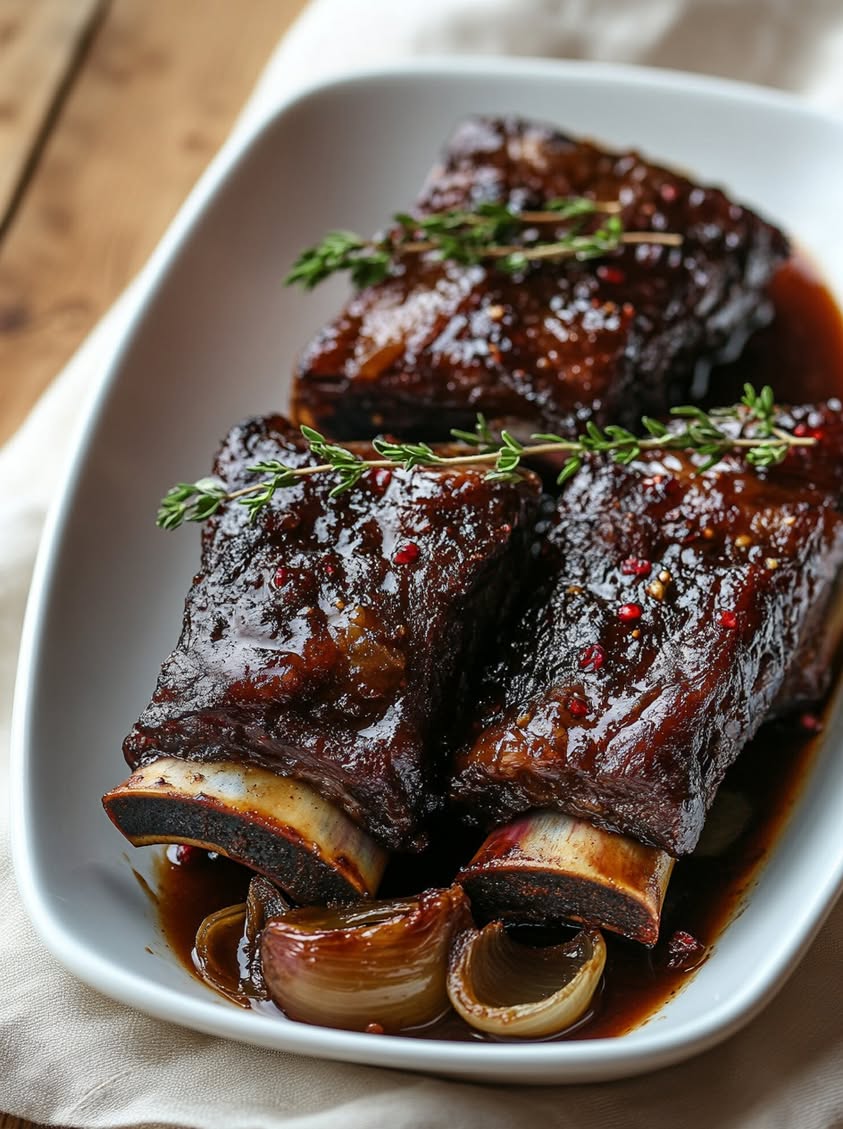
Slow-Braised Short Ribs and Lamb Shank with Pomegranate-Honey Glaze: A Celebration of Deep, Comforting Flavors
Imagine the most tender, fall-off-the-bone meat you have ever tasted, bathed in a rich, glossy sauce that perfectly balances savory depth with a hint of sweet-tart brightness. This recipe for Slow-Braised Short Ribs and Lamb Shank with Pomegranate-Honey Glaze is exactly that kind of culinary masterpiece. It transforms humble, tough cuts of meat into a luxurious feast through the magic of low and slow cooking. The process fills your home with an intoxicating aroma of garlic, rosemary, and caramelizing meat, promising a meal that is as rewarding to make as it is to eat.
This dish is a celebration of contrasting yet harmonious flavors. The short ribs offer an unparalleled beefy richness, while the lamb shank contributes a distinct, gamey complexity. Meanwhile, the pomegranate-honey glaze introduces a vibrant, fruity note that cuts through the fat and elevates the entire plate. Consequently, every bite is a journey through textures and tastes, from the succulent meat to the silky, reduced jus. Ultimately, this recipe is perfect for a special occasion where you want to impress, or simply for a weekend project that yields incredible, soul-satisfying rewards.
Mastering this Slow-Braised Short Ribs and Lamb Shank with Pomegranate-Honey Glaze is a rite of passage for any home cook passionate about braising. The technique is straightforward but requires patience and attention to detail. The result, however, is foolproof and deeply impressive. You will learn the art of building layers of flavor, from the initial sear to the final reduction, creating a restaurant-quality dish in your own kitchen. Furthermore, the beautiful presentation, with the glossy glaze and aromatic herbs, makes it a centerpiece worthy of any holiday table or intimate dinner party.
Quick Recipe Highlights
- Flavor Profile: This dish delivers a powerful umami punch from the slow-braised meats, beautifully balanced by the earthy garlic-rosemary jus and the sweet-tart pomegranate-honey glaze. The combination creates a complex, sophisticated taste that is both hearty and refined.
- Texture: Expect incredibly tender, melt-in-your-mouth meat that pulls cleanly from the bone. The reduced jus is velvety and luxurious, while the glaze adds a subtle, sticky sheen to the exterior of the meat for a perfect textural contrast.
- Aroma: As it cooks, your kitchen will fill with the comforting scent of roasting garlic, woody rosemary, caramelizing onions, and rich, savory meat. The final notes of pomegranate molasses and honey add a warm, inviting sweetness to the aromatic profile.
- Visual Appeal: The presentation is stunning, with deep, mahogany-colored meat glistening under a glossy glaze, nestled in a pool of dark, rich jus. Fresh pomegranate arils and rosemary sprigs provide vibrant pops of color and freshness.
- Skill Level Needed: This recipe is ideal for an intermediate cook comfortable with searing, deglazing, and braising techniques. It requires patience and timing but follows a clear, sequential process that is very manageable.
- Special Equipment: A large, heavy-bottomed Dutch oven or braising pan with a tight-fitting lid is essential for even heat distribution. You will also need kitchen twine for tying the rosemary and thyme, and a fine-mesh strainer for the jus.
Recipe Overview
- Difficulty Level: We rate this recipe as intermediate. While the steps are simple, success hinges on proper technique, particularly achieving a good sear on the meat and managing the braising liquid. The dual-protein approach also requires careful timing to ensure both the short ribs and lamb shank are perfectly cooked. However, with clear instructions, even a confident beginner can achieve excellent results.
- Category: This is a definitive main course, a centerpiece protein dish. It belongs to the categories of comfort food, holiday feasts, and special occasion dinners. Its rich nature and longer cook time make it ideal for leisurely weekend meals or planned celebrations.
- Cuisine: The dish draws inspiration from modern American fine dining and Mediterranean influences. The braising technique is classic French, while the use of pomegranate and lamb nods to Middle Eastern and Greek culinary traditions. The garlic-rosemary jus is a timeless, rustic European combination.
- Cost: This is a moderately expensive dish due to the quality of the proteins. Beef short ribs and lamb shank are premium cuts. However, they are often more affordable than tenderloin or ribeye. The remaining ingredients—aromatics, wine, broth, pomegranate molasses—are pantry staples for many, making the overall cost worthwhile for a special meal.
- Season: This recipe shines in the cooler months of fall and winter. Its hearty, warming nature is perfect for chilly evenings. Additionally, pomegranates are in season during the fall, making the glaze particularly fitting. That said, it can be enjoyed year-round for any indoor gathering.
- Occasion: Think of this for holiday dinners like Christmas or Easter, anniversary celebrations, or a sophisticated dinner party. It is also a magnificent “project” meal for a cozy Sunday supper where the process of cooking is part of the day’s enjoyment.
Why You’ll Love This Recipe
First and foremost, the taste and texture of this Slow-Braised Short Ribs and Lamb Shank with Pomegranate-Honey Glaze are utterly transformative. The long, slow braise breaks down tough connective tissue into gelatin, resulting in meat so tender it requires only a fork. The flavors penetrate deeply, so every fiber is seasoned with the savory jus and bright glaze. Each component—the beef, the lamb, the sauce—complements the others, creating a symphony of savory, sweet, and herbal notes that is deeply satisfying and complex.
From a convenience standpoint, this recipe offers the incredible benefit of being largely hands-off after the initial preparation. Once the pot goes into the oven, you have hours to relax, set the table, or prepare sides. Moreover, it is an incredibly forgiving method; the moist, low-heat environment is very difficult to overcook, making it a reliable choice for entertaining. You can prepare elements ahead, reducing day-of stress and ensuring you have a spectacular, stress-free centerpiece for your meal.
Nutritionally, braised meats like short ribs and lamb shank offer significant benefits. They are excellent sources of high-quality protein, iron, zinc, and B vitamins, including B12. The slow cooking process also makes these nutrients more bioavailable. While the dish contains fat, much of it renders out during cooking and can be skimmed from the sauce. Using bone-in, marrow-rich cuts also imparts minerals and collagen into the braising liquid, which may support joint and gut health.
The social and entertaining value of this dish cannot be overstated. Presenting a platter of this magnificent braised meat instantly elevates any gathering. It feels celebratory and generous. The act of sharing such a carefully prepared meal fosters connection and conversation. It is a dish that tells your guests they are worth the effort, making it perfect for creating memorable dining experiences with family and friends.
Finally, considering the cost-effectiveness, this recipe makes luxurious dining accessible. Short ribs and lamb shank are far more affordable per pound than prime steaks or chops, yet through the braising process, they achieve a level of tenderness and flavor that rivals any expensive cut. You are paying for technique and time, not just raw ingredient cost. This approach allows you to create a truly spectacular feast without a spectacular price tag, making fine dining a reality in your own home.
Historical Background and Cultural Significance
The technique of braising tough cuts of meat is one of humanity’s oldest and most universal cooking methods. Essentially, every culture with access to fire and a pot has a version of a slow-cooked stew or braise. The specific combination of beef and lamb, however, has roots in various pastoral traditions where multiple meats were cooked together for feasts. In medieval European cookery, large “portmanteau” dishes combining different meats were a display of wealth and abundance at banquets, often seasoned with imported spices and sweet-sour sauces reminiscent of our pomegranate glaze.
Culturally, short ribs hold a special place in many cuisines. Korean galbi, Jewish flanken, and Italian brasato all celebrate this flavorful cut. Lamb shank is equally revered, from the slow-cooked dishes of Greece and Turkey to the navarin of France. Combining them is a modern, chef-driven approach that maximizes flavor complexity. The garlic-rosemary pairing is quintessentially Mediterranean, symbolizing the rustic, earthy flavors of the region’s cooking, where these herbs grow abundantly and are used with a generous hand.
The evolution of this recipe reflects contemporary dining trends towards bold, global flavor fusion. The classic French braise meets the Middle Eastern love for pomegranate and lamb. Pomegranate molasses, a staple in Persian and Lebanese kitchens, provides the acidic, fruity counterpoint that modern palates crave against rich meat. This evolution shows how traditional techniques are constantly being reinvented with new ingredient combinations, creating dishes that feel both familiar and excitingly novel.
Regional variations of this concept are endless. In Provence, you might find daube de boeuf with olives and orange zest. In Morocco, a tagine might feature lamb with dried apricots and almonds. An Italian version could use red wine and tomatoes. Our Slow-Braised Short Ribs and Lamb Shank with Pomegranate-Honey Glaze sits at this delicious crossroads, taking the best of these traditions—the slow-cooking method, the sweet-and-sour fruit, the aromatic herbs—to create something uniquely satisfying and representative of today’s interconnected culinary world.
Ingredient Deep Dive
Beef Short Ribs are the cornerstone of rich, beefy flavor. Historically, these were a butcher’s cut, valued by working classes for their affordability and flavor when cooked long and slow. Nutritionally, they are a great source of protein, iron, and collagen, which transforms into gelatin during braising, giving body to the sauce. Look for ribs with good marbling and a thick layer of meat on the bone. Ask your butcher for English-cut ribs for easier searing and serving. Store them in the coldest part of your fridge for up to two days before use. For a substitution, beef chuck roast or oxtails would work, though cooking times may vary slightly.
Lamb Shank brings a distinctive, gamey richness that contrasts beautifully with the beef. Lamb has been a staple protein from the grasslands of Central Asia to the hills of Wales for millennia. It is rich in high-quality protein, vitamin B12, zinc, and selenium. Choose shanks that are a similar size for even cooking, and don’t trim off the thin membrane—it helps hold the meat together. Fresh lamb should have a pinkish-red color and a clean smell. If lamb is not to your taste, a second short rib or a veal shank (osso buco) would be a magnificent alternative, maintaining the bone-in braising principle.
Pomegranate Molasses is the secret weapon for the glaze. This reduced, tangy syrup has been used in Middle Eastern cooking for centuries as a souring agent. It is packed with antioxidants from the pomegranates and adds a complex fruity acidity without being overly sweet. When selecting it, look for a product with no added sugars or preservatives for the purest flavor. It can be stored at room temperature almost indefinitely. If you cannot find it, you can make a substitute by reducing pure pomegranate juice with a little lemon juice and sugar, though the flavor will be less concentrated.
Fresh Rosemary and Garlic form the aromatic soul of the jus. Rosemary, symbolizing remembrance, has been used medicinally and culinarily around the Mediterranean since ancient times. Its piney, robust flavor stands up to long cooking. Garlic, of course, is a global culinary foundation, offering allicin and other compounds with noted health benefits. For the best results, use fresh, firm rosemary sprigs, not dried. Tie them with thyme to make a bouquet garni for easy removal. Use fresh, plump garlic cloves—the slow roasting will mellow their bite into a sweet, nutty perfection that infuses the entire dish.
Common Mistakes to Avoid
- Not Searing the Meat Properly: Skipping or rushing the sear is the biggest error. A deep, brown crust (the Maillard reaction) is non-negotiable for building foundational flavor. Pat the meat absolutely dry with paper towels before searing, and do not crowd the pan. Work in batches if necessary to ensure each piece gets direct contact with the hot surface.
- Using Boiling or Cold Braising Liquid: Adding cold stock to the hot pot shocks the ingredients and stalls cooking. Conversely, boiling liquid can make the meat tough. Always use warm or hot broth when deglazing and adding to the pot. This maintains a consistent temperature for gentle, even braising.
- Overcrowding the Braising Vessel: The meat should fit snugly but not be piled on top of itself. If packed too tightly, it will steam rather than braise, and the pieces won’t cook evenly. Use a Dutch oven that is just large enough to hold everything in a single layer for the best results.
- Peeking During Braising: Every time you lift the lid, you release valuable heat and steam, significantly lowering the oven temperature and extending the cooking time. Trust the process and resist the urge to check more than once near the end of the estimated cook time.
- Not Skimming the Fat: After braising, the liquid will have rendered fat from the meats. If you skip skimming, your jus will be greasy instead of silky. Use a spoon, a fat separator, or carefully drag a paper towel across the surface to remove excess fat before reducing the sauce.
- Reducing the Sauce Too Quickly or Too Much: A rapid, hard boil can make the sauce taste bitter and can cause it to break. Gently simmer the strained liquid. Also, remember it will thicken slightly as it cools. Reduce until it coats the back of a spoon, then check seasoning before deciding if it needs more reduction.
- Applying the Glaze Too Early: Brushing the pomegranate-honey glaze onto the meat before the final roast is a mistake. The sugars will burn under high heat. Always apply the glaze during the last 10-15 minutes of roasting, or even broil for just a few minutes at the end to set it without charring.
- Serving Immediately from the Oven: Braised meats benefit tremendously from a short rest, even after they are out of the braising liquid. Let the glazed meat rest for 10-15 minutes before serving. This allows the juices to redistribute, ensuring every slice is moist and tender, not dry.
Essential Techniques
Searing is the critical first step for building flavor. This technique, known as the Maillard reaction, creates hundreds of new flavor compounds through browning. To master it, ensure your pan is very hot and your meat is thoroughly dried. Do not move the meat until it releases easily from the pan, indicating a proper crust has formed. A common pitfall is a pan that’s not hot enough, leading to steaming instead of searing. Visual success is a deep, even, brown crust on all sides of the meat, with fond (the browned bits) left in the pan.
Deglazing is how you capture all that flavor from the searing process. After removing the meat, you add liquid (like wine or broth) to the hot pan and use a wooden spoon to scrape up the fond. This dissolves those caramelized bits into the liquid, creating the base of your sauce. The key is to use enough liquid to cover the bottom of the pan and to scrape thoroughly. A common mistake is using cold liquid, which can cause the fond to harden and stick. Success means a pan with no stuck-on bits and a liquid that has turned a rich, brown color.
Braising is the gentle, moist-heat cooking method that transforms tough cuts. The meat is partially submerged in liquid and cooked covered at a low temperature for a long time. The importance lies in the low, steady heat, which breaks down collagen without toughening the muscle fibers. Mastering it requires a tight-fitting lid and an oven temperature that maintains a bare simmer, not a boil. A visual cue for success is meat that is fork-tender and easily pulls away from the bone. The pitfall to avoid is letting the braising liquid boil, which will make the meat stringy and dry.
Reducing a sauce concentrates its flavor and improves its texture. After straining the braising liquid, you simmer it to evaporate water, thickening it naturally. The importance is in developing a velvety, intense sauce. Master it by maintaining a gentle simmer and skimming off fat and foam. A common pitfall is rushing this step with high heat, which can make the sauce taste burnt or cause it to break. The visual cue for success is a sauce that coats the back of a spoon and leaves a clear trail when you run your finger through it.
Pro Tips for Perfect Slow-Braised Short Ribs and Lamb Shank
For the deepest flavor, season your short ribs and lamb shank generously with salt and pepper the night before cooking. This dry-brine allows the salt to penetrate deeply, seasoning the meat from the inside out and helping it retain moisture during the long cook.
Use a combination of red wine and beef broth for your braising liquid. The wine adds necessary acidity and fruitiness that balances the fat, while the broth provides a savory backbone. Choose a wine you would enjoy drinking, as its flavor will concentrate.
After braising, strain the cooking liquid through a fine-mesh sieve lined with cheesecloth. This extra step removes any tiny bits of herb or vegetable, resulting in a perfectly smooth, restaurant-quality jus that is elegant and refined.
Let the cooked meat cool slightly in the strained braising liquid before removing it to glaze. This helps it stay moist and makes it easier to handle. The meat is very tender and can fall apart if handled too roughly when piping hot.
When making the pomegranate-honey glaze, warm the honey slightly so it mixes easily with the pomegranate molasses. Brush it on in two thin layers, allowing the first to set for a minute under the broiler before adding the second for maximum shine and flavor adhesion.
For an extra layer of aroma, add a strip of orange zest to the bouquet garni. The citrus oils will subtly perfume the braising liquid without making it taste overtly of orange, adding a bright note that complements the pomegranate beautifully.
If your sauce seems too thin after reducing, you can create a quick slurry with a teaspoon of cornstarch and a tablespoon of cold water. Whisk this into the simmering sauce for an instant, glossy thickening without affecting the flavor.
Always taste your jus for seasoning at the very end, after it has reduced. Reduction concentrates saltiness, so final adjustments with salt and a squeeze of fresh lemon juice should be your last step before serving.
Variations and Adaptations
For regional variations, consider a Spanish twist by using smoked paprika and sherry vinegar in the braise, garnishing with Marcona almonds. An Asian-inspired version could use star anise and ginger in the braising liquid, with a glaze of hoisin and rice vinegar. A North African tagine variation would include cumin, coriander, and apricots, cooked in a tagine or Dutch oven.
Seasonal adaptations are simple and effective. In spring, add fresh peas and mint to the finished dish. For summer, serve the meat at room temperature over a crisp salad. In autumn, incorporate roasted squash or mushrooms into the braise during the last hour. Winter calls for heartier roots like parsnips or turnips cooked alongside the meat.
Dietary modifications are straightforward. For a gluten-free version, ensure your broth and wine are certified gluten-free. To make it dairy-free, simply omit any butter used for finishing the sauce—a drizzle of good olive oil works wonderfully. For a lower-carb approach, thicken the sauce with a xanthan gum slurry instead of a traditional flour roux.
Flavor variations can personalize the dish. Substitute the rosemary with thyme or savory. Use maple syrup or fig jam instead of honey in the glaze. Add a tablespoon of miso paste to the braising liquid for an umami boost. For a spicy kick, include a dried chili or a teaspoon of chili flakes when sautéing the aromatics.
Texture modifications can cater to different preferences. For a chunkier, more rustic sauce, do not strain the braising liquid—just skim the fat and serve it as is. For super-tender meat that shreds easily, extend the braising time by 30-45 minutes. If you prefer a firmer bite, check for doneness 30 minutes earlier.
Presentation alternatives offer creative freedom. Instead of plating whole shanks and ribs, shred all the meat, mix it with some of the reduced jus, and serve it in a bowl over creamy polenta or mashed potatoes. For individual servings, use smaller, single-bone short ribs and lamb shanks. For a family-style feast, present everything on a large wooden board or platter.
Serving and Presentation Guide
Plating techniques should highlight the beauty of the meat. Place a short rib and a lamb shank slightly off-center on a warm, shallow bowl or plate. Spoon the garlic-rosemary jus around, not over, the meat to showcase its glossy glaze. Angle the bones for a dynamic, natural look. Use the negative space on the plate for your starch, creating a balanced and intentional presentation.
Garnishing is the final touch of freshness and color. A scattering of fresh pomegranate arils adds a juicy burst and visual pop. Microgreens or delicate watercress provide a peppery contrast. A final flourish of flaky sea salt over the meat enhances both flavor and texture. A small, fresh rosemary sprig tucked beside the bone reinforces the aromatic theme.
Traditional accompaniments are hearty and starch-based to soak up the magnificent sauce. Creamy mashed potatoes, preferably Yukon Gold for their buttery texture, are a classic choice. Soft polenta or a rich cauliflower puree are excellent gluten-free options. For something different, try crispy roasted fingerling potatoes or a celery root and potato gratin.
Modern serving suggestions lean towards lighter, textured sides to balance the richness. A farro or wheatberry salad with roasted root vegetables adds chew and freshness. Simple steamed broccolini or roasted Brussels sprouts with lemon zest provide a bright, green counterpoint. A crisp, bitter endive salad with a sharp vinaigrette can be served on the side to cleanse the palate.
Temperature considerations are crucial. Serve the meat and jus piping hot. Warm your serving plates beforehand to keep everything at ideal temperature longer. Conversely, any fresh garnishes like pomegranate seeds or herbs should be cold, providing a refreshing contrast when they hit the warm meat.
Portion control is managed by the cuts themselves—a single short rib and a lamb shank per person is a generous and standard serving. For lighter appetites or a multi-course meal, one protein per person may suffice. You can also shred the meat from the bones and serve it family-style, allowing guests to take the amount they desire.
Wine and Beverage Pairing
Wine pairings should complement the dish’s richness and sweet-sour notes. A bold, fruity red with good acidity is ideal. A California Zinfandel or Australian Shiraz has the jammy fruit to match the pomegranate and the structure to stand up to the meat. A classic French Syrah from the Rhône Valley, with its peppery notes, pairs beautifully with the lamb. For a more elegant option, choose a aged Rioja or a Super Tuscan blend; their integrated tannins and earthy notes harmonize with the braised flavors.
Non-alcoholic alternatives can be just as thoughtful. A tart pomegranate juice spritzer with a splash of soda water and a rosemary garnish mirrors the dish’s flavors. For a richer option, a non-alcoholic sparkling cider has the body and slight sweetness to complement the meal. Iced hibiscus tea (agua de jamaica) offers a tangy, floral counterpoint that cuts through the fat beautifully.
While not traditional, certain coffees and teas can work as post-meal pairings. A dark roast coffee with low acidity can be a pleasant finish. Alternatively, a smoky Lapsang Souchong tea echoes the savory, caramelized notes of the seared meat. A mint tea would refresh the palate after the rich meal, connecting back to the lamb’s common herb pairing.
Temperature considerations are key for beverages. Red wines should be served at a cool room temperature, around 60-65°F, to keep the alcohol from tasting hot. Non-alcoholic spritzers should be well-chilled. If serving coffee or tea, offer it after the main course, ensuring it’s freshly brewed and hot to provide a comforting conclusion to the feast.
Serving suggestions include decanting red wine an hour before dinner to allow it to breathe and soften. For non-alcoholic drinks, serve in elegant glassware to make them feel special. Always ensure water is abundantly available on the table to cleanse the palate between bites of this richly sauced dish.
Storage and Shelf Life
Storage methods are straightforward but important for food safety. Allow the cooked meat and sauce to cool completely to room temperature before storing—this should take no more than two hours. Separate the meat from the sauce for best results. Store both in airtight containers. The meat can be kept whole or shredded, based on how you plan to use the leftovers.
Temperature requirements are non-negotiable. Refrigerate the containers promptly. The safe shelf life in the refrigerator is 3 to 4 days. For longer storage, freezing is highly effective. The braised meat and sauce freeze exceptionally well due to their high moisture and fat content.
Container recommendations include glass or BPA-free plastic containers with tight seals. For freezing, use heavy-duty freezer bags, pressing out all the air before sealing, or freezer-safe containers leaving a half-inch of headspace for expansion. Label containers with the date so you can track freshness.
Signs of spoilage include an off or sour smell, a slimy texture on the meat’s surface, or mold growth. If the sauce appears bubbly or fizzy, it may have fermented. When in doubt, throw it out. Properly stored, the fat cap that forms on the cooled sauce acts as a natural preservative, but it does not last indefinitely.
Reheating instructions are gentle to preserve texture. Thaw frozen meat and sauce overnight in the refrigerator. Reheat slowly in a covered saucepan over low heat, adding a splash of water or broth if the sauce seems too thick. You can also reheat in a covered dish in a 300°F oven until warmed through. Avoid the microwave, as it can make the meat rubbery.
Freezing guidelines are simple. The dish can be frozen for up to 3 months for optimal quality. Portion it into meal-sized amounts before freezing for convenience. To serve, thaw in the fridge overnight and reheat gently. Note that the texture of the potatoes, if stored with the meat, may become grainy upon reheating, so it’s often best to freeze the meat and sauce alone.
Make Ahead Strategies
Prep timeline can be spread over two days for stress-free entertaining. On Day 1, complete the entire recipe through the braising step—sear the meat, build the braising liquid, and cook it in the oven until tender. Let it cool in the liquid, then refrigerate the whole pot overnight. This pause actually improves the flavor, allowing it to deepen and meld.
Storage between steps is easy. After the initial braise and cool-down, store the meat submerged in its cooking liquid in the refrigerator. The fat will rise and solidify, making it easy to remove the next day. Keep the separated meat and strained liquid in sealed containers if you prefer a neater fridge.
Quality impact assessment is positive. Make-ahead braises are often superior. The overnight rest allows flavors to penetrate the meat even further, and the congealed fat is easily removed, resulting in a cleaner, richer sauce. The texture of the meat remains excellent, if not better, as it has time to relax fully.
Assembly tips for day-of serving are simple. The next day, remove the solid fat cap from the surface. Gently reheat the meat in the strained liquid on the stovetop until warmed through. Then, remove the meat, strain and reduce the sauce, and proceed with the glazing and final roast in the oven. This breaks the work into manageable, non-rushed stages.
Reheating guidelines are gentle. Always reheat the meat in the sauce or some added liquid to prevent drying out. Use low heat on the stovetop or a low oven (275°F) until just heated through. Avoid boiling, as it can make the meat fall apart excessively.
Fresh element additions are key. Any herbs for garnish, the pomegranate arils, or a final drizzle of olive oil should be added just before serving. This ensures vibrant color, texture, and peak flavor, giving the make-ahead dish a just-cooked, fresh finish that delights the senses.
Scaling Instructions
Halving the recipe is simple for a smaller household. Use a smaller Dutch oven and reduce all ingredients by half. The cooking time may be slightly less, so start checking for tenderness about 30 minutes earlier than the original recipe suggests. The sauce will reduce more quickly due to the smaller volume, so monitor it closely to prevent over-reduction.
Doubling or tripling the recipe is perfect for a crowd. Use the largest heavy pot you have, or divide the ingredients between two pots to avoid overcrowding. Browning the meat will take longer in batches. The braising time may increase slightly due to the greater mass—add an extra 15-30 minutes and check for doneness. You will need a larger surface area or multiple pans to reduce the increased volume of braising liquid efficiently.
Equipment adjustments are necessary when scaling. A larger recipe requires a larger pot, but ensure it still fits in your oven with proper air circulation. You may need a second roasting pan for the glazing step if you’ve doubled the meat. For reducing a large volume of sauce, use a wide skillet or sauté pan to increase surface area and speed up evaporation.
Timing modifications are minimal but important. The prep time will increase linearly with the amount of meat to sear. The oven braising time is the most stable, but a significantly larger mass may need more time. Always use the fork-tender test as your true guide, not the clock. Sauce reduction time will increase with volume, but using a wider pan can mitigate this.
Storage considerations change with scale. A doubled recipe yields more leftovers, so plan your storage containers accordingly. Consider freezing portions in meal-sized amounts right away if you won’t consume it all within a few days. Label everything clearly, as a large batch of frozen sauce can look identical to many other things in the freezer.
Nutritional Deep Dive
The macro breakdown of this dish is rich in protein and fats, with minimal carbohydrates coming from the vegetables and glaze. A typical serving provides a substantial amount of high-quality, complete protein from both beef and lamb, essential for muscle repair and satiety. The fats are a mix of saturated and unsaturated; much of the saturated fat renders out during cooking and can be skimmed. The braising liquid contributes minimal carbs, making the dish suitable for lower-carb eating when served with appropriate sides.
A micronutrient analysis reveals a powerhouse of vitamins and minerals. Both meats are excellent sources of heme iron, which is highly absorbable and crucial for oxygen transport in the blood. They also provide significant amounts of zinc for immune function, selenium for antioxidant defense, and a full spectrum of B vitamins, especially B12, which is vital for neurological health and only found in animal products. The garlic, onions, and herbs contribute additional antioxidants and phytonutrients.
Health benefits stem from this nutrient density. The collagen and gelatin from the bones and connective tissue, released during braising, may support joint health, skin elasticity, and gut lining integrity. The iron content helps prevent anemia. The zinc supports immune function. The B vitamins are essential for energy metabolism. While rich, when consumed as part of a balanced diet, this dish provides sustained energy and valuable nutrients.
Dietary considerations include its suitability for paleo, keto (without starchy sides), and gluten-free diets. It is not suitable for vegetarians, vegans, or those on a low-fat diet. Individuals with gout may need to moderate portion size due to the purine content in red meat and organ meats (from the bone marrow). Those with hypertension should be mindful of the sodium content in the broth and final seasoning.
Portion analysis shows that one short rib and one lamb shank is a generous serving, often between 12-16 ounces of cooked meat. This is more protein than typically recommended in one meal, so sharing a portion or saving half for leftovers is a smart strategy. The sauce, while flavorful, is primarily liquid and herbs, adding minimal calories per spoonful if the fat is properly skimmed.
Weight management tips involve mindful pairing. Enjoy this rich dish with a large portion of non-starchy vegetables like roasted broccoli or a big green salad to increase volume and fiber without adding many calories. Control portion size of the meat itself. Skim all visible fat from the sauce before serving. This allows you to enjoy the decadent flavors while aligning with your health goals.
Dietary Adaptations
For a gluten-free adaptation, this recipe is naturally compliant if you use certified gluten-free beef broth and ensure your red wine is gluten-free (most are, but some processing agents may contain gluten). Thicken the sauce at the end with a cornstarch slurry instead of a flour-based roux if needed. All other core ingredients—meat, vegetables, pomegranate molasses—are inherently gluten-free.
A dairy-free version is easily achieved, as the recipe contains no mandatory dairy. If a recipe suggests finishing the sauce with a pat of butter for shine, simply omit it or substitute a drizzle of high-quality extra virgin olive oil or a dollop of dairy-free butter alternative. The richness from the meat and reduced sauce provides ample mouthfeel without dairy.
Creating a vegan version of this specific dish is not feasible{“success”:true,”message”:”Recipe created successfully”,”post_id”:8285,”tasty_recipe_id”:8285,”shortcode”:” Print
Slow-Braised Short Ribs with Garlic Rosemary Jus and Pomegranate-Honey Lamb Shank
Description
A rich, comforting dish featuring tender short ribs and lamb shank braised in a savory garlic-rosemary jus with a sweet-tart pomegranate-honey glaze.
Ingredients
For the Crust:
- 2 lbs beef short ribs, bone-in
- 1 lb lamb shank
- 1 cup pomegranate juice
- 1/4 cup honey
- 6 garlic cloves, minced
- 2 sprigs fresh rosemary
- 1 onion, chopped
- 2 carrots, chopped
- 2 cups beef broth
- 1/4 cup red wine
- 2 tbsp olive oil
- Salt and black pepper to taste
Instructions
1. Prepare the Crust:
- Season short ribs and lamb shank with salt and pepper. Heat olive oil in a large Dutch oven over medium-high heat and sear meat on all sides until browned, then remove.
- In the same pot, sauté onion, carrots, and garlic until softened, about 5 minutes. Add red wine to deglaze, scraping up browned bits.
- Return meat to the pot. Add beef broth, rosemary, pomegranate juice, and honey. Bring to a simmer, then cover and transfer to a preheated 325°F oven. Braise for 2.5–3 hours until meat is fork-tender.
- Remove meat and strain the braising liquid into a saucepan. Simmer until reduced to a thick jus, about 15 minutes. Serve meat drizzled with the jus.
Notes
You can customize the seasonings to taste.

I’m Billy, a classically trained culinary school graduate from The Culinary Institute of America with over 12 years in the restaurant industry and over 19 years of cooking experience.