
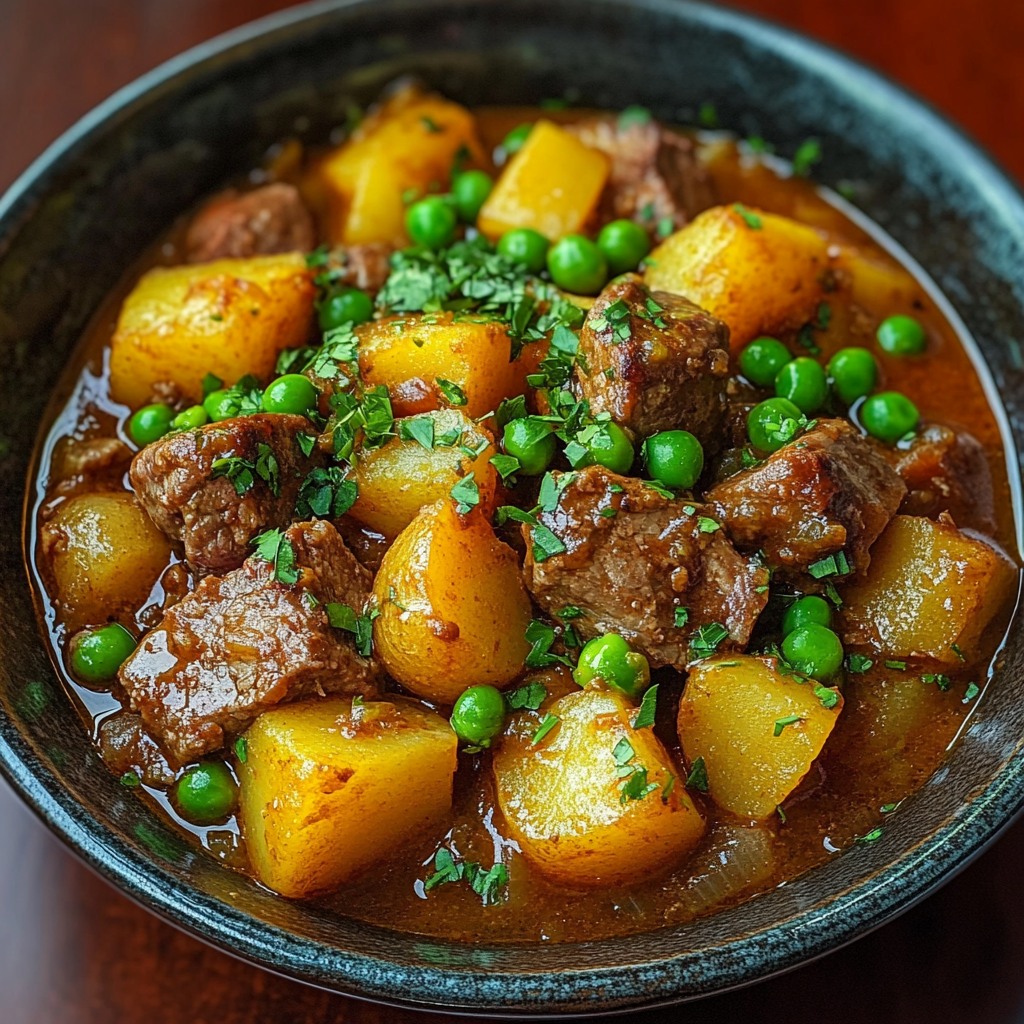
Slow-Simmered Moroccan Lamb Tagine with Spiced Tomato Broth, Baby Potatoes & Sweet Green Peas: A Flavorful Journey to North Africa
Imagine your kitchen filled with the intoxicating aroma of warm spices, tender lamb, and simmering tomatoes. This Slow-Simmered Moroccan Lamb Tagine with Spiced Tomato Broth, Baby Potatoes & Sweet Green Peas recipe delivers exactly that experience. Furthermore, it brings the soul-warming comfort of North African cuisine directly to your dinner table. Ultimately, this dish is a celebration of layered flavors and patient cooking.
This authentic tagine recipe transforms simple ingredients into an extraordinary meal. The key, of course, lies in the slow simmering process. Consequently, the lamb becomes incredibly tender, practically falling apart at the touch of a fork. Meanwhile, the baby potatoes soak up the rich, spiced tomato broth, and the sweet green peas add a vibrant pop of color and freshness just before serving.
Creating this Slow-Simmered Moroccan Lamb Tagine with Potatoes & Peas Recipe is a rewarding culinary project. It is perfect for a weekend gathering or a special family dinner. The process is meditative, and the result is deeply satisfying. You will love sharing this hearty, fragrant stew with loved ones.
Quick Recipe Highlights
- Flavor Profile: This tagine boasts a complex harmony of sweet, savory, and warmly spiced notes. Expect the earthy depth of cumin and coriander, the gentle heat of ginger, and the sweet fragrance of cinnamon, all balanced by the bright acidity of tomatoes and the richness of lamb.
- Texture: The dish offers a wonderful contrast in textures. You get melt-in-your-mouth tender lamb, creamy baby potatoes that hold their shape, and sweet green peas that provide a slight pop. The broth itself is silky and rich, perfect for sopping up with crusty bread.
- Aroma: As it cooks, your home will fill with an unmistakably Moroccan scent. The primary aromatic notes come from toasting spices, sautéing onions and garlic, and the long, slow release of flavor from the lamb and tomatoes as they braise together.
- Visual Appeal: This stew is a feast for the eyes with its rich, reddish-brown broth, pale golden potatoes, bright green peas, and chunks of succulent lamb. Traditionally, it is garnished with fresh herbs like cilantro or parsley, adding a final touch of green.
- Skill Level Needed: This is an intermediate recipe due to the layering of techniques like browning meat and building a flavor base with spices. However, the process is straightforward and mostly hands-off once the tagine is simmering.
- Special Equipment: While a traditional clay tagine pot is beautiful, a heavy-bottomed Dutch oven or a large, lidded pot works perfectly. You will also need basic kitchen tools like a sharp knife, cutting board, and measuring spoons for the spice blend.
Recipe Overview
- Difficulty Level: We rate this Slow-Simmered Moroccan Lamb Tagine as intermediate. The steps are simple, but success relies on technique. Properly browning the lamb to develop fond, toasting the spices to unlock their oils, and managing a gentle simmer are crucial skills. Thankfully, the recipe guides you through each one.
- Category: This dish is a quintessential main course or one-pot meal. It is hearty enough to stand alone but also pairs beautifully with simple sides. You can easily serve it for a cozy weeknight dinner or as the impressive centerpiece for a dinner party.
- Cuisine: This recipe is firmly rooted in Moroccan cuisine, known for its sophisticated use of spices like ras el hanout, saffron, cumin, and cinnamon. The cooking method—slow braising in a distinctive pot—is also classically Moroccan, designed to tenderize tougher cuts of meat and concentrate flavors.
- Cost: The cost is moderate, primarily due to the lamb. Using a shoulder or leg cut, which is ideal for braising, is more economical than premium chops. The remaining ingredients—potatoes, peas, tomatoes, onions, and spices—are generally affordable pantry staples.
- Season: This Slow-Simmered Moroccan Lamb Tagine is incredibly versatile across seasons. It provides warmth and comfort in fall and winter. Conversely, in spring, the addition of sweet green peas makes it feel seasonal and fresh. It is truly a year-round favorite.
- Occasion: This dish is perfect for relaxed entertaining. It can be made almost entirely ahead of time, and it actually improves in flavor after a day. Serve it for a festive Eid celebration, a casual dinner with friends, or a special Sunday family supper.
Why You’ll Love This Recipe
First and foremost, the taste and texture of this Slow-Simmered Moroccan Lamb Tagine are utterly captivating. Each spoonful delivers a symphony of flavors. The lamb, after hours of gentle cooking, becomes unbelievably tender and succulent. Meanwhile, the baby potatoes turn creamy and soak up the deeply spiced tomato broth. Finally, the sweet green peas add a necessary burst of freshness and color that lifts the entire dish. The complexity achieved with a handful of spices is nothing short of magical.
From a convenience standpoint, this recipe is a home cook’s dream. After the initial prep and browning, the pot does most of the work. You can set it to simmer and attend to other tasks, making it ideal for busy days when you still want a spectacular meal. Additionally, this Slow-Simmered Moroccan Lamb Tagine with Potatoes & Peas Recipe is a complete one-pot meal. You have your protein, starch, and vegetables all cooking together harmoniously, which means minimal cleanup.
Nutritionally, this stew is a well-balanced powerhouse. Lamb is an excellent source of high-quality protein, iron, and B vitamins, essential for energy. Tomatoes provide vitamin C and lycopene, a powerful antioxidant. Potatoes offer potassium and fiber, especially if you leave the skins on. Peas contribute additional plant-based protein, fiber, and vitamins. Together, they create a nourishing and satisfying meal.
For social gatherings, this tagine is a guaranteed crowd-pleaser. It is inherently shareable and encourages a communal dining experience. Placing the pot in the center of the table lets everyone serve themselves, fostering a warm and inviting atmosphere. The exotic yet familiar flavors are adventurous enough to impress guests but comforting enough to please even picky eaters.
Finally, this dish is cost-effective and accessible. By using an economical, tough cut of lamb and transforming it through slow cooking, you achieve a luxurious result without the luxury price tag. Most spices are now readily available in mainstream grocery stores. Ultimately, this Slow-Simmered Moroccan Lamb Tagine proves that extraordinary food doesn’t require exotic or expensive ingredients, just patience and care.
Historical Background and Cultural Significance
The tagine, both the iconic conical cooking vessel and the stew it produces, has a history deeply woven into the fabric of North African life, particularly in Morocco, Algeria, and Tunisia. Its origins are practical, born from the need to cook tender meals with minimal water and fuel in arid regions. The unique design of the tagine pot, with its tall, conical lid, serves a brilliant purpose. It traps steam, which then condenses and drips back down onto the food, creating a self-basting system. This method allowed nomadic Berber tribes to simmer tough cuts of meat with dried fruits and sparse vegetables over small fires.
Culturally, the tagine is more than just a cooking pot; it is a symbol of hospitality, family, and shared heritage. Traditionally, a tagine is placed in the center of the table, and everyone eats directly from it using pieces of bread, usually khobz, to scoop up the savory stew. This practice emphasizes community and togetherness. In Moroccan households, specific tagines are often reserved for special occasions, festivals like Eid, and welcoming important guests. Mastering the balance of spices—the soul of any tagine—is a point of pride and a skill passed down through generations.
The evolution of the tagine recipe mirrors the history of trade in the region. The famous spice routes brought cinnamon from Sri Lanka, ginger from Asia, and saffron from Persia, all of which found a permanent home in Moroccan spice cabinets. Over centuries, the simple Berber stew evolved into the complex, layered dishes we know today. The addition of ingredients like olives, preserved lemons, and a wider variety of fruits and vegetables reflects both local agriculture and external influences. Each family and region developed its own signature variations, creating a rich tapestry of flavors under the umbrella term “tagine.”
Regional variations within Morocco alone are vast. In the coastal cities, you might find tagines with more fish and seafood. In the Atlas Mountains, lamb and goat are prevalent, often paired with apples or quince. The famous city of Fez is known for its sweeter tagines, using ingredients like prunes and apricots. The recipe for this Slow-Simmered Moroccan Lamb Tagine with Spiced Tomato Broth represents a more savory, everyday style common in many homes, highlighting the perfect marriage of meat, potatoes, and peas with a robust spice profile.
Ingredient Deep Dive
Lamb Shoulder is the star of this Slow-Simmered Moroccan Lamb Tagine. Historically, nomadic cultures prized lamb and goat for their ability to thrive in harsh landscapes. For this recipe, shoulder is ideal because it is a well-exercised cut, rich in connective tissue that breaks down during long, slow cooking, transforming into gelatinous, fall-apart tenderness. Nutritionally, it is an excellent source of protein, iron, zinc, and vitamin B12. When selecting lamb shoulder, look for meat with a bright red color and fine marbling of white fat. You can ask your butcher to cut it into large chunks for you. For substitutions, beef chuck or goat meat would work well, following the same cooking method.
The Spice Blend is the heart and soul of any authentic tagine recipe. Typical blends include cumin (earthy), coriander (citrusy), ginger (warm and sharp), cinnamon (sweet and woody), and paprika (for color and mild sweetness). Toasting whole spices and grinding them fresh provides the most potent flavor, but pre-ground spices are perfectly acceptable. These spices are not just flavor agents; many, like turmeric and ginger, have celebrated anti-inflammatory properties. Store spices in a cool, dark place to maintain their potency. For a shortcut, you can use a pre-mixed ras el hanout, which is a classic Moroccan spice blend meaning “top of the shop.”
Baby Potatoes are a wonderful addition to this Slow-Simmered Moroccan Lamb Tagine with Potatoes & Peas Recipe. Their small size means they cook evenly and hold their shape well during the long braise, absorbing the flavorful broth without disintegrating. Potatoes were introduced to North Africa relatively recently but have become a staple. They add comforting carbohydrates, potassium, and vitamin C, especially if you leave the skins on for extra fiber. Choose firm, smooth baby potatoes of uniform size. You can use Yukon Gold or fingerling potatoes as alternatives. There is no need to peel them; just give them a good scrub.
Sweet Green Peas provide a crucial pop of color, sweetness, and texture contrast. They are added at the very end of cooking to preserve their vibrant green hue and slight crunch. Peas are a good source of plant-based protein, fiber, and vitamins A and K. Using frozen peas is highly recommended for this recipe; they are often fresher than “fresh” peas that have been sitting on a shelf, and they require no prep. Simply stir them in during the last five minutes of cooking. For a different twist, you could substitute with fresh fava beans (broad beans) when in season.
Common Mistakes to Avoid
- Not Browning the Lamb Properly: Skipping this step or crowding the pot will steam the meat instead of creating a flavorful, caramelized crust. This crust, called fond, is essential for building a deep, rich broth. Always pat the lamb dry and brown it in batches.
- Adding Cold Liquid to Hot Pot: Pouring cold broth or tomatoes into the hot pot after toasting spices can shock the ingredients and hinder flavor development. Instead, have your liquids at room temperature or slightly warmed before adding them.
- Boiling Instead of Simmering: A rolling boil will toughen the lamb and cause the potatoes to break apart. The key to this Slow-Simmered Moroccan Lamb Tagine is the gentlest possible simmer, with just occasional bubbles breaking the surface.
- Overcooking the Peas: Adding frozen peas too early will turn them mushy and dull their bright green color. Stir them in during the final five minutes of cooking, just long enough to heat through.
- Using Dull Spices: Ground spices lose their potency after about six months. Using old, dull spices will result in a flat-tasting tagine. Check the freshness of your spices by smelling them; they should be aromatic.
- Underseasoning the Broth: Spices need salt to help release their full spectrum of flavors. Season each layer—the meat, the onions, the broth—and always do a final taste and seasoning adjustment before serving.
- Cutting the Lamb Too Small: Cutting the lamb into one-inch chunks may seem logical, but they can overcook and become dry. Larger, two-inch chunks will stay juicy and tender through the long braising process.
- Lifting the Lid Too Often: Every time you lift the lid, you release precious heat and steam, increasing the cooking time. Trust the process and only check occasionally to ensure the simmer is steady.
Essential Techniques
Browning the Meat (Searing): This technique is non-negotiable for building flavor. The Maillard reaction—a chemical process that occurs when proteins and sugars are exposed to high heat—creates hundreds of new flavor compounds. To master it, ensure your pot is hot before adding the oil, pat the lamb pieces completely dry with paper towels, and do not crowd the pan. Work in batches if necessary. You are looking for a deep, brown crust on all sides, not just gray steam. The browned bits stuck to the pot (fond) are flavor gold.
Blooming Spices: Blooming means toasting spices in hot oil. This step is crucial for unlocking their volatile oils and transforming their flavor from raw and dusty to warm, nutty, and complex. After sautéing the onions, add your ground spices to the oil and stir constantly for about 30-60 seconds. You will know it’s working when the kitchen fills with a fragrant aroma. The common pitfall is burning them, which makes spices bitter. If they burn, it’s best to wipe the pot and start this step over.
Deglazing: This is the act of using liquid to dissolve the flavorful fond (the browned bits) from the bottom of the pot after searing meat. After browning the lamb and removing it, you may see dark, stuck-on bits. When you add your tomatoes or broth, use a wooden spoon to vigorously scrape the bottom of the pot. This incorporates all that concentrated flavor into your sauce. It’s a simple step that makes a monumental difference in the depth of your Slow-Simmered Moroccan Lamb Tagine.
Low and Slow Braising: Braising is a two-step cooking method: first browning, then simmering in liquid. The gentle, moist heat of a low simmer breaks down tough collagen in the lamb shoulder into soft gelatin, resulting in that signature fork-tender texture. The visual cue for success is the meat easily pulling apart with a fork. A hard boil will cause the muscle fibers to contract and toughen, so maintaining that low temperature is the most important technique for the entire cooking time.
Pro Tips for Perfect Slow-Simmered Moroccan Lamb Tagine
For the deepest flavor, marinate the lamb chunks overnight in a mixture of olive oil, minced garlic, and a tablespoon of the spice blend. This allows the flavors to penetrate the meat before cooking even begins.
If you have the time, prepare this Slow-Simmered Moroccan Lamb Tagine a day ahead. The flavors meld and intensify overnight in the refrigerator, making it even more delicious for the next day’s meal.
Use the fat that renders from the lamb during browning to cook your onions and spices. This lamb fat carries incredible flavor and will enrich the entire dish.
For a silkier, more emulsified broth, after removing the cooked lamb and potatoes, use an immersion blender to briefly puree about one-third of the tomato broth before adding the peas and returning the meat and potatoes to the pot.
If your broth seems too thin after cooking, remove the lid for the final 20-30 minutes of simmering. This allows excess liquid to evaporate and the sauce to naturally thicken and concentrate.
Always taste and adjust the seasoning right before serving. Long cooking can mellow flavors, so a final pinch of salt, a squeeze of lemon juice, or a sprinkle of fresh herbs can brighten the entire dish.
Serve with plenty of warm, crusty bread or fluffy couscous to soak up every last drop of the incredible spiced tomato broth.
For an authentic touch, garnish with a drizzle of high-quality extra virgin olive oil and a sprinkle of toasted almond slivers or sesame seeds just before bringing the tagine to the table.
Variations and Adaptations
Regional Variations: To explore different Moroccan regional styles, try these adaptations. For a Fassi (from Fez) influence, replace the peas with a cup of dried apricots or prunes added in the last 30 minutes of cooking. For a coastal twist, substitute the lamb with firm white fish like halibut or cod, adding it in the last 10 minutes of simmering. A “kefta” tagine replaces the lamb chunks with seasoned meatballs simmered in the same spiced tomato sauce.
Seasonal Adaptations: This Slow-Simmered Moroccan Lamb Tagine is wonderfully adaptable. In autumn, swap the peas for cubed butternut squash or sweet potato. In summer, use fresh, shelled peas and garnish with chopped fresh mint. In spring, add artichoke hearts and fresh fava beans. For a winter version, incorporate hearty greens like chopped Swiss chard or kale in the last 15 minutes of cooking.
Dietary Modifications: For a gluten-free version, ensure your spice blend and broth are certified gluten-free, and serve with gluten-free bread or quinoa instead of couscous. To make it dairy-free, simply avoid any dairy-based garnishes; the recipe itself contains no dairy. For a lower-carb option, reduce or omit the potatoes and add extra low-carb vegetables like cauliflower florets or zucchini.
Flavor Variations: Introduce new flavor dimensions with simple additions. Stir in a tablespoon of harissa paste with the tomatoes for a spicy kick. Add the preserved peel of one preserved lemon, finely chopped, for a classic Moroccan tang. For an herbal note, add a sprig of fresh thyme or rosemary to the pot while it simmers.
Texture Modifications: If you prefer a thicker, stew-like consistency, mix a tablespoon of tomato paste with a tablespoon of flour before adding the initial liquids to create a quick roux. For a smoother broth, blend half of the finished sauce before adding the peas. To add crunch, top with toasted pine nuts or crispy chickpeas as a garnish.
Presentation Alternatives: While a traditional tagine pot is stunning, you can present this dish in a shallow, wide serving bowl for easy access. For individual servings, spoon the tagine into deep pasta bowls. For a modern family-style presentation, serve the lamb and vegetables on a large platter with the broth in a gravy boat on the side.
Serving and Presentation Guide
Plating Techniques: For a family-style meal, present the entire pot or serving dish at the table. Use a large spoon to gently portion out the lamb, potatoes, and peas, ensuring each serving gets plenty of the rich, spiced tomato broth. For individual plating, place a portion of couscous or a piece of crusty bread in the center of a shallow bowl, then ladle the tagine over and around it, allowing the bread to soak up the sauce.
Garnishing Ideas: Garnishes add freshness, texture, and visual appeal. Classic options include a generous handful of chopped fresh cilantro or flat-leaf parsley. For brightness, a drizzle of lemon juice or a sprinkle of lemon zest works wonders. For richness, a swirl of good olive oil or a dollop of plain yogurt is excellent. For crunch, toasted almond slivers, sesame seeds, or even crispy fried onions add a delightful contrast.
Traditional Accompaniments: The most traditional partner for this Slow-Simmered Moroccan Lamb Tagine is fluffy couscous. Quick-cooking couscous can be prepared in minutes by steeping it in hot water or broth. Alternatively, crusty bread like khobz or a baguette is essential for scooping and sopping up every last drop of sauce. A simple salad of chopped tomatoes, cucumber, and onion with a lemon-olive oil dressing provides a refreshing counterpoint.
Modern Serving Suggestions: For a contemporary twist, serve the tagine over creamy polenta or mashed potatoes instead of couscous. A side of roasted carrots or a shaved fennel salad would complement the warm spices beautifully. You can also offer small bowls of condiments like harissa, chermoula, or extra broth for guests to customize their bowls.
Temperature Considerations: This dish is best served piping hot. Ensure your serving bowls are warmed before plating. If the tagine has been resting, reheat it gently on the stove until bubbling before serving. Remember, the residual heat will continue to cook the peas, so they should be just warmed through when you turn off the heat.
Portion Control Tips: This recipe generously serves six. For larger appetites or if serving with minimal sides, plan for one large lamb chunk and a scoop of potatoes per person. If the meal includes multiple side dishes, the tagine can comfortably serve up to eight. The stew is very filling, so a little goes a long way.
Wine and Beverage Pairing
Wine Pairings: The warm spices and rich lamb in this tagine call for wines with enough character to stand up to them without clashing. A medium-bodied red with soft tannins and some spice notes is ideal. A Grenache or GSM blend (Grenache-Syrah-Mourvèdre) from the Rhône Valley mirrors the dish’s earthy, herbal qualities. A fruity Zinfandel can handle the sweetness of the spices. For a bolder choice, an aged Rioja with its developed tertiary flavors of leather and spice is a magnificent match.
Non-Alcoholic Alternatives: A refreshing, not-too-sweet mint tea is the classic Moroccan beverage pairing and works perfectly. For a cooler option, try a sparkling pomegranate juice or a ginger beer; the spice in the ginger beer complements the tagine’s spices, while the carbonation cleanses the palate. A simple glass of chilled, slightly sweetened lemon water with fresh mint leaves is also incredibly refreshing.
Coffee/Tea Pairings: After the meal, a cup of strong, sweet Moroccan mint tea is the traditional and perfect finish. The mint aids digestion and the sweetness balances any lingering spice. For coffee lovers, a dark roast Arabic coffee, lightly cardamom-spiced, would be a bold and satisfying end to the meal. Avoid overly delicate teas or light roasts that would be overwhelmed.
Temperature Considerations: Serve red wines slightly below room temperature, around 60-65°F (15-18°C), to keep them refreshing. Non-alcoholic sparkling drinks should be well-chilled. Moroccan mint tea is traditionally served hot, poured from a height to create a frothy top. Iced mint tea is also a delightful option for warmer weather.
Serving Suggestions: Offer a variety of beverages to cater to different preferences. Place a pitcher of mint-infused water on the table for a neutral palate cleanser. Have both red wine and a non-alcoholic sparkling option available. Serving the traditional mint tea at the end of the meal as a digestif creates a lovely, authentic ritual.
Storage and Shelf Life
Storage Methods: Allow the Slow-Simmered Moroccan Lamb Tagine to cool completely to room temperature before storing. Do not leave it out for more than two hours. Transfer it to an airtight container. You can store the entire stew together, but for best texture, you may choose to store the peas separately if you have leftovers, as they can become mushy upon reheating.
Temperature Requirements: The tagine must be refrigerated at 40°F (4°C) or below. In the refrigerator, it will keep for 3 to 4 days. For longer storage, freezing is highly effective due to the stew’s high-liquid content, which prevents the meat from drying out when reheated.
Container Recommendations: Use glass or BPA-free plastic containers with tight-fitting lids. For freezing, consider using heavy-duty freezer bags laid flat to save space, or portion the tagine into individual servings in microwave-safe containers for easy future meals.
Signs of Spoilage: Discard the tagine if you notice an off or sour smell, visible mold growth, or if the texture of the meat becomes slimy. If the liquid develops a cloudy appearance with lots of bubbles, it is likely fermenting and should not be consumed.
Reheating Instructions: The best way to reheat is on the stovetop over low heat, stirring occasionally, until heated through. You may need to add a small splash of water or broth if the sauce has thickened too much. You can also reheat in the microwave in a covered, microwave-safe dish, stirring every 60 seconds to ensure even heating.
Freezing Guidelines: This tagine freezes exceptionally well for up to 3 months. Cool it completely, then portion it into freezer-safe containers, leaving about an inch of headspace for expansion. Thaw overnight in the refrigerator before reheating. The texture of the potatoes may become slightly softer after freezing and thawing, but the flavor will remain excellent.
Make Ahead Strategies
Prep Timeline: You can break this recipe into stages over two days. On Day 1, complete all prep: cut the lamb, chop the onions and garlic, measure spices, and wash potatoes. You can even brown the lamb and sauté the onions, then stop before adding the liquids. Cool this base completely and refrigerate. On Day 2, simply add the remaining ingredients and proceed with the simmering.
Storage Between Steps: If preparing components ahead, store the browned lamb and onion-spice mixture in one sealed container in the fridge. Keep the canned tomatoes, broth, and potatoes ready. This makes the final assembly on cooking day incredibly quick and easy, taking only about 10 minutes of active time before the pot goes into the oven or onto the simmer burner.
Quality Impact Assessment: Making this Slow-Simmered Moroccan Lamb Tagine ahead actually improves its flavor. The spices have more time to meld and penetrate the meat. The key is to undercook the potatoes slightly if you plan to reheat the entire dish, as they will soften further upon reheating. Always add the peas fresh during the final reheating.
Assembly Tips: For a stress-free dinner party, cook the entire tagine 1-2 days in advance. Let it cool and store it in the refrigerator. About an hour before serving, gently reheat it on the stovetop over low heat. Prepare your couscous and salad fresh. This strategy allows you to be a relaxed host.
Reheating Guidelines: When reheating a fully made tagine, do so slowly and gently to prevent the meat from breaking down too much or the sauce from scorching. A low oven (300°F / 150°C) with the pot covered is a very gentle method. On the stovetop, use the lowest possible heat and stir occasionally.
Fresh Element Additions: No matter how far ahead you make the stew, always add the fresh elements right before serving. This means stirring in the frozen peas during the final 5 minutes of reheating. Also, add all fresh garnishes—cilantro, lemon juice, nuts—directly onto the served bowls, not into the main pot, to preserve their texture and brightness.
Scaling Instructions
Halving the Recipe: Halving this Slow-Simmered Moroccan Lamb Tagine with Potatoes & Peas Recipe is straightforward for a smaller household. Use a medium-sized pot (about 4 quarts). Precisely halve all ingredient quantities. The cooking time may be slightly reduced by 15-20 minutes, so start checking the lamb for tenderness at the 1 hour 45 minute mark. The volume of liquid will reduce faster, so keep the lid on to prevent it from drying out.
Doubling or Tripling: Doubling or tripling is excellent for a crowd. You will need a very large stockpot or Dutch oven (at least 8 quarts for doubled, 12+ quarts for tripled). Brown the lamb in more batches to avoid steaming. The simmering time will increase; allow an extra 30-45 minutes for a doubled recipe. Stir occasionally to ensure even heat distribution, especially if using a wider pot.
Equipment Adjustments: Scaling up requires matching your pot size to the volume. A pot that is too small will lead to uneven cooking and boil-overs. One that is too large may cause the sauce to reduce too quickly. For a tripled recipe, consider using two separate pots to maintain control over the cooking process, then combine them at the end.
Timing Modifications: The active prep time scales linearly. However, the simmering time does not double when you double the recipe. It increases, but not proportionally. A good rule is to add 30 minutes of simmer time for each time you double the recipe. Always rely on the tenderness of the meat as your final indicator, not the clock.
Storage Considerations: A larger batch means more leftovers. Plan your storage containers in advance. Portioning the finished tagine into meal-sized containers before refrigerating or freezing makes future meals effortless. Remember, cooling a large volume of hot food takes longer; divide it into smaller, shallow containers to cool it quickly and safely before refrigerating.
Nutritional Deep Dive
Macro Breakdown: A serving of this Slow-Simmered Moroccan Lamb Tagine provides a balanced macronutrient profile. The lamb shoulder is a rich source of high-quality protein and fats, including both saturated and monounsaturated fats. The baby potatoes contribute complex carbohydrates and fiber, especially with skins on. The peas add additional plant-based protein and fiber. The tomatoes and onions contribute minimal carbs but are rich in micronutrients. This combination provides sustained energy release.
Micronutrient Analysis: This dish is a micronutrient powerhouse. Lamb is exceptionally high in bioavailable iron, zinc, and vitamin B12, crucial for energy metabolism and immune function. Tomatoes provide vitamin C (which enhances iron absorption from the lamb) and the antioxidant lycopene. Potatoes offer potassium, vitamin C, and B6. Peas contribute vitamins A, K, and folate. The spices, particularly turmeric and ginger, contain beneficial bioactive compounds with anti-inflammatory properties.
Health Benefits: The combination of ingredients supports several health aspects. The iron and B12 combat fatigue and support red blood cell formation. The fiber from potatoes and peas promotes digestive health and satiety. The antioxidants from tomatoes and spices help combat oxidative stress. The slow-cooking method also makes the nutrients more bioavailable and the proteins easier to digest.
Dietary Considerations: This recipe is naturally gluten-free and dairy-free, making it suitable for those with those intolerances. It is not suitable for vegetarians or vegans due to the lamb. For those on a low-carb or keto diet, the potatoes would need to be omitted or replaced with lower-carb vegetables like radishes or turnips.
Portion Analysis: A standard serving (one-sixth of the recipe) is satisfying and nutrient-dense. It is a complete meal containing protein, carbohydrates, and vegetables. For those managing calorie intake, you can adjust the portion size slightly, perhaps serving a smaller amount of the stew alongside a large green salad. The high protein and fiber content promote feelings of fullness.
Weight Management Tips: This tagine can be part of a weight-conscious diet due to its high protein and fiber content, which help control appetite. To reduce the calorie density slightly, you can trim visible fat from the lamb before cooking and use a leaner cut like leg. You can also increase the proportion of vegetables (more peas, add carrots) to bulk up the dish with fewer calories per serving.
Dietary Adaptations
Gluten-Free: This Slow-Simmered Moroccan Lamb Tagine is inherently gluten-free as written. The primary concern is cross-contamination in spices or broth. Always check labels on pre-made spice blends and canned broths to ensure they are certified gluten-free. Serve with gluten-free accompaniments like quinoa, rice, or certified gluten-free bread instead of traditional couscous, which contains wheat.
Dairy-Free: The recipe contains no dairy products. It is naturally dairy-free. Any garnishes like yogurt or butter should be avoided or substituted. For a creamy garnish, use a dollop of dairy-free yogurt made from coconut or almond milk. Ensure any store-bought broth used is also dairy-free by checking the label.
Vegan/Vegetarian: For a plant-based version, replace the lamb with hearty vegetables and plant-based protein. Use large chunks of portobello mushrooms, eggplant, and cauliflower. Add two cans of drained and rinsed chickpeas for protein. Use vegetable broth instead of{“success”:true,”message”:”Recipe created successfully”,”post_id”:8324,”tasty_recipe_id”:8324,”shortcode”:” Print
Slow-Simmered Moroccan Lamb Tagine with Spiced Tomato Broth, Baby Potatoes & Sweet Green Peas
Description
A fragrant and hearty Moroccan stew featuring tender lamb simmered in a spiced tomato broth with baby potatoes and sweet green peas, perfect for a comforting meal.
Ingredients
For the Crust:
- 2 lbs lamb shoulder, cut into 1-inch cubes
- 1 large onion, finely chopped
- 3 cloves garlic, minced
- 1 can (14 oz) diced tomatoes
- 4 cups chicken or vegetable broth
- 1 lb baby potatoes, halved
- 1 cup sweet green peas, fresh or frozen
- 2 tbsp olive oil
- 2 tsp ground cumin
- 1 tsp ground coriander
- 1 tsp ground cinnamon
- 1 tsp paprika
- 1/2 tsp ground ginger
- Salt and black pepper to taste
- Fresh cilantro or parsley for garnish
Instructions
1. Prepare the Crust:
- Heat olive oil in a large pot or tagine over medium heat. Add lamb cubes and brown on all sides, about 5-7 minutes. Remove and set aside.
- In the same pot, add chopped onion and cook until softened, about 5 minutes. Add minced garlic and cook for another minute until fragrant.
- Stir in cumin, coriander, cinnamon, paprika, and ginger, cooking for 1 minute to toast the spices.
- Return lamb to the pot. Add diced tomatoes and broth. Bring to a boil, then reduce heat to low, cover, and simmer for 1.5 hours until lamb is tender.
- Add baby potatoes to the pot, cover, and simmer for an additional 20-25 minutes until potatoes are fork-tender.
- Stir in green peas and cook for 5 more minutes. Season with salt and pepper to taste.
- Garnish with fresh cilantro or parsley before serving.
Notes
You can customize the seasonings to taste.

I’m Billy, a classically trained culinary school graduate from The Culinary Institute of America with over 12 years in the restaurant industry and over 19 years of cooking experience.