
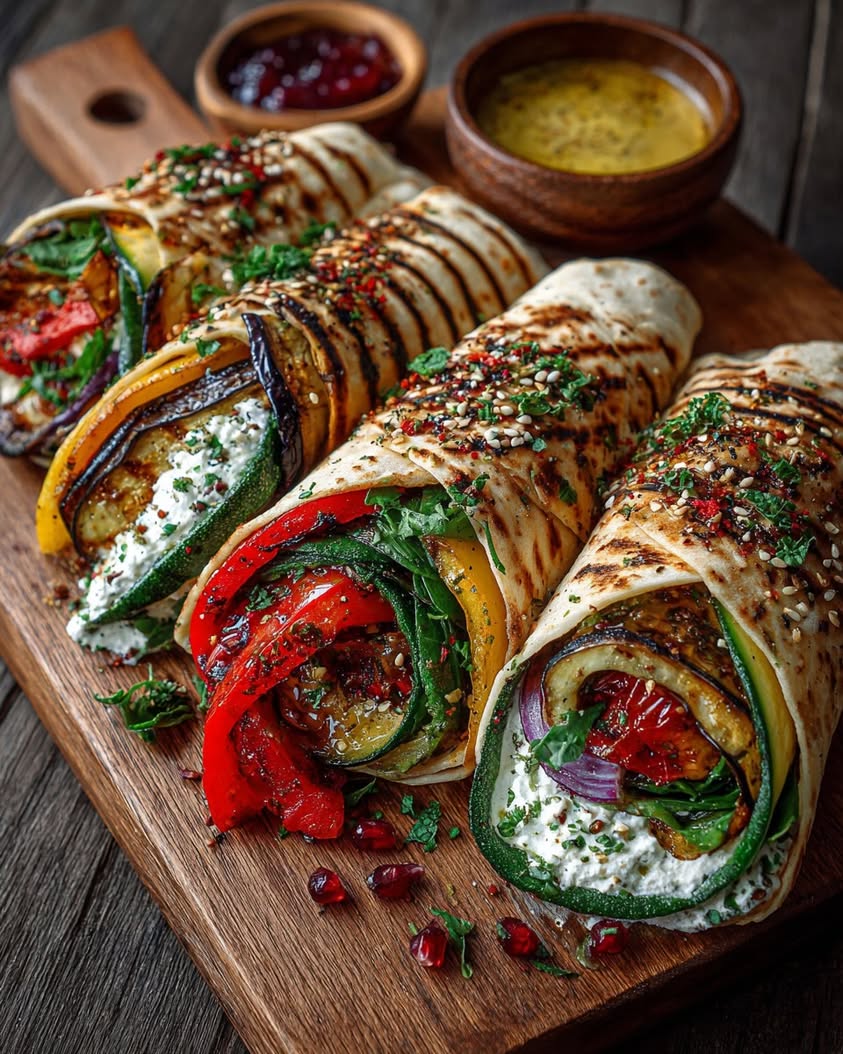
Smoked Vegetable Lavash Rolls with Creamy Feta-Za’atar Spread: A Flavorful Mediterranean Feast
Imagine the irresistible aroma of smoky vegetables mingling with the tangy, herbal notes of za’atar. This recipe for Smoked Vegetable Lavash Rolls with Creamy Feta-Za’atar Spread delivers exactly that experience in a beautiful, handheld package. These rolls are not just a meal; they are a vibrant journey for your senses, combining textures and flavors from the Eastern Mediterranean in a surprisingly simple way. Moreover, they are perfect for anyone seeking a healthy, plant-forward option that doesn’t compromise on taste or satisfaction.
The magic of these Smoked Vegetable Lavash Rolls lies in the contrast. You get tender, charred vegetables wrapped in soft, pliable lavash bread, all brought together by a rich and zesty spread. The creamy feta cheese base is elevated with earthy za’atar, creating a sauce that is both familiar and excitingly different. Consequently, every bite is a harmonious blend of creamy, smoky, fresh, and herbal notes. Whether you serve them as an impressive appetizer, a light lunch, or part of a mezze platter, these rolls are guaranteed to be a conversation starter.
Ultimately, this dish celebrates fresh ingredients and bold flavors. It is incredibly adaptable to seasonal produce and various dietary preferences. From the first slice of zucchini to the final sprinkle of herbs, making these Smoked Vegetable Lavash Rolls is a joyful and rewarding kitchen project. Let’s dive into how you can create this stunning, flavorful feast at home.
Quick Recipe Highlights
- Flavor Profile: These rolls offer a complex symphony of tastes. The smoky, sweet vegetables play against the salty, tangy feta spread, while the za’atar adds its signature earthy, lemony, and herbal punch. A final squeeze of lemon juice brightens everything up perfectly.
- Texture: Expect a wonderful textural journey. The lavash provides a soft yet slightly chewy exterior that holds a filling of tender-crisp, smoky vegetables. The creamy feta spread adds a lush, smooth element that binds all the components together delightfully.
- Aroma: As you prepare these, your kitchen will fill with the warm, woody scent of smoked paprika and grilled vegetables. This is beautifully complemented by the fragrant, toasty aroma of sesame seeds and thyme from the za’atar spice blend.
- Visual Appeal: These rolls are a feast for the eyes. The vibrant colors of red bell pepper, green zucchini, and yellow squash peek through the translucent lavash, while the creamy white spread and green herb garnish create a stunning, restaurant-quality presentation.
- Skill Level Needed: This is an accessible recipe for most home cooks. The techniques involve simple vegetable slicing, a quick sauté or grill, and easy assembly. No advanced culinary skills are required, making it a great project for a confident beginner.
- Special Equipment: A good skillet or grill pan is essential for achieving the smoky char on the vegetables. Meanwhile, a food processor or blender will make the feta spread luxuriously smooth, though a fork and strong arm can work in a pinch.
Recipe Overview
- Difficulty Level: We rate this recipe as easy. The steps are straightforward: chop, cook, blend, and roll. There is no intricate knife work or precise baking science involved. The most important skill is managing the vegetable cook time to achieve a nice char without mushiness. With a little attention, anyone can achieve fantastic results.
- Category: These versatile rolls fit multiple categories beautifully. They shine as a vegetarian main course, a substantial appetizer, or a standout component on a party platter. They are also ideal for packed lunches or picnics, as they travel well and can be eaten at room temperature.
- Cuisine: This dish draws deep inspiration from Levantine and Eastern Mediterranean cuisines. Lavash bread hails from Armenia and surrounding regions, while za’atar is a cornerstone spice blend across the Middle East. The use of fresh vegetables and tangy cheese reflects the healthy, flavor-focused cooking of the area.
- Cost: This is a very cost-effective recipe, especially when vegetables are in season. Lavash bread is inexpensive, and a block of feta and a jar of za’atar go a long way. You can easily adapt the vegetable selection based on what’s on sale, making it a budget-friendly, gourmet-feeling meal.
- Season: Summer and early fall are prime seasons for this recipe, as gardens and markets overflow with perfect zucchini, bell peppers, and eggplant. However, it works wonderfully year-round because the smoking technique using paprika adds depth even to off-season greenhouse vegetables.
- Occasion: These rolls are incredibly versatile for entertaining. They are perfect for casual summer gatherings, elegant cocktail parties, or a festive holiday appetizer spread. They also make a wonderful light dinner for a warm evening on the patio.
Why You’ll Love This Recipe
First and foremost, the taste and texture are utterly irresistible. The combination of smoky vegetables with the creamy, tangy feta-za’atar spread is nothing short of addictive. Each component brings something unique: sweetness from the peppers, earthiness from the zucchini, saltiness from the cheese, and a herbal lift from the za’atar. Together, they create a balanced and deeply satisfying flavor profile that will have you reaching for seconds. The contrast between the soft lavash, tender veggies, and creamy spread ensures every bite is interesting and delicious.
From a convenience standpoint, this recipe is a winner. The components can be prepared ahead of time, making assembly a breeze when you’re ready to serve. The cooking process is simple and relatively quick, with most of the active time spent chopping vegetables. Furthermore, these Smoked Vegetable Lavash Rolls are naturally vegetarian and can be easily adapted to be vegan or gluten-free, catering to a wide range of dietary needs without sacrificing flavor. They are a fantastic solution for feeding a mixed-diet crowd.
Nutritionally, these rolls are packed with benefits. They are loaded with vitamins, minerals, and fiber from the colorful array of vegetables. Using lavash, often thinner and larger than typical wraps, can help with portion control and reduces the bread-to-filling ratio. The feta provides protein and calcium, while the olive oil offers heart-healthy fats. It’s a meal that fuels your body with good things while delighting your palate, proving that healthy eating does not have to be bland or boring.
For social and entertaining value, these rolls are a superstar. They look incredibly impressive when sliced diagonally to reveal the colorful spiral inside, making them perfect for parties. Guests can easily grab one without the mess of a dip or a plate, facilitating mingling. They are a conversation piece, introducing many people to the wonderful flavor of za’atar. Serving these at your next gathering is a surefire way to earn compliments and recipe requests from your friends and family.
Finally, the cost-effectiveness and accessibility of the ingredients make this a recipe you’ll return to often. Lavash bread is found in most grocery stores’ international or bread aisles. Za’atar is also becoming widely available, and a small jar lasts for many recipes. The vegetables are common and affordable. This dish delivers a gourmet, restaurant-quality experience using humble, easy-to-find ingredients, making it a brilliant addition to your weekly meal rotation or your special occasion repertoire.
Historical Background and Cultural Significance
The story of these Smoked Vegetable Lavash Rolls is woven from several ancient culinary threads. Lavash, the soft unleavened flatbread, is one of the most widespread breads in the Middle East and the Caucasus. Historically, Armenian villagers would bake this thin bread in tonir ovens, slapping the dough against the hot clay walls. It was a staple food, durable for travel and versatile for wrapping meats, cheeses, and herbs. Using lavash as a wrap for fresh, cooked ingredients is a tradition centuries old, a practical and delicious way to create a portable, complete meal.
Za’atar, the iconic spice blend, carries profound cultural significance. The name refers both to a wild thyme plant native to the hills of the Levant and to the blend itself, which typically includes dried thyme, oregano, marjoram, toasted sesame seeds, and sumac. For generations, families have gathered wild za’atar, and its unique flavor is deeply tied to the region’s identity. It is often mixed with olive oil and spread on bread for a simple breakfast, symbolizing hospitality and connection to the land. Including it in the creamy spread roots this modern recipe in a rich, aromatic history.
The evolution of this specific recipe is a testament to modern fusion cooking. While wrapping vegetables in bread is ancient, the technique of giving vegetables a “smoked” flavor via paprika and high-heat cooking is a contemporary twist that adds depth without requiring a smoker. The creamy feta spread is a nod to Greek and Turkish meze traditions, where whipped cheeses are common. Combining these elements—Armenian bread, Levantine spices, and a creamy cheese spread—creates a dish that celebrates pan-Mediterranean flavors, reflecting today’s interconnected culinary world.
Regional variations of such wraps are endless. In Turkey, similar rolls might use yufka pastry and be filled with spiced potatoes. In Lebanon, you might find warak enab, grape leaves stuffed with rice and herbs. The concept of a flavorful, vegetable-heavy wrap is universal. This recipe invites you to explore those traditions by starting with a classic combination but also encourages improvisation. You can easily incorporate local produce or preferred spices, making the Smoked Vegetable Lavash Rolls a canvas for your own culinary expression while honoring its diverse inspirations.
Ingredient Deep Dive
Lavash Bread: This soft, thin flatbread is a staple from Armenia to Iran. Traditionally baked in clay ovens, it’s known for its flexibility when fresh, making it perfect for wraps and rolls. Look for it in the bakery or international section of major supermarkets, often near pita bread. If it feels stiff, lightly brushing it with water and warming it in the oven for a minute will restore its pliability. For a gluten-free version, many brands offer gluten-free lavash or you can use large gluten-free tortillas as a substitute.
Za’atar Spice Blend: More than just a seasoning, za’atar is a cultural icon of the Levant. The blend’s tangy, earthy, and nutty flavor comes from a mix of herbs like thyme and oregano, sumac, and toasted sesame seeds. It’s rich in antioxidants and has been used in traditional medicine for centuries. For the best flavor, buy za’atar from a spice shop or Middle Eastern market. You can also make your own by combining dried thyme, toasted sesame seeds, sumac, and a pinch of salt. Store it in a cool, dark place to preserve its aromatic oils.
Feta Cheese: A brined cheese with a history dating back to ancient Greece, feta is traditionally made from sheep’s milk or a sheep-goat blend. Its crumbly texture and salty, tangy punch are essential for balancing the smoky vegetables. For a creamier spread, use a block of feta packed in brine rather than pre-crumbled cheese, which often contains anti-caking agents. If you need a dairy-free alternative, firm, salted tofu blended with lemon juice and nutritional yeast can mimic the tangy saltiness, though the flavor profile will differ.
Smoked Paprika: This spice is the key to the “smoked” flavor without a grill. Paprika itself comes from dried red peppers, and the smoked version is dried over oak fires, imparting a deep, woodsy aroma. It contains capsaicin and antioxidants like vitamin A. For the most authentic smoke flavor, seek out Spanish “pimentón de la Vera,” which comes in sweet, bittersweet, and hot varieties. The sweet (dulce) type works perfectly here. Store paprika away from light and heat to prevent it from losing its vibrant color and flavor.
Vegetables (Zucchini, Bell Pepper, Red Onion): This colorful trio provides texture, sweetness, and vital nutrients. Zucchini, a summer squash, is high in water and fiber. Bell peppers, especially red ones, are loaded with vitamins A and C. Red onions add a sharp sweetness and contain quercetin, an antioxidant. Choose firm, glossy vegetables without soft spots. For the best texture, slice them uniformly so they cook evenly. While this combination is classic, the recipe is wonderfully adaptable—eggplant, mushrooms, or asparagus make excellent seasonal substitutions.
Common Mistakes to Avoid
- Soggy Vegetables: Overcrowding the pan is the main culprit. When vegetables are piled on top of each other, they steam instead of sear, releasing their water and becoming mushy. Always cook in batches if necessary to ensure each piece has contact with the hot surface for proper caramelization.
- Overfilling the Lavash: It’s tempting to pack in as much filling as possible, but this leads to torn bread and messy, difficult-to-eat rolls. Use a moderate amount of spread and vegetables, leaving a clear border around the edges. A neat, tight roll is far more enjoyable than an overstuffed, bursting one.
- Using Stiff, Dry Lavash: If your lavash is brittle, it will crack when you try to roll it. Always check the flexibility before assembling. Briefly warming it or brushing it lightly with olive oil or water can make it pliable and easy to work with, preventing tears.
- Skipping the Resting Time After Rolling: Slicing the rolls immediately after assembling can cause them to unravel. Letting them rest seam-side down for 5-10 minutes allows the lavash to slightly adhere to the filling and the structure to set, resulting in cleaner, prettier slices.
- Bland Feta Spread: Relying solely on the feta for flavor can result in a one-dimensional spread. The za’atar, lemon juice, and olive oil are not optional; they are essential for building complexity. Always taste the spread and adjust the seasoning, remembering that the vegetables are not heavily salted.
- Underseasoning the Vegetables: Vegetables need salt to bring out their natural sweetness, especially before cooking. Season the sliced vegetables with salt and pepper before they hit the pan. This step draws out a bit of moisture and ensures the seasoning is cooked into them, not just sitting on the surface.
- Inconsistent Vegetable Cuts: Chunks, slices, and julienne strips will all cook at different rates. For even cooking and a uniform texture in every bite, aim for similarly sized pieces. A consistent 1/4-inch slice is ideal for quick, even charring.
- Not Toasting the Za’atar (Optional but Recommended): While you can use za’atar straight from the jar, gently toasting it in a dry pan for 30 seconds before adding it to the feta mixture awakens the essential oils in the herbs and sesame seeds, dramatically intensifying the aroma and flavor of your spread.
Essential Techniques
Achieving a Smoky Char on Vegetables: This technique is crucial for developing the deep, savory flavor base of the rolls. The goal is to cook vegetables quickly over high heat to create caramelization (the Maillard reaction) without overcooking them to mush. Use a heavy-bottomed skillet or grill pan and ensure it’s very hot before adding the oil and vegetables. Do not stir constantly; let the vegetables sit for a minute or two to develop a dark, flavorful sear. The smoked paprika added during cooking enhances this effect, mimicking the flavor of outdoor grilling.
Creating a Smooth, Creamy Feta Spread: The texture of your spread can make or break the roll. For a perfectly smooth and spreadable consistency, a food processor or blender is your best tool. Process the feta with the yogurt or cream, lemon juice, and olive oil until completely homogeneous. If mixing by hand, ensure the feta is at room temperature and use a fork to mash it vigorously before incorporating the other liquids. The spread should be thick enough to not leak out but soft enough to spread easily without tearing the lavash.
The Tight Roll: A secure, tight roll ensures the filling stays inside and makes for neat presentation. Lay the lavash flat and spread the cheese mixture evenly, leaving a one-inch border on the side farthest from you. Arrange the vegetable strips in a horizontal line closer to you. Using both hands, lift the edge of the lavash nearest you and fold it snugly over the vegetables. Continue rolling forward, applying gentle pressure to keep the roll compact, until you reach the far end. The final seam should be on the bottom.
Pro Tips for Perfect Smoked Vegetable Lavash Rolls
First, pat your sliced vegetables completely dry with a paper towel before cooking. Any surface moisture will create steam in the pan, preventing that desirable sear and smoky char. Dry vegetables equal beautifully caramelized results.
Let your cooked vegetables cool slightly before assembling the rolls. Placing piping hot vegetables directly onto the lavash and spread can cause the lavash to become soggy and the spread to melt and become runny, leading to a messy final product.
For an extra flavor boost, lightly toast your lavash on a dry skillet for about 15 seconds per side before assembling. This adds a subtle nuttiness and makes the bread even more pliable, reducing the risk of cracking as you roll.
If you’re making these for a party, assemble the rolls whole and wrap them tightly in plastic wrap. Refrigerate them, then slice just before serving. This keeps the exposed edges of the filling from drying out and maintains the freshest presentation.
Add a layer of fresh, leafy greens like baby spinach or arugula under the vegetable strips. This adds a pop of color, a fresh peppery flavor, and an extra textural element that complements the creamy spread and smoky vegetables wonderfully.
Use the back of a spoon or a small offset spatula to spread the feta mixture. This gives you more control and allows you to create a thin, even layer across the entire surface of the lavash, ensuring every bite has the perfect amount of creamy tang.
For clean, professional-looking slices, use a very sharp serrated knife. Gently saw back and forth without pressing down, which can squish the roll. Wiping the knife clean between cuts also helps maintain a pristine appearance on each slice.
Variations and Adaptations
Regional Variations: Travel the Mediterranean through your fillings. For a Greek twist, add kalamata olives and chopped fresh dill to the spread. A Turkish variation might include a spoonful of pepper paste (biber salçası) in the vegetable sauté. For a Lebanese touch, sprinkle the finished rolls with pomegranate molasses and extra sumac. Each region offers a unique spice profile or ingredient that can transform the core recipe into a new culinary adventure.
Seasonal Adaptations: This recipe is a canvas for the best produce of any season. In spring, use asparagus tips, fresh peas, and young leeks. Summer is perfect for the classic zucchini and bell pepper combo. For fall, try roasted cubes of butternut squash, sliced Brussels sprouts, and caramelized onions. In winter, hearty mushrooms, kale, and roasted root vegetables like parsnips add warmth and substance. Adjust cooking times slightly for harder winter vegetables.
Dietary Modifications: To make these vegan, substitute the feta with a block of firm, pressed tofu blended with 2 tablespoons of nutritional yeast, the juice of one lemon, a tablespoon of white miso paste, and salt to taste. Use a plant-based yogurt for the creaminess. For a gluten-free version, use certified gluten-free lavash or large brown rice tortillas. The recipe is naturally vegetarian and can easily be made nut-free as well.
Flavor Variations: Experiment with different spice blends in the spread. Instead of za’atar, try dukkah (an Egyptian nut and spice blend), harissa paste for heat, or a simple mix of fresh basil and pine nuts (pesto-inspired). You can also mix different cheeses into the spread—a combination of feta and creamy goat cheese is particularly delicious, or try whipped ricotta as a milder base.
Serving and Presentation Guide
Plating is key to making these rolls look restaurant-worthy. Slice each roll on a sharp diagonal into 1-inch thick pieces. Arrange the slices slightly fanned out or standing upright on a long rectangular platter or a circular plate. This showcases the beautiful spiral of colors inside. For individual servings, place 3-4 slices neatly in the center of a plate, perhaps over a small smear of extra feta spread or a drizzle of high-quality olive oil.
Garnishing adds the final touch of freshness and color. A generous sprinkle of chopped fresh herbs like parsley, mint, or dill is classic. For texture, add a scattering of toasted pine nuts, walnuts, or extra sesame seeds. A light dusting of za’atar or sumac over the plated slices enhances the visual appeal and reinforces the flavor. A few lemon wedges on the side are not just garnish; they are an essential tool for guests to add a bright, acidic pop to their bite.
Consider traditional and modern accompaniments. These rolls are a complete meal on their own, but they pair beautifully with a simple side salad of chopped cucumber, tomato, and red onion with a lemon-olive oil dressing. For a larger mezze spread, serve them alongside hummus, baba ganoush, stuffed grape leaves, and marinated olives. For a modern twist, offer a small bowl of spicy chili crisp or a garlicky yogurt sauce for dipping.
Wine and Beverage Pairing
Choosing the right wine can elevate this meal. The smoky vegetables and tangy feta call for wines with good acidity to cut through the richness. A crisp, dry Greek Assyrtiko or a Sauvignon Blanc from New Zealand pairs wonderfully, their citrus notes complementing the lemon and herbs. For a red option, a light-bodied, low-tannin wine like a Pinot Noir or a Grenache-based rosé from the South of France won’t overpower the vegetables and will harmonize with the smoky paprika.
For non-alcoholic alternatives, think of beverages that offer refreshment and cleansing acidity. Sparkling water with a squeeze of lemon or lime is always perfect. A homemade mint lemonade or a slightly sweetened iced tea with lemon verbena would be delightful. For something more complex, try a shrub (drinking vinegar) made with berries or stone fruit; its sweet-tart profile is fantastic with the savory, smoky flavors of the rolls.
If serving these for brunch or a late afternoon gathering, coffee and tea pairings work well. A medium-roast coffee with bright, citrusy notes can mirror the lemon in the spread. For tea, consider a Moroccan mint green tea—the cool mint and grassy tea flavors are a refreshing counterpoint to the rich, smoky vegetables and creamy cheese, creating a balanced and satisfying finish to the meal.
Storage and Shelf Life
Proper storage is essential for maintaining texture and flavor. Store unsliced, assembled rolls tightly wrapped in plastic wrap in the refrigerator for up to 24 hours. For longer storage, keep the components separate: store the cooled vegetables and the feta spread in airtight containers for up to 3 days, and assemble the rolls fresh when ready to serve. The lavash itself can dry out, so keep it in its original bag or wrapped in a damp towel if storing for more than a day.
Freezing is not generally recommended for the fully assembled rolls, as the texture of the vegetables and the lavash will suffer significantly upon thawing, becoming soggy and mushy. However, you can freeze the smoked vegetable mixture separately in a freezer bag for up to 2 months. Thaw in the refrigerator and reheat gently in a skillet to recrisp slightly before using. The feta spread can also be frozen, though it may separate slightly; simply re-whisk after thawing.
Signs of spoilage are straightforward. Discard the rolls or components if you notice an off or sour smell, significant discoloration (like dark, slimy spots on the vegetables), or visible mold. The feta spread, containing dairy, is particularly perishable. Always use clean utensils when scooping from the spread container to prevent bacterial contamination. When in doubt, remember the golden rule: if it looks or smells questionable, it’s safer to throw it out.
Make Ahead Strategies
These rolls are an entertainer’s dream because nearly every component can be prepared in advance. The most effective timeline is to cook the vegetables and prepare the feta-za’atar spread up to two days before your event. Store them in separate airtight containers in the refrigerator. The vegetables will release some liquid as they chill, so simply drain any excess before assembling. This advance prep means that on the day of serving, your only task is to quickly warm the lavash, assemble, roll, and slice.
Consider the quality impact of each step. The smoked flavor of the vegetables actually deepens and improves after a night in the fridge, making them even more flavorful. The feta spread also benefits from time, allowing the za’atar and garlic flavors to meld and permeate the cheese. The only element that doesn’t hold well pre-assembled is the lavash itself, which can dry out or become soggy if filled too far in advance. Therefore, final assembly is best done within a few hours of serving.
For the freshest result, assemble the whole rolls up to 3-4 hours before serving. Wrap each unsliced roll tightly in plastic wrap and refrigerate them on a tray. This resting time helps the roll hold its shape. Remove them from the refrigerator about 30 minutes before slicing to take the chill off—this makes for cleaner cuts and allows the flavors to be more pronounced. Garnish with fresh herbs and lemon wedges immediately after slicing and arranging on your platter.
Scaling Instructions
Halving this recipe is simple for a smaller household. Use half of all listed ingredients. The cooking times for the vegetables will be slightly shorter due to the smaller batch size, so keep a close eye to prevent burning. You will likely have partial ingredients like half a block of feta or half a jar of za’atar; store the remainder tightly sealed. A halved recipe yields 3 rolls, which is perfect for 2-3 people as a light meal.
Doubling or tripling the recipe for a party is very manageable. The key is to cook the vegetables in multiple batches to avoid steaming; do not overcrowd the pan. You may need to wipe the skillet clean between batches if fond builds up. For the feta spread, simply multiply the ingredients and use a larger food processor bowl or mix in a big bowl. Consider setting up an assembly line for rolling: lay out multiple sheets of lavash, divide the spread among them, add vegetables, and roll. This assembly-line method is efficient for large quantities.
When scaling up, equipment and timing adjustments are necessary. You’ll need a very large platter or multiple serving dishes. The total prep time will increase, but not linearly—chopping a double batch of vegetables doesn’t take twice as long. The main time increase will be in the batch-cooking of the vegetables. Plan accordingly and enlist help if needed. For storage, keep the multiplied components in several smaller containers rather than one giant one; this makes it easier to manage in the fridge and reduces the risk of the entire batch spoiling if one container is left out.
Nutritional Deep Dive
These Smoked Vegetable Lavash Rolls offer a well-balanced macronutrient profile. One serving (one whole roll) provides a good balance of complex carbohydrates from the lavash and vegetables, moderate protein from the feta cheese and yogurt, and healthy fats primarily from the olive oil and sesame seeds in the za’atar. The exact numbers vary based on specific brands and vegetable sizes, but you can expect a satisfying meal that provides sustained energy without being overly heavy or calorie-dense.
Micronutrient-wise, this dish is a powerhouse. The colorful vegetables deliver a spectrum of vitamins: vitamin C from bell peppers and lemon, vitamin A from red peppers and zucchini, and various B vitamins. Minerals like potassium from the zucchini and calcium from the feta are also present. The olive oil and sesame seeds contribute vitamin E and beneficial monounsaturated fats. The za’atar herbs, particularly thyme, contain antioxidants and have been traditionally associated with anti-inflammatory properties.
For dietary considerations, this recipe is naturally vegetarian. It can be high in sodium depending on the feta brand, so if you are sodium-sensitive, look for a lower-sodium feta or reduce the amount used. The lavash bread contains gluten, but a gluten-free substitute is easy to implement. For those managing carbohydrates, you can use a low-carb tortilla or even large lettuce leaves like romaine or butter lettuce as a wrap alternative, though the technique will differ slightly.
Dietary Adaptations
Gluten-Free: Fortunately, many brands now make excellent gluten-free lavash or flatbreads. Look for them in the freezer or health food section of your grocery store. Ensure all other ingredients, like the za’atar blend, are certified gluten-free, as cross-contamination in spice facilities can occur. The rest of the recipe remains unchanged, making this a simple swap.
Dairy-Free/Vegan: Replace the feta and yogurt with a block of extra-firm tofu, pressed and crumbled. Blend it with 2-3 tablespoons of nutritional yeast for a “cheesy” flavor, the juice of one lemon, a tablespoon of white miso paste for umami depth, and enough unsweetened plant-based yogurt or olive oil to achieve a creamy consistency. The result is a tangy, savory spread that mimics the role of the feta beautifully.
Low-Carb/Keto: Omit the lavash entirely. Instead, use the creamy feta-za’atar spread as a dip for the smoked vegetables. You can also use the vegetables and spread as a filling for large, sturdy lettuce cups like romaine or iceberg. Another option is to use a commercially available low-carb tortilla, but check the net carb count to ensure it fits your specific dietary goals.
Paleo: The main challenge here is the dairy and the grain-based lavash. Use the dairy-free spread adaptation mentioned above. For the wrap, you can use large collard green leaves, blanched briefly to make them pliable, or seek out a grain-free, almond or coconut flour-based wrap from a health food store. Ensure the za’atar blend doesn’t contain any non-Paleo additives.
Troubleshooting Guide
My vegetables are watery and steamed, not smoky. This is almost always due to a crowded pan or insufficient heat. Vegetables need space to release moisture that can then evaporate. Cook in smaller batches. Also, ensure your skillet is fully preheated before adding the oil and vegetables. Pat the vegetables completely dry before cooking, as any residual washing water will steam them.
My lavash cracked when I tried to roll it. Lavash dries out quickly. If your bread is brittle, revive it. Lightly brush one side with water or olive oil, stack the sheets, wrap them in a damp kitchen towel, and microwave for 15-20 seconds. Alternatively, warm them briefly in a 300°F oven. The heat and moisture will restore flexibility. Always work quickly once the lavash is pliable.
The feta spread is too thick/too thin. Consistency is key. If it’s too thick and unspreadable, thin it with an extra teaspoon of lemon juice, yogurt, or olive oil until it reaches a soft, mayonnaise-like consistency. If it’s too thin and runny, add more crumbled feta or let it sit in the refrigerator for 30 minutes to firm up. The spread should hold its shape when spread but not be stiff.
The rolls won’t hold together when sliced. This can happen if the roll wasn’t tight enough or if it was sliced while still warm. Ensure you roll as tightly as possible, using the parchment or plastic wrap to help you squeeze it into a firm log. Always let the assembled roll rest for at least 10 minutes, seam-side down, before slicing. Use a very sharp, serrated knife and a gentle sawing motion.
Recipe Success Stories
We love hearing from our community of home cooks who have tried this recipe. Many report that these Smoked Vegetable Lavash Rolls have become their go-to party appetizer, consistently earning rave reviews. One reader shared that she brought them to a potluck and several guests asked for the recipe, mistaking them for a professional caterer’s work. Another mentioned that her teenage children, usually hesitant about vegetables, devoured them and even asked to help make them again the following week.
Creative adaptations from readers have been inspiring. A home cook from California added grilled peaches to the vegetable mix for a sweet and smoky summer variation. Another, dealing with a nut allergy, substituted sunflower seeds for the sesame in a homemade za’atar blend with great success. A reader following a low-FODMAP diet used only the green parts of scallions and omitted the garlic, reporting that the rolls were still incredibly flavorful thanks to the smoked paprika and herbs.
Photography tips have also emerged from the community. The best photos often use natural light and a simple, neutral background to let the vibrant colors of the roll’s interior shine. Slicing the roll on a dramatic angle and arranging the pieces to show the spiral is key. Many have found that a light drizzle of green herb oil or a sprinkle of bright red sumac just before taking the picture adds that final “wow” factor that makes the dish look irresistible.
Frequently Asked Questions
Q: Can I make these rolls ahead of time?
A: Absolutely. You can prepare the vegetables and the feta spread up to 2 days in advance. Store them separately in the fridge. Assemble the rolls up to 4 hours before serving, wrap them tightly in plastic wrap, and refrigerate. Slice them just before you’re ready to eat for the best texture and presentation.
{“success”:true,”message”:”Recipe created successfully”,”post_id”:9183,”tasty_recipe_id”:9183,”shortcode”:”“}

I’m Billy, a classically trained culinary school graduate from The Culinary Institute of America with over 12 years in the restaurant industry and over 19 years of cooking experience.