
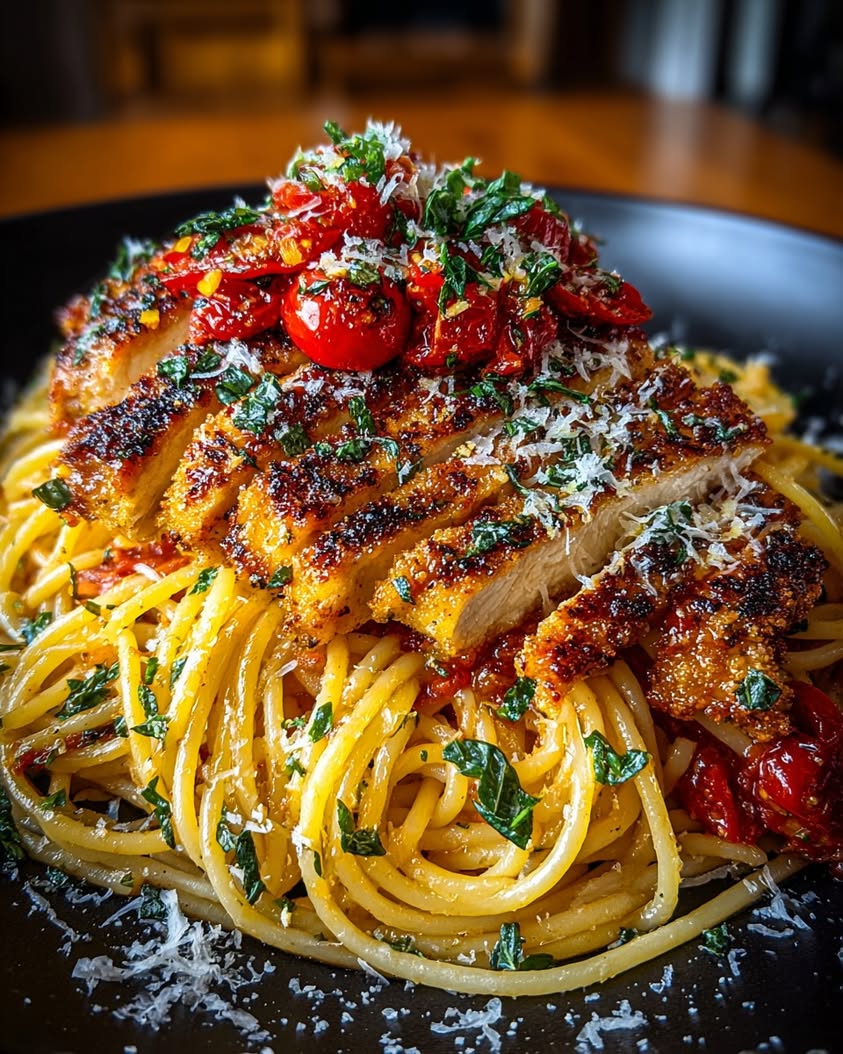
Lemon Chicken Spaghetti with Cheesy Tomato Sauce: A Bright and Comforting Classic
Imagine twirling a forkful of perfectly al dente spaghetti coated in a rich, velvety tomato sauce. Now, picture that sauce bursting with the savory depth of roasted garlic and the creamy tang of melted cheese. Finally, top it all with tender, golden-brown chicken infused with the bright, sunny essence of fresh lemon. This Lemon Chicken Spaghetti with Cheesy Tomato Sauce is not just a meal; it’s a complete sensory experience that brings restaurant-quality flavor right to your kitchen table.
Furthermore, this dish masterfully balances comfort and sophistication. The cheesy tomato garlic sauce provides a familiar, hearty base, while the lemon chicken introduces a vibrant, zesty lift that cuts through the richness. Consequently, every bite is a harmonious blend of creamy, tangy, and savory notes. This recipe is designed for busy weeknights yet impressive enough for weekend guests, proving that incredible flavor doesn’t require complicated techniques or hours of labor.
Ultimately, the magic of this Lemon Chicken Spaghetti with Cheesy Tomato Sauce lies in its layered approach. You build flavor at every step, from browning the chicken to simmering the sauce. The result is a deeply satisfying pasta dish that feels both indulgent and fresh. Whether you’re cooking for your family or treating yourself, this recipe delivers maximum impact with straightforward, accessible ingredients.
Quick Recipe Highlights
- Flavor Profile: This dish features a robust, savory foundation from the cheesy tomato garlic sauce, beautifully contrasted by the bright, citrusy punch of the lemon chicken. The garlic roasts to a mellow sweetness, while Parmesan and mozzarella add a salty, umami-rich creaminess.
- Texture: You get a wonderful contrast of textures: the firm bite of al dente spaghetti, the velvety smoothness of the emulsified sauce, and the juicy, tender interior of the pan-seared chicken with a lightly crisp exterior.
- Aroma: As it cooks, your kitchen will fill with the irresistible scents of sizzling garlic, caramelizing tomatoes, and fragrant lemon zest. The aroma is both comforting and invigorating, promising a delicious meal to come.
- Visual Appeal: The presentation is stunning with vibrant red sauce clinging to the pasta, speckled with herbs and melted cheese, topped with golden-brown chicken slices. A final sprinkle of fresh parsley or basil adds a pop of green.
- Skill Level Needed: This is a fantastic recipe for confident beginners. The techniques are fundamental—sautéing, simmering, and boiling pasta—but executed with care to build deep flavor. No advanced culinary skills are required.
- Special Equipment: You only need basic kitchen tools: a large pot for pasta, a large skillet or sauté pan for the sauce and chicken, and a good chef’s knife. A microplane for zesting lemon is helpful but not essential.
Recipe Overview
- Difficulty Level: We rate this Lemon Chicken Spaghetti recipe as “Easy” because it breaks down into simple, sequential steps. While it involves multitasking between the chicken, sauce, and pasta, each component is straightforward. The key is organization, or “mise en place,” having your ingredients prepped before you start cooking. With a bit of practice, this becomes a seamless 40-minute meal.
- Category: This dish fits perfectly into multiple categories: a hearty main course pasta dish, a comforting family dinner, and a impressive yet approachable meal for entertaining. It’s substantial enough to stand alone but can be paired with a simple side salad or garlic bread.
- Cuisine: While not strictly authentic to one region, this recipe draws inspiration from Italian-American pasta traditions and Mediterranean flavor principles. The use of lemon, garlic, and olive oil is classic to Southern Italian cooking, while the cheesy tomato sauce is a beloved staple in homes worldwide.
- Cost: This is a very cost-effective meal, especially when feeding a family. Chicken thighs or breasts, canned tomatoes, dried pasta, and basic cheeses are pantry-friendly and budget-conscious. Fresh lemons and herbs are the only fresh produce needed, keeping the total cost low per serving.
- Season: This Lemon Chicken Spaghetti shines year-round. It offers cozy comfort in the colder months and feels light enough for spring and summer thanks to the citrus. For a seasonal twist, use fresh garden tomatoes when they are at their peak in late summer.
- Occasion: It’s incredibly versatile for any occasion. Serve it for a quick Tuesday night dinner, a casual Friday night feast, or even a relaxed dinner party. The dish is universally appealing and easily doubled to feed a crowd.
Why You’ll Love This Recipe
First and foremost, the taste and texture are utterly irresistible. The cheesy tomato garlic sauce delivers a familiar, deeply satisfying comfort, while the lemon chicken introduces a surprising and delightful brightness. This combination ensures the dish never feels heavy or one-dimensional. Each component complements the other, creating a balanced plate where you’ll want to get a bit of pasta, sauce, and chicken in every single forkful. The flavors are robust enough for adults yet simple and cheesy enough to be a hit with kids, making it a true family-friendly winner.
From a convenience standpoint, this recipe is a weeknight hero. The total time from start to finish is just 40 minutes, and much of that is hands-off simmering time. The steps are logical and easy to follow. Additionally, you likely have most of the core ingredients—pasta, canned tomatoes, garlic, cheese—already in your pantry. This means you can decide to make this Lemon Chicken Spaghetti with Cheesy Tomato Sauce spontaneously without a special grocery trip. It transforms basic ingredients into something extraordinary with minimal fuss.
Nutritionally, this meal offers a good balance of macronutrients. The chicken provides lean protein to keep you full, the pasta offers energizing carbohydrates, and the sauce made with olive oil and tomatoes contributes healthy fats and antioxidants like lycopene. You control the sodium and cheese quantity, allowing for a healthier version than most restaurant pasta dishes. By using whole wheat spaghetti or a legume-based pasta, you can easily increase the fiber content for an even more nutritious meal.
For social and entertaining value, this dish is a star. It’s visually impressive when plated, sparking conversation and appetites. Because the components come together quickly, you won’t be stuck in the kitchen all night when you have guests. You can easily double or triple the recipe for a larger group. Presenting a homemade Lemon Chicken Spaghetti with Cheesy Tomato Sauce shows care and effort, making your guests feel special without requiring you to master complex culinary techniques.
Finally, its cost-effectiveness and accessibility cannot be overstated. This recipe demonstrates how to create a restaurant-quality experience on a home cook’s budget. Chicken and pasta are among the most affordable protein and starch options. A single can of tomatoes and a block of cheese stretch to feed four people generously. This accessibility means you can enjoy a luxurious-tasting meal regularly, turning an ordinary dinner into a special occasion without straining your wallet.
Historical Background and Cultural Significance
The story of pasta with tomato sauce is a tale of global exchange. Pasta itself has ancient roots, but its marriage with the tomato is a relatively recent development in culinary history. Tomatoes are native to the Americas and were brought to Europe in the 16th century. Initially, they were grown as ornamental plants in Italy, feared to be poisonous. However, by the late 17th century, particularly in the sun-drenched region of Naples, tomatoes began to be incorporated into the local cuisine. The first documented recipe for pasta with tomato sauce appeared in the late 18th century, marking the birth of a partnership that would conquer the world.
Culturally, pasta al pomodoro—pasta with tomato sauce—became a staple of cucina povera, the “food of the poor,” in Southern Italy. It was a nutritious, affordable, and satisfying meal for working families. The addition of cheese, often Pecorino or Parmigiano-Reggiano, added precious protein and fat. This humble dish symbolized resourcefulness and the ability to create profound flavor from few, simple ingredients. Its migration to America with Italian immigrants saw it evolve, often becoming richer and cheesier to suit new tastes and ingredient availability, leading to the “cheesy tomato sauce” we know today.
The evolution of adding chicken to pasta is largely an Italian-American and modern home-cooking innovation. In traditional Italian cuisine, pasta is typically a first course (il primo), with meat served separately as a second course (il secondo). The combination of protein and starch on one plate reflects a more contemporary, time-efficient approach to meal construction. The lemon chicken element draws from Mediterranean grilling and roasting traditions, where lemon is frequently used to marinate and brighten poultry and seafood. Fusing these concepts created a complete, all-in-one meal that is both practical and deeply flavorful.
Regional variations of this core idea are endless. In Italy, you might find “Pasta al Limone” from the Amalfi Coast, a simple sauce of lemon zest, juice, cream, and cheese. In the American context, “Chicken Piccata” served over pasta is a close relative, featuring a lemon-caper-butter sauce. Our Lemon Chicken Spaghetti with Cheesy Tomato Sauce sits at a delicious crossroads: it embraces the creamy, cheesy comfort of American-style pasta bakes while incorporating the bright, acidic balance central to many Italian and Mediterranean dishes. This fusion makes it globally relatable and endlessly adaptable.
Ingredient Deep Dive
Chicken Breast: As the protein star, chicken breast is valued for its lean, versatile nature. Nutritionally, it’s an excellent source of high-quality protein and essential B vitamins, particularly niacin and B6, which support metabolism. For the best results in this Lemon Chicken Spaghetti, select plump, evenly-sized breasts. To ensure even cooking and tenderness, pound them to a uniform ½-inch thickness before seasoning. You can substitute boneless, skinless chicken thighs for a juicier, more flavorful result, though cooking time may increase slightly. Always pat chicken dry before cooking to achieve a proper sear.
Fresh Lemons: The lemon is the defining bright note in this dish. Historically, lemons have been used around the Mediterranean for centuries both as a flavoring and a preservative. They are packed with vitamin C and antioxidants. For this recipe, you’ll use both the zest and the juice. The zest contains potent aromatic oils, providing intense lemon fragrance without excess acidity. Always zest the lemon before juicing it. Choose lemons that are heavy for their size with smooth, vibrant yellow skin, indicating juiciness. In a pinch, 3 tablespoons of bottled lemon juice can replace fresh, but you’ll lose the complex flavor of the zest.
Canned Crushed Tomatoes: These form the backbone of your cheesy tomato garlic sauce. Using high-quality canned tomatoes is often better than fresh out-of-season, as they are picked and packed at peak ripeness. They are a fantastic source of the antioxidant lycopene, which becomes more bioavailable when cooked. Look for cans labeled “San Marzano” for a sweeter, less acidic taste, or any brand with only tomatoes and possibly salt listed. Do not confuse crushed tomatoes with tomato puree or sauce. The texture of crushed tomatoes creates a perfectly saucy base that clings to spaghetti beautifully.
Garlic: Garlic is non-negotiable for building the savory foundation of the sauce. It has a storied history as both a culinary staple and a folk remedy, known for compounds like allicin. For this recipe, we roast it first to mellow its pungent bite and develop a sweet, nutty, almost caramelized flavor that infuses the entire oil and sauce. Use fresh, firm heads of garlic. To roast, simply slice the top off a whole head, drizzle with oil, wrap in foil, and bake or simmer in a skillet until soft and golden. Squeeze the cloves out to mash into your sauce.
Parmesan and Mozzarella Cheese: The cheese blend creates the luxurious, creamy element in the tomato sauce. Parmesan (Parmigiano-Reggiano) brings a sharp, salty, umami punch. It’s a hard cheese aged for complex flavor. Pre-grated cheese often contains anti-caking agents that can make your sauce grainy; always grate it fresh from a block. Mozzarella, preferably low-moisture, melts into wonderful, stretchy strands, adding body and mild creaminess. Together, they create a rich texture that perfectly coats the pasta. For best results, add cheese off the heat at the end of cooking to prevent separation.
Common Mistakes to Avoid
- Overcooking the Chicken: Chicken breast cooks quickly and can become dry and tough if left on the heat too long. Use a meat thermometer and pull it off at 165°F (74°C), remembering it will carryover cook as it rests. Slicing it against the grain after resting is also crucial for tenderness.
- Not Salting the Pasta Water Enough: Your pasta water should taste like the sea. This is the primary opportunity to season the pasta itself. Undersalted water results in bland spaghetti that no amount of sauce can fully correct. Use at least 1-2 tablespoons of kosher salt for a large pot of water.
- Adding Cheese to Boiling Sauce: Introducing grated cheese directly to a violently bubbling sauce can cause it to seize up, becoming stringy and clumpy. Always remove the sauce from heat or turn it down to very low before stirring in the Parmesan and mozzarella for a smooth, creamy integration.
- Skipping the Pasta Water Reserve: The starchy, salty water left after boiling spaghetti is liquid gold for sauce consistency. Before draining, always scoop out at least 1 cup. Adding it back to your cheesy tomato sauce helps it emulsify and cling to each strand of pasta perfectly.
- Using Pre-Grated Parmesan Cheese: Pre-grated cheese contains cellulose to prevent clumping, which prevents it from melting smoothly into your sauce. It often results in a gritty texture. For the creamiest Lemon Chicken Spaghetti with Cheesy Tomato Sauce, invest five minutes in grating a block of real Parmesan yourself.
- Crowding the Pan When Searing Chicken: If you add too many chicken pieces to the skillet at once, they will steam instead of sear. You need space for moisture to evaporate so the chicken can develop a beautiful golden-brown crust. Cook in batches if necessary to avoid this pitfall.
- Neglecting to Taste as You Go: Seasoning is not a one-time event. Taste your sauce after adding the tomatoes, again after simmering, and finally after adding the cheese. You may need to adjust with more salt, a pinch of sugar to balance acidity, or even a splash of pasta water to perfect the flavor and texture.
- Rinsing the Cooked Pasta: Rinsing pasta washes away the essential surface starch that helps the sauce adhere. Unless you are making a cold pasta salad, never rinse your cooked spaghetti after draining. Instead, add it directly to the sauce pan to finish cooking together.
Essential Techniques
Properly Searing Chicken: Achieving a golden-brown crust on your lemon chicken is crucial for flavor development through the Maillard reaction. First, ensure your chicken is dry by patting it thoroughly with paper towels. Next, heat your oil in the skillet until it shimmers. Then, place the chicken in the pan and do not move it for several minutes, allowing a crust to form. Finally, flip only once. Moving it too soon will cause it to stick and tear. A proper sear locks in juices and creates fond—those browned bits in the pan—which will later deglaze to add depth to your sauce.
Building a Flavorful Tomato Sauce: A great sauce is built in layers. Start by sautéing aromatics (like onion or red pepper flakes) in the flavorful fat left from cooking the chicken and roasting the garlic. Next, add the tomato paste and cook for a minute until it darkens slightly, caramelizing its sugars. Then, pour in the crushed tomatoes and roasted garlic paste. The key is to simmer the sauce uncovered, allowing it to reduce and concentrate. This slow cooking melds the flavors and thickens the sauce to the ideal coating consistency for your spaghetti.
Emulsifying the Sauce with Pasta Water: This is the professional secret to restaurant-quality pasta. The starch released from the spaghetti during cooking is a powerful natural thickener and binder. When you add a ladleful of this starchy water to your cheesy tomato sauce and toss it with the pasta over low heat, magic happens. The water, fat from the oil and cheese, and starch create a temporary emulsion. Consequently, the sauce becomes silky and glossy, and it clings to each strand of spaghetti instead of pooling at the bottom of the bowl. Always reserve that water before draining.
Zesting and Juicing Lemons Efficiently: To maximize flavor from your lemons, use a fine microplane grater for zesting. Grate only the bright yellow outer skin, avoiding the bitter white pith underneath. Do this before you cut and juice the lemon. For juicing, roll the lemon firmly on the countertop with the palm of your hand to break down the internal membranes. Then, cut it in half and use a reamer or your hands to extract every drop. Straining the juice removes seeds and pulp for a cleaner finish in your chicken marinade and sauce.
Pro Tips for Perfect Lemon Chicken Spaghetti
First, bring your chicken to room temperature for about 15 minutes before cooking. This simple step promotes even cooking, preventing a scenario where the outside is overcooked while the inside remains underdone. Additionally, use a meat mallet or rolling pin to pound the breasts to an even thickness; this ensures every piece cooks at the same rate.
Second, roast an entire head of garlic for the sauce instead of just mincing raw cloves. The roasting process transforms the garlic’s flavor profile, making it sweet, mellow, and incredibly aromatic. You can do this ahead of time and store the soft cloves in oil in the refrigerator for use throughout the week.
Third, time your pasta to finish cooking just as your sauce is ready. Add the spaghetti to the boiling water when you start simmering the tomato sauce. By the time the sauce has reduced and the chicken is cooked and rested, the pasta will be perfectly al dente and ready to marry with the sauce.
Fourth, finish cooking the pasta directly in the sauce. Instead of just topping cooked spaghetti with sauce, transfer the drained pasta into the skillet with your cheesy tomato garlic sauce. Add a splash of reserved pasta water and toss everything together over low heat for a minute. This allows the pasta to absorb the sauce’s flavor fully.
Fifth, let the cooked chicken rest before slicing. After searing, transfer the lemon chicken to a cutting board and tent it loosely with foil for 5-10 minutes. This allows the juices, which have been driven to the center by the heat, to redistribute throughout the meat. Consequently, when you slice it, those flavorful juices stay in the chicken instead of running out onto the board.
Sixth, garnish with fresh, bright elements just before serving. A final sprinkle of chopped fresh parsley, basil, or even a little extra lemon zest adds a burst of color and a hit of fresh aroma that elevates the entire dish. For extra richness, a final drizzle of high-quality extra virgin olive oil over each plated serving is divine.
Variations and Adaptations
Regional Variations: To lean into Italian roots, use pancetta instead of chicken, adding it to the sauce for a rich, porky depth. For a Greek twist, substitute the chicken with seasoned meatballs (keftedes) and add a pinch of oregano and a crumble of feta cheese at the end. An American comfort food version might involve turning the entire dish into a baked casserole, topping it with extra mozzarella and breadcrumbs, and broiling until bubbly.
Seasonal Adaptations: In summer, replace the canned tomatoes with about 2 pounds of fresh, ripe Roma tomatoes that you’ve peeled, seeded, and crushed. Add fresh basil instead of dried oregano. For a winter version, incorporate roasted vegetables like diced butternut squash or caramelized mushrooms into the sauce for added heartiness and sweetness that complements the lemon chicken beautifully.
Dietary Modifications: For a gluten-free Lemon Chicken Spaghetti, use your favorite gluten-free pasta brand, ensuring you reserve the starchy cooking water as usual. To make it dairy-free, omit the cheese and create creaminess with a splash of full-fat coconut milk or a dollop of dairy-free cream cheese stirred into the tomato sauce. The lemon chicken will still provide the star flavor.
Flavor Variations: Introduce a spicy element by adding ½ teaspoon of red pepper flakes to the oil when you start the sauce. For an herbal note, stir in 2 tablespoons of chopped fresh basil, oregano, or thyme at the very end. A teaspoon of anchovy paste melted into the oil before adding tomatoes will add a deep, savory umami background without a fishy taste.
Texture Modifications: If you prefer a completely smooth sauce, use an immersion blender to puree the tomato and roasted garlic mixture before adding the cheese. For more texture, stir in a handful of chopped kalamata olives or toasted pine nuts just before serving. You can also shred the cooked chicken instead of slicing it, allowing it to integrate more fully with the pasta.
Presentation Alternatives: For individual servings, use a large ring mold to create a neat tower of spaghetti on each plate, leaning the sliced chicken against it. For family-style, present the tossed Lemon Chicken Spaghetti with Cheesy Tomato Sauce in a large, warm serving bowl with the chicken arranged artistically on top. In a skillet, serve the pasta directly from the pan it was cooked in for a rustic, inviting tableside presentation.
Serving and Presentation Guide
Plating Techniques: For restaurant-style plating, use tongs to twirl a portion of spaghetti into a tight nest in the center of a warm, shallow bowl. Spoon extra sauce over and around the pasta. Then, artfully fan out 3-4 slices of the lemon chicken leaning against the pasta. This method showcases each component beautifully and makes for an elegant presentation.
Garnishing Ideas: Fresh herbs are your best friend for garnish. A scattering of finely chopped flat-leaf parsley or basil adds color and a fresh aroma. A final grating of Parmesan cheese over the top adds visual texture and saltiness. For a vibrant touch, sprinkle on some very thin slices of lemon zest or a few small, whole basil leaves.
Traditional Accompaniments: A simple, crisp green salad with a sharp vinaigrette is the classic partner for this rich pasta. The acidity and freshness cleanse the palate between bites. Warm, crusty garlic bread or focaccia is also traditional for sopping up any remaining sauce on the plate. A light, brothy soup like minestrone can precede the meal for a more expansive Italian-style dinner.
Modern Serving Suggestions: Consider deconstructing the elements for a interactive meal. Serve the cheesy tomato garlic sauce in a gravy boat, the spaghetti in a bowl, and the sliced lemon chicken on a platter, allowing guests to assemble their own plates. For a low-carb option, serve the sauce and chicken over spiralized zucchini noodles (zoodles) or spaghetti squash for guests who prefer it.
Temperature Considerations: Serve this dish immediately after assembling. Pasta continues to absorb sauce as it sits, which can lead to a dry result. Ensure your plates or bowls are warmed to help maintain the ideal serving temperature. The contrast between the hot pasta and the slightly cooler, fresh garnish is part of the experience.
Portion Control Tips: A standard serving of dried spaghetti is about 2 ounces (56g) per person as a main course. Use a kitchen scale or a pasta measuring tool to avoid overcooking. For the chicken, one medium-sized breast half (about 6 ounces) per person is ample. Remember, the dish is rich, so moderate portions are satisfying, especially when paired with a side salad.
Wine and Beverage Pairing
Wine Pairings: The bright acidity of the lemon and tomatoes calls for a wine with good acidity to match. A Pinot Grigio or Sauvignon Blanc from Italy or New Zealand offers crisp citrus notes that complement the chicken. For red wine lovers, a lighter-bodied, low-tannin red like a Chianti Classico or a Barbera works well; their acidity cuts through the cheese without overpowering the dish. Avoid heavily oaked whites or big, tannic reds that will clash with the lemon’s vibrancy.
Non-Alcoholic Alternatives: Sparkling water with a wedge of lemon or lime is a classic, cleansing choice. For something more special, a homemade lemonade or limeade, not too sweet, mirrors the citrus in the dish beautifully. Iced herbal teas, like mint or verbena, are also refreshing and palate-cleansing. A tart cherry juice spritzer can provide a interesting sweet-tart counterpoint to the savory flavors.
Coffee/Tea Pairings: After the meal, an espresso or a strong cup of Italian roast coffee can be a perfect finish, its bitterness balancing the meal’s richness. For tea, consider a black tea with citrus notes, like Earl Grey, or a light, floral herbal tea such as chamomile. These warm beverages aid digestion and provide a comforting conclusion to your Lemon Chicken Spaghetti dinner.
Temperature Considerations: White wines should be served well-chilled, between 45-50°F (7-10°C). Light reds like Chianti are best served slightly cooler than room temperature, around 60-65°F (15-18°C). Non-alcoholic sparkling drinks should be ice-cold to provide maximum refreshment against the warm, rich pasta. Always offer water at the table—it’s the most important beverage for cleansing the palate and staying hydrated.
Storage and Shelf Life
Storage Methods: Store leftover Lemon Chicken Spaghetti with Cheesy Tomato Sauce in a single layer if possible, or in a single, shallow airtight container. This promotes rapid, even cooling. It’s best to store the pasta and sauce combined, with the chicken either mixed in or stored separately in slices. Combining everything allows the flavors to meld further during storage. Always cool leftovers to room temperature before refrigerating to prevent condensation, which can make the pasta soggy.
Temperature Requirements: Refrigerate leftovers within two hours of cooking. The safe storage temperature for your refrigerator should be 40°F (4°C) or below. Do not leave the finished dish at room temperature for extended periods, as the dairy and protein create an environment where bacteria can grow rapidly. For longer storage, freezing is an effective option.
Container Recommendations: Glass containers with tight-sealing lids are ideal as they don’t absorb odors or stains. If using plastic, ensure it is BPA-free and designated for food storage. For freezing, use heavy-duty freezer bags, pressing out as much air as possible, or rigid freezer-safe containers leaving a half-inch of headspace for expansion.
Signs of Spoilage: Discard leftovers if you notice an off or sour smell, significant discoloration (like gray or green mold spots), or a slimy texture on the pasta or chicken. If the sauce has separated irreversibly or developed an unusual fizzy or bubbly appearance, it is best to err on the side of caution and dispose of it.
Reheating Instructions: The best method is on the stovetop. Add a splash of water, broth, or milk to a saucepan with the leftovers and warm gently over medium-low heat, stirring frequently. This rehydrates the pasta and re-emulsifies the sauce. You can also use a microwave: place in a microwave-safe dish, sprinkle with water, cover loosely, and heat in 30-second intervals, stirring in between.
Freezing Guidelines: This dish freezes reasonably well for up to 2-3 months. Freeze in portion-sized containers for easy thawing. Note that the texture of the pasta may become slightly softer upon thawing and reheating. Thaw overnight in the refrigerator before reheating using the methods above. For best results, you can freeze the sauce and chicken separately and cook fresh pasta when ready to serve.
Make Ahead Strategies
Prep Timeline: You can prep nearly every component 1-2 days in advance. Roast the garlic and store the soft cloves in oil in the fridge. Grate the cheeses and keep them sealed. Cube or pound the chicken, place it in a zip-top bag with the lemon marinade, and refrigerate. Measure out your dry spices and canned tomatoes. This “mise en place” approach turns active cooking time into a simple assembly process.
Storage Between Steps: Keep prepped ingredients in separate, clearly labeled containers. The marinated chicken can safely sit in the refrigerator for up to 24 hours, allowing the lemon to tenderize the meat slightly. The roasted garlic can be refrigerated for up to a week. Pre-grated cheese should be used within a day or two for optimal freshness and meltability.
Quality Impact Assessment: Making the entire sauce ahead can save the most time, but be aware that the pasta must be cooked fresh. A fully assembled and refrigerated pasta dish will absorb much of the sauce, becoming dry. Therefore, for the highest quality, make the sauce and cook the chicken ahead, then simply cook fresh spaghetti and combine everything at serving time, using reserved pasta water to loosen the sauce.
Assembly Tips: For a stress-free dinner party, have the sauce gently reheated in a pot, the cooked chicken sliced and covered, and your pasta water boiling. When guests arrive, drop the spaghetti. Within 10 minutes, you can drain the pasta, combine it with the warm sauce and a ladle of starchy water, plate it, and top with the room-temperature chicken. It appears effortless.
Reheating Guidelines for Pre-Made Components: Reheat the sauce slowly in a saucepan over medium-low heat, stirring occasionally. If it has thickened too much, thin it with a little chicken broth or water. The pre-cooked chicken can be reheated gently in a skillet with a tiny bit of oil or broth to prevent drying out, or served at room temperature, which is perfectly safe and often preferable for texture.
Scaling Instructions
Halving the Recipe: To serve two, simply divide all ingredient quantities by two. Use a medium skillet for the sauce and chicken to maintain proper pan contact for searing. The cook times will remain roughly the same, though the sauce may reduce a bit faster due to the smaller volume. Keep a close eye on it. You may need slightly less reserved pasta water to achieve the perfect sauce consistency.
Doubling or Tripling: For a crowd, multiply the ingredients consistently. The most significant adjustment is equipment: you’ll need a very large pot for boiling more spaghetti, and you should cook the chicken in batches to avoid overcrowding. Consider using a Dutch oven or large stockpot for the sauce to accommodate the increased volume. Simmering time for the sauce may increase by 5-10 minutes to reach the desired thickness.
Equipment Adjustments: Scaling up often requires different tools. A pasta pot with an insert is invaluable for cooking large amounts of spaghetti. For the sauce, a wide, heavy-bottomed pot provides more surface area for evaporation, helping it reduce properly. Have multiple large skillets ready or use your oven’s broiler to finish multiple chicken breasts at once on a sheet pan after an initial sear.
Timing Modifications: When doubling, the prep time will increase linearly—chopping twice the garlic, grating twice the cheese. However, active cooking time may not double if you use larger pots and efficient batch cooking. Start the sauce first, as it can simmer happily while you batch-cook the chicken and then boil the pasta. Organization is key to keeping the total time manageable.
Nutritional Deep Dive
Macro Breakdown: A typical serving of this Lemon Chicken Spaghetti with Cheesy Tomato Sauce provides a balanced mix of macronutrients. The spaghetti contributes complex carbohydrates for energy. The chicken breast offers a substantial amount of lean, high-quality protein essential for muscle repair and satiety. The olive oil and cheese provide healthy fats, including monounsaturated fats from the oil, which support heart health. The exact numbers depend on specific ingredients and portions, but the dish is designed to be a complete, satisfying meal.
Micronutrient Analysis: This recipe is rich in several key vitamins and minerals. Tomatoes are an excellent source of vitamin C, potassium, and the antioxidant lycopene. Garlic contains manganese, vitamin B6, and immune-supporting compounds. Lemon juice provides a significant boost of vitamin C. Chicken breast offers selenium and phosphorus. The cheese contributes calcium and vitamin B12. Together, they create a nutrient-dense meal that supports overall health.
Health Benefits: The combination of ingredients offers multiple health advantages. Lycopene from cooked tomatoes is linked to reduced risk of certain cancers and heart disease. The lean protein aids in weight management by promoting fullness. Garlic has been associated with supporting cardiovascular health. Using olive oil as the primary fat source introduces anti-inflammatory properties. The dish, when prepared with controlled sodium and reasonable cheese portions, fits well into a balanced, health-conscious diet.
Dietary Considerations: For those monitoring sodium, use no-salt-added canned tomatoes and reduce or omit added salt, relying on herbs and lemon for flavor. To lower saturated fat, use a lighter hand with the cheese or choose part-skim varieties. The dish is naturally nut-free and egg-free, making it suitable for those allergies. As written, it contains gluten (pasta) and dairy (cheese), but modifications for those sensitivities are straightforward, as outlined in the adaptations section.
Dietary Adaptations
<{"success":true,"message":"Recipe created successfully","post_id":9048,"tasty_recipe_id":9048,"shortcode":"[tasty-recipe id=\"9048\"]"}

I’m Billy, a classically trained culinary school graduate from The Culinary Institute of America with over 12 years in the restaurant industry and over 19 years of cooking experience.