
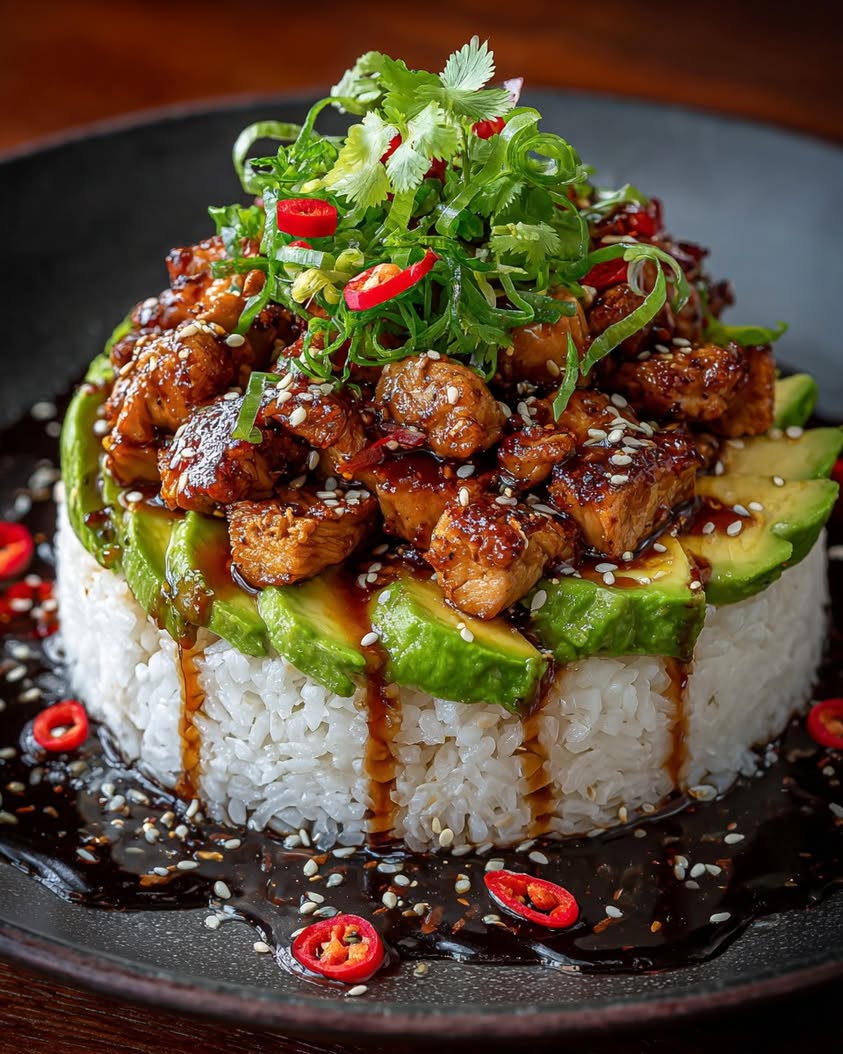
Sticky Honey Soy Chicken & Avocado Rice Stack: A Flavor-Packed Dinner in Minutes
Imagine a dinner that delivers restaurant-quality flavor with minimal kitchen effort. That is exactly what these Sticky Honey Soy Chicken Rice Stacks promise. This recipe transforms simple ingredients into a stunning, layered meal that is as beautiful on the plate as it is delicious. The magic lies in the perfect harmony of savory, sweet, and fresh elements, all stacked into a single, satisfying bite.
Furthermore, this dish is a fantastic solution for busy weeknights. You can have it on the table in about thirty minutes. The process is straightforward, involving cooking the chicken in a glossy sauce and assembling the components. Consequently, you get a meal that feels special and thoughtfully prepared without any culinary stress. The final presentation, with its neat layers of rice, creamy avocado, and glazed chicken, is guaranteed to impress anyone at your table.
Ultimately, this Sticky Honey Soy Chicken Rice Stack recipe is a celebration of bold Asian-inspired flavors. The sticky sauce clings to the tender chicken, creating a caramelized coating that is utterly irresistible. Paired with cool, creamy avocado and fluffy rice, each component complements the others perfectly. This dish is not just food; it is a complete sensory experience you will want to make again and again.
Quick Recipe Highlights
- Flavor Profile: This dish masterfully balances sweet and savory notes. The honey brings a gentle caramel sweetness, while the soy sauce and garlic provide a deep, umami-rich base. A hint of acidity from lime juice cuts through the richness, creating a perfectly rounded taste.
- Texture: You experience a wonderful contrast in every bite. The chicken offers a tender, juicy interior with a slightly sticky, caramelized exterior. Meanwhile, the rice is soft and fluffy, and the avocado adds a cool, creamy smoothness that ties everything together.
- Aroma: As the sauce reduces, your kitchen will fill with an incredible scent. The key aromatic notes are the sweet caramelization of honey, the savory depth of soy and garlic, and the fresh, zesty finish of lime and green onion.
- Visual Appeal: The stacked presentation is instantly eye-catching. You see distinct layers of white rice, vibrant green avocado, and glossy, golden-brown chicken, all garnished with bright sesame seeds and green onions for a professional, colorful finish.
- Skill Level Needed: This is an ideal recipe for beginners or anyone short on time. You only need basic cooking skills like sautéing chicken and making a simple pan sauce. The assembly requires no special technique, just a fun, creative touch.
- Special Equipment: You can make this entire recipe with standard kitchen tools. Essentially, you need just a good skillet or frying pan for the chicken, a pot for rice, a mixing bowl, and a measuring cup or ring mold for stacking if you want perfectly shaped stacks.
Recipe Overview
- Difficulty Level: We rate this recipe as easy because it uses fundamental cooking techniques most home cooks already know. The steps are sequential and logical, with minimal multitasking. Moreover, the ingredient list is short and comprised of common pantry staples, making the process accessible and stress-free.
- Category: This dish fits beautifully into several meal categories. It is a complete and balanced main course for dinner, but you can also serve smaller portions as a impressive lunch. Additionally, the components make it a great candidate for meal prep, as they store and reheat well separately.
- Cuisine: The flavor profile is firmly rooted in Asian-inspired cuisine, drawing primarily from Chinese and Japanese culinary traditions. The combination of soy sauce, honey, and garlic is a classic foundation. However, the addition of avocado and the stacked presentation give it a modern, fusion twist that is very adaptable.
- Cost: This is a remarkably cost-effective meal to prepare. Chicken thighs are an affordable protein choice, and rice is a budget-friendly staple. The sauce ingredients are used in small quantities, and avocados, while variable, complete the meal without requiring expensive cheeses or specialty items. You can easily feed a family for less than the cost of takeout.
- Season: This recipe truly works year-round. It is light and fresh enough for spring and summer, especially with the cool avocado. Conversely, the warm, sticky chicken and hearty rice provide comforting warmth during fall and winter months. It is a versatile, all-season winner.
- Occasion: These stacks are perfect for casual weeknight dinners, yet impressive enough for weekend guests. The beautiful plating makes it suitable for a date night at home. It is also a fantastic dish for introducing kids to exciting flavors in a fun, interactive format.
Why You’ll Love This Recipe
First and foremost, the taste and texture combination is absolutely unbeatable. Each forkful delivers a symphony of flavors: the deep umami of soy, the sweet kiss of honey, the pungent kick of garlic, and the bright freshness of lime. Texturally, you get the perfect contrast between the sticky, glazed chicken and the cool, creamy avocado resting on a bed of fluffy rice. This balance ensures every bite is interesting and satisfying, preventing any flavor fatigue. Consequently, you have a dish that feels gourmet and deeply comforting at the same time.
Secondly, the convenience factor is a major win for any home cook. From start to finish, you can have this stunning meal ready in about thirty minutes. The steps are simple and mostly happen in one pan, which means less cleanup. You can even cook the rice ahead of time or use a quick-cook variety to speed things up further. Therefore, this recipe is the ultimate answer to the “what’s for dinner” dilemma, proving that fast food can and should be delicious, healthy, and made at home.
Next, let’s talk about the nutritional advantages. This Sticky Honey Soy Chicken Rice Stack offers a well-rounded plate. Chicken thighs provide high-quality protein and essential B vitamins. Avocado contributes heart-healthy monounsaturated fats, fiber, and potassium. Meanwhile, brown rice can be used as a whole-grain option for added fiber and minerals. By controlling the sauce ingredients, you also manage the sodium and sugar levels, making this a far healthier choice than similar takeout options. It is a meal that fuels your body properly while delighting your taste buds.
Furthermore, this dish has incredible social and entertaining value. The stacked presentation is a guaranteed conversation starter. It looks like you spent hours in the kitchen, yet the assembly is simple and even fun. You can let guests build their own stacks, which is a great interactive element for a dinner party. The recipe also scales up easily for a crowd, and the components can be kept warm, making it stress-free for the host. It is a surefire way to impress friends and family with your culinary skills.
Finally, the cost-effectiveness and accessibility make this a staple recipe. You likely have most of the sauce ingredients in your pantry already. Chicken thighs and rice are some of the most affordable proteins and carbohydrates available. Even the avocado, often the priciest item, stretches far in this recipe, as one fruit serves multiple people. Compared to ordering delivery or dining out, making these Sticky Honey Soy Chicken Rice Stacks at home saves you significant money while delivering superior flavor and quality. It is a smart, delicious investment in your home cooking repertoire.
Historical Background and Cultural Significance
The story of this dish is not one of ancient tradition but of modern culinary fusion. It draws its core flavors from centuries-old Asian cooking principles, specifically the Chinese technique of creating glossy, reduced sauces using soy and a sweetener like honey or maltose. This method of glazing proteins, known as “loo” or “reduction” cooking, is fundamental to many classic dishes. The sticky, caramelized coating on the chicken is a direct descendant of these techniques, designed to maximize flavor and create a luxurious mouthfeel with simple ingredients.
Culturally, the combination of soy sauce and honey represents a beautiful East-Meets-West ingredient marriage. Soy sauce is a cornerstone of East Asian cuisine, with a history spanning over 2,500 years in China. Honey, while used globally, features prominently in Western baking and glazes. Bringing them together in a savory main dish is a relatively contemporary innovation, popularized by the global exchange of culinary ideas. This fusion approach makes the recipe feel both familiar and excitingly new to a wide audience.
The evolution of the recipe into a “stack” is a clear nod to modern plating trends. Chefs have long played with vertical presentation to add drama to a plate. Transforming a classic combo of protein, starch, and vegetable into a neat, architectural stack elevates the home dining experience. It takes the comforting bowl of rice with toppings—a format seen across Asia in dishes like Korean bibimbap or Hawaiian poke bowls—and presents it in a more structured, visually striking way. This evolution speaks to our desire for meals that are Instagram-worthy without sacrificing homestyle flavor.
Regional variations of this concept are endless. In Korea, you might find a similar stack with gochujang (chili paste) replacing honey for a spicy kick. In Japan, mirin and sake would likely be part of the glaze. A Thai-inspired version could incorporate fish sauce, palm sugar, and a topping of fresh herbs and chopped peanuts. The avocado, while not traditional in East Asian cooking, adds a creamy California twist, showcasing how local ingredients adapt global flavors. This adaptability is the true cultural significance of the Sticky Honey Soy Chicken Rice Stack—it is a template for delicious, personalized fusion cooking.
Ingredient Deep Dive
Chicken Thighs: We choose boneless, skinless chicken thighs for their superior flavor and juiciness compared to breast meat. Thighs contain more fat, which keeps them moist during the high-heat cooking required for a good glaze. Culturally, chicken is a globally celebrated protein, but the use of thigh meat is particularly common in Asian stir-fries and braises for its texture. Nutritionally, they are an excellent source of protein, iron, and zinc. For the best results, look for thighs of relatively even thickness. You can store them in the coldest part of your fridge for 1-2 days before use, or freeze them for longer storage. For a substitution, chicken breast will work, but cook it slightly less time to avoid dryness.
Soy Sauce: This is the umami powerhouse of the dish. Soy sauce originated in China over 2,000 years ago from the fermentation of soybeans and wheat. It provides the deep, savory base that balances the honey’s sweetness. For a richer flavor, use a dark soy sauce, but low-sodium soy sauce is a great option to control salt content. Always store soy sauce in a cool, dark place. For a gluten-free version, tamari is a perfect one-to-one substitute. Coconut aminos can also be used for a slightly sweeter, soy-free alternative.
Honey: Honey is our natural sweetener, responsible for the glossy, sticky caramelization on the chicken. Its history as a food and preservative dates back to ancient civilizations across the globe. In this recipe, it not only sweetens but also helps thicken the sauce as it reduces. For the best flavor, use a pure, mild honey like clover or wildflower. Stronger honeys like buckwheat can overpower the other ingredients. Honey has indefinite shelf life when stored properly. As a substitute, you can use maple syrup or agave nectar, but note they will impart their own distinct flavors and may caramelize differently.
Avocado: The avocado adds a crucial element of cool, creamy fat and freshness. Native to south-central Mexico, it has become a global superfood. Its creamy texture contrasts perfectly with the sticky chicken. Nutritionally, it is packed with healthy monounsaturated fats, fiber, potassium, and vitamins C, E, and K. Select an avocado that yields slightly to gentle pressure. To speed ripening, place it in a paper bag with a banana. Once cut, store it with the pit and a squeeze of lime juice to prevent browning. For a substitution, try a dollop of Greek yogurt or a slice of ripe mango for a different kind of creaminess and sweetness.
Rice: Rice is the foundational starch, acting as the base of our stack. It is a staple food for more than half the world’s population, with a cultivation history spanning millennia. We recommend using a medium or short-grain white rice like Jasmine or sushi rice for its sticky, clumping quality, which helps the stack hold its shape. Brown rice is a excellent whole-grain alternative for added fiber. Always rinse your rice before cooking to remove excess starch. Cooked rice can be stored in the refrigerator for up to 5 days. For a low-carb option, cauliflower rice makes a great substitute, though the stack may be less stable.
Common Mistakes to Avoid
- Overcrowding the Pan: Adding all the chicken to the pan at once is a common error. This causes the chicken to steam instead of sear, preventing proper browning and glaze formation. Instead, cook in batches if necessary to ensure each piece has contact with the hot surface.
- Using Cold Rice: Assembling your stacks with cold, hard rice from the fridge will result in a dense, unappetizing base. Always use freshly cooked, warm rice, or thoroughly reheat leftover rice with a splash of water to restore its fluffy texture before stacking.
- Cutting the Avocado Too Early: Slicing the avocado long before assembly leads to ugly, oxidized browning. Prepare your avocado at the very last moment, right before you build the stacks. A quick squeeze of lime juice over the slices can also help delay browning.
- Not Reducing the Sauce Enough: If you pour the sauce over the chicken without letting it simmer and thicken, you will end up with a watery, runny glaze. Be patient and let the sauce bubble until it coats the back of a spoon nicely and looks glossy.
- Using High Heat for the Sauce: After adding the honey-soy mixture to the pan, maintain a medium simmer. Cranking the heat to high can cause the honey to burn quickly, creating a bitter taste that will ruin your dish.
- Skipping the Garlic: Garlic is not just a minor flavor note; it is essential for building the aromatic base of the sauce. Briefly cooking the minced garlic in the pan before adding the liquid ingredients unlocks its full, sweet flavor.
- Forgetting to Taste and Adjust: Do not assume the sauce is perfect straight from the recipe. Always taste it before adding the chicken back in. You might find it needs another squeeze of lime for acidity or a tiny pinch of salt to balance the sweetness.
- Packing the Rice Too Tightly: When forming the rice base, gently press it into shape. If you pack it down too firmly, it becomes a dense, gummy puck instead of a light, fluffy foundation for your other ingredients.
Essential Techniques
Creating a Sticky Glaze: Mastering the sticky glaze is the most important technique for this recipe. The process involves deglazing the pan with the sauce ingredients and then allowing the liquid to reduce. As the water evaporates, the sugars in the honey concentrate and combine with the soy sauce, thickening into a glossy syrup that clings to the chicken. The key is to simmer, not boil rapidly, to prevent burning. You will know it is ready when the bubbles become slow and thick, and the sauce generously coats a spoon. A common pitfall is removing the chicken too early; let it simmer in the reducing sauce for a minute to ensure every piece is fully coated.
Searing Chicken for Flavor: Properly searing the chicken is non-negotiable for depth of flavor. Pat your chicken thighs completely dry with paper towels before they hit the pan. This ensures a good sear instead of steam. Use a hot pan with just enough oil to coat the bottom. Place the chicken in and do not move it for a few minutes, allowing a golden-brown crust to form. This crust, known as the Maillard reaction, creates complex, savory flavors that form the foundation of your dish. The visual cue for success is an even, deep golden color on the side facing the pan before you flip it.
Building a Stable Stack: The architectural appeal of this dish relies on proper stacking technique. Use a circular mold like a ring cutter, a clean can with both ends removed, or even a sturdy cup. Place it on the serving plate and fill the bottom with warm, slightly compacted rice. Gently press down with a spoon to create a flat, stable base. Next, add a layer of avocado slices. Finally, carefully spoon the sticky honey soy chicken on top. The key is to lift the mold straight up without wobbling. If your stack collapses, your rice may be too dry or not pressed firmly enough.
Pro Tips for Perfect Sticky Honey Soy Chicken Rice Stacks
First, marinate your chicken thighs in a tablespoon of the soy sauce for 15-30 minutes before cooking. This simple step adds an extra layer of flavor directly into the meat.
For an extra glossy sauce, add a half-teaspoon of cornstarch slurry (cornstarch mixed with cold water) during the final minute of reducing. This guarantees a thick, restaurant-quality glaze.
Toast your sesame seeds in a dry pan for a minute until fragrant before garnishing. This unlocks their nutty oil and adds a more complex flavor and aroma to your finished dish.
If your avocados are underripe, do not force them. Instead, serve the stacks with a side of quick-pickled cucumber or a dollop of spicy mayo for that needed cool, creamy contrast.
Double the sauce recipe if you love extra glaze. You can pour the additional sticky honey soy sauce over the assembled stacks or serve it on the side for dipping.
Let the cooked chicken rest for a few minutes after glazing and before slicing. This allows the juices to redistribute, ensuring every bite is moist and tender.
Use slightly wet hands or a wet spoon when handling and pressing the rice. This prevents the grains from sticking to your tools and makes for a cleaner, smoother stack base.
Garnish with thinly sliced fresh chili or a sprinkle of crushed red pepper flakes just before serving for a welcome kick of heat that cuts through the sweetness.
Variations and Adaptations
Regional Variations: Travel the world from your kitchen by tweaking the sauce. For a Korean twist, replace half the honey with gochujang and add a teaspoon of sesame oil. For a Thai-inspired version, use fish sauce instead of soy and add a tablespoon of lime juice and a pinch of brown sugar. A Japanese take might include a splash of mirin and sake in the glaze.
Seasonal Adaptations: Adapt the toppings with the seasons. In summer, add a layer of fresh, sliced heirloom tomatoes or a corn and black bean salsa. During fall, incorporate roasted sweet potato cubes or sautéed mushrooms into the stack. For winter, a sprinkle of pomegranate arils adds a festive, juicy crunch.
Dietary Modifications: This recipe is wonderfully adaptable. For gluten-free, use tamari or coconut aminos. To make it vegan, substitute the chicken with extra-firm tofu or king oyster mushrooms, and use maple syrup instead of honey. For a lower-carb option, replace the rice with cauliflower rice or a base of shredded cabbage.
Flavor Variations: Experiment with different sweeteners for unique notes. Maple syrup will give a distinct, earthy sweetness. Agave nectar offers a neutral sweetness. For a more complex flavor, try using half honey and half hoisin sauce. You can also infuse the sauce with fresh ginger or a star anise pod while it reduces.
Texture Modifications: Play with textures for a different experience. Add crunch with a layer of shredded cabbage or carrot slaw beneath the chicken. Incorporate crispy fried shallots or garlic chips as a garnish. For a richer feel, mix a soft-boiled or jammy egg into the stack layers.
Presentation Alternatives: If stacking feels fussy, simply deconstruct the meal. Serve the sticky honey soy chicken over a bowl of rice with avocado slices on the side. Alternatively, use the components as a filling for lettuce wraps or to top a vibrant grain bowl with greens and other vegetables.
Serving and Presentation Guide
Plating Techniques: The classic presentation uses a circular mold for a neat, restaurant-style stack. For a more rustic look, simply spoon a mound of rice onto the plate, top with avocado, and pile the chicken alongside. You can also use a small bowl to shape the rice: pack the rice into the bowl, invert it onto the plate, and lift the bowl away for a perfect dome.
Garnishing Ideas: Garnishes add the final touch of color and flavor. Always use thinly sliced green onions and white or black sesame seeds. Fresh cilantro leaves, microgreens, or edible flowers add elegance. A final drizzle of sriracha or sriracha mayo in a zigzag pattern looks professional and adds a spicy note.
Traditional Accompaniments: In many Asian cuisines, a simple, quick-pickled vegetable is a traditional side. Serve your stacks with a small bowl of pickled cucumber, radish, or carrot. A light, miso soup or a simple green salad with a ginger-sesame dressing also complements the rich flavors beautifully.
Modern Serving Suggestions: For a fun, interactive meal, set up a “stack bar.” Place bowls of warm rice, the sticky chicken, sliced avocado, and various toppings like shredded cabbage, edamame, and sauces. Let everyone build their own custom creation, which is especially great for families or casual gatherings.
Temperature Considerations: Serve this dish immediately after assembly. The rice and chicken should be hot or very warm, while the avocado should be cool from room temperature or slightly chilled. This temperature contrast is a key part of the eating experience. Warm your serving plates slightly to keep the food hot longer.
Portion Control Tips: A standard serving uses about 3/4 cup of cooked rice, half an avocado, and one chicken thigh per stack. For a lighter meal, reduce the rice to 1/2 cup and use a quarter of an avocado. To make it more substantial for active appetites, add an extra piece of chicken or a side of steamed vegetables like broccoli.
Wine and Beverage Pairing
Wine Pairings: The sweet and savory profile of the sticky honey soy chicken pairs wonderfully with off-dry white wines. A Riesling or Gewürztraminer with a hint of sweetness will complement the honey and counter the saltiness perfectly. For red wine lovers, a light, low-tannin red like a Pinot Noir or Beaujolais works well, as it will not overpower the dish. An unoaked Chardonnay can also be a good match, offering a clean palate that lets the food’s flavors shine.
Non-Alcoholic Alternatives: Sparkling water with a wedge of lime or lemon is a classic, refreshing choice that cleanses the palate. For something more flavorful, try a chilled jasmine or green tea, which echoes the Asian inspiration. A homemade ginger beer or a tart cherry juice spritzer also provides a nice balance to the dish’s richness.
Coffee/Tea Pairings: While not a typical dinner pairing, a cup of genmaicha (brown rice green tea) after the meal is a delightful Japanese-inspired finish. Its toasty, nutty flavor complements the sesame and rice notes in the dish. A light, floral oolong tea would also be a sophisticated post-meal choice.
Temperature Considerations: White and sparkling wines should be served well-chilled, between 45-50°F. Light reds like Pinot Noir are best served slightly cooler than room temperature, around 55°F. Non-alcoholic sparkling drinks and teas are most refreshing when served cold or over ice.
Serving Suggestions: Always serve wine in appropriate glassware to enhance the aroma and taste. For a casual dinner, pouring drinks into nice tumblers or highball glasses is perfectly acceptable. Consider having a pitcher of infused water or iced tea on the table so guests can help themselves throughout the meal.
Storage and Shelf Life
Storage Methods: Store all components separately for the best results. Place cooled sticky honey soy chicken in an airtight container. Store sliced avocado with the pit and a squeeze of lime juice in a container, pressing plastic wrap directly onto the surface. Keep rice in its own sealed container. This prevents the avocado from browning and the rice from becoming soggy from sauce moisture.
Temperature Requirements: All components must be refrigerated promptly. Do not leave assembled stacks or individual parts at room temperature for more than two hours. Your refrigerator should be at or below 40°F (4°C) to ensure food safety and maximize shelf life.
Container Recommendations: Use glass or BPA-free plastic containers with tight-fitting lids. For the avocado, a small container that minimizes air exposure is ideal. For the saucy chicken, a container with a leak-proof seal is necessary to prevent spills in your refrigerator.
Signs of Spoilage: Discard any component that develops an off smell, unusual sliminess, or mold. Chicken should not have a sour odor. Rice that has been stored improperly can develop a fermented smell. Avocado will turn from brown to black and become unpleasantly mushy when it is past its prime.
Reheating Instructions: Reheat the chicken and rice separately. Gently reheat the chicken in a skillet over medium-low heat with a splash of water to loosen the glaze, or microwave in 30-second intervals. Reheat rice in the microwave with a damp paper towel over it to restore moisture. Avocado should be used fresh from the fridge and not reheated.
Freezing Guidelines: You can freeze the cooked sticky honey soy chicken (without garnish) for up to 2 months. Thaw overnight in the refrigerator before reheating. Do not freeze the avocado or assembled stacks, as they will become mushy and watery upon thawing. Cooked rice can be frozen, but its texture becomes grainier.
Make Ahead Strategies
Prep Timeline: You can prep this meal over two days. Day 1: Cook the rice and let it cool completely before refrigerating. Make the sticky honey soy sauce base (soy, honey, garlic, water) and store it in a jar in the fridge. Day 2 (30 mins before serving): Cook the chicken, finish the sauce with the pre-made base, reheat the rice, slice the avocado, and assemble.
Storage Between Steps: Store cooked rice in the fridge for up to 4 days. The pre-mixed sauce base will keep for 5-7 days refrigerated. Keep raw chicken in its original packaging or a sealed container on a bottom shelf in the fridge until ready to cook, for 1-2 days maximum.
Quality Impact Assessment: Pre-cooking the rice has minimal impact, especially if reheated properly with moisture. Pre-mixing the sauce actually allows the garlic flavor to meld and deepen. The only element that must be absolutely fresh is the avocado, as it browns and softens quickly after cutting.
Assembly Tips: For fastest assembly, have all your components ready: warm rice, sliced avocado, hot glazed chicken, and garnishes. Use your mold or bowl and work quickly to build each stack just before serving to maintain ideal temperatures and textures.
Reheating Guidelines: Reheat the rice with a sprinkle of water in the microwave, covered, for 1-2 minutes. Reheat the chicken in a pan over medium heat, adding a tablespoon of water to reactivate the sticky glaze and prevent scorching.
Fresh Element Additions: Always add the avocado and all garnishes (green onion, sesame seeds, fresh herbs) after reheating and immediately before serving. This ensures they retain their vibrant color, crisp texture, and fresh flavor.
Scaling Instructions
Halving the Recipe: Halving is straightforward for smaller households. Simply divide all ingredient quantities by two. Use a smaller skillet to ensure the sauce reduces properly without burning. The cook time for the chicken may be slightly less. One avocado will still be enough for two stacks, so you may have leftover avocado for another use.
Doubling or Tripling: For a crowd, double or triple the ingredients. The key is to cook the chicken in batches to avoid overcrowding and ensure proper searing. You may need to use a large pot or Dutch oven to combine all the chicken with the sauce at the end. Consider keeping the finished chicken warm in a low oven (200°F) while you finish subsequent batches.
Equipment Adjustments: Scaling up requires larger equipment. Use your largest skillet or a wide Dutch oven. You may need an extra pot to cook a larger batch of rice. For assembly, having multiple ring molds or cups will speed up the process of building many stacks at once.
Timing Modifications: When scaling up, prep time increases linearly, but cook time for the sauce may take slightly longer as there is more liquid to reduce. Factor in extra time for batch-cooking the chicken. Start the rice early, as a large batch takes longer to cook and cool slightly for handling.
Storage Considerations: Leftovers from a scaled-up batch will be more plentiful. Ensure you have enough airtight containers to store components separately. Label containers with the date, as you will likely have leftovers for several days. Consider freezing a portion of the cooked chicken for a future quick meal.
Nutritional Deep Dive
Macro Breakdown: A typical serving provides a balanced mix of macronutrients. The chicken thighs offer high-quality protein for muscle repair and satiety. The avocado contributes healthy monounsaturated fats, which support heart health and nutrient absorption. The rice is primarily a source of carbohydrates, providing the energy needed to fuel your body. The honey adds simple sugars, but in a modest amount that is balanced by the other components.
Micronutrient Analysis: This dish is rich in essential vitamins and minerals. Chicken provides B vitamins, particularly B6 and B12, crucial for energy metabolism. Avocado is an excellent source of Vitamin K, folate, and potassium. Soy sauce adds sodium, but using a low-sodium version helps manage this. Garlic contributes manganese and Vitamin C, while sesame seeds provide calcium and magnesium.
Health Benefits: The combination of protein, healthy fats, and complex carbs makes this a sustaining meal that stabilizes blood sugar. The monounsaturated fats from avocado are linked to reduced inflammation and improved cholesterol levels. Garlic has known cardiovascular benefits. Overall, it is a nutrient-dense meal that supports overall wellness when enjoyed as part of a varied diet.
Dietary Considerations: This recipe can be adapted for many dietary needs, but in its standard form, it contains soy (gluten), honey, and animal protein. It is naturally dairy-free. Individuals monitoring sodium intake should use low-sodium soy sauce and be mindful of portion size regarding the glaze.
Portion Analysis: One stack, as described, is a satisfying single-portion meal. For those with higher caloric needs, adding a side of steamed vegetables increases volume and nutrients without significantly altering the core macro balance. For weight management, ensuring the rice portion is measured (about 3/4 cup cooked) is the easiest way to control calorie intake.
Weight Management Tips: To make this dish more weight-loss friendly, increase the non-starchy vegetable content. Add a large side of steamed broccoli or bok choy. You can also slightly reduce the rice portion to 1/2 cup and increase the chicken and avocado slightly for more protein and fat, which enhances feelings of fullness.
Dietary Adaptations
Gluten-free: This is an easy fix. Simply replace regular soy sauce with tamari (which is traditionally gluten-free) or coconut aminos. Ensure all other packaged ingredients, like chicken broth if used, are certified gluten-free. The rest of the recipe is naturally gluten-free.
Dairy-free: The standard recipe is already completely dairy-free. No butter, milk, or cheese is used. Always double-check labels on pre-made sauces or broth to ensure no hidden dairy derivatives like whey or casein are present.
Vegan: Replace the chicken with extra-firm tofu (pressed and cubed) or thick slices of king oyster mushroom. Use maple syrup or agave nectar instead of honey. For a “chicken” flavor, you can marinate the tofu in a bit of vegetable broth and soy sauce before cooking. Ensure your soy sauce is vegan-friendly.
Low-carb/Keto: Omit the rice entirely. Serve the sticky honey soy chicken and avocado over a bed of cauliflower rice or shredded cabbage. Replace the honey in the sauce with a keto-friendly sweetener like monk fruit or erythritol that measures like sugar. Be mindful of the carb count in onions and garlic if following strict keto.
Paleo: Use coconut aminos instead of soy sauce. Replace the honey with pure maple syrup (though some strict Paleo followers avoid this) or omit the sweetener for a more savory version. Serve over cauliflower rice. Ensure your chicken is pasture-raised if following Paleo principles closely.
Low-FODMAP: This requires several changes. Use garlic-infused oil instead of fresh garlic to get the flavor without the fructans. Replace the honey with maple syrup. Use only the green tops of the green onions. Serve with a small portion of white rice (well-tolerated) and a moderate amount of avocado. Use a soy sauce alternative like a homemade coconut aminos blend.
Troubleshooting Guide
Sauce is Too Thin/Watery: If your glaze isn’t{“success”:true,”message”:”Recipe created successfully”,”post_id”:8796,”tasty_recipe_id”:8796,”shortcode”:” Print
Sticky Honey Soy Chicken & Avocado Rice Stack
Description
A flavorful and visually appealing dish featuring tender chicken glazed in a sweet-savory honey soy sauce, layered with creamy avocado and fluffy rice for a satisfying stack.
Ingredients
For the Crust:
- 2 boneless, skinless chicken breasts, cut into bite-sized pieces
- 1/4 cup honey
- 1/4 cup soy sauce
- 2 cloves garlic, minced
- 1 teaspoon grated ginger
- 1 tablespoon rice vinegar
- 1 cup white rice, cooked
- 1 ripe avocado, sliced
- 1 tablespoon sesame oil
- 2 green onions, chopped
- 1 tablespoon sesame seeds for garnish
- Salt and pepper to taste
Instructions
1. Prepare the Crust:
- In a bowl, whisk together honey, soy sauce, minced garlic, grated ginger, and rice vinegar to make the glaze.
- Season chicken pieces with salt and pepper. Heat sesame oil in a pan over medium heat and cook chicken until browned and cooked through, about 6-8 minutes.
- Pour the honey soy glaze over the cooked chicken in the pan. Simmer for 3-4 minutes until the sauce thickens and coats the chicken sticky.
- To assemble the stack, place a ring mold on a plate. Layer cooked rice at the bottom, followed by avocado slices, then top with the sticky honey soy chicken.
- Carefully remove the ring mold. Garnish with chopped green onions and sesame seeds. Serve immediately.
Notes
You can customize the seasonings to taste.

I’m Billy, a classically trained culinary school graduate from The Culinary Institute of America with over 12 years in the restaurant industry and over 19 years of cooking experience.