
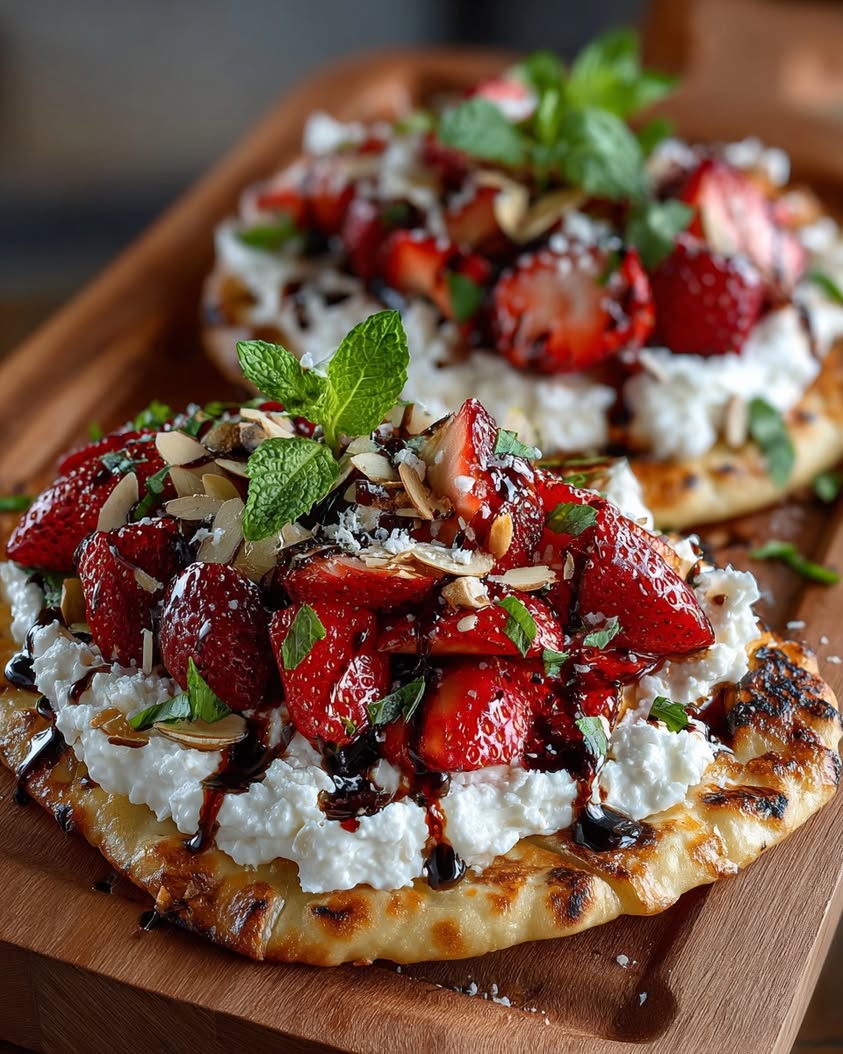
Strawberry & Balsamic Flatbread with Whipped Goat Cheese: A Sweet and Savory Masterpiece
Imagine a dish that perfectly captures the essence of a summer garden party. This Strawberry Balsamic Goat Cheese Flatbread is exactly that. It masterfully balances sweet, juicy strawberries with the rich tang of balsamic glaze and creamy, whipped goat cheese. Consequently, every bite is a delightful contrast of flavors and textures. This recipe transforms simple ingredients into an elegant appetizer or light meal. Ultimately, it is a celebration of seasonal produce and effortless entertaining.
Moreover, this flatbread is incredibly versatile. You can serve it as a stunning starter for a dinner party, a sophisticated lunch, or even a unique pizza alternative. The combination of fresh strawberries and savory elements like arugula and red onion creates a complex flavor profile. Additionally, the visual appeal is undeniable, with vibrant red berries against a backdrop of white cheese and green herbs. This Strawberry Balsamic Goat Cheese Flatbread is sure to impress your guests without requiring hours in the kitchen.
Furthermore, the beauty of this recipe lies in its simplicity and speed. From start to finish, you can have a restaurant-quality dish on the table in under 30 minutes. The process involves minimal cooking, primarily focusing on assembling high-quality ingredients. Therefore, it is an ideal choice for busy weeknights or last-minute gatherings. This Strawberry Balsamic Goat Cheese Flatbread proves that impressive food does not need to be complicated.
Quick Recipe Highlights
- Flavor Profile: This flatbread features a beautiful harmony of sweet and savory. The natural sweetness of ripe strawberries plays against the tangy, slightly acidic balsamic reduction. Meanwhile, the creamy, peppery whipped goat cheese adds a rich, complex base that ties everything together.
- Texture: You will experience a wonderful textural journey. First, there is the crisp, chewy base of the naan or flatbread. Next, you get the light, airy cloud of whipped cheese. Finally, the juicy burst of fresh strawberries and the delicate crunch of arugula complete the experience.
- Aroma: As it bakes, the warm, toasty scent of the flatbread mingles with the caramelizing balsamic. Upon serving, the fresh, grassy aroma of basil and the bright, sweet scent of strawberries create an irresistible fragrance.
- Visual Appeal: This dish is a feast for the eyes. The vibrant red strawberries pop against the snowy white cheese and the deep green arugula. A drizzle of dark balsamic glaze adds artistic streaks, making it almost too pretty to eat.
- Skill Level Needed: This is a beginner-friendly recipe. It requires no advanced techniques, just simple assembly and a brief bake. If you can spread cheese and slice strawberries, you can absolutely master this Strawberry Balsamic Goat Cheese Flatbread.
- Special Equipment: You need only basic kitchen tools. A baking sheet, a small bowl for whipping the cheese, and a knife for slicing are sufficient. A hand mixer can make whipping the goat cheese faster, but a fork and some elbow grease work perfectly.
Recipe Overview
- Difficulty Level: We rate this recipe as easy because it involves straightforward assembly rather than complex cooking techniques. The steps are simple: whip, spread, top, and bake. There is no dough to make or intricate sauces to prepare. Consequently, it is accessible for cooks of all experience levels, from novice to expert.
- Category: This dish fits beautifully into multiple categories. Primarily, it is an outstanding appetizer or starter for a shared meal. Alternatively, it serves as a fantastic light lunch or dinner, especially when paired with a simple salad. It also blurs the line between savory flatbread and dessert pizza, making it a versatile choice.
- Cuisine: While not tied to one specific tradition, this flatbread draws inspiration from modern Californian and Mediterranean cuisines. It emphasizes fresh, high-quality produce and simple preparations. The use of goat cheese and flatbread has Mediterranean roots, while the sweet-savory fruit combination is a hallmark of contemporary fusion cooking.
- Cost: This is a moderately priced recipe. The main costs come from fresh strawberries, goat cheese, and pre-made flatbreads or naan. Balsamic glaze, arugula, and herbs are typically pantry or refrigerator staples. Overall, you can create an impressive dish for a fraction of the cost of ordering similar fare at a restaurant.
- Season: This recipe shines brightest in late spring and early summer. That is when strawberries are at their peak of sweetness and flavor. However, you can make it year-round with good-quality store-bought berries. It brings a taste of sunshine to any table, regardless of the season.
- Occasion: It is perfect for al fresco dining, bridal or baby showers, garden parties, and romantic date nights at home. Furthermore, it is an excellent choice for potlucks because it travels well and looks gorgeous. It adds a touch of elegance to any casual or formal gathering.
Why You’ll Love This Recipe
First and foremost, the taste is utterly captivating. This Strawberry Balsamic Goat Cheese Flatbread delivers a sophisticated flavor profile that feels both indulgent and refreshing. The sweet strawberries and tangy balsamic are a classic pairing for a reason. They create a perfect sweet-and-sour balance. Meanwhile, the whipped goat cheese adds a luxurious, creamy element that mellows the sharper notes. Every component complements the others, resulting in a harmonious and memorable bite that will have everyone asking for the recipe.
Secondly, the convenience factor is a major win. With a total time of just 25 minutes, this recipe is a lifesaver for busy hosts. You can achieve gourmet results with minimal effort and very little active cooking time. The assembly is intuitive and fun, almost like creating a delicious piece of edible art. Consequently, you spend less time in the kitchen and more time enjoying the company of your guests. This flatbread proves that fast food can indeed be fantastic, fresh, and beautiful.
Additionally, this dish offers some notable nutritional advantages. Strawberries are packed with vitamin C, antioxidants, and fiber. Goat cheese is often easier to digest than cow’s milk cheese for some people and provides protein and calcium. Using a whole-grain naan or flatbread boosts the fiber content further. While it is a treat, it is made with real, whole-food ingredients. Therefore, you can feel good about serving it, knowing it is a step above processed snacks or heavy appetizers.
From a social perspective, this flatbread is a true entertainer’s dream. Its stunning visual appeal instantly elevates any table setting. It encourages sharing and conversation, as people gather around to admire it before diving in. The recipe is easily scalable, so you can make multiple flatbreads to feed a crowd without much extra work. It is a conversation starter that demonstrates thoughtfulness and culinary flair, making any occasion feel more special.
Finally, it is cost-effective and accessible. You do not need any rare or expensive specialty ingredients. Most components are readily available at any standard grocery store. By making this Strawberry Balsamic Goat Cheese Flatbread at home, you save significantly compared to ordering a similar dish at a trendy restaurant. It allows you to create a luxurious dining experience on a sensible budget, which is always a reason to celebrate.
Historical Background and Cultural Significance
The concept of topping flatbreads dates back thousands of years to ancient civilizations. Cultures from the Mediterranean to the Middle East used flatbreads as edible plates, topping them with local ingredients. The modern “flatbread” as an appetizer, however, is a relatively recent innovation in Western cuisine. It evolved from the pizza, focusing on thinner, crispier bases and often more gourmet, non-traditional toppings. This Strawberry Balsamic Goat Cheese Flatbread is a direct descendant of this trend, embracing creativity and seasonal produce.
Culturally, the pairing of fruit and cheese is a timeless tradition across Europe. From Italian figs with pecorino to French pears with brie, the combination is celebrated. The addition of balsamic vinegar, specifically from Modena, Italy, adds another layer of cultural heritage. Traditionally, aged balsamic is drizzled over strawberries or Parmesan cheese. This recipe cleverly combines all three elements—fruit, cheese, and balsamic—onto a convenient flatbread canvas. It respectfully nods to these Old World traditions while presenting them in a new, shareable format.
The evolution of this recipe mirrors broader food trends. Firstly, the move towards small plates and shareable appetizers gained popularity in the 2000s. Secondly, the “sweet and savory” trend pushed boundaries, introducing fruits into main courses. The whipped goat cheese technique adds a modern, chef-inspired touch, transforming a spreadable cheese into something airy and luxurious. This Strawberry Balsamic Goat Cheese Flatbread is a product of these converging trends, offering a perfect snapshot of contemporary casual dining.
Regional variations of this idea are endless. In the southern United States, you might find a version with peaches and ricotta. In the Pacific Northwest, blackberries and hazelnuts could be featured. The basic formula—a crisp base, creamy cheese, seasonal fruit, and an acidic glaze—is wonderfully adaptable. This versatility is key to its widespread appeal. It allows home cooks and chefs to express local flavor and seasonal abundance, making the recipe a global citizen with deep regional roots.
Ingredient Deep Dive
Strawberries: Historically, wild strawberries have been enjoyed since Roman times, but the modern garden strawberry we know today originated in 18th-century Europe. Nutritionally, they are powerhouses of vitamin C, manganese, folate, and antioxidants like anthocyanins, which give them their red color. For the best flavor, select berries that are uniformly red, fragrant, and shiny with bright green caps. Avoid containers with stains or mushy berries. Store them unwashed in the refrigerator for up to a week. For a substitution, try ripe peaches, figs, or pears when strawberries are out of season.
Goat Cheese (Chèvre): With origins dating back over 10,000 years, goat cheese is one of the oldest known dairy products. Its tangy flavor comes from fatty acids like caproic and caprylic acid. It is often easier to digest than cow’s milk cheese due to different protein structures and contains probiotics, calcium, and protein. Choose a fresh, soft log for whipping. Store it tightly wrapped in the coldest part of your fridge. For a dairy-free version, whipped vegan cream cheese or a thick cashew cream can be used, though the flavor profile will change.
Balsamic Glaze: True traditional balsamic vinegar (Aceto Balsamico Tradizionale) is a protected product from Modena, Italy, aged for years in wooden casks. The more common “balsamic glaze” or “reduction” is a syrup made by simmering vinegar with sugar. It provides a sweet-tart complexity that enhances fruits and cheeses. Look for a glaze with minimal ingredients. You can make your own by reducing balsamic vinegar with a touch of honey. As a substitute, a high-quality aged balsamic vinegar can be drizzled, though it will be more liquid.
Naan or Flatbread: Naan is a leavened flatbread from South and Central Asia, traditionally baked in a tandoor oven. Using it as a base is a convenient modern shortcut. For the best texture, choose a thick, soft naan or a pre-baked pizza crust. Whole-grain options add fiber and nuttiness. Store unused bread in the freezer. For a gluten-free flatbread, use a certified gluten-free naan or a cauliflower crust. Pita bread or even a pre-baked pizza dough round are excellent alternatives.
Arugula (Rocket): This peppery leafy green has been cultivated since Roman times, valued for its sharp flavor. It is rich in vitamins A, C, and K, as well as calcium and potassium. Its spicy bite cuts through the richness of the cheese. Select bunches with vibrant, perky leaves and no yellowing. Store it wrapped in a damp paper towel in a plastic bag in the fridge. Baby spinach or watercress can be used as milder substitutes.
Common Mistakes to Avoid
- Using Soggy or Under-ripe Strawberries: This is the most critical error. Mushy berries will release too much water, making the flatbread soggy. Meanwhile, under-ripe berries lack sweetness and can be tart. Always select firm, fragrant, fully red strawberries for the best flavor and texture.
- Not Whipping the Goat Cheese Enough: If you simply spread the goat cheese from the log, it will be dense and difficult to spread. Whipping it with a little milk creates a light, fluffy, cloud-like texture that is far superior. Take the minute to whip it properly.
- Overloading the Flatbread: While it is tempting to pile on the toppings, less is more here. An overloaded flatbread will not crisp up properly. The base might stay doughy, and toppings can slide off. Use a moderate, even layer of each ingredient for the perfect balance.
- Skipping the Pre-Bake for the Crust: If you add toppings to a cold, soft flatbread and bake it all at once, the bottom may not get crispy. Always pre-bake the naked crust for a few minutes first. This step ensures a sturdy, crisp foundation that can support the toppings.
- Applying Balsamic Glaze Before Baking: Adding the glaze before it goes in the oven can cause it to burn or become bitter. The high sugar content caramelizes too quickly. Instead, always drizzle the balsamic glaze on after baking, just before serving, for a glossy, sweet finish.
- Cutting the Strawberries Too Thick: Very thick strawberry slices can be awkward to eat and may not soften slightly in the oven’s residual heat. Aim for slices about 1/4-inch thick. This allows them to warm through and meld with the other flavors without becoming mushy.
- Using Wilted or Old Arugula: The arugula adds a crucial fresh, peppery element. If it is wilted or slimy, it will detract from the dish. Always use the freshest, crispiest arugula you can find, and add it after baking so it retains its texture and vibrant color.
- Not Seasoning the Whipped Goat Cheese: Plain whipped goat cheese can taste a bit flat. A small pinch of salt and a crack of black pepper amplify its flavor dramatically. Do not skip this simple seasoning step; it makes a world of difference.
Essential Techniques
Whipping Goat Cheese: This technique transforms dense cheese into a light, spreadable cloud. Start with room-temperature goat cheese; cold cheese will not whip properly. Place it in a bowl with a tablespoon of milk or cream. Use a hand mixer on medium speed or vigorously whip with a fork for 2-3 minutes until noticeably lighter and fluffier. The key is to incorporate air. The result should be smooth and easy to dollop, not stiff or crumbly. This creates a luxurious base that contrasts beautifully with the crisp flatbread.
Pre-Baking the Crust: This step is non-negotiable for a perfect texture. It ensures your flatbread base is crisp and sturdy, preventing a soggy middle. Place your naan or flatbread directly on the oven rack or a preheated baking sheet in a hot oven (usually 400°F) for 3-5 minutes. Watch it closely until it just starts to puff and become lightly golden. This par-baking drives off moisture and sets the structure. Consequently, your finished Strawberry Balsamic Goat Cheese Flatbread will have a satisfying crunch with every bite.
Slicing Strawberries Uniformly: Consistent slicing ensures even distribution and perfect texture in every bite. First, wash and thoroughly dry the berries. Hull them by removing the green stem and core. Then, using a sharp paring knife, slice vertically from tip to stem end into even 1/4-inch slices. Uniform slices will warm evenly and look more professional. Avoid slicing too thin, or they may dry out; too thick, and they become cumbersome. This attention to detail elevates the final presentation.
Drizzling Balsamic Glaze: This final flourish adds visual drama and concentrated flavor. Do not just pour it on. Instead, use a spoon or a squeeze bottle. Hold it high above the flatbread and move your hand in a quick, zigzag or circular motion. The height creates thin, elegant lines. Apply it after adding the fresh arugula so the dark glaze contrasts against the green leaves and red strawberries. A little goes a long way; you want accents, not a pool.
Pro Tips for Perfect Strawberry Balsamic Goat Cheese Flatbread
First, for an extra flavor boost, marinate your strawberry slices. Toss them with a teaspoon of balsamic vinegar and a pinch of sugar for 10-15 minutes before assembling. This intensifies their sweetness and gives them a deeper, more complex flavor.
Secondly, add a layer of protection against sogginess. After pre-baking the crust, brush it very lightly with a thin layer of olive oil before adding the whipped cheese. This creates a subtle barrier that helps keep the crisp texture intact under the moist toppings.
Thirdly, play with fresh herbs. While basil is classic, thyme, mint, or even a little chopped rosemary can add fascinating new dimensions. Sprinkle the herbs over the flatbread after it comes out of the oven so their delicate oils remain vibrant.
Fourth, consider adding a crunch element. A small handful of toasted pine nuts, chopped walnuts, or even pumpkin seeds scattered on top provides a wonderful textural contrast to the juicy strawberries and creamy cheese.
Fifth, for a more savory edge, add a few thin slices of prosciutto or speck after baking. The salty, cured meat pairs exquisitely with the sweet strawberries and rich cheese, taking the flatbread in a heartier direction.
Sixth, if your balsamic glaze is very thick, warm it slightly. Place the bottle in a cup of warm water for a minute or microwave it for 5-second bursts. This makes it easier to drizzle in fine, controlled lines.
Seventh, let the flatbread rest for 2-3 minutes after baking before slicing. This allows the cheese to set slightly and the toppings to adhere, resulting in cleaner cuts when you serve it.
Finally, always taste your strawberries before using them. If they are not perfectly sweet, you can compensate by adding an extra drizzle of honey over the finished flatbread or using a slightly sweeter balsamic glaze.
Variations and Adaptations
Regional Variations: Embrace local flavors by swapping ingredients. In the South, use peaches and a drizzle of honey with black pepper. For a coastal twist, add lump crab meat and Old Bay seasoning. A Mediterranean version could feature figs, honey, and chopped pistachios. The basic framework welcomes regional interpretation, making this Strawberry Balsamic Goat Cheese Flatbread a canvas for local produce.
Seasonal Adaptations: This recipe is a year-round friend. In fall, use sliced pears or apples with a sprinkle of cinnamon and candied walnuts. For winter, try roasted squash or pomegranate arils with a hint of orange zest. Spring welcomes asparagus tips and fresh peas. Adapting the toppings keeps the concept fresh and exciting through every season.
Dietary Modifications: For a gluten-free version, use a certified gluten-free flatbread or a cauliflower crust. Vegan adaptations are simple: use a high-quality vegan cream cheese whipped with plant-based milk and nutritional yeast for tang. Opt for a vegan balsamic glaze and skip any meat additions. The recipe is naturally vegetarian and easily adaptable to many dietary needs.
Flavor Variations: Experiment with different cheese bases. Whipped feta offers a saltier punch, while ricotta provides mild creaminess. Add a smear of basil pesto under the cheese for an herbal burst. A sprinkle of chili flakes or a drizzle of hot honey introduces a spicy element that contrasts wonderfully with the sweet fruit.
Texture Modifications: For extra crunch, sprinkle the flatbread with toasted breadcrumbs or crushed crackers before baking. For a richer mouthfeel, add small dollops of mascarpone cheese alongside the whipped goat cheese. If you prefer a softer base, do not pre-bake the crust as long, but be aware the center may be more doughy.
Presentation Alternatives: Instead of one large flatbread, use mini naan or pita rounds to create individual appetizer portions. Cut the flatbread into small squares or triangles before topping for bite-sized party snacks. You can also deconstruct it into a salad, with torn pieces of flatbread as croutons on a bed of arugula topped with the strawberries, cheese, and glaze.
Serving and Presentation Guide
Plating Techniques: For the most impact, serve the whole flatbread on a large, clean wooden cutting board or a simple slate platter. This rustic presentation highlights the food’s natural beauty. Use a pizza cutter or a large, sharp chef’s knife to slice it into wedges or squares directly on the serving board. Alternatively, pre-slice and arrange the pieces slightly fanned out on a platter for easy grabbing.
Garnishing Ideas: Fresh herb sprigs are the perfect final touch. A few whole basil leaves, microgreens, or edible flowers add color and sophistication. A light dusting of flaky sea salt (like Maldon) over the finished flatbread enhances all the flavors. A sprinkle of freshly cracked black pepper adds visual specks and a flavor boost.
Traditional Accompaniments: This flatbread is substantial enough to stand alone as a light meal. However, for a more complete spread, pair it with a simple green salad dressed with a light lemon vinaigrette. A bowl of marinated olives or a selection of cured meats also complements it well, offering savory counterpoints to the sweet and tangy notes.
Modern Serving Suggestions: For a brunch offering, serve it alongside a frittata and fresh fruit. At a cocktail party, pair it with a crisp, sparkling wine or a floral gin cocktail. You can also offer small bowls of extra toppings—like additional nuts, herbs, or glaze—on the side, allowing guests to customize their slice.
Temperature Considerations: This dish is best served immediately while the crust is still warm and crisp and the cheese is slightly softened. The arugula should be cool and fresh. If you must wait, keep the baked crust (with cheese and strawberries) at room temperature and add the cold arugula and glaze just before serving to maintain optimal textures.
Portion Control Tips: One standard naan flatbread typically serves 2 people as a light main or 4 as an appetizer portion. When serving as part of a larger spread with other dishes, plan for one flatbread per 4-6 guests. For a party, making multiple flatbreads with slight variations keeps things interesting and ensures there is enough for everyone.
Wine and Beverage Pairing
Wine Pairings: The sweet and savory profile of this flatbread calls for wines with good acidity and some fruitiness. A dry Rosé from Provence is a flawless match, bridging the gap between the strawberries and the cheese. A sparkling wine like Prosecco or Cava cuts through the richness with its bubbles. For white wine lovers, a Pinot Gris or a Sauvignon Blanc with citrus notes complements the dish beautifully. If you prefer red, opt for a light, low-tannin red like a Pinot Noir or a chilled Beaujolais.
Non-Alcoholic Alternatives: Sparkling water with a twist of lemon or a few muddled strawberries is always refreshing. For something more special, try a homemade strawberry-basil shrub mixed with soda water. A tart cherry or pomegranate juice spritzer also mirrors the sweet-tart elements of the flatbread. Iced herbal tea, like hibiscus or mint, provides a lovely, non-caffeinated option.
Coffee/Tea Pairings: This dish is less suited for traditional coffee pairings. However, if serving for a brunch or lunch, a light roast coffee or a latte can work. For tea, consider a floral white tea or a fruity herbal infusion like strawberry-rhubarb. The key is to avoid overly bitter or heavy beverages that would clash with the delicate flavors.
Temperature Considerations: Serve white, rosé, and sparkling wines well chilled. Red wines should be slightly cooler than room temperature. Non-alcoholic spritzers and iced teas should be very cold. The contrast between the cool drink and the slightly warm flatbread is part of the pleasure.
Serving Suggestions: Always offer beverages in clear glassware to showcase their color. Provide plenty of ice for non-alcoholic options. If hosting, you can create a signature cocktail or mocktail inspired by the flatbread, such as a strawberry-balsamic smash or a goat cheese-inspired creamy mocktail (using yogurt or coconut milk).
Storage and Shelf Life
Storage Methods: This flatbread is best enjoyed immediately. However, if you have leftovers, store them in a single layer in an airtight container in the refrigerator. Place parchment paper between layers if stacking is unavoidable. The arugula will wilt and the crust will soften, so it is not ideal for make-ahead storage.
Temperature Requirements: Always refrigerate leftovers promptly. Do not leave the flatbread at room temperature for more than two hours due to the dairy content. The ideal fridge temperature is below 40°F (4°C) to keep ingredients safe and slow spoilage.
Container Recommendations: A shallow, rectangular glass or plastic container with a tight-fitting lid is best. Alternatively, you can wrap the flatbread tightly in aluminum foil or plastic wrap. The goal is to minimize air exposure, which speeds up staling and wilting.
Signs of Spoilage: Discard the flatbread if you notice an off or sour smell, significant mold growth (often fuzzy spots in white, green, or blue), or if the strawberries become excessively slimy or mushy. If the crust develops an unpleasantly tough or chewy texture, it is likely past its prime.
Reheating Instructions: Reheating is not generally recommended, as it will further wilt the arugula and can make the strawberries mushy. If you must, remove the arugula first. Reheat the crust with cheese and strawberries in a toaster oven or conventional oven at 350°F for 5-7 minutes until warmed through. Then, re-add fresh arugula and a new drizzle of glaze.
Freezing Guidelines: Freezing is not recommended for the assembled flatbread. The high water content in the strawberries and arugula will cause texture issues upon thawing, resulting in a soggy, watery mess. The components do not freeze well together.
Make Ahead Strategies
Prep Timeline: You can prep nearly all components 1 day in advance. Wash, hull, and slice the strawberries; store them in a sealed container lined with a paper towel in the fridge. Whip the goat cheese, cover tightly, and refrigerate. Wash and dry the arugula, storing it in a salad spinner or wrapped in paper towels in a bag. Have your balsamic glaze ready. This leaves only assembly and baking for the day of serving.
Storage Between Steps: Keep all prepped ingredients in separate, airtight containers in the refrigerator. The whipped goat cheese may firm up when cold; let it sit at room temperature for 15 minutes before spreading to soften slightly. Keep the sliced strawberries dry to prevent sogginess.
Quality Impact Assessment: Prepping the strawberries a day ahead may cause minimal loss of vibrancy but no significant flavor loss. The whipped cheese holds perfectly. The arugula may wilt if not stored correctly. Overall, day-ahead prep has a minimal negative impact and a major positive impact on your stress level when entertaining.
Assembly Tips: On the day of, take your prepped ingredients out of the fridge. Preheat the oven. Pre-bake your crust, then let it cool for just a minute before spreading with the whipped cheese, topping with strawberries, and doing the final bake. This workflow is seamless when components are ready.
Reheating Guidelines: This recipe is not designed to be fully assembled and reheated. The fresh elements suffer. The best make-ahead strategy is component prep, not full assembly. If you must bake fully ahead, expect a softer crust and wilted greens upon reheating.
Fresh Element Additions: The key to a make-ahead success is reserving the fresh, delicate elements for the last moment. Always add the fresh arugula and the final drizzle of balsamic glaze after the flatbread comes out of the oven, just before serving. This preserves their texture, color, and vibrant flavor.
Scaling Instructions
Halving the Recipe: Halving is straightforward. Use one flatbread, half the amount of all toppings, and bake as directed. Whipping a small amount of goat cheese is easiest with a fork. Keep an eye on the bake time, as a single flatbread may cook a minute or two faster. This is perfect for a cozy meal for two.
Doubling or Tripling: For a crowd, simply multiply all ingredients by your desired factor. The key is oven management. Bake flatbreads in batches or on multiple racks, rotating the sheets halfway through for even cooking. You may need to extend the bake time by 1-2 minutes per batch if the oven is crowded. Prepare the whipped cheese in a larger bowl with a hand mixer.
Equipment Adjustments: When scaling up, ensure you have enough baking sheets. If you only have one, keep pre-baked crusts warm under a clean towel while you bake the next batch. Use a large bowl for whipping big batches of cheese. Consider setting up an assembly line for topping efficiency.
Timing Modifications: Prepping toppings will take proportionally longer. However, baking time does not scale linearly. Two flatbreads on one sheet may need the standard time; three might need a few extra minutes. Always rely on visual cues—golden edges and warmed strawberries—rather than strict timer adherence when scaling.
Storage Considerations: If making multiple flatbreads for a party, bake them in staggered batches to serve some hot and fresh while others are baking. You can hold pre-baked, untopped crusts at room temperature for an hour before final assembly and baking. Avoid stacking baked flatbreads, as they will steam and soften.
Nutritional Deep Dive
Macro Breakdown: A serving of this flatbread provides a balance of macronutrients. The carbohydrates come primarily from the flatbread and strawberries, offering energy and fiber. The goat cheese and any olive oil contribute healthy fats and protein, which promote satiety. The exact numbers vary based on your specific flatbread and cheese choices, but it is generally a moderate-calorie dish that fits into a balanced diet.
Micronutrient Analysis: This dish is a notable source of several vitamins and minerals. Strawberries deliver a high dose of vitamin C and manganese. Goat cheese provides calcium, phosphorus, and vitamin B2 (riboflavin). Arugula adds vitamins A, C, K, and folate. Using a whole-grain flatbread increases the B-vitamin and mineral content. Together, they create a nutrient-dense appetizer or light meal.
Health Benefits: The antioxidants in strawberries (like anthocyanins) have anti-inflammatory properties. The fiber from the berries and whole grains supports digestive health. Goat cheese contains conjugated linoleic acid (CLA) and probiotics, which may benefit gut health. The monounsaturated fats from olive oil are heart-healthy. This combination makes the flatbread more than just a tasty treat.
Dietary Considerations: The recipe is naturally vegetarian. It can be high in sodium depending on the flatbread and cheese used, so those monitoring sodium intake should choose low-sodium versions. It contains dairy, so it is not suitable for a dairy-free or vegan diet without modifications. It is generally not low-carb due to the flatbread base.
Portion Analysis: As an appetizer shared among several people, the portion size is naturally controlled. When eaten as a main dish, one half of a standard naan flatbread is a reasonable serving, especially when paired with a side salad. Being mindful of the amount of cheese and glaze used helps manage calorie and sugar intake.
Weight Management Tips: To make this dish more weight-conscious, use a lighter flatbread option, measure the cheese, and be sparing with the balsamic glaze, which contains added sugar. Load up on the strawberry and arugula volume for bulk and fiber. Pair it with a large green salad to increase fullness without significantly adding calories.
Dietary Adaptations
Gluten-Free: Use a certified gluten-free flatbread, naan, or pizza crust as the base. Many brands offer excellent options made from rice flour, cauliflower, or almond flour. Ensure all other ingredients, like the balsamic glaze, are certified gluten-free, as some vinegars may contain gluten-derived additives.
Dairy-Free/Vegan: Substitute the goat cheese with a vegan cream cheese or a homemade cashew cheese. For the cashew version, blend soaked cashews with lemon juice, nutritional yeast, and salt until smooth. Use a plant-based milk if needed for consistency. Choose a vegan bals{“success”:true,”message”:”Recipe created successfully”,”post_id”:9213,”tasty_recipe_id”:9213,”shortcode”:”“}

I’m Billy, a classically trained culinary school graduate from The Culinary Institute of America with over 12 years in the restaurant industry and over 19 years of cooking experience.