
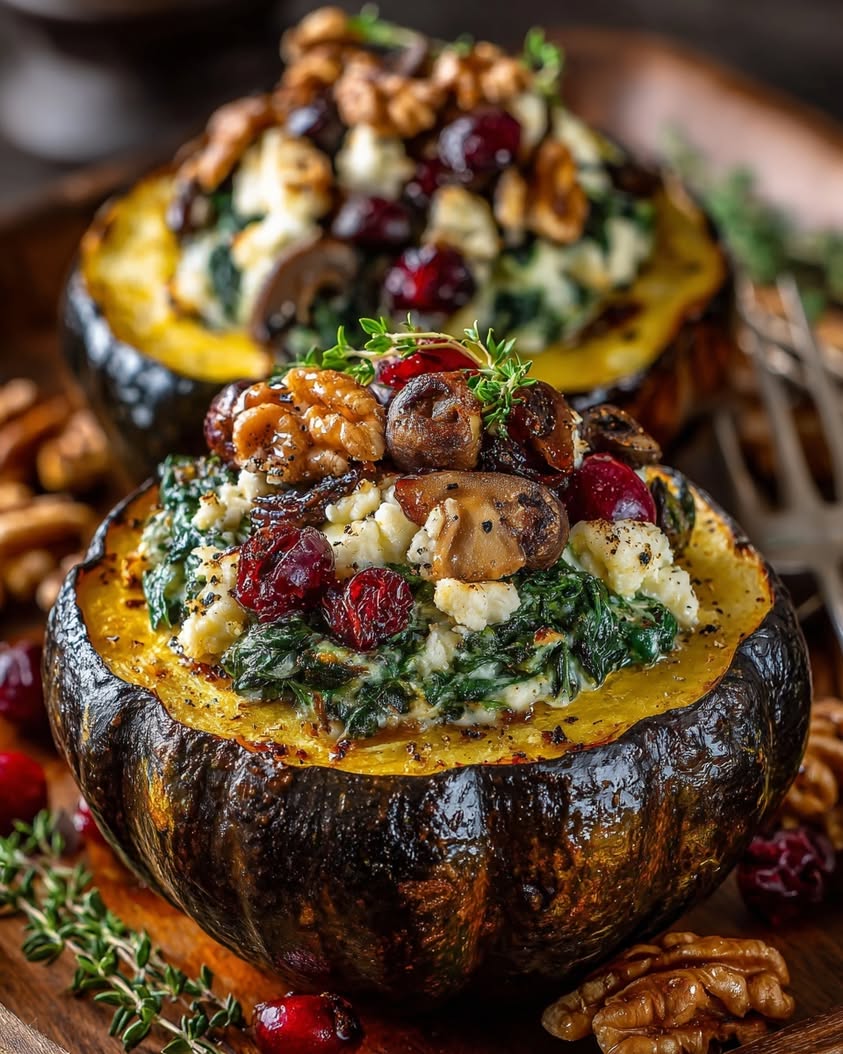
Savory Stuffed Acorn Squash Recipe: A Festive Vegetarian Main Dish
Welcome to a stunning and satisfying vegetarian main dish that will become a centerpiece on your table. This Savory Stuffed Acorn Squash Recipe perfectly balances sweet, earthy, and tangy flavors in a beautiful, edible bowl. Moreover, the combination of tender roasted squash, savory mushrooms, wilted spinach, tart cranberries, and creamy feta creates a symphony of textures and tastes. Consequently, this dish feels both comforting and elegant, making it ideal for a cozy weeknight dinner or a festive holiday gathering.
Preparing this Savory Stuffed Acorn Squash Recipe is surprisingly straightforward. First, you roast the squash halves until they become tender and caramelized. Meanwhile, you sauté a flavorful filling that comes together in one pan. Ultimately, you stuff the squash and bake it again, allowing all the flavors to meld. The result is a visually impressive, nutrient-dense meal that proves vegetarian cooking can be hearty and deeply flavorful. Additionally, this recipe is naturally gluten-free and easily adaptable for various dietary needs.
Quick Recipe Highlights
- Flavor Profile: This Savory Stuffed Acorn Squash Recipe delivers a complex taste experience. The natural sweetness of the roasted squash beautifully contrasts with the umami-rich mushrooms and salty feta. Finally, the dried cranberries provide a bright, tart pop that ties everything together.
- Texture: You will enjoy a wonderful contrast of textures in every bite. The squash becomes soft and spoonable, while the filling offers a satisfying mix of meaty mushrooms, wilted spinach, and chewy cranberries. The feta adds a delightful creamy crumble that melts slightly in the heat.
- Aroma: As this dish bakes, it fills your kitchen with an incredible, comforting aroma. The scent of roasting squash and onions mingles with earthy herbs and the savory note of sautéed mushrooms. It is a truly inviting fragrance that promises a delicious meal.
- Visual Appeal: The presentation is simply stunning. The deep green, ridged squash halves cradle a colorful filling of dark greens, golden-brown mushrooms, and vibrant red cranberries. A final sprinkle of white feta and fresh herbs makes it look restaurant-worthy.
- Skill Level Needed: This is an accessible recipe for cooks of all levels. It involves basic techniques like roasting, sautéing, and seasoning. Therefore, even a beginner can achieve fantastic results with careful attention to the simple steps.
- Special Equipment: You need only standard kitchen tools. A sturdy baking sheet, a large skillet, and a sharp knife are essential. A spoon for scooping out the squash seeds and a mixing bowl for the filling are also helpful.
Recipe Overview
- Difficulty Level: We rate this Savory Stuffed Acorn Squash Recipe as easy. The steps are sequential and simple, involving no advanced culinary skills. However, it does require some multitasking as you roast the squash while preparing the filling. Overall, it is a very manageable process for any home cook.
- Category: This dish fits perfectly into several meal categories. Primarily, it serves as a fantastic vegetarian main course. Alternatively, you can present it as a substantial side dish alongside a roast or other protein. It is also excellent for meal prep and special occasion dinners.
- Cuisine: While not tied to one specific tradition, this recipe draws inspiration from contemporary American and Mediterranean cuisines. The use of feta cheese and olive oil nods to Mediterranean flavors, while the acorn squash and cranberries feel quintessentially autumnal and North American. It is a beautiful fusion of wholesome ingredients.
- Cost: This is a very cost-effective recipe, especially during the fall and winter squash season. Acorn squash is typically inexpensive. Furthermore, ingredients like mushrooms, spinach, and onions offer great value. Overall, you can create an impressive meal for four without straining your grocery budget.
- Season: This Savory Stuffed Acorn Squash Recipe shines brightest in the autumn and winter months. Acorn squash is at its peak then, offering the best flavor and texture. The warm, hearty nature of the dish is ideal for cooler weather. That said, you can enjoy it year-round with good results.
- Occasion: This versatile dish suits many occasions. It is elegant enough for Thanksgiving or a dinner party yet simple enough for a Tuesday night family meal. It also makes a wonderful potluck contribution, as it travels well and appeals to a wide range of eaters.
Why You’ll Love This Recipe
You will adore the incredible taste and texture of this Savory Stuffed Acorn Squash Recipe. Each component brings something special to the table. The squash itself roasts into a sweet, tender vessel. Meanwhile, the filling packs a powerful umami punch from the mushrooms, a vegetal freshness from the spinach, and a tangy surprise from the cranberries. The feta cheese melts just enough to add a creamy, salty richness that binds everything together. Every forkful offers a perfect balance, making the eating experience deeply satisfying and never boring.
The convenience and preparation benefits of this dish are significant. Despite its impressive appearance, the recipe follows a logical, streamlined process. You can roast the squash and prepare the filling simultaneously, maximizing your time in the kitchen. Additionally, the components are forgiving; you can adjust cooking times slightly without ruining the meal. This makes the Savory Stuffed Acorn Squash Recipe a reliable choice when you need a beautiful meal without excessive stress. It is the kind of recipe that builds confidence in the kitchen.
From a nutritional standpoint, this meal is a powerhouse. Acorn squash is rich in vitamins A and C, fiber, and potassium. Spinach adds iron, folate, and more vitamins. Mushrooms contribute B vitamins and selenium. Together, they create a meal that is high in fiber, packed with antioxidants, and naturally low in fat. This Savory Stuffed Acorn Squash Recipe proves that eating well can also mean eating deliciously. It is a meal that fuels your body and delights your senses simultaneously.
The social and entertaining value of this dish cannot be overstated. When you bring a whole stuffed squash to the table, it creates a moment. It is a conversation starter and a visual showstopper. For vegetarian guests or those reducing meat intake, it feels like a dedicated main course, not an afterthought. Serving this Savory Stuffed Acorn Squash Recipe shows care and thoughtfulness in your menu planning. It makes any meal feel more special and celebratory.
Finally, this recipe is wonderfully cost-effective and accessible. The ingredients are common and often already in your pantry or easily found at any grocery store. You do not need expensive specialty items. Furthermore, the recipe is flexible; you can swap in different nuts, cheeses, or grains based on what you have available. This adaptability makes the Savory Stuffed Acorn Squash Recipe a practical staple in your cooking repertoire. It delivers gourmet flavor on a sensible budget.
Historical Background and Cultural Significance
The practice of stuffing vegetables spans cultures and centuries, acting as a clever way to extend ingredients and create a complete meal. While the specific combination in this Savory Stuffed Acorn Squash Recipe is modern, the concept is ancient. Mediterranean and Middle Eastern cuisines have long featured stuffed vegetables like peppers, grape leaves, and zucchini. In the Americas, indigenous peoples cultivated squash varieties, including acorn squash, and often roasted or stuffed them with other foraged and cultivated ingredients. This recipe sits at the intersection of these old-world and new-world traditions.
Acorn squash itself holds cultural significance as a winter squash native to North and Central America. Historically, indigenous communities valued it for its hard shell, which allowed for long storage through harsh winters, providing vital nutrients when other foods were scarce. Stuffing it would have been a natural evolution, using available meats, beans, or grains. Our contemporary Savory Stuffed Acorn Squash Recipe honors this history of resourcefulness. It transforms a humble, storied vegetable into a centerpiece, continuing its legacy as a sustaining and versatile food.
The recipe has evolved significantly with global trade and modern agriculture. Ingredients like feta cheese (originating from Greece) and dried cranberries (a modern commercial product) are now readily available, allowing for creative fusion. The vegetarian focus of this version also reflects a more recent, widespread dietary shift. Today’s Savory Stuffed Acorn Squash Recipe is less about survival and more about celebrating seasonal abundance and diverse flavors. It represents how traditional cooking methods adapt to incorporate new ingredients and dietary preferences.
Regional variations of stuffed squash are endless, which speaks to its universal appeal. In Italy, you might find squash stuffed with sausage and breadcrumbs. In the American South, a pecan and brown sugar stuffing is popular. Our version, with its spinach, mushroom, and feta filling, leans into a earthy, savory profile with a touch of sweetness. This particular Savory Stuffed Acorn Squash Recipe is a testament to personalized, home-style cooking where the cook’s preferences guide the final creation. It invites you to make it your own.
Ingredient Deep Dive
Acorn Squash: This beautiful, ribbed winter squash is the star of our Savory Stuffed Acorn Squash Recipe. Cultivated for thousands of years in the Americas, it gets its name from its acorn-like shape. Nutritionally, it is a powerhouse of beta-carotene (which converts to Vitamin A), Vitamin C, fiber, and potassium. When selecting, choose squash that feel heavy for their size with a deep green rind and a small patch of orange; avoid those with soft spots or cracks. Store whole squash in a cool, dark place for up to a month. For a substitution, delicata or sweet dumpling squash work beautifully, though cooking times may vary slightly.
Cremini Mushrooms: These are simply young portobello mushrooms, offering a deeper, earthier flavor than white button mushrooms. They have been prized in European and Asian cuisines for centuries for their umami-rich qualities. They provide B vitamins, selenium, and a meaty texture that is essential to the heartiness of this vegetarian dish. Select mushrooms that are firm with dry, intact caps. Store them in a paper bag in the refrigerator. You can substitute with white button mushrooms or shiitakes (stems removed), though the flavor profile will change subtly.
Fresh Spinach: Spinach has a history dating back to Persia, spreading to Asia and later Europe. It adds vibrant color, iron, calcium, vitamins A and K, and folate to our Savory Stuffed Acorn Squash Recipe. As it wilts, it reduces dramatically, allowing you to pack a significant nutrient punch into the filling. Look for bright green, crisp leaves without yellowing. Store it loosely in a plastic bag with a paper towel to absorb moisture. If substituting, kale or Swiss chard are excellent options, though they may require a slightly longer sautéing time to tenderize.
Dried Cranberries: A modern twist on the native American cranberry, the dried version adds a crucial pop of tart sweetness and chewy texture. They provide antioxidants and fiber. Their acidity helps balance the richness of the cheese and mushrooms. Choose unsweetened or fruit-juice-sweetened varieties to avoid excessive added sugar. For storage, keep them in a sealed container in your pantry. As an alternative, dried cherries or chopped dried apricots would work well, offering a slightly different fruity note.
Feta Cheese: This brined cheese, with origins in Greece, brings a salty, tangy creaminess that is irreplaceable in this recipe. Made from sheep’s or goat’s milk, it is lower in fat than many cheeses and adds protein and calcium. For the best flavor in your Savory Stuffed Acorn Squash Recipe, buy a block of feta in brine rather than pre-crumbled. Store it submerged in its brine in the refrigerator. For a dairy-free version, a firm, salty tofu crumble or a vegan feta alternative can be used, though the distinct tang may be different.
Common Mistakes to Avoid
- Not Roasting the Squash Enough First: Undercooked squash will be tough and difficult to eat. Always roast the halves until a fork easily pierces the flesh. Otherwise, the final bake will not soften it sufficiently, resulting in a frustrating texture contrast with the tender filling.
- Overcrowding the Mushrooms in the Pan: Sautéing mushrooms in a crowded pan steams them instead of browning them. You want that deep, caramelized flavor. Therefore, cook them in batches if necessary to ensure each piece has contact with the hot surface of the pan.
- Adding Spinach Too Early: If you add the spinach at the same time as the mushrooms, it will overcook and become slimy. Instead, always wilt the spinach at the very end, just until it collapses. The residual heat will continue to cook it perfectly.
- Forgetting to Season Each Layer: Seasoning is cumulative. You should season the squash cavity before roasting, and then season the filling as you cook it. If you only add salt at the end, the flavors will not be integrated and the dish may taste bland.
- Using Pre-Crumbled Feta Exclusively: Pre-crumbled feta often contains anti-caking agents and can be drier. For superior creaminess and flavor, purchase a block of feta in brine and crumble it yourself just before adding it to the filling and topping the dish.
- Skipping the Olive Oil Brush on the Squash: Lightly brushing the cut sides of the squash with oil before roasting is crucial. This step promotes caramelization, prevents drying, and helps the seasoning adhere. Do not just drizzle; use a pastry brush for an even, thin coat.
- Not Scooping Out Enough Flesh: Be generous when creating the squash “bowl.” Scoop out some of the tender flesh after roasting to mix into the filling. This intensifies the squash flavor throughout the dish and creates more room for the delicious stuffing.
- Overstuffing the Squash Halves: While you want a generous amount of filling, piling it too high can cause it to spill over and burn on the baking sheet. Mound the filling neatly, but keep it within the natural rim of the squash for the best presentation and even cooking.
Essential Techniques
Roasting Squash to Perfect Tenderness: This technique is foundational for our Savory Stuffed Acorn Squash Recipe. Roasting concentrates the squash’s natural sugars, creating a caramelized, sweet flavor and a soft, scoopable texture. To master it, ensure your oven is fully preheated and place the squash cut-side down on the baking sheet. This method uses radiant heat to cook the flesh evenly and allows steam to escape, preventing sogginess. The key visual cue for success is when the edges are lightly browned and a fork pierces the thickest part of the flesh with no resistance. Under-roasting leads to a tough, unpleasant eat.
Sautéing Mushrooms for Maximum Flavor: Properly sautéed mushrooms develop a deep, meaty umami taste essential to the filling. The technique involves cooking them in a single layer with enough space so they release their moisture and then re-absorb it, browning in the process. Do not stir them constantly; let them sit to develop a sear. A common pitfall is adding them to a cold pan or crowding them, which causes them to steam and become rubbery. Success is evident when the mushrooms are shrunken, golden-brown, and fragrant, having transformed their texture entirely.
Wilting Spinach Efficiently: Wilting spinach quickly preserves its vibrant color and nutrients while reducing its volume dramatically. The technique is simple: add the fresh leaves to the hot pan with the other cooked ingredients and stir constantly for just 1-2 minutes. The residual heat and moisture from the other components are usually sufficient. The pitfall is overcooking, which turns the spinach a dull olive green and makes it slimy. Perfectly wilted spinach should be uniformly dark green, fully collapsed, but still retain a slight texture. It will continue to soften from residual heat after you remove the pan from the burner.
Pro Tips for Perfect Savory Stuffed Acorn Squash
Score the Squash Flesh: Before roasting, use a sharp knife to score the cut side of the squash in a crosshatch pattern. This simple step allows the oil and seasoning to penetrate deeper and helps the squash cook more evenly. It also makes it easier to scoop out some flesh later to mix into the filling.
Boost Umami with Tomato Paste: For an even deeper savory flavor, add a tablespoon of tomato paste to the skillet when you sauté the onions and garlic. Let it cook for a minute until it darkens slightly. This “toasting” unlocks a rich, concentrated umami that beautifully complements the mushrooms.
Toast Your Nuts: If you choose to add walnuts or pecans to the filling, always toast them first. Spread them on a baking sheet and toast in the oven (or in a dry skillet) for 5-7 minutes until fragrant. Toasting removes raw bitterness and maximizes their nutty flavor and crunch.
Use a Melon Baller for Scooping: For a clean, professional-looking squash bowl, use a melon baller or a small spoon to scoop out the seeds and stringy pulp after roasting. It gives you more control than a large spoon and helps you avoid tearing the tender flesh of the squash walls.
Let the Filling Cool Slightly: Before stuffing the roasted squash, let the mushroom and spinach mixture cool for about 5 minutes. This prevents the hot filling from immediately melting the feta cheese you mix in, allowing it to stay in distinct, creamy crumbles throughout the dish.
Finish with Fresh Herbs: After baking, garnish your stuffed squash with a generous sprinkle of fresh chopped parsley, thyme, or chives. The bright, fresh flavor and green color provide a final layer of aroma and visual appeal that elevates the dish from home-cooked to chef-inspired.
Variations and Adaptations
Regional Variations: You can easily adapt the core Savory Stuffed Acorn Squash Recipe to reflect different culinary traditions. For an Italian twist, use Italian sausage (plant-based or meat), sun-dried tomatoes, and mozzarella. For a Southwestern flair, incorporate black beans, corn, cumin, chili powder, and pepper jack cheese. A Middle Eastern version might feature chickpeas, baharat spice, pine nuts, and a drizzle of tahini yogurt sauce. The basic method remains the same, but the flavor profile transports you.
Seasonal Adaptations: Embrace what is fresh. In spring, use asparagus and peas with lemon zest and goat cheese. For summer, try a filling with zucchini, corn, cherry tomatoes, and basil. The autumn version with mushrooms and cranberries is classic, but a winter variation with roasted Brussels sprouts and chestnuts is also wonderful. This flexibility makes the recipe a year-round favorite.
Dietary Modifications: This recipe is naturally gluten-free. For a vegan Savory Stuffed Acorn Squash Recipe, omit the feta or use a high-quality vegan feta or ricotta. To add more protein, stir in cooked quinoa, lentils, or crumbled tempeh to the filling. For a grain-free or keto version, increase the mushrooms and spinach and add extra nuts or seeds for crunch.
Flavor Variations: Play with the seasoning profile. Add a pinch of smoked paprika or red pepper flakes for heat. Incorporate fresh sage or rosemary for a more aromatic, earthy note. A splash of balsamic glaze drizzled over the stuffed squash before the final bake adds a sweet and tangy complexity. A teaspoon of maple syrup in the filling can enhance the squash’s natural sweetness.
Texture Modifications: If you prefer a more cohesive filling, stir in a beaten egg or a quarter cup of breadcrumbs or cooked rice before stuffing. This helps bind the ingredients. For extra crunch, reserve some toasted nuts or seeds to sprinkle on top after baking, rather than mixing them in.
Presentation Alternatives: For individual servings, use smaller sweet dumpling squashes. For a deconstructed approach, cube the roasted squash, mix it with the filling ingredients in a baking dish, top with cheese, and bake as a casserole. You can also blend the roasted squash into a smooth purée to use as a base under a mound of the sautéed filling.
Serving and Presentation Guide
Plating Techniques: For the most dramatic presentation, serve each stuffed squash half on its own plate. Place it slightly off-center. Then, use a microplane to grate a little extra cheese or zest a bit of lemon over the top just before serving. This adds a fresh, finishing touch. If serving family-style, arrange the halves on a large platter or wooden board, garnished generously with fresh herbs. The contrast between the platter and the colorful food is stunning.
Garnishing Ideas: Beyond fresh herbs, consider a drizzle of high-quality extra virgin olive oil or a balsamic reduction. A sprinkle of pomegranate arils in the winter adds brilliant color and a juicy burst. Toasted pumpkin seeds (pepitas) or chopped hazelnuts provide an elegant crunch. For a creamy element, a dollop of Greek yogurt or sour cream on the side is always welcome.
Traditional Accompaniments: This hearty dish often stands alone as a complete meal. However, traditional pairings include a simple green salad with a bright vinaigrette to cut the richness. A crusty whole-grain bread or dinner rolls are perfect for soaking up any delicious juices left on the plate. For a more substantial spread, it pairs beautifully with a lentil soup or a roast chicken.
Modern Serving Suggestions: For a contemporary twist, slice the roasted stuffed squash into thick wedges after baking and serve them over a bed of garlicky sautéed kale or arugula. Alternatively, fluff the filling with a fork and serve it alongside the squash as a composed plate rather than a stuffed vessel. This is especially helpful for easier serving at larger gatherings.
Temperature Considerations: This dish is best served hot from the oven when the cheese is slightly melted and the edges are crispy. However, it also holds its flavor remarkably well at room temperature, making it excellent for buffets or picnics. If you need to reheat, do so in the oven to restore texture; the microwave can make the squash soggy.
Portion Control Tips: One acorn squash half is typically a satisfying main course serving for most adults. For larger appetites or as a side dish, you can serve a half or a quarter of a stuffed squash. If using very large squash, consider cutting them into quarters after roasting to create more manageable, shareable portions.
Wine and Beverage Pairing
Wine Pairings: The earthy, savory, and slightly sweet notes of this dish call for versatile, food-friendly wines. A medium-bodied Pinot Noir with its red fruit and earthy undertones is a classic match, complementing the mushrooms without overpowering the squash. A dry Riesling or Gewürztraminer works wonderfully, as their slight sweetness and acidity play off the cranberries and cut through the richness. For white wine lovers, an oaked Chardonnay with notes of butter and vanilla can stand up to the creamy feta and roasted flavors.
Non-Alcoholic Alternatives: Sparkling water with a twist of lemon or lime provides a clean, palate-cleansing effervescence. For something more flavorful, try a tart cranberry spritzer made with unsweetened cranberry juice and club soda. An herbal iced tea, like mint or rosemary, echoes the earthy notes in the dish. Apple cider, served warm or cold, is a seasonal favorite that harmonizes with the autumnal ingredients.
Coffee and Tea Pairings: After the meal, a cup of coffee or tea can be a perfect finish. A medium-roast coffee with low acidity won’t clash with the dish’s flavors. For tea, consider an earthy Pu-erh or a smoky Lapsang Souchong, which can mirror the depth of the mushrooms. A gentle chamomile or peppermint tea is also a soothing, digestif option.
Temperature Considerations: Serve white wines and non-alcoholic spritzers well-chilled. Red wines like Pinot Noir are best served slightly below room temperature, around 55-60°F. Warm beverages like cider or tea should be served piping hot to provide a comforting contrast to the warm, but not scalding, food.
Serving Suggestions: Always offer water on the table alongside any other beverage. When serving wine, pour modestly to allow guests to enjoy the pairing without overwhelming the food. For non-alcoholic options, consider serving them in elegant glassware to make the experience feel just as special as a wine pairing.
Storage and Shelf Life
Storage Methods: Allow any leftover Savory Stuffed Acorn Squash to cool completely to room temperature. Then, transfer the stuffed halves to an airtight container. You can store them whole or scoop the filling and squash flesh into a separate container. Proper storage is key to maintaining texture and preventing the absorption of other refrigerator odors.
Temperature Requirements: Refrigerate leftovers promptly. They must be stored at or below 40°F (4°C) to inhibit bacterial growth. Do not leave the cooked dish at room temperature for more than two hours. For longer storage, freezing is an effective option, though it will slightly alter the texture of the squash.
Container Recommendations: Use shallow, airtight containers to promote rapid, even cooling. Glass containers with locking lids are ideal as they do not absorb odors and allow you to see the contents. If storing the stuffed halves whole, choose a container large enough to prevent them from being crushed.
Signs of Spoilage: Before consuming leftovers, inspect them carefully. Discard if you notice an off or sour smell, significant discoloration (especially a slimy grey film on the mushrooms or spinach), or visible mold. When in doubt, it is always safer to throw it out.
Reheating Instructions: To restore the best texture, reheat in the oven. Preheat to 350°F (175°C), place the stuffed squash on a baking sheet, cover loosely with foil to prevent over-browning, and heat for 15-20 minutes until hot throughout. The microwave can be used for speed but may make the squash soggy; use a lower power setting and reheat in short intervals.
Freezing Guidelines: This dish freezes reasonably well for up to 2 months. Freeze the stuffed squash halves on a baking sheet until solid, then wrap each tightly in plastic wrap and foil before placing in a freezer bag. Thaw overnight in the refrigerator before reheating in the oven. Note that the texture of the spinach and squash may become slightly softer after freezing.
Make Ahead Strategies
Prep Timeline: You can prepare nearly every component of this Savory Stuffed Acorn Squash Recipe a day in advance. Roast the squash halves, let them cool, and store them wrapped in the refrigerator. Prepare the entire mushroom and spinach filling (without adding the feta), cool it, and refrigerate in a separate container. Crumble the feta and store it separately. This advance work turns final assembly into a simple 10-minute task.
Storage Between Steps: Store the cooled, roasted squash halves on a plate or tray covered tightly with plastic wrap. The filling should go in an airtight container. Keeping them separate is crucial; storing them stuffed overnight can make the squash shell soggy. The feta should remain dry and cold in its own container.
Quality Impact Assessment: Making the components ahead has minimal negative impact and can even improve flavor, as the filling’s ingredients have time to meld. The only caution is that the roasted squash may release a little moisture in the fridge, so pat the cavities dry with a paper towel before stuffing. The final baked result will be virtually identical to a same-day preparation.
Assembly Tips: When ready to bake, take the components out of the fridge about 20 minutes ahead to take the chill off. Stir the crumbled feta into the cold filling. Stuff the squash halves, place them on a baking sheet, and proceed with the recipe. You may need to add 3-5 extra minutes to the final bake time since you are starting with cold ingredients.
Reheating Guidelines: If you fully assemble and bake the dish ahead of time, you can reheat it covered in foil in a 325°F (160°C) oven until warmed through. To refresh the top, remove the foil for the last few minutes. This is perfect for dinner parties where you want to minimize last-minute kitchen work.
Fresh Element Additions: For the absolute best presentation and flavor, add any fresh garnishes after reheating. Sprinkle with extra fresh herbs, a final dusting of cheese, or a drizzle of oil just before serving. This brings brightness and visual appeal to the pre-made dish.
Scaling Instructions
Halving the Recipe: Halving this Savory Stuffed Acorn Squash Recipe is straightforward. Use one medium acorn squash, halved. Simply divide all filling ingredient quantities by two. Use a smaller skillet for sautéing. The roasting and final baking times will remain roughly the same, as they depend on the thickness of the squash, not the quantity. Always check for doneness with a fork.
Doubling or Tripling: For a crowd, this recipe scales up beautifully. Multiply all ingredients accordingly. You will need to roast the squash in batches or on multiple oven racks, rotating the sheets halfway through for even cooking. Sauté the filling in batches to avoid steaming; you can combine it all in a large bowl afterward. A single, large final bake on multiple sheets is fine.
Equipment Adjustments: Scaling up requires planning. Ensure you have enough baking sheets (line them with parchment for easy cleanup). You may need a very large skillet or to cook the filling in several batches. For a large quantity, consider mixing the final filling in a big bowl before stuffing. Have a dedicated workspace for assembly.
Timing Modifications: When cooking multiple trays of squash, the total oven time may increase slightly due to reduced air circulation. Allow a few extra minutes and check each tray. The filling preparation time will increase linearly with the number of batches you need to sauté. Factor this into your overall schedule.
Storage Considerations: Leftovers from a scaled-up batch can be stored as usual. If you are preparing for future meals, consider freezing individual stuffed halves before the final bake for a convenient freezer meal. Thaw in the refrigerator overnight and then bake as directed.
Nutritional Deep Dive
Macro Breakdown: One serving of this Savory Stuffed Acorn Squash Recipe provides a balanced macronutrient profile. It is a good source of complex carbohydrates from the squash, offering sustained energy. The mushrooms, spinach, and feta contribute moderate amounts of protein, essential for satiety and muscle maintenance. The fats are primarily heart-healthy monounsaturated fats from the olive oil, with some saturated fat from the cheese. The dish is naturally high in dietary fiber, which aids digestion and promotes a feeling of fullness.
Micronutrient Analysis: This dish is a micronutrient powerhouse. The acorn squash delivers a massive dose of Vitamin A (as beta-carotene) for eye and immune health, along with significant Vitamin C and potassium. Spinach adds iron, calcium, and Vitamin K for bone health. Mushrooms provide B vitamins like riboflavin and niacin, crucial for energy metabolism. Together, they create a meal dense with vitamins, minerals, and antioxidants that support overall wellness.
Health Benefits: Regularly consuming meals like this supports numerous health goals. The high fiber and nutrient density can aid in weight management by promoting satiety. The antioxidants combat oxidative stress and inflammation. The potassium helps regulate blood pressure. Furthermore, the inclusion of a variety of plant-based foods supports gut health through diverse fibers and prebiotics. It is a meal that truly nourishes the body.
Dietary Considerations: This recipe is naturally gluten-free and vegetarian. It can be adapted to be vegan or dairy-free with simple cheese substitutions. It is not inherently low-carb due to the squash, but the carb content comes from a whole, unprocessed vegetable. For those monitoring sodium, you can control the amount of added salt and choose a lower-sodium feta cheese.
Portion Analysis: One half of a medium acorn squash with a generous cup of filling constitutes a substantial and satisfying meal portion. It is volumetrically large, meaning it takes up space on your plate and in your stomach, which can help prevent overeating. The balance of fiber, protein, and fat ensures stable blood sugar levels after eating, avoiding energy crashes.
Weight Management Tips: This dish is an excellent choice for weight management. To make it even lighter, you can reduce the olive oil by a teaspoon or two, though this may impact flavor and browning. Increasing the proportion of spinach and mushrooms in the filling adds volume and nutrients with minimal calories. Remember, the satisfaction factor is high, which can prevent snacking on less healthy options later.
Dietary Adaptations
Gluten-Free: This Savory Stuffed Acorn Squash Recipe is naturally gluten-free as written. All ingredients—squash, vegetables, cheese, and seasonings—are inherently free of gluten. Always double-check labels on any pre-packaged ingredients like dried cranberries or broth to ensure no gluten-containing additives were used in processing. It is a safe and delicious option for those with celiac disease or gluten sensitivity.
Dairy-Free/Vegan: For a dairy-free or vegan version, omit the feta cheese. Instead, use{“success”:true,”message”:”Recipe created successfully”,”post_id”:8811,”tasty_recipe_id”:8811,”shortcode”:” Print
Stuffed Acorn Squash with Spinach, Mushroom, Cranberries & Feta
Description
A hearty and flavorful vegetarian dish featuring roasted acorn squash halves stuffed with a savory mixture of spinach, mushrooms, dried cranberries, and tangy feta cheese.
Ingredients
For the Crust:
- 2 medium acorn squash, halved and seeded
- 2 tablespoons olive oil, divided
- Salt and black pepper to taste
- 8 ounces cremini mushrooms, chopped
- 3 cloves garlic, minced
- 4 cups fresh spinach, roughly chopped
- 1/2 cup dried cranberries
- 1/2 cup crumbled feta cheese
- 1/2 teaspoon dried thyme
- 1/4 teaspoon ground nutmeg
Instructions
1. Prepare the Crust:
- Preheat oven to 400°F (200°C). Brush squash halves with 1 tablespoon olive oil, season with salt and pepper, and place cut-side down on a baking sheet. Roast for 25-30 minutes until tender.
- While squash roasts, heat remaining olive oil in a large skillet over medium heat. Add mushrooms and cook until browned, about 5-7 minutes.
- Stir in garlic and cook for 1 minute until fragrant. Add spinach and cook until wilted, about 2-3 minutes.
- Remove skillet from heat. Stir in dried cranberries, feta cheese, thyme, and nutmeg. Season with salt and pepper to taste.
- Flip roasted squash halves cut-side up. Divide the stuffing mixture evenly among the halves. Return to oven for 5-10 minutes until heated through and cheese is slightly melted.
Notes
You can customize the seasonings to taste.

I’m Billy, a classically trained culinary school graduate from The Culinary Institute of America with over 12 years in the restaurant industry and over 19 years of cooking experience.