
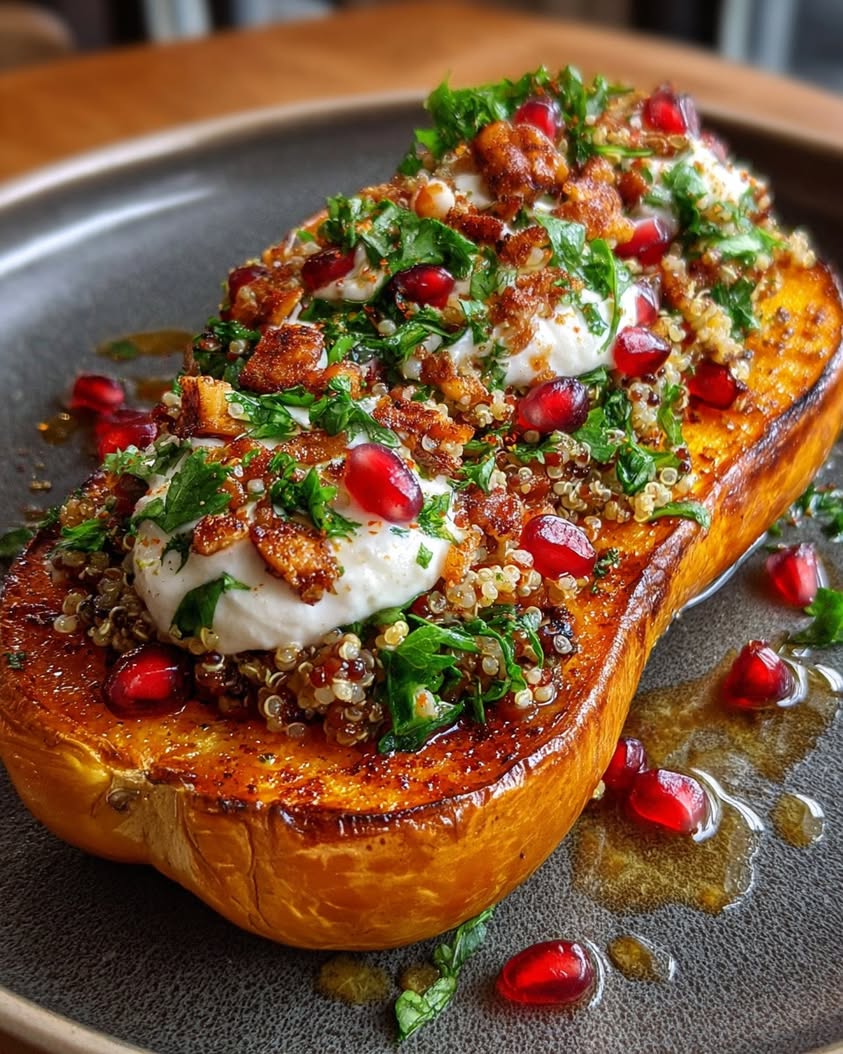
Stuffed Butternut Squash with Quinoa, Pomegranate & Whipped Feta: A Festive Fall Masterpiece
Imagine a dish that captures the very essence of autumn in a single, stunning presentation. This recipe for Stuffed Butternut Squash with Quinoa, Pomegranate & Whipped Feta is exactly that. It transforms a humble winter squash into a vibrant, edible centerpiece. The sweet, caramelized flesh of the roasted squash cradles a savory, nutty quinoa filling. Meanwhile, the entire creation is crowned with a cloud of tangy whipped feta and a jewel-like scattering of pomegranate arils. Ultimately, this dish is a celebration of texture, color, and seasonal flavor.
Moreover, this stuffed butternut squash recipe is a fantastic option for both casual weeknights and special holiday gatherings. It feels indulgent and elegant, yet it is built on a foundation of wholesome, nutritious ingredients. The process is surprisingly straightforward, involving roasting, mixing, and a simple whipping technique. Consequently, you can create a restaurant-quality vegetarian main course right in your own kitchen. The final result is a visually spectacular dish that promises to impress every guest at your table.
Furthermore, the beauty of this recipe lies in its perfect balance. The natural sweetness of the squash is expertly countered by the salty, creamy feta and the bright, acidic pop of the pomegranate. Each component plays a crucial role, creating a symphony of flavors in every bite. This Stuffed Butternut Squash with Whipped Feta is not just a meal; it’s an experience. It engages all the senses, from the gorgeous orange hue to the incredible aromas that will fill your kitchen as it roasts.
Quick Recipe Highlights
- Flavor Profile: This dish masterfully balances sweet, savory, tangy, and earthy notes. The caramelized squash offers a deep sweetness, perfectly complemented by the savory herbs and garlic in the quinoa. Finally, the tangy whipped feta and bright pomegranate cut through the richness for a perfectly harmonious bite.
- Texture: You will enjoy a wonderful contrast of textures. Expect creamy, soft squash flesh against the slightly chewy, fluffy quinoa. Additionally, the whipped feta is luxuriously smooth, while the pomegranate seeds provide a delightful, juicy crunch that elevates the entire dish.
- Aroma: As it roasts, the kitchen fills with the warm, comforting scent of caramelizing squash and toasted pine nuts. Subsequently, the aroma of sautéed garlic and onions mingles with fresh herbs like parsley, creating an irresistible fragrance that signals a delicious meal is ready.
- Visual Appeal: This recipe is a feast for the eyes. The vibrant orange squash halves make a stunning base. The golden-brown quinoa stuffing and snowy white whipped feta create beautiful layers. Ultimately, the ruby-red pomegranate seeds and green parsley offer a festive, confetti-like finish.
- Skill Level Needed: This is an accessible recipe for most home cooks. It requires basic knife skills for prepping the squash and simple techniques like roasting and sautéing. The whipped feta is incredibly easy with a food processor. Therefore, even a confident beginner can achieve fantastic results.
- Special Equipment: You will need a sturdy baking sheet, a medium saucepan for the quinoa, and a small skillet for toasting nuts. Most importantly, a food processor or high-speed blender is essential for achieving the perfectly smooth, airy texture of the whipped feta.
Recipe Overview
- Difficulty Level: We rate this Stuffed Butternut Squash recipe as medium difficulty. The steps are simple, but they require coordination of multiple components. For example, you must roast the squash, cook the quinoa filling, and prepare the whipped feta topping. However, with clear instructions, the process flows smoothly from one task to the next.
- Category: This dish proudly sits as a spectacular vegetarian main course. It is substantial and satisfying enough to be the star of the meal. Alternatively, you can serve it as a hearty side dish alongside a roast or other protein. It is perfect for holiday feasts like Thanksgiving or Christmas.
- Cuisine: This recipe draws inspiration from Mediterranean and Middle Eastern culinary traditions. Ingredients like quinoa, pomegranate, feta, and pine nuts are staples in these regions. The focus on whole, plant-based ingredients with bold, fresh flavors is a hallmark of these healthy and vibrant cuisines.
- Cost: This is a moderately priced recipe. Butternut squash and quinoa are affordable pantry staples, especially in season. Feta cheese and pine nuts are the pricier components, but a little goes a long way. You can easily make budget-friendly swaps, like using walnuts instead of pine nuts.
- Season: This is the ultimate fall and winter recipe. Butternut squash is at its peak sweetness and availability from early fall through late winter. Pomegranates are also in season during the colder months. Consequently, this dish captures the very best flavors that the season has to offer.
- Occasion: This stuffed butternut squash is incredibly versatile. It is elegant enough for a holiday centerpiece or a dinner party showstopper. Simultaneously, it is comforting and nutritious for a cozy family Sunday supper. It is also an excellent option for a festive Meatless Monday or a special vegetarian Thanksgiving.
Why You’ll Love This Recipe
First and foremost, the taste and texture appeal of this Stuffed Butternut Squash with Whipped Feta is undeniable. Every forkful delivers a complex and satisfying experience. You get the creamy, sweet flesh of the squash, the savory and herby quinoa studded with crunchy pine nuts, the luxurious tang of the whipped feta, and the explosive juiciness of the pomegranate. This combination is truly greater than the sum of its parts. It is a dish that will have everyone asking for seconds and begging for the recipe.
Next, consider the convenience and preparation benefits. While it looks impressive, the recipe breaks down into very manageable steps. You can roast the squash and cook the quinoa filling simultaneously. Meanwhile, the whipped feta comes together in minutes in a food processor. This parallel prep makes efficient use of your time. Furthermore, the components can be prepared slightly in advance, making final assembly a breeze before serving. This stuffed butternut squash recipe is designed for success without last-minute stress.
Additionally, the nutritional advantages are a major win. This dish is packed with fiber from the squash and quinoa, which aids digestion and promotes fullness. Butternut squash is rich in Vitamin A and antioxidants. Quinoa provides complete plant-based protein. The feta offers calcium and protein, while the pomegranate seeds are loaded with vitamins and antioxidants. Therefore, you are serving a meal that is as nourishing for the body as it is delightful for the palate.
From a social perspective, this Stuffed Butternut Squash with Whipped Feta has incredible entertaining value. It makes a breathtaking centerpiece that sparks conversation. Serving individual stuffed squash halves feels special and personalized. It is a fantastic option for mixed-diet gatherings, as it caters beautifully to vegetarians while still satisfying meat-eaters with its hearty nature. It demonstrates care and culinary skill, making your guests feel truly valued.
Finally, the cost-effectiveness and accessibility of the ingredients make this a repeatable recipe. Butternut squash is inexpensive, especially in autumn. Quinoa, while sometimes pricier than rice, is still a cost-effective source of protein. You can find all ingredients at a standard grocery store. Moreover, the recipe is forgiving and adaptable; you can swap in different nuts, dried fruits, or herbs based on what you have. This Stuffed Butternut Squash with Whipped Feta is a celebration of good food that doesn’t require a lavish budget.
Historical Background and Cultural Significance
The concept of stuffing vegetables is an ancient culinary practice born from necessity and ingenuity. Cooks across the globe have long hollowed out robust vegetables like squash, peppers, and cabbage to create edible vessels for flavorful fillings. This method stretches back centuries in Mediterranean, Middle Eastern, and European cuisines. It was a practical way to extend precious ingredients like grains, herbs, and meats, transforming them into a complete, portable meal. The stuffed butternut squash recipe we know today is a modern iteration of this timeless, resourceful technique.
Culturally, stuffed vegetables hold significant importance in many traditions. In Greek cuisine, stuffed tomatoes and peppers (“gemista”) are summer staples. Similarly, Middle Eastern cuisine features “mahshi,” a variety of vegetables stuffed with rice and herbs. The use of squash as a vessel aligns with harvest traditions in many agricultural societies, where storing and using the entire bounty was essential. This Stuffed Butternut Squash with Quinoa, Pomegranate & Whipped Feta respectfully draws from these rich histories, using contemporary ingredients while honoring the spirit of the original concept.
The evolution of this specific recipe reflects modern dietary trends and global ingredient availability. Traditionally, stuffings were based on rice or bread. The substitution of quinoa is a nod to the modern desire for high-protein, gluten-free whole grains. Pomegranate, a fruit deeply symbolic in many cultures representing abundance and prosperity, has become a popular global garnish. Whipped feta is a trendy take on a classic cheese, leveraging modern kitchen tools to create a new, spreadable texture. Consequently, this dish is a beautiful fusion of old-world wisdom and new-world innovation.
Regional variations of stuffed squash are endless. In Italy, you might find squash stuffed with sausage and breadcrumbs. In the American South, a stuffed acorn squash might feature pecans and maple syrup. The version presented here leans into Levantine flavors with pomegranate, pine nuts, and parsley. You could easily adapt it with Mexican-inspired spices, black beans, and corn, or with an Indian-inspired curry-spiced lentil filling. This versatility is the hallmark of a great foundational recipe. Ultimately, this Stuffed Butternut Squash with Whipped Feta provides a delicious template for culinary creativity.
Ingredient Deep Dive
Let’s start with the star: butternut squash. This winter squash is native to the Americas and has been cultivated for thousands of years. It is incredibly versatile and nutritious, packed with beta-carotene (which converts to Vitamin A), fiber, and potassium. When selecting a squash, look for one that feels heavy for its size with a firm, matte skin and no soft spots. Store whole squash in a cool, dark place for months. Once cut, wrap it tightly and refrigerate for up to five days. For a substitution, acorn squash or delicata squash work beautifully, though cooking times may vary slightly.
Quinoa, the protein-packed filling base, is a pseudocereal originally from the Andes. The Incas revered it as the “mother of all grains.” It is a complete protein, containing all nine essential amino acids, and is naturally gluten-free. Look for pre-rinsed quinoa to avoid a bitter saponin coating. Store it in an airtight container in a cool, pantry. You can substitute quinoa with an equal amount of cooked couscous, farro, or brown rice. However, note that these grains have different cooking times and nutritional profiles, but they will still yield a delicious stuffed squash.
Feta cheese brings the essential salty, tangy element. Traditionally, feta is a Greek brined cheese made from sheep’s milk or a blend with goat’s milk. Its crumbly texture and sharp flavor are iconic. For the whipped component, a block of feta in brine is preferable to pre-crumbled feta, which often contains anti-caking agents. Whipping it with a bit of cream cheese or yogurt transforms it into a luxurious, spreadable cloud. If you need a dairy-free alternative, blended firm tofu with lemon juice and nutritional yeast can mimic the tangy creaminess, though the flavor profile will differ.
Pomegranate molasses and arils provide the crucial sweet-tart punch. Pomegranates are one of the oldest known fruits, symbolizing fertility and abundance in many cultures. The molasses is a reduced, syrupy juice that adds incredible depth. The fresh arils offer a juicy, crunchy burst. To select a good pomegranate, choose one that is heavy and has a deep red, leathery skin. You can store whole pomegranates in the fridge for up to two months. For substitutions, a drizzle of balsamic glaze can mimic the molasses’ sweetness and acidity, and dried cranberries can stand in for the arils’ pop of color and fruitiness.
Common Mistakes to Avoid
- Not Roasting the Squash Long Enough: Undercooked squash will be difficult to scoop and eat. Always roast until the flesh is very tender when pierced with a fork. The caramelization on the edges is key for flavor, so don’t be afraid of a little color.
- Overcooking the Quinoa: Soggy, mushy quinoa makes for a wet, unappealing stuffing. Follow the package instructions precisely and fluff it with a fork immediately after cooking to separate the grains and release steam.
- Skipping the Toasting Step for Pine Nuts: Raw pine nuts can taste bland and soft. Toasting them in a dry pan for a few minutes until golden brown unlocks their rich, nutty flavor and adds essential crunch to the stuffing.
- Using Cold Feta for Whipping: Taking your feta and cream cheese straight from the fridge will result in a grainy, uneven whip. Let them soften at room temperature for about 30 minutes before processing for a perfectly smooth texture.
- Adding the Pomegranate Arils Too Early: If you mix the juicy arils into the hot quinoa stuffing, they will wilt and bleed color. Always add them at the very end, just before filling the squash, to maintain their vibrant pop and crisp texture.
- Overfilling the Squash Halves: Piling the stuffing too high can cause it to spill over and burn in the oven. Mound it gently, leaving a slight border. You can always warm any extra filling separately to serve on the side.
- Neglecting to Season Each Layer: Season the squash cavity with salt and pepper before adding stuffing. Season the quinoa mixture well. Taste and adjust the whipped feta for tang and salt. Proper seasoning at every stage builds depth of flavor.
- Not Letting the Squash Rest After Roasting: Rushing to stuff and serve the squash straight from the oven can lead to burns and a messy presentation. Let the halves cool for 5-10 minutes so they are easier to handle.
Essential Techniques
Roasting the Squash: This technique is crucial for developing the squash’s natural sweetness through caramelization. Halve the squash lengthwise and scoop out the seeds. Drizzle with oil and season generously. Roast cut-side down initially to create a beautiful sear on the flesh, then flip for the remainder of the cooking time. The visual cue for success is flesh that is deeply golden brown and easily pierced with no resistance. A common pitfall is under-oiling, which can lead to sticking and uneven cooking.
Cooking Fluffy Quinoa: The key to perfect quinoa is the water-to-grain ratio and proper resting. Typically, use a 2:1 ratio of liquid to quinoa. Bring to a boil, then reduce to a simmer, cover, and cook until the liquid is absorbed and the germ ring is visible. Remove from heat and let it sit, covered, for 10 minutes. Finally, fluff with a fork. This resting period allows the grains to steam and separate, preventing a gummy texture. The most common mistake is peeking and stirring during cooking, which releases too much starch.
Whipping the Feta: This modern technique transforms crumbly cheese into a smooth, spreadable delight. Ensure your feta and cream cheese are at room temperature. Combine them in a food processor with a splash of lemon juice or milk. Process until completely smooth and creamy, scraping down the sides as needed. The importance lies in achieving a consistency that can be dolloped or spread without being runny. If your mixture is too thick, add liquid one teaspoon at a time. Over-processing can sometimes warm the cheese, so work quickly.
Pro Tips for Perfect Stuffed Butternut Squash
First, use a sharp, sturdy chef’s knife and a secure cutting board to safely halve the squash. If it’s very hard, you can microwave it for 1-2 minutes to slightly soften the skin. Secondly, save the squash seeds! Rinse them, toss with oil and salt, and roast them on a separate tray for a crunchy, zero-waste garnish. Thirdly, build flavor in your quinoa by cooking it in vegetable broth instead of water. The broth infuses the grains with a savory depth that plain water cannot achieve.
Fourth, toast your pine nuts in a dry pan over medium-low heat. Watch them closely, as they can burn in seconds. Shake the pan frequently until they are fragrant and lightly golden. Fifth, let your whipped feta shine by adding a touch of flavor. A small clove of roasted garlic, a pinch of lemon zest, or a sprinkle of fresh dill blended into the feta can elevate it wonderfully. Sixth, for the most stunning presentation, use a spoon to create a shallow well in the roasted squash flesh before adding the stuffing. This helps the filling sit neatly and prevents rolling off.
Seventh, if you’re making this for a dinner party, you can roast the squash and prepare the quinoa filling up to a day in advance. Store them separately in the fridge. Assemble and reheat just before serving. Eighth, for a golden, crispy top on your stuffing, sprinkle a little grated Parmesan or breadcrumbs over the filled squash before the final bake. This adds an extra layer of texture and flavor that guests will love.
Variations and Adaptations
For regional variations, consider a Mexican-inspired twist. Use black beans and corn in the quinoa, season with cumin and chili powder, and top with a lime crema and avocado. Alternatively, for a Moroccan flair, add raisins or apricots to the stuffing, use spices like cinnamon and cumin, and top with a drizzle of harissa yogurt instead of whipped feta. These adaptations show how the stuffed butternut squash recipe can travel across flavor profiles while maintaining its satisfying structure.
Seasonal adaptations are simple and fun. In winter, incorporate roasted Brussels sprout leaves and dried cranberries into the stuffing. For a spring version, use peas, asparagus, and fresh mint. Summer might call for zucchini, corn, and basil. The whipped feta and squash base remain constant, but the filling evolves with the harvest. This ensures your Stuffed Butternut Squash with Whipped Feta can be a year-round favorite, always tasting fresh and of-the-moment.
Dietary modifications are straightforward. For a vegan version, replace the whipped feta with a cashew-based cream blended with lemon juice and nutritional yeast. Use maple syrup instead of honey in the dressing. Ensure all other ingredients, like vegetable broth, are vegan-certified. For a gluten-free adaptation, this recipe is naturally compliant as written—just confirm your quinoa is certified gluten-free to avoid cross-contamination. For a nut-free option, substitute toasted sunflower seeds or pepitas for the pine nuts.
Serving and Presentation Guide
Plating is key for this showstopper. Place each stuffed squash half on a warm, individual plate or a large, rustic platter for family-style sharing. Use a wide spatula to transfer them without spilling the filling. For garnishing, don’t just dump the pomegranate arils and parsley. Instead, scatter them artfully over the whipped feta, allowing the white cheese to peek through. A final, light drizzle of pomegranate molasses or olive oil over the plate adds a professional, finished look.
Consider traditional accompaniments that complement the flavors. A simple, bitter green salad with a lemony vinaigrette cuts the richness beautifully. For a heartier meal, serve with a side of roasted chicken or sausages. Modern serving suggestions might include a dollop of garlicky yogurt on the side or a sprinkle of za’atar spice over the top. Temperature is crucial; serve the stuffed butternut squash warm, with the whipped feta slightly cool for contrast. This interplay of temperatures enhances the eating experience.
Wine and Beverage Pairing
Wine pairings for this dish should balance its sweet, savory, and tangy notes. A crisp, unoaked white wine like a Sauvignon Blanc or Pinot Grigio works wonderfully. Their acidity cuts through the creamy feta and complements the herbs. Alternatively, a light-bodied red with low tannins, such as a Pinot Noir or Beaujolais, can pair nicely with the earthy squash and savory stuffing. The key is to avoid overly oaky or heavy wines that might overwhelm the dish’s delicate balance.
For non-alcoholic alternatives, consider sparkling water with a twist of lemon or a few muddled pomegranate arils. A tart cherry or pomegranate juice spritzer mimics the fruit notes in the dish. Herbal teas are also excellent; a warm mint tea or a slightly sweetened ginger tea can cleanse the palate between bites. Serve these beverages chilled or at room temperature to avoid competing with the warm squash. Ultimately, the goal is to choose a drink that refreshes and highlights the complex flavors of your Stuffed Butternut Squash with Whipped Feta.
Storage and Shelf Life
Store any leftovers in an airtight container in the refrigerator for up to 3 days. Keep the components separate if possible—store the stuffed squash, extra quinoa filling, and whipped feta in their own containers. This prevents the squash from getting soggy and the feta from weeping. Signs of spoilage include an off smell, slimy texture on the squash, or mold. Always use your best judgment and when in doubt, throw it out.
Reheating instructions are important for quality. Reheat the stuffed squash in a 350°F oven, covered with foil, until warmed through (about 15-20 minutes). The microwave can make the squash rubbery and the filling mushy, so the oven is preferred. The whipped feta is best served cold or at room temperature; do not heat it. If you plan to freeze the dish, freeze the roasted squash halves and the cooked quinoa filling separately before assembling. Thaw in the refrigerator overnight before reheating and adding fresh toppings.
Make Ahead Strategies
You can prep this entire recipe over a two-day timeline for stress-free entertaining. Day One: Roast the squash halves, let them cool, and store them wrapped in the fridge. Cook the quinoa filling (minus the fresh herbs and pomegranate) and store it separately. Toast the pine nuts and store them at room temperature. Day Two (2-3 hours before serving): Bring the squash to room temperature. Make the whipped feta and chop the fresh herbs. Reheat the squash in the oven, warm the quinoa filling, then fold in the herbs, nuts, and pomegranate. Assemble and serve.
This strategy has minimal impact on quality. The squash may soften slightly but will reheat beautifully. Keeping the fresh, crunchy elements (herbs, pomegranate) separate until the end is the secret to maintaining vibrant texture and color. For the whipped feta, it can be made up to a day ahead and stored in the fridge. Let it sit out for 20 minutes before serving to soften slightly for easy dolloping. This make-ahead plan turns a seemingly complex dish into a manageable, enjoyable cooking project.
Scaling Instructions
Halving the recipe is simple for a smaller household. Use one medium squash and simply halve all other ingredient quantities. Cooking times for the squash may be slightly reduced, so start checking for tenderness at the 35-minute mark. Use a smaller baking sheet. Doubling or tripling for a crowd is also easy. You will need multiple baking sheets; rotate them in the oven halfway through roasting for even cooking. Use a large pot or cook the quinoa in batches to avoid overcrowding.
Equipment adjustments are necessary when scaling. A standard food processor can handle a double batch of whipped feta, but for tripling, you may need to work in batches. Ensure you have enough mixing bowls for the increased volume of stuffing. Timing modifications are minimal for the active prep, but the oven space for roasting multiple squash halves is the main bottleneck. Plan accordingly and allow extra time if you only have one oven. Store any extra assembled stuffed squash in the fridge and reheat as needed.
Nutritional Deep Dive
This Stuffed Butternut Squash with Whipped Feta is a nutritionally dense meal. A single serving provides an excellent balance of macronutrients: complex carbohydrates from the squash and quinoa, plant-based and dairy-based protein from the quinoa and feta, and healthy fats from the olive oil, pine nuts, and cheese. It is high in dietary fiber, which promotes digestive health and sustained energy release. The dish is also rich in micronutrients like Vitamin A (from the squash), iron and magnesium (from the quinoa), and calcium (from the feta).
From a health perspective, this recipe supports immune function, bone health, and heart health. The antioxidants in the squash and pomegranate combat inflammation. For dietary considerations, it is naturally vegetarian and can be adapted to be gluten-free and vegan. Regarding portion analysis, one half of a medium squash is a satisfying and filling main course. For weight management, it is a volumetrics-friendly dish—high in volume and nutrients but moderate in calories, helping you feel full and satisfied. It’s a perfect example of how delicious food can also be incredibly good for you.
Dietary Adaptations
For a gluten-free version, this recipe is already a great candidate. Simply ensure your vegetable broth and any other packaged ingredients (like pomegranate molasses) are certified gluten-free. Quinoa is naturally gluten-free, but cross-contamination can occur during processing, so look for a GF label if you have celiac disease or a severe sensitivity.
Creating a dairy-free or vegan Stuffed Butternut Squash requires a few smart swaps. Omit the whipped feta or replace it with a blend of soaked cashews, lemon juice, nutritional yeast, and salt processed until smooth. Use a plant-based yogurt or vegan cream cheese if needed for consistency. Ensure the sweetener in the dressing is maple syrup, not honey. The result is a plant-powered dish that is still creamy, tangy, and utterly delicious.
For a lower-carb or keto adaptation, the challenge is the squash and quinoa. Replace the squash with smaller, lower-carb vegetables like bell peppers or portobello mushroom caps. Substitute the quinoa with cauliflower rice sautéed until dry. Increase the fat content by adding more cheese, olives, or avocado to the filling. The whipped feta fits perfectly into a keto framework. This creates a completely different but still tasty dish inspired by the original flavors.
Troubleshooting Guide
If your squash is too watery after roasting, you may have chosen a very high-moisture squash or not roasted it long enough. Solution: Scoop out some of the excess liquid before stuffing. Next time, roast cut-side down for the first 20 minutes to encourage evaporation, and select a squash that feels dense and heavy.
If your stuffing is too dry, the quinoa may have absorbed too much liquid or you may need more moisture. Solution: Gently fold in a tablespoon or two of vegetable broth, olive oil, or a squeeze of lemon juice to loosen it. The moisture from the squash and whipped feta will also help once assembled.
If your whipped feta is grainy, the cheese was likely too cold or your food processor blade isn’t sharp enough. Solution: Ensure ingredients are at room temperature. Add a tablespoon of milk, yogurt, or the oil from the feta container and process again. If it’s still grainy, it will still taste good, even if the texture isn’t perfectly smooth.
Recipe Success Stories
Community feedback on this Stuffed Butternut Squash with Whipped Feta has been overwhelmingly positive. Many readers report it becoming their go-to vegetarian holiday main. One home cook shared how she made it for a Friendsgiving and several guests, who were skeptical of a “squash main,” went back for seconds and requested the recipe. Another reader adapted it for her vegan sister by using the cashew cream option and said it was the hit of the dinner party, pleasing both vegan and omnivore guests alike.
Photography tips from successful makers emphasize natural light. Shoot the final dish on a dark, rustic table or a bright white plate to make the colors pop. Get a close-up shot showing the layers: the squash, the quinoa, the dollop of feta, and the pomegranate seeds. A drizzle of olive oil or pomegranate molasses right before the photo adds a professional, glossy finish. Reader suggestions often include adding a sprinkle of smoked paprika for a hint of warmth or mixing in some cooked lentils to the quinoa for extra protein.
Frequently Asked Questions
Q: Can I use pre-cut butternut squash cubes?
A: Unfortunately, pre-cut cubes won’t work for this specific presentation. You need the intact squash half to act as a edible bowl for the stuffing. The recipe relies on the roasted squash shell for structure and visual appeal.
Q: How do I easily remove pomegranate seeds?
A: Cut the pomegranate in half horizontally. Hold a half, cut-side down, over a bowl of water. Whack the back firmly with a wooden spoon. The seeds (arils) will fall into the water, and the white pith will float, making separation easy.
Q: Can I make the whipped feta without a food processor?
A: Yes, but it requires more effort. Use a sturdy fork to mash the room-temperature feta and cream cheese together in a bowl until as smooth as possible. Then, vigorously whisk it to incorporate some air. It won’t be as perfectly smooth, but it will still be tasty.
Q: Is this recipe good for meal prep?
A: Absolutely. Roast the squash and cook the quinoa filling (hold the fresh herbs and pomegranate). Store separately for up to 4 days. Reheat the squash, warm the quinoa, mix in the fresh elements, and add the whipped feta when ready to eat.
Q: Can I use goat cheese instead of feta?
A> Yes, goat cheese whips up beautifully and has a similar tangy profile. Use the same weight of soft goat cheese in place of the feta. The flavor will be slightly milder and creamier, which is a delicious variation.
Q: My squash won’t sit flat. What can I do?
A: This is common. Simply take a thin slice off the rounded skin-side bottom of each half to create a stable, flat base. This prevents rocking and makes stuffing much easier. Do this before roasting.
Q: Can I freeze the assembled stuffed squash?
A: Freezing after assembly is not recommended, as the texture of the squash and whipped feta will suffer greatly. It’s best to freeze the components separately (roasted squash, cooked quinoa) and assemble with fresh toppings after thawing and reheating.
Q: What can I use instead of pomegranate molasses?
A> A good substitute is a mixture of 1 tablespoon balsamic glaze mixed with 1 teaspoon of honey or maple syrup. This will give you a similar sweet-tart, syrupy consistency to drizzle over the finished dish.
Additional Resources
If you loved this Stuffed Butternut Squash with Quinoa, Pomegranate & Whipped Feta, explore other seasonal vegetarian mains. A Wild Mushroom & Lentil Stuffed Acorn Squash or a Moroccan-inspired Stuffed Bell Pepper recipe would be fantastic next projects. For mastering techniques, our guides on “How to Perfectly Roast Any Vegetable” and “Cooking Grains 101: Fluffy Quinoa Every Time” are invaluable. They build the foundational skills that make recipes like this one foolproof.
For ingredient information, deep dives into the health benefits of winter squash, the history of quinoa, and how to select the best feta cheese can enrich your cooking knowledge. Equipment recommendations for this recipe include a good half-sheet pan, a quality chef’s knife, and a reliable food processor. For seasonal variations, remember that the template of a roasted vegetable + grain stuffing + creamy topping is endlessly adaptable. Try it with sweet potatoes in winter, zucchini in summer, or eggplant in the fall for a whole year of delicious, healthy meals.
{“success”:true,”message”:”Recipe created successfully”,”post_id”:8693,”tasty_recipe_id”:8693,”shortcode”:” Print
Stuffed Butternut Squash with Quinoa, Pomegranate & Whipped Feta
Description
A vibrant, plant-based dish featuring roasted butternut squash halves stuffed with fluffy quinoa, fresh pomegranate seeds, and a creamy whipped feta topping.
Ingredients
For the Crust:
- 1 medium butternut squash, halved lengthwise and seeds removed
- 1 cup quinoa, rinsed
- 2 cups vegetable broth
- 1/2 cup pomegranate seeds
- 1/4 cup chopped fresh parsley
- 2 tablespoons olive oil
- 1 teaspoon ground cumin
- 1/2 teaspoon smoked paprika
- Salt and black pepper to taste
- For the whipped feta: 4 oz feta cheese, 1/4 cup plain Greek yogurt, 1 tablespoon lemon juice, 1 clove garlic, minced
Instructions
1. Prepare the Crust:
- Preheat oven to 400°F (200°C). Place butternut squash halves cut-side up on a baking sheet, drizzle with 1 tablespoon olive oil, and season with salt and pepper. Roast for 30-35 minutes until tender.
- While squash roasts, combine quinoa and vegetable broth in a saucepan. Bring to a boil, reduce heat, cover, and simmer for 15 minutes until liquid is absorbed. Fluff with a fork.
- In a bowl, blend feta, Greek yogurt, lemon juice, and minced garlic until smooth and creamy. Set aside.
- In a large bowl, mix cooked quinoa with pomegranate seeds, parsley, cumin, smoked paprika, remaining olive oil, salt, and pepper.
- Once squash is cooked, fill each half generously with the quinoa mixture. Top with dollops of whipped feta and serve warm.
Notes
You can customize the seasonings to taste.

I’m Billy, a classically trained culinary school graduate from The Culinary Institute of America with over 12 years in the restaurant industry and over 19 years of cooking experience.