
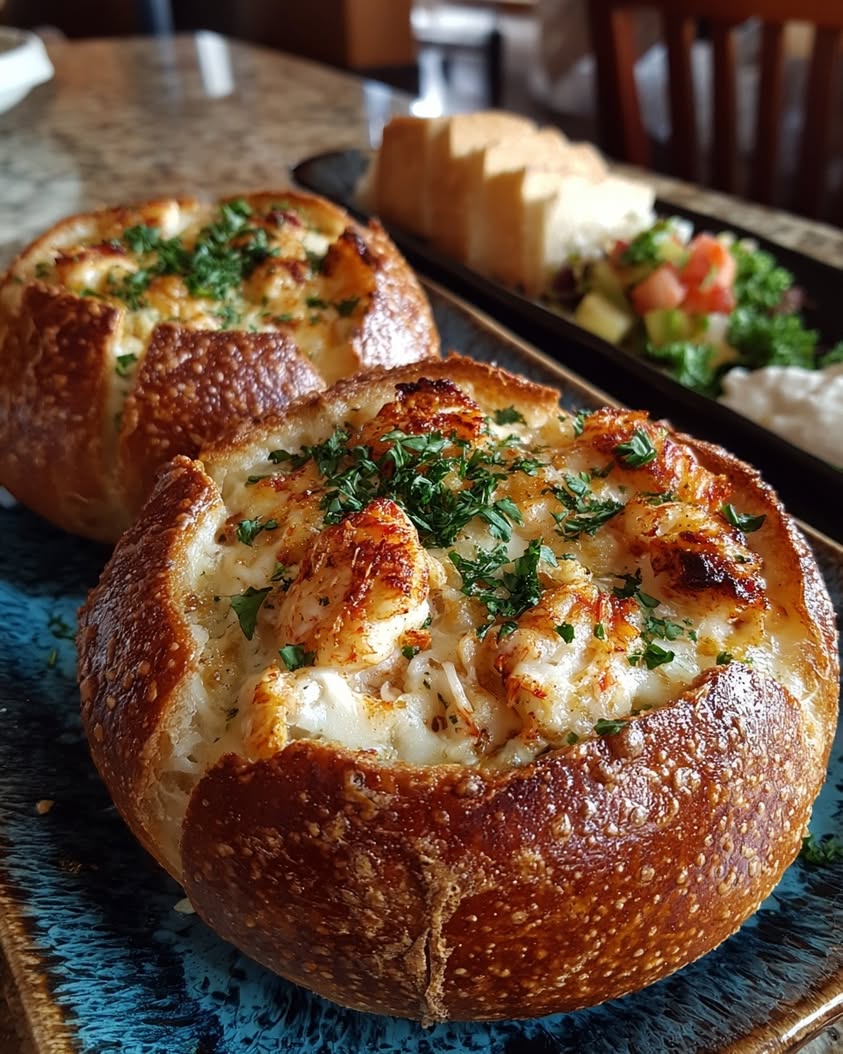
Stuffed Seafood Bread Bowls: An Impressive and Easy Dinner Recipe
Imagine a dinner that combines the comforting warmth of fresh bread with the luxurious flavor of a creamy seafood bake. These Stuffed Seafood Bread Bowls deliver exactly that experience, creating a meal that feels special yet comes together with surprising ease. Essentially, you hollow out a rustic loaf, fill it with a rich mixture of shrimp, crab, and cheese, and bake it until golden and bubbling. The result is a stunning centerpiece dish that promises to wow your family or guests without demanding hours in the kitchen.
The magic of this recipe lies in its brilliant simplicity and incredible flavor payoff. You start with a few key ingredients, primarily shrimp, imitation crab, and a blend of creamy cheeses. Then, you combine them with aromatics like onion and celery before stuffing the mixture back into the bread shell. During baking, the bread soaks up the savory juices from the seafood filling, transforming its interior into a soft, flavor-packed vessel. Consequently, every spoonful offers a perfect harmony of textures, from the crispy bread crust to the tender, cheesy seafood within.
Furthermore, this dish solves the eternal question of what to make for a memorable weeknight dinner or a casual weekend gathering. It looks like you spent all day crafting a masterpiece, but the truth is much simpler. The stuffed seafood bread bowls recipe is designed for maximum impact with minimal fuss. Ultimately, it turns humble ingredients into a celebratory feast, proving that impressive cooking doesn’t have to be complicated.
Quick Recipe Highlights
- Flavor Profile: These bowls offer a rich, savory taste dominated by sweet shrimp and crab, perfectly balanced by the sharpness of cheddar and the creamy tang of cream cheese. Herbs and aromatics like celery and onion add a foundational depth that makes the seafood shine.
- Texture: You get a wonderful contrast between the crispy, toasted exterior of the bread bowl and the luxuriously soft, moist filling inside. The seafood remains tender, while the melted cheese creates a delightful, gooey pull with every bite.
- Aroma: As it bakes, the kitchen fills with the irresistible smell of toasting bread, melted cheese, and sweet, briny seafood. It’s a warm, comforting scent that instantly builds appetite and anticipation.
- Visual Appeal: The golden-brown, crusty bread bowl brimming with creamy, orange-tinged seafood filling is a feast for the eyes. It presents beautifully on a plate, often requiring just a simple green garnish for a restaurant-quality look.
- Skill Level Needed: This is a fantastic recipe for beginner to intermediate cooks. The techniques are straightforward—chopping, sautéing, and mixing—with no advanced skills required. It’s a great introduction to cooking seafood in a forgiving, cheesy sauce.
- Special Equipment: You need very little beyond basic kitchen tools. A sharp knife for prepping vegetables and hollowing the bread, a mixing bowl, a skillet for sautéing, and a baking sheet are essentially all that’s required. No fancy gadgets are necessary.
Recipe Overview
- Difficulty Level: We rate this recipe as easy because it uses common ingredients and simple techniques like chopping, mixing, and baking. There’s no intricate knife work or complex sauce-making. The process is logical and forgiving, making it perfect for a confident beginner or anyone seeking a stress-free cooking project.
- Category: This dish fits beautifully into several categories. It’s a hearty main course, a fantastic appetizer for a crowd if made with smaller rolls, and an outstanding comfort food option. It also works well for special occasion dinners or holiday meals when you want something uniquely satisfying.
- Cuisine: While not tied to one specific tradition, the recipe draws inspiration from American comfort food and coastal seafood bakes. The use of a bread bowl has roots in various cultures, from New England clam chowder servings to French onion soup presentations, creating a delicious fusion concept.
- Cost: This is a moderately priced meal that feels luxurious. Using imitation crab keeps costs down while still delivering great flavor and texture. Shrimp can be adjusted based on budget, and the bread and dairy components are typically affordable. Overall, it delivers high perceived value for a reasonable grocery bill.
- Season: These stuffed seafood bread bowls are truly versatile across seasons. They provide cozy warmth in fall and winter, yet the light seafood filling feels appropriate for spring and summer evenings. They are particularly perfect for holidays or any time you crave something both comforting and celebratory.
- Occasion: This recipe excels for date nights at home, family Sunday dinners, or potluck gatherings where you want to bring a show-stopping dish. It’s also ideal for game day spreads, festive holiday meals like Christmas Eve, or any time you want to turn an ordinary meal into a special event.
Why You’ll Love This Recipe
First and foremost, the taste and texture combination is utterly irresistible. Each bite delivers the sweet, delicate flavor of shrimp and crab, enveloped in a rich, creamy, and cheesy sauce. The bread bowl itself soaks up all the savory juices, becoming soft and flavorful on the inside while staying wonderfully crisp on the outside. This contrast between the crunchy vessel and the luscious filling creates a dining experience that is both comforting and exciting. You get the satisfaction of a casserole with the interactive fun of edible tableware, making every spoonful a delight.
Secondly, the convenience factor is a major win. This entire meal comes together in one pan for the filling and one baking sheet, meaning cleanup is a breeze. The preparation steps are simple and logical, flowing from chopping vegetables to sautéing to mixing. There’s no need to cook separate sides unless you want to, as the bread bowl acts as your starch. For busy cooks, you can even prepare the seafood filling a day ahead, store it in the fridge, and simply stuff and bake the bread when you’re ready. This make-ahead flexibility makes it a reliable choice for entertaining.
Nutritionally, this dish offers a good source of protein from the shrimp and crab. Seafood provides essential nutrients like iodine, selenium, and omega-3 fatty acids, which support heart and brain health. Using a whole grain or artisan bread for the bowl can add fiber and complex carbohydrates. While it is a rich dish, you control the portion size by choosing your bread loaf, and you can easily incorporate vegetables like spinach or peas into the filling for an extra nutrient boost. It’s a balanced meal in a fun, self-contained package.
From a social perspective, these stuffed seafood bread bowls are made for sharing and impressing. Placing a whole, golden-brown, stuffed loaf on the table creates instant conversation and a sense of occasion. It encourages a communal, hands-on dining style where everyone tears off pieces of bread and scoops out the filling. This interactive element makes the meal more memorable and engaging than a standard plated dinner. It’s a guaranteed way to make your guests feel special and well-catered to, elevating a simple dinner into a mini-feast.
Finally, this recipe is remarkably cost-effective and accessible. Imitation crab is an affordable and flavorful stand-in for expensive lump crab meat, making the seafood filling budget-friendly. The other ingredients—bread, cheese, celery, onion—are pantry staples or inexpensive to purchase. You don’t need any special equipment or hard-to-find items. Consequently, this dish allows you to create a restaurant-quality, impressive seafood meal at a fraction of the cost you’d pay dining out. It proves that eating well doesn’t require a lavish budget, just a bit of clever cooking.
Historical Background and Cultural Significance
The concept of serving food in an edible container is ancient and spans countless cultures. Using bread as a bowl, plate, or spoon dates back to medieval times in Europe, where a thick slice of stale bread called a “trencher” served as a plate for meats and sauces. The bread would soak up the juices and be eaten at the end of the meal or given to the poor. This practical tradition laid the groundwork for modern dishes like bread bowl soups. Our stuffed seafood bread bowls recipe is a direct, delicious descendant of this historical practice, transforming utility into gourmet appeal.
In American culinary culture, the bread bowl became famously associated with San Francisco’s sourdough and clam chowder in the 19th century. Fishermen’s wharves needed hearty, portable meals for workers, and serving hot chowder in a hollowed-out sourdough loaf was a perfect solution—no dishwashing required. This innovation married convenience with incredible flavor, as the bread absorbed the soup’s richness. The idea naturally evolved beyond chowder to include various fillings. Our seafood bake filling continues this coastal tradition, updating it with a creamy, cheesy stuffing that honors its working-class, maritime roots.
The recipe itself reflects a beautiful evolution of home cooking and resourcefulness. Combining affordable seafood like shrimp and imitation crab with dairy and vegetables in a bread vessel speaks to a cook’s desire to create something special from accessible ingredients. It’s a dish born from pantry staples and a creative spirit, similar to casseroles or pot pies. Over time, as seafood became more widely available, these types of recipes gained popularity in community cookbooks and family kitchens, celebrated for their ability to feed a crowd impressively without strain.
Regionally, you can find variations of this concept all along coastlines. In the South, you might find a Cajun-spiced shrimp and rice stuffing in a French bread loaf. In New England, a lobster or crab salad filling might be used. Our version is a versatile, crowd-pleasing amalgamation that draws from these influences. It represents a modern, fusion approach to comfort food, where global accessibility of ingredients allows home cooks to blend traditions and create their own signature dishes. Ultimately, it’s a testament to how food traditions adapt and thrive, connecting us to history while satisfying contemporary tastes.
Ingredient Deep Dive
Let’s start with the foundation: the bread bowl. A round, crusty artisan loaf or a large sourdough boule is ideal. The bread needs a sturdy crust to hold its shape during baking and a soft, airy interior that’s easy to hollow out. Historically, bread was the original edible plate. Nutritionally, opting for a whole-grain version adds fiber and nutrients. When selecting your loaf, choose one that feels heavy for its size, indicating a good crumb structure. Avoid pre-sliced bread or loaves with too soft a crust. If needed, a large, round Italian loaf or even a unsliced sandwich bread loaf can work in a pinch.
Shrimp is the star protein, offering sweet, briny flavor and firm texture. Culturally, shrimp have been harvested worldwide for centuries, from Asian coastal villages to Southern American shrimping boats. They are an excellent source of lean protein, selenium, and vitamin B12. For this recipe, medium-sized, peeled, and deveined shrimp save time. You can use fresh or frozen; just ensure they are thoroughly thawed and patted dry. Briefly sautéing them before mixing into the filling is crucial—it cooks them partially and develops flavor, preventing them from becoming rubbery during the final bake.
Imitation crab, or surimi, is a brilliant, cost-effective ingredient with a fascinating history. Developed in Japan centuries ago as a way to preserve fish, it’s made from finely pulverized white fish (like pollock) shaped and flavored to resemble crab. It provides a sweet, seafood flavor and flaky texture that perfectly complements the shrimp. Nutritionally, it’s low in fat and a good protein source. When buying, look for chunks or sticks rather than shreds for better texture. It requires no cooking, simply flaking apart. For a luxury version, you can substitute real lump crab meat, but surimi makes this recipe accessible and delicious year-round.
Cream cheese and cheddar create the luxurious, cohesive sauce. Cream cheese, invented in New York in the 1870s, gives the filling its rich, tangy base and creamy consistency that holds everything together. It’s a good source of vitamin A. Use full-fat brick cream cheese for the best melt and flavor. Sharp cheddar cheese, with its origins in England, introduces a bold, tangy depth and beautiful color. Its excellent melting properties help bind the filling. Grating your own cheddar from a block avoids anti-caking agents and results in a smoother melt. Together, these cheeses create a flavorful glue that makes the stuffing irresistible.
The aromatic vegetables—onion and celery—are the flavor backbone. Onion, cultivated for over 5,000 years, adds savory sweetness and complexity when sautéed. It’s rich in antioxidants and vitamin C. Celery provides a distinct, fresh, slightly bitter note that cuts through the richness of the cheese and seafood. It also adds a pleasant crunch. Finely dicing these vegetables ensures they soften completely and distribute their flavor evenly. Sautéing them until translucent is a non-negotiable step; it mellows their raw bite and builds a foundational flavor layer called “sofrito” in many cuisines, which is essential for a deeply savory filling.
Common Mistakes to Avoid
- Choosing the Wrong Bread: A loaf with too thin or soft a crust will collapse under the weight of the filling and become soggy. Always select a sturdy, crusty artisan bread or sourdough round that can act as a robust edible container.
- Not Drying the Shrimp: Adding wet shrimp to the filling introduces excess moisture, which can make the filling runny and prevent proper baking. Always pat thawed shrimp thoroughly dry with paper towels before sautéing.
- Overcooking the Shrimp Initially: Sautéing the shrimp just until pink is key. They will finish cooking in the oven. If you fully cook them in the pan first, they will become tough and rubbery during the final bake.
- Leaving the Bread Lid Too Thick: When cutting the top off the loaf to create a lid, cut at a slight angle and remove only about a ¾-inch thick layer. A lid that’s too thick won’t crisp properly and will be difficult to eat.
- Scooping Out Too Much Bread: You want to remove enough soft bread to create a generous cavity, but leave a ½-inch to ¾-inch wall of bread around the sides and bottom. This ensures the bowl holds its shape and doesn’t leak.
- Not Seasoning in Layers: Season the sautéed vegetables, then season the seafood mixture. Cheese can be salty, so taste before adding the final amount of salt. Layering seasoning builds depth of flavor throughout the filling.
- Overstuffing the Bowl: Piling the filling above the rim of the bread bowl looks tempting, but it can spill over during baking and make a mess. Fill it just to the top, as the filling will settle slightly as it heats.
- Skipping the Final Bake with the Lid On: The initial bake with the lid on is crucial. It steams the interior, heating the filling thoroughly and softening the bread walls. Removing the lid for the final bake then crisps everything up perfectly.
- Using Pre-Shredded Cheese Exclusively: Pre-shredded cheese contains additives to prevent clumping, which can hinder smooth melting. For the creamiest texture, grate a block of cheddar cheese yourself.
- Not Letting it Rest Before Serving: Pulling the baked bowl from the oven and immediately cutting into it can cause the hot filling to gush out. Let it rest for 5-10 minutes; this allows the filling to set slightly for cleaner serving.
Essential Techniques
Hollowing the bread bowl is your first critical technique. Use a serrated bread knife to slice off the top at a slight angle, creating a lid. Then, carefully insert the knife point about ¾-inch from the crust and cut around the perimeter. Use your fingers to pull out the soft bread chunks, leaving a sturdy wall. The goal is a uniform thickness so the bowl bakes evenly. A common pitfall is cutting too close to the bottom and creating a leak. For success, work slowly and use a gentle sawing motion with the knife, keeping your free hand on top of the loaf for stability.
Sautéing the vegetables and shrimp properly builds your flavor base. Start by heating oil or butter in a skillet over medium heat. Add the diced onion and celery, cooking until they become soft and translucent, which usually takes 5-7 minutes. This process, called sweating, releases their natural sugars and develops sweetness without browning. Then, add the shrimp and cook just until they turn pink and opaque, about 2-3 minutes per side. The visual cue for success is shrimp that are pink and curled into a “C” shape, not an “O” shape, which indicates overcooking. This step ensures your filling has deep, savory notes and tender shrimp.
Combining the filling correctly ensures cohesion and even flavor. In a large bowl, mix the sautéed shrimp and vegetables with the flaked imitation crab. Add the softened cream cheese and most of the shredded cheddar while the shrimp mixture is still warm—this helps the cheeses begin to melt and integrate smoothly. Season well and stir until everything is evenly distributed. The mixture should be chunky but hold together when pressed. If it seems dry, a tablespoon of mayonnaise or a splash of cream can help. This technique is important because a well-integrated filling bakes into a uniform, creamy mass rather than separating into distinct layers.
The two-stage baking method is the secret to perfect texture. First, place the stuffed bowl (with its lid on) on a baking sheet and bake. This initial phase uses trapped steam to heat the filling through and soften the interior bread walls without drying them out. Then, you remove the lid and continue baking. This second stage allows excess moisture to evaporate, crisping up the top of the filling and toasting the bread edges and lid. The visual cue for doneness is a golden-brown bread crust and bubbly, lightly browned filling. Mastering this bake ensures a contrast between a crisp exterior and a tender, hot interior.
Pro Tips for Perfect Stuffed Seafood Bread Bowls
Save the bread you hollow out! Tear those soft chunks into pieces, toss them with a little melted butter and garlic powder, and toast them on the baking sheet during the last 10 minutes of baking. You’ll have delicious homemade croutons to serve alongside or on top of the finished dish.
For an extra flavor boost, sauté your vegetables in a tablespoon of seafood seasoning like Old Bay along with the butter or oil. This infuses the entire filling with that classic, aromatic coastal flavor from the very beginning.
Let the cream cheese soften completely at room temperature before mixing. This is non-negotiable for a smooth filling. Cold cream cheese will remain lumpy and won’t blend properly with the other ingredients, creating an uneven texture.
Consider adding a “flavor bomb” ingredient. A tablespoon of Worcestershire sauce, a squeeze of fresh lemon juice, or a teaspoon of Dijon mustard mixed into the filling can add a wonderful layer of complexity that cuts through the richness.
If your bread bowl seems unstable on the baking sheet, create a “nest” with crumpled aluminum foil. Place the foil ring on the sheet and set the bowl inside it; this prevents any rolling or tipping during handling and baking.
For a gorgeous, glossy finish, brush the outside of the bread bowl and the cut side of the lid with melted garlic butter or olive oil before baking. This promotes an even, deep golden-brown color and adds fantastic flavor to every bit of crust.
Don’t discard the bread lid! After the final bake, you can place it back on top for a dramatic presentation at the table, or break it into pieces for dipping into the creamy seafood filling.
Check for doneness with an instant-read thermometer. Insert it into the center of the seafood filling; it should read at least 165°F (74°C). This guarantees that everything is safely heated through without over-baking the bread.
Variations and Adaptations
For regional twists, consider a Cajun variation by adding andouille sausage, bell peppers, and a heavy dose of Cajun seasoning to the filling. A New England style could use more cream, fresh parsley, and a focus on lobster or real crab. A Mediterranean version might include chopped artichoke hearts, sun-dried tomatoes, spinach, and feta cheese instead of cheddar, finished with a sprinkle of oregano.
Seasonal adaptations are easy. In summer, add fresh sweet corn kernels and chopped basil. For fall, incorporate diced roasted butternut squash and a pinch of sage. In spring, peas and asparagus tips bring a fresh, green vibrancy. These additions not only change the flavor profile but also make the dish feel perfectly suited to the time of year.
Dietary modifications are straightforward. For gluten-free, use a certified gluten-free round loaf or even large portobello mushroom caps as the vessel. For dairy-free, substitute the cream cheese with a vegan cream cheese alternative and use a dairy-free cheddar shred. To lower carbs, skip the bread bowl altogether and bake the filling in individual ramekins or bell pepper halves.
Flavor variations can take this recipe in countless directions. Add a spicy kick with diced jalapeños or a dash of hot sauce. For an umami-rich version, stir in sautéed mushrooms. A “seafood alfredo” style can be achieved by adding a half-cup of grated Parmesan to the cheese mix. Experiment with different herb blends like dill for a Scandinavian feel or tarragon for a French touch.
Texture modifications can cater to personal preference. For more crunch, add water chestnuts or finely chopped celery leaves. For a smoother, more dip-like filling, pulse the mixture a few times in a food processor before stuffing. To include more vegetables for bulk and nutrition, stir in a cup of cooked, chopped spinach that has been thoroughly squeezed dry.
Presentation alternatives offer fun ways to serve. Instead of one large bowl, use individual sourdough rolls or large bread rolls to make personal portions—perfect for parties. You can also deconstruct the dish: bake the filling in a casserole dish and serve it with toasted bread slices or puff pastry squares on the side for dipping and scooping.
Serving and Presentation Guide
Plating is simple yet impactful. Place the whole, baked stuffed seafood bread bowl on a large wooden cutting board or a sturdy, decorative platter. Surround it with lemon wedges and a small bunch of fresh parsley or dill for a pop of color. Provide a sharp serrated knife for cutting and a large serving spoon for scooping. This rustic, family-style presentation invites everyone to dig in and creates a focal point on your dinner table.
Garnishing elevates the visual appeal right before serving. A final sprinkle of chopped fresh chives, green onions, or parsley over the hot, bubbly filling adds a fresh contrast. A light dusting of paprika or smoked paprika not only adds color but also a hint of warmth. For a luxurious touch, a few reserved whole shrimp or a claw of crab meat placed on top signals the quality within.
Traditional accompaniments keep the meal focused. A simple, crisp green salad with a lemon vinaigrette balances the richness of the cheesy seafood. For a heartier meal, a side of steamed seasonal vegetables like asparagus or green beans works beautifully. Since the bread bowl is your starch, you typically don’t need additional carbohydrates, keeping the meal well-balanced and satisfying.
Modern serving suggestions can streamline the experience. For a dinner party, consider pre-portioning: cut the baked bowl into wedges in the kitchen and plate each wedge individually with a small side salad. Alternatively, serve the filling as a dip in a bread bowl for a casual gathering, with extra bread cubes, crackers, and vegetable sticks for dipping, transforming it into a stunning appetizer.
Temperature is crucial. Serve the stuffed seafood bread bowls immediately after the brief resting period. The filling should be piping hot, and the bread should still be crisp. If it sits too long, the steam from the filling will soften the bread crust. To keep it warm for a few extra minutes, you can tent the whole platter loosely with aluminum foil, but avoid sealing it tightly, as that will trap steam.
Portion control is built-in but flexible. One large loaf typically serves four as a main course. For lighter appetites or as part of a larger spread, it can serve six. When using individual rolls, plan for one or two per person depending on their size and the rest of the menu. The beauty of this dish is that it’s easy to scale and visually indicates how much is available, preventing over-serving.
Wine and Beverage Pairing
For wine pairings, you want something that complements the richness and cuts through the cheese while harmonizing with the sweet seafood. A crisp, unoaked Chardonnay is a classic choice—its bright acidity cleanses the palate. Alternatively, a Pinot Gris or a dry Riesling offers fruity notes that contrast beautifully with the savory filling. If you prefer red, opt for a light-bodied, low-tannin red like a Pinot Noir, which won’t overpower the delicate shrimp and crab flavors.
Non-alcoholic alternatives should provide a refreshing counterpoint. Sparkling water with a twist of lemon or lime is always perfect. For something more special, a virgin mojito with mint and lime offers a herbal, citrusy zing. Iced herbal teas, like lemongrass or ginger, can also work wonderfully, as their subtle spices and aromatics complement the seafood without adding sweetness that might clash with the cheese.
While not a traditional pairing for this dish, a light roast coffee or a mild black tea could work as an after-dinner companion if you’ve served the bread bowls for a lunch or brunch. The key is to avoid anything too bitter or strong that would compete with the lingering savory and creamy notes of the meal. A cup of Earl Grey with its citrusy bergamot could actually be a surprising and pleasant finish.
Temperature considerations are key for beverages. White wines and sparkling non-alcoholic drinks should be served well-chilled, around 45-50°F. This cold temperature enhances their refreshing quality against the warm, rich food. Red wines should be served slightly cool, at cellar temperature (around 55°F), rather than room temperature, to keep them lively.
Serving suggestions include setting up a small beverage station if you’re entertaining. Offer a choice of a white wine and a non-alcoholic sparkler in ice buckets. Provide clear glassware to show off the colors of the drinks. Placing lemon and lime wedges nearby allows guests to customize their water or tea. This thoughtful touch ensures everyone has a perfect drink to accompany their impressive stuffed seafood bread bowl.
Storage and Shelf Life
Storage of leftovers requires careful handling. First, let the stuffed bread bowl cool completely. Then, carefully scoop all the seafood filling out of the bread shell and place it in an airtight container. Store the bread shell separately in a bag or wrapped in foil. The filling will keep in the refrigerator for up to 3 days. Storing them together will cause the bread to become irreversibly soggy from the moisture in the filling.
Temperature is critical for food safety. Both the filling and the bread should be refrigerated within two hours of cooking. The ideal refrigerator temperature is at or below 40°F (4°C). Do not leave the baked dish at room temperature for extended periods, as the dairy and seafood mixture is susceptible to bacterial growth.
Container recommendations are simple. Use a shallow, airtight container for the filling to allow it to cool quickly and evenly. Glass containers are ideal as they don’t absorb odors. For the bread shell, a paper bag or loosely wrapped aluminum foil will help retain some crispness better than an airtight plastic bag, which can trap moisture and make it chewy.
Signs of spoilage are important to recognize. Discard the filling if it develops an off or sour smell, if mold appears, or if the texture becomes slimy. The bread should be discarded if it shows any signs of mold (fuzzy spots) or if it develops an unusual odor. When in doubt, it’s safest to throw it out.
Reheating instructions are specific. Reheat the seafood filling in a saucepan over low heat, stirring frequently, or in the microwave in 30-second intervals, stirring between each. You can re-crisp the bread shell in a 350°F oven for 5-10 minutes. For best results, reheat the filling, then spoon it back into the warm bread shell just before serving. Avoid microwaving the assembled bowl, as it will make the bread very soggy.
Freezing is possible but with caveats. The seafood filling can be frozen in an airtight container for up to 2 months. Thaw overnight in the refrigerator before reheating. Note that the texture of the cream cheese may become slightly grainy upon thawing, but the flavor will still be good. Do not freeze the bread bowl, as it will become tough and stale-tasting. It’s best to freeze only the filling and use a fresh loaf when ready to serve again.
Make Ahead Strategies
You can prep the entire filling 1-2 days in advance. Simply follow the recipe through the step of mixing all filling ingredients together. Instead of stuffing the bread, transfer the mixture to an airtight container and refrigerate. This allows the flavors to meld beautifully. When ready to cook, let the filling sit at room temperature for 20-30 minutes to take the chill off, then stuff your fresh bread loaf and bake as directed. This is the ultimate time-saver for entertaining.
Storage between steps is straightforward. If prepping vegetables ahead, store diced onion and celery together in a container in the fridge. Cooked and cooled shrimp can be stored separately. The cream cheese and shredded cheese can be pre-measured. Keeping components separate until the final assembly ensures the best texture, as the vegetables won’t weep into the cheese and the shrimp won’t continue to cook in the residual heat.
The quality impact of make-ahead steps is generally positive. The filling often tastes better after the flavors have had time to marry in the refrigerator. The only potential downside is that the filling may release a little liquid as it sits; simply drain any excess or stir it back in before stuffing. The bread, however, should always be hollowed out on the day of baking to ensure the crust is fresh and sturdy.
Assembly tips for a make-ahead plan are simple. Have your hollowed bread bowl ready on the baking sheet. Fill it with the cold filling just before you plan to bake it. You may need to add a few extra minutes to the initial covered baking time if the filling is going into the oven cold, as it will take longer to heat through to the center. Use a thermometer to check for the 165°F internal temperature.
Reheating guidelines for a fully pre-assembled but unbaked bowl are not recommended. Assembling the raw filling into the bread and then refrigerating the whole thing for hours will cause the bread to become soggy from the moisture in the cold filling. Therefore, the key strategy is to keep the filling and bread separate until the final bake.
Fresh element additions can be saved for the last minute. If using delicate fresh herbs like parsley or chives, stir half into the pre-made filling and reserve the other half for garnishing after baking. A squeeze of fresh lemon juice is also best added right after the bowl comes out of the oven to preserve its bright, fresh flavor. This ensures the finished dish has layers of both developed and immediate freshness.
Scaling Instructions
Halving the recipe is perfect for a couple. Use a smaller bread loaf, like a mini boule or a large ciabatta roll. Simply divide all ingredient quantities by two. The cooking times may be slightly reduced—start checking for doneness about 5 minutes earlier than the original recipe suggests. The same techniques apply; just ensure your smaller bread bowl has walls thick enough to hold the reduced amount of filling without collapsing.
Doubling or tripling the recipe is excellent for a party. Multiply all ingredients accordingly. You will need multiple bread loaves. It’s easier to manage if you bake them on separate baking sheets or in batches to ensure even air circulation and browning. The oven temperature remains the same, but you may need to rotate the sheets halfway through baking. Mix the filling in a very large bowl or divide the mixing into two batches to ensure even seasoning distribution.
Equipment adjustments are necessary when scaling up. For a double batch, you’ll need a larger skillet or may need to sauté the vegetables and shrimp in two batches to avoid overcrowding, which steams them instead of sautéing. For a triple batch, consider using a large Dutch oven or stockpot to mix the final filling. Ensure you have enough baking sheet space and oven racks to accommodate all the bread bowls without them touching each other.
Timing modifications are minimal but important. The prep time will increase linearly as you chop more vegetables and shrimp. The actual bake time for the stuffed bowls, however, should remain roughly the same per loaf, as each is an individual unit. The key is to ensure your oven is fully preheated before the first batch goes in, and to avoid opening the door frequently, which causes temperature fluctuations.
Storage considerations change with scale. If making multiple bowls for later, it’s best to freeze the unbaked filling in portion-sized containers. Then, thaw and stuff fresh bread on the day you plan to serve. Baking multiple bowls ahead and reheating them is less successful, as the bread texture suffers. For a large event, consider a mix-and-match approach: bake some fresh and have the filling prepped for a second wave if needed.
Nutritional Deep Dive
This dish provides a balanced macronutrient profile. The shrimp and imitation crab offer high-quality, lean protein essential for muscle repair and satiety. The cheese and any added butter contribute fats, which aid in nutrient absorption and provide sustained energy. The bread bowl is the primary source of carbohydrates, offering fuel for the body. Depending on the specific ingredients used, a serving can provide a good mix of all three macros, making it a satisfying and complete meal that keeps you full for hours.
Micronutrient analysis reveals several benefits. Seafood is rich in selenium, a powerful antioxidant, and iodine, crucial for thyroid function. Shrimp provide astaxanthin, another antioxidant. Cheese offers calcium and vitamin A for bone and eye health. Onions and celery provide vitamin C, vitamin K, and various phytonutrients. Using a whole-grain bread adds B vitamins, iron, and fiber. While it is a rich dish, it delivers a spectrum of vitamins and minerals that support overall health.
Specific health benefits are linked to the key ingredients. The omega-3 fatty acids in seafood support heart and brain health. The protein promotes muscle{“success”:true,”message”:”Recipe created successfully”,”post_id”:7730,”tasty_recipe_id”:7730,”shortcode”:” Print
Stuffed Seafood Bread Bowls
Description
A savory and indulgent dish featuring hollowed-out bread bowls filled with a creamy seafood mixture, baked until golden and bubbly.
Ingredients
For the Crust:
- 4 large round sourdough bread bowls
- 1 lb mixed seafood (shrimp, scallops, crab meat)
- 2 tbsp butter
- 1 small onion, diced
- 2 cloves garlic, minced
- 1 cup heavy cream
- 1/2 cup grated Parmesan cheese
- 1/4 cup chopped fresh parsley
- 1 tsp paprika
- Salt and black pepper to taste
Instructions
1. Prepare the Crust:
- Preheat oven to 375°F (190°C). Slice off the top of each bread bowl and hollow out the center, leaving a 1-inch thick shell.
- In a large skillet, melt butter over medium heat. Add onion and garlic, sauté until softened, about 3-4 minutes.
- Add mixed seafood to the skillet and cook until just opaque, about 5-6 minutes. Stir in heavy cream, Parmesan, parsley, paprika, salt, and pepper. Simmer for 5 minutes until slightly thickened.
- Spoon the seafood mixture evenly into the hollowed bread bowls. Place bowls on a baking sheet and bake for 15-20 minutes, until tops are golden and bubbly.
- Serve immediately, garnished with extra parsley if desired.
Notes
You can customize the seasonings to taste.

I’m Billy, a classically trained culinary school graduate from The Culinary Institute of America with over 12 years in the restaurant industry and over 19 years of cooking experience.