
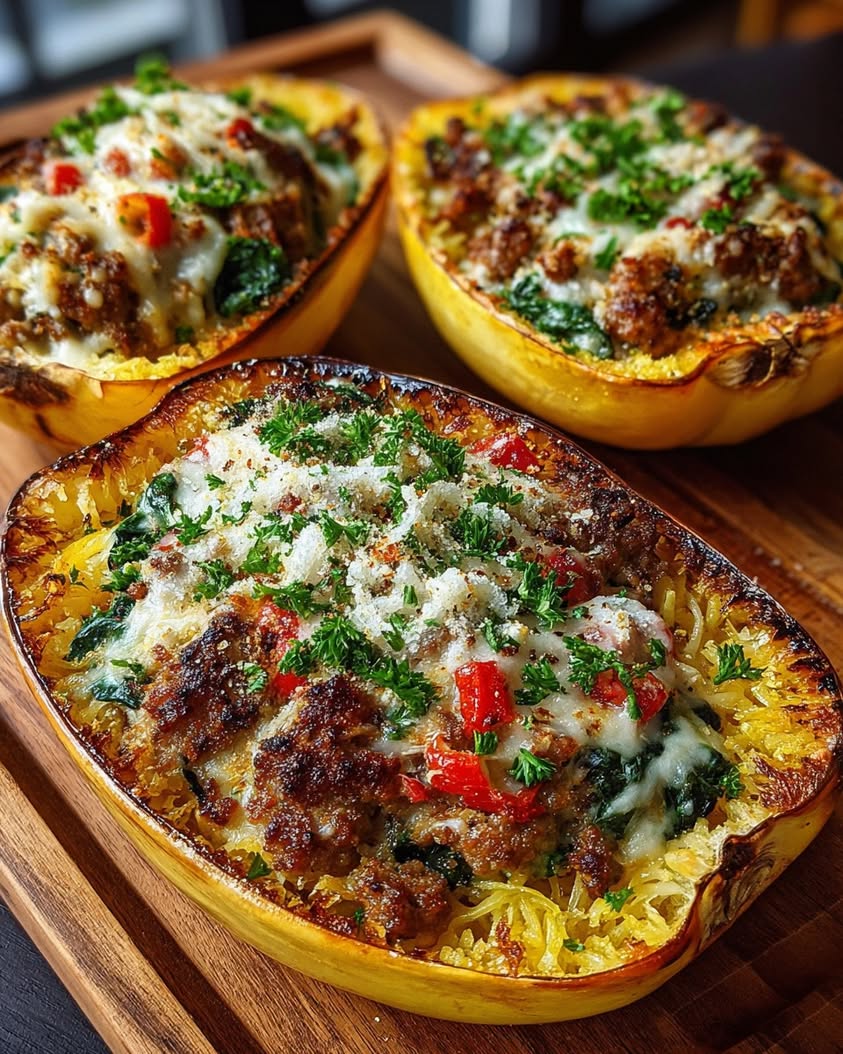
Italian Sausage Stuffed Spaghetti Squash Recipe: A Flavor-Packed Fall Dinner
Welcome to your new favorite autumn comfort food. This Italian Sausage Stuffed Spaghetti Squash Recipe masterfully combines savory, sweet, and creamy elements into a stunning, edible bowl. Moreover, it transforms a humble vegetable into a complete, satisfying meal that feels both indulgent and wholesome. The natural spaghetti-like strands of the squash cradle a hearty filling of seasoned sausage, wilted spinach, sweet apples, and melted pepper jack cheese. Consequently, every bite delivers a symphony of textures and flavors that will have everyone at the table asking for seconds.
This dish is a perfect centerpiece for a cozy weeknight dinner or an impressive offering for casual entertaining. Importantly, it is naturally gluten-free and can be easily adapted for various dietary preferences. The beauty of this Italian Sausage Stuffed Spaghetti Squash Recipe lies in its versatility and straightforward preparation. Ultimately, you end up with a beautiful, self-contained presentation that is as pleasing to the eye as it is to the palate.
Quick Recipe Highlights
- Flavor Profile: This recipe features a robust savory base from the Italian sausage, beautifully balanced by the subtle sweetness of sautéed apples. Additionally, the pepper jack cheese adds a creamy, slightly spicy kick that ties all the elements together.
- Texture: You get a wonderful contrast between the tender, slightly al dente strands of roasted spaghetti squash and the juicy, crumbled sausage. Meanwhile, the melted cheese creates a luscious, gooey binding for the filling.
- Aroma: As it roasts and bakes, the kitchen fills with the earthy scent of squash, the fragrant herbs from the sausage, and the sweet, caramelizing notes of apple. It is the quintessential smell of a fall feast.
- Visual Appeal: The golden-halved squash boats brimming with a colorful, cheesy filling make for a stunning presentation straight from the oven. The vibrant green spinach and flecks of red apple skin add beautiful pops of color.
- Skill Level Needed: This is an accessible recipe for cooks of all levels. Basic knife skills for halving the squash and simple sautéing techniques are the primary requirements. Therefore, it is very approachable.
- Special Equipment: You only need a sturdy chef’s knife, a large baking sheet, and a skillet. A spoon or fork for shredding the squash is helpful, but no specialized kitchen gadgets are necessary.
Recipe Overview
- Difficulty Level: We rate this Italian Sausage Stuffed Spaghetti Squash Recipe as easy. The steps are sequential and simple: roast, sauté, mix, and bake. The most challenging part is safely cutting the raw squash, which can be managed with a sharp knife and caution.
- Category: This dish fits perfectly into the main course category. It is a substantial, protein-packed meal that requires no side dishes, though a simple green salad complements it wonderfully.
- Cuisine: While spaghetti squash is a New World ingredient, the flavor profile is inspired by Italian-American cuisine. The use of fennel-seasoned sausage, garlic, and spinach creates a familiar, comforting taste.
- Cost: This is a budget-friendly meal, especially during the fall squash season. Spaghetti squash, apples, and spinach are typically affordable. The Italian sausage and cheese are the main cost drivers, but they provide high flavor value.
- Season: This recipe is ideal for autumn and winter when spaghetti squash is at its peak. The hearty, warming qualities of the dish are perfect for cooler weather. However, you can find squash year-round in most supermarkets.
- Occasion: It is fantastic for a family weeknight dinner, a healthy meal prep option, or a rustic dish for a casual dinner party. It is impressive yet completely unfussy.
Why You’ll Love This Italian Sausage Stuffed Spaghetti Squash Recipe
First and foremost, the taste is utterly irresistible. The savory depth of the Italian sausage, infused with fennel and garlic, forms a perfect foundation. Then, the addition of sweet, tender apples introduces a surprising and delightful contrast that cuts through the richness. Furthermore, the pepper jack cheese melts into every nook, providing a creamy, slightly spicy glue that unites the filling. Finally, the roasted spaghetti squash itself offers a mild, slightly nutty flavor that soaks up all the delicious juices. Every component works in harmony to create a complex and deeply satisfying eating experience.
From a convenience standpoint, this Italian Sausage Stuffed Spaghetti Squash Recipe is a winner. It is a complete meal in a single package, which means fewer dishes to wash. The preparation is largely hands-off after the initial chopping and sautéing. While the squash roasts, you can quickly prepare the flavorful filling. Additionally, the recipe scales easily for a crowd or can be halved for a smaller household. It also reheats beautifully, making it a stellar option for weekly meal prep.
Nutritionally, this dish is a powerhouse. Spaghetti squash is low in calories and carbohydrates compared to traditional pasta, yet it is high in fiber and vitamins like C and B6. Spinach adds a massive boost of iron, vitamin K, and antioxidants. The Italian sausage provides high-quality protein to keep you full and satisfied. By using this vegetable as the base, you create a meal that feels decadent while being packed with nutrients. It is a fantastic way to enjoy the comfort of a stuffed pasta dish with a healthier vegetable twist.
For entertaining, this recipe offers tremendous social value. It presents beautifully, creating an instant “wow” factor when you bring it to the table. Guests can serve themselves directly from the squash halves, which is fun and interactive. The recipe is naturally gluten-free, so it can accommodate many dietary needs without special preparation. It is a conversation starter and a guaranteed crowd-pleaser that feels special without requiring chef-level skills.
Finally, this Italian Sausage Stuffed Spaghetti Squash Recipe is cost-effective and accessible. The ingredients are common and easy to find in any standard grocery store. During the fall harvest, squash and apples are at their most affordable and flavorful. You can also customize the filling based on what you have on hand, reducing food waste. It delivers restaurant-quality flavor and presentation for a fraction of the cost of dining out.
Historical Background and Cultural Significance
The story of spaghetti squash is a fascinating tale of New World agriculture. Native to Central America and parts of North America, spaghetti squash was cultivated by indigenous peoples long before European contact. Its unique property of separating into long, pasta-like strands when cooked was a culinary novelty. After colonization, the squash spread globally, but it remained a relatively niche vegetable for centuries. Its rise to prominence as a pasta alternative is a very modern phenomenon, coinciding with late-20th-century diet trends focused on low-carbohydrate eating.
Culturally, the act of stuffing vegetables is a ancient cooking technique born from practicality and resourcefulness. Across Mediterranean, Middle Eastern, and European cuisines, hollowed-out vegetables like peppers, tomatoes, zucchini, and eggplants have been filled with grains, meats, and herbs for millennia. This Italian Sausage Stuffed Spaghetti Squash Recipe is a direct descendant of that tradition, applying Old World stuffing concepts to a New World vegetable. It represents a beautiful fusion of culinary histories.
The recipe itself has evolved significantly from its likely origins. Early versions may have simply used the squash as a vessel for leftovers or basic stuffings. The modern iteration, featuring specific ingredients like Italian sausage and pepper jack, reflects contemporary tastes and the global pantry. The inclusion of apple is a particularly clever innovation, adding a sweet note that complements the sausage’s savoriness in a way that mirrors classic pork and apple pairings from Northern European cuisine.
Regional variations of stuffed squash are endless. In Italy, one might find a similar dish using ricotta, herbs, and ground meat. In the American South, a stuffed squash might include cornbread and spicy sausage. This specific recipe sits at a delightful crossroads, blending Italian-American flavor profiles with a health-conscious, gluten-free approach. It is a testament to how recipes continuously adapt, borrowing from different traditions to create something new and delicious for today’s tables.
Ingredient Deep Dive
Let us start with the star: spaghetti squash. This winter squash is a cultivar of Cucurbita pepo. When cooked, its flesh miraculously separates into long, crisp-tender strands resembling spaghetti pasta. Nutritionally, it is a low-calorie, vitamin-rich alternative to grains, providing fiber, vitamin C, and manganese. Select a squash that feels heavy for its size with a firm, pale yellow rind free of soft spots. Store it in a cool, dark place for up to a month. While spaghetti squash is unique, acorn squash or even large zucchini boats can work as a vessel in a pinch.
Italian sausage is the flavor engine of this filling. Traditionally, it contains pork, fennel seed, garlic, and red pepper flakes. The fennel is its signature, providing a distinctive licorice-like aroma. It offers substantial protein and fat, which carry flavor and create a satisfying mouthfeel. For the best results, choose a good-quality sausage with a high meat content. You can use sweet or hot variety based on your spice preference. For a leaner option, try chicken or turkey Italian sausage. If you cannot find pre-seasoned sausage, you can season ground pork with fennel, garlic powder, and crushed red pepper.
Fresh spinach brings color, nutrients, and a mild earthy flavor. It wilts dramatically, allowing you to incorporate a large volume into the filling. Spinach is loaded with iron, calcium, and vitamins A and K. Look for vibrant, crisp leaves without signs of yellowing or sliminess. Pre-washed baby spinach saves significant prep time. You can substitute other hearty greens like chopped kale or Swiss chard, though they may require a slightly longer sautéing time to tenderize.
The apple is the secret weapon for balance. It adds a subtle, natural sweetness that contrasts beautifully with the savory sausage. Use a firm, sweet-tart variety like Honeycrisp, Fuji, or Pink Lady that will hold its shape when cooked. Apples provide fiber and vitamin C. They should feel firm and smell fresh. Store them in the refrigerator. If you do not have apples, a diced pear or even a handful of dried cranberries added at the end can provide a similar sweet contrast.
Pepper Jack cheese delivers creaminess and a gentle kick. It is a Monterey Jack cheese flavored with sweet peppers and spicy jalapeños. It melts beautifully, creating a luscious sauce within the filling. For a milder dish, use regular Monterey Jack or mozzarella. For more heat, try a habanero Jack. If you need a dairy-free version, a melty vegan cheese alternative or a sprinkle of nutritional yeast can provide a similar effect, though the texture will vary.
Common Mistakes to Avoid
- Undercooking the Squash: If the squash is not tender before stuffing, it will be difficult to shred and unpleasant to eat. Always roast until a fork easily pierces the flesh. The strands should separate cleanly.
- Overcooking the Filling: Sauté the sausage and apples just until the sausage is cooked through and the apples are tender-crisp. Overcooking can make the apples mushy and the sausage dry before the final bake.
- Not Seasoning the Squash: Before roasting, always drizzle the squash halves with oil and season generously with salt and pepper. This simple step seasons the vegetable itself, not just the filling.
- Skipping the Pre-Roast: Trying to cook the raw squash and filling simultaneously from a cold start will result in either undercooked squash or burnt filling. Roasting the squash first is non-negotiable for perfect texture.
- Using a Dull Knife: Cutting a raw spaghetti squash requires a sharp, heavy chef’s knife for safety and control. A dull knife can slip, causing injury. Microwave the whole squash for 2-3 minutes to slightly soften the skin first.
- Overstuffing the Boats: Piling the filling too high can cause it to spill over and burn on the baking sheet. Fill the boats generously, but keep the filling level just at or below the rim.
- Forgetting to Drain Sausage Grease: After browning the sausage, drain excess fat if there is more than a tablespoon. Otherwise, the filling can become greasy and the cheese may not bind properly.
- Using Pre-Shredded Cheese: Pre-shredded cheese contains anti-caking agents that can inhibit smooth melting. For the creamiest, most cohesive filling, shred a block of pepper Jack cheese yourself.
Essential Techniques
Halving the squash safely is the first critical technique. Place the squash on a stable cutting board. Using a sharp chef’s knife, carefully pierce the skin and rock the knife through from stem to blossom end. Apply steady, firm pressure. For extra safety, you can place a damp kitchen towel under the board to prevent slipping. Alternatively, microwave the whole squash for a few minutes to soften the skin slightly, making cutting easier.
Roasting the squash properly is key to its texture. Place the halves cut-side down on a parchment-lined baking sheet. This method allows the squash to steam in its own moisture, resulting in tender, perfectly separated strands. Roast in a hot oven (around 400°F) until the flesh is completely tender when pierced with a fork. The edges may caramelize slightly, which adds flavor. Let it cool just enough to handle before shredding.
Shredding the squash correctly maximizes its “pasta-like” quality. After roasting and cooling slightly, use a fork to gently scrape the flesh from the skin in long, vertical strokes. The strands should pull away easily. Be careful not to scrape too deeply and puncture the skin, as you need the shell to remain intact to hold the filling. Transfer the shredded strands to a bowl to mix with the filling.
Sautéing the filling builds layers of flavor. Start by browning the sausage, breaking it into crumbles. Then, add the diced apple to sauté in the rendered sausage fat, which infuses it with savory flavor. Finally, wilt the spinach just until it collapses. This sequential cooking ensures each ingredient is perfectly cooked. The entire process should happen in one skillet for efficiency and flavor integration.
Pro Tips for Perfect Italian Sausage Stuffed Spaghetti Squash
First, score the cut sides of the squash before roasting. Make a few shallow crosshatch cuts in the flesh. This allows the oil and seasoning to penetrate more deeply and can make shredding even easier later.
Second, reserve a handful of cheese for the top. After filling the boats, sprinkle a little extra shredded pepper Jack on top. This creates a beautifully browned, cheesy crust that is visually appealing and adds a textural contrast.
Third, add a splash of liquid. When mixing the filling, consider adding a tablespoon of broth, white wine, or even apple cider. This adds moisture and prevents the final bake from drying out, especially if your sausage is lean.
Fourth, use an ice cream scoop to remove the seeds. After halving the squash, a standard ice cream scoop is the perfect tool for quickly and cleanly scraping out the seed cavity.
Fifth, let the stuffed squash rest for 5 minutes after baking. This allows the filling to set slightly, making it easier to serve neatly from the baking sheet.
Sixth, customize the herbs. While the sausage is seasoned, adding a teaspoon of fresh chopped rosemary or sage to the sautéing apples can elevate the autumnal flavor profile even further.
Variations and Adaptations
For regional variations, consider a Mexican-inspired twist. Use chorizo instead of Italian sausage, black beans, corn, and top with Monterey Jack and cilantro. Alternatively, a Greek version could feature ground lamb, oregano, spinach, feta cheese, and kalamata olives. The basic method of the Italian Sausage Stuffed Spaghetti Squash Recipe is a perfect template for global flavors.
Seasonal adaptations are simple. In spring, use asparagus tips and fresh peas in the filling. For summer, incorporate roasted corn, zucchini, and fresh basil. The squash itself is available year-round, making this a versatile dish for any calendar month.
Dietary modifications are straightforward. For a keto or ultra-low-carb version, simply reduce or omit the apple. For a dairy-free version, use a plant-based cheese that melts well. To make it vegetarian, substitute the sausage with a plant-based ground “meat” or a mix of lentils and walnuts seasoned with fennel and garlic.
Flavor variations can change the profile entirely. Try using breakfast sausage and sharp cheddar for a brunch-for-dinner feel. Incorporate sun-dried tomatoes and basil for a more Mediterranean note. A dash of curry powder in the filling can take it in a completely different, warming direction.
Serving and Presentation Guide
Plating is effortless with this dish. Serve each person a whole half squash boat on a dinner plate for a dramatic, rustic presentation. Alternatively, for a more refined look, you can carefully transfer the filling to a serving platter, frame it with the roasted squash shells, and garnish generously. Use a wide spatula to support the squash bottom when transferring to a plate.
Garnishing adds the final touch. A sprinkle of fresh chopped parsley or chives adds color and freshness. A few red pepper flakes or a drizzle of high-quality olive oil just before serving enhances both flavor and appearance. For a touch of richness, a dollop of sour cream or Greek yogurt on the side is lovely.
Traditional accompaniments are simple. A crisp green salad with a tangy vinaigrette balances the richness of the squash. Crusty bread is perfect for soaking up any delicious bits left on the plate. For a heartier meal, roasted Brussels sprouts or green beans make excellent side dishes.
Wine and Beverage Pairing
Wine pairings should complement the savory sausage and creamy cheese. A medium-bodied red wine like Chianti or Sangiovese works beautifully, as their bright acidity cuts through the fat. Alternatively, a rich, oaky Chardonnay can match the creaminess of the cheese and the sweetness of the squash. For a lighter option, a dry Riesling or Pinot Gris handles the sweet apple note perfectly.
Non-alcoholic alternatives are just as important. Sparkling apple cider mirrors the apple in the dish and provides a festive feel. A ginger beer or ginger ale offers a spicy-sweet contrast that cleanses the palate. For a simple option, ice-cold sparkling water with a squeeze of lemon is always refreshing.
Storage and Shelf Life
Store leftovers in an airtight container in the refrigerator for up to 4 days. You can store the stuffed squash halves whole or scoop the filling into a separate container. The squash shells may soften further in the fridge, but the flavors will meld and often improve.
Reheating instructions are simple. For best results, reheat in a 350°F oven until warmed through, about 15-20 minutes. This helps restore texture better than the microwave. If using a microwave, cover with a damp paper towel and heat in short intervals to prevent rubberiness.
Freezing is possible but with caveats. The filled squash boats can be assembled, wrapped tightly, and frozen before the final bake. Thaw in the refrigerator overnight before baking as directed, adding a few extra minutes. Note that the texture of the squash may become slightly watery upon thawing, but the flavor will remain excellent.
Make Ahead Strategies
You can prep this Italian Sausage Stuffed Spaghetti Squash Recipe in stages. Roast and shred the squash up to two days in advance; store the strands and shells separately in the fridge. The sausage filling can also be cooked, cooled, and refrigerated for two days. When ready to serve, combine the cold filling and squash strands, stuff the shells, and bake. You may need to add 5-10 minutes to the baking time if starting with cold components.
For meal prep, assemble complete stuffed halves in oven-safe containers. Cover and refrigerate. They are ready to bake for a quick dinner throughout the week. This method saves valuable time on busy evenings.
Scaling Instructions
Halving the recipe is simple. Use one medium squash and simply reduce all other filling ingredients by half. The cook times remain the same. This is perfect for a dinner for two.
Doubling or tripling for a crowd is easy. You will need multiple baking sheets, and they may need to be rotated in the oven for even roasting. Consider browning the sausage in batches to avoid steaming it. A large bowl is essential for mixing the increased volume of filling and squash strands.
Nutritional Deep Dive
This dish offers a balanced macronutrient profile. The Italian sausage provides high-quality protein and fats, which promote satiety. The spaghetti squash and apples contribute complex carbohydrates and a significant amount of dietary fiber, aiding digestion. The cheese adds additional protein and fat. Overall, it is a meal designed to keep you full and energized.
Micronutrients are abundant. Spaghetti squash is rich in vitamin C for immunity and B vitamins for energy metabolism. Spinach delivers iron, magnesium, and vitamin K for bone health. Apples provide antioxidants and additional vitamin C. Together, they create a nutrient-dense meal that supports overall wellness.
Dietary Adaptations
For a gluten-free version, this recipe is naturally compliant as written. Just ensure your Italian sausage is certified gluten-free, as some brands use fillers.
For a dairy-free adaptation, omit the pepper Jack cheese. Instead, use a dairy-free cheese alternative that melts well, or create a “cheesy” sprinkle with nutritional yeast, ground almonds, and a pinch of salt.
For a vegan version, use a plant-based ground sausage substitute or seasoned lentils. Replace the cheese with a vegan alternative. The cooking method remains identical.
For a keto or low-carb adaptation, reduce or omit the apple to lower the sugar content. Ensure the sausage has no added sugars. The squash itself is relatively low in net carbs, making this a suitable centerpiece for a low-carb meal.
Troubleshooting Guide
If your squash is watery, you may have overcrowded the baking sheet or not roasted it cut-side down. Next time, ensure the halves are not touching and always roast face-down. For a current fix, drain the shredded squash in a colander for a few minutes before mixing with the filling.
If the filling is dry, you may have overcooked the sausage or used a very lean variety. To rescue it, mix in a tablespoon of broth, tomato sauce, or even a bit of cream before stuffing. In the future, avoid overcooking the filling components before the final bake.
If the cheese isn’t melting smoothly, you might be using pre-shredded cheese with anti-caking agents. For now, cover the dish with foil for the last few minutes of baking to steam the top. Always shred cheese from a block for the next attempt.
Recipe Success Stories
Home cooks love the flexibility of this Italian Sausage Stuffed Spaghetti Squash Recipe. Many report that it has become a regular in their fall dinner rotation. One reader shared that she uses the recipe as a template, swapping in ground turkey and whatever vegetables she has, calling it her “clean-out-the-fridge masterpiece.”
Others have found it perfect for entertaining. A couple mentioned serving it at a casual dinner party where it was the unanimous favorite, with guests impressed by the presentation. Several gluten-free followers have expressed gratitude for a satisfying, “pasta-like” dish that doesn’t require special ingredients.
Frequently Asked Questions
Can I use a different type of squash? Yes, acorn squash or delicata squash work well. The cooking time may vary slightly based on size and density. The shredding technique is unique to spaghetti squash, so other types will be served as a soft-filled bowl.
Is there a way to cook the squash faster? You can microwave halved squash for 10-12 minutes instead of roasting. Place cut-side down in a microwave-safe dish with a little water. It will be tender but won’t have the same caramelized flavor as roasting.
Can I make this vegetarian? Absolutely. Substitute the Italian sausage with a plant-based ground meat alternative or one cup of cooked lentils or quinoa seasoned with fennel, garlic, and red pepper flakes.
What can I use instead of pepper Jack cheese? Mozzarella, fontina, provolone, or a Italian cheese blend are excellent substitutes. For spice, add a pinch of red pepper flakes to the filling if using a mild cheese.
How do I know when the squash is done roasting? The flesh should be very tender when pierced with a fork, and the edges will start to turn a deeper golden brown. The strands should separate easily when scraped.
Can I prepare this entirely ahead of time? Yes. Follow the make-ahead strategy: roast squash and cook filling separately. Store in the fridge for up to two days, then assemble and bake when ready.
Is the skin of the spaghetti squash edible? The skin is very tough and not typically eaten. It serves as a natural bowl for the filling. Scoop out the tender flesh and leave the skin behind on the plate.
My squash is very large. Will it feed more than two per half? It depends. A very large squash half can sometimes be shared between two people, especially when filled with a hearty mixture. A medium squash typically yields one satisfying serving per half.
Can I freeze the leftovers? You can freeze assembled, unbaked stuffed squash. Thaw in the refrigerator before baking. Note the texture may be slightly softer after freezing and thawing.
What’s the best way to reheat a single serving? Reheat in a toaster oven or conventional oven at 350°F until hot, about 10-15 minutes. This preserves the texture better than a microwave.
Additional Resources
If you loved this Italian Sausage Stuffed Spaghetti Squash Recipe, explore other creative ways to use winter squash. Try a creamy spaghetti squash carbonara or a simple squash “noodle” stir-fry. Mastering the basic roasting technique for spaghetti squash opens up a world of healthy, delicious possibilities.
For more hearty, vegetable-forward meals, consider stuffed bell peppers, portobello mushroom “pizzas,” or a savory vegetable bread pudding. The concept of turning a vegetable into a vessel is a timeless technique that yields impressive and satisfying results.
{“success”:true,”message”:”Recipe created successfully”,”post_id”:9310,”tasty_recipe_id”:9310,”shortcode”:”“}

I’m Billy, a classically trained culinary school graduate from The Culinary Institute of America with over 12 years in the restaurant industry and over 19 years of cooking experience.