
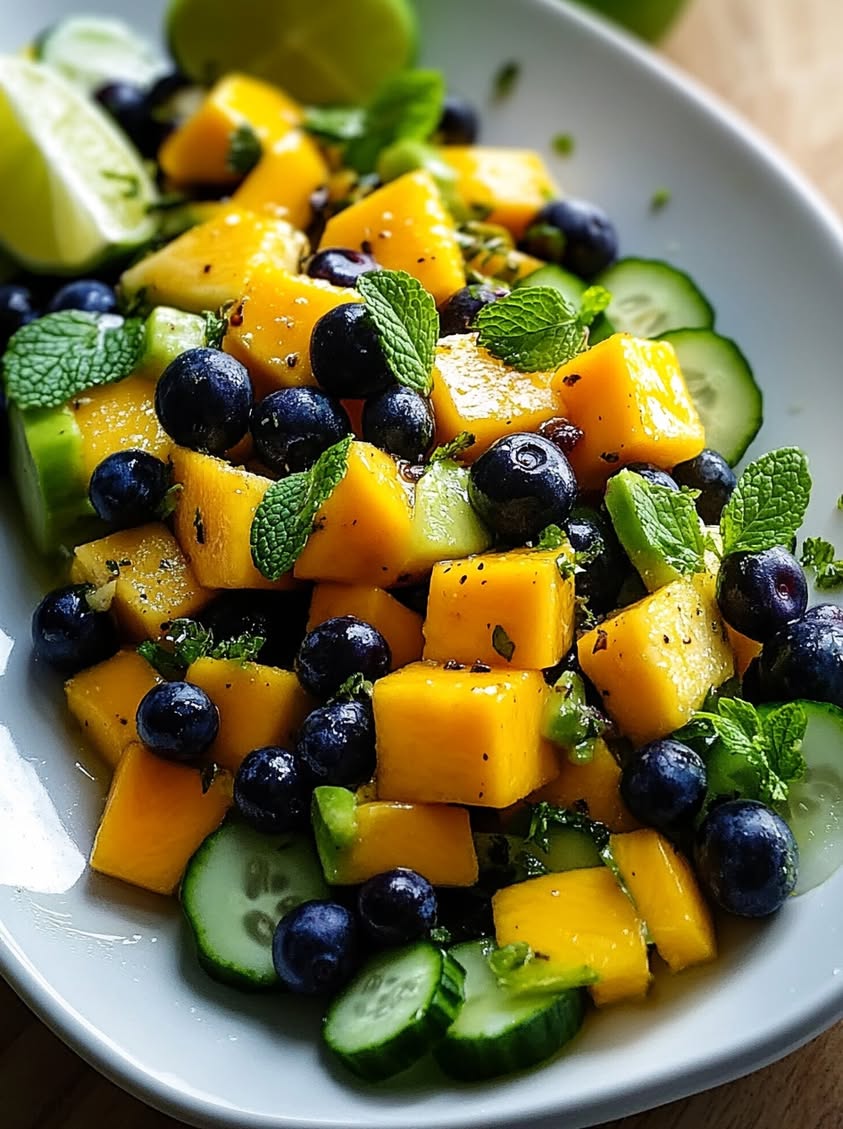
Summer Fruit and Avocado Platter with Lime Mint Dressing: A Vibrant No-Cook Feast
Imagine a platter that captures the very essence of summer sunshine. This Summer Fruit and Avocado Platter with Lime Mint Dressing is exactly that. It is a stunning, edible mosaic of juicy berries, ripe stone fruit, and creamy avocado. Moreover, it is all brought together with a zesty, herbaceous dressing that dances on the palate. This dish is not just food. It is a celebration of the season’s best produce, arranged for maximum visual impact and flavor.
Consequently, this recipe is perfect for anyone seeking a healthy, beautiful, and effortless dish. It requires absolutely zero cooking, making it ideal for hot days when you want to avoid the oven. Furthermore, it is incredibly versatile. You can serve it as a stunning appetizer, a light lunch, or a refreshing side dish at your next barbecue. Ultimately, the combination of sweet, tart, and savory elements creates a complex and satisfying eating experience that will impress every guest.
Additionally, the magic lies in the simple, vibrant dressing. Fresh lime juice provides a bright acidity, while extra virgin olive oil adds a luxurious, peppery richness. Finally, a generous handful of chopped mint infuses the entire platter with a cool, refreshing aroma. This Summer Fruit and Avocado Platter with Lime Mint Dressing is a testament to the fact that the best recipes often have the shortest ingredient lists.
Quick Recipe Highlights
- Flavor Profile: This platter offers a beautiful harmony of sweet summer fruits against the rich, buttery backdrop of avocado. The lime mint dressing introduces a sharp, citrusy punch and a cool herbal finish, tying all the elements together without overpowering them.
- Texture: You will experience a delightful contrast between the juicy burst of berries, the firm-yet-yielding bite of stone fruit, and the supremely creamy texture of perfectly ripe avocado. The dressing coats everything in a light, glossy sheen.
- Aroma: The scent is unmistakably fresh and summery. Expect the bright, zesty notes of lime to mingle with the cooling fragrance of mint, all lifted by the natural, sweet perfume of ripe peaches, nectarines, and berries.
- Visual Appeal: This dish is a showstopper. The vibrant reds of strawberries and raspberries, the deep blues of blackberries, the sunny yellows of peaches, and the rich green of avocado and mint create a stunning, colorful centerpiece.
- Skill Level Needed: This recipe is beginner-friendly. It requires no technical cooking skills, only basic knife work for slicing fruit and chopping herbs. The focus is on assembly and presentation, making it accessible to all.
- Special Equipment: You need only a sharp knife, a cutting board, a large serving platter or board, and a small bowl for whisking the simple dressing. No fancy gadgets are required.
Recipe Overview
- Difficulty Level: We rate this recipe as “Easy” because it involves no cooking, baking, or complex techniques. The steps are purely about preparation and assembly. The most challenging aspect is selecting perfectly ripe fruit and avocado, which is a simple skill to learn. Anyone can create this impressive dish with minimal effort.
- Category: This platter fits multiple categories beautifully. It is an excellent appetizer or starter for a dinner party. It also works perfectly as a light lunch or a healthy snack. Furthermore, it serves as a spectacular side dish or salad alternative at picnics, potlucks, and barbecues.
- Cuisine: While not tied to one specific tradition, this dish draws inspiration from Californian and Mediterranean culinary philosophies. It emphasizes fresh, high-quality produce, simple preparations, and healthy fats like olive oil. The use of lime and mint also nods to vibrant Latin American and Southeast Asian flavors.
- Cost: The cost is variable and seasonal. In peak summer, local berries and stone fruits are very affordable. Out of season, they can be more expensive. Avocados, limes, and mint are typically budget-friendly year-round. Overall, this is a cost-effective way to feed a crowd with premium ingredients.
- Season: This recipe is designed for late spring through summer, when berries and stone fruits are at their peak of flavor, sweetness, and affordability. The refreshing quality of the dish is also ideal for warm weather entertaining.
- Occasion: It is perfect for casual brunches, garden parties, holiday cookouts like the Fourth of July, baby showers, or as a healthy potluck contribution. It also makes a wonderful, light meal for a hot evening when cooking is unappealing.
Why You’ll Love This Recipe
First and foremost, the taste is absolutely incredible. Each bite delivers a symphony of flavors. The natural sweetness of summer fruit is perfectly balanced by the rich, savory avocado. Then, the lime mint dressing cuts through with its bright acidity and herbal freshness. This combination prevents the dish from feeling too heavy or too sweet. Consequently, your palate remains engaged and refreshed from the first bite to the last.
Secondly, the convenience factor is unbeatable. There is no oven to preheat, no pots to watch, and no complicated steps to follow. You simply wash, slice, and arrange. This makes the Summer Fruit and Avocado Platter with Lime Mint Dressing a lifesaver for busy hosts. Furthermore, you can prepare components ahead of time. For instance, you can make the dressing and wash the berries hours in advance. Then, you just assemble everything right before serving.
Nutritionally, this platter is a powerhouse. It is packed with vitamins, antioxidants, and healthy fats. Berries are famous for their high antioxidant content. Avocado provides monounsaturated fats that are great for heart health. Additionally, the olive oil in the dressing is another source of beneficial fats. This dish is naturally gluten-free, dairy-free, and vegan-friendly. It is a guilt-free option that feels indulgent and celebratory.
From a social perspective, this platter is a guaranteed conversation starter. Its vibrant, colorful presentation is inherently festive and inviting. It encourages sharing and grazing, which fosters a relaxed, communal dining atmosphere. Guests will naturally gather around it, picking their favorite combinations. It is a dish that looks like you spent hours on it, yet it comes together in mere minutes. This always impresses friends and family.
Finally, it is remarkably cost-effective and accessible. You can adapt the fruit selection based on what is on sale or looks best at the market. For example, if peaches are expensive, use more plums or nectarines. If blackberries aren’t available, double up on blueberries. The recipe framework is flexible. Therefore, you can create a stunning, restaurant-quality appetizer without a restaurant-quality budget.
Historical Background and Cultural Significance
The concept of arranging fresh fruit on a platter is ancient and cross-cultural. However, the modern interpretation, especially one featuring avocado, has clearer roots. This style of Summer Fruit and Avocado Platter with Lime Mint Dressing draws significant inspiration from the California cuisine movement of the 1970s. Chefs like Alice Waters championed the idea of eating fresh, local, and seasonal produce with minimal fuss. This philosophy directly leads to dishes where the quality of the ingredients is the star, much like this platter.
Culturally, the inclusion of avocado marks a significant shift. Once a niche ingredient, avocado became a mainstream superstar in the late 20th and early 21st centuries. Its rise in popularity, particularly in health-conscious and foodie circles, made it a natural pairing with sweet summer fruits. The creamy texture provides a savory balance that other fruits cannot. Consequently, this pairing now feels classic and modern simultaneously, reflecting contemporary eating trends.
The evolution of the recipe is also tied to global flavor influences. The dressing of lime, mint, and olive oil is a fusion. Olive oil is Mediterranean. Lime is prevalent in Latin American and Southeast Asian cuisines. Mint is used worldwide. This blending of flavors represents today’s interconnected food culture. It moves beyond a simple fruit salad into a more sophisticated, globally-inspired composition. The result is a dish that feels familiar yet excitingly new.
Regional variations are endless. In the Mediterranean, you might find a similar platter with figs, melon, and halloumi cheese, dressed with honey and thyme. In Mexico, a fruit platter might include tajín (chili-lime salt) and chamoy. The version presented here is a versatile blueprint. You can easily incorporate regional fruits or herbs from your own locale. The core idea—celebrating peak-season produce with a bright, simple dressing—is universal and adaptable to any culinary tradition.
Ingredient Deep Dive
Mixed Summer Berries (Strawberries, Raspberries, Blueberries, Blackberries): Berries have been foraged and cultivated for millennia, prized for their sweetness and medicinal properties. Nutritionally, they are low in calories but high in fiber, vitamin C, and potent antioxidants like anthocyanins, which give them their vibrant colors. When selecting berries, look for plump, firm fruits with bright, uniform color and a fragrant smell. Avoid containers with stains or moisture, which can indicate spoilage. Store them unwashed in the refrigerator in a single layer if possible, and wash gently just before using. For substitutions, any seasonal berry works; pomegranate arils or halved grapes can also add a juicy pop.
Stone Fruits (Peaches, Nectarines, Plums): Stone fruits originated in China and spread via the Silk Road, becoming symbols of longevity and immortality in some cultures. They are excellent sources of vitamins A and C, potassium, and dietary fiber. Choose fruits that are fragrant and yield slightly to gentle pressure at the stem end. Avoid hard, green fruits or those with significant bruises. To ripen, leave them at room temperature in a paper bag. Once ripe, refrigerate to slow further ripening. If peaches or nectarines are out of season, mango, pineapple, or even crisp apple slices can provide a different but delightful texture and sweetness.
Avocado: Native to south-central Mexico, the avocado has a history dating back over 10,000 years. It is uniquely rich in heart-healthy monounsaturated fats and contains nearly 20 vitamins and minerals, including potassium, folate, and vitamins K and E. For the perfect ripe avocado, seek one that is dark in color and yields to gentle, firm pressure. It should feel heavy for its size. To speed ripening, place it in a paper bag with a banana. Store cut avocado with the pit and a squeeze of lime juice to prevent browning. There is no perfect substitute for its creamy texture, but for a different fat element, fresh mozzarella or burrata could be interesting.
Fresh Mint: Mint has been used since ancient times for its medicinal and culinary properties, symbolizing hospitality in many cultures. It aids digestion and provides a refreshing aroma without significant calories. Look for bright green, perky leaves with no signs of wilting or black spots. Store mint like a bouquet: trim the stems and place in a glass of water in the fridge, loosely covered with a bag. For a different herbal note, basil or cilantro can create a fascinating twist, though it will significantly alter the flavor profile.
Lime & Extra Virgin Olive Oil (The Dressing): Lime juice provides vitamin C and acidity that balances fat and sweetness. Always use fresh lime juice, not bottled, for the brightest flavor. Roll the lime on the counter before juicing to get more juice. Extra virgin olive oil (EVOO) is the highest quality, unrefined oil, offering a fruity, peppery flavor and antioxidants. Store EVOO in a cool, dark place away from the stove. The dressing is simple but irreplaceable; however, for a different accent, a high-quality balsamic glaze drizzle can complement the berries beautifully.
Common Mistakes to Avoid
- Using Underripe or Overripe Fruit: The success of this platter hinges on perfect ripeness. Underripe fruit will be tart and hard, while overripe fruit will be mushy and can make the platter soggy. Always take the time to select fruit at its peak. Test for a gentle give and sweet aroma.
- Cutting the Avocado Too Early: Avocado browns quickly when exposed to air. Consequently, you should slice and add it to the platter at the very last moment. A quick toss in a bit of the lime dressing can also help slow oxidation.
- Drowning the Platter in Dressing: The dressing is meant to be a light glaze, not a pool. Drizzle it over the assembled platter just before serving. Alternatively, serve it on the side so guests can add their own desired amount.
- Overhandling the Berries: Raspberries and blackberries are very delicate. Wash them gently and pat dry thoroughly with a paper towel. Wet berries will bleed color and dilute the dressing, creating a messy presentation.
- Using Dried or Wilting Herbs: Fresh mint is non-negotiable for its vibrant color and cooling aroma. Dried mint will taste dusty and look unappealing. Always use fresh, crisp mint leaves for the best result.
- Neglecting the Platter Itself: Presentation matters. Using a small, crowded plate makes serving difficult. Instead, choose a large platter or board that gives the fruit space to shine. Arrange items in sections or mix them for a more rustic look.
- Forgetting to Season: A tiny pinch of flaky sea salt sprinkled over the platter after dressing can work wonders. It heightens the natural sweetness of the fruit and the richness of the avocado, making all the flavors pop.
- Storing the Assembled Platter: This dish does not keep well once assembled. The fruits will release juices and the avocado will brown. For best results, assemble and serve immediately. Prepare components separately and combine at the last minute.
Essential Techniques
Selecting Ripe Produce: This is the most critical technique for this recipe. For stone fruit, use your nose; it should smell fragrant. Gently press near the stem; it should yield slightly. For avocados, remove the small stem cap; if it’s green underneath, it’s ripe. For berries, look for vibrant color and avoid any with mold or mushiness. Mastering selection ensures every component tastes its best, transforming simple ingredients into an extraordinary dish.
Creating an Appealing Arrangement: Technique here is about visual balance. Start by placing larger items like avocado slices and peach wedges around the platter to anchor the composition. Then, fill in spaces with clusters of berries. Use different colors next to each other for contrast. Finally, scatter mint leaves over the top. The goal is to create a platter that looks abundant and inviting, encouraging guests to dig in from all sides.
Making an Emulsified Dressing: While simple, whisking the dressing properly ensures it coats the fruit evenly. In a small bowl, whisk the lime juice and a pinch of salt first until the salt dissolves. Then, slowly drizzle in the olive oil while continuously whisking vigorously. This temporary emulsion creates a slightly thickened, cohesive dressing that won’t immediately separate. It clings to the fruit better than just dumping oil and juice separately.
Pro Tips for Perfect Summer Fruit and Avocado Platter
First, chill your serving platter in the refrigerator for 15-20 minutes before assembling. This helps keep the fruit cool and fresh longer, especially on a warm day.
Second, use a melon baller on the avocado for a fun, elegant presentation. It creates beautiful, creamy spheres that are easy to eat and look impressive.
Third, add a tiny amount of honey or maple syrup to the dressing if your fruit isn’t as sweet as you’d like. This balances the lime’s acidity perfectly.
Fourth, for extra texture and flavor, sprinkle the finished platter with toasted coconut flakes, chopped pistachios, or crumbled goat cheese or feta.
Fifth, if serving outdoors, place the platter over a larger tray filled with ice to create a makeshift chilled serving station.
Sixth, cut your stone fruits in different ways—some in wedges, some in slices—to add visual interest and make the platter feel more dynamic.
Seventh, reserve a few whole sprigs of mint and lime wedges to garnish the edges of the platter. This reinforces the flavors guests are about to experience.
Variations and Adaptations
Regional Variations: Give the platter a tropical twist by using mango, pineapple, and papaya. For a Mediterranean feel, add figs, dates, and a sprinkle of za’atar to the dressing. A Mexican-inspired version could include jicama sticks, cucumber, and a dusting of tajín chili-lime salt.
Seasonal Adaptations: In fall, use sliced persimmons, pears, pomegranate seeds, and grapes with a dressing infused with orange zest and rosemary. For winter, focus on citrus like blood orange and grapefruit segments, paired with pomegranate and a honey-sweetened dressing.
Dietary Modifications: To add protein for a more substantial meal, arrange slices of grilled chicken, shrimp, or flaked salmon on the side. For a vegan protein boost, add a can of rinsed and drained chickpeas or white beans in a separate bowl.
Flavor Variations: Infuse the olive oil gently with chili flakes or fresh ginger before making the dressing. Substitute the mint with basil, tarragon, or lemon verbena for a completely different herbal profile. A teaspoon of finely grated ginger in the dressing adds a warm, spicy note.
Texture Modifications: Introduce crunch with toasted nuts (almonds, pecans), seeds (pumpkin, sunflower), or crispy quinoa. For a creamy element beyond avocado, add small dollops of ricotta, labneh, or coconut yogurt around the platter.
Presentation Alternatives: Instead of one large platter, create individual servings in wide, shallow bowls or on small plates. For a party, make fruit and avocado skewers, laying them on a platter and drizzling with the dressing just before serving.
Serving and Presentation Guide
Plating Techniques: Use a large, neutral-colored platter (white, slate, wood) to make the colors pop. Arrange ingredients in intentional sections or groups rather than randomly tossing them. This creates a sense of order and makes the platter look curated. Place taller items like stacked peach slices in the center and let berries cascade towards the edges.
Garnishing Ideas: Beyond mint, edible flowers like nasturtiums or pansies add a stunning, elegant touch. A final drizzle of high-quality balsamic reduction in a zigzag pattern adds visual drama and a flavor boost. A sprinkle of flaky sea salt (like Maldon) just before serving enhances all the flavors.
Traditional Accompaniments: This platter stands beautifully on its own. However, it pairs classically with simple, lightly toasted bread or crostini for scooping up avocado and fruit. A side of whipped honey yogurt or mascarpone cheese offers a delightful dipping option.
Modern Serving Suggestions: Serve it as part of a “build-your-own” bowl bar. Provide the platter alongside bowls of greens (arugula, spinach), grains (quinoa, farro), and proteins, letting guests create their own salad masterpiece with the fruit and avocado as toppings.
Temperature Considerations: All components should be served cool but not ice-cold. Taking fruit out of the fridge 10-15 minutes before serving allows its full aroma and flavor to develop. The avocado should be at room temperature for the best texture.
Portion Control Tips: As an appetizer for 6-8 people, this recipe is perfect. For a larger crowd, simply increase the quantities proportionally, focusing on adding more of the smaller, quicker-to-eat items like berries. For a main course salad for 2-3, this recipe size is ideal.
Wine and Beverage Pairing
Wine Pairings: A dry Rosé from Provence is a classic and perfect match. Its bright acidity, red fruit notes, and crisp finish complement the sweet and savory elements without overpowering them. Alternatively, a slightly off-dry Riesling or Gewürztraminer can mirror the fruit’s sweetness while cleansing the palate. For a sparkling option, a Prosecco or Cava adds a festive touch, with its bubbles cutting through the richness of the avocado.
Non-Alcoholic Alternatives: Sparkling water with a splash of fresh lime juice and a few muddled mint leaves mimics the dressing’s flavors beautifully. Iced herbal tea, like hibiscus or peach ginger, pairs wonderfully. A refreshing cucumber-melon agua fresca would also be a fantastic, thematic choice.
Coffee/Tea Pairings: This dish is typically served as a light lunch or appetizer, so hot coffee isn’t a natural fit. However, a glass of iced tea is ideal. A lightly sweetened black tea with lemon or a fragrant jasmine green tea served over ice would be refreshing complements.
Temperature Considerations: All beverages should be served well-chilled. The cold temperature contrasts pleasantly with the room-temperature fruit and enhances the refreshing quality of the entire meal. Have plenty of ice on hand for guests to customize their drinks.
Serving Suggestions: Offer a variety of beverages in dispensers or large pitchers for a casual gathering. For a more formal setting, pre-pour glasses of wine or sparkling water garnished with a berry or mint sprig to tie the drink presentation to the platter.
Storage and Shelf Life
Storage Methods: The assembled platter does not store well and is best enjoyed immediately. For leftovers, carefully separate the components. Store berries in a single layer in a sealed container in the fridge. Place stone fruit in a separate container. Avocado slices should be stored in an airtight container with a squeeze of lime juice on top. Keep the dressing in its own small jar.
Temperature Requirements: All components must be refrigerated if not consumed within 2 hours of assembly. The ideal fridge temperature is below 40°F (4°C). Do not leave the platter out in warm weather for extended periods.
Container Recommendations: Use shallow, airtight containers to prevent crushing the berries. Glass containers are ideal as they don’t retain odors. For avocado, press a piece of plastic wrap directly onto the surface before sealing the lid to minimize air exposure.
Signs of Spoilage: Discard any fruit that has become excessively soft, mushy, or slimy. Mold growth (fuzzy white, green, or blue spots) is an immediate sign to throw the item away. Avocado that has turned deep brown or black throughout, not just on the surface, should be discarded. A sour or fermented smell indicates spoilage.
Reheating Instructions: This is a cold dish and should never be reheated.
Freezing Guidelines: Freezing is not recommended for the assembled platter or for avocado, as it will become mushy. However, you can freeze individual berries on a parchment-lined tray before transferring to a bag for smoothies; they will not be suitable for platter presentation after thawing.
Make Ahead Strategies
Prep Timeline: You can do almost all the prep 1-2 hours ahead. Wash and thoroughly dry all berries, then store them in their containers in the fridge. Make the lime mint dressing and keep it in a jar at room temperature (refrigeration can solidify the olive oil). Slice the stone fruit and store it in a container. Do not slice the avocado until the moment of assembly.
Storage Between Steps: Keep each prepped ingredient group separate. This prevents flavors from mingling prematurely and maintains optimal texture. The berries stay dry, the stone fruit won’t get soggy, and the avocado won’t brown.
Quality Impact Assessment: Prepping components ahead has minimal negative impact if done correctly. In fact, it can improve the dish by allowing the flavors in the dressing to meld. The only element that suffers from advance prep is the avocado, which must be left whole until assembly.
Assembly Tips: When ready to serve, take all components out of the fridge. Slice the avocado directly onto the platter. Arrange the pre-sliced stone fruit and berries. Give the dressing a good shake or whisk, then drizzle it over everything. Garnish with fresh mint.
Reheating Guidelines: Not applicable for this cold dish.
Fresh Element Additions: The fresh mint garnish and the avocado are the key “last-minute” elements. Adding them right before serving ensures the mint looks perky and green and the avocado retains its perfect color and texture.
Scaling Instructions
Halving the Recipe: To serve 2-3, simply divide all ingredient quantities in half. Use a smaller platter or serving board. The prep time remains roughly the same, as you are still performing the same tasks (washing, slicing), just with less volume.
Doubling or Tripling: For a large party of 12-18, double or triple the amounts. The key is to use multiple platters or one very large surface to avoid a crowded, messy pile. Consider setting up a “fruit platter station” with different types of fruit on each platter for a grand display.
Equipment Adjustments: Scaling up primarily requires larger serving vessels. Ensure you have a big enough knife for efficiently slicing larger quantities of stone fruit. You may also need a larger bowl for whisking a bigger batch of dressing.
Timing Modifications: Prep time will increase linearly when scaling up. Slicing 6 peaches takes longer than slicing 3. Budget approximately 10-15 extra minutes of prep for each time you double the recipe.
Storage Considerations: When making a larger quantity, the “do not assemble ahead” rule becomes even more critical. Prep all fruit and make dressing in large batches, but store them separately in multiple containers. Assemble the platters no more than 30 minutes before guests arrive to maintain freshness.
Nutritional Deep Dive
Macro Breakdown: This platter is predominantly a source of healthy carbohydrates and fats. The fruits provide natural sugars and fiber, while the avocado and olive oil deliver monounsaturated fats. It is naturally low in protein, unless you add a protein element like nuts or cheese. A serving is relatively low in calories but high in volume and nutrients, promoting satiety.
Micronutrient Analysis: This dish is a micronutrient powerhouse. Berries offer vitamin C and manganese. Stone fruits provide vitamins A and C. Avocado is rich in vitamins K, C, E, and B-vitamins like folate. The olive oil adds vitamin E and polyphenols. Together, they contribute a wide spectrum of antioxidants that combat oxidative stress in the body.
Health Benefits: Regular consumption of the ingredients in this platter supports heart health (fats from avocado/olive oil, fiber from fruit), improves digestion (high fiber content), and may reduce inflammation (antioxidants from berries). The healthy fats also aid in the absorption of fat-soluble vitamins from the fruits.
Dietary Considerations: The recipe is naturally gluten-free, dairy-free, vegan, and paleo-friendly. It is also suitable for vegetarian and plant-based diets. It is not inherently low-carb or keto due to the natural sugars in the fruit, but portion control can fit it into some lower-carb plans.
Portion Analysis: One serving (approximately 1/6 of the platter) is a satisfying portion for an appetizer or side. For a light main course, this serving size is appropriate when paired with a protein source. The combination of fiber, water content, and healthy fats helps you feel full.
Weight Management Tips: This platter is an excellent choice for weight management due to its high fiber and water content, which promote fullness. The healthy fats also provide sustained energy. To keep it as a low-calorie option, be mindful of the amount of olive oil in the dressing; a light drizzle is sufficient.
Dietary Adaptations
Gluten-free: This recipe is naturally gluten-free as it contains no grains. Ensure all packaged ingredients, like pre-washed berries, are processed in a gluten-free facility if you have celiac disease or a severe sensitivity.
Dairy-free: The base recipe contains no dairy. It is perfectly suitable for a dairy-free diet. Any added cheeses in variations would need to be omitted or substituted with dairy-free alternatives.
Vegan: This Summer Fruit and Avocado Platter with Lime Mint Dressing is inherently vegan. No animal products are used in the core recipe. It’s a fantastic option for vegan entertaining.
Low-carb/Keto: For a keto adaptation, significantly reduce the amount of higher-sugar fruits like peaches and berries. Focus on berries like raspberries and blackberries in very small quantities, and increase the proportion of avocado. Add keto-friendly elements like olives, nuts, and cheese.
Paleo: This recipe is paleo-compliant as written. It uses whole, unprocessed foods—fruits, vegetables, healthy fats, and herbs. It aligns perfectly with the paleo dietary framework.
Low-FODMAP: This requires careful modification. Avocado is low-FODMAP only in servings of 1/8 of a fruit. Berries like strawberries, blueberries, and raspberries are okay in limited amounts. Avoid stone fruits like peaches and plums, which are high in FODMAPs. Substitute with low-FODMAP fruits like oranges, pineapple, and kiwi in moderation.
Nut-Free: The base recipe is nut-free. Simply avoid adding any nuts or seeds as garnishes if you have an allergy. Check that any pre-packaged fruits haven’t been processed on equipment shared with nuts.
Troubleshooting Guide
Texture Issues (Soggy Platter): This is caused by wet fruit or assembling too far in advance. Solution: Ensure all washed fruit is thoroughly patted dry with paper towels. Assemble the platter at the last possible minute. If fruit has released juice, use a slotted spoon to transfer it to a new platter, leaving the liquid behind.
Flavor Balance (Too Tart or Too Bland): If the fruit is underripe and tart, balance it by adding a teaspoon of honey or maple syrup to the dressing. If flavors seem bland, the culprit is often under-seasoning. Add a pinch more salt to the dressing or a sprinkle over the finished platter to make the natural sweetness pop.
Temperature Problems (Fruit Too Cold): Fruit served straight from the fridge can taste muted. Solution: Remove prepped fruit from the refrigerator 10-15 minutes before assembling. This allows the complex aromas and flavors to develop, resulting in a much tastier experience.
Equipment Challenges (Dressing Won’t Emulsify): If your oil and lime juice separate quickly, you may not be whisking vigorously enough. Solution: Use a small jar with a tight lid. Add all dressing ingredients, seal, and shake vigorously for 30 seconds. This creates a temporary emulsion perfect for immediate drizzling.
Ingredient Substitutions (No Fresh Mint): While not ideal, in a pinch you can use 1-2 teaspoons of high-quality mint extract or a mint simple syrup (reduce other sweeteners). A better alternative is to use another fresh herb like basil, which will change the profile but still be delicious.
Timing Concerns (Avocado Browning Before Serving): To slow browning, toss the sliced avocado directly in a few tablespoons of the prepared lime dressing before arranging it on the platter. The acid creates a barrier against oxygen. You can also place the avocado pit among the slices on the platter, though this is more folk wisdom than proven science.
Recipe Success Stories
Readers consistently report that this Summer Fruit and Avocado Platter with Lime Mint Dressing is their go-to for effortless entertaining. One home cook shared that she brought it to a potluck and received more compliments than on her elaborate baked dish. Another mentioned that her children, who typically avoid fruit, devoured it because the presentation made it feel special. The visual “wow” factor is a common theme in feedback.
Many have successfully adapted the recipe for different diets. A reader following a vegan diet used it as the centerpiece for her birthday brunch. Another, hosting a friend with gluten intolerance, was thrilled to have such a beautiful, safe option that everyone could enjoy. The recipe’s inherent flexibility is a key to its success across diverse groups.
Photography tips from our community include using natural light near a window to make the colors of the fruit truly shine. Shooting from directly above (“flat lay”) captures the beautiful arrangement. Several readers have created stunning variations, adding edible flowers from their gardens or arranging the fruit in a rainbow pattern, sharing their photos online to inspire others.
Frequently Asked Questions
Q: Can I make this platter the night before?
A: We do not recommend assembling the full platter the night before. The fruit will release juices and the avocado will brown. However, you can prep all components separately: wash/dry berries, slice stone fruit, make the dressing, and store everything in airtight containers in the fridge. Slice the avocado and{“success”:true,”message”:”Recipe created successfully”,”post_id”:8330,”tasty_recipe_id”:8330,”shortcode”:” Print
Summer Fruit & Avocado Platter with Lime, Mint and Olive Oil
Description
A vibrant, no-cook platter featuring fresh summer fruits and creamy avocado, drizzled with zesty lime juice, fragrant mint, and rich olive oil for a light and refreshing appetizer or side dish.
Ingredients
For the Crust:
- 2 ripe avocados, sliced
- 1 cup watermelon, cubed
- 1 cup strawberries, hulled and halved
- 1 cup peaches, sliced
- 1/2 cup blueberries
- 1/4 cup fresh mint leaves, chopped
- 2 tablespoons extra virgin olive oil
- 1 lime, juiced
- Pinch of sea salt
- Pinch of black pepper
Instructions
1. Prepare the Crust:
- Arrange the sliced avocados, watermelon, strawberries, peaches, and blueberries on a large serving platter in an attractive pattern.
- Sprinkle the chopped mint leaves evenly over the fruit and avocado.
- Drizzle the olive oil and lime juice over the entire platter.
- Season lightly with sea salt and black pepper to taste.
- Serve immediately, gently tossing if desired before eating.
Notes
You can customize the seasonings to taste.

I’m Billy, a classically trained culinary school graduate from The Culinary Institute of America with over 12 years in the restaurant industry and over 19 years of cooking experience.