
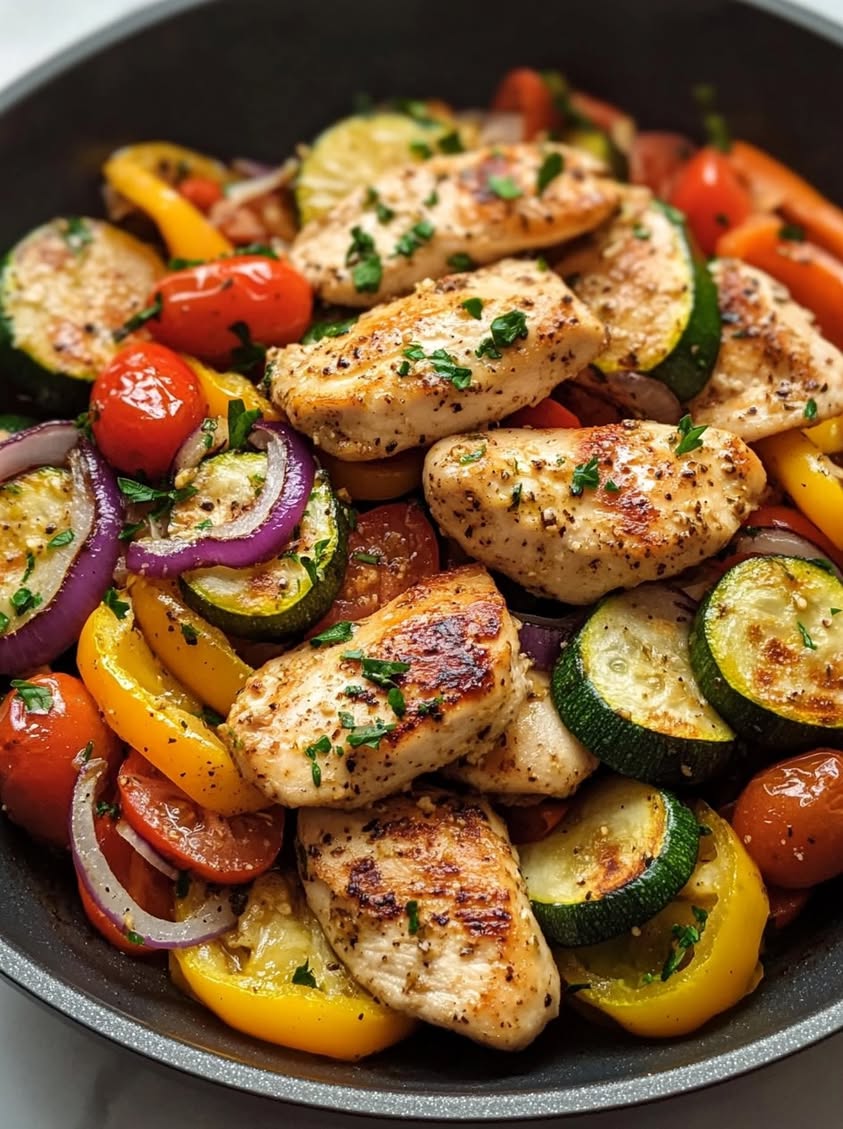
Sun-Kissed Mediterranean Chicken Skillet with Lemon Herb Drizzle: A One-Pan Wonder
Imagine the vibrant flavors of a coastal Mediterranean village, all captured in a single, sizzling skillet. This Sun-Kissed Mediterranean Chicken Skillet with Lemon Herb Drizzle delivers exactly that experience. It transforms simple, wholesome ingredients into a restaurant-quality meal with minimal effort. Furthermore, the dish brings the sunny, bright essence of the Mediterranean directly to your dinner table, making any weeknight feel like a special occasion.
The magic of this recipe lies in its beautiful simplicity and layered flavors. Juicy chicken thighs cook alongside colorful cherry tomatoes and briny Kalamata olives. Meanwhile, the entire skillet basks in the aromatic embrace of garlic, oregano, and a generous splash of white wine. Ultimately, a fresh, zesty lemon herb drizzle ties everything together, adding a final burst of brightness that elevates the entire dish.
This Sun-Kissed Mediterranean Chicken Skillet is more than just dinner; it’s a sensory journey. You will love the sound of the chicken searing, the smell of garlic and herbs filling your kitchen, and the stunning visual appeal of the finished plate. Best of all, cleanup is a breeze since you cook everything in one pan. Consequently, this recipe is perfect for busy cooks who refuse to compromise on flavor or health.
Quick Recipe Highlights
- Flavor Profile: This dish features a masterful balance of savory, bright, and herbal notes. The chicken develops a deep, savory crust, while the tomatoes burst with sweetness. Simultaneously, the lemon herb drizzle introduces a vibrant, acidic punch that cuts through the richness perfectly.
- Texture: You will enjoy a wonderful contrast of textures in every bite. The chicken boasts crispy, golden skin and tender, juicy meat. Meanwhile, the tomatoes become soft and jammy, and the olives provide a pleasant, briny chew. The drizzle adds a light, emulsified finish.
- Aroma: As the skillet cooks, your kitchen will fill with an irresistible fragrance. Key aromatic notes include the earthy scent of searing chicken, the pungent warmth of garlic, the floral hint of dried oregano, and the bright, citrusy zing of fresh lemon zest.
- Visual Appeal: This dish is a feast for the eyes with its stunning color palette. You see golden-brown chicken nestled among ruby-red tomatoes, deep purple olives, and flecks of green herbs. The pale yellow lemon drizzle adds a beautiful, finishing touch.
- Skill Level Needed: This is a fantastic recipe for cooks of all levels. You need only basic searing and simmering techniques. Importantly, the process is forgiving and intuitive, making it an excellent choice for a confident beginner or a seasoned home chef seeking a quick, flavorful meal.
- Special Equipment: You require just one key piece of equipment: a large, oven-safe skillet. A well-seasoned cast iron or a sturdy stainless steel skillet works perfectly. Additionally, you will need a small bowl for mixing the drizzle and basic kitchen utensils like tongs and a wooden spoon.
Recipe Overview
- Difficulty Level: We rate this Sun-Kissed Mediterranean Chicken Skillet as easy. The steps are straightforward and logical. You simply sear the chicken, build a quick pan sauce with aromatics and wine, then finish cooking everything together. There are no complicated techniques or precise temperatures to monitor, making it very approachable.
- Category: This versatile dish fits multiple meal categories beautifully. It is a complete, protein-forward main course for dinner. Additionally, you can consider it a fantastic one-pan meal or a healthy weeknight dinner solution. The leftovers also make a superb lunch option.
- Cuisine: This recipe draws direct inspiration from the coastal cuisines of Greece and Southern Italy. It embodies the core principles of Mediterranean cooking: emphasis on fresh produce, lean protein, healthy fats like olive oil, and bright, herbaceous flavors. The use of olives, oregano, and lemon is quintessential.
- Cost: Preparing this meal is surprisingly cost-effective. Chicken thighs are an affordable cut, and the vegetable components are minimal. The most significant cost comes from the Kalamata olives and dry white wine, but you use small amounts that stretch far. Overall, you can expect to feed four people for less than the cost of a single restaurant entrée.
- Season: While delicious year-round, this Sun-Kissed Mediterranean Chicken Skillet truly shines in the late spring and summer months. This is when cherry tomatoes are at their peak sweetness and fresh herbs are most abundant. The bright, light flavors also perfectly complement warmer weather.
- Occasion: This skillet meal is wonderfully adaptable for any occasion. It is elegant enough for a casual dinner party or date night at home, yet simple and quick enough for a busy Tuesday family dinner. You can also easily double the recipe to feed a larger crowd.
Why You’ll Love This Recipe
First and foremost, the taste and texture appeal of this Sun-Kissed Mediterranean Chicken Skillet is undeniable. Each component brings something special to the fork. You get the savory, umami-rich depth from the seared chicken, the sweet acidity from the burst tomatoes, and the salty punch from the olives. Then, the lemon herb drizzle cascades over it all, adding a fresh, creamy, and tangy element that makes the entire dish sing. The contrast between the crispy chicken skin and the soft, jammy vegetables creates a truly satisfying mouthfeel that keeps you coming back for another bite.
Next, consider the sheer convenience and preparation benefits. This is a true one-pan wonder, meaning you spend less time washing dishes and more time enjoying your meal. The active cooking time is minimal, and most of the work happens hands-off in the oven or simmering on the stovetop. You can have a gorgeous, impressive meal on the table in well under an hour. Moreover, the ingredient list is composed mostly of pantry staples and fresh items that are easy to find at any grocery store, eliminating the need for a special shopping trip.
From a nutritional standpoint, this dish aligns perfectly with the celebrated Mediterranean diet, which numerous studies link to heart health and longevity. You benefit from lean protein, healthy monounsaturated fats from olive oil, and a wealth of antioxidants from the tomatoes, garlic, and herbs. It is a balanced meal that feels indulgent without being heavy. You can feel good about serving it to your family, knowing you are providing nourishment that is as good for the body as it is for the soul.
The social and entertaining value of this Sun-Kissed Mediterranean Chicken Skillet is also a major win. Presentation is effortless yet stunning. You can bring the sizzling skillet directly to the table, allowing guests to serve themselves family-style, which always fosters a warm, communal dining atmosphere. The vibrant colors and enticing aromas are guaranteed to elicit compliments. It is a recipe that looks like you spent far more time and effort than you actually did, making you the star of any casual gathering.
Finally, the cost-effectiveness and accessibility of this recipe make it a true keeper. As mentioned, chicken thighs are a budget-friendly protein choice that stays incredibly moist during cooking. You can often find pints of cherry tomatoes on sale, and a small jar of olives will last for multiple recipes. You do not need any expensive, hard-to-find ingredients or special equipment. This accessibility means you can enjoy a taste of the Mediterranean anytime the craving strikes, without breaking the bank or stressing over complicated sourcing.
Historical Background and Cultural Significance
The culinary traditions that inspire this Sun-Kissed Mediterranean Chicken Skillet run deep, rooted in the sun-drenched landscapes of Southern Europe. While not a single, historic recipe, it is a modern homage to the rustic, farm-to-table cooking that has sustained Mediterranean communities for centuries. The core concept of cooking protein with seasonal tomatoes, olives, and wild herbs in a single vessel over an open flame or hearth is ancient. This method maximized flavor with minimal resources, a principle born from necessity that we now celebrate for its simplicity and delicious results.
Culturally, dishes like this represent the heart of Mediterranean home cooking. They emphasize communal eating, seasonal ingredients, and the philosophy that food should be both nourishing and a pleasure. The use of olive oil as the primary fat, the inclusion of garlic and oregano, and the bright finish of lemon are hallmarks of Greek and Italian coastal cuisine. These flavors are not just taste preferences; they are a reflection of the local agriculture and a way of life centered around the sea and the sun-baked earth.
The evolution of this specific recipe is a story of global fusion and modern convenience. The traditional method might involve a whole chicken or rabbit cooked in a clay pot over many hours. The contemporary skillet version adapts that spirit for today’s faster-paced kitchens, using quick-cooking chicken thighs and a stovetop-to-oven method. The lemon herb drizzle, while inspired by classic gremolata or avgolemono sauce, is a simplified, no-cook emulsion that delivers big flavor with minimal fuss. This evolution makes the timeless flavors of the region accessible to home cooks everywhere.
Regional variations of this concept are plentiful, showcasing the diversity within Mediterranean cooking. In Provence, you might find a similar dish with Herbes de Provence and a splash of pastis. In Sicily, capers and anchovies might join the olives. A Spanish version could feature smoked paprika and sherry vinegar. Our Sun-Kissed Mediterranean Chicken Skillet with Lemon Herb Drizzle leans into the Greek idiom, but it welcomes your own interpretation. You can easily swap the herbs, use artichoke hearts instead of olives, or add a pinch of saffron to the sauce, making the recipe your own while staying true to its sunny origins.
Ingredient Deep Dive
Let us start with the star: chicken thighs. Culturally, chicken is a versatile protein found across the Mediterranean, often preferred for its richer flavor and forgiving nature compared to breast meat. Nutritionally, thighs provide excellent protein, iron, and zinc. When selecting them, look for pieces with firm, pink flesh and skin that is not overly torn. For the best texture, pat them thoroughly dry before seasoning. You can store raw thighs in the coldest part of your fridge for 1-2 days. For a substitution, bone-in, skin-on chicken breasts will work, but you must reduce the cooking time to prevent dryness.
Cherry tomatoes are the sweet, juicy backbone of the skillet’s sauce. Historically, tomatoes arrived in the Mediterranean from the Americas and were enthusiastically adopted, becoming central to the cuisine. They are packed with vitamins C and K, potassium, and the antioxidant lycopene. Choose tomatoes that are firm, deeply colored, and fragrant. Avoid any with wrinkled skin or soft spots. Store them at room temperature until ripe, then refrigerate if needed. You can substitute with diced Roma tomatoes or sun-dried tomatoes packed in oil for a more intense, concentrated flavor.
Extra virgin olive oil is the lifeblood of Mediterranean cooking. Its history is intertwined with the region’s culture, economy, and religion for millennia. It provides heart-healthy monounsaturated fats and antioxidants. Always use a good-quality extra virgin olive oil for the drizzle and finishing; you can use a lighter olive oil for searing. Store it in a cool, dark place to prevent rancidity. For a different flavor profile, avocado oil is a good high-heat searing substitute, but you will lose the characteristic fruity, peppery notes of olive oil.
Fresh herbs, specifically parsley and oregano, are non-negotiable for the drizzle. Oregano, in particular, is synonymous with Greek cuisine and was revered in ancient times for its medicinal properties. Both herbs are rich in vitamins and antioxidants. Select bunches with vibrant, perky leaves and no signs of wilting or yellowing. Store them stem-down in a glass of water in the fridge, covered loosely with a bag. If you lack fresh oregano, use half the amount of dried oregano in the skillet sauce, but always use fresh parsley for the bright, green finish of the drizzle.
Common Mistakes to Avoid
- Not Drying the Chicken: Failing to pat the chicken thighs completely dry with paper towels before seasoning is a critical error. Consequently, moisture on the skin will steam instead of sear, preventing you from achieving that essential, crispy, golden-brown crust. Always take this simple step for a perfect texture.
- Crowding the Skillet: Adding all four chicken thighs to a skillet that is too small is a common pitfall. As a result, the chicken will steam in its own juices and boil rather than sear. You must cook in batches if your skillet cannot comfortably fit all pieces with space between them. This ensures proper browning.
- Moving the Chicken Too Soon: Being impatient and trying to flip the chicken before it has properly released from the pan is a mistake. When the sear is complete, the chicken will naturally unstick. If you force it, you tear the beautiful skin. Let it cook undisturbed for a full 5-7 minutes on the first side.
- Using Pre-Minced Garlic: Opting for jarred, pre-minced garlic instead of fresh cloves will compromise the flavor. Fresh garlic has a brighter, more complex aroma and taste that mellows perfectly during cooking. The pre-minced version often has a harsh, metallic aftertaste. Taking a minute to mince fresh garlic is always worth it.
- Skipping the Wine Deglaze: After removing the chicken, you must deglaze the pan with white wine. This step scrapes up the flavorful browned bits (fond) from the bottom, which forms the foundation of your sauce. If you skip it, you lose a tremendous amount of depth and complexity. Even a small amount of wine makes a huge difference.
- Overcooking the Drizzle Ingredients: Adding the fresh herbs and lemon zest for the drizzle directly to the hot skillet will cause them to wilt and lose their vibrant flavor. The drizzle is a cold, fresh sauce meant to be added at the end. Combining it off-heat preserves its bright, grassy, and citrusy character.
- Underseasoning in Layers: Seasoning only the chicken and forgetting to season the vegetables and the final dish is an error. You should season each component as you build the skillet. Taste the tomato mixture before adding the chicken back, and always do a final seasoning check before serving. This builds a more complete flavor profile.
- Using a Non-Oven-Safe Skillet: Starting the recipe in a pan with a plastic handle or other non-oven-safe materials will lead to disaster. You need a skillet that can safely transition from the stovetop to a hot oven. Always verify your cookware is oven-safe to the required temperature before you begin cooking.
Essential Techniques
Pan Searing for Flavor: Mastering the pan sear is the most important technique for this Sun-Kissed Mediterranean Chicken Skillet. It is important because it creates the Maillard reaction, a chemical process that develops hundreds of complex, savory flavors and a beautiful crust. To master it, ensure your pan is properly preheated and your chicken skin is dry. Place the chicken skin-side down and do not move it. A common pitfall is a pan that is not hot enough, leading to steaming. Visual cues for success include a deep golden-brown color and the chicken releasing easily from the pan when lifted with tongs.
Deglazing to Build Sauce: Deglazing is the process of adding liquid to a hot pan to dissolve the browned bits stuck to the bottom. This technique is crucial because it captures all the concentrated flavor from searing the chicken and incorporates it into your sauce. To do it, simply pour your wine into the hot pan after removing the chicken and use a wooden spoon to scrape vigorously. The common mistake is using too little liquid or not scraping thoroughly. Success is visible when the liquid becomes cloudy and brown, and the pan bottom is clean.
Emulsifying the Drizzle: Creating the lemon herb drizzle involves emulsification—combining oil and an acidic liquid (lemon juice) into a stable, creamy mixture. This is important for a cohesive sauce that clings to the food. To master it, whisk the lemon juice, mustard, and herbs together first, then slowly drizzle in the olive oil while whisking constantly. The common pitfall is adding the oil too quickly, which will cause the sauce to separate. Success is a slightly thickened, pale green emulsion that holds together.
Pro Tips for Perfect Sun-Kissed Mediterranean Chicken Skillet
First, for the crispiest skin, season your chicken thighs and let them sit uncovered on a plate in the refrigerator for 30 minutes before cooking. This air-drying step further removes surface moisture. Second, use a kitchen timer for the searing step. It is easy to get distracted, and a precise 5-7 minutes ensures perfect browning without burning. Third, if your tomatoes are not very sweet, add a tiny pinch of sugar to the skillet when they go in. This balances acidity and mimics the flavor of peak-season produce.
Fourth, let the cooked skillet rest for 5 minutes off the heat before serving. This allows the juices in the chicken to redistribute, ensuring every bite is moist. Fifth, double the recipe for the lemon herb drizzle if you love extra sauce. It is fantastic drizzled over roasted vegetables or a simple grain bowl the next day. Sixth, garnish with additional fresh herbs and lemon wedges for a professional, inviting presentation that hints at the flavors inside.
Variations and Adaptations
For regional variations, explore different herb profiles. Swap the oregano for rosemary and thyme for a French Provençal feel. Alternatively, add a teaspoon of smoked Spanish paprika and use green olives for a Iberian twist. You can also incorporate artichoke hearts or capers for additional briny, Mediterranean flavors. Each change transports the basic recipe to a different coastline while maintaining its core identity.
Consider seasonal adaptations by swapping the vegetables. In fall, use chunks of sweet potato and Brussels sprout halves. For winter, try mushrooms and shallots. The cooking method remains the same. For dietary modifications, this recipe is naturally gluten-free. To make it dairy-free, ensure your Dijon mustard brand is compliant. For a lower-carb or keto version, simply serve the skillet on its own or over cauliflower rice instead of pasta or regular rice.
Flavor variations are easy. Add a tablespoon of tomato paste with the garlic for a richer, deeper sauce. For a spicy kick, include a pinch of red pepper flakes when you add the oregano. Texture modifications can include using chicken breasts for a leaner option or adding cannellini beans in the last 5 minutes of cooking for extra heartiness. Presentation alternatives include shredding the cooked chicken and tossing it with the skillet ingredients for a rustic, spoonable stew.
Serving and Presentation Guide
Plating this dish is part of its charm. For a family-style presentation, bring the entire skillet to the table on a trivet. Alternatively, plate individual servings by placing a scoop of your chosen base (like orzo or quinoa) on a warm plate, topping it with a chicken thigh and a generous spoonful of the tomatoes and olives. Drizzle the lemon herb sauce over everything just before serving. This method ensures each component is highlighted.
Garnishing is simple but effective. A final sprinkle of chopped fresh parsley, a few whole oregano leaves, or a twist of lemon zest adds color and freshness. You can also add a few whole Kalamata olives or halved cherry tomatoes around the plate for visual appeal. Traditional accompaniments include crusty bread for soaking up the sauce, a simple arugula salad with lemon vinaigrette, or a side of tzatziki. Modern suggestions include serving it over creamy polenta or a lemony couscous.
Temperature is key. Serve the Sun-Kissed Mediterranean Chicken Skillet immediately while the chicken skin is still crisp and the drizzle is fresh. The skillet ingredients should be piping hot, and the drizzle should be cool or room temperature, providing a pleasant contrast. For portion control, one chicken thigh per person is standard, but you can stretch the meal by adding more vegetables or a hearty side. Leftovers store and reheat beautifully for lunch the next day.
Wine and Beverage Pairing
Wine pairings for this vibrant dish should complement its acidity and herbal notes. A crisp, dry Greek Assyrtiko is a perfect regional match, with its citrus and mineral flavors cutting through the richness. Alternatively, a Sauvignon Blanc from New Zealand or a Vermentino from Italy offers similar bright acidity and herbal qualities. If you prefer red, choose a light-bodied, low-tannin option like a Pinot Noir or a Greek Xinomavro, served slightly chilled to avoid overpowering the chicken.
For non-alcoholic alternatives, consider sparkling water with a squeeze of lemon or lime to mirror the dish’s citrus elements. A homemade herbal iced tea with mint and lemon verbena would be delightful. Even a simple cucumber-mint infused water provides a refreshing, clean palate cleanser. The goal is to choose beverages that are refreshing and not too sweet, as sweetness can clash with the savory, briny, and acidic components of the skillet.
Storage and Shelf Life
Store any leftovers in an airtight container in the refrigerator for up to 3 days. We recommend storing the lemon herb drizzle separately if possible, as the fresh herbs can wilt and darken when mixed and stored. For best results, let the skillet components cool completely before transferring them to containers. Glass containers are ideal as they do not absorb odors and allow you to see the contents.
Signs of spoilage include an off or sour smell, a significant change in texture (mushy vegetables), or any visible mold. When reheating, do so gently to prevent the chicken from drying out. Place the desired portion in a covered skillet over low heat with a splash of water or broth, or microwave in 30-second intervals until warmed through. You can freeze the chicken and vegetable mixture (without the drizzle) for up to 2 months. Thaw overnight in the refrigerator before reheating.
Make Ahead Strategies
You can significantly speed up dinner time with smart make-ahead steps. The day before, pat dry and season the chicken thighs; store them covered on a plate in the fridge. Wash and halve the cherry tomatoes, and measure out your olives and minced garlic. Store each in separate small containers. You can even mix the dry ingredients for the lemon herb drizzle (the chopped herbs, garlic, salt, pepper).
When ready to cook, your chicken will be seasoned and ready to sear, and your mise en place will be complete. The only last-minute tasks are whisking the drizzle with lemon juice and oil, and the actual cooking. This prep-ahead strategy reduces active cooking time to about 20 minutes. The quality impact is minimal if you store components properly; in fact, dry-brining the chicken overnight in the fridge can make the skin even crispier.
Scaling Instructions
Scaling this Sun-Kissed Mediterranean Chicken Skillet recipe is straightforward. To halve it, simply use two chicken thighs and reduce all other ingredients by half. Use a medium skillet instead of a large one. The cook times will remain roughly the same. To double or triple for a crowd, use the largest skillet you have or cook in multiple batches. You may need to increase the oven time slightly if the skillet is very full.
Equipment adjustments are key when scaling up. If doubling, consider using a large roasting pan or Dutch oven on the stovetop, then transferring it to the oven. Timing modifications are minimal, but always rely on the internal temperature of the chicken (165°F) as your primary doneness guide rather than strict time. For storage considerations, remember that a larger batch will take longer to cool, so spread leftovers into shallow containers for quicker, safer cooling before refrigerating.
Nutritional Deep Dive
This dish offers a balanced macro profile. A serving provides high-quality protein from the chicken, healthy fats primarily from the olive oil and olives, and complex carbohydrates from the vegetables. It is relatively low in saturated fat and contains no refined sugars. The exact breakdown will vary, but it is a meal that supports sustained energy and satiety.
The micronutrient analysis is impressive. You get a wealth of vitamins: Vitamin C from tomatoes and lemon, Vitamin K from herbs and greens, and B vitamins from the chicken. Minerals like potassium (tomatoes), iron (chicken), and selenium (chicken) are also present. The health benefits are aligned with the Mediterranean diet, potentially supporting heart health, reducing inflammation, and providing antioxidant protection. For portion analysis, one chicken thigh with a quarter of the vegetables and sauce is a satisfying meal. For weight management, it is a protein-forward, vegetable-rich option that is naturally filling without excessive calories.
Dietary Adaptations
This recipe is naturally gluten-free, as none of the core ingredients contain gluten. Just ensure any packaged items like Dijon mustard are certified gluten-free if you have celiac disease. For a dairy-free adaptation, the recipe already contains no dairy. Again, check your mustard brand to confirm.
A vegan adaptation is more involved but possible. Substitute the chicken with large, seasoned cauliflower steaks or extra-firm tofu slabs, pressing and drying them well. Use vegetable broth instead of wine for deglazing if preferred. The lemon herb drizzle remains perfectly vegan. For a strict Paleo version, omit the white wine (substitute with chicken broth) and ensure your mustard is compliant. The recipe is already low-carb and keto-friendly as written, especially if served without a starchy side.
Troubleshooting Guide
If your chicken skin is not crispy, the pan was likely not hot enough, or the chicken was too wet. Next time, ensure thorough drying and wait for the oil to shimmer before adding the chicken. If the sauce is too watery, let the skillet simmer uncovered on the stovetop for a few extra minutes after cooking to reduce and thicken the juices. The tomatoes will break down further and create a saucier consistency.
If the dish tastes bland, you likely underseasoned. Remember to season in layers. You can often rescue it by adjusting the seasoning at the end with more salt, a squeeze of fresh lemon juice, or a pinch of red pepper flakes. If your lemon herb drizzle separates, it means the oil was added too quickly. You can fix it by starting with a new bowl with a teaspoon of lemon juice and slowly whisking the broken drizzle into it to re-emulsify.
Recipe Success Stories
Community feedback on this Sun-Kissed Mediterranean Chicken Skillet has been overwhelmingly positive. Many readers report it becoming a weekly staple in their homes. One common success story involves picky eaters who normally avoid olives or tomatoes happily devouring the entire dish because the flavors meld so beautifully. Parents love that it is a one-pan meal that minimizes cleanup on busy nights.
Variation successes are also frequent. Some readers have added feta cheese crumbles in the last few minutes of oven time for a creamy, salty addition. Others have swapped the chicken for firm white fish fillets, adjusting the cook time downward. Reader suggestions often include adding a can of drained cannellini beans for extra fiber and heartiness. For photography tips, natural daylight is your best friend. Photograph the skillet just after drizzling the sauce, when the herbs are brightest and the steam is still rising, for the most appetizing shot.
Frequently Asked Questions
Q: Can I use boneless, skinless chicken thighs?
A: Yes, you can, but you will miss the crispy skin and some flavor. Reduce the initial searing time to about 3-4 minutes per side, as they cook faster. The final oven time may also be slightly shorter, so check for an internal temperature of 165°F.
Q: What can I use instead of dry white wine?
A: You can substitute with an equal amount of chicken broth or vegetable broth. Add a tablespoon of fresh lemon juice to the broth to mimic the acidity the wine provides. This will still give you a flavorful pan sauce.
Q: Is the skillet oven step necessary?
A> While you can finish cooking entirely on the stovetop, the oven provides gentle, even heat that cooks the chicken through without drying it out and concentrates the tomato juices beautifully. It is recommended for the best, most hands-off result.
Q: Can I make this recipe with chicken breasts?
A> Absolutely. Use bone-in, skin-on breasts for the best flavor and moisture. You may need to reduce the total cook time by 5-10 minutes, as breasts cook faster than thighs. Always use a meat thermometer to ensure they reach 165°F without overcooking.
Q: How do I know when the chicken is done?
A> The most reliable method is using an instant-read meat thermometer. Insert it into the thickest part of the thigh, avoiding the bone. It should read 165°F. Visually, the juices should run clear when pierced.
Q: My drizzle is too thick/too thin. How can I fix it?
A> If it is too thick, whisk in a teaspoon of warm water at a time until it reaches a drizzling consistency. If it is too thin, you likely need to add more oil. Whisk in an extra tablespoon of olive oil slowly to help it emulsify and thicken.
Q: Can I prep the entire dish ahead of time?
A> You can prep all components ahead, but for the best texture, cook it just before serving. You can sear the chicken and make the sauce base ahead, then combine and finish in the oven when ready. Add the fresh drizzle at the very end.
Q: What sides do you recommend?
A> This pairs wonderfully with orzo, couscous, crusty bread, a simple Greek salad, roasted asparagus, or sautéed greens like spinach or Swiss chard. Anything that can soak up the delicious pan juices is a great choice.
Q: Is this recipe freezer-friendly?
A> The chicken and vegetable mixture freezes well for up to 2 months. Freeze the lemon herb drizzle separately or plan to make a fresh batch when reheating, as the fresh herbs do not freeze well in the emulsion.
Q: Can I use dried herbs instead of fresh for the drizzle?
A> For the drizzle, fresh herbs are essential for their bright flavor and color. Dried herbs will not rehydrate properly in the cold sauce and can taste gritty and dusty. Use dried oregano only in the cooked skillet sauce.
Additional Resources
If you loved the flavors of this Sun-Kissed Mediterranean Chicken Skillet, explore related recipes like a classic Greek Lemon Chicken (Kotopoulo Lemonato), a vibrant Greek Salad, or a simple Orzo Pilaf with herbs. These dishes all share the bright, fresh, and herbaceous profile that defines this cuisine.
For technique guides, consider reading up on how to properly sear protein or master the five mother sauces, as the lemon herb drizzle is a variation of a vinaigrette. Understanding these fundamentals will make you a more confident cook. For ingredient information, learn more about the different types of olive oil or how to select the best fresh herbs at the market. Equipment recommendations for this style of cooking always include a high-quality chef’s knife, a sturdy cutting board, and of course, a reliable oven-safe skillet.
{“success”:true,”message”:”Recipe created successfully”,”post_id”:8363,”tasty_recipe_id”:8363,”shortcode”:” Print
Sun-Kissed Mediterranean Chicken Skillet with Lemon Herb Drizzle
Description
A vibrant one-pan dish featuring tender chicken cooked with Mediterranean vegetables and topped with a zesty lemon-herb drizzle.
Ingredients
For the Crust:
- 4 boneless, skinless chicken breasts
- 2 tablespoons olive oil
- 1 red bell pepper, sliced
- 1 yellow bell pepper, sliced
- 1 red onion, sliced
- 1 cup cherry tomatoes, halved
- 3 cloves garlic, minced
- 1 teaspoon dried oregano
- 1 teaspoon dried thyme
- Salt and black pepper to taste
- 1/4 cup fresh parsley, chopped
- 1/4 cup fresh dill, chopped
- Juice of 1 lemon
- 2 tablespoons extra virgin olive oil
Instructions
1. Prepare the Crust:
- Season chicken breasts with salt, pepper, oregano, and thyme.
- Heat olive oil in a large skillet over medium-high heat. Add chicken and cook for 6-7 minutes per side until golden and cooked through. Remove and set aside.
- In the same skillet, add bell peppers, onion, and garlic. Sauté for 5-7 minutes until softened.
- Add cherry tomatoes and cook for another 3-4 minutes until they start to burst.
- Return chicken to the skillet, nestling it among the vegetables. Reduce heat to low and let simmer for 2-3 minutes.
- In a small bowl, whisk together lemon juice, extra virgin olive oil, parsley, and dill to make the drizzle.
- Serve chicken and vegetables on plates, drizzled with the lemon herb mixture.
Notes
You can customize the seasonings to taste.

I’m Billy, a classically trained culinary school graduate from The Culinary Institute of America with over 12 years in the restaurant industry and over 19 years of cooking experience.